
Photo caption: Patricia Highsmith in LOVING HIGHSMITH. Courtesy of Frameline.
In the revelatory biodoc Loving Highsmith, documentarian Eva Vitija reveals intimate perspectives on the iconic author. Patricia Highsmith’s novels were turned into twisted movie thrillers that include Hitchcock’s Strangers on a Train and all the Tom Ripley movies, as well as the queer memoir Carol.
Vitija has sourced Loving Highsmith with the firsthand memories of Highsmith’s last live-in lover Marijean Meaker, her Berlin lover Tabea Blumenshein, her Paris friend Monique Buffet, and members of Highsmith’s rodeo-focused Texas family. The insights include:
Highsmith’s Texas roots.
Her heartbreakingly one-way relations with her mother.
The origin of the Tom Ripley character.
Her intentionality in crafting the ending of Carol.
Her obsession with her married secret London lover.
Even those who are familiar with Highsmith will be impressed with this 360-degree portrait. Loving Highsmith plays this year’s Frameline on June 21 at the Castro.
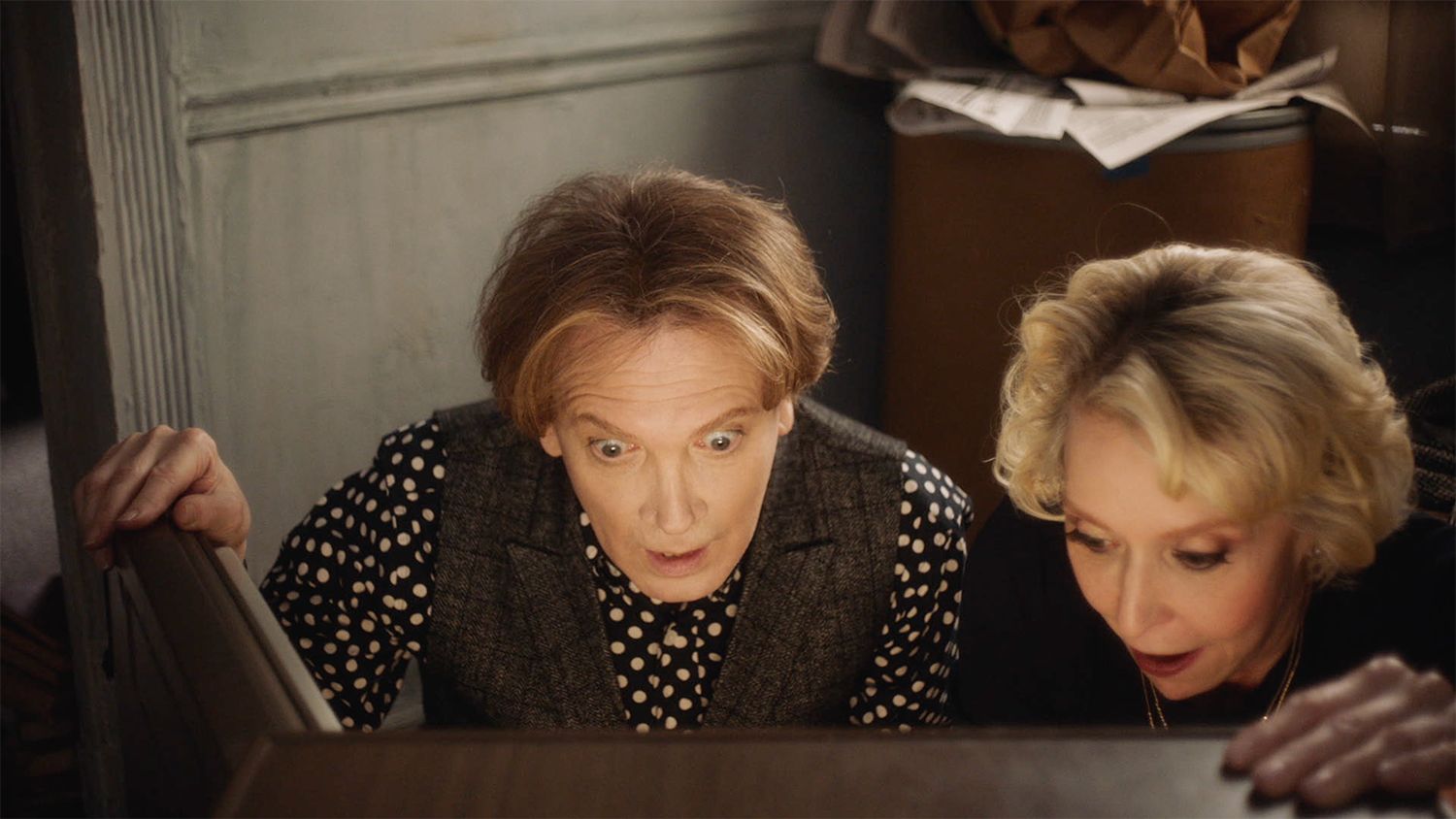
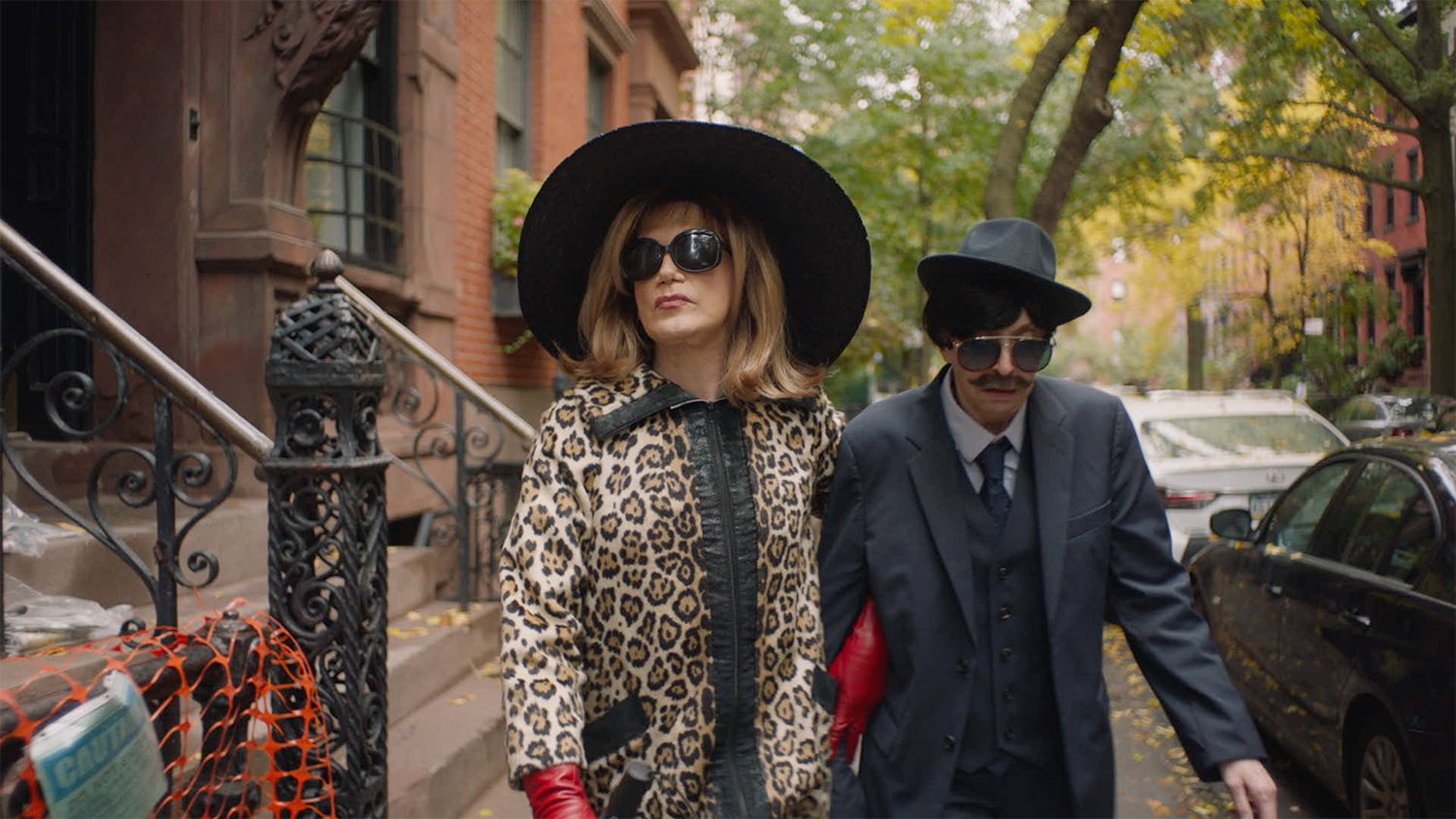
Photo caption: Charles Busch and Julie Halston in THE SIXTH REEL. Courtesy of Frameline.
The endearing madcap comedy The Sixth Reel is set in the insular world of classic movie geeks. I’m not talking about the average Turner Classic Movies devotees; these are folks who would sell their souls for the right lobby card and say things like, “William Powell is sexier with Kay Francis than he is with Myrna Loy.”
Jimmy (Charles Busch) is a down-on-his-luck collector and dealer of movie memorabilia. Jimmy has a history of becoming the companion of aging filmmakers and emerging with their memorabilia collections after their demise. Despite this unsavory business model, Jimmy is broke when stumbles upon a lead – the final reel of an iconic “lost film” is extant after all.
Jimmy and his peers, each shadier than the last, plunge ahead, competing with each other for their Holy Grail. Wackiness ensues.
Charles Busch and Julie Halston in THE SIXTH REEL. Courtesy of Frameline.
Busch co-wrote and co-directed The Sixth Reel with Carl Andress. This is my first Charles Busch film, but I understand that his movies, dappled with drag performances, constitute their own comedy sub-genre.
Busch’s committed performance is excellent. The rest of the cast, which includes Tim Daly and Margaret Cho, is fine, too, especially Julie Halston as an assertive widow and Patrick Page as an imperious mogul.
There should always be a place for well-crafted farce like this. The Sixth Reel screens at Frameline on June 25, and can be streamed from Frameline after June 24.
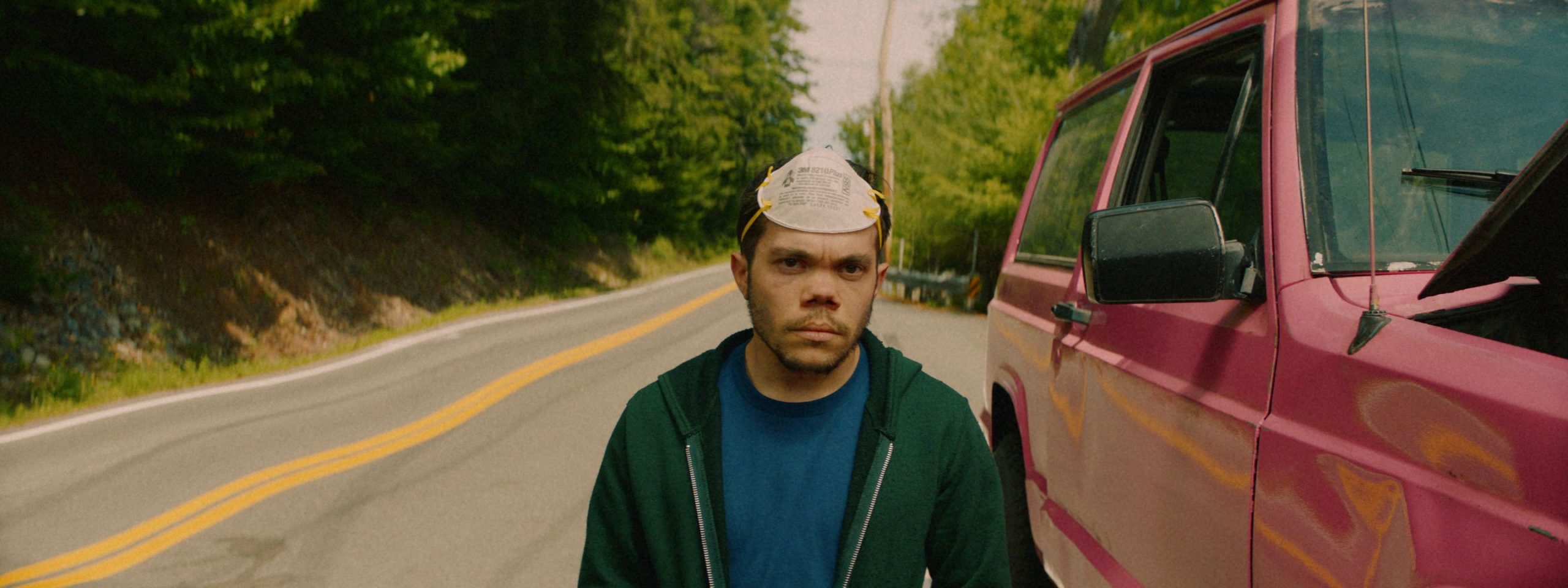
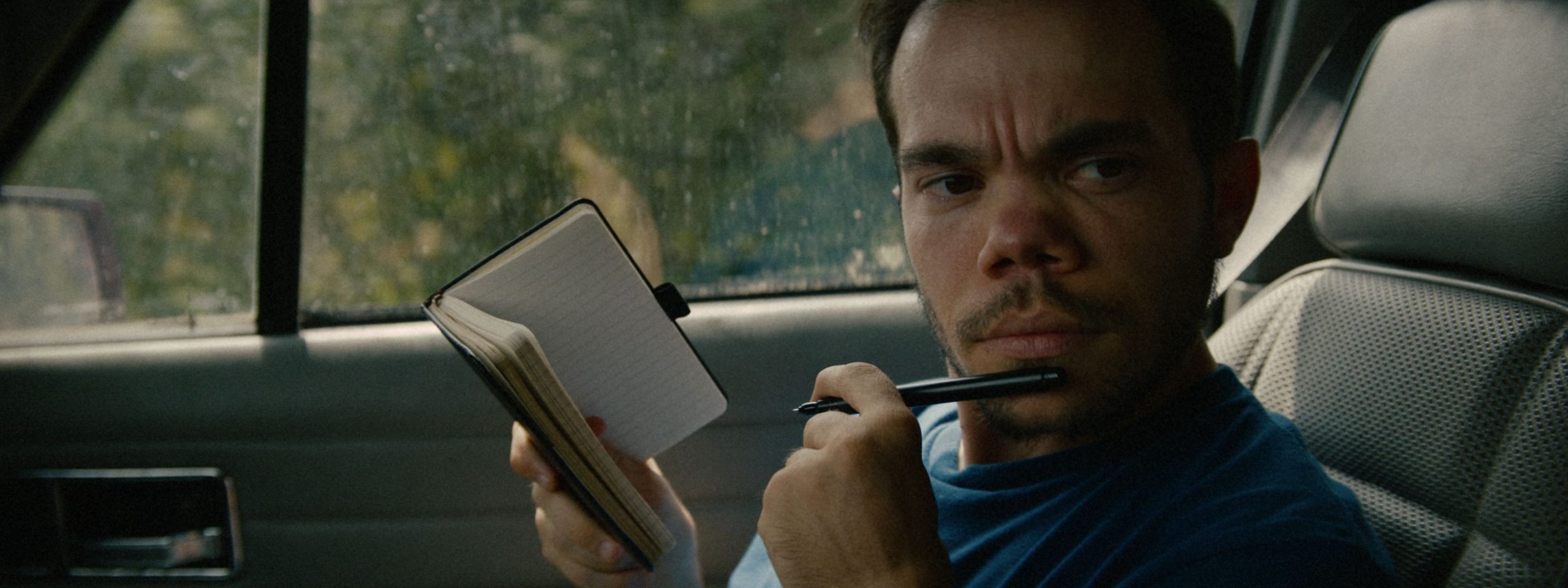
Photo caption: Matthew August Jeffers in UNIDENTIFIED OBJECTS. Courtesy of Unidentified Objects Film, LLC.
The Odd-Couple-On-A-Roadtrip dramedy Unidentified Objects takes us on a singular journey – from the offbeat through the surreal to the redemptive.
The self-isolation of anti-social gay dwarf Peter (Matthew August Jeffers) is disrupted when his neighbor, the chirpy sex worker Winona (Sarah Hay) insists that he provide his car for her drive from New York to Canada. She seeks to keep an appointment there with her space alien abductors. Wanting nothing to do with Winona or any aliens, Peter is nonetheless driven by financial necessity to agree.
In every social situation, Peter is quick to find (or manufacture) a grievance and explode in a torrent of invective; the rest of the time Peter seethes, leaking unpleasantness. It turns out that he is grieving the loss of a close friend – and with an overlay of guilt.
The trip is eventful. The two encounter lesbian cosplayers (one proud to cosplay full time – is that a thing?). Peter has dreams of a traffic stop by an extraterrestrial highway patrolman and of unexpected kindness in Canadian roadhouse.
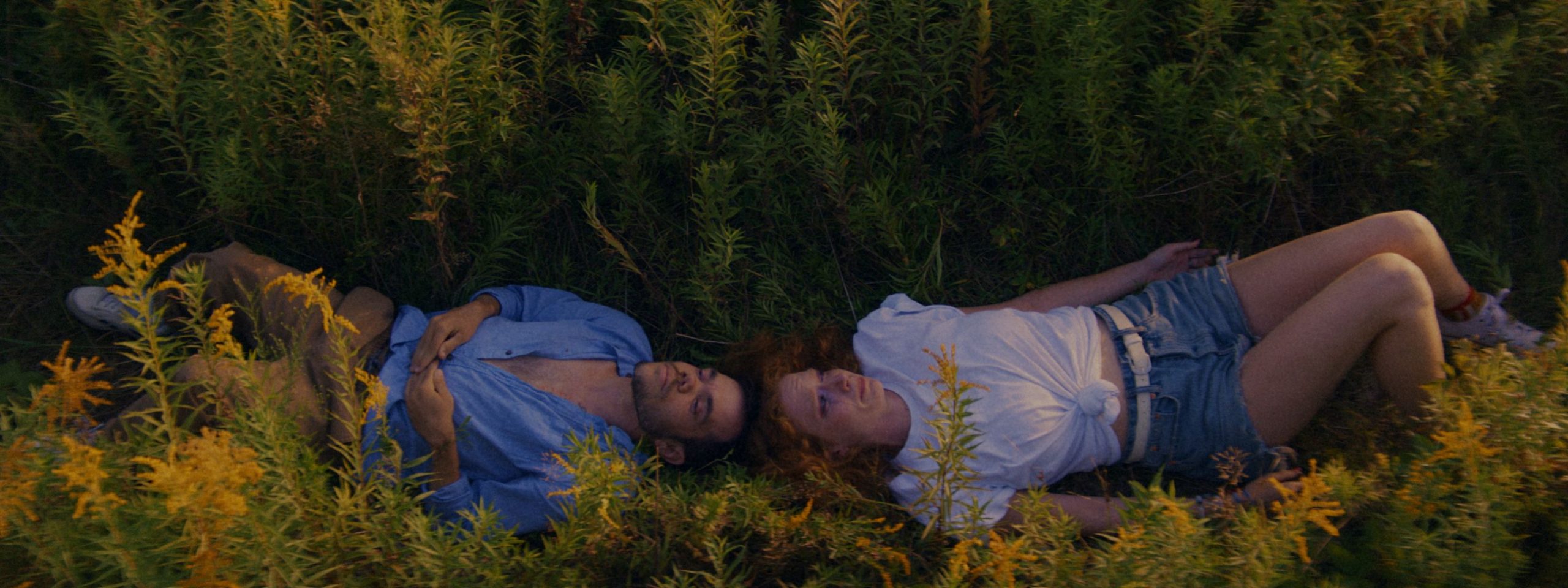
Matthew August Jeffers (Peter Hobbes) and Sarah Hay (Winona Jordan) in UNIDENTIFIED OBJECTS. Courtesy of Unidentified Objects Film, LLC.
Yet the tone of Unidentified Objects is neither is not zany nor madcap. In his first feature, director and co-writer Juan Felipe Zuleta has created a character-driven story – no matter the odd occurrences, the roots of Peter’s unrest are simmering just beneath the surface. The story is about what Winona finds at the end of her trip, and, more profoundly, what Peter finds at the terminus of his.
Zuleta’s dream sequences are vivid and realistic – and all the more surreal because they seem real (until they don’t).
Through most of the film, Peter’s bitterness becomes grating, but, for those who hang in there, the payoff is worth it.
The US premiere of Unidentified Objects is at Frameline – in person on June 19 and streaming after June 24.
Matthew August Jeffers in UNIDENTIFIED OBJECTS. Courtesy of Unidentified Objects Film, LLC.
Truman Capote (left) and Tennessee Williams in TRUMAN AND TENNESSEE: AN INTIMATE CONVERSATION. Photo courtesy of Frameline.
Truman and Tennessee: An Intimate Conversation brings us a double-barrelled biodoc of two literary giants, one who remade American theater and the American novel in the 1950s and 1960s. Truman Capote and Tennessee Williams were both gay men from the Deep South, who attained fame and descended into addiction. They also knew each other.
Truman and Tennessee tells their stories from their own letters and from being interviewed on TV by the likes of David Frost and Dick Cavett.
The words of Capote are voiced by Jim Parsons, and those of Williams by Zachary Quinto. There is no third-party “narration”. It’s an effective and increasingly popular documentary technique, used in, for example, I Am Not Your Negro.
The film’s structure allows us to harvest insights about each writer’s artistic process. There are plenty of nuggets like Tennessee Williams’ frustrations with the cinematic versions of his plays, all dumbed down to comply with the movie censorship of the day.
Truman and Tennessee: An Intimate Conversation can be streamed from Frameline through Thursday night, June 24, and opens in theaters on June 25.
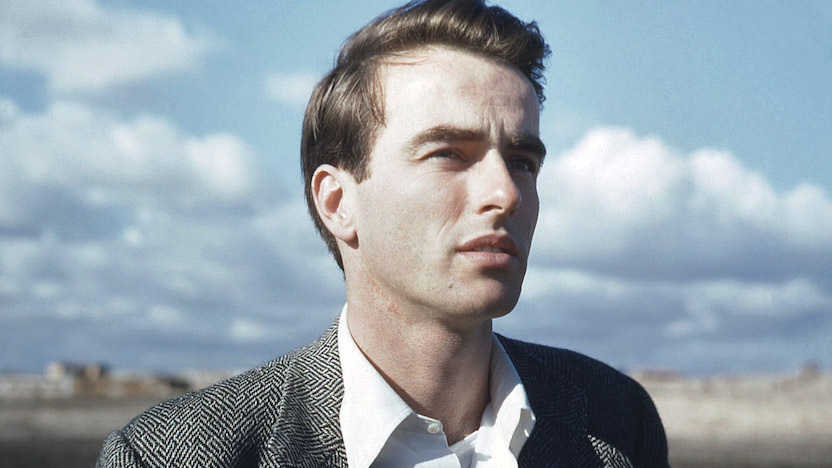
MAKING MONTGOMERY CLIFT, directed by Robert Anderson Clift and Hilary Demmon
The best documentary in this year’s Frameline festival was Making Montgomery Clift, from directors Robert Anderson Clift and Hilary Demmon. It’s an unexpectedly insightful and nuanced probe into the life of Clift’s uncle, the movie star Montgomery Clift. And it explodes some of the lore that has shaped popular understanding of Montogomery Clift.
Clift is the son of Brooks Clift, Montgomery Clift’s brother and archivist. The younger Clift never met his uncle Monty, but had access to his father’s vast collection of Monty memorabilia and to the memories of family, friends and previous biographers.
Many of us think we know the arc of Montgomery Clift’s life: success as a 1950s movie heartthrob is torpedoed by the inner torment of his closeted homosexuality; then alcoholic self-medication and disfigurement from an auto accident propel him into drunken despair and an early death. It turns out to be a much, much more nuanced story.
It turns out that some in the Clift family indulged in secret audio taping to a jaw-dropping degree. Directors Clift and Demmon take full advantage of the actual conversations of Monty and others. Their gift is to drop in the most startling revelations without lingering or even emphasizing them. To watch Making Montgomery Clift is a constant exercise in “wait…WHAT?” Demmon’s brisk editing helps, too.
How tormented was Monty by his sexuality (which we learn was a robust bisexuality)? Witnesses – who would know – let us know that Monty was comfortable in his own skin and fairly open – for the times – about his sexuality. This wasn’t Rock Hudson or Tab Hunter.
We learn that Montgomery Clift’s refusal to sign a studio contract was to preserve BOTH his artistic independence and his sexual independence (avoiding being forced into faux marriage and the like).
Making Montgomery Clift also discredits the view that Monty sank into depression after the accident changed his looks. His personally most satisfying performances came AFTER the accident.
The insights into Monty’s artistic process are unique and significant. We hear the actual conversation between Montgomery Clift and director Stanley Kramer about Clift’s riveting cameo in Judgment at Nuremberg. Monty’s intentionality in shaping the scene dispels the myth that, instead of giving a performance, he had an actual breakdown before the camera. Yes, he was acting it, and it was spectacular.
There has been a handful of recent showbiz biodocs made by younger relatives of the famous artists. Usually, these films add some personal family anecdotes, but are so fond of their subjects that they’re not especially insightful. Making Montgomery Clift is not that – it ascends above the pack – and should change how all of us understand Monty Clift.
Making Montgomery Clift is available to stream on Amazon.
Frameline, the San Francisco International LGBTQ+ Film Festival, is underway; scroll down to see what I’ve written about several Frameline films.
OUT NOW
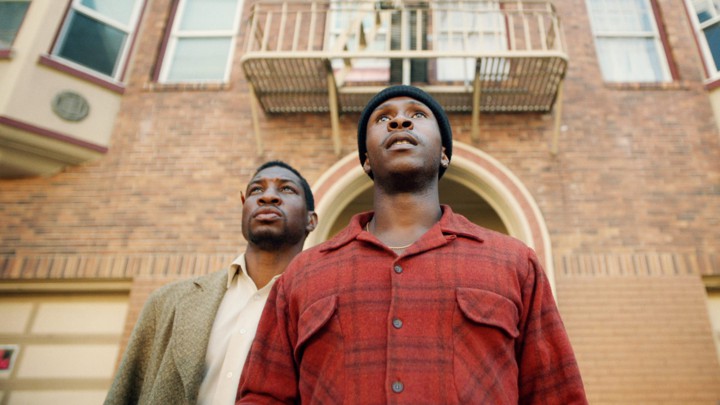
The Last Black Man in San Francisco is an absorbing exploration of inner lives reacting to a changing city – and it’s one of the best films of the year. The link will go live this weekend after I finish my review.
The wildly successful comedy Booksmart is an entirely fresh take on the coming of age film, and a high school graduation party romp like you’ve never seen. Directed and written by women, BTW.
Rocketman is more of a jukebox musical than a film biography, but it’s wonderfully entertaining.
So you think you know what you’re going to get from a movie titled Rolling Thunder Revue: A Bob Dylan Story by Martin Scorsese. It is indeed a documentary of a concert tour, but Scorsese adds some fictional flourish, as befits Dylan’s longtime trickster persona.
Charlize Theron and Seth Rogen are pleasantly entertaining in the improbable Beauty-and-the-Beast romantic comedy Long Shot.
The documentary Framing John DeLorean is an incomplete retelling of this modern Icarus fable. If you already know the basics of the DeLorean story, I’d recommend this Car and Driverarticle instead. Framing John DeLorean is available to stream from Amazon, iTunes, Vudu, YouTube and Google Play.
ON VIDEO
I have the perfect film to kick off the summer – the marvelously entertaining dark comic thriller Headhunters. You can stream Headhunters on Amazon, iTunes, Vudu, YouTube or Google Play It’s such a great choice, I’ll reprise it next week, too.
ON TV
Wow, on June 24, Turner Classic Movies will present two classics from the 1970s. The first is one of the all-time greats of cinema – Martin Scorcese’s Taxi Driver. It’s a masterpiece exploration of alienation through its searing portrait of loner Travis Bickle, played by an explosive Robert De Niro. Also the first glimpse of Jodi Foster’s genius.
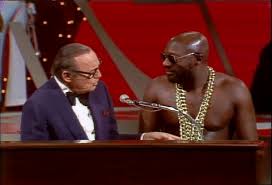
Then there’s the original Shaft – a low-budget and simplistic film not anywhere in the class of Taxi Driver. But it is the icon of the Blaxploitation genre and a snapshot of an important moment in our culture. And – it has one of the best movie theme songs EVER. I can’t hear it without thinking of songwriter Isaac Hayes accepting his Best Song Oscar in his shirt-of-chains.
The best documentary in this year’s Frameline festival may be Making Montgomery Clift, from directors Robert Anderson Clift and Hilary Demmon. It’s an unexpectedly insightful and nuanced probe into the life of Clift’s uncle, the movie star Montgomery Clift. And it explodes some of the lore that has shaped popular understanding of Montogomery Clift.
Clift is the son of Brooks Clift, Montogmery Clift’s brother and archivist. The younger Clift never met his uncle Monty, but had access to his father’s vast collection of Monty memorabilia and to the memories of family, friends and previous biographers.
Many of us think we know the arc of Montgomery Clift’s life: success as a 1950s movie heartthrob is torpedoed by the inner torment of his closeted homosexuality; then alcoholic self-medication and disfigurement from an auto accident propel him into drunken despair and an early death. It turns out to be a much, much more nuanced story.
It turns out that some in the Clift family indulged in secret audio taping to a jaw-dropping degree. Directors Clift and Demmon take full advantage of the actual conversations of Monty and others. Their gift is to drop in the most startling revelations without lingering or even emphasizing them. To watch Making Montgomery Clift is a constant exercise in “wait…WHAT?” Demmon’s brisk editing helps, too.
How tormented was Monty by his sexuality (which we learn was a robust bisexuality)? Witnesses – who would know – let us know that Monty was comfortable in his own skin and fairly open – for the times – about his sexuality. This wasn’t Rock Hudson or Tab Hunter.
We learn that Montgomery Clift’s refusal to sign a studio contract was to preserve BOTH his artistic independence and his sexual independence (avoiding being forced into faux marriage and the like).
Making Montgomery Clift also discredits the view that Monty sank into depression after the accident changed his looks. His personally most satisfying performances came AFTER the accident.
The insights into Monty’s artistic process are unique and significant. We hear the actual conversation between Montgomery Clift and director Stanley Kramer about Clift’s riveting cameo in Judgment at Nuremberg. Monty’s intentionality in shaping the scene dispels the myth that, instead of giving a performance, he had an actual breakdown before the camera. Yes, he was acting it, and it was spectacular.
There has been a handful of recent showbiz biodocs made by younger relatives of the famous artists. Usually, these films add some personal family anecdotes, but are so fond of their subjects that they’re not especially insightful. Making Montgomery Clift is not that – it ascends above the pack – and should change how all of us understand Monty Clift.
In the ambitious and innovative Monsters., writer-director Marius Olteanu unspools his story one chapter at a time. First we follow Dana (Judith State), a morose woman whose behavior is bewildering her cab driver – and the audience. In the second chapter, we meet two men, one of them Arthur (Christian Popa), and try to figure out the connection to the first chapter. The third and final chapter weaves the stories together into a romantic tragedy. (And, yes, there is a period in the film’s title.)
[MILD SPOILER: The movie is about a couple in love who want to have a conventional marriage, but whose relationship cannot succeed in that form.]
Monsters. is Olteanu’s feature film debut. Stylistically, Monsters. is typical of Romanian Slow Cinema, long takes and all, and it depicts a 24-hour story in under two hours.
Olteanu is an ambitious and fearless filmmaker. The beginning and most of Monsters. is in an unfamiliar, vertical aspect ratio; right away, we know that we’re watching something different. And, just when we’ve settled in, Olteanu CHANGES the aspect ratio to make points about the content. This dynamic aspect ratio and the film’s structure are self-conscious, but it’s clear that Oltenau is aspirational and innovative. I’m looking forward to what he has in store for us next.
Both lead actors are very good. State is up to the challenge of playing a sad character who is always aggrieved without becoming tiresome. Serban Pavlu is especially excellent as an off-puttingly meticulous Grindr hookup.
Frameline hosts the North American premiere of Monsters..
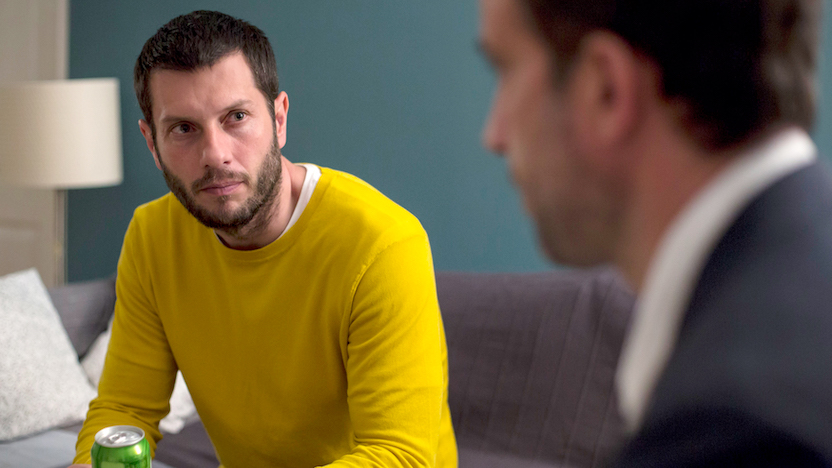
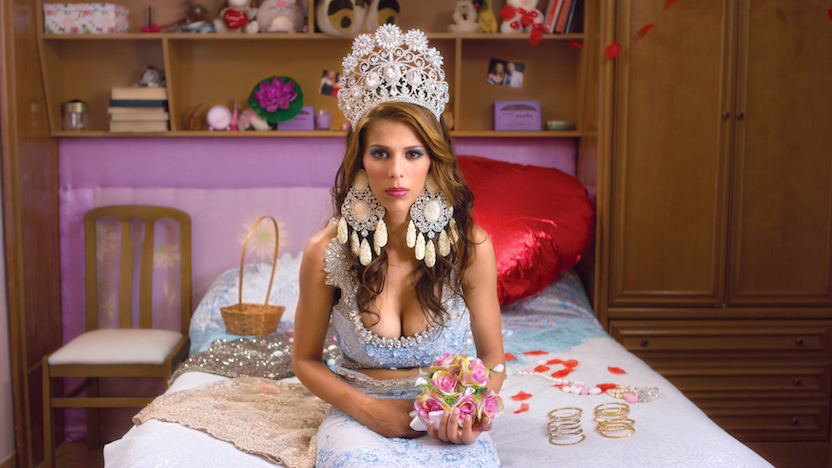
Carmen y Lola is a sexual coming of age story set among urban Romani people in contemporary Spain. 16-year-old Lola (Zaira Romero) is a smart, talented and feisty kid; she knows that she likes girls and wants a career; how she can do either within her traditional Romani culture is a dilemma. Buoyant 17-year-old Carmen (Rosy Rodriguez) embraces her future – being married off to a handsome young Roma man – but meeting Lola awakens her to other choices – and to her own sexual preference.
I’ve seen movies about the Romani people (widely known as Gypsies) before – usually historical period pieces and always with itinerant Romani. There are no wagons or RVs in Carmen y Lola; these characters live in the hardscrabble suburbs of Madrid. (Almost 2% of Spain’s population is Romani.)
We also get to see the ugly face of anti-Romani prejudice (which I’ve just learned is called antiziganism). Carmen y Lola is unsparing in its point of view that the Romani are held down by both external racism and some of their own patriarchal and anti-education Roma traditions.
There’s also a welcome element of cultural tourism here. We get to watch a Romani betrothal ritual, a Romani evangelical church service and an all-female flamenco party.
Carmen y Lola is the directorial debut of Arantxa Echevarria. It’s one of the successful first features showcased in this year’s Frameline film festival.
Isaac and Lien Binh Phat in SONG LANG, playing at Frameline.
Song Lang is writer-director Leon Le’s groundbreaking romantic tragedy. Set in 1990s Vietnam, Dung (Lien Binh Phat) is an effectively brutal collector for a loan shark, Sent to collect from an on-the-skids traditional opera company, Dung is about to trash the company’s wardrobe, when he encounters the opera’s charismatic lead singer Phung (Isaac). Dung has a female bed buddy, but Phung triggers some strong feelings in Dung. The evolving relationship between the two soars – until the consequences of Dung’s business catch up.
Song Lang is a great-looking movie. The color palette reflects the tropical vibrancy of Vietnam, and the sets and the costumes of the cải lương opera are breathtaking.
Isaac and Lien Binh Phat in SONG LANG, playing at Frameline.
Song Lang is also a love letter to cải lương itself; the art form is depicted beautifully and affectionately. And the story reveals that Dung himself has his own connection to cải lương.
Both leads are very good. This is the first screen credit for Lien Binh Phat, who won an acting award at the Tokyo International Film Festival.
American audiences will expect more physical expressions of passion than are portrayed in this film romance. This is a Vietnamese film.
On the other hand, there is one distracting moment for Vietnamese-American – when there’s a quick hug of grandma – no one hugs their grandma in Vietnam.
But, as is common in Vietnamese cinema, this is a tearjerker. It’s too easy to call this just “the Vietnamese Brokeback Mountain“. It’s an especially beautiful film with two original characters.
I also recommend thisLA Times article on Leon Le and how he came to make Song Lang.
Frameline hosts the North American premiere of Song Lang. This is the directorial debut for Leon Le and is one of several first features in the Frameline program.