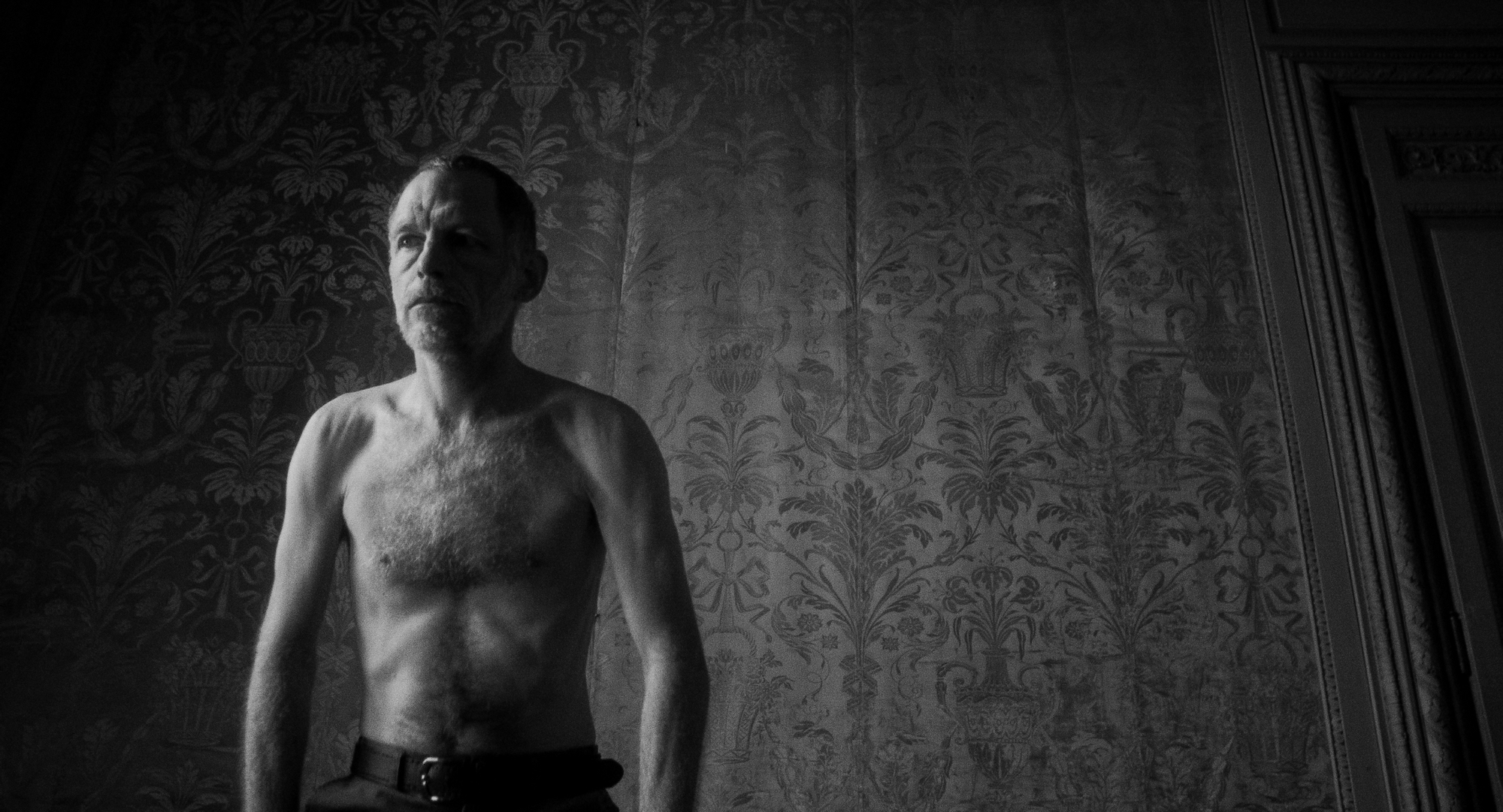
GOLDEN YEARS: when dreams diverge

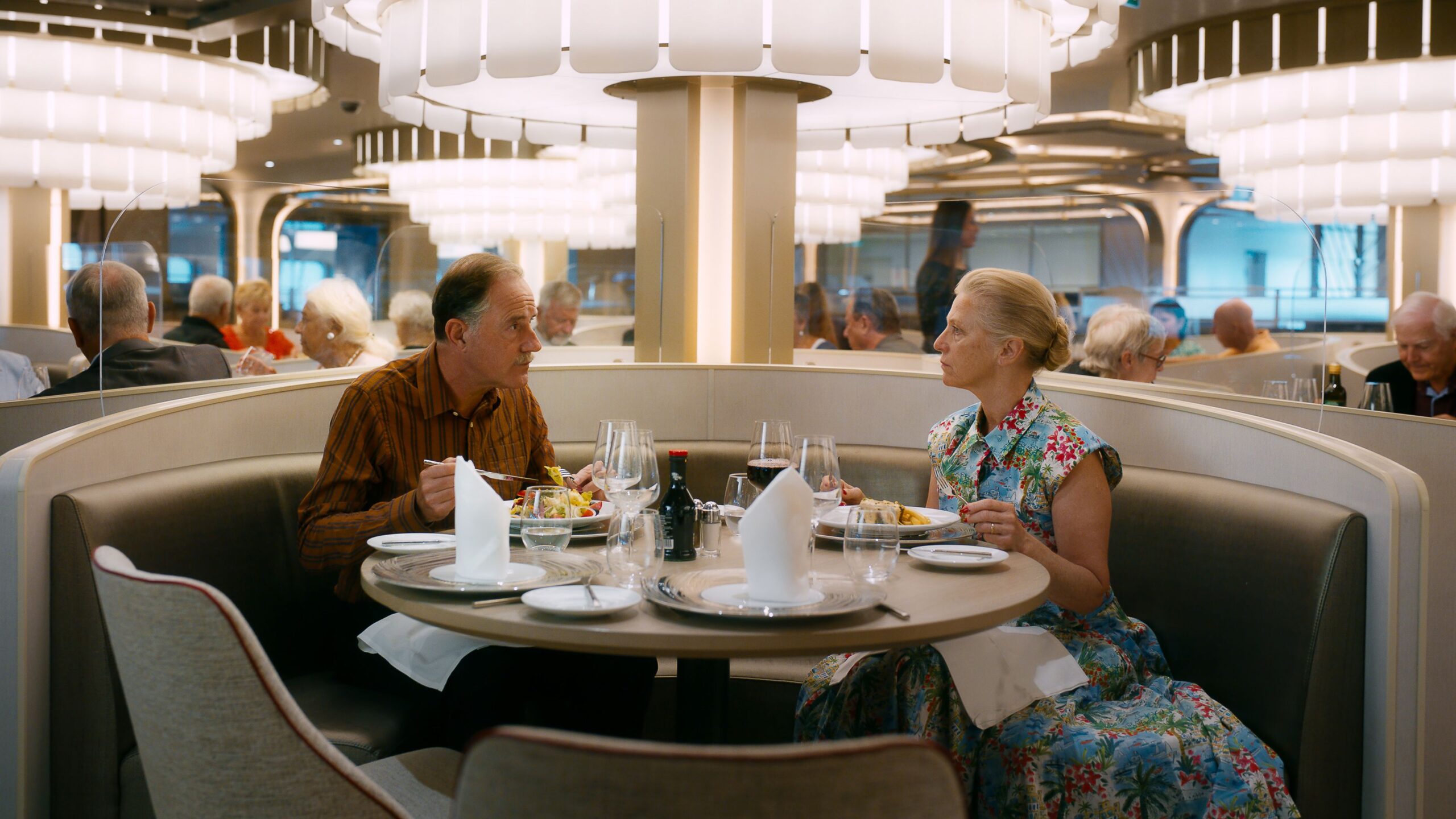
Photo caption: Stefan Kurt and Esther Gemsch in GOLDEN YEARS. Courtesy of Music Box Films.

The Swiss dramedy Golden Years begins as Peter (Stefan Kurt) turns 65 and retires. His wife Alice (Esther Gemsch) has been eagerly awaiting this day, which she sees as an opportunity for travel and to rekindle intimacy with Peter. In contrast, Peter doesn’t seem to have been thinking about it at all, but he begins to be consumed with his physical health and suddenly transforms himself into a mountain biking, vegan workout king. Alice wants to downsize, but he wants to stay in their house. Travel doesn’t interest Peter, but he feels trapped into joining Alice on a Mediterranean cruise that their adult children have gifted them.

Esther’s best friend unexpectedly dies, and Peter impulsively invites her heartbroken husband to join them on the cruise, which appalls Esther, who wants Peter to herself on the cruise. Esther has read her late friend’s hidden cache of letters and has stumbled on an explosive secret. Esther’s annoyance from Peter’s inattention simmers until it boils over into she staggers Peter by embarking on her own adventure.
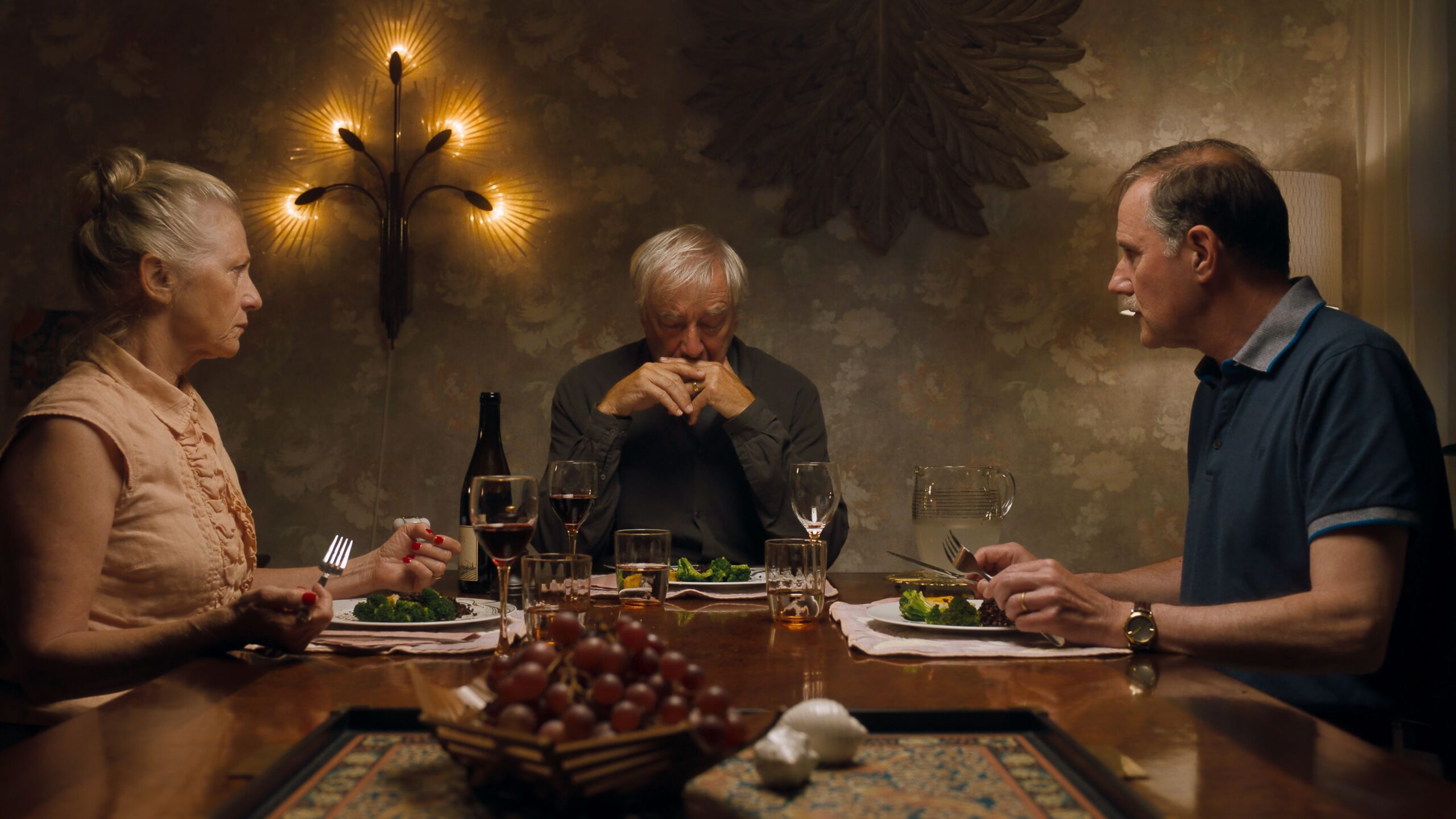
Esther Gemsch, Ueli Jaggi and Stefan Kurt in GOLDEN YEARS. Courtesy of Music Box Films.

At this point, Golden Years departs from a comedy of manners into an exploration of dual self-discoveries. Indeed, there are Men-are-from-Mars moments when Peter is a clueless dunderhead about Esther’s expectations. But Peter’s needs have evolved, too, and Esther has also mistakenly assumed that he will want to do want she wants to do.

We all know couples who drift totally apart after decades of marriage, and there must be some couples who age with identical interests. Many couple have different, but complementary aspirations, or can build a new life together around some core commonality. The question that Alice and Peter face is, where are they on this continuum?

Will Alice and Peter compromise? Will they be able to accommodate each others’ needs? Will they live separate lives? Is there a Win Win?

Screenwriter Petra Volpe (The Divine Order) probes these questions in a consistently funny and engaging movie with a minimum of senior citizen tropes or cheap geezer cheap jokes. (It is very funny, though, when Peter’s Gen X co-worker brightly tells him that his old office will become a server room.)

Esther Gemsch in GOLDEN YEARS. Courtesy of Music Box Films.

Director Barbara Kulcsar keeps the story sprightly paced and maintains just the right balance between comedy and the more serious issues. Alice is the primary focus of the story, and the performance of actress Esther Gemsch is especially strong.

Golden Years opens in select theaters, including the Laemmle Town Center in LA, on February 23.  I’ll remind you when the film arrives nationwide on digital on March 26.

Movies to See Right Now

Teo Yoo and Greta Lee in PAST LIVES. Courtesy of A24.

This week on The Movie Gourmet – a new review of Drift. Getting ready for the Oscars, I just rewatched Best Picture nominees Anatomy of a Fall, Past Lives and Killers of the Flower Moon with The Wife and her father. They all stand up, with Oppenheimer, as the top four on my Best Movies of 2023.

REMEMBRANCE

Carl Weathers retired from pro football at 26, played a football player in Semi-tough, and then the unforgettable Apollo Creed in the Rocky franchise. He recently starred in The Mandalorian and directed some of it. Personal note: his film Action Jackson was playing theaters in Santiago, Chile, when I visited in 1984.

CURRENT MOVIES

WATCH AT HOME

Laia Costa in VICTORIA

The most eclectic watch-at-home recommendations you’ll find ANYWHERE:

  • Victoria: a thrill ride filmed in one shot. Amazon, AppleTV, Vudu, YouTube, KinoNow.
  • The Gift: three people revealed. Amazon, AppleTV, Vudu, YouTube, redbox.
  • Inez & Doug & Kira: the tangle of love, friendship and bipolar disorder. Amazon, AppleTV, Vudu, YouTube.
  • The Handmaiden: gorgeous, erotic and a helluva plot. Amazon, Vudu.
  • Run & Jump: a romance, a family drama and a promising first feature. Amazon, AppleTV, Vudu, YouTube.
  • Youth: a glorious cinematic meditation on life. Amazon, AppleTV, Vudu, YouTube.
  • Me and Earl and the Dying Girl: a Must See, perched on the knife edge between comedy and tragedy. Amazon, AppleTV, Vudu, YouTube.

ON TV

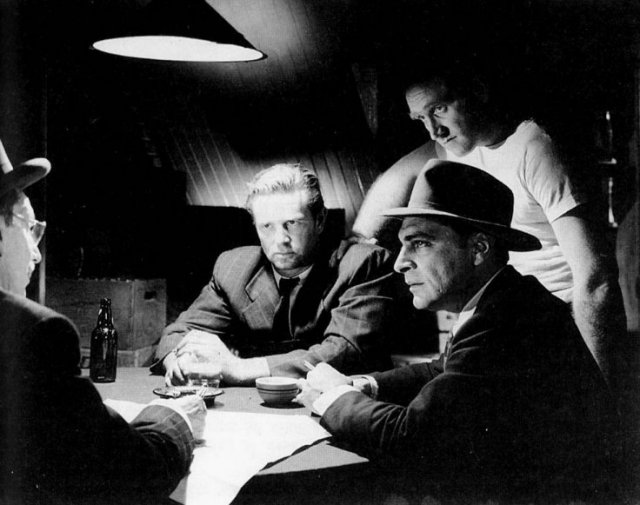
Sam Jaffe, Sterling Hayden, Anthony Caruso and James Whitmore inTHE ASPHALT JUNGLE

On February 17, Turner Classic Movies presents the classic film noir The Asphalt Jungle. At the most recent Noir City film festival, film scholars Eddie Muller and Imogen Sarah Smith explained that the Production Code banned the depiction of the means of crime; director John Huston blasted right through that stop sign, making this the protype of all heist movies, with the intricate planning, the assembling of the team and then the real-time heist itself.

The crooks do pull off the big heist…and then things begin to go wrong. There aren’t many noirs with better casting – the crooks include Sterling Hayden, Louis Calhern, Sam Jaffe and James Whitmore. Lesser known Marc Lawrence and Brad Dexter light up their parts, too.

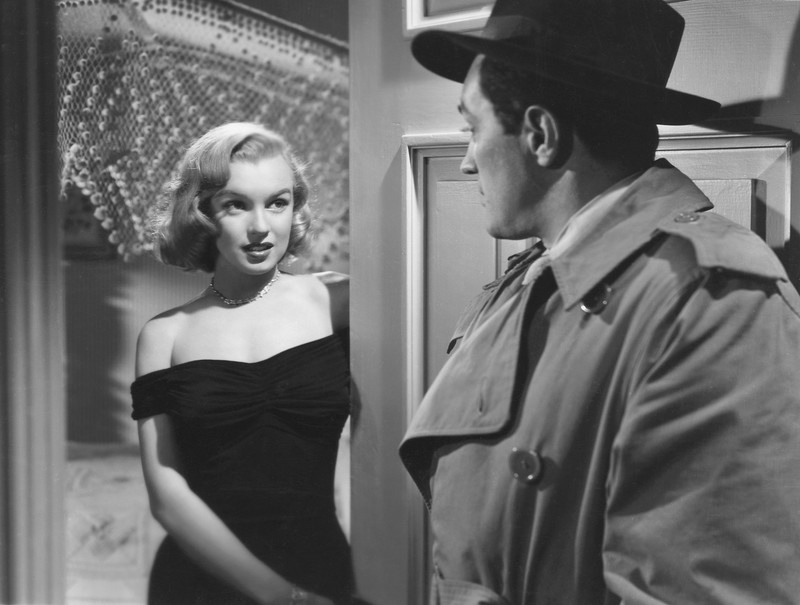
The 23-year-old Marilyn Monroe plays Calhern’s companion in her first real speaking part. Marilyn plays an alibi witness; when the police commissioner asks about her credibility (“How did she impress you?”) the interviewing detective replies, “Very much! She’s some babe!” Marilyn ‘s stardom must have soared by the time The Asphalt Jungle reached Italian theaters, because she is the featured figure in the Italian movie poster. Anyway, the final scene between Monroe and Calhern is both poignant and funny.

How noir is it? Even the cop who breaks the case goes to jail.

Marilyn Monroe and Don Haggerty in THE ASPHALT JUNGLE

DRIFT: escaping the horrors, but not yet the trauma

Cynthia Erivo in DRIFT. Courtesy of Utopia.

The indie drama Drift is set on a Greek isle, a glorious, carefree tourist destination. Jacqueline (Cynthia Erivo) is Liberian, and living rough, sleeping in hidden locations for safety and to avoid immigration authorities; she’s surviving by dumpster diving for food and selling foot massages on the beach.

There are other Sub-Saharan Africans in the island’s informal economy, mostly men selling blanket loads of souvenir trinkets. Jacqueline minimizes her contact with them, too. It becomes apparent that those guys have reached Greece to escape poverty, but that Jacqueline’s story is different.

Callie (Alia Shawkat) is an American tour guide who shows historic ruins to visitors who have come to the island for sunny beaches, not out of any cultural interest or intellectual curiosity. At one of those sites, Callie meets Jacqueline, who pretends to be an affluent tourist, and because Jacqueline is educated, urbane and cosmopolitan, Callie buys her story.

Eventually, we learn from flashbacks that Jacqueline is from a family in Liberia’s privileged elite, a family suddenly torn from its comfortable station by unspeakable horrors. Barely escaping with her life, Jacqueline profoundly traumatized by the violence and the sudden losses. and experiences PTSD reactions to fireworks and to unruly crowds .

Callie spots Jacqueline scrounging on the beach and realizes that her cover story is false. But Jacqueline, feeling vulnerable and embarrassed by circumstance, persists in her pose.

It’s clear to us that a friendship with Callie would give Jacqueline the support that she needs, but Jacqueline’s PTSD is in the way. When can she accept even a hug?

Erivo’s performance as Jacqueline is spot on. Erivo is a Broadway musical actress/singer, and stars in the Wicked franchise. In Harriet, Erivo played Harriet Tubman with convincing intensity. Erivo was absolutely the best thing about the Steve McQueen film Widows; since her character teamed with those played by Viola Davis, Michelle Rodriguez and Elizabeth Debicki, the fact that she stole the movie is impressive.

As we expect, Alia Shawkat (Arrested Development) is excellent, too.

Drift is the third feature for director Anthony Chen. Chen unspools the back story effectively, and it’s a well-crafted and especially well-acted little film.

I screened Drift for the Nashville Film Festival. It opens this weekend at the Monica Film Center and will roll out more widely.

Movies to See Right Now

Photo caption: Jeffrey Wright in AMERICAN FICTION. Courtesy of MGM.

This week on The Movie Gourmet – a wrap-up of my experience last week’s Noir City in Oakland where Eddie Muller and team introduced me to four new noirs, two of which are magnificent. Now I’m screening films from the March 2024 Cinequest program.

Incidentally, my coverage of Slamdance in January highlighted three films. The Accident and The Complex Forms won the top two narrative feature awards and Demon Mineral  won the audience award for documentaries. I’ll let you know when/if they stream.

CURRENT MOVIES

WATCH AT HOME

Maxine Peake in RUN & JUMP

The most eclectic watch-at-home recommendations you’ll find ANYWHERE:

  • Run & Jump: a romance, a family drama and a promising first feature. Amazon, AppleTV, Vudu, YouTube.
  • The Gift: three people revealed. Amazon, AppleTV, Vudu, YouTube, redbox.
  • Inez & Doug & Kira: the tangle of love, friendship and bipolar disorder. Amazon, AppleTV, Vudu, YouTube.
  • The Handmaiden: gorgeous, erotic and a helluva plot. Amazon, Vudu.
  • Victoria: a thrill ride filmed in one shot. Amazon, AppleTV, Vudu, YouTube, KinoNow.
  • Youth: a glorious cinematic meditation on life. Amazon, AppleTV, Vudu, YouTube.
  • Me and Earl and the Dying Girl: a Must See, perched on the knife edge between comedy and tragedy. Amazon, AppleTV, Vudu, YouTube.

ON TV

William Powell and Carole Lombard in MY MAN GODFREY

On February 11, Turner Classic Movies is airing the timeless and fantastic comedy, My Man Godfrey (1936). An assembly of eccentric, oblivious, venal and utterly spoiled characters make up a rich Park Avenue family and their hangers-on during the Depression. The kooky daughter (Carole Lombard) brings home a homeless guy (William Powell) to serve as their butler. The contrast between the dignified butler and his wacky employers results in a brilliant screwball comedy that masks searing social criticism that is still sharply relevant today. The wonderful character actor Eugene Pallette (who looked and sounded like a bullfrog in a tuxedo) plays the family’s patriarch, and he’s keenly aware that his wife and kids are completely nuts.

I feel strongly about this 88-year-old movie, which I first saw when it was only 36-years-old. We talk about screwball comedy, but this is the gold standard. And we need to remember the comic genius of Carole Lombard, who died supporting the war against fascism when she was only 33.

Wrapping up NOIR CITY 2024

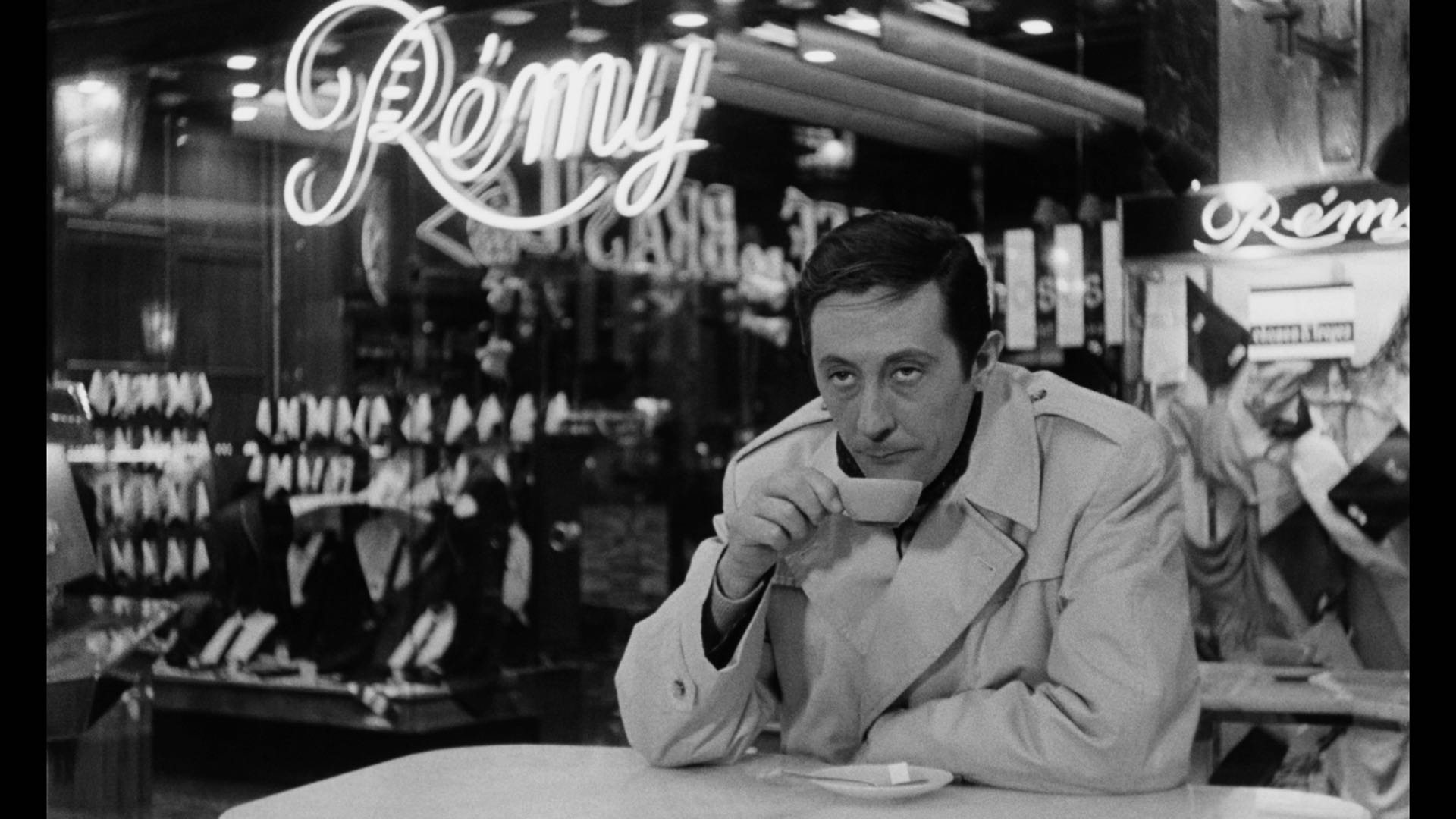
Jean Rochefort in SYMPHONY FOR A MASSACRE

I’ve always enjoyed Noir City, the Film Noir Foundation’s flagship film festival, but I found the 2024 version to be especially rewarding. My attendance is usually driven by the opportunity to see films that are new to me, and those which aren’t available on VOD or even DVD. I particularly value being introduced to international noir, as I pointed out in my Noir City preview

It’s also great to hear the films introduced by film scholars Eddie Muller, Imogen Sarah Smith and Alan K. Rode. The 600-seat Grand Lake Theater, a period movie palace, was packed for each of the double features that I attended.

I experienced six films at this fest – two from France, two from the UK, one from Japan and one from the US – and four were new to me. They were:

  • The Asphalt Jungle (US, 1950): Muller and Smith pointed out that the Production Code had banned filmmakers from depicting the means of committing crimes. So John Huston and the team behind The Asphalt Jungle blasted right through that stop sign in showing the intricate planning and execution of the heist. Those aspects and the assembly of the heist team are familiar elements of every heist film since, but they were completely original in The Asphalt Jungle. This film is especially well-cast (Sam Jaffe, Sterling Hayden, Louis Calhern, Jean Hagen, James Whitmore, John McIntyre and a 23-year-old Marilyn Monroe), but this time, I especially noticed the sparkling performances of supporting players Brad Dexter and Marc Lawrence.
  • Symphony for a Massacre (France 1963): Five crooks plan a big drug score that requires a large amount of capitalization, which will tap most of them out. They collect the fortune, send off the bag man and, then, one of the five steals it all. Each of the crooks becomes a detective trying to recover his money; of course, one of them is only pretending to look for the loot. It looks like the perfect crime, but there’s a slip, a surprise, another slip and…. Symphony for a Massacre is an early career showcase for Jean Rochefort, who plays a particularly amoral character with a reptilian smugness. Co-writer Jose Giovanni, who plays one of the crooks, knew crooked ways from his own eleven years in prison (and was concealing an even darker past). This is a top notch noir, and, because it is available for streaming, I’l be featuring it soon on this blog.
  • Elevator to the Gallows (France, 1958): I’ve written about Elevator to the Gallows and its groundbreaking aspects, but it was such a pleasure to watch it on the big screen with a sellout crowd.
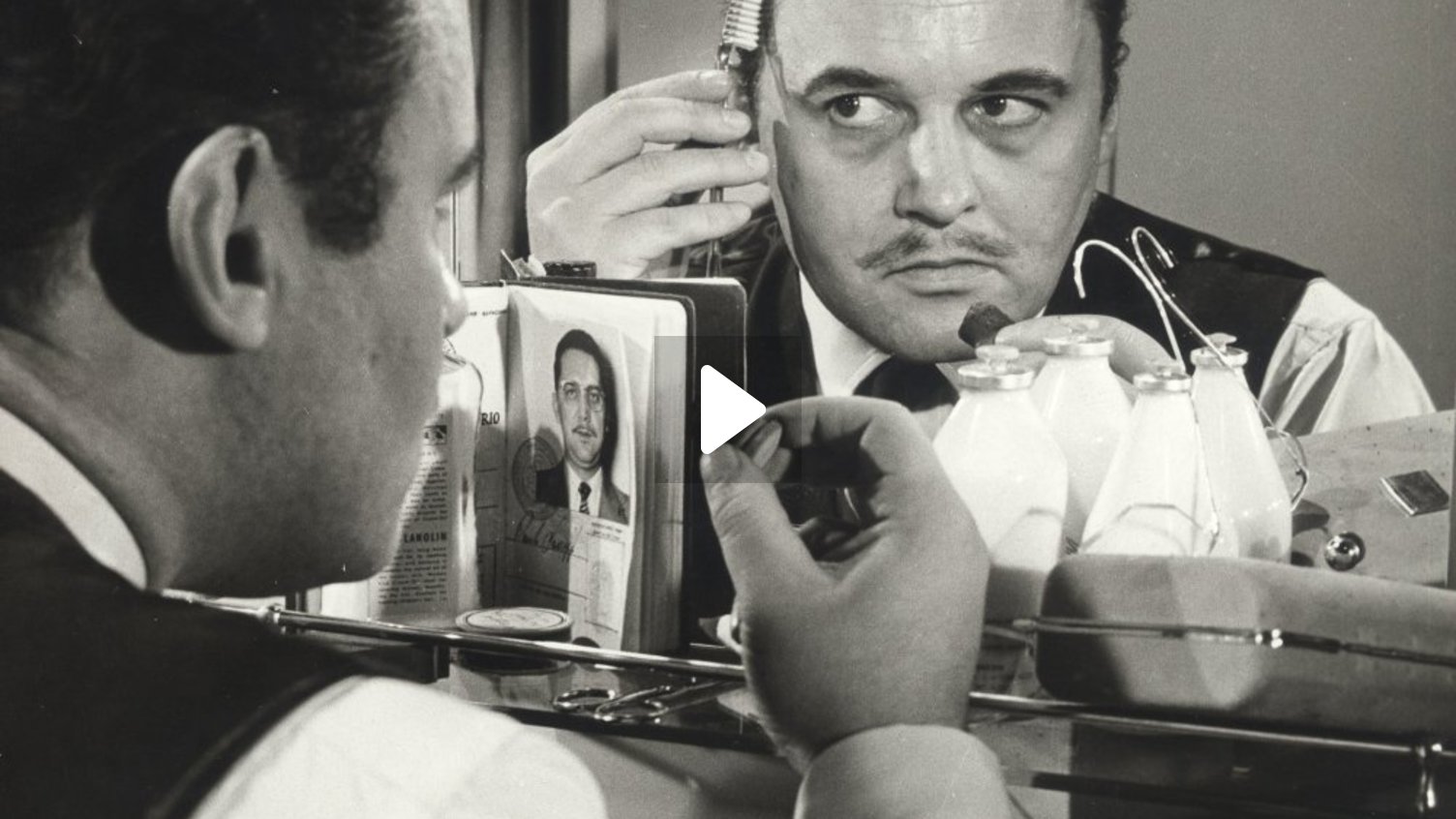
  • Across the Bridge (UK, 1957): The ever-intense Rod Steiger is All In as a German-born British merger-and-acquisition buccaneer who is in NYC to gobble up a couple more companies when he learns that Scotland Yard is examining his books. He knows that, within a week, his three billion pound fraud will be discovered (and that’s in 1957 money!). He goes on the lam, figuring that he can travel incognito on the two-day train trip to Mexico and slip across the border before anyone is looking for him. He has money stashed in Mexico City that will buy him time to find a more permanent, extradition-free new home. But the news breaks while he is on the train, so he switches identities with a fellow passenger. His new phony identity brings a very unwelcome surprise. Steiger’s character is a brusque bully, used to getting his way. Usually in film noir, we’re rooting for the anti-hero to get away with it, and that’s not exactly the case here, but Steiger makes his financier’s predicaments and his attempts to evade them absolutely VIVID. The film’s director, Ken Annakin, observed that Steger was “trying to out-Brando Brando”. The story becomes a faceoff between Steiger’s fugitive and the corrupt Mexican police chief (an excellent Noel Willman). Oh – and there’s Dolores, one of the greatest three dogs (with Monty and Asta) in film noir. This is a first class movie, but a bit of a Lost Film, not available on VOD.
  • Zero Focus (Japan, 1961): This is a dark mystery story with a woman’s focus; in fact, the three most pivotal characters turn out to be women. A man disappears, and his new bride, with some unreliable assistance from his employer and the cops, tries to find out what happened to him. Secrets are revealed, Rashomon-like, at the end , when the mystery is “solved” in differing ways by the police and, then, by two of the women characters; (the screenwriter also wrote Rashomon). The setting is a bleak, wintry coast. I found Zero Focus a little too long and talky at the end, but otherwise an excellent noir,
  • The Strongroom (UK, 1962): The premise in this 74-minute British programmer is that the crooks easily rob a bank, but then realize that they’ll swing for capital murder if the bank employees now locked in the airtight vault succumb. In a race against time, the robbers try to break back into the bank – and it’s much harder the second time. There’s a shockingly abrupt, but satisfying, ending. Most of the audience recognized an actor playing one of the hoods, Darren Nesbitt, who went on to be a character actor in such memorable 1960s fare such as The Blue Max, The Prisoner and Where Eagles Dare.

Bottom line: Noir City revealed two hitherto unknown classics: Symphony for a Massacre and Across the Bridge. I’ll be writing more about each of them.

Rod Steiger in ACROSS THE BRIDGE

Movies to See Right Now

Photo caption: Jeffrey Wright in AMERICAN FICTION. Courtesy of MGM.

This week on The Movie Gourmet – a new review of The Zone of Interest. The best movies in theaters right now are American Fiction and Poor Things. The best current movies that you can watch at home are Anatomy of a Fall, Killers of the Flower Moon and The Holdovers.

CURRENT MOVIES

WATCH AT HOME

THE HANDMAIDEN

The most eclectic watch-at-home recommendations you’ll find ANYWHERE:

  • The Handmaiden: gorgeous, erotic and a helluva plot. Amazon, Vudu.
  • The Gift: three people revealed. Amazon, AppleTV, Vudu, YouTube, redbox.
  • Inez & Doug & Kira: the tangle of love, friendship and bipolar disorder. Amazon, AppleTV, Vudu, YouTube.
  • Run & Jump: a romance, a family drama and a promising first feature. Amazon, AppleTV, Vudu, YouTube.
  • Victoria: a thrill ride filmed in one shot. Amazon, AppleTV, Vudu, YouTube, KinoNow.
  • Youth: a glorious cinematic meditation on life. Amazon, AppleTV, Vudu, YouTube.
  • Me and Earl and the Dying Girl: a Must See, perched on the knife edge between comedy and tragedy. Amazon, AppleTV, Vudu, YouTube.

ON TV

Harold Lloyd in SAFETY LAST!

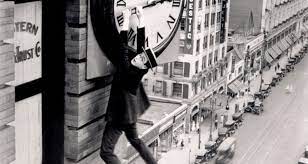
On February 6, Turner Classic Movies will air Harold Lloyd’s silent comedy classic Safety Last!, and this 101-year-old movie is still a zinger. Lloyd, with Charlie Chaplin and Buster Keaton, was one of the three great filmmakers of silent comedies. Safety Last! begins with a joke on the audience, when we discover we’re not watching the scene we thought we were. Off we go, bouncing through Lloyd’s rube-in-the-big-city misadventures, all the way to the iconic finale, where Lloyd himself (he did most of his own stunts) climbs the exterior of a 10-story building and hangs from the face of a clock (which was actually staged on a shorter warehouse, but still dangerous).

THE ZONE OF INTEREST: next door to the unthinkable

Photo caption: Sandra Huller in THE ZONE OF INTEREST. Courtesy of A24.

Jonathan Glazer’s The Zone of Interest is an exceptionally original and well made, intentionally unsettling and, ultimately, unnecessary film.

We first meet Hedwig (the great Sandra Huller), Rudolph (Christian Friedel) and their five children in 1943 on an idyllic riverside picnic in the woods.  They return to their spacious villa and put the kids to bed (Hedwig firmly and Rudolph gently).  When Hedwig and Rudolph are in bed themselves, they ignore what sounds like shouting and the barking of guard dogs nearby.  

The next morning we see that Rudolph is the commandant of Auschwitz and the family home is LITERALLY next door to the walls.  Hedwig, like any hausfrau, hangs laundered sheets to dry, while her groceries are delivered by death camp slave labor. 

As the family’s domestic life goes on, the soundtrack slowly becomes louder and includes more shots, screams and the drone of industrial extermination.  We see more of the skyline, with smokestacks spewing fire and ash.

Glazer slips in little matter-of-fact horrors like perverse Easter Eggs. Hedwig brags to her gal pals about furs and other luxuries she has stolen from dead Jews. Hedwig seems meaner than Rudolph and coldly utters what must be the most terrifying threat ever made to a maid.

Having married a guy who has risen to be a big boss, Hedwig is living her best life, with servants and plenty of perks, like Italian spa vacations.  She has the very disturbing capacity to shut out the hellish enterprise over her back fence, replete with the sounds, smells and images of workaday genocide. Glazer has made a Holocaust film without any images from inside the death camp; the Holocaust is just kind of leaking over the fence.

The Martin Amis novel that Glazer adapted into the screenplay did not name the commandant and his wife, but Glazer uses the names of the actual historical figures: the real Rudolph and Hedwig Hoss.  When one reads about the real Hoss, you can see the care with which Glazer depicts him, down to his distinctive haircut, the kids’ names and Hedwig’s dream of spacious gardens (She’s the true believer in lebensraum.)

Rudolph is not a hate-spewing frothing maniac, more of a Company Man go-getter.  One can imagine a 1960s version of Rudolph driving to surpass this quarter’s IBM sales goal. Yet, this is the man who admitted to murdering 2.5 million people; the other million, he said, died of disease and starvation.

The Zone of Interest is an extraordinary illustration of the banality of evil. But why do we need it?  Hannah Arendt’s recognition that Hitler’s mad horrors were not carried out by monsters, but by the ordinary and mediocre, has been generally accepted for decades. If Hitler were obsessed with dairy production or ceramic art, thousands of workaday Nazis would have been content to do just that, instead.  The logical conclusion is that the Holocaust doesn’t need a maniac to happen again, just millions of people who obey the maniac. After all, it was ordinary-looking American companies that vied for Trump Administration contracts to put migrant babies in cages, not some survivalist militia.

It’s a familiar truism, and, to my sensibilities, not worth the unpleasantness of sitting watching these unpleasant people and their unthinkable deeds. That being said, this is anything but a slog. The Zone of Interest is captivating throughout (not unlike a vehicular crash).

This is only Glazer’s fourth feature in 24 years: Sexy Beast (2000), Birth (2004), Under the Skin (2013).

The Zone of Interest has been nominated for multiple Oscars, including Best Picture.

Movies to See Right Now

Photo caption: Jeffrey Wright in AMERICAN FICTION. Courtesy of MGM.

This week on The Movie Gourmet:

I’m actually at the Grand Lake Theater in Oakland, covering the last weekend of the Noir City festival of film noir in person. Here’s my Noir City preview with recommended movies.

CURRENT MOVIES

WATCH AT HOME

awny Cypress and Thalia Thiesfield in INEZ & DOUG & KIRA. Photo courtesy of Cinequest.

The most eclectic watch-at-home recommendations you’ll find ANYWHERE:

  • Inez & Doug & Kira: the tangle of love, friendship and bipolar disorder. Amazon, AppleTV, Vudu, YouTube.
  • The Gift: three people revealed. Amazon, AppleTV, Vudu, YouTube, redbox.
  • The Handmaiden: gorgeous, erotic and a helluva plot. Amazon, Vudu.
  • Run & Jump: a romance, a family drama and a promising first feature. Amazon, AppleTV, Vudu, YouTube.
  • Victoria: a thrill ride filmed in one shot. Amazon, AppleTV, Vudu, YouTube, KinoNow.
  • Youth: a glorious cinematic meditation on life. Amazon, AppleTV, Vudu, YouTube.
  • Me and Earl and the Dying Girl: a Must See, perched on the knife edge between comedy and tragedy. Amazon, AppleTV, Vudu, YouTube.

ON TV

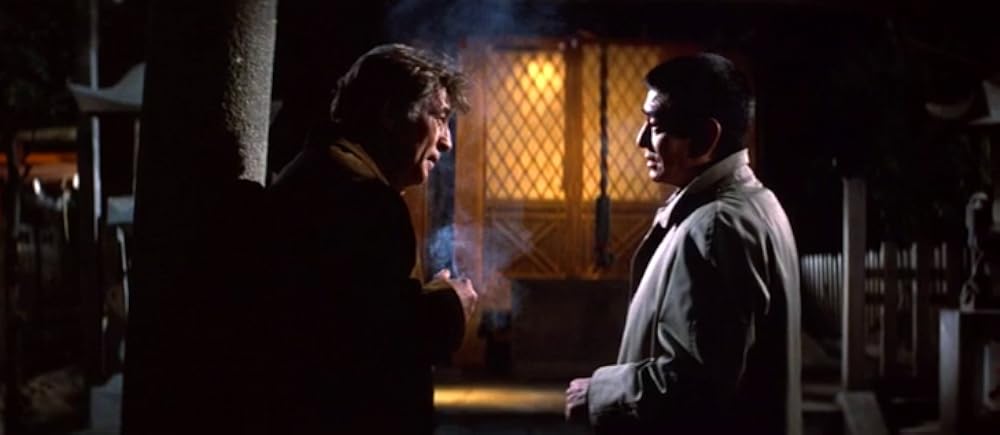
Robert Mitchum and Ken Takakura in THE YAZUKA

On January 31, Turner Classic Movies will air the 1974 neo-noir The Yakuza, starring Robert Mitchum. The world-weary Mitchum was the greatest male star of classic film noir, and 25 years later was still jaded and just as cool. Here, Mitchum plays a former GI who returns to Japan to help rescue the kidnapped daughter of an army buddy (Brian Keith) who still lives in Japan. Mitchum’s character has a unique relationship with a former Yazuka (Ken Takakura), who can help him navigate the Japanese underworld. Of course, the Japanese had been making Yakuza movies for over a decade, but The Yakuza introduced American audiences to the code of behavior of the Yakuza (severed fingers and all) and other aspects of Japanese culture. There’s a big reveal about two of the characters, and the finale is heavy duty. The Yazuka was directed by Sydney Pollack (Out of Africa, Tootsie, Jeremiah Johnson) from a screenplay adapted by Paul Shrader (Taxi Driver) and Robert Towne (Chinatown). James Shigeta, who I discuss in my post about The Crimson Kimono, also appears.

Keiko Kishi and Robert Mitchum in THE YAZUKA

AMERICAN FICTION: this can’t be happening

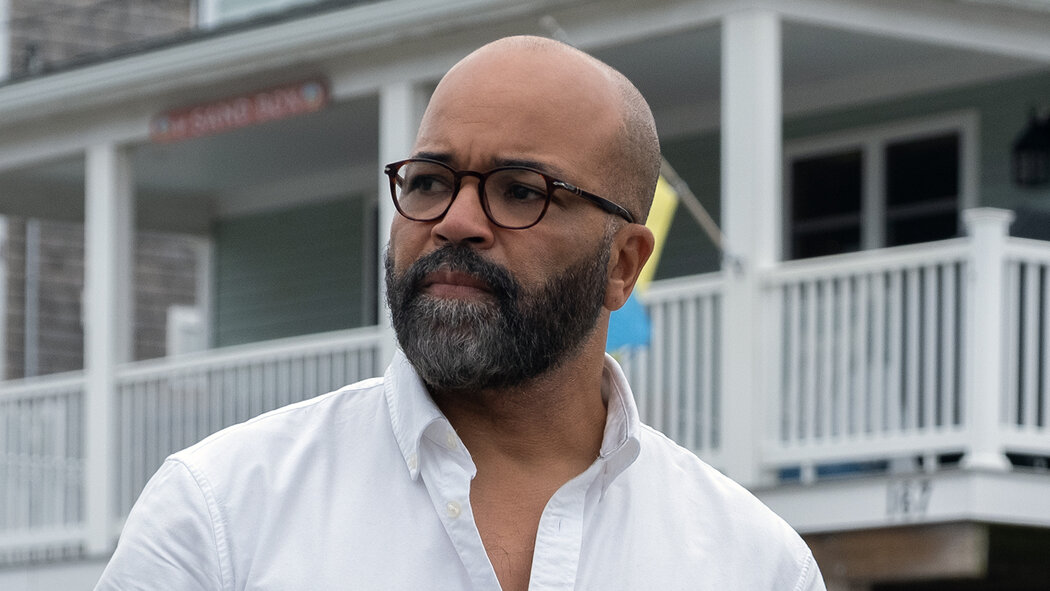
Photo caption: Jeffrey Wright in AMERICAN FICTION. Courtesy of MGM.

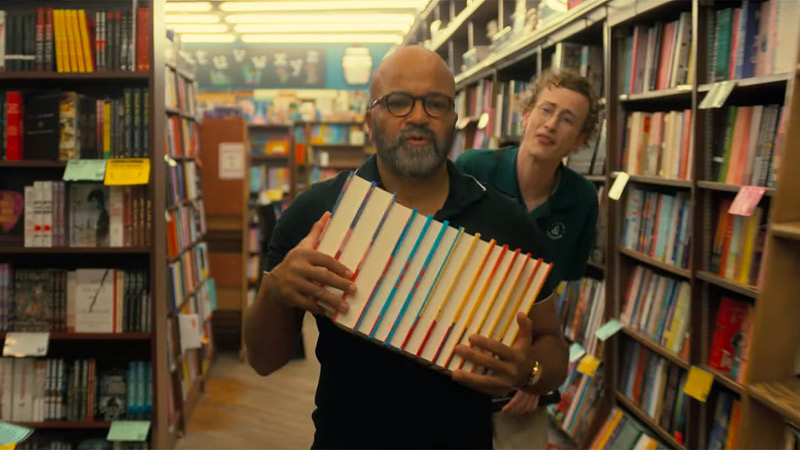
In the sharply funny American Fiction, Monk (Jeffrey Wright) is an academic and a novelist, the kind who wins literary awards, not the kind who people read on the airplane or on the beach. He is also African-American, named Thelonious Monk Ellison at birth, and his father and both siblings are physicians. His literary agent (John Ortiz) has not found a publisher ready to buy Monk’s latest high-falutin manuscript, an updating of Aeschylus.

Monk’s sensibilities are offended whenever he is pigeon-holed as a Black Writer. But he is enraged by books and movies that portray everyday African-American life as driven by deadbeat dads, crack addicts, and getting shot by the police. Monk, himself financially stressed by circumstance, goes ballistic when a Black writer (Issa Rae) gets a best seller by penning a story crammed with negative tropes.

Monk, in his cups, goes all in, adopting the pseudonym Stagg R. Leigh, and cramming every offensive stereotype into a volume initially titled My Pafology (until it gets an even worse new title). Monk demands that his agent submit it to publishers, and they are shocked when publishing houses and movie studios vie over the rights.

The joke here is that, far from ignoring black voices, the New York and Hollywood cultural gate-keepers, not a Trump voter among them, are eager to embrace black artists and black content – as long as the work conforms to the stereotypes with which they are comfortable. American Fiction sends up the white intelligentsia for incentivizing black creatives to perform in a new, but equally disgusting, form of black face. It’s wickedly funny.

While American Fiction is a successful social parody, it includes heartfelt threads of family dynamics and personal self-discovery. (There’s even a wedding.)

Jeffrey Wright is wonderful as a Monk who is pompous and curmudgeonly when we first meet him, but who becomes more complicated as we learn more about his upbringing. Tracee Ellis Ross (Blackish), Sterling K. Brown and Erika Alexander are each remarkably winning as Monk’s siblings and love interest, respectively. Leslie Uggams is downright brilliant as Monk’s mother. The entire cast is excellent, including the actors playing powerful white nitwits, especially Miriam Shor and Adam Brody

American Fiction is the directorial debut of its screenwriter, Cord Jefferson, who won a Primetime Emmy for Watchmen. It is a brilliant screenplay; Jefferson adapted it from the book Erasure by Percival Everett.

American Fiction is nominated for the Best Picture Oscar. Jefferson’s screenplay, Laura Karpman’s score, Jeffrey Wright and Sterling K. Brown are also Oscar-nominated. This is one of my Best Movies of 2023.

THE COMPLEX FORMS: what did he bargain for?

David Allen White in Fabio D’Orta’s THE COMPLEX FORMS. Courtesy of Slamdance.

The visually striking atmospheric The Complex Forms is set in a centuries-old Italian villa, where Christian (David Allen White) and other down-on-their-luck middle-aged men sell their bodies for a period of days to be “possessed”. Possessed how? By who or by what? As the dread builds, Christian resolves to pry the answers from the secretive masters of the villa.

Director Fabio D’Orta unspools the story with remarkably crisp black-and-white cinematography, a brooding soundtrack and impeccable editing. In his astonishingly impressive filmmaking debut, D’Orta wrote, directed, shot and edited The Complex Form.

David Allen White is excellent as Christian, who begins resigned to endure whatever process that he has committed to, but becomes increasingly uneasy as his probing questions are deflected. So are Michael Venni as Christian’s talkative roommate Luh and Cesare Bonomelli as the impassive roommate simply called The Giant.

Like his countrymen Fellini and Leona, D’Orta has a gift for using faces to heighten interest and tell the story. He makes especially effective use of Bonomelli’s Mt. Rushmore-like countenance.

Slamdance is hosting the United States premiere of The Complex Forms. The Complex Forms is the my favorite among the dozen or so films I screened in covering this year’s Slamdance. The Complex Forms won Slamdance’s Honorable Mention for Narrative Feature.