PERFECT DAYS: intentional contentment

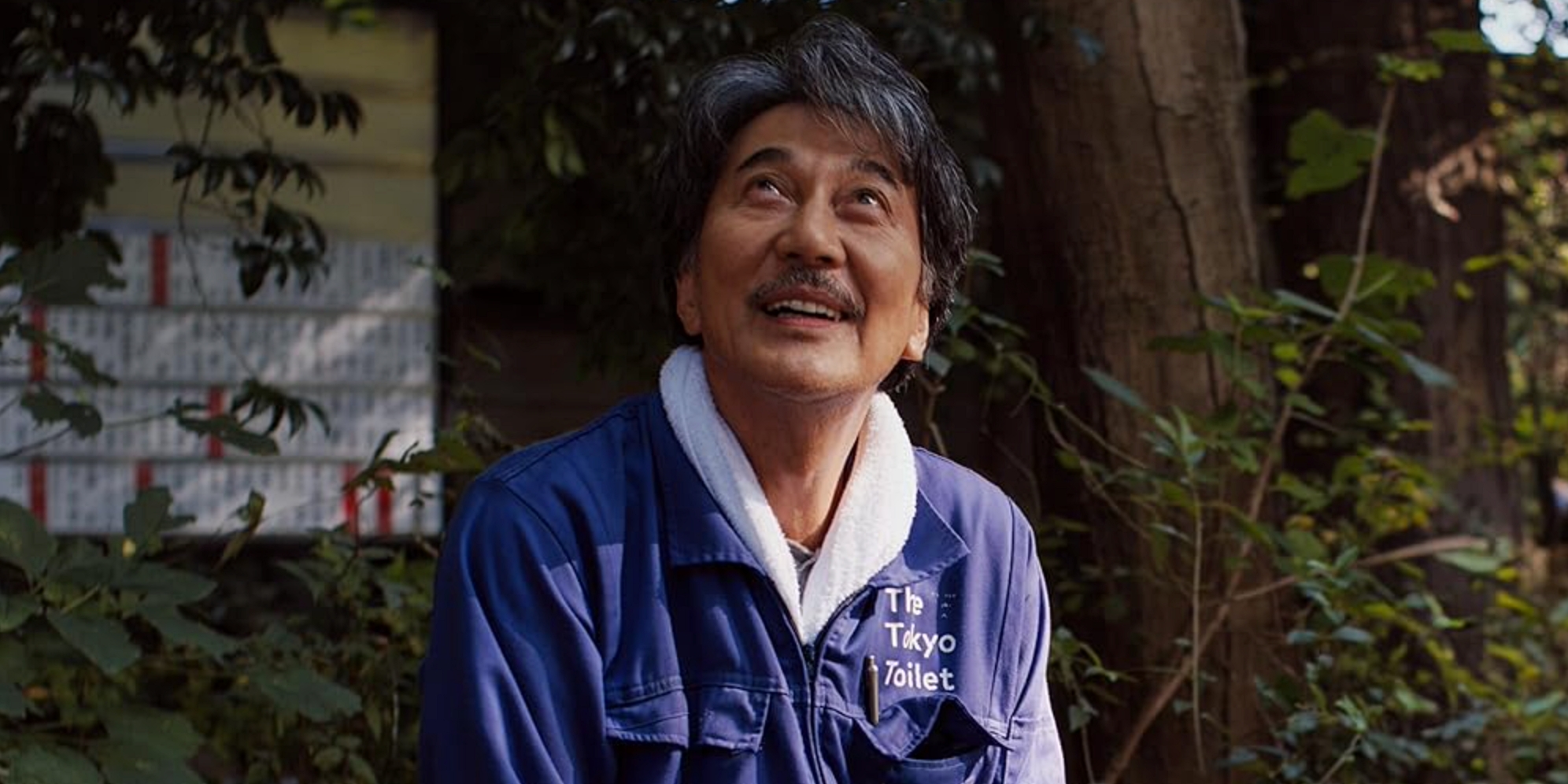
Koji Yakusho in PERFECT DAYS. Courtesy of NEON.

Wim Wenders’ quietly mesmerizing Perfect Days is an ode to those who can identify the beauty in everyday life. Sixtyish Hirayama (Koji Yakusho) works cleaning public toilets in Tokyo’s urban parks. He lives a simple, even spartan existence, within the parameters of a firm routine. Others might be ground down by a life of drudgery, but Hirayama is a happy man.

Hirayama finds beauty in the parks, his massive collection of audiocassettes of 70s and 80s rock, dramatic cityscapes, his friendship with a restaurant owner, a little gardening and reading William Faulkner and Patricia Highsmith. Hirayama isn’t a blissed-out simpleton – he is deliberate in seeking and garnering pleasure from bits of beauty. It’s as if he frames his job, not as cleaning toilets all day, but as working in Tokyo’s most serene urban oases. Hirayama lives within a complete absence of envy and has long since discarded any need for striving. Hirayama lives a life of intentional contentment.

He is kind, but not a naive pushover. His younger work partner is a slacker who is shallow, impulsive and lazy; Hirayama disapproves of his lack of work ethic, but doesn’t let it ruin his own day. Hirayama doesn’t seek social interaction, but is available to emotionally support his runaway niece and a cancer-ridden acquaintance.

There are characters who do not get Hirayama’s ethos, like his estranged sister. The annoying younger co-worker is not affected by Hirayama’s cassette of Patti Smith’s Redondo Beach, and doesn’t notice that the woman he is dating is entranced; we know that it’s going to be his loss.

Hirayama catches the eye of a young working woman as each lunches on a sandwich on a park bench; she looks back, not understanding how he can find a sandwich in a tranquil setting to be so rapturous.

Wim Wenders first directed a movie in 1967 and became an acclaimed international auteur, his masterpiece being Paris, Texas. Now at 78, Wenders still has something to say, and it’s about contentment and beauty.

Perfect Days is not for everyone – some may be bored by the repetition in Hirayama’s routine – getting up, commuting, cleaning toilets, dropping in a public bath before bed, rinse and repeat.

Koji Yakusho won the best actor award at Cannes for this performance. You may remember him starring in the arthouse hits Tampopo (1985) and Shall We Dance? (1996), in Alejandro Inarritu’s international ensemble in Babel (2008), as the lead assassin in 2010’s 13 Assassins and as the oddball confessed murderer in Hiroyuki Koreeda’s 2018 The Third Murder.

This is a beautiful little film, sweet, without being cloying or sentimental. Perfect Days can be streamed on Amazon, AppleTV, YouTube, Fandango and Hulu (included).

Movies to See Right Now

Photo caption. Jodie Comer and Austin Butler in THE BIKERIDERS. Courtesy of Focus Features.

You know it’s a good week when you can see Ghostlight, The Bikeriders and Thelma in theaters, and you can stream Challengers, La Chimera and Hit Man at home. This week on The Movie Gourmet – new reviews of Jeff Nichol’s superbly character driven The Bikeriders and the unabashedly surreal comedy Mother Couch, and the disgustingly self-indulgent Kinds of Kindness.

REMEMBRANCE

Robert Towne is best known, justifiably, for his Oscar-winning screenplay for Chinatown, one of my Greatest Movies of All Time; but director Roman Polanski perfected the script by changing the ending over Towne’s objections.  However, Chinatown was only one of a string of brilliant screenplays penned by Towne between 1973 and 1982 – The Last Detail, The Yakuza, Shampoo and Personal Best. Starting in 1967, Towne was also the uncredited script doctor who polished Bonnie and Clyde, McCabe and Mrs. Miller, The Godfather and Heaven Can Wait.

CURRENT MOVIES

  • Ghostlight: a family saves itself, in iambic pentameter. In theaters.
  • The Bikeriders: they ride, drink and fight, and yet we care. In theaters.
  • Hit Man: who knew self-invention could be so fun? Netflix.
  • Thelma: too proud to be taken. In theaters.
  • Mother Couch: obstreperous mom, surreal situation. In theaters, primarily arthouses.
  • Challengers: three people and their desire. Amazon, AppleTV, YouTube, Fandango, but still expensive.
  • La Chimera: six genres for the price of one. Amazon, AppleTV, YouTube.
  • The Grab: important, engrossing and sobering. Amazon, AppleTV, YouTube.
  • Run Lola Run: still sprinting after 25 years. In theaters and Amazon, AppleTV and YouTube.
  • Relative: a loving, but insistent investigation. Amazon (included with prime), AppleTV, Vudu, YouTube. 
  • Wicked Little Letters: a sparkling Jessie Buckley and an interesting take on repression. Amazon, AppleTV, YouTube.
  • How to Have Sex: searing and authentic. MUBI.
  • Civil War: a most cautionary tale. Amazon, AppleTV, YouTube, Fandango, but still expensive.
  • The Dead Don’t Hurt: such a bad movie. In theaters.
  • Kinds of Kindness: disgustingly indulgent. In theaters, primarily arthouses.

WATCH AT HOME

Aksel Hennie in HEADHUNTERS

The most eclectic watch-at-home recommendations you’ll find ANYWHERE:

ON TV

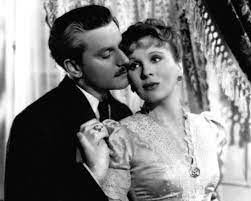
Anton Walbrook and Dyana Wyngard in GASLIGHT.

On July 8, Turner Classic Movies will play the less well-known 1940 version of Gaslight. In GASLIGHT, GASLIGHT and gaslighting in domestic violence, I wrote about this film, the more familiar 1944 version and gaslighting itself. This original 1940 version is also especially well-acted. Anton Walbrook is suave and evil as the hubbie and Dyana Wyngard is unforgettably haunting as the wife. Only 19 minutes in, we see his duplicity, manipulation and control. Frank Pettingell is very good as the detective, and the cast includes Robert Newton (Long John Silver in the 1950 Treasure Island). Cathleen Cordell plays the oversexed maid Nancy in a less nuanced performance than Angela Lansbury’s in 1944. This 1940 film version is reportedly the most faithful to the stage play source material.

KINDS OF KINDNESS: disgustingly indulgent

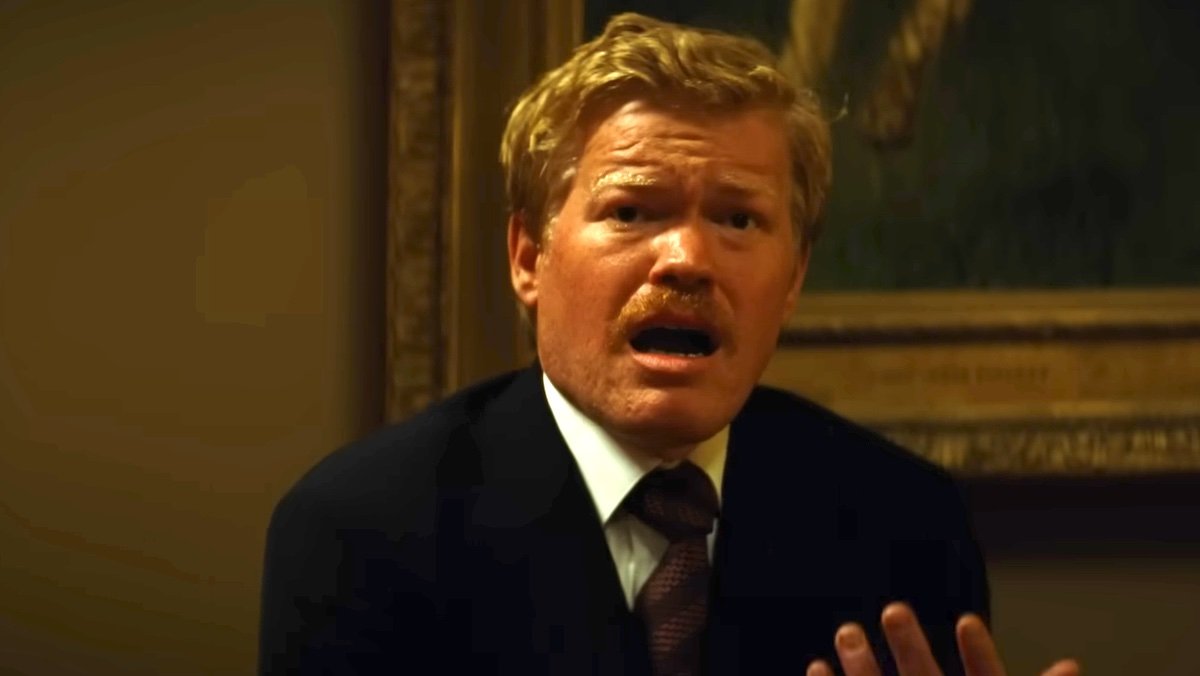
Photo caption: Jesse Plemons in KINDS OF KINDNESS. Courtesy of Searchlight Pictures.

Yorgos Lanthimos (Poor Things) probably enjoyed writing and directing his disgustingly self-indulgent Kinds of Kindness, but there’s no reason for an audience to waste three hours on it. There are three separate stories – equally bizarre fables in Kinds of Kindness. The same ensemble of actors play different roles in each of the three stories: Jesse Plemons, Emma Stone, Willem Dafoe, Margaret Qualley, Mamadou Athie, Hong Chau and Joe Alwyn.

I like absurdism in cinema (see this week’s Mother Couch), but to SOME end; Kinds of Kindness is just an unremitting sequence of outrageously transgressive behavior in weird circumstances. Lanthimos has been quoted that we was exploring relationships and memory, but all we get is a torrent of provocations. So much is being thrown at the screen, including cannibalism, that, at least, it’s not boring.

  • In the first story, Jesse Plemons plays a corporate lackey who owes everything to his nightmarishly micro-managing boss (Willem Dafoe), who decrees what he wears, what he eats and drinks, when he has sex with his wife. He’s finally baited into saying “no” to th boss for the first time in eleven years, as his life dissolves.
  • In the second, Plemons plays a cop devastated by the disappearance of his wife (Emma Stone, a marine biologist on a research mission. When she is miraculously rescued, he is convinced that it’s not really her, but some malevolent double. There are two extremely funny moments in this chapter – a stunningly ineffectual psychiatrist and a riotously inappropriate home movie. And, then, there’s cannibalism on the menu.
  • The final episode involves a cult with a weird fascination for water purity that has sent out scouts (Stone and Plemons) in search for a prophesied young woman who can raise the dead. Stone’s character is kicked out of the cult, and she goes to great lengths to get back in.

Jesse Plemons is exceptional in each of his three roles, and he’s by far the best element of Kinds of Kindness. There’s isn’t a bad performance in Kinds of Kindness, just the finest of screen actors trapped in a bad screenplay. Margaret Qualley continues to act unclothed in what seems to me to be a high proportion of her films.

Lanthimos co-wrote Kinds of Kindness with Efthimis Filippou, as he did with his most off-the-wall work – Dogtooth, which I loved, and The Lobster and The Killing of a Sacred Deer, both of which I hated. (Filippou also co-wrote Athina Rachel Tsangari’s hilarious skewering of male competitiveness, Chevalier (which I REALLY loved). )

Unfortunately, Kinds of Kindness is really just Lanthimos’ exercise in devising outrageous behavior for his characters, just because he can. We don’t need to watch.

MOTHER COUCH: obstreperous mom, surreal situation

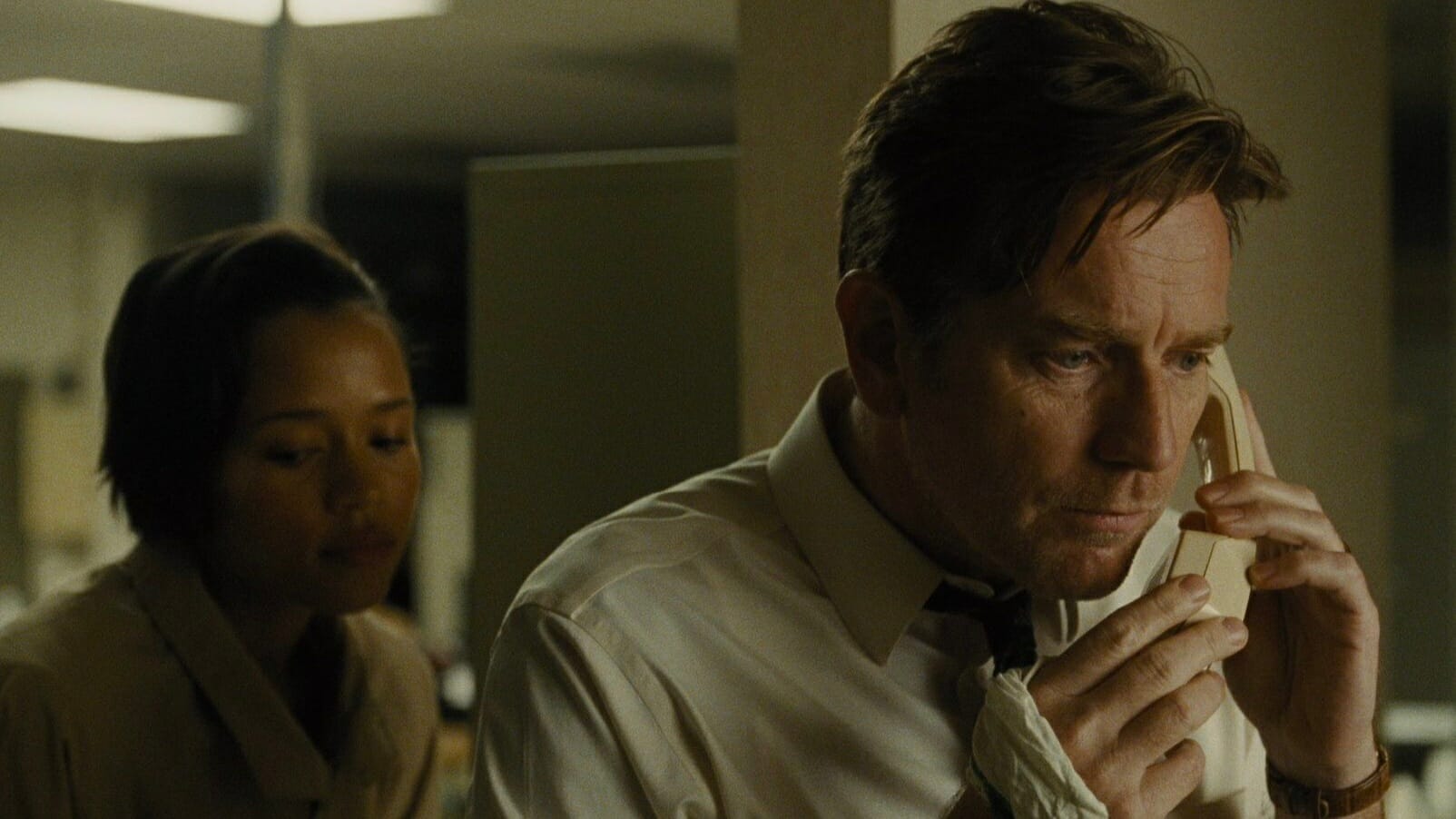
Ewan McGregor (right) in MOTHER COUCH. Courtesy of Film Movement.

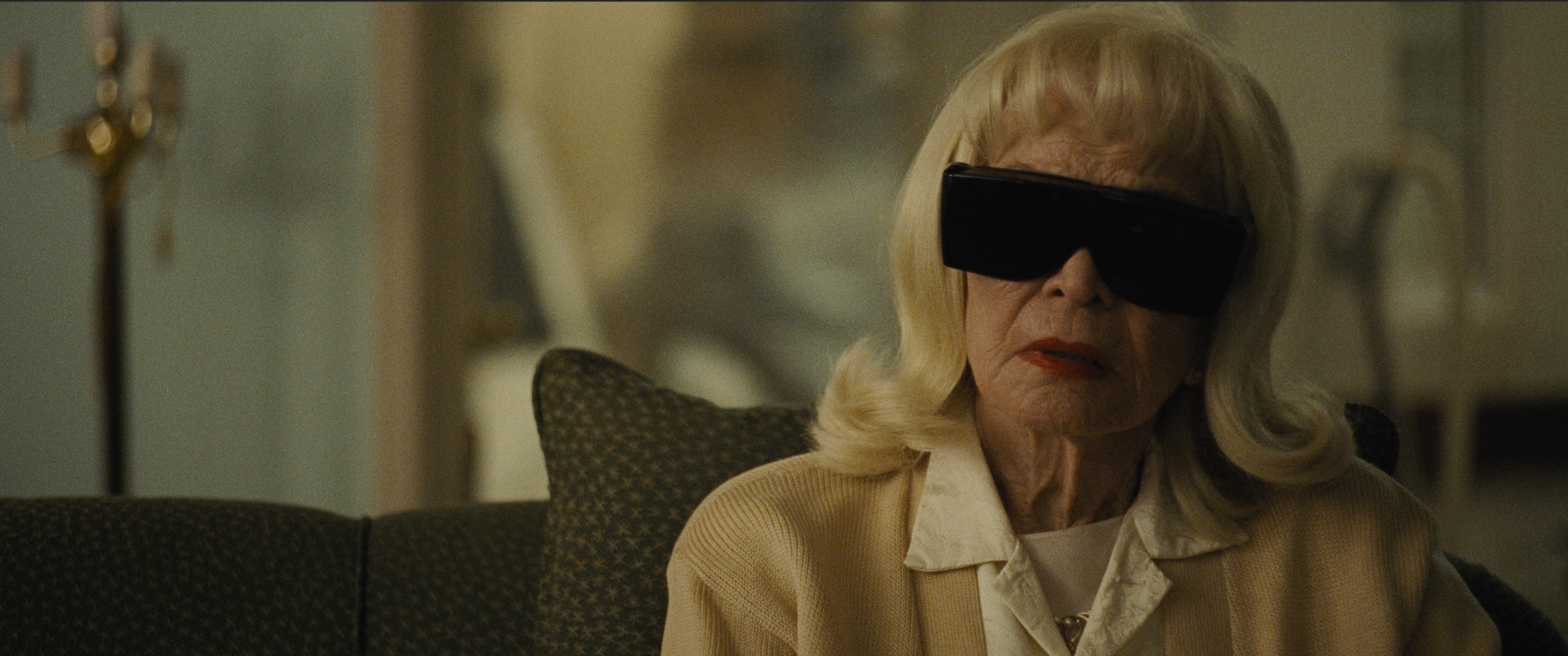
In the nightmarish fever dream Mother Couch, Ewan McGregor plays a man trapped in an absurd situation – his obstreperous, estranged mother (Ellen Burstyn) is refusing to leave a couch in a furniture store. His adult siblings (Rhys Ifans, Lara Flynn Boyle), whom he barely knows, are present but not supportive. The oddly singular furniture store is itself a bizarre construction, and this fable of parental emotional abandonment just keeps getting ever more surreal.

The now elderly mom has been a terrible mother – selfish, emotionally unconnected and not the least bit nurturing – and unashamed. Now that she needs care, her two oldest kids are prepared to giver a dose of her own medicine. But the youngest son (McGregor) feels obligated to take care of dear old mom, as hateful as she is.

Ellen Burstyn in MOTHER COUCH. Courtesy of Film Movement.

McGregor’s and Burstyn’s performances are very strong, and the depth of the cast is extraordinary: Taylor Russell, F. Murray Abraham and Lake Bell.  I particularly admired Rhys Ifans’ subtle performance as guy who doesn’t want to be as apathetic and irresponsible as his behavior would indicate. We get to enjoy Abraham as two characters – twin brothers with very disparate personalities.

Mother Couch is the first narrative feature for writer-director Niclas Larsson, an acclaimed director of car commercials, and it’s a remarkable calling card.

This is the most surreal film that I have seen in a long while. I screened Mother Couch for the SFFILM in April; it releases into primarily arthouse theaters on July 5.

THE BIKERIDERS: they ride, drink and fight, and yet we care

Photo caption. Jodie Comer and Austin Butler in THE BIKERIDERS. Courtesy of Focus Features.

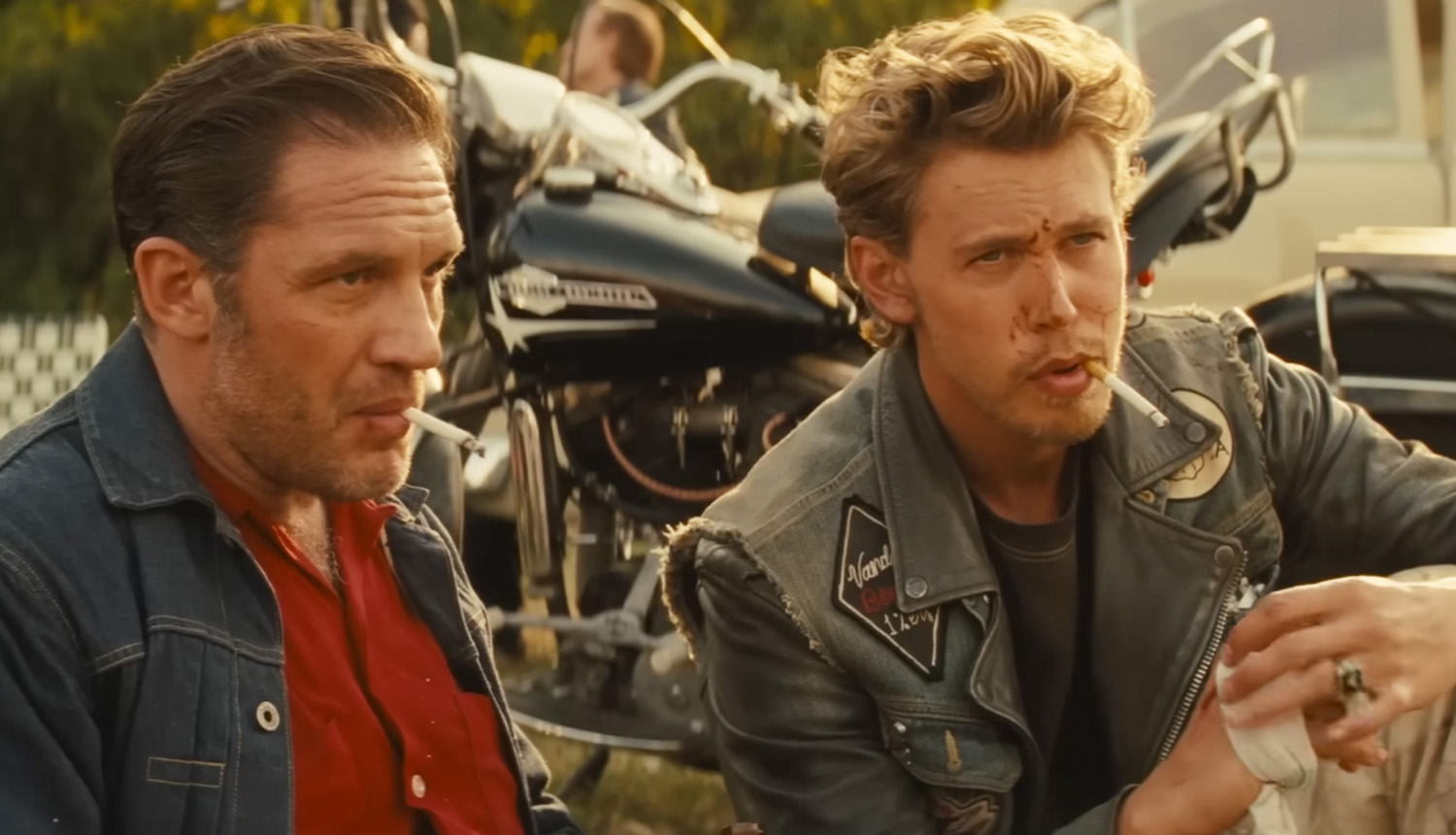
The Bikeriders is Jeff Nichols’ engrossing exploration of the culture of a 1960s Midwestern motorcycle gang and its (unfortunate) evolution. The source material is a book by a photographer who embedded himself with a real biker gang, and taped interviews as well as photographing them.

The gang was founded by Johnny (Tom Hardy), inspired by a TV rebroadcast of The Wild One, in which the biker played by Marlon Brando is asked what are he is rebelling against, and replies, Whadda you got? The bikers are a collection of misfits who share an ethos of breaking every available rule. Of course, none of these guys know what an ethos is, let alone intend to have one.

The most reckless biker is Benny (Austin Butler), whose girlfriend Kathy (Jodie Comer) is fiercely in love with him, but at most agnostic about the biker lifestyle. We see the story of the 1960s gang in flashback; Kathy, from the 1970s, narrates the story.

The Bikeriders bears out Nichol’s great gift as a storyteller – recognizing the humanity in his characters. I guarantee that I would, in real life, not care one whit about any of these characters. But, in The Bikeriders, I did care and was deeply invested in them.

Nichols’ previous films Shotgun Stories, Take Shelter, Mud and Loving, have each made my list of their year’s best movies. Those films, three fictional and one historical, tell the stories of redneck brothers betrayed by their father, a quasi-supernatural psychiatric decompensation, a backwoods coming of age and interracial love in the Jim Crow South. What all of them have in common with The Bikeriders are the authentic, compelling characters.

After all, what mostly happens in The Bikeriders is drinking, fighting and riding motorcycles – and the plot traces the natural consequences. Motorcycle riding is a relatively dangerous activity, as are binge drinking and fighting, so you won’t be surprised that not everyone comes out unscathed

Tom Hardy and Austin Butler in THE BIKERIDERS. Courtesy of Focus Features.

As Johnny, Tom Hardy is an amalgam of world weariness and alpha power. Hardy is known for his physicality, but his Johnny looks like more of an average guy than his characters often do; he doesn’t look scary at first glance, but no one wants to mess with him. Hardy is able to project internal steeliness.

The Wife noted that Austin Butler just looks like movie star. Indeed, when a barroom crowd parts so that Kathy can first glimpse Butler’s Benny at the end of a pool table in all his hunkiness, the scene evokes when John Garfield first sees Lana Turner in The Postman Always Rings Twice, or when Burt Lancaster first sees Claudia Cardinale in The Leopard. Benny is so devoid of emotion for most of the movie, the key to Butler’s performance is making us wonder whether there’s any empathy buried deep down in there someplace. Is Benny a one-dimensional sociopath or somebody able to repress his feelings?

Jodie Comer in THE BIKERIDERS. Courtesy of Focus Features.

The Bikeriders is a showcase for Jody Comer, whom I had most recently seen playing a medieval French noblewoman in The Last Duel, as the biker girlfriend brimming with ambivalence. The Bikeriders works because of Comer’s matter of fact and perceptive narration; Kathy is the only surviving character who is observant and articulate enough to tell the story. Comer’s performance definitely merits an Oscar nomination.

As Kathy, Comer, who grew up in and lives in Liverpool, sounds like a lifetime Chicagoan; it’s the best American regional accent in the movies since Frances McDormand’s Marge Gunderson in Fargo.

Nichols essentially discovered and launched the career of Michael Shannon in Shotgun Stories; Shannon has acted in all of Nichol’s films except Loving. Shannon is again wonderful here in a small, juicy role. Emory Cohen and Norman Reedus sparkle as gang members Cockroach and Funny Sonny, respectively.

Nichol’s character-driven slice of biker life is a grand movie, and Jodie Comer elevates it even more.

Movies to See Right Now

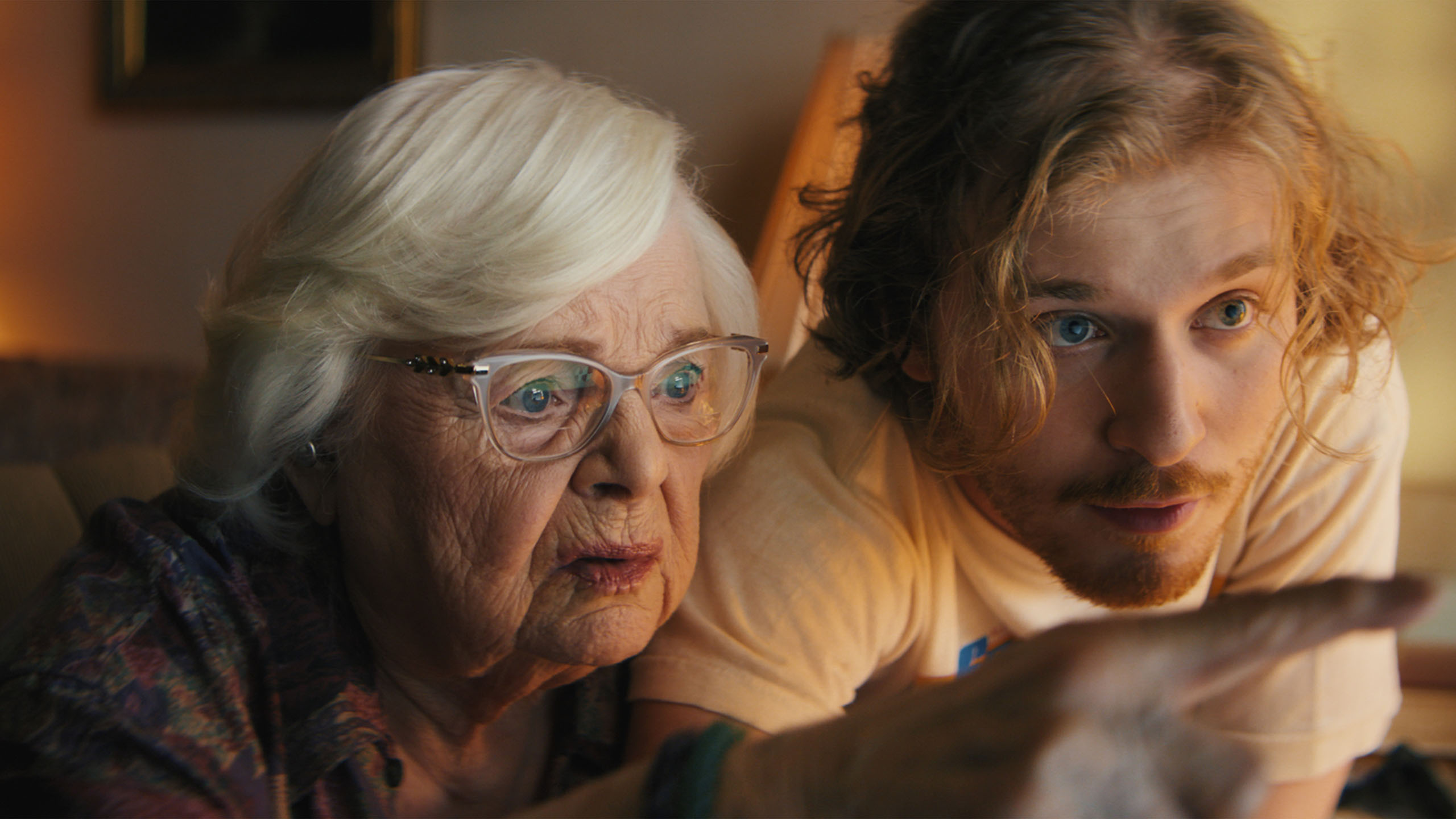
Photo caption: June Squibb and Fred Hechinger in THELMA. Courtesy of Magnolia Pictures | photo by David Bolen.

This week on The Movie Gourmet – a new reviews of the important documentary The Grab, the family drama Ghostlight and the clichéd western The Dead Don’t Hurt, which is not always plausible or understandable. Ghostlight joins Hit Man and Thelma as the Must See movies.

CURRENT MOVIES

  • Ghostlight: a family saves itself, in iambic pentameter. In theaters.
  • Hit Man: who knew self-invention could be so fun? Netflix.
  • Thelma: too proud to be taken. In theaters.
  • Challengers: three people and their desire. Amazon, AppleTV, YouTube, Fandango, but still expensive.
  • La Chimera: six genres for the price of one. Amazon, AppleTV, YouTube.
  • The Grab: important, engrossing and sobering. Amazon, AppleTV, YouTube.
  • Run Lola Run: still sprinting after 25 years. In theaters and Amazon, AppleTV and YouTube.
  • Banel and Adama: we want to be together and left alone. In arthouse theaters.
  • Relative: a loving, but insistent investigation. Amazon (included with prime), AppleTV, Vudu, YouTube. 
  • Geoff McFetridge: Drawing a Life: creativity with self-indulgence. In NYC and LA theaters now and digital on July 3.
  • Waiting for Dali: here’s the cuisine; where’s the surrealist? AppleTV, YouTube.
  • The Origin of Evil: the angry, the unhinged and the evil. Amazon, AppleTV.
  • Wicked Little Letters: a sparkling Jessie Buckley and an interesting take on repression. Amazon, AppleTV, YouTube.
  • How to Have Sex: searing and authentic. MUBI.
  • Wildcat: often admirable, rarely fun. In theaters.
  • Civil War: a most cautionary tale. Amazon, AppleTV, YouTube, Fandango, but still expensive.
  • Ennio: the good the bad and the transcendent. Amazon, AppleTV, YouTube.
  • Chasing Chasing Amy: origins of love, fictional and otherwise. Waiting for release.
  • The Woman Who Ran: is the payoff worth the slow burn? AppleTV, YouTube.
  • The Dead Don’t Hurt: such a bad movie. In theaters.

WATCH AT HOME

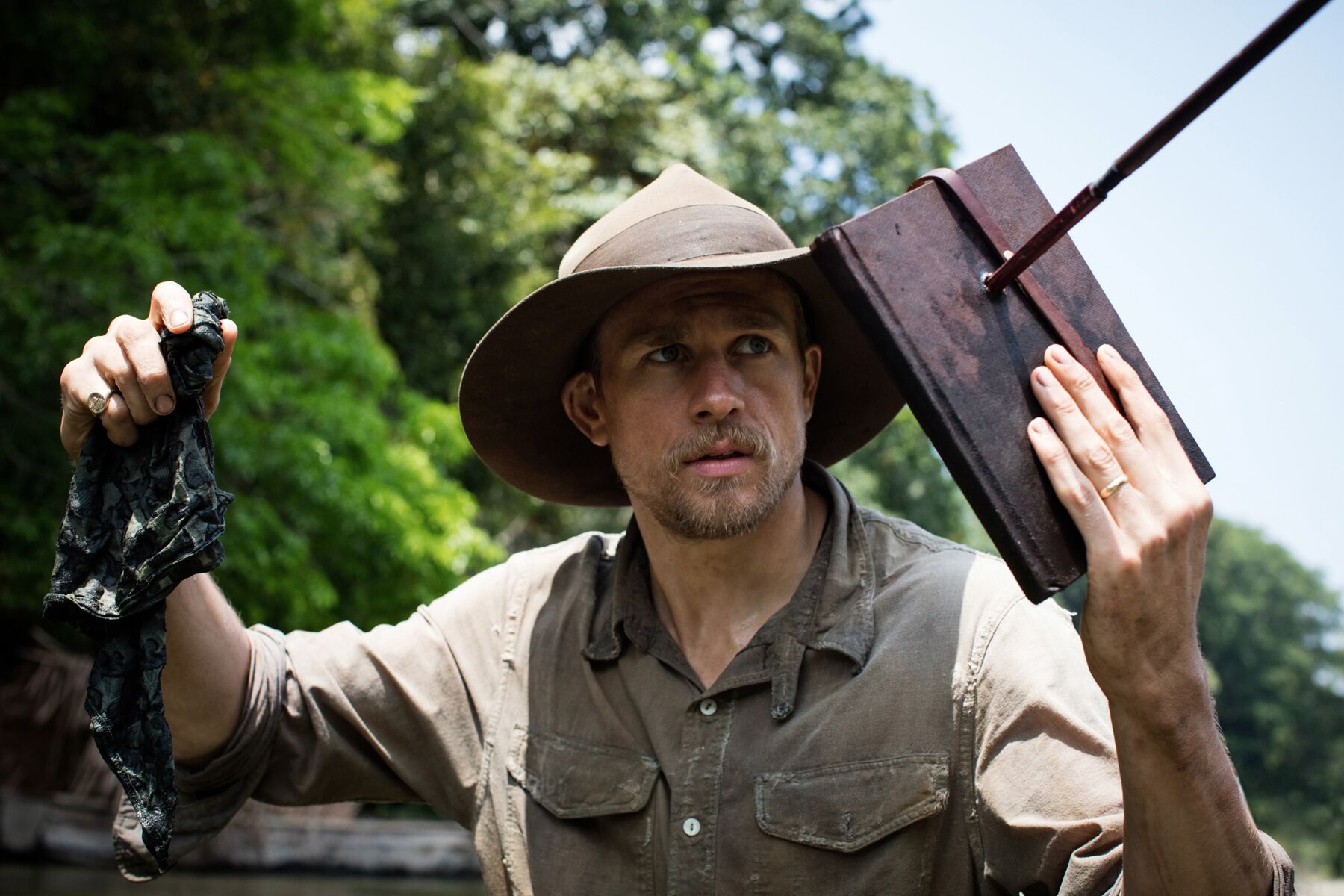
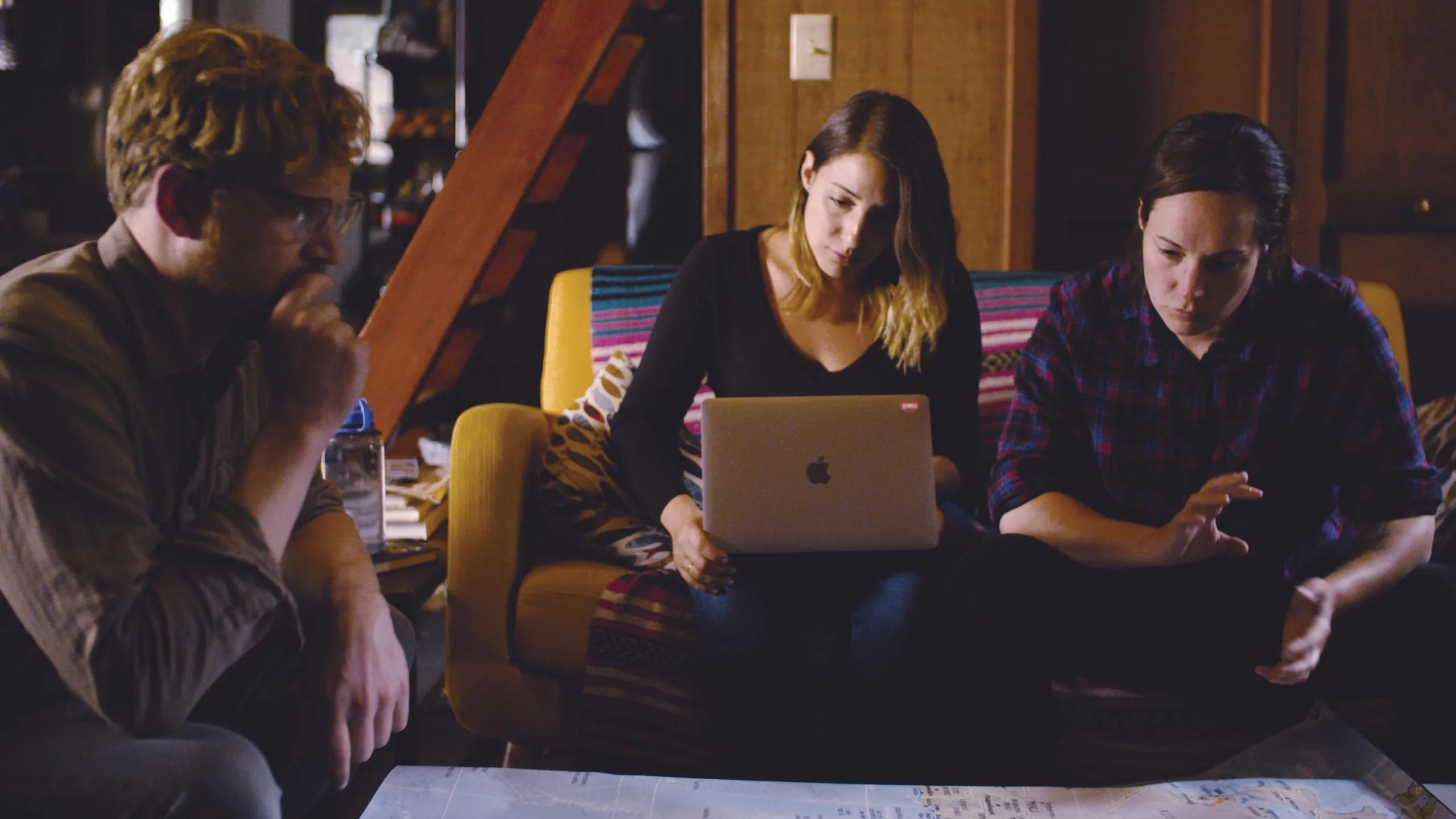
Charlie Hunnam in THE LOST CITY OF Z photo courtesy of SFFILM

The most eclectic watch-at-home recommendations you’ll find ANYWHERE:

ON TV

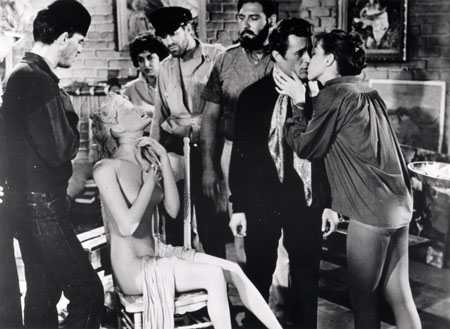
Just for fun – on July 3, Turner Classic Movies will air A Bucket of Blood, a campy minor horror movie much more interesting as a window in beatnik culture. By 1959, beatnik consciousness was ripe for exploitation by low-budget movie wizard Roger Corman, who produced and directed A Bucket of Blood.  The story is about a loser who covers a dead cat with plaster of Paris and is acclaimed as a talented sculptor.  He embraces the hoax and starts hunting victims to cast into human “sculptures”; hence the horror and the bucket of blood.

“Beatnik” conjures up 20-somethings adorned in black turtleneck sweaters (and black leotards for women), berets, goatees and dark glasses; they’re in coffee houses snapping their fingers to applaud poetry and jazz.  And they’re conversing in hip cat patter.  Watch A Bucket of Blood and you’ll get a dose.

A Bucket of Blood stars Corman favorite Dick Miller, the subject of That Guy Dick Miller; ubiquitous game show host Burt Convy, as a young actor, played Lou. Can you dig it?

GHOSTLIGHT: a family saves itself, in iambic pentameter

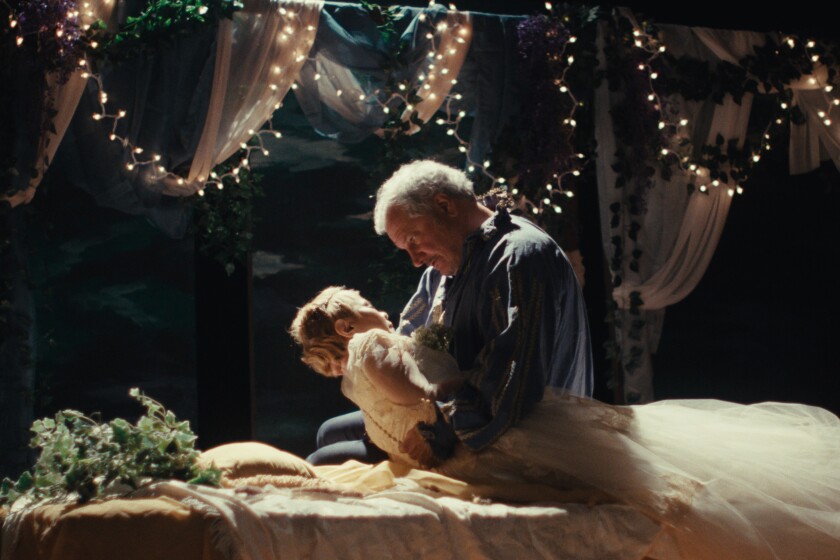
Photo caption: Keith Kupferer and Katherine Mallen Kupferer in GHOSTLIGHT. Courtesy of IFC Films.

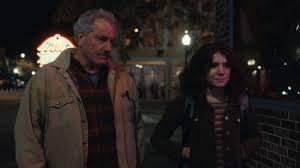
In the endearing family drama Ghostlight, we meet Dan (Keith Kupferer), a middle-aged hardhat who is at the end of his rope. Dan seems to be a gentle and profoundly decent guy, but he is stressed to the point that he’s ready to explode in rage, and he’s sinking out of his marriage to Sharon (Tara Mullen). Their precocious and spirited daughter Daisy is insolent even by teen standards and out of control.

Eventually, we learn that the family has suffered a loss. Sharon can’t grieve because it’s taking all of her energy to hold the family together with Dan refusing to acknowledge anyone’s feelings and Daisy’s behavior blowing up. Dan describes himself as Old School , which, in his case, means he doesn’t acknowledge anyone’s feelings, especially his own, he doesn’t believe in therapy or understand art. This is a family processing (or not processing) grief at the pace of its slowest, most recalcitrant member.

Dan has a chance meeting with Rita (Dolly De Leon, who stole Triangle of Sorrow), who inveigles him into a tiny community theater’s table reading of Romeo and Juliet. Dan, of course, is ill at ease among the touchy feely theater types. Dan has heard of Romeo and Juliet, but doesn’t know how it ends, yet it strikes a chord with him, and he comes back for more. Daisy, who can quote passages from the play, wisecracks, “Here’s a hint – it’s a tragedy“.

Dolly De Leon and Keith Kupferer in GHOSTLIGHT. Courtesy of IFC Films.

What happens next is that Dan takes the family on a journey that is funny, heartrending, and ultimately redemptive. There’s never a false moment.

The acting in Ghostlight is superbly authentic. The family members are played by an actual family. Teen actor Katherine Mallen Kupferer is the daughter of actor Keith Kupferer and theater director and actor Tara Mallen.

Here’s another real family aspect of Ghostlight – it’s the first feature from director and co-writer Kelly O’Sullivan, who just had a child with co-director Alex Thompson.

Ghostlight won the audience award at SXSW. This little movie is one of the best films of the year and a Must See.

THE DEAD DON’T HURT: such a bad movie

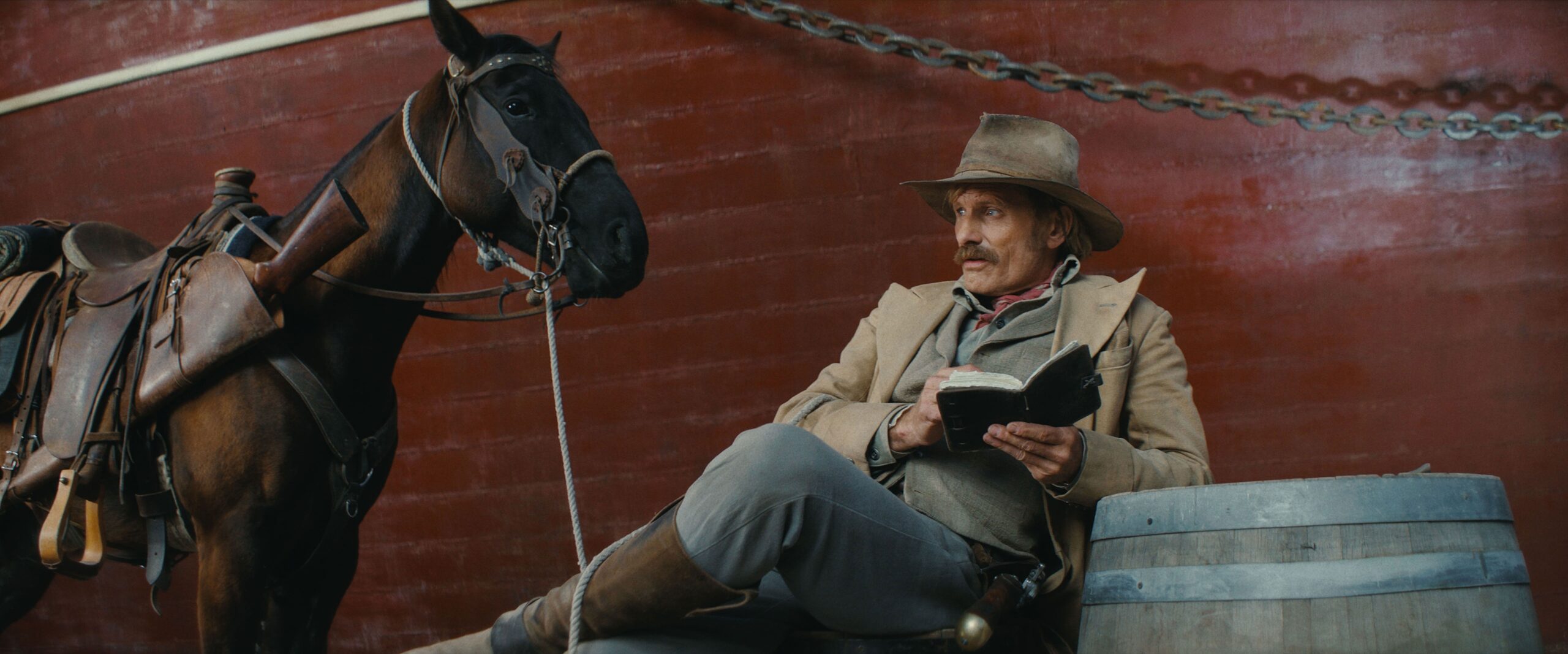
Photo caption: Viggo Mortensen in THE DEAD DON’T HUNT. Courtesy of Shout! Studios;  photo credit Marcel-Zyskind38.

I sure do like me a western and I admire Viggo Mortensen, so I was very disappointed in The Dead Don’t Hurt, which Mortensen wrote, directed and stars in. Mortensen plays a guy who finds a woman (Vicky Krieps) in San Francisco, takes her to his Nevada homestead, and immediately heads off to the Civil War and must deal with the consequences when he returns. Cliches ensue, culminating in a lousy movie.

The central problem with The Dead Don’t Hurt is that Mortensen, as screenwriter, developed a story where the behavior of the two main characters is not always plausible or understandable and the other characters are all one-dimensional. Consequently, we don’t care about the characters; I will allow that I did care about the villain, a psychopathic villain, whom I wanted to see dead, but he was perhaps the most one-dimensional of the lot. I take notes while I watch movies, and, at one point, I scribbled this is Viggo’s movie; this is Viggo’s fault.

This screenplay was a terrible waste of Garret Dillahunt, Danny Huston and W. Earl Brown, some of our most gifted and colorful character actors, who were assigned to play roles which are essentially cardboard cutouts.

Only Ray McKinnon (Reverend H. W. Smith in Deadwood) gets enough singularity to work with, and he sparkles as a perversely random-behaving judge. (The other good thing about The Dead Don’t Hurt was the music in the closing credits, which was composed by Mortensen.)

Much of the movie rests on Vicky Krieps, whose screen appeal has eluded me. The Luxembourgian actress Krieps received much critical buzz for Phantom Thread, but I wrote then that I wouldn’t cross the street to see her next movie.

I usually watch movies alone, unless I’m with The Wife, and she and I have pre-arranged silent signals when one or both of us want to walk out of a movie. I saw The Dead Don’t Hunt with my friend Keith, and it occurred to me, about 30 minutes in, that we don’t have that kind of signal, and I couldn’t figure out how to see if he wanted to leave, too, without disturbing other patrons.

Keith and I are gonna have to develop a signal; we have been going to movies together for decades, and we’ve sat all the way through bad movies like Bite the Bullet and Le Quattro Volte, but I’m now too old to waste an hour of my remaining lifetime.

[SPOILERS FOLLOW] I usually can write a full review without a spoiler, but I just need to explain elements of cinematic misfire that entirely distracted me from the story. It begins with the rape revenge, which has become one of the laziest of plot devices. The psychopathic bully murders for sport and immediately starts leering at the Krieps character, telegraphing the most obvious movie rape since Billy Jack. She is impregnated in the rape and bears a son. Now, the Civil War was four years long, and human gestation is nine months; this means that when Viggo returns to find his wife with a son, the kid should be three years old. But the kid in the movie is five at the youngest, and more likely six. He doesn’t look or act like a three year old, speaks English, French and a little Spanish, and is learning to write numbers. He’s a six-year-old who is supposed to be three and It’s VERY distracting.

The one novelty in The Dead Don’t Hunt, the one thing I hadn’t seen in a movie before, was a death from syphilis.

When Viggo’s character despondently throws his military medal away, I was wishing he had tossed the script, too.

THE GRAB: important, engrossing and sobering

A scene from Gabriela Cowperthwaite’s THE GRAB. Courtesy of Magnolia Pictures.

The exposé The Grab is an important documentary at the level of An Inconvenient TruthThe Grab documents and clearly explains the global grab for food and water resources by corporations and nations. Think about water as a matter of national security. Imagine an OPEC for food.

The grab to control agricultural land and water rights is happening in secret – but in plain sight. It’s difficult enough to impose any accountable on actors of this scale – global mega-corporations and even nations – so The Grab’s bringing some transparency is essential.

Documentarian Gabriela Cowperthwaite is known for Blackfish, an exposé of Orca handling at SeaWorld and an arthouse hit in 2013. Cowperthwaite has also directed a narrative space station thriller, I.S.S., set for release in June 2023.

Cowperthwaite describes The Grab as a “6-year investigative deep dive“. Impressively researched, The Grab is engrossing and sobering.

I screened The Grab for the 2023 SLO Film Fest. It’s now available to stream from Amazon, AppleTV and YouTube.

Movies to See Right Now

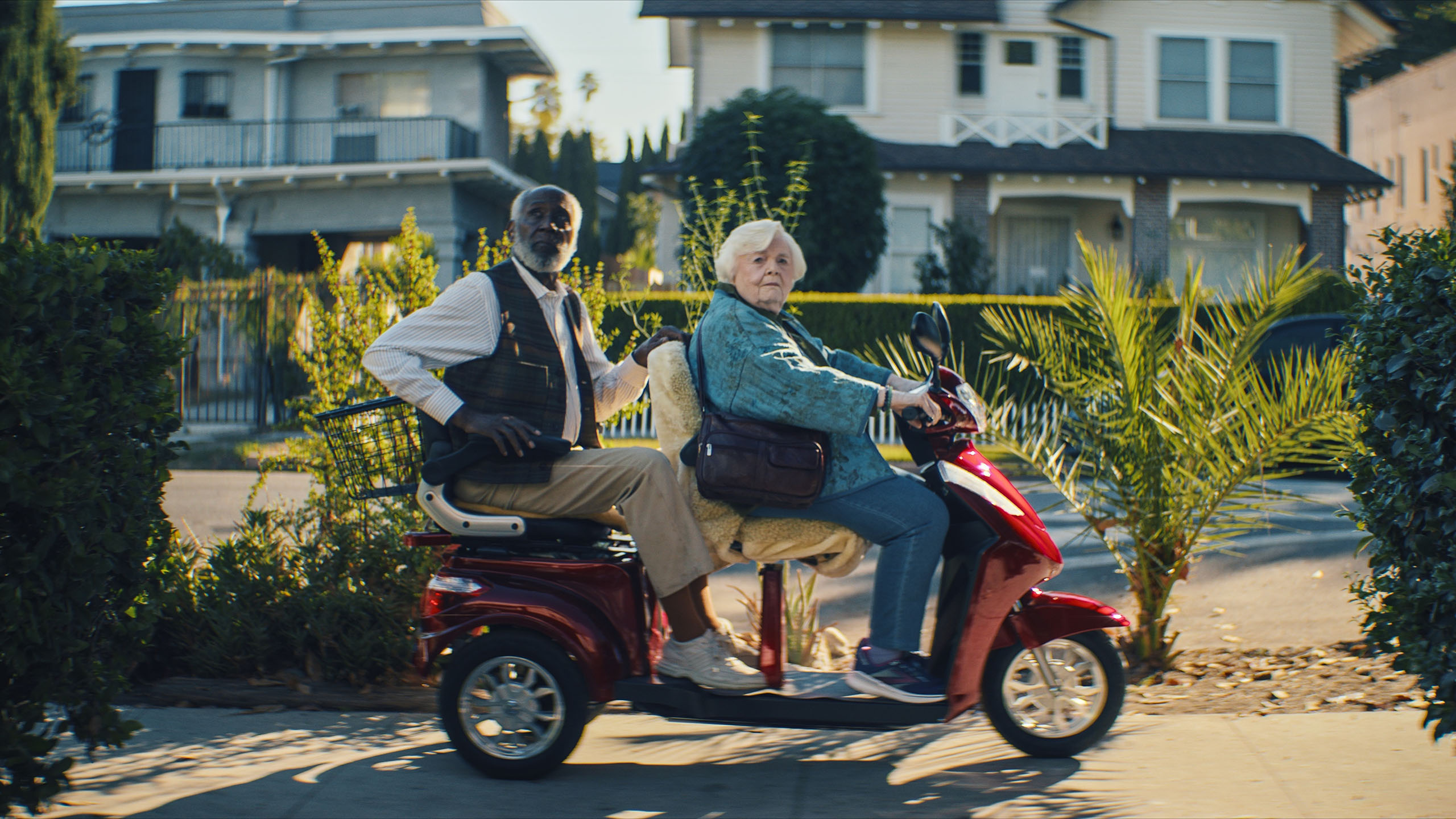
Richard Roundtree and June Squibb in THELMA. Courtesy of Magnolia Pictures | photo by David Bolen..

This week on The Movie Gourmet – new reviews of the audience-pleasing comedy Thelma, the good-hearted Catalan farce Waiting for Dali, the thoughtful artist biodoc Geoff McFetridge: Drawing a Life, the unpretentious 1976 ground-breaker Car Wash and 1964’s The Strangler, which is pretty perverse even for a serial killer movie. Plus a preview of Frameline, the oldest and longest-running LGBTQ+ film festival in the world, now underway in the Bay Area.

Wow – in just two weeks, the Movie Gourmet has produced reviews of six new 2024 movies and three revivals, along with previews of two film festivals. Whew.

REMEMBRANCES

Donald Sutherland became a famous character actor playing quirky misfits in The Dirty Dozen and Kelly’s Heroes, and became a star as an iconic subversive in M*A*S*H*. His performances in Klute and Invasion of the Body Snatchers are indelible. Sutherland finished with 199 IMDb credits, including the Hunger Games franchise, and had three films released in 2023.

Anouk Aimée starred in some of the most iconic European art films of the 1960s: Fellini’s 8 1/2 and La Dolce Vita and Lelouch’s A Man and a Woman.

Tony Lo Bianco first made his name in a perverse movie that became a cult film, The Honeymoon Killers. He went on to act in the 1970s classics The French Connection, The Seven Ups, Jesus of Nazareth, and lots and lots of TV work. I especially admire his performance in John Sayles’ City of Hope.

CURRENT MOVIES

  • Hit Man: who knew self-invention could be so fun? Netflix.
  • Thelma: too proud to be taken. In theaters.
  • Challengers: three people and their desire. Amazon, AppleTV, YouTube, Fandango, but still expensive.
  • La Chimera: six genres for the price of one. Amazon, AppleTV, YouTube.
  • Run Lola Run: still sprinting after 25 years. In theaters and Amazon, AppleTV and YouTube.
  • Banel and Adama: we want to be together and left alone. In arthouse theaters.
  • Relative: a loving, but insistent investigation. Amazon (included with prime), AppleTV, Vudu, YouTube. 
  • Geoff McFetridge: Drawing a Life: creativity with self-indulgence. In NYC and LA theaters now and digital on July 3.
  • Waiting for Dali: here’s the cuisine; where’s the surrealist? AppleTV, YouTube.
  • The Origin of Evil: the angry, the unhinged and the evil. Amazon, AppleTV.
  • Wicked Little Letters: a sparkling Jessie Buckley and an interesting take on repression. Amazon, AppleTV, YouTube.
  • How to Have Sex: searing and authentic. MUBI.
  • Wildcat: often admirable, rarely fun. In theaters.
  • Civil War: a most cautionary tale. Amazon, AppleTV, YouTube, Fandango, but still expensive.
  • Ennio: the good the bad and the transcendent. Amazon, AppleTV, YouTube.
  • Chasing Chasing Amy: origins of love, fictional and otherwise. Waiting for release.
  • The Woman Who Ran: is the payoff worth the slow burn? AppleTV, YouTube.

WATCH AT HOME

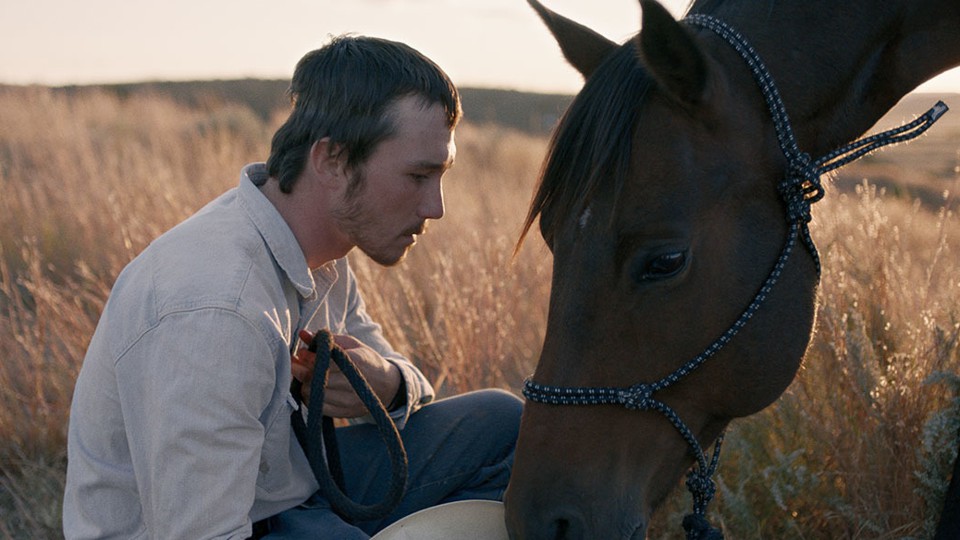
Brady Jandreau in THE RIDER

The most eclectic watch-at-home recommendations you’ll find ANYWHERE:

ON TV

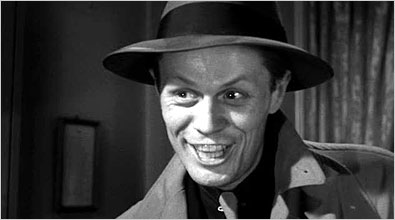
Richard Widmark in THE KISS OF DEATH

On June 25, Turner Classic Movies airs the classic film noir Kiss of Death. Victor Mature plays an ex-con with horrific luck – he gets caught on a heist and takes the rap for his cohorts; this leads to a long sentence and a double-cross with impacts to his wife and kids. Seeking to see his kids again, he is released back on the streets to set up the double-crossers for the DA. Mature, too often dismissed for his campy sword-and-sandal movies, did his finest work in film noir – especially I Wake Up Screaming, Kiss of Death and The Long Haul. But the flashiest performance in Kiss of Death is Richard Widmark’s film debut as psychopath Tommy Udo, who chortles maniacally as he pushes an old lady in a wheelchair down the stairs to her demise; Widmark went on to play indelible neurotics and sleazes in noir for the next three years (Roadhouse, Panic in the Streets, Night and the City, No Way Out, Pickup on South Street) before becoming an A-lister.