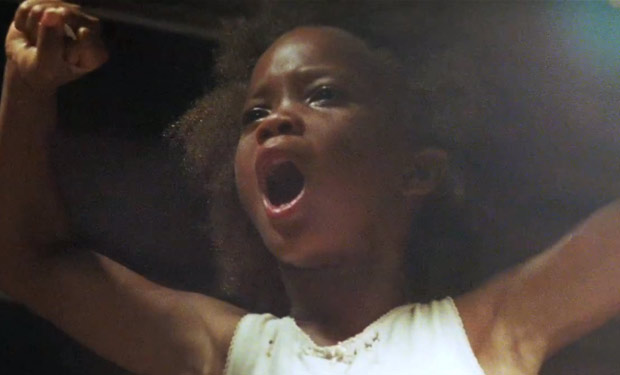
Mainly, I’m just so glad that Beasts of the Southern Wild was nominated for Best Picture and that its star Quvenzhane Wallis (now nine years old) was nominated for Best Actress. Both are very deserving of nominations, and it would have been easy for the Academy to overlook such a small indie film and its first-time director and actress.
For the most part, the Academy avoided leaving out the obviously deserving and rewarding the ridiculously underserving – very few big brainfarts this year. I am completely baffled that Ben Affleck of Argo and Kathryn Bigelow ofZero Dark Thirty did not receive Best Director nods; (I would have passed over David O. Russell and Michael Haneke). But that’s just about my only quibble.
Eight of the nine nominees for Best Picture are currently playing at your local theaters (although Amour is harder to find until next weekend). Beasts of the Southern Wild is available on DVD from Netflix and Redbox and streams from a host of VOD services.
You can also find Flight at the theaters and watch Oscar-nominated Denzel Washington. The Sessions, with Oscar favorite Helen Hunt, is still lurking in some second run houses. Among the nominated documentaries, Invisible War is available on Netflix Instant and some VOD services, while Searching for Sugar Man is available from several VOD services (although pricey).
The enthralling Zero Dark Thirty tells the story of the frustrating, wearying and dangerous ten-year man hunt for Bin Laden – it’s a Must See. The intelligent dramaRust and Bone is the singular tale of a complicated woman and an uncomplicated man. Matt Damon’s stellar performance leads a fine cast in Promised Land, an engaging (until the corny ending) drama about exploitation of natural gas in rural America. Not Fade Away is a pleasant enough, but unremarkable 60s coming of age story by The Sopranos creator David Chase and rocker Steven Van Zandt.
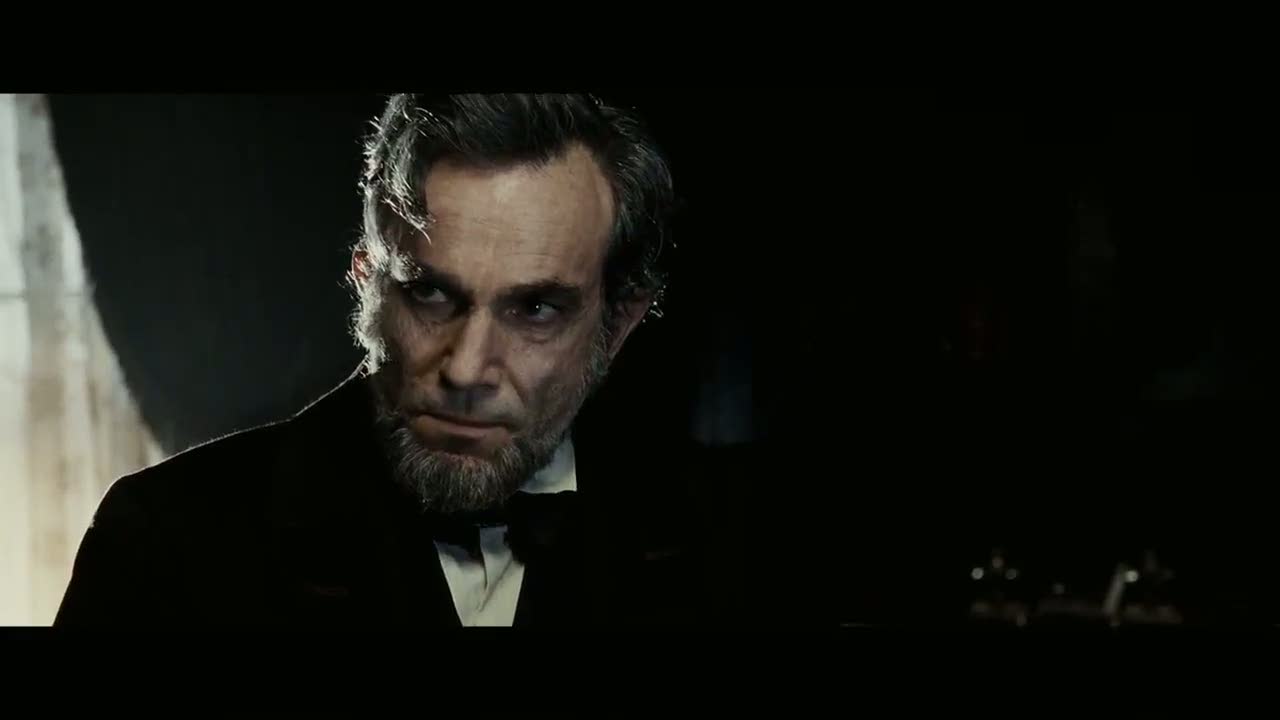
Like Zero Dark Thirty, Argo, Lincoln and Silver Linings Playbook are on my list of Best Movies of 2012. In Lincoln, Steven Spielberg and Daniel Day-Lewis push aside the marble statue and bring to life Abraham Lincoln the man. Argo is Ben Affleck’s brilliant thriller based on a true story from the Iran Hostage Crisis. The rewarding dramedy Silver Linings Playbook has a strong story, topicality and humor, but it’s worth seeing just for Jennifer Lawrence’s performance.
If, like me, you worship the spaghetti Western, the Quentin Tarantino blockbuster Django Unchained is gloriously pedal-to-the-metal, splattering exploitation. Also don’t overlook the solid thriller Deadfall that is flying under the radar this holiday season.
Ang Lee’s visually stunning fable Life of Pi is an enthralling commentary on story-telling. Denzel Washington stars in Flight, a thriller about the miraculous crash landing of an airliner and the even more dangerous battle against alcoholism. Skyfall updates the James Bond franchise with thrilling action and a more shopworn 007 from Daniel Craig.
Pass on the lavish but stupefying all star Les Miserables, with its multiple endings, each more miserable than the last. The FDR movie Hyde Park on Hudson is a bore. The disaster movie The Impossible is only for audiences that enjoy watching suffering adults and children in peril.
My pick for the best movie of 2012, The Kid with a Bike, is playing on the Sundance Channel three times on January 16-17. And next week Turner Classic Movies will be broadcasting the classic Western A Man Called Horse, Jack Nicholson’s most copmplex performance in Five Easy Pieces and a real curiosity, the 1933 anti-war movie Men Must Fight which predicts World War II with unsettling accuracy.
Promised Land is an engaging drama about the exploitation of natural gas in rural America – until the corny ending. Matt Damon and Frances McDormand play a team of corporate road warriors who persuade farmers to lease their land for the fracking. Based on the experience of his own hometown, the Damon character believes that the American rural way of life has become an unsustainable myth, that small farming communities are doomed without the cash from natural gas. He believes that he is suckering them into their own salvation.
It’s an “issue movie”of the kind that I often dislike. My day job is in public policy, and I see more nuance and tradeoffs than usually make it into these movies, which are often too “black hat/white hat” for my taste. Promised Land doesn’t fall into that trap because Damon’s character and because the locals are not uniformly saintly. Most of the struggling farmers can’t sign their leases fast enough. Ken Strunk plays an elected official right out of Mark Twain’s Hadleyburg. Lucas Black plays a guy who is a puddle of bad choices waiting to be made. Scoot McNairy (Argo) plays an inarticulate man of firm principles; he’s right, but he doesn’t know why.
Director Gus Van Sant (Good Will Hunting, Elephant, Paranoid Park, Milk) creates a rural community that is completely authentic without using clichés. Damon is outstanding. McDormand, John Krasinski, a frisky Rosemarie DeWitt (Rachel Getting Married, Your Sister’s Sister) and Hal Holbrook are all reliably excellent.
Unfortunately, after navigating through the conflicting values, difficult tradeoffs and shades of gray that are found in real life, the movie takes the easy way out – an improbable ending that is happy for all. Too bad – a little cynicism would have gone a long way here.
Not Fade Away is a pleasant enough coming of age story by The Sopranos creator David Chase and rocker Steven Van Zandt. It centers around the life of a 16-year-old’s garage band from 1963 through 1966. As you would expect from Chase, the movie absolutely nails the look and feel of each year of the dynamic period – a treat for Boomers. The protagonist’s generation gap with his father (James Gandolfini) climaxes in a poignant encounter in which the dad reveals a secret to his son – the only way he can find to forge a bond. Van Zandt wrote songs for the band, along with a hilarious advertising jingle for a medical supply company. But, other than that, it’s a fairly unremarkable film.
Rust and Bone is an intelligent drama about a complicated woman and an uncomplicated man. She (Marion Cotillard) takes pride and enjoyment from her high profile job and lives with a boyfriend, but she is dissatisfied. A shocking and disabling accident turns her dissatisfaction into despair.
He (Matthias Schoenaerts of Bullhead) is amiable, carnal and matter-of-fact. He wouldn’t recognize a plan or a deep thought if it smacked him on the temple. For him, stress can lead to violent outbursts, which are especially scary because he is a downscale prizefighter.
The two people form a bond, and therein lies the drama. They engage each other in differing paces at different depths, often doing the same thing for separate reasons.
Director Jacques Audiard (A Prophet) makes excellent choices throughout, especially with very effective moments of silence and near-silence, which work to emphasize dramatic events more effectively than would swelling strings.
There are also non-stock secondary characters. One is the boxer’s shady friend whose eyes never meet another’s gaze, yet dart about, never missing anything. Another is the boxer’s sister who stands for a French working class struggling with the increasingly multinational economy.
Key plot plots may sound corny in isolation, but everything in this movie works well together. It’s an intelligent, solid and worthwhile drama.
A controversy has erupted relating to Zero Dark Thirty and its depiction of torture used by American intelligence forces in the War On Terror. Critics of the movie assert that 1) the movie incorrectly shows that interrogations under torture helped track down Bin Laden and/or 2) the movie favors this application of torture. Astoundingly, much of the criticism came before the release of the film and from people who had not seen it.
It is historical fact that, during the George W. Bush administration, American intelligence forces used “harsh interrogation techniques” on detainees, some of which (including waterboarding) constitute torture. It is also well-established that torture is not an effective means of interrogation. You can check with last month’s report by the Senate Intelligence committee (reported here) and these intelligence experts interviewed on NPR (and also here).
In my view, the torture used in these interrogations violated US and international law. I also take the word of interrogation experts that torture is not effective because it does not produce reliable intelligence. To end the torture, subjects will eventually say anything that they think that the interrogator wants to hear – whether true or timely or useful or not. These experts say that more useful information is gained – without torture – by using skilled non-coercive interrogation techniques.
[SPOILER ALERT – the next few paragraphs contain key plot points. If you haven’t seen the movie, you can skip to the last paragraph for my conclusion.]
So does Zero Dark Thirty incorrectly show that interrogations under torture helped track down Bin Laden? The first hour of Zero Dark Thirty depicts the first years of the War On Terror, including several instances of interrogation with torture (which undeniably happened). In the movie, one of the pieces of information secured through such an interrogation is a nickname for one of Bin Laden’s couriers – but this tidbit does not pay off. But years go by without anyone capitalizing (or even verifying this lead). Most of the intelligence agents even believe information from another detainee that the courier is dead. In fact, years elapse and new leads come and go after the torture of detainees has ended.
Only in the ninth year of the man hunt, do the intelligence agents begin to close in by combining an overlooked tip on the courier’s family name, wiretapping the courier’s mother’s home phone, triangulating his cell phone calls (my favorite scenes in Zero Dark Thirty), putting a tail on the courier and satellite and drone surveillance of the compound. Even with this, only the Jessica Chastain character rates more than a 60% probability on Bin Laden’s location. All of this happens long after Zero Dark Thirty has shown the last of the torture – and after showing presidential candidate Obama pledging to end the practice when elected President.
Now, of course, non-critical thinkers in the audience may see torture at the beginning and the successful raid on Bin Laden at the end, and incorrectly connect the dots but, in my opinion the filmmakers cannot be held responsible for the lazy thinkers in the audience. I conclude that Zero Dark Thirty does not show that the use of torture helped to locate Bin Laden.
And does Zero Dark Thirty favor the use of torture? The torture scenes are realistic, and they are uncomfortable for the audience; they are not gratuitous. In contrast, in the Dirty Harry movies, the audience roots for Harry when he shoots the bad guy in the kneecap to get information. In Zero Dark Thirty, the filmmakers do not frame the scenes so the audience gets a kick out of the torture – even though the folks being tortured are the most despicable people on earth. I have no problem with the filmmakers showing the use of torture – it did happen and it illustrates that, in the 9/11 aftermath, the American government would go to any means to get the terrorists. Just because the filmmakers show stomach-turning torture does not mean that they endorse it. I conclude that Zero Dark Thirty does not favor the use of torture.
Finally, I am very disappointed that many commentators and political leaders that I generally agree with jumped into the fray before they saw Zero Dark Thirty. These are the same folks who, along with me, would not hesitate to ridicule the criticism of a film (e.g., The Last Temptation of Christ) by right wingers who hadn’t seen it. In this case, their criticism of Zero Dark Thirty was both unfounded and unfair.
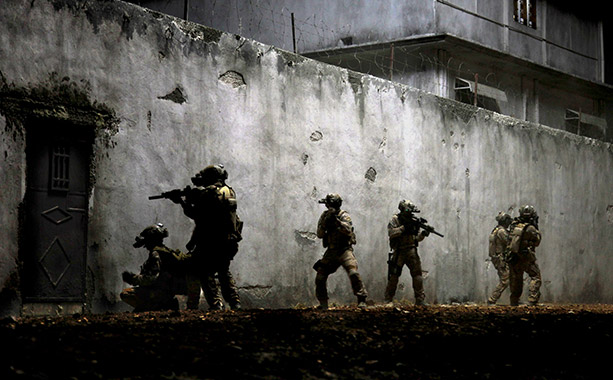
Zero Dark Thirty is director Kathryn Bigelow’s inspired telling of the hunt for Bin Laden. Bigelow, who won the directorial Oscar for The Hurt Locker, once again demonstrates an uncommon ability to enthrall. She chose to tell the story of the frustrating, wearying and dangerous ten-year man hunt, not just the exciting raid in Abbottabad.
We should all be grateful that this movie was made with Bigelow’s directorial choices. She is content to invest half of her screen time on false leads and wasted efforts – and makes them utterly gripping. She neither lingers on the violence nor shies away from it. In a scene where a CIA operative is looking for a man talking on a cell phone, the camera pulls back to reveal that he is on a chaotic Pakistani street with hundreds of men on cell phones – perfectly conveying the needle-in-a-haystack aspect of the search. As the Navy Seal team returns from the successful raid, the music is deeply thoughtful and reflective, not the triumphalist anthem that many directors would have used.
Zero Dark Thirty contains realistic and non-gratuitous depictions of war, terrorism and torture. The movie is, to my sensibilities, not too uncomfortable for most viewers. (Tomorrow I will comment on the torture controversy surrounding this movie.)
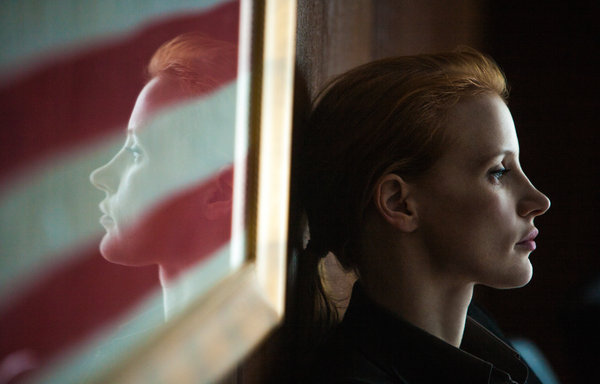
Jessica Chastain brilliantly plays the CIA analyst who doggedly and passionately pursues an unlikely lead that finally pays off after a ten-year grind. I’ve already rhapsodized several times about Chastain’s sudden emergence as perhaps our best current screen actress. She is profoundly gifted and can do anything. Let’s just say that, as good as Zero Dark Thirty is, she carries it.
The rest of the fine cast includes Jason Clarke (Lawless), Joel Edgerton (Animal Kingdom), Jennifer Ehle (The Ides of March, The King’s Speech), Kyle Chandler (Friday Night Lights), Fares Fares (Safe House), Jeremy Strong (The Guard), Mark Duplass and James Gandolfini.
After seeing Ruby Sparks and Celeste and Jesse Forever, I can hardly wait for the next screenplays by actress-writers Zoe Kazan and Rashida Jones. Those were two of the smartest and most inventive screenplays of the year, and revived the thought-to-be-brain dead romantic comedy genre.
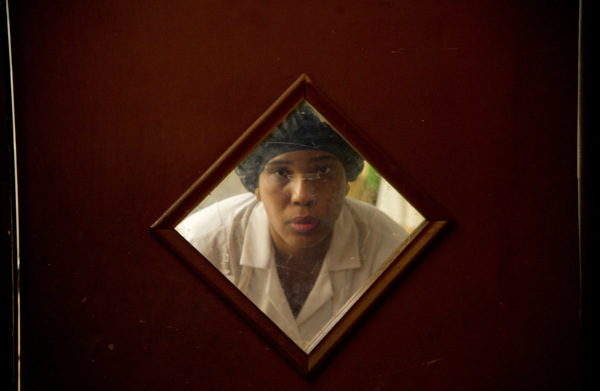
Popular singer Macy Gray turned in an astonishing performance in The Paperboy. Like Mariah Carey in Precious, Gray has proved that she can act.
Also in the The Paperboy and in Liberal Arts, Zac Efron proved that he is more than just the pretty boy of High School Musical. I am looking forward to his dramatic turn in Ramin Bahrani’s (Goodbye Solo, Chop Shop, Man Push Cart) At Any Price.
Mary Elizabeth Winstead turned in what should be a star-making performance inSmashed. Let’s see if she gets a chance in a big movie.
If you haven’t already, make sure you see the best three movies this season. In Lincoln, Steven Spielberg and Daniel Day-Lewis push aside the marble statue and bring to life Abraham Lincoln the man. Argo is Ben Affleck’s brilliant thriller based on a true story from the Iran Hostage Crisis. The rewarding dramedy Silver Linings Playbook has a strong story, topicality and humor, but it’s worth seeing just for Jennifer Lawrence’s performance. All three films are on my list of Best Movies of 2012 – So Far.
If, like me, you worship the spaghetti Western, the Quentin Tarantino blockbuster Django Unchained is gloriously pedal-to-the-metal, splattering exploitation. Also don’t overlook the solid thriller Deadfall that is flying under the radar this holiday season.
Ang Lee’s visually stunning fable Life of Pi is an enthralling commentary on story-telling. Denzel Washington stars in Flight, a thriller about the miraculous crash landing of an airliner and the even more dangerous battle against alcoholism. Skyfall updates the James Bond franchise with thrilling action and a more shopworn 007 from Daniel Craig.
Pass on the lavish but stupefying all star Les Miserables, with its multiple endings, each more miserable than the last. The FDR movie Hyde Park on Hudson is a bore. The disaster movie The Impossible is only for audiences that enjoy watching suffering adults and children in peril.
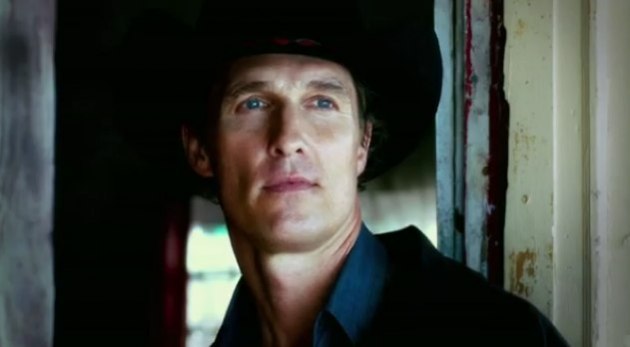
1. This year I attended over ten screenings that were followed by Q & As with the filmmaker. My favorite was the rip-snorting Killer Joe, followed by an hour with one of the great raconteurs, director William Friedkin (The French Connection, The Exorcist).
2. Sitting with other film geeks at the San Francisco International Film Festival, only to be surprised and delighted by the hilarious Norwegian comic thriller Headhunters.
3. Watching the three-hour director’s cut of Margaret with The Wife and our friend Paula.
4. Watching Bill W. (about the founder of Alcoholics Anonymous) in an audience that contained over 200 AA members,
5. Enjoying the classic Italian comedy Big Deal on Madonna Street for the first time.