- The Catcher in the Rye 3D
- The Sun Also Rises 3D
- Adventures of Huckleberry Finn 3D
- Native Son 3D
- The Sound and the Fury 3D
- Of Mice and Men 3D
- The Color Purple 3D
- A Confederacy of Dunces 3D
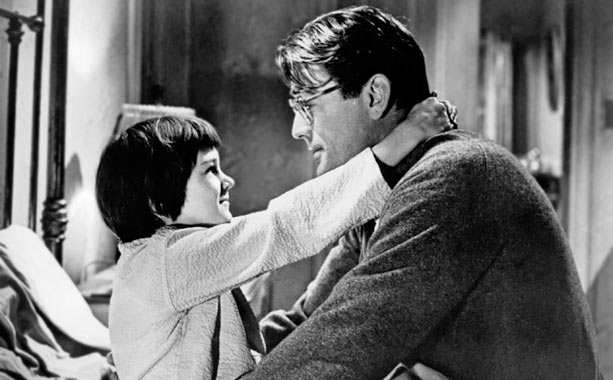
- To Kill a Mockingbird 3D
- The Great Gatsby 3D
Movie Recommendations, Rants and Ruminations


At Any Price is a thought-provoking psychological drama and a rare glimpse into modern corporate agriculture. The Reluctant Fundamentalist offers a compelling performance by Riz Ahmed and a thriller ending, but holes in the story and the miscasting of Kate Hudson dim the effect. Kon-Tiki is a faithful, but underwhelming account of a true life 5,000 mile raft trip across the Pacific. The French In the House is clever, darkly funny and slightly creepy.
The best film in theaters now is the gripping and thoughtful Mud. Two Arkansas boys embark on a secret adventure with a man hiding from the authorities, and they learn more than they expected about love and loyalty. Mud is one of the best movies of 2013.
If you see the thought-provoking drama The Place Beyond the Pines with Ryan Gosling and Bradley Cooper, you’ll still be mulling it over days later. I guarantee that you will enjoy the absolutely winning The Sapphires, a charmer about Australian Aboriginal teens forming a girl group to entertain troops in the Vietnam War. Don’t overlook the heartwarming British indie The Angel’s Share about a hard luck guy’s struggle to turn his life around with unexpected help from some ultra-rare Scotch whisky.
The compelling documentary The Central Park Five from Ken Burns, et al, is available streaming from Amazon Instant and other VOD providers. Football fans should tune into ESPN’s 30 for 30 for Elway to Marino, an inside look at several astonishing stories from the 1983 NFL draft.
The dreadful-looking The Great Gatsby is opening this weekend. You can read descriptions and view trailers of upcoming films at Movies I’m Looking Forward To.
My DVD/Stream of the Week is Shotgun Stories, the first triumph by Mud writer-director Jeff Nichols and the breakthrough film for actor Michael Shannon. Shotgun Stories is available on DVD from Netflix and streaming from Netflix and iTunes.
On May 14, Turner Classic Movies will be broadcasting the 1947 film noir Kiss of Death, which introduced Richard Widmark as one of the most unforgettable screen villains – a nutty thug named Tommy Udo who chortles maniacally as he pushes an old lady in a wheelchair down the stairs to her demise.
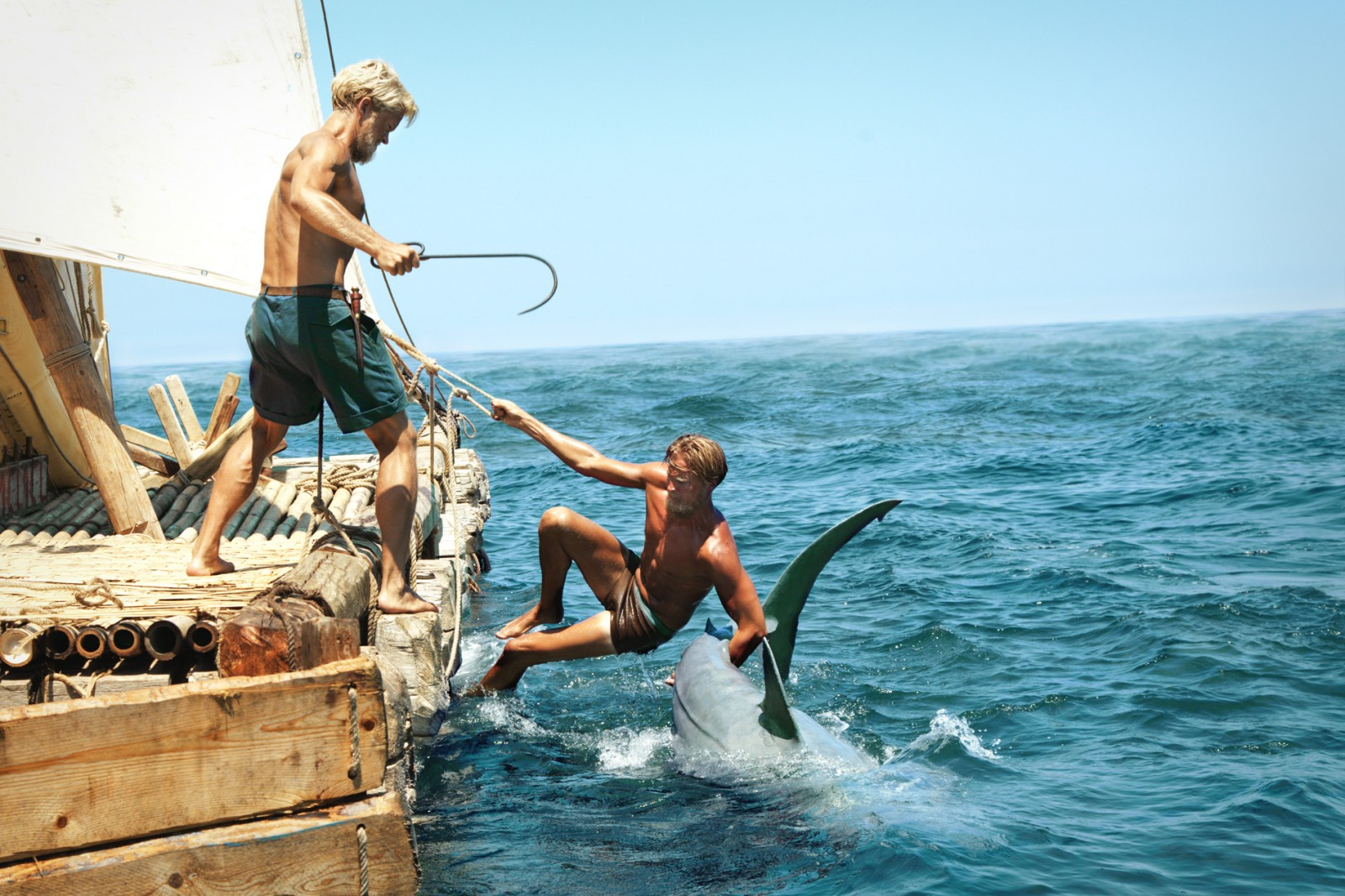
In 1947, Norwegian ethnologist Thor Heyerdahl and a five man Scandinavian crew constructed a Stone Age raft and floated almost 5,000 miles from Peru to French Polynesia to prove his academic theory. Kon-Tiki tells the story of that voyage, which was a helluva challenge.
The balsa wood raft was tied together with indigenous fibers. The crew had an intermittently operable radio, a sextant, some canned food and little other modern technology. The raft could not be steered, so there were many nerve-wracking days when they were drifting toward a current headed the wrong way. There were storms, sharks and all the usual hazards (except for Life of Pi’s tiger in the boat). The crew gets more and more sunburned and their blond beards grow bushier and bushier.
It’s a good story, but not really suspenseful. After all, Heyerdahl’s book about the expedition sold millions of copies, especially to boys of the Baby Boom generation (like me), and his documentary on the voyage won an Oscar in 1951. So it’s not really a spoiler to acknowledge that they made it safely to their destination.
Kon-Tiki portrays Heyerdahl as an affable but testosterone-fueled guy with unflinching (and oft misplaced) confidence that everything is going to work out for him. As a result, he recklessly puts at risk his life and his crew’s (as well as his marriage). It’s a mildly interesting characterization. As they say, it’s better to be lucky than good.
So Kon-Tiki is okay. I just wish it had acknowledged and addressed this fact: Heyerdahl was wrong. His theory that ancient Peruvians floated west and settled Polynesia flew in the face of nearly all anthropological, linguistic and archaeological evidence. Since the 1940s, of course, new scientific tools have been discovered, and DNA analysis now confirms that he was entirely, utterly, completely wrong. And, because he lived until 2002, Heyerdahl had to know it or live in ridiculous denial. So why not make a film about a guy who endures an amazing, life-risking ordeal just to find out that it was all in vain? I think that would have made the film more memorable.
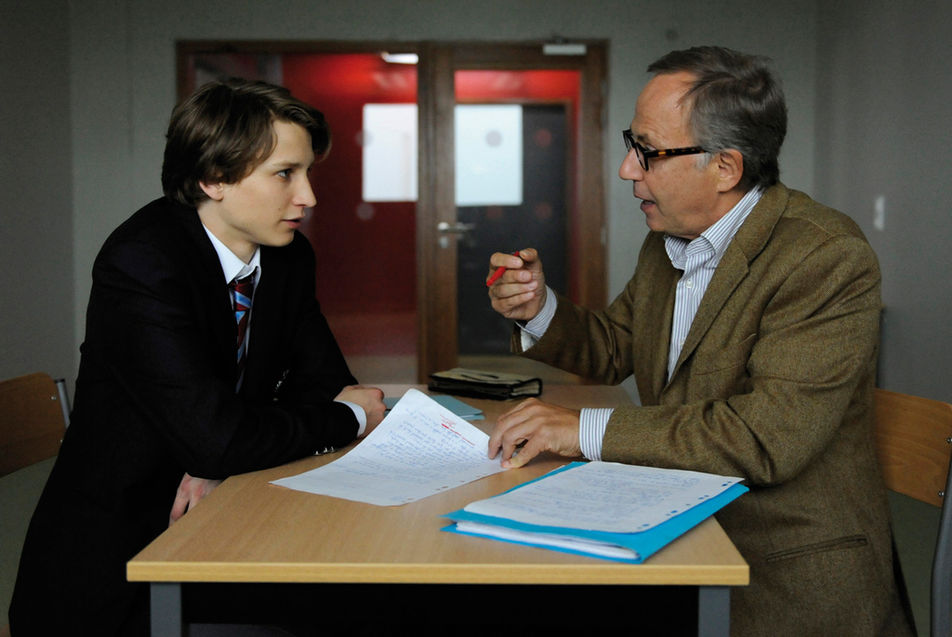
In the clever French movie In the House (Dans la maison), we met a high school literature teacher who is continually disappointed by his lackluster students. Then a new student shows a special talent for creative writing. Every day after school, the teacher provides extra coaching to the young writer, who starts spinning an episodic tale about his creepy infiltration of his friend’s family. We want to know what’s gonna happen in the next installment, and the teacher becomes hooked – even obsessed. Although the teacher is supposedly the mentor, soon the student is controlling the teacher.
The wonderful French actor Fabrice Luchini plays the teacher. Luchini is a master at playing socially awkward and inappropriate situations a la Seinfeld, Larry David and, of course, Woody Allen. (In my favorite Fabrice Luchini movie Intimate Strangers, he plays a tax lawyer who can’t bring himself to tell a woman that she’s sat down in the wrong office – thinking that she’s seeing a new therapist, she’s unburdening the intimate details of her marriage.)
In the House’s cleverness is not surprising, because it is directed by Francois Ozon (Swimming Pool, 8 Women, Potiche). Always her best in French films, Kristin Scott Thomas is very good as the teacher’s wife.
In the House is a funny and slightly creepy exploration of the creative writing process – and altogether satisfying.
Some promising movies opened this weekend while I was sampling the San Francisco International Film Festival. The result: ten movies for me in seven theaters in three cities over four days.
I started on Friday at the SFIFF with Prince Avalanche and Rent a Family Inc. at the Sundance Kabuki Cinemas. Prince Avalanche, a droll comedy with Paul Rudd and Emile Hirsch that will open in theaters later his summer, is very funny. Writer-director David Gordon Green (All the Real Girls, Pineapple Express) introduced his film and took questions. Rent a Family Inc., a documentary about an odd Japanese practice of renting fake family members, was less successful. (Note: I missed my monthly poker game for these two flicks.)
On Saturday, I caught up with the new releases: The Reluctant Fundamentalist at Camera 7 in Campbell (okay), At Any Price at San Jose’s Camera 12 (liked it a lot) and the French thriller In the House at San Jose’s Camera 3 (surprisingly clever).
On Sunday, I caught Kon-Tiki at San Francisco’s Embarcadero Center Cinema; (I’m writing about Kon-Tiki tomorrow). Then it was over to SFIFF for Me and You at the Kabuki. Me and You is the latest from Italian cinema legend Bernardo Bertolucci, and I LOVED it. (I had to miss the great director William Friedkin’s appearance at a rare screening of his 1977 Sorcerer at Camera 3; I would have loved it, but I just saw Friedkin last summer at a Killer Joe screening and I already had my SFIFF tickets; to make up for it, I am gonna buy Friedkin’s new book and Netflix his Sorcerer.)
Then I rendezvoused with my nephew Danny and his friend Zeke for a special showing of the 1978 Invasion of the Body Snatchers at the Castro Theatre, preceded by a Q&A with director Philip Kaufman. It was the first time that the guys experienced both a grand movie palace and an appearance by a filmmaker – and they enjoyed the movie, too. Body Snatchers, which I saw in its theatrical release, held up very well – and still has one of the all-time great closing shockers in cinema.
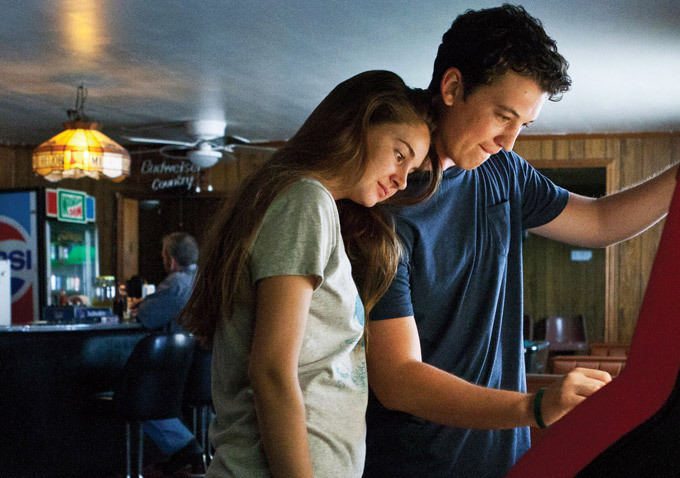
I returned to the SFIFF on Monday with The Wife. First, we saw The Spectacular Now at the Kabuki, a coming of age indie focused on teen alcoholism; one of the best films of the year, it will open widely on August 2. Then we saw Deceptive Practices, the fine documentary about my favorite magician/card shark Ricky Jay, at the New People Cinema.
Whew! That was a whirlwind! It’s lots of fun to go to the movies, but trying to write about so many in a compressed period is tough for me. The highlight was sharing the movie experience with The Wife and the guys. But I also saw some movies that will be on my Best Movies of 2013 – The Spectacular Now, Me and You and (probably) At Any Price – all in one glorious weekend.
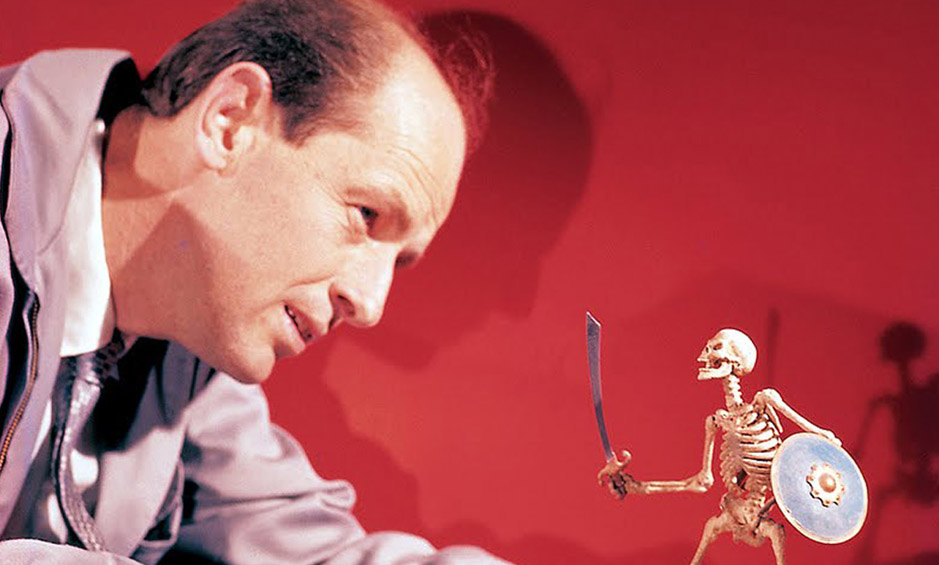
Ray Harryhausen, who died today at age 92, was a unique genius of movie special effects. His stop-motion animation created the vivid creatures that made possible movies about ancient mythology (from the 1958 The 7th Voyage of Sinbad through the 1981 Clash of the Titans) and fantasy literature (The Three Worlds of Gulliver). His pioneering work in stop-motion animation has influenced the field since, all the way to today’s Aardman Animation and Wallace and Gromit.
Harryhausen’s masterpiece was the 1963 Jason and the Argonauts, for which he created the Harpies, Talos, the Clashing Rocks Triton, the Hydra and the sword-fighting skeletons that emerge from the Hydra’s teeth. I still watch Jason and the Argonauts whenever it’s on TV, and I often give the DVD to kids. Thank you, Harry.
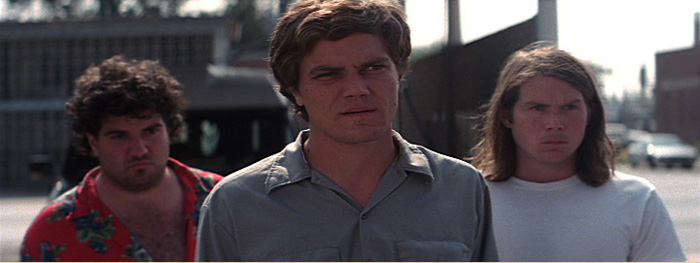
I am celebrating Mud this week by recommending writer-director Jeff Nichols’ Shotgun Stories. Nichols followed Shotgun Stories with Take Shelter and now Mud, which together constitute his “Arkansas Trilogy”. Shotgun Stories was also the breakout film for Nichols’ favorite leading man, Michael Shannon, who has since gone on to Boardwalk Empire, next week’s The Ice Man and the upcoming blockbuster Man of Steel.
Shotgun Stories opens with three brothers finding about the death of their no good father. He had abandoned them and their mother in poverty – and was such an indifferent father that he named his children Son, Boy and Kid. After walking away from his family, he found religion and started another, more prosperous, family with another set of three sons. The three older sons crash the funeral to express their bitterness, and it becomes clear that the two sets of brothers are headed for a clash.
Shannon plays the oldest brother, who has been forged into stony strength and determination by deprivation and long-smoldering resentment. Nichols uses that resentment to light a fuse that burns fitfully but inexorably for most of Shotgun Stories’ 92 minutes.
Shotgun Stories ranked #7 on my Best Movies of 2007. Shotgun Stories is available on DVD from Netflix and streaming from Netflix and iTunes.
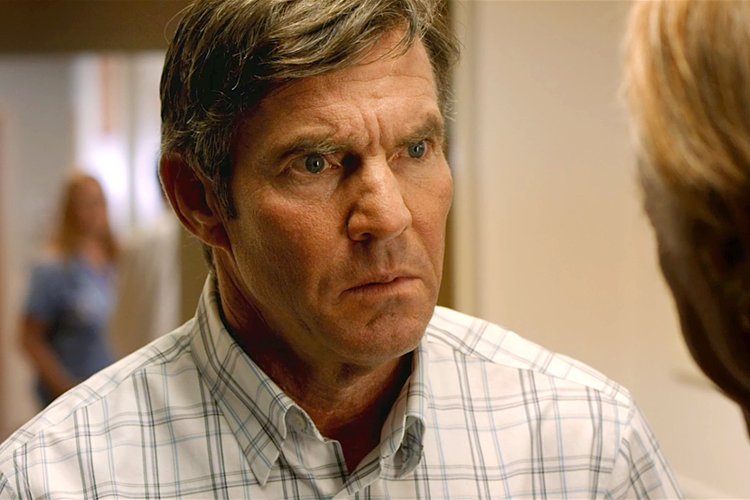
At Any Price is – at long last – a movie about today’s Farm Belt that farmers will recognize. American cinema has been romanticizing the small family farm for at least a quarter century since, to survive, US farmers have moved on to industrial scale agribusiness (with all its tradeoffs). The corporate farmer at the center of At Any Price is Henry Whipple (Dennis Quaid). Henry is a driven man, consumed by a need to have the biggest farm and to sell the most genetically modified corn seeds in southern Iowa. Henry is also stupendously selfish, utterly tone-deaf to the needs of anyone else.
Despite Henry’s dream to hand the business to one of his two sons, they despise him. The older son has avoided conflict by escaping to a vagabond life in international mountain climbing. The younger son, Dean (Zac Efron), plans his escape as a NASCAR driver and seems well on his path. Stuck on the farm for now, he can barely tolerate his father’s incessant grasping. But he’s small town royalty, he’s got a pretty girlfriend (Maika Monroe) and he’s as good-looking as Zac Efron, so life isn’t unbearable.
But Henry’s smug perch on top of the haystack is not as impregnable as it would seem. Along the way, he has cut some corners and stepped on other people, and it catches up to him. Henry’s empire threatens to topple, Dean clutches at his big career chance, and the two men – each and together – must react to developments that they never saw coming. Writer-director Ramin Bahrani spins a deeply authentic psychological drama as each man is forced into some uncomfortable self-examination.
It’s interesting that such a realistic exploration of New Agriculture in Middle America comes from Bahrani. Himself North Carolina-born, he has used nonprofessional actors to make three brilliant movies about struggling immigrants in America: Chop Shop, Man Push Cart and Goodbye, Solo. Goodbye, Solo was #5 on my list of Best Movies of 2009. Here’s a recent interview with Bahrani in the New York Times touching on At Any Price.
One of Bahrani’s insights is that the impacts of today’s capitalism aren’t necessarily from the malevolently rapacious (like Henry F. Potter in It’s a Wonderful Life), but from the indifference of the selfish. With almost every step that he takes, Henry Whipple screws other folks, but he’s convinced himself that he’s a prince of a guy.
At Any Price is a showcase for Quaid and Efron. Quaid’s portrayal of Henry is brilliantly textured, projecting a self-righteous bluster which barely masks the desperation threatening to erupt through his pores. And I’ve come to always look forward to seeing Efron, who, in Me and Orson Welles, The Paperboy and Liberal Arts, has proven that he is more than just the pretty boy of High School Musical.
Bahrani’s actors have taken full advantage of his screenplay. The character of Dean’s girlfriend is especially well-written. Beginning as a simple teen from a broken family looking for some fun, her journey takes several surprising turns. The actress Maika Monroe pulls it off with a memorable performance. In many ways, the story is anchored by Kim Dickens (Deadwood, Treme) as Henry’s wife and Zac’s mom, resolutely dragging her men out of their self-created sinkholes. Veteran character actor Clancy Brown (the guy has 209 acting credits on IMDb) is superb as Henry’s chief rival.
We are left with two men who finally must appreciate who they really are, whether we like them or whether they like themselves. After seeing At Any Price, I didn’t leave the theater thrilled, but that’s probably because a brilliant examination of two ambiguous men is more thought-provoking than stirring. And there’s nothing wrong with that.
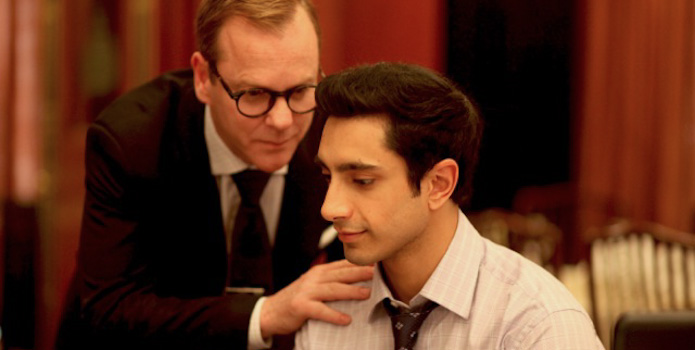
Director Mira Nair (Mississippi Masala, Monsoon Wedding, The Namesake) brings the novel The Reluctant Fundamentalist to the screen. A young Pakistani man flourishes at Princeton and on Wall Street, and he becomes an American Master of the Universe. But then September 11 changes his world, as Americans reacting and overreacting to terror start treating him badly. Suddenly, he no longer sees a fit with his American girlfriend, a flighty, overprivileged artist. He returns to Pakistan to teach in a university, and becomes an intellectual leader for Pakistanis seeking to resist the West. The movie becomes a thriller when the question arises, has he become a terrorist?
The thriller works – if you haven’t read the novel, you don’t know whether the guy we’ve been rooting for is or is not a terrorist until the final minutes. The best thing about the movie is the remarkably intense performance of British actor Riz Ahmed as the protagonist. Ahmed is a compelling screen presence, and he clearly has impressive acting range when you contrast his hyper-alert role here with the dim terrorist he played in the hilarious terrorist parody Four Lions. As one would expect, Liev Schreiber is also excellent as the guy who must determine whether Ahmed has become a terrorist.
What didn’t work for me? First there was the odd choice of Kate Hudson as the girlfriend. The character is just too vapid to captivate a Wall Street whiz kid, and Hudson just doesn’t project the sensuality to make up the difference for a guy in his early 20s.
The story also suggests that non-violent, democratic nationalism can have widespread appeal in Pakistan, and, while I would hope that Pakistanis embrace that path, I’m not sure that it’s a likely outcome.
If you need a sermon on the blowback from our War on Terror, then you can sit in the pew for The Reluctant Fundamentalist. But, for an ambiguous thriller, Homeland is a better choice.
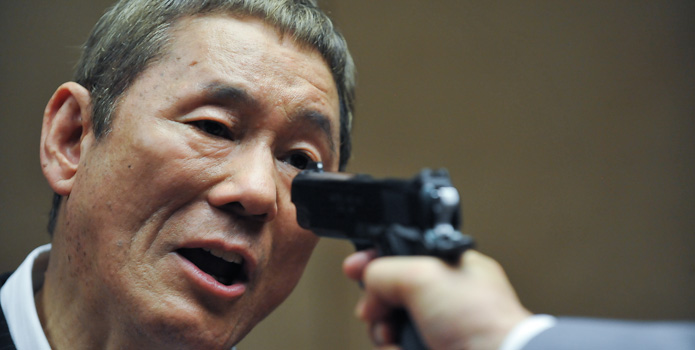
Takeshi Kitano returns to star in the Japanese gangster movie Outrage Beyond. It’s a sequel to writer-director Kitano’s 2011 Outrage, of which I wrote:
If you’re looking for a hardass gangster movie with deliciously bad people doing acts of extreme violence upon each other, Outrage is the film for you. But what makes Outrage stand out is the pace and stylishness of all the nastiness, as if Quentin Tarantino had made Goodfellas (only without all the extra dialogue about foot rubs and the Royale with cheese)…Kitano, much like Charles Bronson, has the worn and rough face of a man who has seen too much disappointment and brutality.
Outrage was more of a tragic noir, because you know that most of the characters probably won’t survive – and they know it, too. There is less foreboding in Outrage Beyond, which is just glorious exploitation – gangster mayhem splattering the streets. Because this is a Yakuza film, Kitano delivers the minimum one full body tattoo and one severed finger. But he also makes ingeniously lethal use of a pitching machine in a batting cage, and “Let’s play baseball” is the cruelest line in the film.
I saw Outrage Beyond at the San Francisco International Film Festival.