A COMPLETE UNKNOWN: a genius and his time

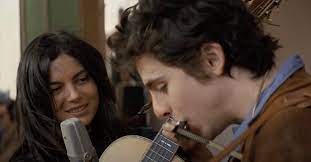
Timothée Chalamet in A COMPLETE UNKNOWN. Courtesy of Searchlight Pictures.

A Complete Unknown, James Mangold’s brilliant biopic of Bob Dylan, is a film about genius. If you need to understand why Dylan is the only songwriter to win the Nobel Prize for Literature, here is why. It’s a fascinating story, and Mangold’s telling of it is insightful and entertaining.

The story begins with 19-year-old Bob Dylan showing up in New York City. No one knows who he is (a complete unknown), because he hasn’t done anything, but he wants to meet his hero, the now hospitalized folksinger Woody Guthrie. Dylan can’t pretend to be anything but another homeless musician wannabe, but legendary folksinger Pete Seeger (Edward Norton) takes Dylan under his wing. Starting with open mic nights, Dylan starts playing around the Greenwich Village folk scene.

Dylan meets Sylvie Russo (Elle Fanning) a student activist Dylan whom appreciates because she is pretty, smart, opinionated and has an apartment. Sylvie is a barely fictionalized Suze Rutolo, Dylan’s girlfriend of the period, who appears on the cover of his The Freewheelin’ Bob Dylan album.

Dylan meets another woman his age, Joan Baez (Monica Barbaro), who is already a big deal. Baez had played the Newport Folk Festival at age eighteen and had already recorded three albums. Bob is excited by Baez’s stardom, and Joan admires Bob’s still undiscovered song writing. Without falling in love exactly, they begin an affair. Bob takes advantage of Joan’s connections and credibility (and apartment); he lets her cover Don’t Think Twice, It’s All Right before he released his own version. You get the impression that Joan could have fallen in love with Bob if he would treat her with decency and affection, but Bob is only in love with himself.

Seeger, Baez and others in Greenwich Village’s music world soon recognize the extraordinary, generational genus of Dylan’s songwriting. He finally gets to record his own material in 1963 with The Freewheelin’ Bob Dylan; it was an auspicious and transformative collection of original songs from a 22-year-old: Blowin’ in the Wind, Masters of War, A Hard Rain’s Gonna Fall and Don’t Think Twice, It’s All Right.

In what I found to be the most thrilling moment in A Complete Unknown, Dylan debuts The Times They Are a-Changin‘ to a live audience, and all the listeners, including Seeger and Baez, are captivated, by each new groundbreaking verse. Come mothers and fathers…Throughout the land…And don’t criticize…What you can’t understand…Your sons and your daughters…Are beyond your command. The song – and this scene in A Complete Unknown – completely capture the zeitgeist of the time.

Dylan becomes a huge star and cultural icon – a symbol of a generation. And he immediately is alienated by the accompanying trappings of celebrity.

Dylan also evolves musically from his roots in acoustic folk music. His mentors in the Folk Music movement have a tough time with that, and it all explodes at the 1965 Newport Folk Festival when Dylan defiantly shows up with an electric rock band, the climax of A Complete Unknown.

The folk purists, like Pete Seeger and the musicologist Alan Lomax, saw folk music as politically significant and rock and roll music as politically inconsequential – history soon proved them very wrong about this. The old folkies had also suffered for their movement by being victimized in the McCarthy Era, earning some of their self-righteousness. What the old folkies could not comprehend – and would find abhorrent if they did – is that Bob Dylan was bigger than the genre of Folk Music itself.

Elle Fanning and Timothee Chalamet in A COMPLETE UNKNOWN. Courtesy of Searchlight Pictures.

So, just who IS Bob Dylan? We expect any biopic to reveal, but Mangold has targeted one of our culture’s most notorious enigmas. Mangold and Chalamet give us a Dylan perhaps less complicated than his image. Here, Dylan is ambitious and absolutely committed to his art. He will not prioritize any relationship or behavioral norm above his songwriting or his career.

He wants the recognition, fame and money that comes from having an audience and fans but, in person, he doesn’t want to experience the fandom or even respect the audience. In pursuit of his own vision, Dylan is not afraid to disappoint (or enrage) anyone else, nor does he feel constrained by loyalty. (Although, if consistent with his vision, he can be kind to his hero Woody Guthrie.)

There’s more than a touch of narcissism there, too. A Complete Unknown depicts Dylan between the ages of 19 to 24, when he was only as mature as most of us were at that age; after all, one can be important while still very immature. He can be a brat, but he isn’t a bad person; he just isn’t capable of a reciprocal relationship. Sylvie Russo and Joan Baez both come to understand that, whoever he really is, he’s not interested in giving them what they want.

The older generation of folksingers certainly don’t GET Dylan, His manager Albert Grossman (Dan Fogler) doesn’t get him, but is fiercely devoted, anyway. In A Complete Unknown, the only people who get Bob are Bobby Neuwirth (Will Harrison), the singer-songwriter who became his road manager, and another icon, Johnny Cash (Boyd Harrison).

As far as I can tell, A Complete Unknown is remarkable for its historical accuracy. There are a few tiny factual quibbles (Dylan actually changed his name from Zimmerman just AFTER he arrived in New York), but none of them are important or detract from the essential truth.

A Complete Unknown is also a time capsule of the early 1960s, and will be especially evocative for Baby Boomers like me, right down to the institutional green paint on Woody Guthrie’s hospital walls. LBJ hadn’t yet escalated the Viet Nam War, so peaceniks were campaigning against the threat of nuclear annihilation and white college kids were flocking to the Civil Rights Movement. Mangold perfectly captures the instant terror and helplessness that Americans felt during The Cuban Missile Crisis – and the suddenness of relief when it was over.

If you know the story, there are lots of delicious tidbits. For example, in the recording session for Like a Rolling Stone, Al Kooper (Charlie Tahan of Ozark), whose services were not needed on guitar, switches instruments so he can get paid for the session and invents the 1960s’ most iconic organ riff.

Monica Barbaro and Timothee Chalamet in A COMPLETE UNKNOWN. Courtesy of Searchlight Pictures.

Chalamet, whom I’ve always seen as a little kittenish, finally gets to be a little dangerous and is appropriately prickly as Bob Dylan. Chalamet portrays Dylan’s aching and yearning for artistic achievement, which allows us to root for a guy who often behaves badly.

Barbaro’s Joan Baez is especially vivid, especially as she sizes up Dylan’s talent and assesses his behavior. Bob, you’re kind of an asshole.

Scoot McNairy’s performance as Woody Guthrie is especially haunting. Guthrie had been suffering from the then little understood Huntington’s disease; because of the disabling neurological effects and the behavioral symptoms, he spent his final years confined in psychiatric hospitals.

Big Bill Morganfield’s performance as a fictional blues artist named Jesse Moffette, who clearly stands in for Muddy Waters, is especially charismatic. Morganfield happens to be the son of Muddy Waters.

Chalamet, Norton, Barbaro and Boyd Harrison do their own singing in A Complete Unknown, which has been much ballyhooed, but I don’t find that important to a successful biopic. Their singing in character is all very good, and I was impressed by how perfectly Barbaro nails Baez’s unique voice. Norton, BTW, plays his own banjo, which is also impressive.

The editing by Andrew Buckland and Scott Morris is exceptional – none of the shots or scenes linger even a half-second too long. This is a two hour, twenty minute film that never lags.

A Complete Unknown is the best biopic, showbiz or otherwise, since Walk the Line (also a James Mangold film) and it’s one of the Best Movies of 2024.
Movies to See Right Now – New Year’s Edition

Photo caption: Monica Barbaro and Timothee Chalamet in A COMPLETE UNKNOWN. Courtesy of Searchlight Pictures.

This week on The Movie Gourmet -don’t wait for my review review of A Complete Unknown this weekend – go out and see it- it’s great. And I’ve begun my year end coverage continues. Look for Best Movies of 2024 on the 31st. So far, I published:

CURRENT MOVIES

  • Anora: human spirit vs the oligarchs. In theaters.
  • Conclave: explosive secrets? in the Vatican?. In theaters.
  • Blitz: one brave, resourceful kid amid the horrors. AppleTV.
  • A Real Pain: whose pain is it? In theaters.
  • The Outrun: facing herself without the bottle. Amazon, AppleTV, YouTube, Fandngo.
  • The Critic: who’s on top now? Amazon, AppleTV, YouTube, Fandngo.
  • The Remarkable Life of Ibelin: totally unexpected. Netflix.
  • The Settlers: reckoning with the ugly past. MUBI.
  • Emilia Pérez: four women yearn amid Mexico’s drug violence. Netflix.
  • Chasing Chasing Amy: the origins of love, fictional and otherwise. In theaters.
  • Kneecap: sláinte! Amazon, AppleTV.
  • Will & Harper: old friends adjust. Netflix.

WATCH AT HOME

From my Best Movies of 2024 – So Far:

ON TV

Myrna Loy and William Powell as Nora and Nick Charles during the Holidays

Once again, Turner Classic Movies is giving us a wonderful New Year’s Eve present – an all-day Thin Man marathon. William Powell and Myrna Loy are cinema’s favorite movie couple for a reason – just settle in and watch Nick and Nora Charles in The Thin Man and its sequels do what they do best – banter, canoodle, solve crimes and, of course, tipple.

Stars abound in supporting roles in the series. James Stewart had only made one feature film before 1936, the year, he appeared in After the Thin Man. Dean Stockwell played Nick and Nora’s son Nick Charles Jr in Song of the Thin ManFilm noir goddesses Gloria Grahame and Marie Windsor also both appear in Song of the Thin Man.

The pre-notoriety Tom Neal has a key role in in Another Thin Man. Classic film aficionados will also recognize Maureen O’Sullivan, Keenan Wynn, Leon Ames, Sheldon Leonard, C. Awbrey Smith, Joseph Calleia and Sam Levene.

These six movies from 1934-47 (The Thin Man, After the Thin Man, Another Thin Man, The Shadow of the Thin Man, The Thin Man Goes Home and Song of the Thin Man) are still first-rate escapist entertainment. Love ’em.

2024 FAREWELLS: behind the camera

Roger Corman

The prolific low-budget producer Roger Corman has died at 98, leaving behind a legacy far greater than the 491 titles that he produced. Corman’s great gift to us all is his mentorship of young and talented filmmakers.  Filmmakers who got their first assignment from Corman (called “the Corman Film School”) include Oscar winning directors James Cameron, Francis Ford Coppola, Jonathan Demme, Curtis Hanson, Ron Howard and Martin Scorsese.  Not to mention cult directors Paul Bartels and Monte Hellman. And Chinatown screenwriter Robert Townsend. And movie star Jack Nicholson In the 70s, Corman combined making lowbrow American movies with distributing highbrow foreign films, including  Bergman’s Cries and Whispers, Fellini’s Amarcord, Kurosawa’s Dersu Uzawa and Schlondorff’s The Tin Drum.  In one decade, he distributed more Best Foreign Film Oscar winners than all the Hollywood studios combined.

Robert Towne is best known, justifiably, for his Oscar-winning screenplay for Chinatown, one of my Greatest Movies of All Time; but director Roman Polanski perfected the script by changing the ending over Towne’s objections.  However, Chinatown was only one of a string of brilliant screenplays penned by Towne between 1973 and 1982 – The Last Detail, The Yakuza, Shampoo and Personal Best. Starting in 1967, Towne was also the uncredited script doctor who polished Bonnie and Clyde, McCabe and Mrs. Miller, The Godfather and Heaven Can Wait.

Casting director and producer Fred Roos enhanced the films of Francis Ford Coppola and George Lucas by advocating for then unknown actors like Al Pacino, Harrison Ford, Tom Cruise, Carrie Fisher, Richard Dreyfuss, Rob Lowe, Cindy Williams, Patrick Swayze, Matt Dillon and Mackenzie Phillips.

In his second act, Marshall Brickman co-wrote Woody Allen’s two masterpieces: Annie Hall and Manhattan. Brickman had success before (creating Johnny Carson’s Carnac the Magnificent and co-writing The Muppets) and after (creating the Broadway shows Jersey Boys and The Addams Family).

Documentarian Morgan Spurlock broke through with his McDonalds exposé Super Size Me.

Eleanor Coppola was the wife of director Francis Ford Coppola and the mother of director Sophia Coppola. Eleanor Coppola herself directed perhaps the best ever documentary film about the making of a movie, Hearts of Darkness: A Filmmaker’s Apocalypse.

2024 FAREWELLS: on the screen

M. Emmet Walsh in BLOOD SIMPLE

M. Emmet Walsh was one of cinema’s most stories, prolific (233 screen credits) and welcome character actors. Walsh was unforgettable as the murderous private detective Loren Visser in Blood Simple, a scary (and funny) concoction of amorality, sleaze and tenacity. He also elevated Midnight Cowboy, Little Big Man, What’s Up Doc?, Serpico, Blade Runner, Ordinary People, Slap Shot, Straight Time, Reds, Cavalry and Knives Out. There was only one T in Emmet, and the M stood for Michael.

Donald Sutherland in INVASION OF THE BODY SNATCHERS

Donald Sutherland became a famous character actor playing quirky misfits in The Dirty Dozen and Kelly’s Heroes, and became a star as an iconic subversive in M*A*S*H*. His performances in Klute and Invasion of the Body Snatchers are indelible. Sutherland finished with 199 IMDb credits, including the Hunger Games franchise, and had three films released in 2023.

Alain Delon in ANY NUMBER CAN WIN

Impossibly handsome and dashing, no one ever removed their sunglasses with more of a flourish than iconic French leading man Alain Delon.  Delon had eyes that can switch off any glimmer of empathy – perfect for playing sociopaths. Accordingly, he broke through internationally playing Patricia Highsmith’s Tom Ripley in Purple Noon (1960). Delon is best known for being a favorite of top European directors, starring in Visconti’s Rocco and His Brothers and The Leopard, Antonioni’s L’Eclisse, and Melville’s Le Samouri and Le Cercle Rouge. I also like Delon in the less famous caper movies Any Number Can Win and The Sicilian Clan. Mr. Klein, in which Delon played a sleazy French art dealer who took advantage of Nazi persecution of Jews, was a Lost Film, only becoming available again in the past five years. Sheila O’Malley has written most insightful essays on Delon and has posted the most playful photo of him.

Tom Wilkinson won an Oscar for Michael Clayton, but I best remember his searing performance in In the Bedroom and his delightful turn in The Full Monty.

James Earl Jones’ expressive face, imposing bearing and authoritative voice won him an Oscar for THE GREAT WHITE HOPE. The voice was enough by itself to dominate the STAR WARS franchise as Darth Vader.

Maggie Smith’s career began in the 1950s, and she was accomplished enough by the mid-1960s to play Desdemona to Laurence Olivier’s Othello. She won Oscars in the 70s for The Prime of Miss Jean Brodie and California Suite.  Her popularity soared in the 2000s with Gosford Park, the Harry Potter franchise and her unforgettably withering Lady Violet Crawley in Downton Abbey.

Anouk Aimée starred in some of the most iconic European art films of the 1960s: Fellini’s 8 1/2 and La Dolce Vita and Lelouch’s A Man and a Woman.

Shelley Duvall will be best remembered for playing the wife of Jack Nicholson’s decompensating writer in The Shining. It’s hard to discuss American cinema of the 1970s without mentioning Duvall because six of her first seven movies were Robert Altman films (Brewster McCloud, McCabe and Mrs. Miller, Thieves Like Us, Nashville, Buffalo Bill etc., and 3 Women; the seventh was Annie Hall, in a hilarious turn as an Alvy Singer sex partner. She also played the waitress who prods Steve Martin’s Cyrano character into wooing Daryl Hannah’s Roxanne in Roxanne.

Gena Rowlands, Oscar-nominated as best actress for Gloria and A Woman Under the Influence, had a gift for authentic and wrenching performances. I also liked her in lighter fare like Minnie and Moskowitz and Night on Earth. She was the director John Cassavetes’ wife, muse and leading lady.

Beginning as a teen in 1960, Marisa Paredes presided over Spanish cinema with 120 acting performances through this year.  American art house audiences knew her from Pedro Almodovar‘s High Heels, All About My Mother, The Flower of My Secret and The Skin I Live In.

Earl Holliman had the confidence, in one of his first movies, to put a unique spin on the role of a mob henchman in 1955’s The Big Combo. He continued to play character roles in big movies: Giant, Gunfight at the O.K. Corral and The Sons of Katie Elder. He went on to amass almost 100 credit in television, most popularly as Angie Dickinson’s boss in Policewoman/ most of his TV work was forgettable, but he did star in the first ever episode of The Twilight Zone.

British actor Timothy West became recognized in the US for his titular performance in the imported mini-series Edward the King, as the son of Queen Victoria, who simmered for decades, waiting for his chance to become King Edward VII. I loved him one of my favorite movies, Day of the Jackal. West’s 151 screen credits included three portrayals of Winston Churchill. As prolific as he was in television and the movies, he had even more of an impact on stage. He was a member of the Royal Shakespeare Company and the Prospect Theater Company, served as artistic director of the Old Vic Theater, and, at age 81, played the role of King Lear for the fourth time.

Louis Gossett, Jr., won an Oscar for his drill sergeant in An Officer and a Gentleman. He also played Fiddler in Roots, amid 198 other screen appearances.

I was surprised that Teri Garr had 44 screen credits (many as a dancer, including Viva Las Vegas) BEFORE her breakthrough role as Inga in Young Frankenstein.  Then she played the mom in Close Encounters of the Third Kind, earned an Oscar nod for her most memorable role in Tootsie and went on to work in 200 more movies and shows.

Dabney Coleman, a versatile and prolific character actor, perfected the clueless, boorish boss characters in 9 to 5 and Tootsie. As gifted as he was in those comedic roles, he also worked in a wide range of fine movies: Downhill Racer, Cinderella Liberty, Midway, Go Tell the Spartans, North Dallas Forty and Melvin and Howard. Coleman topped off his career with roles in Boardwalk Empire, Ray Donovan and, as John Dutton, Sr., in Yellowstone.

Tony Lo Bianco first made his name in a perverse movie that became a cult film, The Honeymoon Killers. He went on to act in the 1970s classics The French Connection, The Seven Ups, Jesus of Nazareth, and lots and lots of TV work. I especially admire his performance in John Sayles’ City of Hope.

Carl Weathers retired from pro football at 26, played a football player in Semi-tough, and then the unforgettable Apollo Creed in the Rocky franchise. He recently starred in The Mandalorian and directed some of it. Personal note: his film Action Jackson was playing theaters in Santiago, Chile, when I visited in 1984.

You’ve seen David Harris in Brubaker, A Soldier’s Story, and NYPD Blue, but his most memorable role was early on, in Walter Hill’s indie cult classic The Warriors.

I didn’t remember the name of actor Jonathan Haze, who worked in a score of Roger Corman’s low budget exploitation films.  His most memorable starring role was in Little Shop of Horrors, where his character cultivated a flesh-eating houseplant and pulled a tooth from a masochistic dental patient (Jack Nicholson).

Movies to See Right Now – Holiday Edition

Photo caption: Timothee Chalamet in A COMPLETE UNKNOWN

This week on The Movie Gourmet – a new review of The Critic and a capsule recommendation (below) of Beetlejuice Beetlejuice, along with two recommendations to DVR on TCM. Next week: A Complete Unknown, the ballyhooed Bob Dylan biopic.

And my year-end coverage is about to begin: Farewells, Best (and Worst) Movie-going Experiences and, of course, The Best Films of 2024. Watch this space.

CURRENT MOVIES

I’m not writing a separate post about Beetlejuice Beetlejuice because it’s neither an overlooked movie or an important one. But The Wife and I finally got around to streaming it for free from Max, and, boy, is it entertaining. We were reminded that so much of Beetlejuice’s gleeful misbehavior is Michael Keaton’s brilliant invention. Jenna Ortega adds a refreshing note. There’s an homage to the original movie’s hilarious use of Banana Boat (Day-O) and the comic possibilities of MacArthur Park are fully realized. There’s even some smart mockery of our self-help heavy culture Beetlejuice Beetlejuice can be streamed from Max (included), Amazon and AppleTV.

  • Anora: human spirit vs the oligarchs. In theaters.
  • Conclave: explosive secrets? in the Vatican?. In theaters.
  • Blitz: one brave, resourceful kid amid the horrors. AppleTV.
  • A Real Pain: whose pain is it? In theaters.
  • The Outrun: facing herself without the bottle. Amazon, AppleTV, YouTube, Fandngo.
  • The Critic: who’s on top now? Amazon, AppleTV, YouTube, Fandngo.
  • The Remarkable Life of Ibelin: totally unexpected. Netflix.
  • The Settlers: reckoning with the ugly past. MUBI.
  • Emilia Pérez: four women yearn amid Mexico’s drug violence. Netflix.
  • Chasing Chasing Amy: the origins of love, fictional and otherwise. In theaters.
  • Kneecap: sláinte! Amazon, AppleTV.
  • Will & Harper: old friends adjust. Netflix.

WATCH AT HOME

From my Best Movies of 2024 – So Far:

ON TV

On December 27, Turner Classis Movies airs Three Strangers, with Geraldine Fitzgerald’s indelible performance, which I wrote about last week. If you missed it, you can stream it from Amazon or AppleTV.

On December 28, TCM will present The Last Detail, featuring one of 30-something Jack Nicholson’s iconic embodiments of alienation and rebelliousness (Five Easy Pieces, Chinatown, The Passenger, Onne Flew Over the Cuckoo’s Nest).

Two non-commissioned Navy lifers (Nicholson and Otis Young) are ordered to escort a court-martialed 18-year-old seaman (Randy Quaid) from Norfolk to a naval prison in Maine. The kid is very dumb, very inexperienced and very, very, very unlucky. He faces a long, disproportional for a petty theft; he didn’t know he was stealing from the base commander’s wife’s pet charity. Because he hasn’t had many adult experiences, the older guys decide to show him a good, completely unauthorized, time on the trip.

Carol Kane and Michael Moriarty add superb supporting performances.

Co-written by Robert Towne (Chinatown) and directed by Hal Ashby (Harold and Maude, Being There), this is a prime example of New Hollywood cinema.

Randy Quaid, Jack Nicholson and Otis Young in THE LAST DETAIL.

THE CRITIC: who’s on top now?

Photo caption: Ian McKellen and Gemma Arterton in THE CRITIC. Courtesy of Greenwich Entertainment.

The cynical thriller The Critic is set a hundred years ago, when print media was king. Jimmy (Ian McKellen) is the chief drama critic for a low-brow, mass circulation London newspaper. He’s had the job for forty years, and he sees his job as entertaining the readership with his savage reviews, using a vast vocabulary he knows is above the readers’ grasp. Jimmy’s longevity and prominence has made his voice powerful; he could be expected to sometimes act with mercy and responsibility, but he never does.

Protected by his longtime publisher, Jimmy has become very entitled, and he enjoys perks that exceed the station of a newspaper writer, however erudite. He doesn’t appreciate that others may be put off by his day-drinking, capricious cruelty and general arrogance. His boss’ authority as an aristocrat has also protected Jimmy from the police persecution of homosexuals and from blackmail.

Then the boss dies, and his straitlaced, sexually repressed son (Jeremy Strong) inherits his title and his newspaper. Jimmy’s invulnerability evaporates. Desperate to regain what he stands to lose, Jimmy resorts to blackmail himself. Unpredicted life and death consequences unfold.

Ian McKellen in THE CRITIC. Courtesy of Greenwich Entertainment.

Is Jimmy really an unredeemable prick? Will he get his due? The Critic is all about the character of Jimmy, which Ian McKellen plays with gusto and nuance. Watching McKellen is a delicious treat.

The other characters exist to move the plot along for Jimmy, but Strong and the other actors (Gemma Arterton, Aldred Enoch) are very good, and Lesley Manville is perfect, once again.

The Critic is streaming on Amazon, AppleTV, YouTube and Fandango.

Movies to See Right Now

Photo caption: Daniel Craig in QUEER. Courtesy of A24.

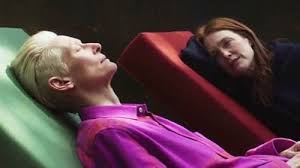
This week on The Movie Gourmet – new reviews of Saturday Night, I Used to Be Funny, and It’s Not Me. I’m waiting to see the Bob Dylan biopic A Complete Unknown, Luca Guadagnino’s Queer with Daniel Craig, Pedro Almodovar’s The Room Next Door with Julianne Moore and Tilda Swinton, Mike Leigh’s Hard Truths, and Brady Corbet’s acclaimed third feature, The Brutalist with Adrian Brody – and I’m getting twitchy with impatience.

CURRENT MOVIES

  • Anora: human spirit vs the oligarchs. In theaters.
  • Conclave: explosive secrets? in the Vatican?. In theaters and now streaming.
  • Blitz: one brave, resourceful kid amid the horrors. AppleTV.
  • A Real Pain: whose pain is it? In theaters.
  • The Substance: the thinking woman’s Faust, if you can take the body horror. MUBI (free), Amazon, AppleTV.
  • Endless Summer Syndrome: there will be hell to pay. In arthouse theaters.
  • The Outrun: facing herself without the bottle. Amazon, AppleTV, YouTube, Fandngo.
  • The Remarkable Life of Ibelin: totally unexpected. Netflix.
  • Saturday Night: chaos as entertainment. Amazon, AppleTV, YouTube, Fandango.
  • It’s Not Me: his life as an art film. Amazon, Fandango.
  • The Settlers: reckoning with the ugly past. MUBI.
  • Emilia Pérez: four women yearn amid Mexico’s drug violence. Netflix.
  • I Used to Be Funny: PTSD is no joke. Netflix, Amazon, AppleTV, YouTube, Fandango.
  • Kneecap: sláinte! Amazon, AppleTV.
  • Will & Harper: old friends adjust. Netflix.

WATCH AT HOME

From my Best Movies of 2024 – So Far:

ON TV

Peter Lorre, Geraldine Fitzgerald and Sydney Greenstreet in THREE STRANGERS.

Set your DVR to record the December 27 Turner Classic Movies airing of Three Strangers, a much underrated film noir from 1946, co-written by John Huston. Geraldine Fitzgerald, Sydney Greenstreet and Peter Lorre play three people who don’t know each other ando are brought together by an odd gamble. There’s a legend that, if three strangers make the same prayer to a Chinese god, he will grant a their wish. Each of the three needs money, so they partner in the purchase of a sweepstakes ticket and give it a go.

Lorre’s character is a destitute alcoholic who would buy a bar with his windfall and never leave it. The other two need to hit the jackpot, too, but their reasons are much, much darker. The ending of the story is absurdly noir for some and tragically noir for others.

The best element of Three Strangers is Geraldine Fitzgerald’s a performance as a woman who seems eccentric, until she reveals herself as dangerously unhinged. John Huston had wanted Fitzgerald for the Bridgit O’Shaughnessy role in The Maltese Falcon, and I’m glad that Mary Astor got the part instead because Astor’s performance was perfect – and maybe the best ever liar in the history of cinema. But, when you see her in Three Strangers, it becomes clear that Fitzgerald would have been a remarkably interesting Bridgit, too.

Lorre and Greenstreet were first paired five years earlier in The Maltese Falcon (Greenstreet’s very first movie, at age 62), and Three Strangers was one of eight more films that took advantage of their chemistry.

The director was Jean Negulesco, who knew his way around the noir genre (The Mask of Dimitrios, Nobody Lives Forever, Johnny Belinda and Road House). Three Strangers is plenty entertaining, and Fitzgerald is a revelation.

Geraldine Fitzgerald in THREE STRANGERS.

IT’S NOT ME: his life as an art film

Photo caption: Leos Carax and Denis Lavant in IT’S NOT ME. Courtesy of Janus Films.

I generally only write about feature-length films, but there’s a lot of interest among cinephiles for the mid-length It’s Not Me. A European museum asked the artistic renegade filmmaker Leos Carax for a project that answers the question, Who are you? Although the title of this film is cheeky, It’s Not Me is Carax’s reflection on what has formed him – cinema, the 20th century, his Jewishness – and who he is – an artist, a parent, a moral critic.

It’s Not Me is rapidly-paced montage of bits from classic cinema, Carax’s own films (augmented by some new footage) and historical stills and clips. There’s even cell phone footage of his daughter as a child and now playing the piano as an adult.  It is a curated mush mash, decidedly not as random as it sometimes seems. The clips are interspersed with bold color titles a la Jean-Luc Goddard. Movies can be LIKE fever dreams; this one may BE an actual fever dream.

Carax is known for Holy Motors, which I mostly liked, and Annette, which I didn’t. One thing is for sure – each Carax movie will be like nothing you’ve seen before.

Carax isn’t usually very political, but here he explicitly vents his hatred for haters like Hitler and current right wing, nationalist leaders. There’s a very creepy scene where a mother reads her kids a bedtime story that applauds Hitler’s Final Solution. There’s footage of the 1939 pro-Nazi rally at Madison Square Garden, and of the corpses of contemporary would-be immigrant children sloshing on a European beach.  Tough stuff.

It’s Not Me runs only 42 minutes, but there’s almost two minutes of opening credits, and then the closing credits start at the 37-minute mark.  After the closing credits, there’s a a final 2-minute puppet performance that is brilliant, even if I have no idea why Carax included it.

Denis Lavant reprises his role as Monsieur merde, the outré character in Holy Motors and other Carax films. If you want to know just how outré, read my post on Holy Motors.

Clips of the 27-year-old Juliette Binoche from the 1991 Carax film The Lovers on the Bridge remind us what a breath-taking beauty Binoche has been in every stage of her career.

It’s Not Me is streaming on Amazon and Fandango.

I USED TO BE FUNNY: PTSD is no joke

Photo caption: Rachel Sennott in I USED TO BE FUNNY. Courtesy of Utopia.

In the Canadian indie I Used to Be Funny, Sam is a standup comedian (played by Rachel Sennott, a real life standup comedian). Sam has been suffering the effects of PTSD for a year, and is existing with the kindness of her two comedian roommates. She’s been unable to work, write or leave the house, and it’s a major achievement to take a shower.

Through flashbacks, we learn how she got to her present condition. Sam had taken a day job as a nanny for a 13-year-old girl, Brooke (Olga Petsa). Brooke is a pistol anyway, but her mom is on her deathbed and her father is stricken with both grief and the bewilderment as to how to meet the needs of his teenage daughter, who is already troubled by the mom’s illness and soon to go off the rails completely. At first Brooke responds encouragingly to the hip young Sam. But then, everyone’s life is upended by the traumatic event. (That event is depicted over an hour into the film, but the audience has surely guessed what it is by then. )

Will Sam work through her PTSD and become functional again? Will Brooke be lost to her self-destructiveness?

I Used to Be Funny is the first feature for television writer-director Ally Pankiw. Pankiw accurately portrays the disabling pain of a PTSD sufferer and the helplessness of adults dealing with an out-of-control teenager. Pankiw finally gets us to a redemptive ending, but there’s a lots of emotional pain and drama on the way.

In case you forget that this is a Canadian film, you’ll notice that the comedian roommates, the estranged boyfriend, Brooke’s aunt and the folks at the comedy club are exceedingly nice. Even the troubled teen, a punk drug dealer and sexist cops are very nice for their types.

I watched I Used to Be Funny because I so enjoyed Sennott’s performance in Saturday Night. Now we know that Sennott has the emotional range to play the extremes of the spectrum – a depressive here and a sexy and masterful creative in Saturday Night. Both of those characters are quick-witted, and Sennott is very believable, of course, as a head comedy writer and as a standup comic.

I Used to Be Funny is streaming on Netflix, Amazon, AppleTV, YouTube and Fandango.

SATURDAY NIGHT: chaos as entertainment

Photo caption: Cooper Hoffman (kneeling), Lamorne Morris, Cory Michael Scott. Ella Hunt, Emily Fairn, Kim Matula and Dylan O’Brien in SATURDAY NIGHY. Courtesy of Columbia Pictures and Sony Pictures Entertainment.

It’s hard to imagine, but fifty years ago there was no Saturday Night Live. There wasn’t much edginess on TV – All in the Family and M.A.S.H. were controversial -and a live performance telecast was unthinkable. Saturday Night depicts the first telecast of Saturday Night Live on October 11, 1975, and it’s quite a story.

Television network executives, always trying not to upset sponsors and affiliate stations, constricted creativity. By 1975, American music, movies, literature and fashion, had all moved on to reflect the turbulence and societal revolution of the 1960s and the Vietnam/Watergate Era of the early 70s. TV was still too square for the culture. There was nothing on TV like Portnoy’s Complaint, Midnight Cowboy, Frank Zappa or The National Lampoon. There was an opening for edgier content that would appeal to then twenty-something Baby Boomers.

As Saturday Night tells it, the timeslot was only available because NBC was in a contract dispute with Johnny Carson and needed a temporary replacement, a show that would be disposable when The Tonight Show with Johnny Carson returned. Into the breach stepped twenty-something showrunner Lorne Michaels (Gabriel Labelle) with an idea for a sketch-comedy show with musical guest performances, to be broadcast live, which the NBC’s Radio City complex was not set up for.

Saturday Night captures the chaos and risks of SNL’s debut. There were staggering technical issues with live television broadcast. The human challenges were more imposing – network suits were ready to pull the plug, the blue collar crew was in revolt and the network censor had never seen a script so transgressive. And Michaels had to wrangle a a group of artists, many whose egos and drug use were out of control.

Saturday Night’s cast members have the challenge of playing figures with whom the audience is extremely familiar – John Belushi, Dan Ackroyd, Chevy Chase, Gilda Radner, Jane Curtin, Garrett Morris and Laraine Newman. They’re all good. Dylan O’Brian kept making me me think I was watching the real 1970s version of Dan Ackroyd. Nicholas Braun captures the off-kilter talent of Andy Kaufman, and also plays a comically earnest Jim Henson.

Two performances stand out. Sennott is a revelation as SNL co-creator and head writer Rosie Shuster. Sennott’s Shuster is bright, sexy and charismatic; her command of situations, leavened with playfulness, is exactly what Lorne Michaels needs, as he is ever more confounded by unexpected crises.

J.K. Simmons is brilliant as Milton Berle, still feeling the entitlement of his TV superstardom, which, in 1975, was over 15 years in the past. Simmons dominates two of the greatest scenes in Saturday Night, the first as Berle cruelly dispenses a deserved comeuppance to Chevy Chase. In my personally favorite scene, Berle is taping an insipid variety show and mailing in his performance; just watch how Simmons’ Berle knows precisely how little effort he needs to put into a dance number.

Director Jason Reitman has delivered some the best movie comedies of the century. Saturday Night doesn’t have the depth of Reitman’s best (Juno, Up in the Air, Young Adult), but it’s entertaining. Saturday Night, a pretty good movie about a pivotal moment in our culture, is streaming on Amazon, AppleTV, YouTube and Fandango.