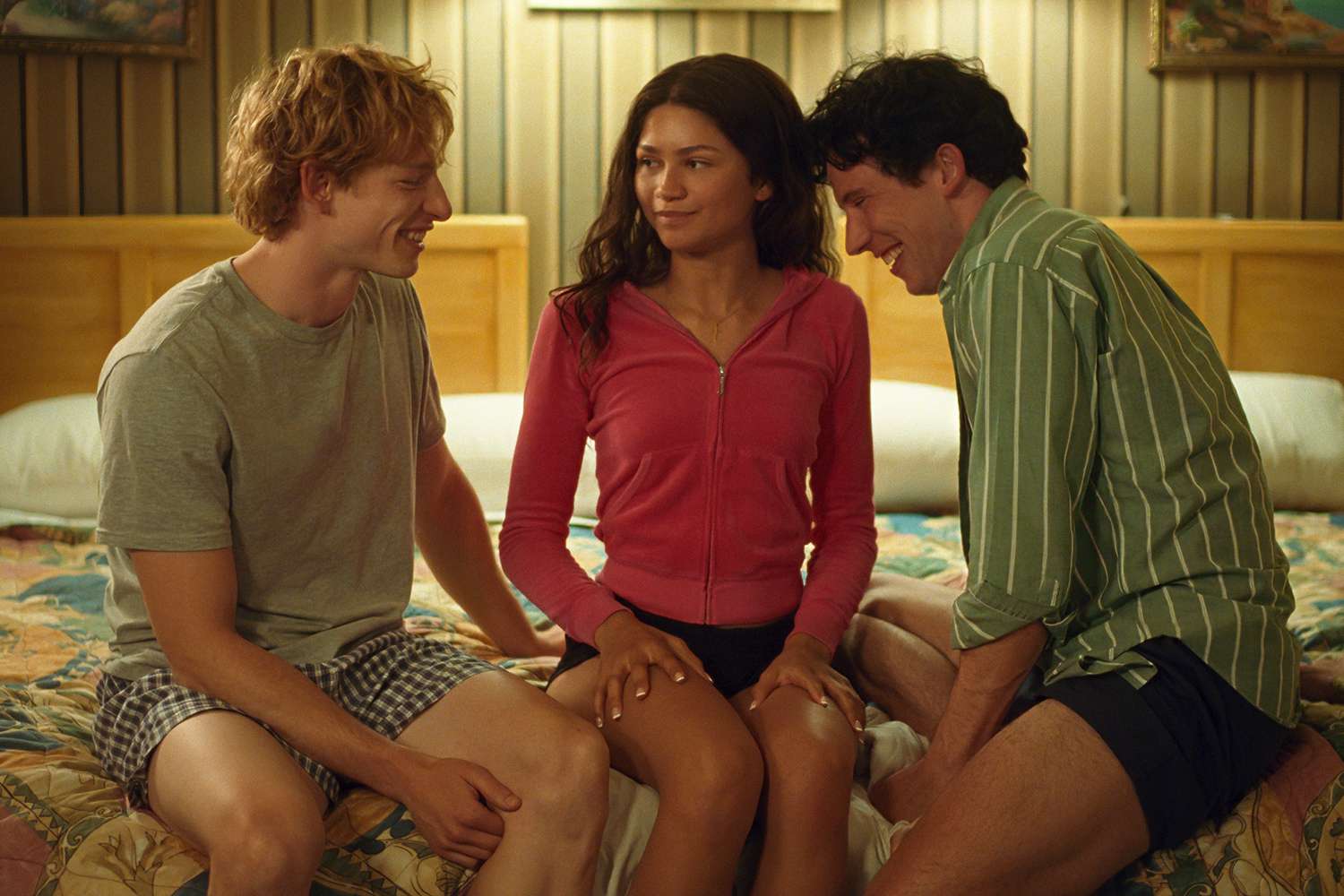
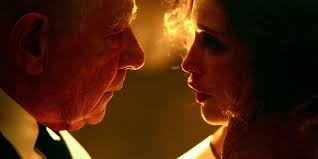
Photo caption: Mark Eydelshteyn and Mikey Madison in ANORA. Courtesy of NEON.
Every year, I keep a running list of the best movies I’ve seen this year. By the end of the year, I usually end up with a Top Ten and another 5-15 mentions. Here are my Best Movies of 2023 and Best Movies of 2022 lists. To get on my year-end list, a movie has to be one that thrills me while I’m watching it and one that I’m still thinking about a couple of days later.
When I wrote my year’s end post last December 31, I had already seen the best two films, Oppenheimer and Anatomy of a Fall. Today, I still haven’t seen many of the films I expect to contend for this list, includingThe Room Next Door, The Brutalist, Hard Truths, All We Imagine as Light and Hard Truths. Pretty sure most of those will end up high on my list when I finalize it in a couple months. Sean Baker’s Anora is brilliant film, but I expect it to be surpassed on my list by one or some of the upcoming releases.
I HAVE seen 126 2024 films so far. BTW that 126 total for 2024 doesn’t include the 105 festival submissions that I’ve screened (those will be 2025 films) nor the 104 movies from earlier years that I watched this year.
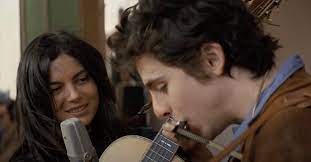
Monica Barbaro and Timothee Chalamet in A COMPLETE UNKNOWN. Courtesy of Searchlight Pictures.
Here’s the entire list of the best of 2024:
Anora: human spirit vs the oligarchs. In theaters.
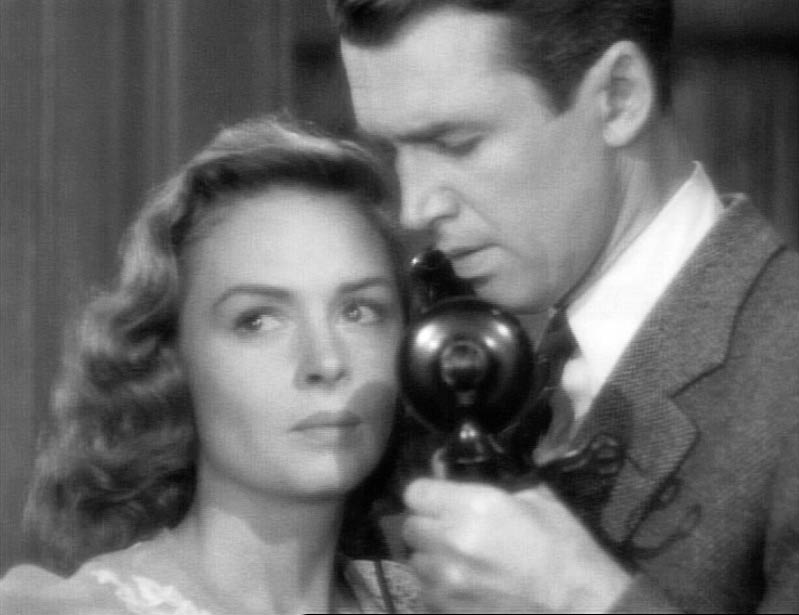
Photo caption: Donna Reed in IT’S A WONDERFUL LIFE – the second best wife ever
Happy 24th Anniversary to The Wife, also known as Lisa, The Love of My Life!
We started out the year by binge-watching The Crown (season 6) and Shetland (season 6), and ended, as is our beloved Holiday tradition, watching It’s a Wonderful Lifeon the big screen
I really enjoyed introducing her to Anatomy of a Fall in January. Together, we discovered Ghostlight and The Bikeriders in July and Conclave, A Real Pain, A Complete Unknown and Queer to close out the year.
After a year-long streak of stinkers, she revived her own movie-picking credibility with Wicked Little Letters andKneecap.
Once again, she tolerated my spending huge chunks of time covering Noir City and the San Luis Obispo International Film Festival in person and Cinequest, Slamdance, Frameline, San Francisco International Film Festival (SFFILM), Nashville Film Festival and San Francisco Jewish Film Festival virtually. She was also OK with my helping out Cinequest by screening over 100 film submissions. I’m getting ready now to cover Noir City in person and Slamdance virtually again in January.
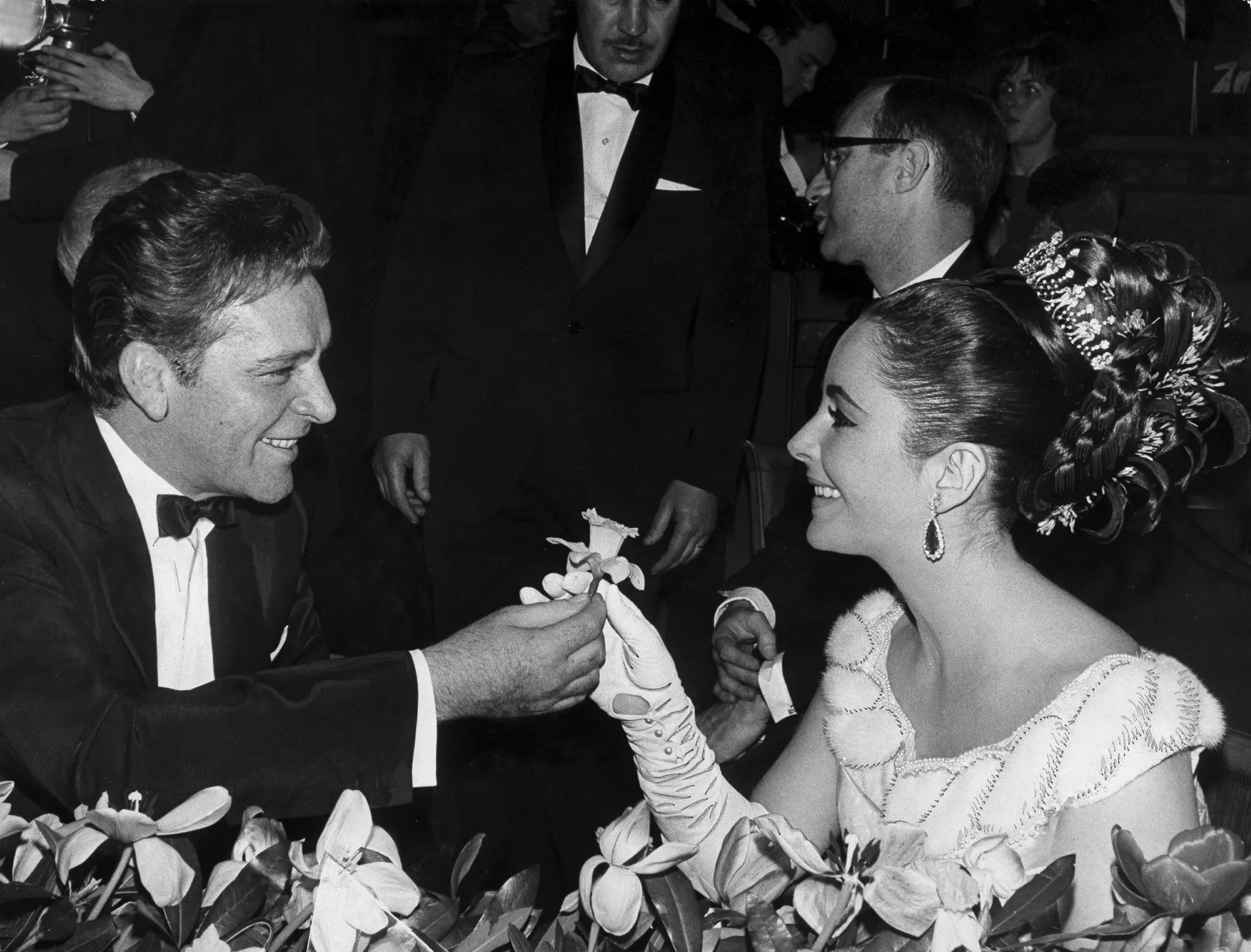
She joined me on my bucket list pilgrimage to the 105-year-old Hollywood restaurant Musso & Frank Grill. We sat at the bar where William Faulkner, Ernest Hemingway, F. Scott Fitzgerald and Dashiell Hammett imbibed (and where Hammett wrote). We dined at Elizabeth Taylor and Richard Burton’s regular booth and passed by Charlie Chaplin’s regular table by the front window. Unforgettable.
She’s the biggest fan and supporter of this blog DURING ALL OF ITS FOURTEEN YEARS, and I appreciate her and love her. Happy Anniversary, Honey!
In PBS’ American Experience documentary Jimmy Carter, The New Yorker writer and former Carter speechwriter Henrik Hertzberg says:
Jimmy Carter was what the American people always SAY they want – above politics, determined to do the right thing regardless of political consequences, a simple person who doesn’t lie, a modest man, not someone with a lot of imperial pretenses. That’s what people say they want. And that’s what they got with Jimmy Carter.
And herein lies the rub.
In 1976, Americans were reacting to Watergate and wanted a President the LEAST like Richard Nixon. We got him, in the form of Jimmy Carter; it turned out that Carter could deliver non-Nixonian decency, but not the leadership that the era required.
In Jimmy Carter, we hear from those who know Carter best – including his wife Rosalynn Carter, his vice-president Walter Mondale, and right-from-the-start Carter insiders Jody Powell, Pat Caddell and Bert Lance. How the times made this man, then propelled him to such improbable electoral success and then finally doomed his Administration, is a great and cautionary story.
Jimmy Carter is in two parts, which combine for two hours and 39 minutes. It’s available to stream from Amazon and AppleTV (I can find it on my app, but not on the website).
Photo caption: Craig Wasson and Jodi Thelen in FOUR FRIENDS
I see over 300 movies each year, and every time, I am hoping for an especially rewarding experience. Here are my favorite movie-going experiences of 2024.
A special screening of Four Friends at the Cambria Film Festival with stars Craig Wasson, Reed Birney and Jim Metzler. Critics loved this 1981 Arthur Penn film, and I loved it, and almost nobody else saw it. A film about an aspirational blue-collar young man in the turbulent Vietnam Era (like me), this film deeply resonated with me in 1981 and continues to do so. Grievously underrated, Four Friends isn’t available to stream and is very hard to find. It was wonderful to see it agaon, this time with an audience and the filmmakers.
Noir City: In recent years, Eddie Muller and team have been introducing me to international film noir. This year, they came through with the French Symphony for a Massacre and the British Across the Bridge. I attended Noir City in-person in Oakland, and I’ll be returning in January 2025.
Slamdance: This blog loves directorial debuts and world premieres – and that’s what Slamdance is all about. This year, the best two films were Italian: The Complex Forms and The Accident.
Cinequest: The film festival that launched this blog was once again rich with world premieres. The best were The Invisibles, Pain and Peace, and The Island Between the Tides, and the North American premiere of Human Resources. presented the remarkable In the Summers.
Nashville Film Festival: NashFilm has become one of my favorite film fests, and this year introduced me to In the Summers, which made my year-end top ten.
SFFILM: This time, SFFILM delivered two surprises of surrealism and absurdism: Mother Couch and The Practice.
San Luis Obispo International Film Festival: This year, the SLO Film Fest soared with its unique and very deep surf/skate program, and two indie charmers, Tokyo Cowboy and Chasing, Chasing Amy.
Frameline: San Francisco’s major LGBTQ fest brought us Gondola, another charming, dialogue-free comedy from German writer-director Veit Helmer, this one set in Georgia.
San Francisco Jewish Film Festival: The SFJFF is a major Jewish cultural event held against the backdrop of current events in Israel and Gaza, and the SFJFF leaned right into what would otherwise be the elephant in the room. I’ve been covering the SFJFF since 2016, I’m not Jewish and I can attest that this attitude is nothing new. I’ve seen SFJFF films with Palestinian voices, by Palestinian and Israeli Arab filmmakers, and about the Israeli-Palestinian conflict.
Not for the first time: I re-experienced Man on a Train, The Day of the Jackal, The Valley of Elah and Before the Devil Knows You’re Dead.
Palm Theater: My hometown arthouse delivered The Taste of Things, La Chimera, Wicked Little Letters, Ghostlight, How to Come Alive, Didi, The Outrun, Anora, A Real Pain, Queer and A Complete Unknown.
Sweetheart Deal: I’ve reviewed fifteen documentaries this year and screened another 80 while helping to program a film festival. Sweetheart Deal is the best documentary I’ve seen this year.
The Bikeriders: Jeff Nichols has written and directed six films, and I have loved all five that I have seen, including this latest one with Jodie Comer’s fine performance.
Netflix: I expected Richard Linklater’s Hit Man to be good (and it was), but I was totally surprised by The Remarkable Life of Ibelin.
TO TOP EVERYTHING ELSE
This is not technically movie-GOING, but it topped my movie-RELATED experiences of 2024. The Wife and I were joined by our friends Keith, Cynthia and Nisan on a bucket list pilgrimage to the 105-year-old Hollywood restaurant Musso & Frank Grill. The Wife and I sat at the bar where William Faulkner, Ernest Hemingway, F. Scott Fitzgerald and Dashiell Hammett imbibed (and where Hammett wrote). We dined at Elizabeth Taylor and Richard Burton’s regular booth and passed by Charlie Chaplin’s regular table by the front window. (The old-school martini and the sweetbreads were the best I’ve had.)
THE WORST
I usually don’t have a “ten worst movie” list because I only choose to watch movies that I hope will be exceptionally good. After all, I don’t have an editor assigning me to review soulless franchise movies, predictable rom coms and cheesy horror flicks. And, I generally just choose NOT to write about a bad indie – indie filmmakers have invested years of their lives in their films, and they just don’t need snark from somebody like me. But EVERY ONCE IN A WHILE, some film crosses the line.
This year, that film was a world premiere at Slamdance, the Japanese high school coming of age film House of Se, where one of the main characters is a menstruophile who swipes all the used sanitary napkins in the school. Anyone who makes a film this transgressive really must deliver a movie with some minimal production values and a coherent story, which House of Se fails to do. Of the 300+ movies that I watched in 2024, House of Se is unquestionably the very worst.
I did despise Kinds of Kindness and The Dead Don’t Hurt, but at least they were competently made.
Timothée Chalamet in A COMPLETE UNKNOWN. Courtesy of Searchlight Pictures.
A Complete Unknown, James Mangold’s brilliant biopic of Bob Dylan, is a film about genius. If you need to understand why Dylan is the only songwriter to win the Nobel Prize for Literature, here is why. It’s a fascinating story, and Mangold’s telling of it is insightful and entertaining.
The story begins with 19-year-old Bob Dylan showing up in New York City. No one knows who he is (a complete unknown), because he hasn’t done anything, but he wants to meet his hero, the now hospitalized folksinger Woody Guthrie. Dylan can’t pretend to be anything but another homeless musician wannabe, but legendary folksinger Pete Seeger (Edward Norton) takes Dylan under his wing. Starting with open mic nights, Dylan starts playing around the Greenwich Village folk scene.
Dylan meets Sylvie Russo (Elle Fanning) a student activist Dylan whom appreciates because she is pretty, smart, opinionated and has an apartment. Sylvie is a barely fictionalized Suze Rutolo, Dylan’s girlfriend of the period, who appears on the cover of his The Freewheelin’ Bob Dylan album.
Dylan meets another woman his age, Joan Baez (Monica Barbaro), who is already a big deal. Baez had played the Newport Folk Festival at age eighteen and had already recorded three albums. Bob is excited by Baez’s stardom, and Joan admires Bob’s still undiscovered song writing. Without falling in love exactly, they begin an affair. Bob takes advantage of Joan’s connections and credibility (and apartment); he lets her cover Don’t Think Twice, It’s All Right before he released his own version. You get the impression that Joan could have fallen in love with Bob if he would treat her with decency and affection, but Bob is only in love with himself.
Seeger, Baez and others in Greenwich Village’s music world soon recognize the extraordinary, generational genus of Dylan’s songwriting. He finally gets to record his own material in 1963 with The Freewheelin’ Bob Dylan; it was an auspicious and transformative collection of original songs from a 22-year-old: Blowin’ in the Wind, Masters of War, A Hard Rain’s Gonna Fall and Don’t Think Twice, It’s All Right.
In what I found to be the most thrilling moment in A Complete Unknown, Dylan debuts The Times They Are a-Changin‘ to a live audience, and all the listeners, including Seeger and Baez, are captivated, by each new groundbreaking verse. Come mothers and fathers…Throughout the land…And don’t criticize…What you can’t understand…Your sons and your daughters…Are beyond your command. The song – and this scene in A Complete Unknown – completely capture the zeitgeist of the time.
Dylan becomes a huge star and cultural icon – a symbol of a generation. And he immediately is alienated by the accompanying trappings of celebrity.
Dylan also evolves musically from his roots in acoustic folk music. His mentors in the Folk Music movement have a tough time with that, and it all explodes at the 1965 Newport Folk Festival when Dylan defiantly shows up with an electric rock band, the climax of A Complete Unknown.
The folk purists, like Pete Seeger and the musicologist Alan Lomax, saw folk music as politically significant and rock and roll music as politically inconsequential – history soon proved them very wrong about this. The old folkies had also suffered for their movement by being victimized in the McCarthy Era, earning some of their self-righteousness. What the old folkies could not comprehend – and would find abhorrent if they did – is that Bob Dylan was bigger than the genre of Folk Music itself.
Elle Fanning and Timothee Chalamet in A COMPLETE UNKNOWN. Courtesy of Searchlight Pictures.
So, just who IS Bob Dylan? We expect any biopic to reveal, but Mangold has targeted one of our culture’s most notorious enigmas. Mangold and Chalamet give us a Dylan perhaps less complicated than his image. Here, Dylan is ambitious and absolutely committed to his art. He will not prioritize any relationship or behavioral norm above his songwriting or his career.
He wants the recognition, fame and money that comes from having an audience and fans but, in person, he doesn’t want to experience the fandom or even respect the audience. In pursuit of his own vision, Dylan is not afraid to disappoint (or enrage) anyone else, nor does he feel constrained by loyalty. (Although, if consistent with his vision, he can be kind to his hero Woody Guthrie.)
There’s more than a touch of narcissism there, too. A Complete Unknown depicts Dylan between the ages of 19 to 24, when he was only as mature as most of us were at that age; after all, one can be important while still very immature. He can be a brat, but he isn’t a bad person; he just isn’t capable of a reciprocal relationship. Sylvie Russo and Joan Baez both come to understand that, whoever he really is, he’s not interested in giving them what they want.
The older generation of folksingers certainly don’t GET Dylan, His manager Albert Grossman (Dan Fogler) doesn’t get him, but is fiercely devoted, anyway. In A Complete Unknown, the only people who get Bob are Bobby Neuwirth (Will Harrison), the singer-songwriter who became his road manager, and another icon, Johnny Cash (Boyd Harrison).
As far as I can tell, A Complete Unknown is remarkable for its historical accuracy. There are a few tiny factual quibbles (Dylan actually changed his name from Zimmerman just AFTER he arrived in New York), but none of them are important or detract from the essential truth.
A Complete Unknown is also a time capsule of the early 1960s, and will be especially evocative for Baby Boomers like me, right down to the institutional green paint on Woody Guthrie’s hospital walls. LBJ hadn’t yet escalated the Viet Nam War, so peaceniks were campaigning against the threat of nuclear annihilation and white college kids were flocking to the Civil Rights Movement. Mangold perfectly captures the instant terror and helplessness that Americans felt during The Cuban Missile Crisis – and the suddenness of relief when it was over.
If you know the story, there are lots of delicious tidbits. For example, in the recording session for Like a Rolling Stone, Al Kooper (Charlie Tahan of Ozark), whose services were not needed on guitar, switches instruments so he can get paid for the session and invents the 1960s’ most iconic organ riff.
Monica Barbaro and Timothee Chalamet in A COMPLETE UNKNOWN. Courtesy of Searchlight Pictures.
Chalamet, whom I’ve always seen as a little kittenish, finally gets to be a little dangerous and is appropriately prickly as Bob Dylan. Chalamet portrays Dylan’s aching and yearning for artistic achievement, which allows us to root for a guy who often behaves badly.
Barbaro’s Joan Baez is especially vivid, especially as she sizes up Dylan’s talent and assesses his behavior. Bob, you’re kind of an asshole.
Scoot McNairy’s performance as Woody Guthrie is especially haunting. Guthrie had been suffering from the then little understood Huntington’s disease; because of the disabling neurological effects and the behavioral symptoms, he spent his final years confined in psychiatric hospitals.
Big Bill Morganfield’s performance as a fictional blues artist named Jesse Moffette, who clearly stands in for Muddy Waters, is especially charismatic. Morganfield happens to be the son of Muddy Waters.
Chalamet, Norton, Barbaro and Boyd Harrison do their own singing in A Complete Unknown, which has been much ballyhooed, but I don’t find that important to a successful biopic. Their singing in character is all very good, and I was impressed by how perfectly Barbaro nails Baez’s unique voice. Norton, BTW, plays his own banjo, which is also impressive.
The editing by Andrew Buckland and Scott Morris is exceptional – none of the shots or scenes linger even a half-second too long. This is a two hour, twenty minute film that never lags.
A Complete Unknown is the best biopic, showbiz or otherwise, since Walk the Line (also a James Mangold film) and it’s one of the Best Movies of 2024.
Photo caption: Monica Barbaro and Timothee Chalamet in A COMPLETE UNKNOWN. Courtesy of Searchlight Pictures.
This week on The Movie Gourmet -don’t wait for my review review of A Complete Unknown this weekend – go out and see it- it’s great. And I’ve begun my year end coverage continues. Look for Best Movies of 2024 on the 31st. So far, I published:
Sweetheart Deal: a triumph of cinéma vérité. In arthouse theaters.
Love Lies Bleeding: obsessions and impulses collide. Amazon, AppleTV, YouTube, Fandango.
I Saw the TV Glow: brimming with originality. Amazon, AppleTV, YouTube, Fandango.
ON TV
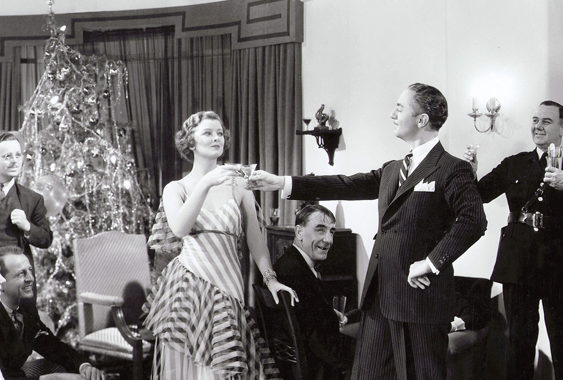
Myrna Loy and William Powell as Nora and Nick Charles during the Holidays
Once again, Turner Classic Movies is giving us a wonderful New Year’s Eve present – an all-day Thin Man marathon. William Powell and Myrna Loy are cinema’s favorite movie couple for a reason – just settle in and watch Nick and Nora Charles in The Thin Man and its sequels do what they do best – banter, canoodle, solve crimes and, of course, tipple.
Stars abound in supporting roles in the series. James Stewart had only made one feature film before 1936, the year, he appeared in After the Thin Man. Dean Stockwell played Nick and Nora’s son Nick Charles Jr in Song of the Thin Man. Film noir goddesses Gloria Grahame and Marie Windsor also both appear in Song of the Thin Man.
The pre-notoriety Tom Neal has a key role in in Another Thin Man. Classic film aficionados will also recognize Maureen O’Sullivan, Keenan Wynn, Leon Ames, Sheldon Leonard, C. Awbrey Smith, Joseph Calleia and Sam Levene.
These six movies from 1934-47 (The Thin Man, After the Thin Man, Another Thin Man, The Shadow of the Thin Man, The Thin Man Goes Home and Song of the Thin Man) are still first-rate escapist entertainment. Love ’em.
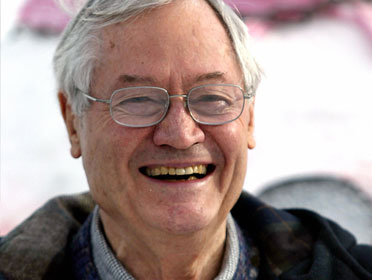
The prolific low-budget producer Roger Corman has died at 98, leaving behind a legacy far greater than the 491 titles that he produced. Corman’s great gift to us all is his mentorship of young and talented filmmakers. Filmmakers who got their first assignment from Corman (called “the Corman Film School”) include Oscar winning directors James Cameron, Francis Ford Coppola, Jonathan Demme, Curtis Hanson, Ron Howard and Martin Scorsese. Not to mention cult directors Paul Bartels and Monte Hellman. And Chinatown screenwriter Robert Townsend. And movie star Jack Nicholson In the 70s, Corman combined making lowbrow American movies with distributing highbrow foreign films, including Bergman’s Cries and Whispers, Fellini’s Amarcord, Kurosawa’s Dersu Uzawa and Schlondorff’s The Tin Drum. In one decade, he distributed more Best Foreign Film Oscar winners than all the Hollywood studios combined.
Robert Towne is best known, justifiably, for his Oscar-winning screenplay for Chinatown, one of my Greatest Movies of All Time; but director Roman Polanski perfected the script by changing the ending over Towne’s objections. However, Chinatown was only one of a string of brilliant screenplays penned by Towne between 1973 and 1982 – The Last Detail, The Yakuza, Shampoo and Personal Best. Starting in 1967, Towne was also the uncredited script doctor who polished Bonnie and Clyde, McCabe and Mrs. Miller, The Godfather and Heaven Can Wait.
Casting director and producer Fred Roos enhanced the films of Francis Ford Coppola and George Lucas by advocating for then unknown actors like Al Pacino, Harrison Ford, Tom Cruise, Carrie Fisher, Richard Dreyfuss, Rob Lowe, Cindy Williams, Patrick Swayze, Matt Dillon and Mackenzie Phillips.
In his second act, Marshall Brickman co-wrote Woody Allen’s two masterpieces: Annie Hall and Manhattan. Brickman had success before (creating Johnny Carson’s Carnac the Magnificent and co-writing The Muppets) and after (creating the Broadway shows Jersey Boys and The Addams Family).
Documentarian Morgan Spurlock broke through with his McDonalds exposé Super Size Me.
Eleanor Coppola was the wife of director Francis Ford Coppola and the mother of director Sophia Coppola. Eleanor Coppola herself directed perhaps the best ever documentary film about the making of a movie, Hearts of Darkness: A Filmmaker’s Apocalypse.
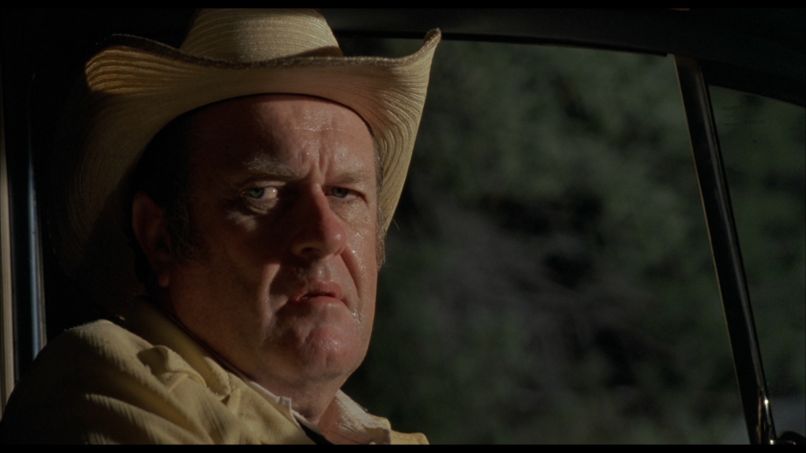
M. Emmet Walsh was one of cinema’s most stories, prolific (233 screen credits) and welcome character actors. Walsh was unforgettable as the murderous private detective Loren Visser in Blood Simple, a scary (and funny) concoction of amorality, sleaze and tenacity. He also elevated Midnight Cowboy, Little Big Man, What’s Up Doc?, Serpico, Blade Runner, Ordinary People, Slap Shot, Straight Time, Reds, Cavalry and Knives Out. There was only one T in Emmet, and the M stood for Michael.
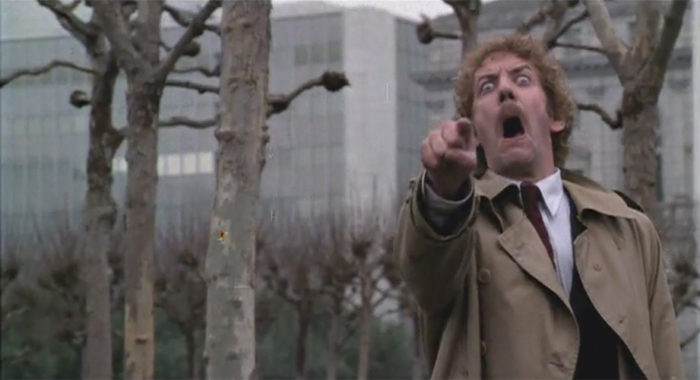
Donald Sutherland in INVASION OF THE BODY SNATCHERS
Donald Sutherland became a famous character actor playing quirky misfits in The Dirty Dozen and Kelly’s Heroes, and became a star as an iconic subversive in M*A*S*H*. His performances in Klute and Invasion of the Body Snatchers are indelible. Sutherland finished with 199 IMDb credits, including the Hunger Games franchise, and had three films released in 2023.
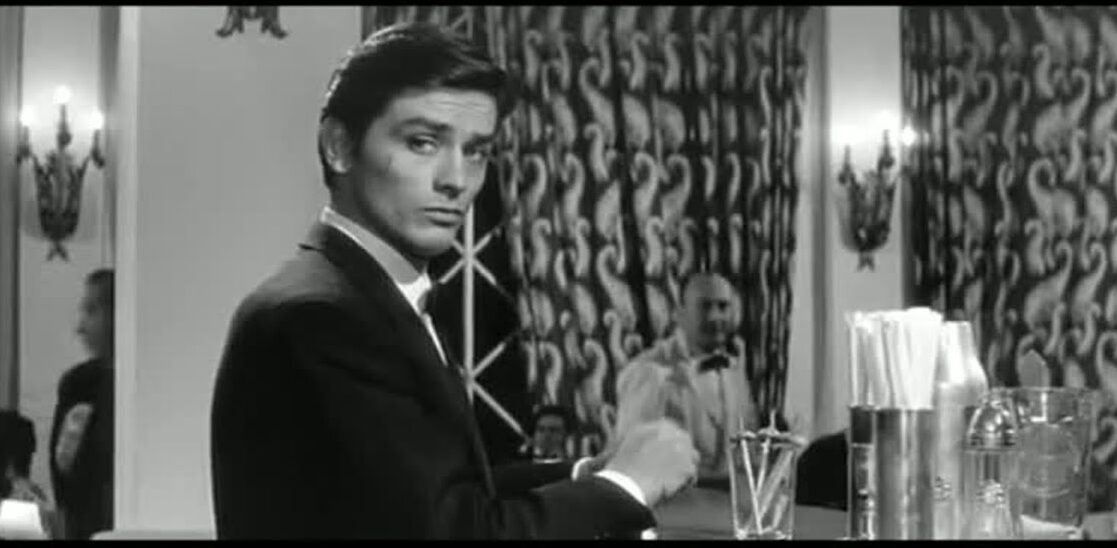
Alain Delon in ANY NUMBER CAN WIN
Impossibly handsome and dashing, no one ever removed their sunglasses with more of a flourish than iconic French leading man Alain Delon. Delon had eyes that can switch off any glimmer of empathy – perfect for playing sociopaths. Accordingly, he broke through internationally playing Patricia Highsmith’s Tom Ripley in Purple Noon (1960). Delon is best known for being a favorite of top European directors, starring in Visconti’s Rocco and His Brothers and The Leopard, Antonioni’s L’Eclisse, and Melville’s Le Samouri and Le Cercle Rouge. I also like Delon in the less famous caper movies Any Number Can Win and The Sicilian Clan. Mr. Klein, in which Delon played a sleazy French art dealer who took advantage of Nazi persecution of Jews, was a Lost Film, only becoming available again in the past five years. Sheila O’Malley has written most insightful essays on Delon and has posted the most playful photo of him.
Tom Wilkinson won an Oscar for Michael Clayton, but I best remember his searing performance in In the Bedroom and his delightful turn in The Full Monty.
James Earl Jones’ expressive face, imposing bearing and authoritative voice won him an Oscar for THE GREAT WHITE HOPE. The voice was enough by itself to dominate the STAR WARS franchise as Darth Vader.
Maggie Smith’s career began in the 1950s, and she was accomplished enough by the mid-1960s to play Desdemona to Laurence Olivier’s Othello. She won Oscars in the 70s for The Prime of Miss Jean Brodie and California Suite. Her popularity soared in the 2000s with Gosford Park, the Harry Potter franchise and her unforgettably withering Lady Violet Crawley in Downton Abbey.
Anouk Aimée starred in some of the most iconic European art films of the 1960s: Fellini’s 8 1/2 and La Dolce Vita and Lelouch’s A Man and a Woman.
Shelley Duvall will be best remembered for playing the wife of Jack Nicholson’s decompensating writer in The Shining. It’s hard to discuss American cinema of the 1970s without mentioning Duvall because six of her first seven movies were Robert Altman films (Brewster McCloud, McCabe and Mrs. Miller, Thieves Like Us, Nashville, Buffalo Bill etc., and 3 Women; the seventh was Annie Hall, in a hilarious turn as an Alvy Singer sex partner. She also played the waitress who prods Steve Martin’s Cyrano character into wooing Daryl Hannah’s Roxanne in Roxanne.
Gena Rowlands, Oscar-nominated as best actress for Gloria and A Woman Under the Influence, had a gift for authentic and wrenching performances. I also liked her in lighter fare like Minnie and Moskowitz and Night on Earth. She was the director John Cassavetes’ wife, muse and leading lady.
Beginning as a teen in 1960, Marisa Paredes presided over Spanish cinema with 120 acting performances through this year. American art house audiences knew her from Pedro Almodovar‘s High Heels, All About My Mother, The Flower of My Secret and The Skin I Live In.
Earl Holliman had the confidence, in one of his first movies, to put a unique spin on the role of a mob henchman in 1955’s The Big Combo. He continued to play character roles in big movies: Giant, Gunfight at the O.K. Corral and The Sons of Katie Elder. He went on to amass almost 100 credit in television, most popularly as Angie Dickinson’s boss in Policewoman/ most of his TV work was forgettable, but he did star in the first ever episode of The Twilight Zone.
British actor Timothy West became recognized in the US for his titular performance in the imported mini-series Edward the King, as the son of Queen Victoria, who simmered for decades, waiting for his chance to become King Edward VII. I loved him one of my favorite movies, Day of the Jackal. West’s 151 screen credits included three portrayals of Winston Churchill. As prolific as he was in television and the movies, he had even more of an impact on stage. He was a member of the Royal Shakespeare Company and the Prospect Theater Company, served as artistic director of the Old Vic Theater, and, at age 81, played the role of King Lear for the fourth time.
Louis Gossett, Jr., won an Oscar for his drill sergeant in An Officer and a Gentleman. He also played Fiddler in Roots, amid 198 other screen appearances.
I was surprised that Teri Garr had 44 screen credits (many as a dancer, including Viva Las Vegas) BEFORE her breakthrough role as Inga in Young Frankenstein. Then she played the mom in Close Encounters of the Third Kind, earned an Oscar nod for her most memorable role in Tootsie and went on to work in 200 more movies and shows.
Dabney Coleman, a versatile and prolific character actor, perfected the clueless, boorish boss characters in 9 to 5 and Tootsie. As gifted as he was in those comedic roles, he also worked in a wide range of fine movies: Downhill Racer, Cinderella Liberty, Midway, Go Tell the Spartans, North Dallas Forty and Melvin and Howard. Coleman topped off his career with roles in Boardwalk Empire, Ray Donovan and, as John Dutton, Sr., in Yellowstone.
Tony Lo Bianco first made his name in a perverse movie that became a cult film, The Honeymoon Killers. He went on to act in the 1970s classics The French Connection, The Seven Ups, Jesus of Nazareth, and lots and lots of TV work. I especially admire his performance in John Sayles’ City of Hope.
Carl Weathers retired from pro football at 26, played a football player in Semi-tough, and then the unforgettable Apollo Creed in the Rocky franchise. He recently starred in The Mandalorian and directed some of it. Personal note: his film Action Jackson was playing theaters in Santiago, Chile, when I visited in 1984.
You’ve seen David Harris in Brubaker, A Soldier’s Story, and NYPD Blue, but his most memorable role was early on, in Walter Hill’s indie cult classic The Warriors.
I didn’t remember the name of actor Jonathan Haze, who worked in a score of Roger Corman’s low budget exploitation films. His most memorable starring role was in Little Shop of Horrors, where his character cultivated a flesh-eating houseplant and pulled a tooth from a masochistic dental patient (Jack Nicholson).
Photo caption: Timothee Chalamet in A COMPLETE UNKNOWN
This week on The Movie Gourmet – a new review of The Critic and a capsule recommendation (below) of Beetlejuice Beetlejuice, along with two recommendations to DVR on TCM. Next week: A Complete Unknown, the ballyhooed Bob Dylan biopic.
And my year-end coverage is about to begin: Farewells, Best (and Worst) Movie-going Experiences and, of course, The Best Films of 2024. Watch this space.
CURRENT MOVIES
I’m not writing a separate post about Beetlejuice Beetlejuice because it’s neither an overlooked movie or an important one. But The Wife and I finally got around to streaming it for free from Max, and, boy, is it entertaining. We were reminded that so much of Beetlejuice’s gleeful misbehavior is Michael Keaton’s brilliant invention. Jenna Ortega adds a refreshing note. There’s an homage to the original movie’s hilarious use of Banana Boat (Day-O) and the comic possibilities of MacArthur Park are fully realized. There’s even some smart mockery of our self-help heavy culture Beetlejuice Beetlejuice can be streamed from Max (included), Amazon and AppleTV.
Anora: human spirit vs the oligarchs. In theaters.
Conclave: explosive secrets? in the Vatican?. In theaters.
Blitz: one brave, resourceful kid amid the horrors. AppleTV.
Sweetheart Deal: a triumph of cinéma vérité. In arthouse theaters.
Love Lies Bleeding: obsessions and impulses collide. Amazon, AppleTV, YouTube, Fandango.
I Saw the TV Glow: brimming with originality. Amazon, AppleTV, YouTube, Fandango.
ON TV
On December 27, Turner Classis Movies airs Three Strangers, with Geraldine Fitzgerald’s indelible performance, which I wrote about last week. If you missed it, you can stream it from Amazon or AppleTV.
On December 28, TCM will present The Last Detail, featuring one of 30-something Jack Nicholson’s iconic embodiments of alienation and rebelliousness (Five Easy Pieces, Chinatown, The Passenger, Onne Flew Over the Cuckoo’s Nest).
Two non-commissioned Navy lifers (Nicholson and Otis Young) are ordered to escort a court-martialed 18-year-old seaman (Randy Quaid) from Norfolk to a naval prison in Maine. The kid is very dumb, very inexperienced and very, very, very unlucky. He faces a long, disproportional for a petty theft; he didn’t know he was stealing from the base commander’s wife’s pet charity. Because he hasn’t had many adult experiences, the older guys decide to show him a good, completely unauthorized, time on the trip.
Carol Kane and Michael Moriarty add superb supporting performances.
Co-written by Robert Towne (Chinatown) and directed by Hal Ashby (Harold and Maude, Being There), this is a prime example of New Hollywood cinema.
Randy Quaid, Jack Nicholson and Otis Young in THE LAST DETAIL.
Photo caption: Ian McKellen and Gemma Arterton in THE CRITIC. Courtesy of Greenwich Entertainment.
The cynical thriller The Critic is set a hundred years ago, when print media was king. Jimmy (Ian McKellen) is the chief drama critic for a low-brow, mass circulation London newspaper. He’s had the job for forty years, and he sees his job as entertaining the readership with his savage reviews, using a vast vocabulary he knows is above the readers’ grasp. Jimmy’s longevity and prominence has made his voice powerful; he could be expected to sometimes act with mercy and responsibility, but he never does.
Protected by his longtime publisher, Jimmy has become very entitled, and he enjoys perks that exceed the station of a newspaper writer, however erudite. He doesn’t appreciate that others may be put off by his day-drinking, capricious cruelty and general arrogance. His boss’ authority as an aristocrat has also protected Jimmy from the police persecution of homosexuals and from blackmail.
Then the boss dies, and his straitlaced, sexually repressed son (Jeremy Strong) inherits his title and his newspaper. Jimmy’s invulnerability evaporates. Desperate to regain what he stands to lose, Jimmy resorts to blackmail himself. Unpredicted life and death consequences unfold.
Ian McKellen in THE CRITIC. Courtesy of Greenwich Entertainment.
Is Jimmy really an unredeemable prick? Will he get his due? The Critic is all about the character of Jimmy, which Ian McKellen plays with gusto and nuance. Watching McKellen is a delicious treat.
The other characters exist to move the plot along for Jimmy, but Strong and the other actors (Gemma Arterton, Aldred Enoch) are very good, and Lesley Manville is perfect, once again.
The Critic is streaming on Amazon, AppleTV, YouTube and Fandango.