The compelling and affecting Short Term 12 is set in a foster care facility unit named Short Term 12; since the kids can live there for years, it seems pretty long-term to me. These are kids who have suffered abuse and neglect and who act out with disruptive and dangerous behaviors. Runaways, assaults and suicide attempts are commonplace, and some of the kids thrive on creating drama.
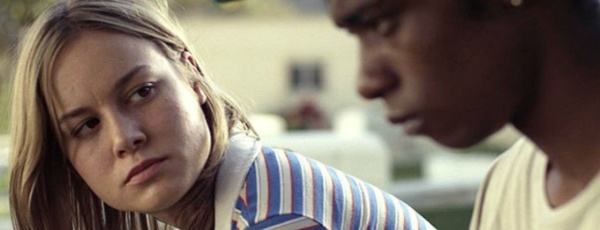
The gifted lead counselor on the unit is Grace (Brie Larson), who isn’t much older than the kids. She’s kind of a Troubled Kid Whisperer who, in each impossible situation, knows exactly what to do to defuse or comfort or protect. But while she is in total command of her volatile and fragile charges, she is profoundly troubled herself. She and her boyfriend Mason (John Gallagher Jr.), who also works on the unit, are themselves survivors and former foster youth. Mason seems to have resolved his issues, but Grace’s demons lurk just under her skin.
In Short Term 12’s taut 96 minutes, we watch Grace navigate through crisis after crisis until she must face her own. We share many of the most powerful moments in 2013 cinema, particularly one kid’s unexpectedly painful insightful and sensitive rap, another kid’s authoring a wrenching children’s story and Grace’s own outburst of ferocity to protect a kid from a parent.
Brie Larson’s performance as Grace is being widely and justifiably described as star-making, and I think she deserves an Oscar nomination. I noticed her performances in much smaller roles in Rampart and The Spectacular Now , and I’m really looking forward to the launch of a major career. Think Jennifer Lawrence.
John Gallagher Jr. must be a superb actor, because nobody in real life can be as appealing and sympathetic as his characters in Margaret, Newsroom and Short Term 12. I’ll watch any movie with Gallagher in it, and he’s almost good enough to help me stomach Newsroom.
In his debut feature, writer-director Destin Cretton has hit a home run with one of the year’s best dramas. Some might find the hopeful ending too pat, but I say So What – I have met many former foster youth who have transcended horrific childhoods to become exemplary adults.
Short Term 12 is available on DVD from Netflix and streaming from Netflix Instant, Amazon, iTunes, Vudu, YouTube, GooglePlay and Xbox Video. It was high on my Best Movies of 2013.
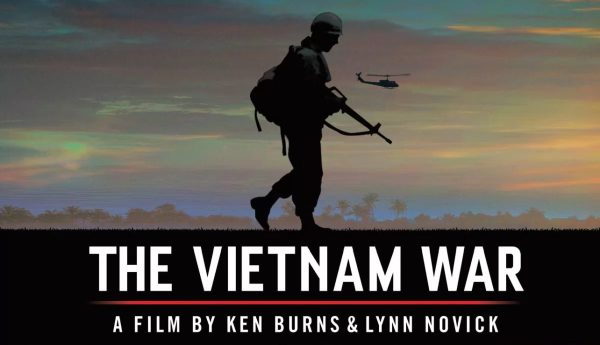
The new PBS documentary by Ken Burns and Lynn Novick, The Vietnam War, is one of the best documentaries of the century and a superb history lesson, crucial to understand the America of today. It’s a Must See for Baby Boomers. For different reasons, it’s a Must See for Americans of later generations. The ten episodes of The Vietnam War can be streamed from PBS through October 15.
It’s impossible to overstate the effect of the Vietnam War upon Americans of my generation. I was watching TV at nine years old when I viewed a Buddhist monk setting himself on fire. Vietnam got my attention on that day and held it throughout my youth. I remember watching the television news, with the weekly “body count” scorecards for dead Americans, Army of the Republic of Vietnam (ARVN), Viet Cong and North Vietnamese Army (NVA). I was almost 15 when, overnight, the Tet Offensive changed the appraisal of the war by the mainstream American public. I was almost 19 when I got my draft lottery number. I was 22 and about to graduate from college when Saigon fell.
Last week, a carpenter about my age did some work at my house. When he arrived, he commented that he heard through the door that I was watching The Vietnam War. It took us about two sentences to get to the draft. Each of us instantly remembered our lottery numbers (mine was 65, his was 322). Both of us remembered where we were on February 2, 1972, the night of that lottery drawing.
For Baby Boomers, The Vietnam War provides context for our experience, along with some new revelations. Younger Americans who watch The Vietnam War will now understand what happened then and how it affects our culture and our politics to this day.
Burns and Novick tell their story mostly through first person accounts, from real people recounting their experiences 40-60 years ago. The American talking heads aren’t big shots, but people who were soldiers, protesters, POWs, journalists and family members who lost loved ones. But Burns and Novick also bring us Vietnamese witnesses – soldiers and civilians from the ARVN, Viet Cong and NVA. Including the Vietnamese points of view – as disparate as the American ones – works to complete the picture.
The Vietnam War also brings us new information about the era’s most iconic photos. We all remember the shocking still photo of the summary pistol-to-the-temple execution of a Viet Cong by a South Vietnamese police official; The Vietnam War brings us the original network TV film clip that was shot and shown only once on the TV news. There’s the unforgettable photo of the Kent State coed, with hands outstretched over the corpse of a fellow student; we also see a never-before-shown home movie clip shot of the scene by another student. Finally, we hear from the journalist who photographed the running Vietnamese girl burned by napalm, and we see film from that scene, too.
Who remembers that “light at the end of the tunnel” was coined by a French general in Vietnam, and later adopted by American brass (a bad choice, given the French experience)? We hear the phrase used again in a very grim joke in late April 1975.
The Vietnam War shows us that Le Duan had shouldered Ho Chi Minh aside and ran the North Vietnamese side of the war for its last eight years. Study of Le Duan provides us with some important lessons. First, never get in a war of attrition with a fanatic. Second, never let a fanatic run your postwar economy or foreign relations.
The Vietnam War is unmatched in tracing the evolution in the American public’s attitude during the long, long war. There was some public opposition to the War almost from the beginning, but the Tet Offensive in early 1968 convinced the great majority that the US could never win and needed to find a way out. But many Americans despised the anti-war protests. It was the protests that divided the American nation. Oddly, at the same time there was both a policy consensus (get out of Vietnam) and a cultural civil war.
And The Vietnam War, through his own words on White House tapes, exposes Henry Kissinger (the favorite of the American press) as the cynical sycophant that he was, ever flattering Nixon and conspiring to delay peace to favor Nixon’s political fortunes.
There is no more evocative aspect of The Vietnam War than its soundtrack, with 120 songs from the era from Jimi Hendrix, Bob Dylan, The Beatles, The Rolling Stones, Buffalo Springfield, Nina Simone, Simon and Garfunkel, Cream, Janis Joplin, Pete Seeger and even the Zombies, Procol Harum, Vanilla Fudge and Link Wray. One episode ends with my choice as the anthem for 1971 in America – Marvin Gaye’s What’s Going On. The songs are absolutely perfectly matched with the usual and spoken content, perhaps the most masterful use of popular music on a soundtrack that I have seen (and heard). You can even review the episode playlists .
Through October 15, you can stream, The Vietnam Warhere.
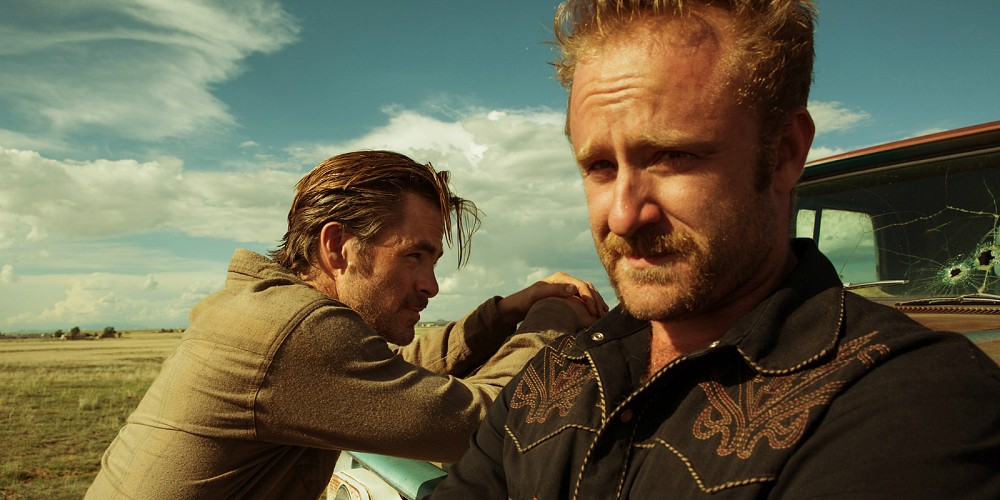
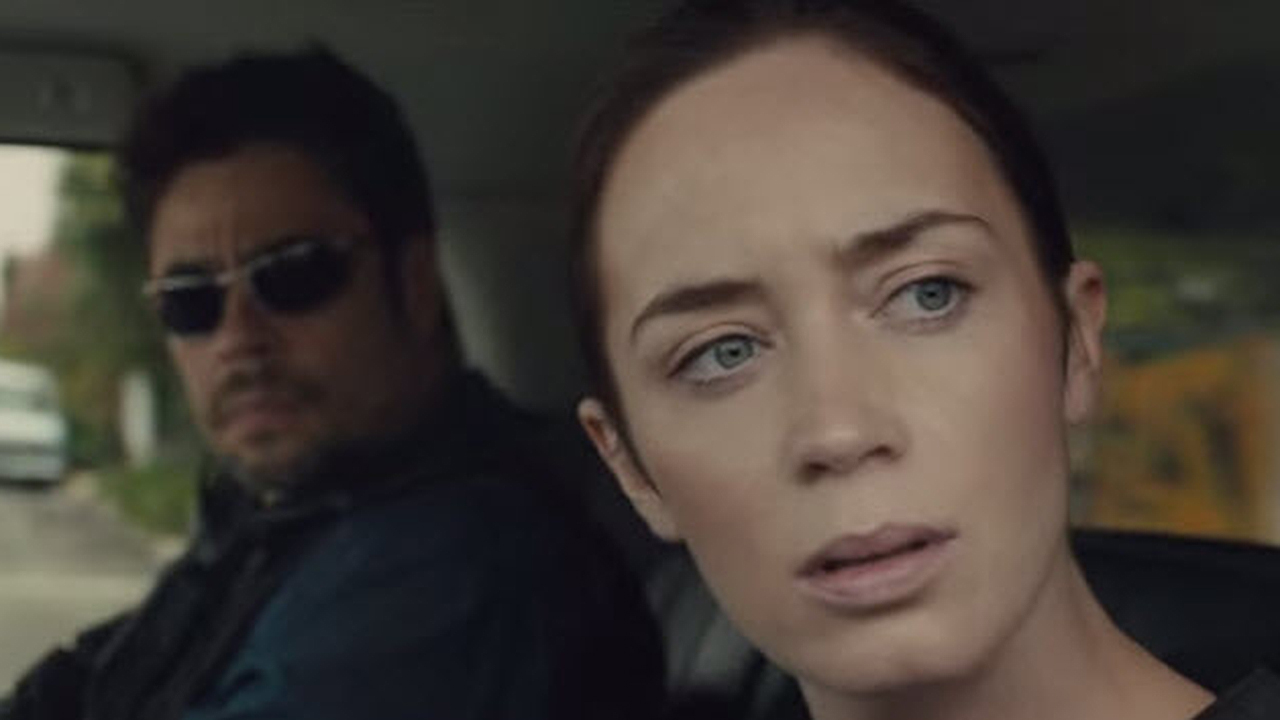
The actor Taylor Sheridan has written three recent films, and he has emerged as one of America’s most important filmmakers. The three movies are Sicario, Hell or High Waterand Wind River(which is his directorial debut – I’m not counting the low budget horror film Vile). I named Hell or High Water as the very best movie of 2016.
Here are some observations about Sheridan’s movies so far.
Western settings: This is the most obvious Sheridan signature: Sicario is set on the border between Mexico and Texas and New Mexico. Hell or High Water is set in West Texas (but primarily shot in New Mexico). Wind River is set in Wyoming. Sheridan, very comfortable with wide open spaces, grew up on a ranch outside the hamlet of Cranfills Gap, Texas, between Fort Worth and Waco. He isolates his characters in sparsely populated landscapes under Big Skies. But he’s not sentimental – the Mexican border city in Sicario and the Indian Reservation in Wind River are horrible places.
Great dialogue: From “Toto, I’ve a feeling we’re not in Kansas anymore.” to “Fasten your seatbelts, it’s going to be a bumpy night!” to “Forget it, Jake. It’s Chinatown,” great movies are known for iconic dialogue. Sheridan is reviving that lost art.
From Hell or High Water:
Toby: “You’re talkin’ like you don’t think we’re going to get away with it.”
Tanner: “I never met anyone who got away with anything.”
And from Wind River:
“Who’s the victim today? Looks like it’s gonna be me.”
and
“This isn’t the land of backup, Jane. This is the land of you’re on your own.”
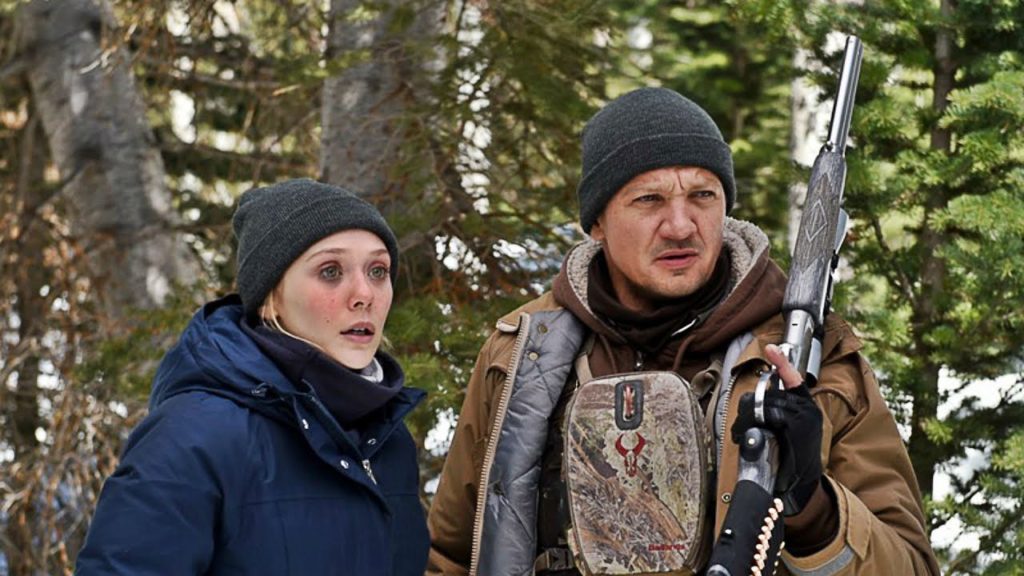
Elizabeth Olsen and Jeremy Renner in WIND RIVER
Resists the easy: Sicario revolves around a fish-out-of water female cop, but he doesn’t mate her her with one of the male stars. In Hell or High Water, Toby insures the family’s security – but that isn’t enough for his ex-wife to take him back. In Wind River, Cory and Jane meet cute (in a way) but don’t fall into bed; and Cory’s ex-wife doesn’t comfort him, either.
Not everything is going to be okay: Sheridan knows how to craft a satisfying movie ending, but it’s not going to Happily Ever After for everyone. In Hell or High Water, the action that brings peace to Chris Pine’s character brings eternal unease to Jef Bridges’. Wind River’s reservation still devoid of hope. Sicario’s border region is still poisioned by drugs and the drug war.
Populist politics: Sheridan hates that, in much of our society, people are disposable. Sheridan explores this theme with the victims of the drug wars in Sicario, the flyover-state working class in Hell or High Water and the Native Americans on the reservation in Wind River.
It’s an impressive body of work from Sheridan. I’m looking forward to his next screenplays, a follow-up to Sicario named Soldado and a TV drama titled Yellowstone.
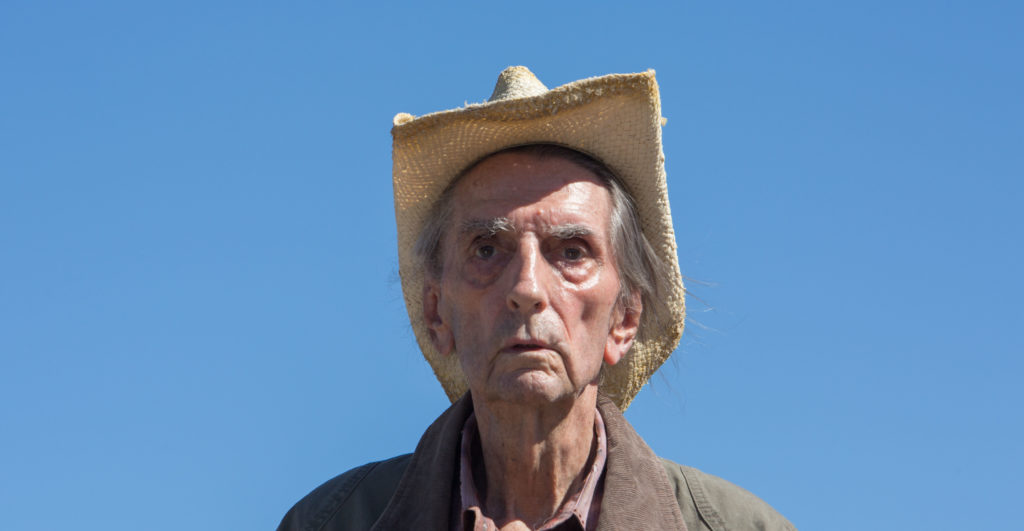
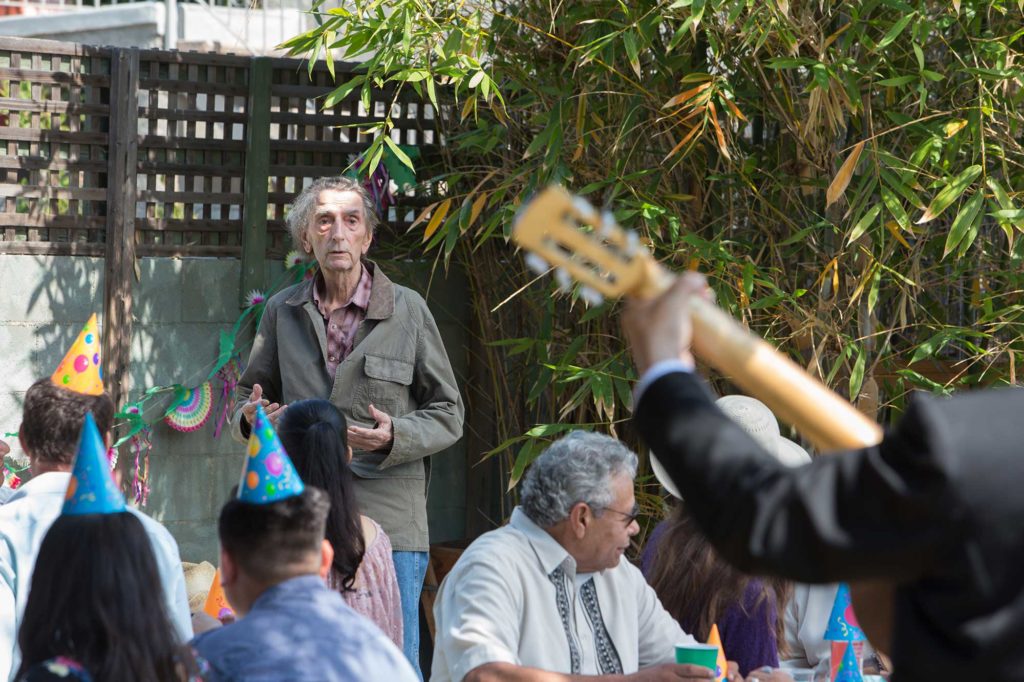
Harry Dean Stanton in LUCKY. Photo courtesy of Magnolia Pictures
The often funny and stealthily profound Lucky opens this weekend in the Bay Area. Here’s my remembrance of its star, Harry Dean Stanton. Other choices:
A Must See: the contemporary Western thriller Wind River, which has mystery, explosive action, wild scenery and some great acting, especially by Jeremy Renner and Gil Birmingham.
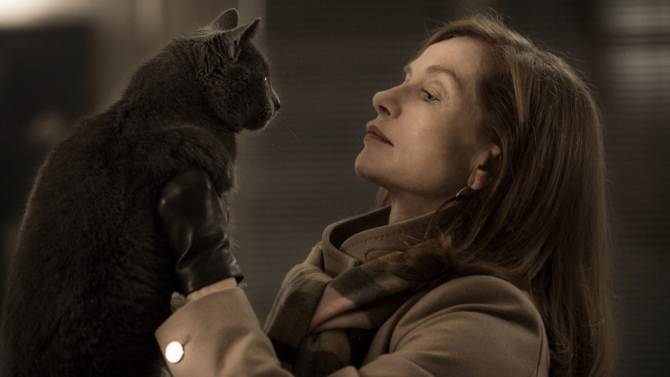
For the second straight week, my DVD/Stream of the Week is the extraordinary performance of French actress Isabelle Huppert in the subversive Elle. The controversial Elle is available on DVD from Netflix and to stream from Amazon, iTunes, Vudu, YouTube and Google Play.
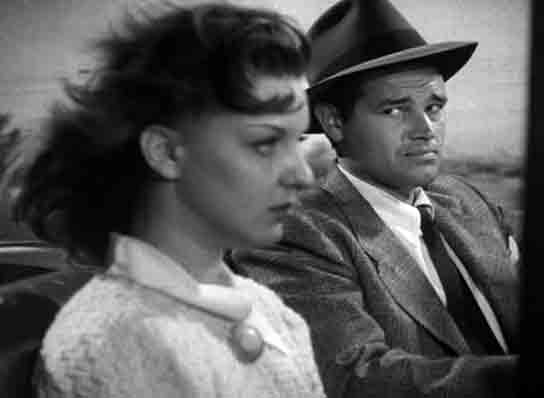
On October 8, Turner Classic Movies brings us the especially nasty noirDetour, in which poor Tom Neal is practically eaten alive by Ann Savage as perhaps the most predatory and savage female character in film noir history. One of the few Hollywood films where the leading lady was intentionally de-glamorized with oily, stringy hair.
Ann Savage and Tom Neal in DETOUR (Hint – she’s trouble!)
DOWNSIZING – coming to the Mill Valley Film Festival
The Mill Valley Film Festival always showcases many of the most promising prestige films that are scheduled for release during Award Season. It’s the best opportunity for Bay Area film goers to catch an early look at the Big Movies.
For example, last year’s festival featured La La Land, Arrival, Loving, Elle, Toni Erdmann, Lion, The Handmaiden, The Salesman and Paterson.
THE SQUARE – coming to the Mill Valley Film Festival
Here is a selection of the MVFF’s Oscar bait:
Downsizing from director Alexander Payne of (Sideways and Nebraska).
Three Billboards Outside Ebbing Missouri from Martin McDonagh (The Guard) – see trailer below.
The Shape of Waterfrom Guillermo del Toro (Pan’s Labyrinth).
Last Flag Flying from Richard Linklater (Boyhood, Before Sunrise/Susnet/Midnight).
Wonderstruck from Todd Haynes (Far from Heaven, Carol).
The Square from Ruben Ostlund of (Force Majeure).
Thelma from Joachim Trier (Reprise, Louder Than Bombs).
The Current Warfrom Alfonso Gomez-Rejon (Me and Earl and the Dying Girl).
Call Me By My Name from Luca Guadagnino (I Am Love, A Bigger Splash).
Loveless from Andrey Zvyagintsev the director of (Leviathan).
The Florida Project by Sean Baker the director of (Tangerine).
THE FLORIDA PROJECT
Celebrity appearances, for those of you who like that sort of thing, will include Sean Penn, Kristin Scott Thomas, Andrew Garfield and Holly Hunter. For those of you seeking a chance to hear great filmmakers discuss their work in the flesh, you’ll get your chance with Richard Linklater, Joe Wright, Todd Haynes and Alfonso Gomez-Rejon.
The directorial debut of actor Greta Gerwig will screen, as will the first German-language film directed by actor Diane Kruger.
There will also be several documentaries featuring musicians: Paul Butterfield, Bill Frisell, Joe Satriani and Sly and the Family Stone.
This year’s MVFF runs from October 5-15, at the Sequoia in Mill Valley, the Rafael in San Rafael, the Century Larkspur and the Lark in Larkspur and the Century Cinema in Corte Madera. Check out the program and tickets for the MVFF.
Harry Dean Stanton in LUCKY. Photo courtesy of Magnolia Pictures
Let’s not bury the lede: Lucky is Harry Dean Stanton’s last film. Lucky was written for Harry Dean, and the main character is reportedly not dissimilar to Stanton. Here’s my Harry Dean Stanton remembrance.
Lucky is a vivid portrait of a singular character. It’s also a meditation on life and the end of life and how you can control how you live.
Stanton plays Lucky, a nonagenarian who lives in his isolated house on the edge of a Mojave desert town. The town is so small that everyone knows everyone else. There’s not a lot of action in Lucky. We watch Lucky as he purposefully plods through his modest daily routine: to his refrigerator, to the diner, to the local bar, plopped in front of his TV to watch “my shows”. Lucky is sometimes confused by age, but retains great strength of conviction and a formidable will.
Lucky is not really anti-social but he is minimally social. He values his privacy and doesn’t seek human interaction, but he accepts it as it occurs organically. He is not a stereotypical movie curmudgeon with a heart of gold. He’s prickly, but capable of authentic tenderness, as when he shares a joint with a waitress friend and when he belts out the Mexican tearjerker Volver, Volver.
He’s also an atheist. Being areligious doesn’t mean that someone is amoral. Not at all. Lucky lives by a firm code – he is so offended when thinks someone is exploiting a grieving friend, he fiercely tries to fight a man fifty years his younger.
But as we observe Lucky not doing much, we are pulled into an increasingly profound contemplation. How do we choose to live our lives if there’s no afterlife? How afraid are we of the finality of death? What is meaningful? What’s in our control?
This is also a pretty funny film. Lucky reminds us that Harry Dean was a master of both the deadpan and the sarcastic jibe. And Lucky has lived decades without female or other supervision, and his habits, like watering cactus in his underwear and cowboy boots, are pretty entertaining.
Lucky is the first film directed by the actor John Carroll Lynch, so creepy in Zodiac and so heartbreaking in The Founder. Lynch is a confident enough director to take his time. And, if you have any doubt about where Lynch sees Lucky on the continuum of life, check out this shot.
Harry Dean Stanton in LUCKY. Photo courtesy of Magnolia Pictures
Lynch gets excellent performances out of the rest of the cast: Ed Begley, Jr., James Darren (yes, the 60s heartthrob), Ron Livingston, Barry Shabaka Henley (recently so good in Paterson), Yvonne Huff and, surprisingly, the director David Lynch. Tom Skeritt delivers a moving monologue.
But, in the end, this is Harry Dean Stanton’s film. And, to Lynch’s credit, it’s a fine way to remember Harry Dean.
I’ve been traveling and haven’t had a chance until now to recognize the life and career of the actor Harry Dean Stanton, who died this month at the age of 91. Coincidentally, Harry Dean was on my mind because I had just watched his masterpiece Paris, Texas on the flight to my vacation destination, and I was preparing to watch the screener for his last film, Lucky, to be released in the Bay Area next weekend.
Once of the most noticeable of the prolific character actors, he improbably became a leading man at age 58 and, in his 80s, starred as the menacing leader of a polygamist cult in Big Love. I’ll be writing about Lucky tomorrow.
Harry Dean was a great favorite of mine – and of many other cinephiles. Roger Ebert and Gene Siskel once posited that a movie could not be entirely bad if Harry Dean Stanton were in it. Harry Dean often seemed like that uncle/neighbor/mentor who had Lived A Life but would let you inside and let you learn from his journey. He was ever accessible and always piqued the audience’s curiosity about his characters.
Harry Dean Stanton garnered 200 screen credits, including scores of 1960s TV shows. He appeared on seemingly every TV Western: Rawhide, Bonanza, The Big Valley, The High Chaparral, The Virginian, Laramie, The Rifleman, Bat Masterson and Stoney Burke. Think how many times we Baby Boomers must have seen him in The Fugitive, Adam 12, Mannix, Combat!, The Untouchables, and even The Adventures of Rin Tin Tin.
In the early 1970s, I first really noticed Harry Dean for his quirkiness, singularity and forlorn humor in his sidekick roles in Pat Garrett and Billy the Kid and The Missouri Breaks. That’s when you had to sit through the end credits to find out who that actor was.
Along the way, he made three Monte Hellman cult films (Ride the Whirlwind, Cockfighter, Two-Lane Blacktop) and was friends with fellow Hollywood outlaws Warren Oates and Jack Nicholson. He shared a house with Nicholson for a while (can you imagine?).
Also a fine musician, Harry Dean left us with touching vocal renditions of Just a Closer Walk with Thee in Cool Hand Luke and Volver, Volver in Lucky.
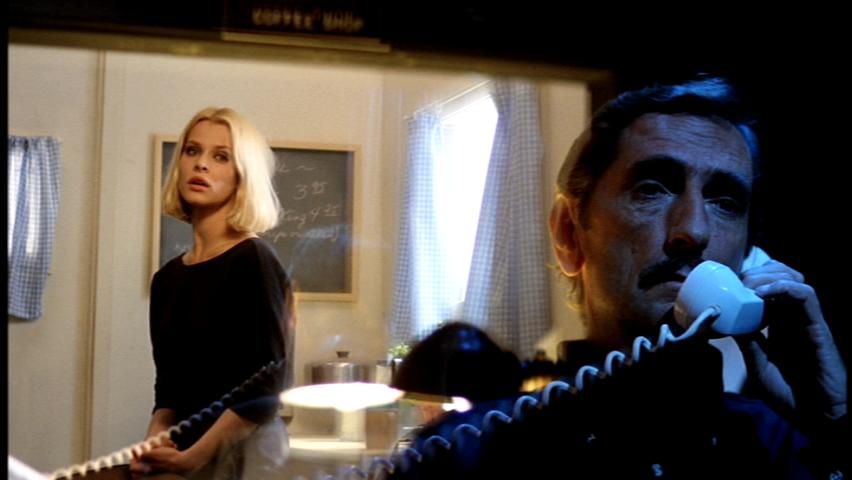
Natassja Kinski and Harry Dean Stanton in PARIS, TEXAS
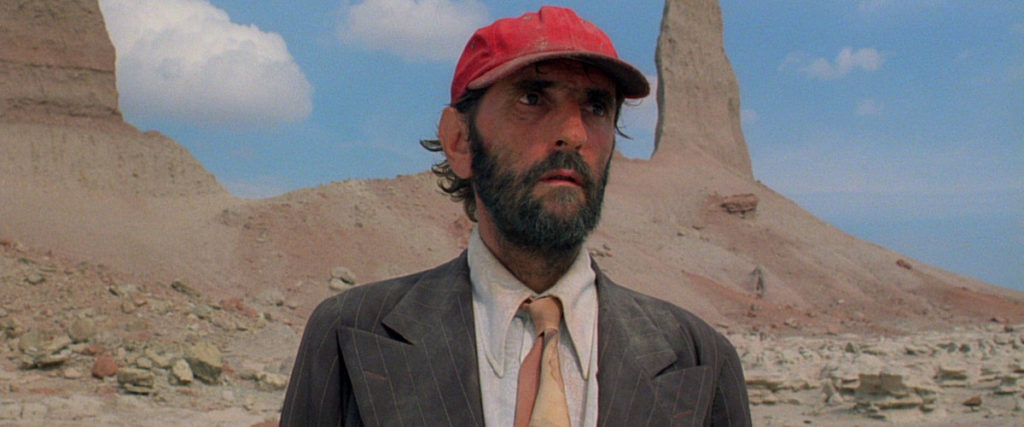
In 1984, at the age of 58, Harry Dean Stanton broke through in two wonderful lead performances. He played the old school mentor of the punk Emilio Estevez in the cult film Repo Man. And he made his masterpiece, Wim Wenders’ Paris, Texas.
In Paris Texas, Harry Dean plays Travis, a man so traumatized that he has disappeared and is found wandering across the desert and mistaken for a mute. As he is cared for by his brother (Dean Stockwell), he evolves from feral to erratic to troubled, but with a sense of tenderness and a determination to put things right. We see Travis as a madman who gains extraordinary lucidity about what wrong in his life and his own responsibility for it.
At the film’s climax, Travis speaks to Jane (Natassja Kinski) through a one-way mirror (she can’t see him). Spinning what at first seems like parable, Travis explains what happened to him – and to her – and why it happened. It’s a 20-minute monologue so captivating and touching that it rises to be recognized as one of the very greatest screen performances.
Kinski, Stockwell and the child actor Hunter Carlson are also exceptional. Paris, Texas is available on DVD from Netflix and streaming from Amazon, iTunes and FilmStruck.
We’ll miss you, Harry Dean.
Harry Dean Stanton in LUCKY. Photo courtesy of Magnolia Pictures
We’re on the verge of a promising Prestige Movie Season. For the time being:
A Must See: the contemporary Western thriller Wind River, which has mystery, explosive action, wild scenery and some great acting, especially by Jeremy Renner and Gil Birmingham.
The amiably entertaining hillbilly heist film Logan Lucky.
The extraordinary performance of French actress Isabelle Huppert makes the already subversive Elle into a Must See DVD/Stream of the Week. The controversial Elle is available on DVD from Netflix and to stream from Amazon, iTunes, Vudu, YouTube and Google Play.
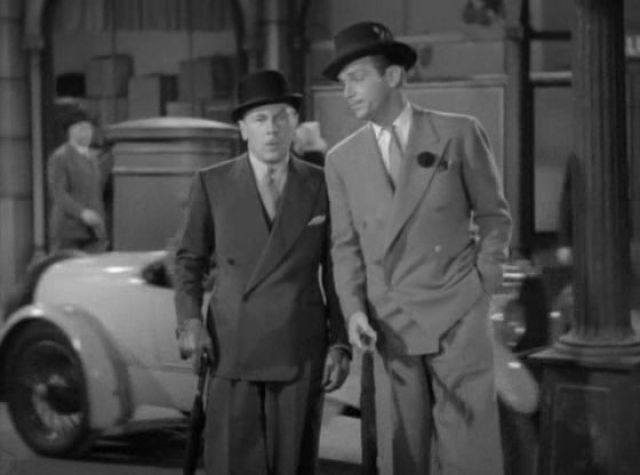
On September 30, Turner Classic Movies presents a wonderfully entertaining comedy about an entire family of professional con artists, The Young in Heart. It’s sweet and sappy, with the optimistic view that the criminals could be reformed by the unconditional love of a lonely old lady. After much fun, it turns out that they just needed some structure that incentivizes them to use their talents for good rather than evil. As readers will know, I’m not generally attracted to sentimental movies, but this one is damn funny. The family is played by Roland Young, Janet Gaynor, Douglas Fairbanks, Jr. and the always batty Billie Burke,The movie is almost stolen by Minnie Dupree as their intended victim, Miss Fortune. There’s also a nice turn by the gorgeous Paulette Goddard. The Young in Heart is a showcase for Roland Young, so often the supporting character in the great screwball comedies; this film, more than his Topper series, may be his best and most enjoyable performance.
Roland Young and Douglas Fairbanks, Jr. in THE YOUNG IN HEART
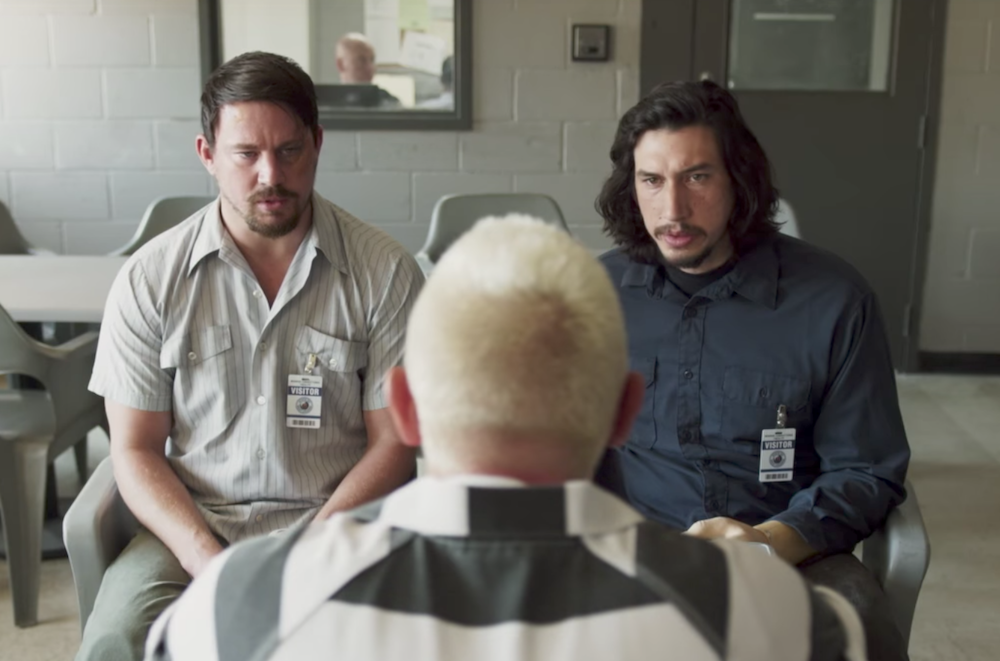
Channing Tatum and Adam Driver face Daniel Craig in LOGAN LUCKY
There’s not much to say about Stephen Soderbergh’s Logan Lucky, except that it’s a benign and sporadically entertaining two hours at the movies. A couple of down-on-their-luck West Virginia brothers, played by the always appealing Channing Tatum and Adam Driver, mastermind a high-profile heist. These guys have never had a bit of success in their lives, and they are Not Bright, but they are seeking to outsmart an icon of American corporate culture. The funniest aspects of Logan Lucky stem from their need to enlist an imprisoned safe-cracker, improbably played by Daniel Craig; Craig, deadpan in his bleached buzz-cut, is very funny.
The heist is cool because I hadn’t seen this particular money delivery system before (it ain’t an armored car), and one of the guys gains some critical intel because he’s a coal miner. There’s an effective plot twist AFTER the heist, and Hilary Swank shows up to presage a sequel.
I was moderately glad that I saw it and haven’t thought much about it since.
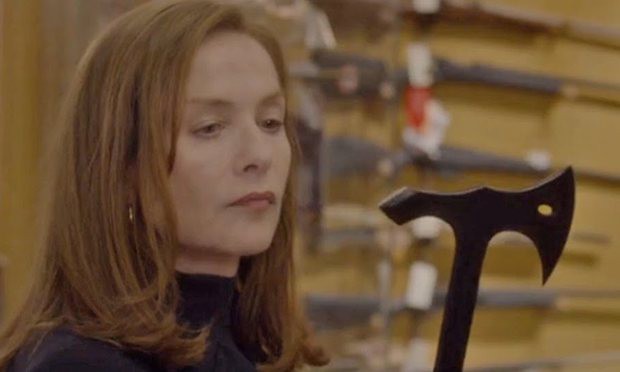
The extraordinary performance of French actress Isabelle Huppert makes the already subversive Elle into a Must See. Huppert plays the middle-aged businesswoman Michèle, who is raped in her home in the first seconds of this movie. Elle is likely to be controversial; Michèle’s reaction to the rape will not meet anyone’s expectations. At first, Elle seems like it will be a looks like a whodunit (who is the attacker?), then it shifts into a revenge fantasy, all the while remaining, at its core, an amazing study of Michèle, a character that we haven’t seen before. This is a woman who refuses to accept – and may not be capable of – victimhood.
The screenplay, which turns upside down any expectations we may have, is written by David Birke from a Philippe Djian novel. The hunted becomes the hunter, we never know what to expect from Michèle and shockers abound. Who better than Paul Verhoeven (Basic Instinct) to direct? Especially since the willful Michèle has a lusty sexual appetite, with adventuresome tastes.
Michèle needs to be in control, and she’s generally tough enough to stay in charge. The way to understand her actions is that she will do anything to regain that control and to avenge any moment that someone else has wrested it from her. One would expect the rape to be shattering enough, but Michèle starts getting messages from her attacker that would send ANYONE into a puddle of paralyzing terror; instead she’s only momentarily unnerved.
With the exception of two monsters, all the men in Elle are weak (despite any internal sense of bravado), and she handles them all easily. (Those two monsters better watch out, too.)
One way of watching Elle is to keep score, as in: Michèle 6, Men 0. But Elle is not a man-bashing film – Michèle’s ridiculously self-centered mom and her son’s abusive nightmare of a girlfriend are just as unsympathetic as all but two of the men.
There’s plenty of dark humor in Elle. For example, immediately after the opening rape scene, we watch Michèle at work as the founding CEO of a video game company. She’s watching a clip from her company’s newest video game in development. The clip is so hyper-violent and misogynistic that it would trigger massive PTSD for any rape victim, but Michèle’s complaint is that it’s NOT VIOLENT ENOUGH.
Isabelle Huppert may be the best screen actress working today, she’s certainly the most fearless. She’s so fearless, you gotta wonder if there any scripts that she rejects for being TOO weird, challenging or transgressive. She is comfortable with roles that range from the kinky (The Piano Teacher) to the most twisted (Ma Mere).
Huppert is especially gifted at playing impenetrable. She is at her best when she simply REGARDS other characters, assessing and judging them. With almost no lines,and very little screen time, her sphinx-like character dominated the recent Louder Than Bombs.
I also have to note that her character in Elle is in her early 50s – a sexy early 50s – while Huppert herself is 63. She seems to have somehow stopped the aging process about 15 years ago.
Elle ends in a moment of friendship, with the final line an homage to my favorite movie of all time. There’s a difference between perverse and perverted, and Elle keeps just inside that fine line. The shockers, the very dark humor and Huppert’s singular and compelling performance make Elle one of the year’s most absorbing films. Two weeks after screening it, I’m still thinking about it. Elle is available on DVD from Netflix and to stream from Amazon, iTunes, Vudu, YouTube and Google Play.