WYETH: what is a muse?

Andrew Wyeth’s Christina’s World, featured in WYETH

Wyeth, the latest documentary in the PBS American Masters series, takes on the odd case of the great painter Andrew Wyeth and explores the question, what is a muse?    And how can great art come from the most unlikely and obscure subjects?

Every artist has a source of inspiration, and it’s amazing that Wyeth was able to find his while living an unusually parochial life.   Choosing not to “see the world”, Wyeth spent his entire life in two rural settings – his childhood home in  Chadds Ford, Pennsylvania. and his summer coastal home in Cushing, Maine.  Fortunately, some of his neighbors allowed him to hang around and watch them in their daily lives.  Wyeth would then pad along home to his studio and churn out hundreds of finely detailed paintings from what he remembered.

In doing so, he rendered iconic some very unlikely subjects by painting them again and again – a disabled neighbor woman, a stolid farmer, an alcoholic eccentric.

We learn that Wyeth could spend all of his time on his two obsessions – studying the locals and painting them – because of his wife Betsy.  From age 17, Betsy managed Wyeth’s business, household and family, freeing him to devote every thought to the artistic process.

That’s why it was so shocking when Wyeth revealed fifteen years’ work – over 200 paintings, many erotic – with a subject Betsy had known nothing about.

Wyeth draws upon rich source material, including never-before-seen family photos and artifacts, and we meet Wyeth’s family members, neighbors and subjects, and visit the actual homes where Wyeth studied his subjects.

Wyeth will be airing on the PBS American Masters series beginning on September 7.

MEA MAXIMA CULPA: SILENCE IN THE HOUSE OF GOD: the blame climbs until it cannot climb higher

MEA MAXIMA CULPA: SILENCE IN THE HOUSE OF GOD

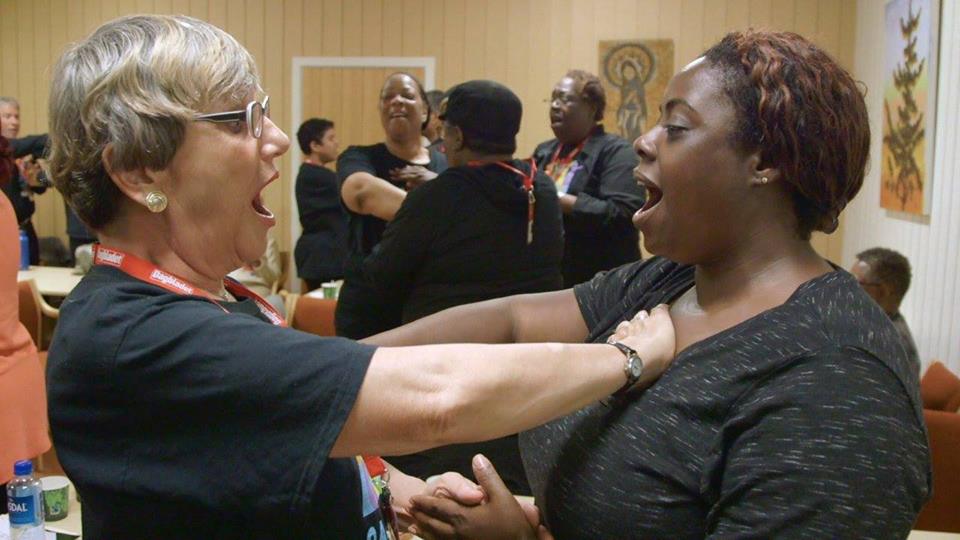
We’ve just seen another appalling Catholic Church sex abuse scandal, this one in Pennsylvania. In Mea Maxima Culpa: Silence in the House of God, documentarian Alex Gibney explores the Catholic Church’s decades-long cover-up of priest abuse from a Wisconsin parish to the top of the Vatican (and I mean the top). The film begins with the horrifying and disgusting abuse of the most vulnerable – children at a residential Catholic school for the deaf; the children’s devout parents could not communicate with the children through American Sign Language, making them even more easy to victimize.

At first it seems like just another story of Church leaders suppressing the truth to avoid bad publicity and lawsuits – and it is for the first few years. But then we learn about an American bishop trying to remove a pedophile from ministry, but being thwarted by superiors across the Atlantic. As Gibney pulls apart the onion, the focus of the story climbs the Church hierarchy. The brilliant and prolific Gibney’s work includes Enron: The Smartest Guys in the Room, Client 9: The Rise and Fall of Eliot Spitzer, Casino Jack and the United States of Money and the Oscar-winning Taxi to the Dark Side.

I also recommend another documentary on this difficult subject, Deliver Us From Evil, which made my top ten list for 2006. That is the story of a serial pedophile priest moved from parish to parish in the Diocese of Stockton, California. This has become, sadly, a familiar narrative, but what distinguishes Deliver Us From Evil is its breathtaking interviews with the pedophile himself.

Mea Maxima Culpa: Silence in the House of God is available to stream from Amazon (included with Prime), iTunes, Vudu, YouTube, Google Play and HBO GO. Deliver Us from Evil is available to stream from iTunes, Vudu and YouTube.

Movies to See Right Now

Awkwafina in CRAZY RICH ASIANS

Crazy Rich Asians is wildly popular for a reason – it’s damn entertaining and probably the year’s most appealing date movie. You’ll laugh, you’ll cry and you’ll wait for the chance to see Awkwafina in her next movie. Other choices in theaters:

OUT NOW

  • Spike Lee’s true story BlacKkKlansman is very funny and, finally, emotionally powerful.
  • Three Identical Strangers is an astonishing documentary about triplets separated at birth that ranges from the exuberance of discovering siblings to disturbing questions of social engineering.
  • The hyper-violent and stylized Belgian thriller Let the Corpses Tan is a contemporary thriller that pays loving homage to the Sergio Leone canon. Essentially a soulless exercise in style, more interesting than gripping. It’s a visual stunner, though, and the Leone references are fun.
  • The coming-of-age drama We the Animals is imaginative, but a grind.


ON VIDEO

My Stream of the Week is the cheeky and original sex comedy Threesomething, which I saw at its world premiere at this year’s Cinequest. Comedy is hard to write, especially comedy as smart and original as this.  Threesomething is now available to stream on Amazon, iTunes, Vudu, YouTube and Google Play.

ON TV

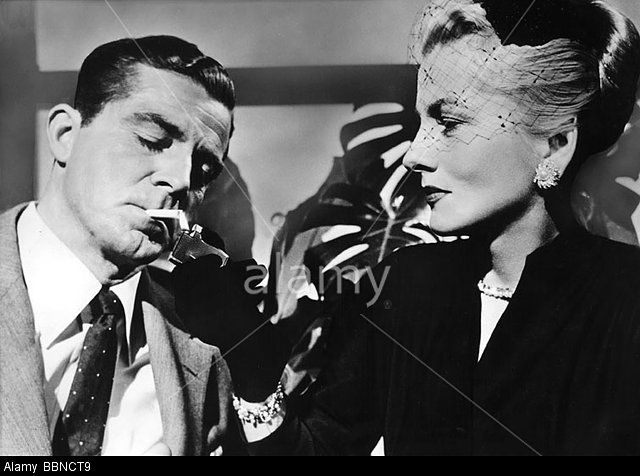
On September 1, Turner Classic Movies presents the iconic 1946 film noir The Postman Always Rings Twice. An essential element in film noir is a guy’s lust for a Bad Girl driving him to a Bad Decision, and when John Garfield first sees Lana Turner in The Postman Always Rings Twice, you can tell that he’s hooked. She’s a Bad Girl, and a Bad Decision is on its way.

John Garfield's first look at Lana Turner in THE POSTMAN ALWAYS RINGS TWICE
John Garfield’s first look at Lana Turner in THE POSTMAN ALWAYS RINGS TWICE

LET THE CORPSES TAN: an exercise in style

A scene from LET THE CORPSES TAN, courtesy of Kino Lorber

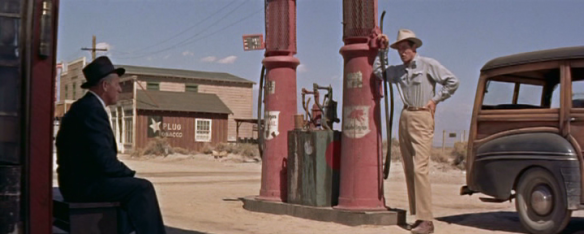
Neo-noir and Spaghetti Westerns converge in the hyper-violent and stylized Belgian thriller Let the Corpses Tan.

Written and directed by Hélène Cattet and  Bruno Forzani, this is a contemporary thriller that pays loving homage to the Sergio Leone canon.  Tight closeups on characters’ eyes aren’t just for the big showdowns in this flick.  They even use two Ennio Morricone musical cues from 1969 and 1971.  A pivotal character even smokes cigarillos like Clint Eastwood’s Man With No Name in the Leone movies.

Let the Corpses Tan is set in a compound of ruins atop a Mediterranean cliff, occupied by an oversexed artist who hosts visitors.  Besides a writer, she’s hosting three mysterious out-towners.  They turn out to be criminals who, with their shady lawyer, have pulled off an armored car heist and are flush in gold bars.  Just as they are ready to sneak away, the writer is surprised by his estranged wife, her kid and her nanny.  Then two cops happen upon the residents, and a gun battle explodes.

There’s only one road out of the compound and two groups of criminals and two groups of the non-criminals occupy various shelters in the ruins.  It’s a standoff because no one can escape – or escape with the gold. They are forced to hunt each other in a lethal and claustrophobic game of cat-and-mouse, including even the guy caught without any clothes.  Under life-and-death pressure, allegiances become malleable and the double crosses and side-switching begin.

So do the casualties.  Sam Peckinpah would wince at some of the gore and splatter, and Let the Corpses Tan lives up to its deliciously brutal title.

As exhaustion mounts from the siege, various characters have vivid fantasies.  Let the Corpses Tan gets very, very trippy.  One breast milk crucifixion fantasy is like nothing I have seen or could have imagined.  Eventually, there’s a Death character in female form, at one point a urinating Death.

There’s one interesting character.  The artist/hostess is basically a goddess of carnality.  She is played by Elina Löwensohn (from 1994’s Amateur with Isabelle Huppert), and Löwensohn’s eyes are voracious.

Let the Corpses Tan is essentially a soulless exercise in style, more interesting than gripping.  It’s a visual stunner, though, and the Leone references are fun.

Stream of the Week: THREESOMETHING – original and cheeky

Isabelle Chester and Sam Sonenshine in THREESOMETHING

In the cheeky and original comedy Threesomething, Charlie (Sam Sonenshine) and his buddy Isaac (James Morosini) invite Charlies’ friend Zoe (Isabelle Chester) to engage in a three-way sexual encounter. That pitch alone is one of the funniest three-minute, fifteen-second, openings to a film I’ve seen in years. But then Threesomething finds the ridiculous moments in both the sex itself and in the all-consuming passion of new infatuation. After a crisp 72 minutes, Threesomething‘s ending is very fresh and non-formulaic, posing just enough ambiguity about the characters’ futures.

Co-writers Morosini and Sonenshine have identified the comic possibilities within the notion that a threesome is more or less symmetrical. Let me explain it this way. What if your idea of a threesome is three participants, but it evolves into two participants and a spectator?

Lust and love are such ripe sources of comedy because we humans are our most ridiculous when we are the most absorbed and single-minded – and that is definitively the case while having sex. And everyone’s sexual fantasies and fetishes – even if shared with one’s sexual partner – are laughable or creepy to someone else. Threesomething reaps the laughs from these situations without being sit-commy.

This is the Are you good? generation. Threesomething’s commentary on the compulsive over-checking in and over-supportiveness is all very sharply witty. And over-sharing is the core of Charlie’s relationship with his mother (Dru Mouser, who steals all of her scenes).

Sonenshine is just about perfect in his reactions during the threesome. He is fantastically gifted at playing both awkward discomfort and contained frustration.

Chester’s performance has several highlights, beginning with Zoe’s takes on the initial proposition and a particularly ill-timed outburst of weeping (inspired). As the story concludes, watch Chester’s face as Zoe considers and reconsiders how comfortable she really is in her choice of partner(s).

Threesomething is Morosini’s directorial debut and the first feature screenplay for both Morodini and Sonenshine. Comedy is hard to write, especially comedy as smart and original as this. I saw Threesomething’s world premiere at this year’s Cinequest.  It is available to stream on Amazon, iTunes, Vudu, YouTube and Google Play.

WE THE ANIMALS: not a feel-good

WE THE ANIMALS

The coming-of-age drama We the Animals is decidedly NOT a feel good movie.  It’s about a working class Puerto Rican family in rural up-state New York.  The mom has a factory job, and the dad works night security.  The couple sleeps on the couch so the boys get the only bedroom. The youngest boy sneaks under the bed at night and draws; in We the Animals’ most inventive aspect, his drawings are animated throughout the film.

The dad hits the mom and leaves.  The mom is disabled by depression.  Without adult guidance, the boys become feral.  As we watch them roam wild, we worry about their immediate safety and welfare; and we worry about what they’ll become.

We the Animals has its moments, including two very compelling scenes, the first when the dad is prone on the floor and the boys let their feelings about him explode.  The second involves the youngest son’s drawings.  And the most poignant scene is when the mom asks her youngest to stay his current age.

Raúl Castillo and Sheila Vand play the parents, and both deliver excellent performances.  The non-actor kids are remarkable, too.

This film has won festival awards and received very good reviews.  But, only 93 minutes long, We the Animals feels longer.  Ironically, the movie’s success in making you care and worry about the kids also makes it a grind for the audience.

When I’m writing about what’s up on the screen, I usually consider it bad form to compare it to another movie.  But I realized why We the Animals just didn’t work for me – it is clearly inferior to Sean Baker’s The Florida Project, which is an oft-thrilling movie from just last year, also centered on free-ranging poor kids.  So there.

LET THE SUNSHINE IN: exquisite performance, pointless movie

Juliette Binoche in LET THE SUNSHINE IN

The French drama Let the Sunshine In is a pointless movie with a great, great performance from Juliette Binoche. Binoche plays a divorced artist who, yearning to be in a relationship with a guy, has sexual encounters with a range of them. She churns a series of men who are not good-relationship material for a variety of reasons. And she is aiming way too low. All of this is obvious.

Finally, she finds herself listening to counsel from a character played by Gérard Depardieu; I really lost track of whether the character is a therapist or some kind of guru, whatever. But in this scene, the movie’s final 10-15 minutes, we can appreciate the most exquisite acting of the year. Depardieu is doing 90% of the talking, but the camera is on Binoche as she listens and internalizes what is being said. I really couldn’t tell you whether his advice was sound or empty psychobabble.  I was just too entranced by Binoche’s reactions.

This is the GOOD part of the movie, but there’s a problem here, too. Just when the audience is enraptured by Binoche’s face, the giant letters J-U-L-I-E-T-T-E-B-I-N-O-C-H-E run across it. It’s so distracting that my first thought was that the movie’s projection had become garbled.  But no – it’s the CLOSING CREDITS scrolling across the most profound performance of the year. Unpardonable.

It should be noted that this story of a woman’s yearnings is told by the woman writer-director Claire Denis. I liked, but don’t otherwise remember much about her 2008 35 Shots of Rum; I was dismayed by her 2013 BastardsLet the Sunshine In is another whiff.

THE LINES OF WELLINGTON: plodding through Portugal, glimpsing John Malkovich

Nuno Lopes (left) and Afonso Pimentel in THE LINES OF WELLINGTON

The Lines of Wellington is an epic about Wellington’s repulsion of the French invasion of Portugal during the Napoleonic Wars – but without very much about Wellington or his lines.  Because this is an epic – with lots and lots of characters – we do get the flavor of how war affected civilians and troops of all ranks in the early 1800s; hint – as war has been before and since, it has its unpredictable moments, but is predictably harsh for all concerned.

Wellington spent a year-and-a-half secretly building an ingenious series of defensive fortifications just north of Lisbon, scorched the earth in front of them and then lured in the French Army.  The scale of the fortifications is mind-boggling – lines of 126 forts with miles of walls  – and he even re-directed rivers.  When the French arrived, already weakened by the march to get there, they were baited to attack the impregnable defense.  The French suffered more heavy losses and completed the fiasco with a painful retreat.  Unfortunately, we don’t see the Lines of Wellington until only 26 minutes remain in The Lines of Wellington.  And even then we don’t get to appreciate the scale and connectivity of the fortifications – we might as well be watching Fort Apache.

We don’t see much of Wellington either.  Played by John Malkovich, Wellington struts around for a few minutes scowling impenetrably and once advises a painter on how to better glorify Wellington in oils.  Lots of other big name art house favorites wander through The Lines of Wellington.  If you don’t blink, you’ll catch glimpses of Catherine Deneuve, Michel Piccoli, Isabelle Huppert, Mathieu Amalric, Marisa Paredes and Chiara Mastroianni.  But The Lines of Wellington focuses more on the story of two Portuguese soldiers, one of whom is charismatically played by the Portuguese actor Nuno Lopes.

Because The Lines of Wellington aspires to tell the stories of the many affected by this military campaign, it is a series of vignettes.  The effect is a disjointed and mildly interesting slog through 1810 Portugal that takes 151 minutes (the miniseries cut).  Maybe, the 135 minute theatrical version is tighter, but it would still lack the depth and cohesiveness that I didn’t find here.

I really would only recommend The Lines of Wellington to a military history buff (like my friend Bob).  It is available streaming on Amazon Instant Video, Vudu and Xbox Video.

CRAZY RICH ASIANS: heckuva date movie

Henry Golding and Constance Wu in CRAZY RICH ASIANS

Crazy Rich Asians is wildly popular for a reason – it’s damn entertaining and probably the year’s most appealing date movie.  Nick (the hunky Henry Golding) is getting serious about his New York girlfriend Rachel (Constance Wu) and wants to take her to meet his family in Singapore.  Now Rachel, being a beautiful NYU economics professor who is fluent in multiple languages, is just about anybody’s ideal daughter-in-law.  What Rachel doesn’t know is that Nick’s family is super, super rich – so rich that their set puts on $40 million weddings.  The family matriarch, Nick’s mom Eleanor (Michelle Yeoh – the leading lady in Crouching Tiger, Hidden Dragon), is never going to approve Nick marrying an American, even a Chinese-American rock star like Rachel.  As the lovers try to win over the formidably stern Eleanor, comic situations ensue.  Will love prevail?

As you can tell, this story follows a familiar arc for a romantic comedy, but with an Asian cast, an Asian location and lots of Asian cultural references.  But his isn’t a just rom com with a gimmick.  Director John M. Chu keeps the pages turning quickly all the way through the two hours running time (a little long for this genre) without any slow spots.   The three main characters are surrounded by wacky friends and family, and most of the biggest laughs come from the foibles of the supporting characters.

I saw this film in a heavily Asian audience, and Ken Jeong’s scenes in particular drew howls from the Asian crowd.  The rapper Awkwafina, who has gotten good notices for her performance in Oceans Eight, is hilarious as Rachel’s zany friend.  We’re going to be seeing a lot more of Awkwafina in the movies; she has Lucille Ball’s lasered-in earnestness.

Awkwafina in CRAZY RICH ASIANS
Michelle Yeoh in Warner Bros. Pictures’ and SK Global Entertainment’s and Starlight Culture’s contemporary romantic comedy CRAZY RICH ASIANS, a Warner Bros. Pictures release.

The Asians in my audience also responded knowingly to the references to Chinese family traditions and parents’ relations to their adult children, much of which is, of course, also universal.

Crazy Rich Asians has some fine set pieces, including an over-the-top wedding where the bridal party wades down a flooded aisle – and a reception so decadent that it makes Baz Luhrmann’s The Great Gatsby look Amish. There’s also a mouth-watering street food scene in Singapore.

You’ll laugh, you’ll cry. Here’s the teaser (not the trailer because the trailer gives away two of the most impactful lines).

Movies to See Right Now

John David Washington and Laura Harrier in BlacKkKlansman, a Focus Features release.Credit: David Lee / Focus Features

OUT NOW

  • Spike Lee’s true story BlacKkKlansman is very funny and, finally, emotionally powerful.
  • You can still see the best movie of the year: the emotionally powerful coming of age drama Leave No Trace from Debra Granik (Winter’s Bone). Superbly well-crafted, impeccably acted, thoughtful and emotionally powerful, it’s a Must See. Still at one theater in Silicon Valley and one in San Francisco.
  • The savagely funny social satire Sorry to Bother You carries the message that humans are more than just their commercial value as consumers and labor to be exploited.
  • The political documentary Dark Money exposes the growing threat of unlimited secret money in political campaigns.
  • Puzzle intelligently and authentically traces one woman’s journey of self discovery.
  • The surprisingly emotional biodoc Won’t You Be My Neighbor? is about Fred Rogers’ fierce devotion to the principle that every child is deserving of love and our protection.
  • Three Identical Strangers is an astonishing documentary about triplets separated at birth that ranges from the exuberance of discovering siblings to disturbing questions of social engineering.
  • RBG is the affectionate and humanizing biodoc about that great stoneface, Ruth Bader Ginsburg.

ON VIDEO

My DVD/Stream of the week is the period thriller The Two Faces of January, a Patricia Highsmith tale of dark hearts in sunny Greece. The Two Faces of January is available on DVD from Netflix and streaming on Amazon, iTunes, Vudu, YouTube and Google Play.

ON TV

Turner Classic Movies is airing Requiem for a Heavyweight (1962). Anthony Quinn is Mountain Rivera, a fighter whose career is ended by a ring injury by Cassius Clay (played by the real Muhammed Ali). His manager, Jackie Gleason, continues to exploit him in this heartbreaking drama. There’s no boxing in this clip, but it illustrates the quality of the writing and the acting.