Stream of the Week: PHOENIX – riveting psychodrama, wowzer ending

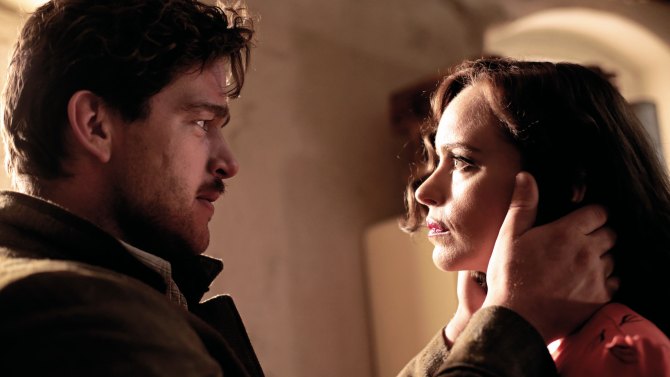
Ronald Zehfeld and nina Hoss in PHOENIX
Ronald Zehfeld and Nina Hoss in PHOENIX

In the German psychological drama Phoenix, Nina Hoss plays Nelly, an Auschwitz survivor whose face has been destroyed by a Nazi gunshot; her sister has arranged for plastic surgery to reconstruct her face. When Nelly gets her new face, we accompany her on an intense quest.

Writer-director Christian Petzold is an economical story-teller, respectful of the audience’s intelligence. Watching a border guard’s reaction to her disfigurement and hearing snippets from the sister and the plastic surgeon, we gradually piece together her back story. The doctor asks what seems like a very good question – Why would a Jewish woman successfully rooted in London return to Germany in 1938? The answer to that question involves a Woman Loving Too Much.

The sister plans to re-settle both of them in Israel, but Nelly is obsessed with finding her husband. She does find her husband, who firmly believes that Nelly is dead. But he notes that the post-surgery Nelly resembles his pre-war wife, and he has a reason to have her impersonate the real Nelly. So he has the real Nelly (who he doesn’t think IS the real Nelly) pretending to be herself. It’s kind of a reverse version of The Return of Martin Guerre.

It’s the ultimate masquerade. How would you feel while listening to your spouse describe you in detail to a stranger?

Nina Hoss is an uncommonly gifted actress. Here she acts with her face fully bandaged for the first third of the film. We ache for her Nelly’s obsessive need for her husband – and when she finally finds him, she still doesn’t really have him.

As the husband, Ronald Zehfeld shows us the magnetism that attracts Nina, along with the brusque purposefulness that he thinks he needs to survive and flourish in the post-war Germany.

Christian Petzold and Nina Hoss collaborated on the recent film Barbara (he won the Berlin Film Festival’s Silver Bear for his work). About Barbara, I wrote

“Given that’s it difficult to imagine how anyone else could have improved Barbara, I’ll be looking for Petzold’s next movie.”

Well, here it is, and it’s gripping.

The ending of the film is both surprising and satisfying. Several people in my audience let out an audible “Wow!” at the same time.

Phoenix was one of my Best Movies of 2015. It is available to stream from Netflix Instant, Amazon Video, YouTube and Google Play.
SUNSET: mysteries in a dying empire

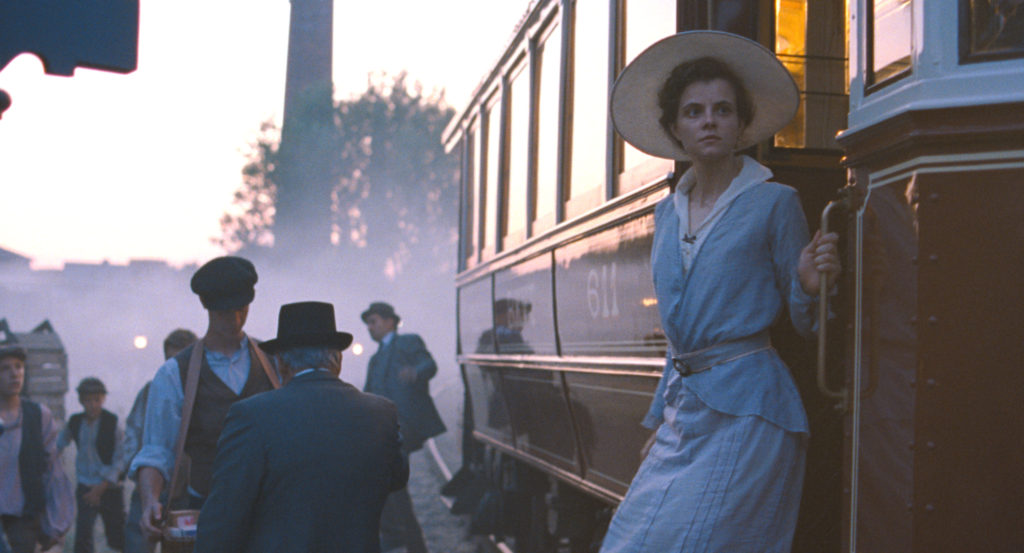
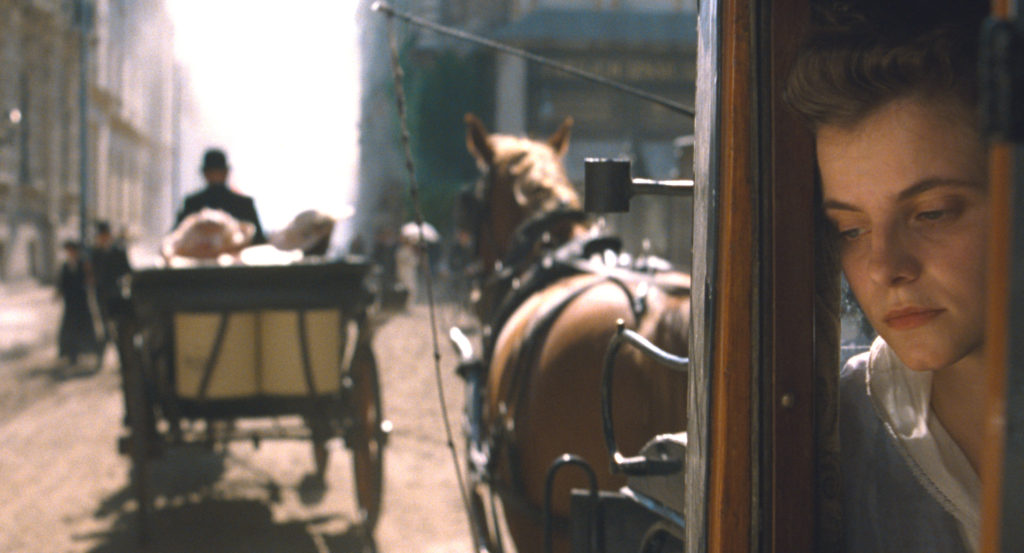
Right: Juli Jakab as Írisz in SUNSET.  Courtesy of Sony Pictures Classics

For the first hour-and-a-half of Sunset, I was convinced that I was watching the best movie of the year.  Sunset is a visual masterpiece but the story’s coherence and pacing slips away in the final act.

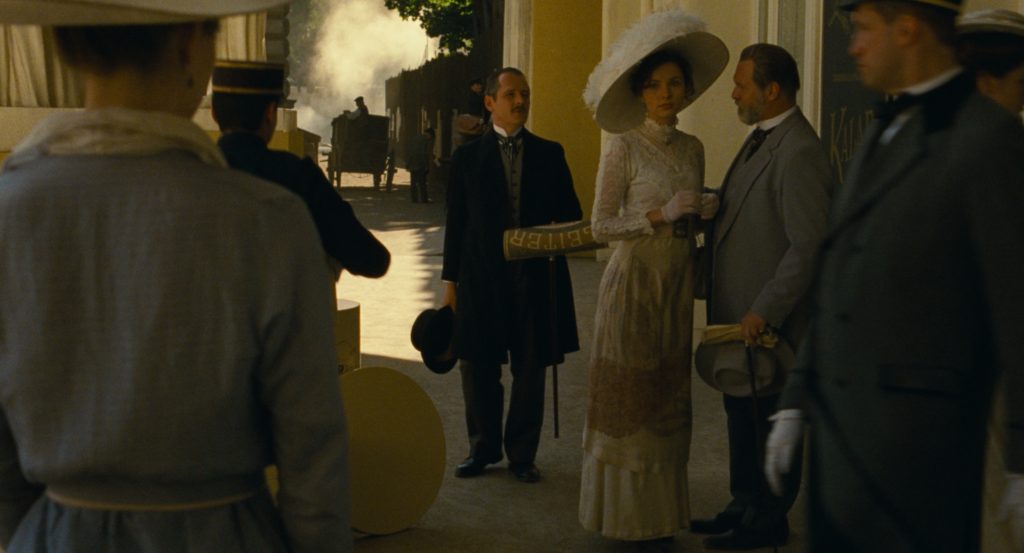
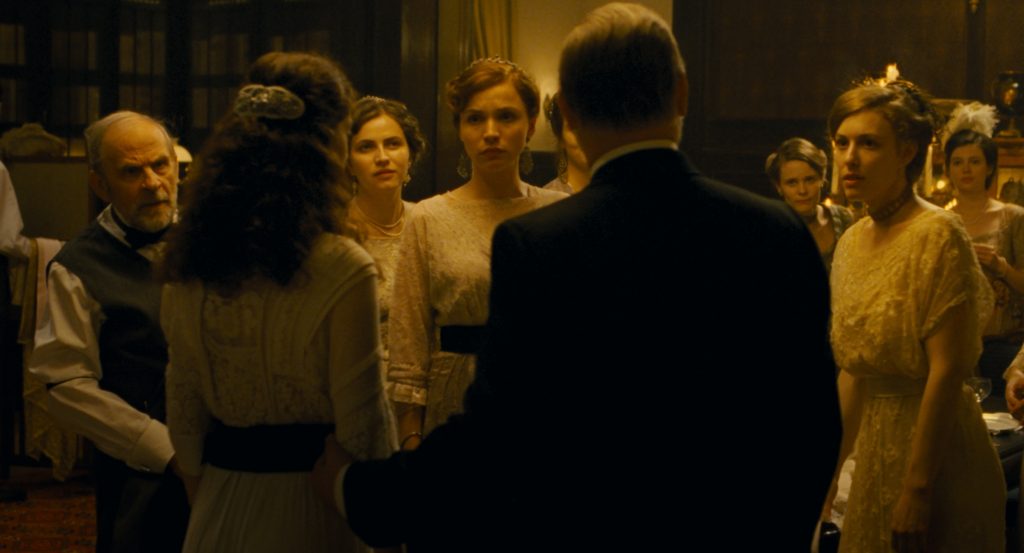
Set only months before the outbreak of World War I, anarchy is erupting as a response to corrupt, senile empires.  The young woman Írisz Leiter (Juli Jakab), who was sent to Trieste at age two when her parents died, returns to Budapest and to her parents’ prestigious millinery store.   That store – still hatmaker to the elite of the Austro-Hungarian Empire – is now owned by Oszkár Brill (Vlad Ivanov), who is threatened by her reappearance.

Írisz is determined to find out more about what happened to her parents, but she becomes entangled by one more mystery after another.  She encounters  a former family retainer who is mad, and an aristocratic widow who may be mad; they and some sympathetic milliners leak  the shocking snippets.  Soon she is surprised to learn that she has a sibling – but can she find him?  Then she finds out about a notorious murder – but what really happened and why?  She stumbles upon an anarchist plot – but against whom and when?  And an upcoming royal visit has a decidedly sinister side.

As Írisz insinuates herself in Brill’s squad of young female milliners, she plays detective, unspooling the web of mysteries.  While the story is focused on Írisz’ family secrets, Sunset is gripping.  When the story grows wider, into a royal perversion and an anarchist upheaval it gets less coherent and less compelling.

Sunset was written and directed by László Nemes, who burst into world cinema with the gripping, innovative and impossibly grim Son of Saul.  That film won the Best Foreign Language Picture Oscar.  Sunset’s cinematographer Mátyás Erdély won the American Society of Cinematographers Spotlight Award for Son of Saul.

From the painting of Budapest in the opening titles. Sunset is a feast for the eyes. I haven’t seen a film since Ida in which every frame is composed to be a stand alone piece of art. The color palette of the daytime scenes conjures a time that we know from sepia-tinged photos. The chiaroscuro in the nighttime scenes lit by early electricity and open flames is magnificent.

Right: Juli Jakab as Irisz Leiter in SUNSET.  Courtesy of Sony Pictures Classics
Center: Evelin Dobos as Zelma, Vlad Ivanov as Oszkar Brill in SUNSET.  Courtesy of Sony Pictures Classics
Center: Evelin Dobos as Zelma in SUN.SET.  Courtesy of Sony Pictures Classics

Some have noted that the part of the always intense Írisz doesn’t offer much range for Juli Jakab.  But Jakab is able to carry this film in which she’s in every scene, and I admired her performance.

Ivanov is best known for the Romanian  masterpiece 4 Days, 3 Weeks and 2 Days, in which he played one of cinema’s most repellent characters, Mr. Bebe, the sexually harrassing abortionist. American audiences have also seen Ivanov’s performances in Police, Adjective and Snowpiercer.  Hopefully,  Ivanov’s star turn in Hier, which I reviewed for Cinequest, will get an American release.

Nemes, in partnership with his cinematographer Erdély is a peerless filmmaker, but he is not yet a peerless storyteller.  I still recommend Sunset, even with its flaws, for its uncommon artistry.

TRANSIT: the thrill was gone

.
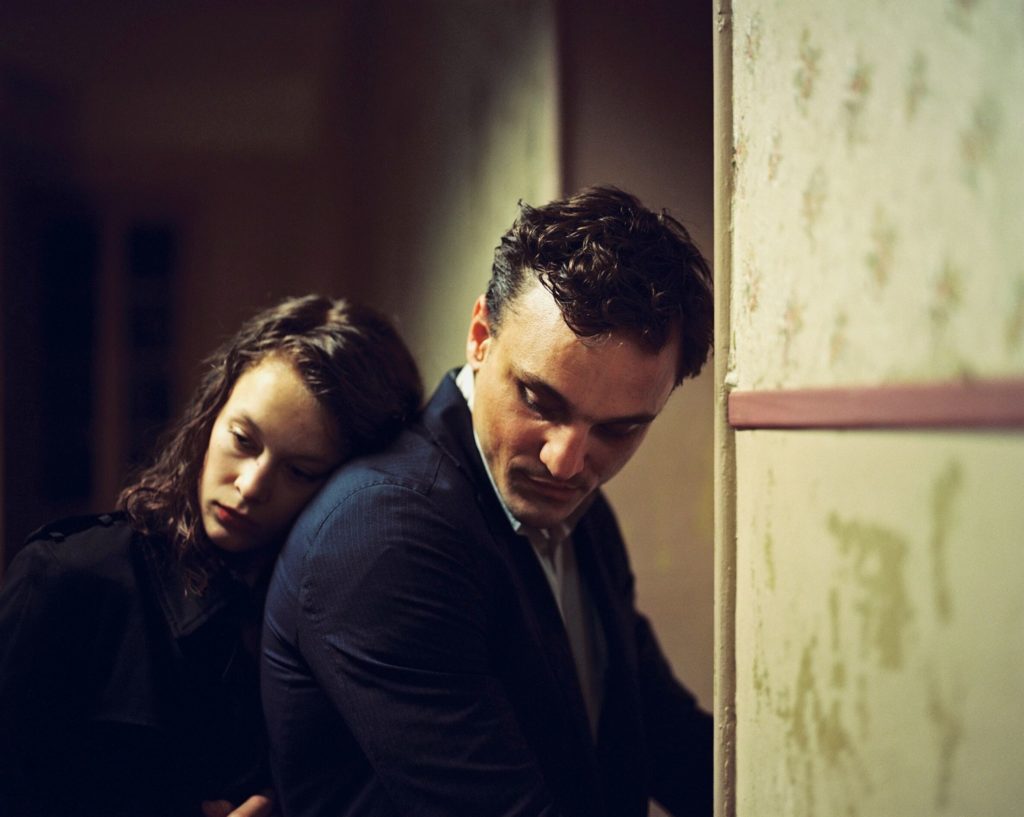
Paula Beer and Franz Rogowski in TRANSIT. Courtesy of Music Box Films

In Christian Petzold’s puzzling thriller Transit, George (Franz Rogowski) flees Paris for his life, just ahead of the invading Nazis.  He assumes the identity of a dead author, which comes with a ticket from Marseilles to the safety of the Western Hemisphere.  Trouble is, the ship won’t leave for weeks, so he must wait it out in Marseilles as the Nazis get closer and closer.  He finds himself in a community of other refugees – all forlornly hoping for a ticket, a visa, a letter of transit so they can get out, too. Completely at the disposal of impenetrable bureaucracies, their situation is Kafkaesque.  It’s a puddle of human desperation, and the clock is ticking.

Georg glimpses a mysterious beauty, Marie (Paula Beer). She turns out to be the widow of the man that Georg is impersonating, but she doesn’t know that her husband is dead.  What Georg knows is that he also has papers for her to join him on the escape ship.  While waiting for her husband to appear in Marseilles, she has taken up with the altruistic doctor Richard (Godehard Giese).

So, we have European refugees holed up, trying to get letters of transit to escape the Nazis. Our protagonist is in love with a woman, who is with a selfless idealist. Yes, this story does have its similarities to Casablanca – there’s even a dramatic sacrifice at the end.  But the impeccably plotted Casablanca is easy to follow, and Transit has its surreal aspects. Casablanca is of its time – when individuals subsumed their interests to a great, global cause: “I’m no good at being noble, but it doesn’t take much to see that the problems of three little people don’t amount to a hill of beans in this crazy world.”  Set in the same wartime period, Transit is of our time – focused on the micro-plight of individuals.

I’m trying to think how to explain this – it’s a period story shot in modern times. So, the characters wear 1940s clothes and use 1940s typewriters. But the environs are modern Paris and Marseilles, so the storm troopers are modern French SWAT teams and the police vehicles are modern French cop cars with their Euro sirens. It may sound weird, but it worked for me. I just became absorbed in figuring out what was going on.

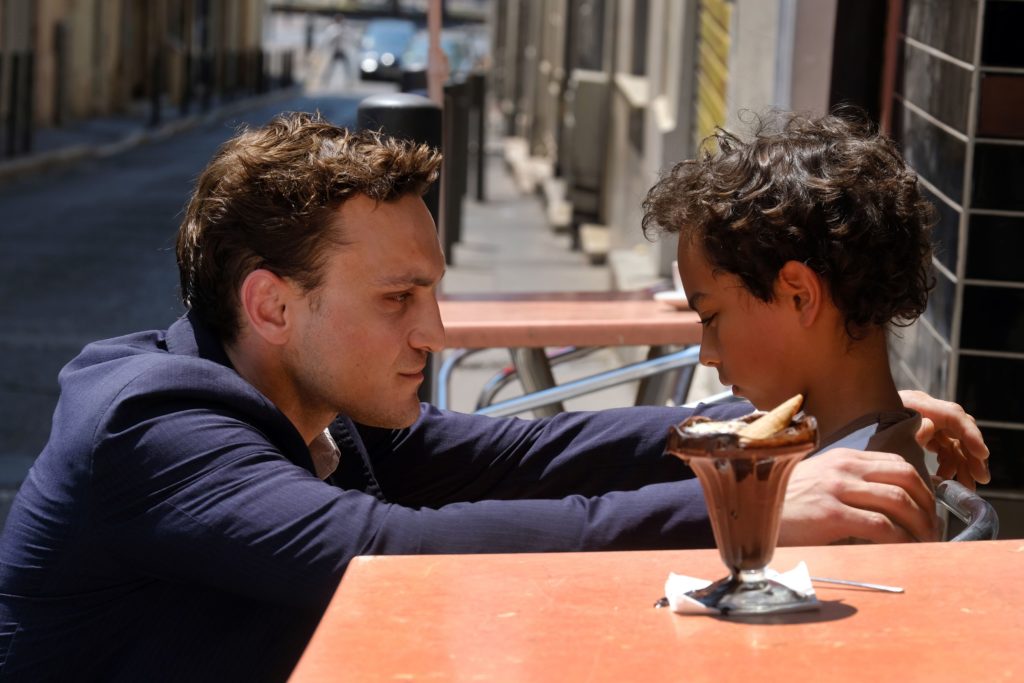
Franz Rogowski and Lilien Batman in TRANSIT. Courtesy of Music Box Films

There is a sweet and effective subplot involving Georg and a boy with a disability.  Their relationship is the most relatable part of Transit.

Franz Rogowski (so good as Boxer in Victoria) has an intensity that pays off in his portrayal of  Georg, who is either escaping or, when he has a moment, seeking.  Beer captures Marie’s  unreliability and fragility; she makes us understand why Georg’s would be so attracted to Marie – and why that might not work out for him.

At some point in Marseilles, Transit lost me.  I still was engaged in the intellectual execise of figuring out the puzzles, but I stopped caring about Georg and Marie.  Christian Petzold’s previous films Barbara and Phoenix prove that he is an exceptional filmmaker. Transit, for all its originality just isn’t Petzold’s best.

THE HUMMINGBIRD PROJECT: it’s a movie about nanoseconds, but it slows to a muddle

Salma Hayek and Jesse Eisenberg in THE HUMMINGBIRD PROJECT

In The Hummingbird Project, two brothers take on Wall Street power in a race to build a fiber-optic cable network from Kansas City to New York City. They plan to take advantage of getting financial data several nanoseconds before everyone else and to become zillionaires. Vincent (Jesse Eisenberg) is the wheeler-dealer and Anton (Alexander Skarsgård) is the technical whiz.  It’s a ridiculously audacious bet, and the movie is about whether they can pull it off.

Their ruthless Wall Street competition is personalized in the character played by Salma Hayek.  Hayek is okay, but she appears to be performing in a different (and better) movie than the other leads.

The Hummingbird Project doesn’t quite work.  Eisenberg is not a stranger to jittery, fast-talking roles.  But here, he accelerates into auctioneer-pacing, and he speaks so quickly that it’s hard to follow.  There’s too much film footage invested in the cable-laying procedural.   And why the hell does Vincent return a THIRD time to visit the Amish farmers in the rainstorm?

There are two good scenes in The Hummingbird Project, both involving Anton.  In one, he decides to physically run away from the FBI and, in the other, he exacts some hacking revenge on the Wall Street baddies.

I saw The Hummingbird Project at Cinequest, and it is now playing in Bay Area theaters.

Movies to See Right Now

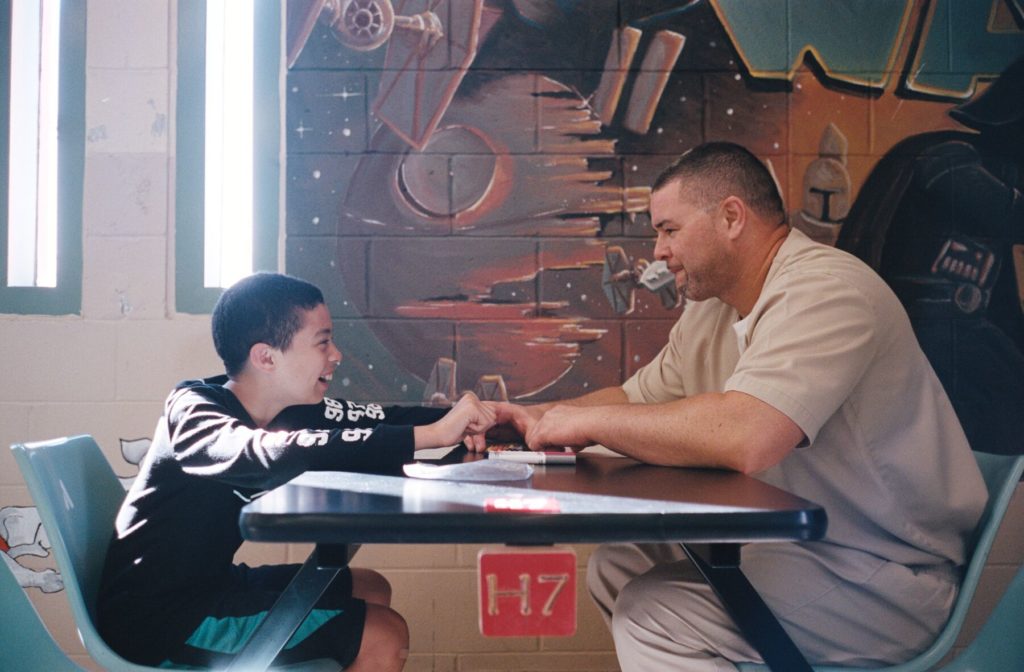
A scene from Denali Tiller’s TRE MAISON DASAN, playing at the 2018 San Francisco International Film Festival, April 4 – 17, 2018. Courtesy of SFFILM.

The unwavering and emotionally powerful documentary Tre Maison Dasan was my top pick from the world premieres at the 2018 San Francisco International Film Festival (SFFILM) – and you can finally watch on TV this weekend. The title reflects the names of three Rhode Island boys with incarcerated parents. Unfettered by talking heads, Tre Maison Dasan invites us along with these kids as they interact with their families – both on the outside and the inside.  PBS is airing Tre Maison Dasan on its Independent Lens series on April 1; you’ll also be able to stream it on PBS.

Look for some binge-posting from me this weekend as I catch up from Cinequest and get ready for SFFILM. Of new movies out now, I’m surprisingly ambivalent on Transit and a thumbs down on The Hummingbird Project. Details to follow.

ON TV

On March 31, there’s George Cukor’s Dinner at Eight, an all-star 1933 Hollywood dramedy that mostly still stands up today. Jean Harlow is hilarious as the trophy bride of the course noveau-millionaire played by Wallace Beery. Marie Dressler is at least as funny as a former star yearning to relive an old romance. John Barrymore adds a heartbreaking performance as a man facing disgrace. If all this weren’t enough, we also get Lionel Barrymore, some ditziness from Billie Burke and a splash of sarcasm from quick-patter artist Lee Tracy. Harlow, who died at 26, is usually remembered as a platinum blonde sex symbol, but Dinner at Eight reminds us of her comic brilliance.

TRE MAISON DASAN: sins of the father…

A scene from Denali Tiller’s TRE MAISON DASAN, playing at the 2018 San Francisco International Film Festival, April 4 – 17, 2018. Courtesy of SFFILM.

The unwavering and emotionally powerful documentary Tre Maison Dasan was my top pick from the World Premieres at the 2018 San Francisco International Film Festival (SFFILM) – and you can finally watch on TV this weekend.  The title reflects the names of three Rhode Island boys with incarcerated parents.  Unfettered by talking heads, Tre Maison Dasan invites us along with these kids as they interact with their families – both on the outside and the inside.  It’s all about the kids, all of the time – an effective choice by writer-director Denali Tiller In her feature debut.

One of the parents is released from prison early in the film; the other two are going to stay there during critical developmental periods in their children’s lives. Tre, Maison and Dasan are each taking different paths.  One kid is getting wonderful nurturing and guidance from a released parent, and lots of support from the community; we sense that he’s going to be OK.  That’s not the case with all of the kids.

Tiller doesn’t get academic or partisan.  By simply showing the impact on these children of having a parent incarcerated, she gets our attention and sympathy.  Tre Maison Dasan may not be a call to action in itself, but it’s an essential predicate.   PBS is airing Tre Maison Dasan on its Independent Lens series on April 1; you’ll also be able to stream it on PBS.

Movies to See Right Now

Comic Aron Kader in TRAVEL BAN: MAKE AMERICA LAUGH AGAIN

Lots to come from The Movie Gourmet as I catch up after my Cinequest coverage. I’m finishing up my interviews with Cinequest’s Mr. Documentary, Sandy Wolf, and Mine 9 director Eddie Mensore, along with Cinequest reviews of The Man Who Killed Don Quixote, Transit, Teen Spirit, Buy Me a Gun, The Bra, The Hummingbird Project, The Extraordinary Journey of Celeste Garcia, Original Sin and WBCN and the American Revolution.  At least four of these films will be in theaters soon.

Speaking of Cinequest, my strong recommendations for Mine 9 and Last Sunrise were validated by the Cinequest Jury Awards for Best Narrative Drama Feature and Best Science Fiction Feature, respectively. Travel Ban, which I also recommended, won an Audience Award.

Along with Transit, I also need to finish writing up the art house imports Birds of Passage and Sunset, along with the doc The Brink.

ON TV

On March 24, Turner Classic Movies is broadcasting Twentieth Century, a 1934 screwball comedy, which holds up as well today as it did 77 years ago. A flamboyantly narcissistic Broadway producer (John Barrymore) has fallen on hard times and hops a transcontinental train to persuade his former star (Carole Lombard), now an A-list movie star, to headline his new venture. Barrymore’s shameless self-entitlement and hyper dramatic neediness makes for one of the funniest performances in the movies.

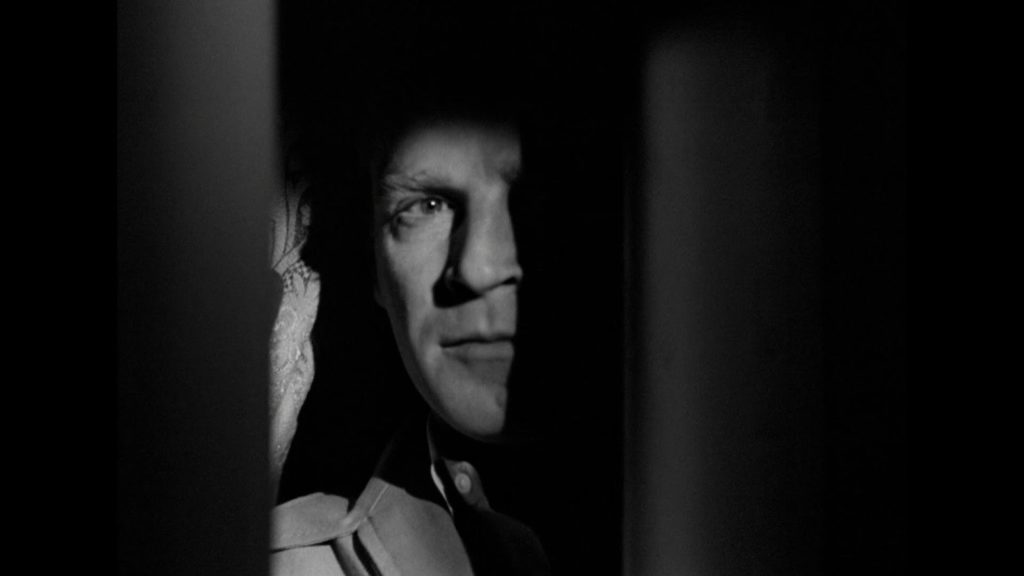
And, on March 29, TCM airs the innovative film noir He Walked By Night, completed by an uncredited Anthony Mann. Inspired by a true life story, the LAPD goes on a man hunt for a highly skilled wacko played by Richard Basehart, with his bland good looks (but maniacal eyes). It’s a police procedural elevated by the great cinematography of John Alton, especially the sewer escape chase (right up there with the one in The Third Man).

Richard Basehart in HE WALKED AT NIGHT

Movies to See Right Now

Adam Driver and Jonathan Pryce in THE MAN WHO KILLED DON QUIXOTE

I’ve been absorbed by the 2019 Cinequest, which runs through Sunday. Here’s my Cinequest preview; I’m recommending the closing movie on Sunday evening – Terry Gilliam’s The Man Who Killed Don Quixote, starring Adam Driver and Jonathan Pryce. Throughout the festival, I link my festival coverage to my Cinequest page, including both features and movie recommendations. Follow me on Twitter for the very latest coverage.

OUT NOW

  • In They Shall Not Grow Old, Lord of the Rings filmmaker Peter Jackson has, for the first time, layered humanity over our understanding of World War I. By slowing down the speed of the jerky WWI film footage and adding sound and color, Jackson has allowed us to relate to the real people in the Great War. This is a generational achievement and a Must See.
  • Roma is an exquisite portrait of two enduring women and the masterpiece of Alfonso Cuarón (Gravity, Children of Men and Y Tu Mama Tambien). It won multiple Oscars. It is streaming now Netflix.
  • Green Book: This is the Oscar winner for Best Picture. Tony Lip is a marvelous character, and Viggo Mortensen’s performance is one of the great pleasures of this year in the movies.
  • Vice: in this bitingly funny biopic of Dick Cheney by writer-director Adam McKay (The Big Short), Cheney is played by a physically transformed and unrecognizable Christian Bale. A superb performance, pretty good history, biography from a sharp point of view and a damn entertaining movie.
  • Stan & Ollie: Steve Coogan as Stan Laurel and John C. Reilly as Oliver Hardy deliver remarkable portraits of a partnership facing the inevitability of showbiz decline.
  • Pawel Pawlikowski’s sweeping romantic tragedy Cold War is not as compelling as his masterpiece Ida.
  • The Favourite: Great performances by three great actresses, sex and political intrigue are not enough; this critically praised film didn’t work for me.


ON VIDEO

My stream of the week is the Peruvian psychological drama Magallanes from the 2016 Cinequest. Magallanes can be streamed from iTunes, YouTube and Google Play.


ON TV

On March 19, Turner Classic Movies brings us The Best Years of Our Lives. It’s an exceptionally well-crafted, contemporary snapshot of post WW II American society adapting to the challenges of peacetime. Justifiably won seven Oscars. Still a great and moving film.

Harold Russell, Dana Andrews and Frederic Mrch in THE BEST YEARS OF OUR LIVES

RICH KIDS: topical, but…

kids (but not the lead kids) in RICH KIDS

Rich Kids has topicality going for it, as it explores our society’s disparity of wealth.  Matias (Gerardo Velasquez), his brainy crush Vanessa (Michelle Magallon) and their pals are dirt poor teens.  There’s a nearby vacant luxury home, and the kids hop the fence  for a dip in the pool.  The pool party moves inside, and the kids get to experience what to them is fantasy opulence.    Drama ensues.

Unfortunately, Rich Kids wears its  social message on its sleeve.  The dialogue is too obvious and heavy-handed.  Rich Kids becomes a predictable screed.  Most of the actors playing the kids are too old to pass for high school students, and they just aren’t able to elevate the dialogue.

On the other hand, the opening scene pulses with verisimilitude, and the actors who play Matias’ parents  (who I believe are Ricky Catter and Amelia Rico) are really good.

Rich Kids played at Cinequest.

THE MAN WHO KILLED DON QUIXOTE: finally!

Adam Driver and Jonathan Pryce in THE MAN WHO KILLED DON QUIXOTE

The Man Who Killed Don Quixote is director Terry Gilliam’s final conquest of the iconic Miguel Cervantes novel. Gilliam has been trying to make this movie for decades, and the 2002 documentary Lost in La Mancha, which chronicles one disastrous attempt, is a more entertaining movie than this one. Lost in La Mancha can be streamed on Amazon and iTunes.

Adam Driver plays Toby, a film director, in demand for his commercials, who had failed at a Don Quixote film as a young indie director. Now Toby returns to Spain, and tries again with more resources. He finds that the older local man (Jonathan Pryce) in the first film shoot has become deluded that he really is Don Quixote. He also finds that his earlier venture changed the life of a young girl from the village (Joana Ribeiro).

Terry Gilliam is nothing if not imaginative, as demonstrated by his earlier films Brazil, The Adventures of Baron Munchausen, The Imaginarium of Doctor Parnassus, The Zero Theorem). Here he creates thread after thread of deluded quests and braids them together. He captures the combination of absurdity and futile earnestness in the source material.

The Man Who Killed Don Quixote is witty and well-made, but neither Gilliam’s nor Cervantes’ stories make the film engrossing. I saw The Man Who Killed Don Quixote at the 2019 Cinequest, where it was the closing night film.