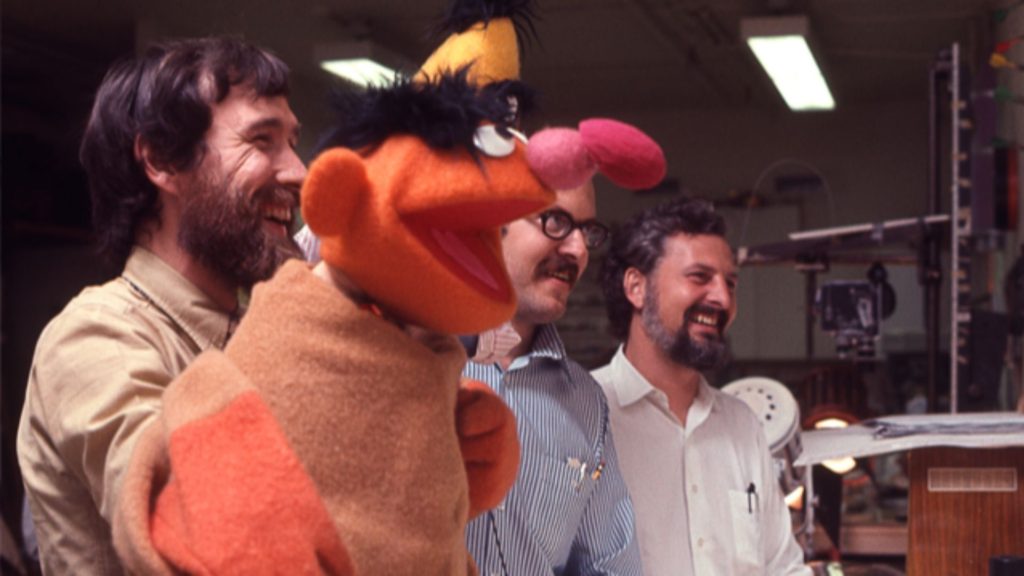
Caption: A scene from Marilyn Agrelo’s film STREET GANG: HOW WE GOT TO SESAME STREET. Courtesy of SFFILM
There’s a lot to like about Street Gang: How We Got to Sesame Street, a documentary as charming as the beloved TV series. As groundbreaking as it was, Sesame Street is now a 51-year-old institution, and its origin saga has not been well-known. Most of the key players survive, allowing director Marilyn Agrelo to present the first-hand back story.
We take the concept for granted today, based on the recognition that kids voraciously learn from commercial television – they learn to consume commercially marketed products. Sesame Street’s founders aimed to find out what kids like to watch and what is good for them to watch and put the two together.
Refreshingly. the pioneering producer Joan Ganz Cooney, the visionary Lloyd Morrisette of the Carnegie Foundation and the inventive director/head writer Jon Stone, each gives the credit to the others. If you add Mister Rogers to these folks, you have the Mount Rushmore of children’s television.
Everything in Sesame Street was intentional – like the street setting itself. Noting that most kid shows had fantasy settings, the creators chose a gritty urban neighborhood street to be relatable to disadvantaged urban kids. The same is true for the integrated cast.
Of course, Street Gang highlights the role of the Muppets. At first, the Muppets had their own set, but the creators learned that kids were so entertained by the Muppets that they found the street boring. So, they pivoted and brought the Muppets on to the street.
Jim Henson founded the Muppets as a late night satirical act and brought that adult sensibility to Sesame Street. The jokes embedded for adults encouraged parents to watch Sesame Street with their kids (which the educators thought was important).
There is also the astounding story of Sesame Street in Mississippi, where state government-controlled public television refused to air a show with an integrated cast. Those stations had to reverse themselves when private Mississippi stations put the show on the air.
This had not occurred to me, but Sesame Street requires creation of original music for 100 episodes per year – an enormous body of work. Street Gang takes us into the songwriting craft, with witty gems like Letter B (from Let It Be).
I screened Street Gang: How We Got to Sesame Street at SFFILM. It opens today in select San Francisco theaters and will release on VOD on May 6.
Kelley Kali in a scene from Kelley Kali’s and Angelique Molina’s film I’M FINE (THANKS FOR ASKING), playing at the 2021 San Francisco International Film Festival, April 9 -18, 2021. Courtesy of SFFILM
In the winning indie I’m Fine (Thanks for Asking), a recently widowed mom has lost her housing and goes on a one-woman crusade to get herself and her daughter back into an apartment. With a one-day deadline to earn the last $200 for a rental deposit, she races the clock through a series of misadventures – both comic and tragic – roller skating around Pacoima, braiding hair and making app-based food deliveries. And she’s putting on the best face, hiding her homelessness (and even convincing her 8-year-old that they’re “camping”). I’m Fine (Thanks for Asking) makes powerful statements about housing security and the gig economy in a oft funny, always accessible movie. It’s the first feature for the female, BIPOC filmmakers – shot on a low budget during a pandemic.
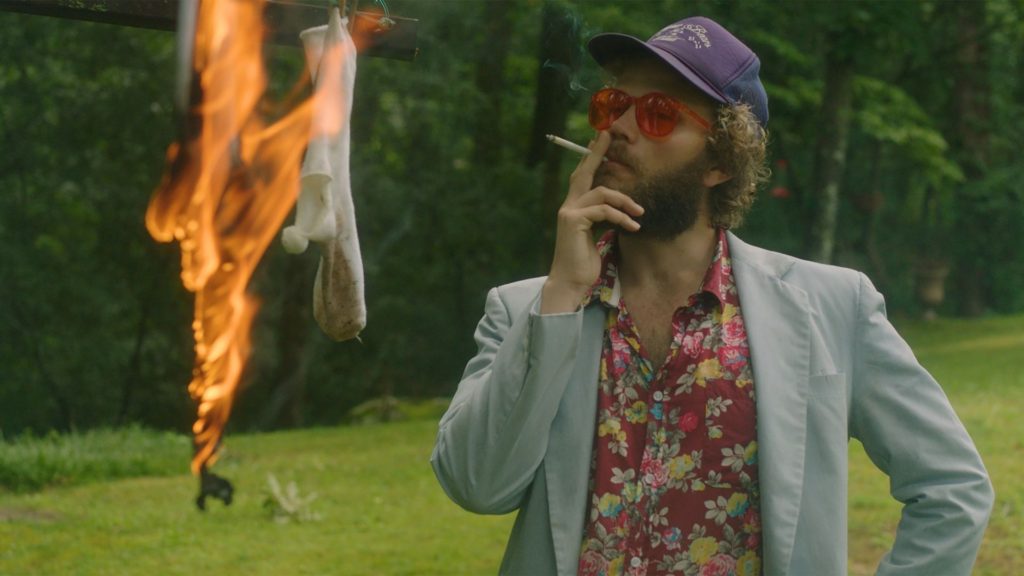
A scene from Bo Maguire’s film SOCKS ON FIRE, playing at the 2021 San Francisco International Film Festival, April 9 -18, 2021. Courtesy of SFFILM
Socks on Fire is Bo McGuire’s tale of his own family’s inheritance battle over a Hokes Bluff, Alabama, bungalow. The family of church-going Bama football fans – and one drag queen – is jarred and wounded by the mean behavior of one aunt. Enriched by old home movies and re-enactments, this ain’t your conventional talking head documentary. Socks on Fire swings between funny and operatic, and there’s a sweet remembrance of a grandmother in here, too. Won Best Documentary at the Tribeca Film Festival.
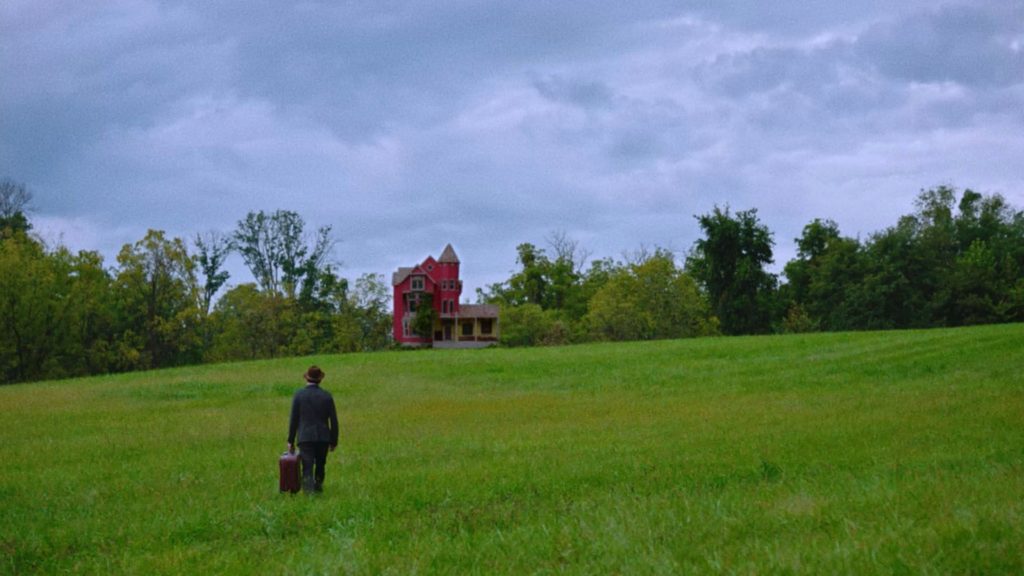
A scene from Kentucker Audley’s and Albert Birney’s film STRAWBERRY MANSION, playing at the 2021 San Francisco International Film Festival, April 9 -18, 2021. Courtesy of SFFILM
The very trippy and ultimately sweet fable Strawberry Mansion is set in a future where people’s dreams are taxed. An Everyman tax auditor (co-writer and co-director Kentucker Audley) is assigned to the dreams of an elderly artist and is plunged into an Alice in Wonderland experience with her dreams, and his dreams, and a romance, to boot. Strawberry Mansion is also a sharp and funny critique of insidious commercialism.
Socks on Fire had its North American theatrical premiere at a drive-in event – complete with live drag queen performances – as SFFILM’s centerpiece event. I’m Fine (Thanks for Asking) and Strawberry Mansion can be streamed at home through April 18. Tickets are available at SFFILM.
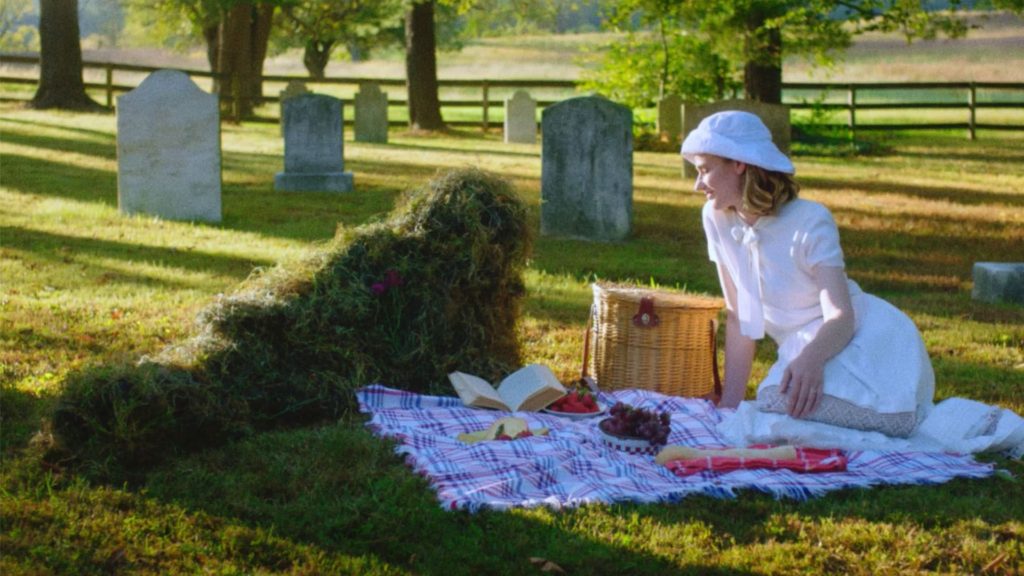
A scene from Kentucker Audley’s and Albert Birney’s film STRAWBERRY MANSION, playing at the 2021 San Francisco International Film Festival, April 9 -18, 2021. Courtesy of SFFILM
The very trippy and ultimately sweet fable Strawberry Mansion is set in a future where people’s dreams are taxed. Preble (Kentucker Audley), a workaday tax auditor, is assigned to audit the dreams of an elderly artist, Bella (Penny Fuller). Preble is soon plunged into an Alice in Wonderland experience with her dreams, and his dreams, and a romance to boot.
Preble puts on a gizmo to watch the dreams pf others (and comes across an even cooler gizmo that filters dreams). He even encounters Bella’s younger self (Grace Glowicki).
Strawberry Mansion is also a sharp and funny critique of insidious commercialism. A fictional brand of fried chicken keeps showing up in the story. Hilariously, Preble becomes entangled in an endless loop of upselling at a fast food drive-thru. And Preble is constantly prodded to consume by his own diabolical dream buddy (Linas Phillips). A sinister marketing plot is revealed.
A scene from Kentucker Audley’s and Albert Birney’s film STRAWBERRY MANSION, playing at the 2021 San Francisco International Film Festival, April 9 -18, 2021. Courtesy of SFFILM
Kentucker Audley is very good as Preble, who starts out the movie mildly annoyed and evolves into various degrees of bewilderment. Audley is one of those actors who keeps showing up in something interesting (and offbeat) like Amy Seimetz’s She Dies Tomorrow and Sun Don’t Shine, or in smaller parts in especially fine films like Her Smell and Ain’t Them Bodies Saints.
As Bella, Penny Fuller radiates a contentment that ranges from ditzy to sage. Reed Birney is especially good as Bella’s sinister son.
Audley co-wrote and co-directed Strawberry Mansion with Albert Birney. They make the most of the surreal settings within dreams, and use different color palettes for each dream; the palette for Preble’s real-life bachelor apartment is pretty surreal, too.
Strawberry Mansion played at the Sundance Film Festival and can be streamed through April 18 at SFFILM.
A scene from Ran-hee Lee’s film A LEAVE. Courtesy of SFFILM
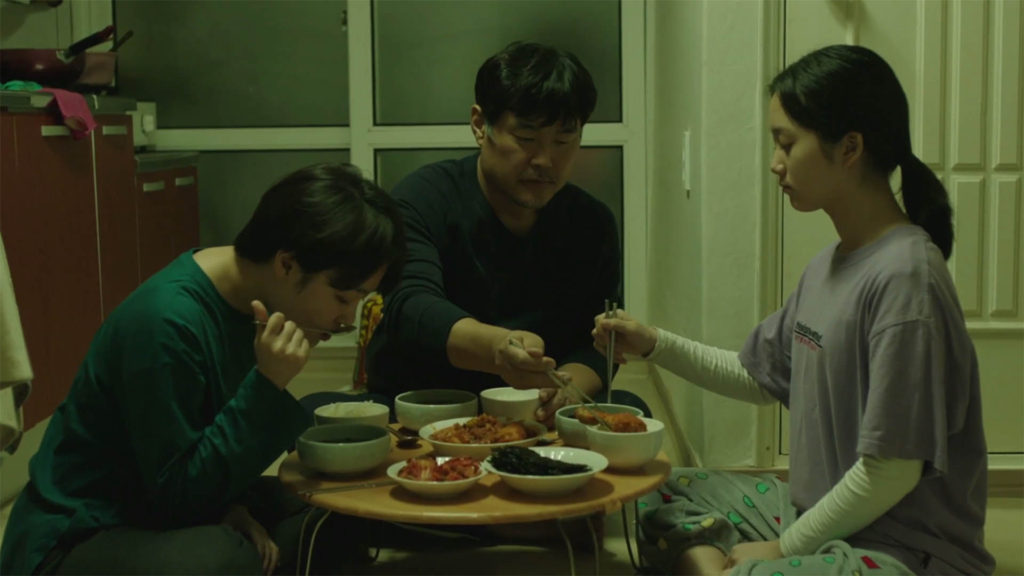
Ran-hee Lee’s unpretentious A Leaveis a surprisingly insightful slice-of-life into the modern global workplace. It opens on Day 1893 of a labor sit-in, as laid-off workers hold out to get reinstated in their longtime jobs. They have obviously lost this struggle a long while ago, although not everyone is ready to internalize that fact and move on. Middle-aged Jaebok, one of the sit-in;s remaining leaders, decides to take a leave from organizing that he characterizes as “like taking a leave from work”.
With some distance from the day-to-day campaign, he’s back in his apartment, and back to clogged drains and surly teenagers. He realizes that, without a paycheck, he cannot give his kids what they need (and his bright, promising older daughter needs college tuition). So, Jaebok finds a job in the new economy.
A scene from Ran-hee Lee’s film A LEAVE. Courtesy of SFFILM
It turns that his new job is as a temp contract worker in a sweat shop that supplies a big company like the one that laid him off. His new boss sells the opportunity with, “the company is disaster-free” – a low bar if ever there were one.
Jaebok, used to a decades-long career path with a single employer is puzzled by the revolving door of fellow workers. Only one young guy stays for more than a couple days, and many of the others must be undocumented immigrants working illegally.
The younger worker is not used to any continuity of co-workers – and not used to having relationships with his co-workers, something that Jaebok thinks is normal. The kid believes that asking for an eight hour shift is quaint.
A Leave is the first feature for writer-director Ran-hee Lee. She knows how to tell a little story in a little movie, which is not faint praise at all. Sometimes a little story is the best way to unmask great truth.
Lee uses non-actors in the film Her leading man is a 49-year-old guy who was laid off in real life and then picked up a temp job as a low wage contractor with undocumented, very green co-workers.
I screened A Leave for the SFFILM, where it won a jury mention.
A scene from Ran-hee Lee’s film A LEAVE. Courtesy of SFFILM
A scene from Angeles Cruz’s NUDO MEXTECO. Photo courtesy of SFFILM
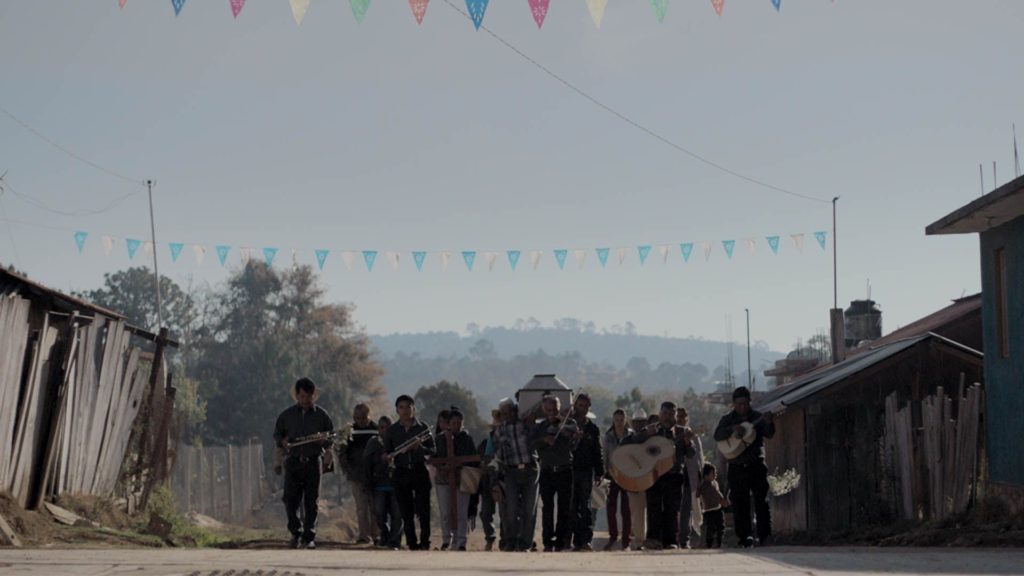
In Nudo Mixteco, we visit an indigenous Mixtec village in Southern Mexico and get three dramas for the price of one. It’s the annual festival, and three long-absent locals return home. One is there for her mom’s funeral. another to intervene in her daughter’s welfare and the third has just decided that’s time to come back home.
Nudo is Spanish for “knot”, and the three stories form a loose braid. As in Kieślowski’s Blue/Red/White, the characters in each plot thread can be spotted in the others.
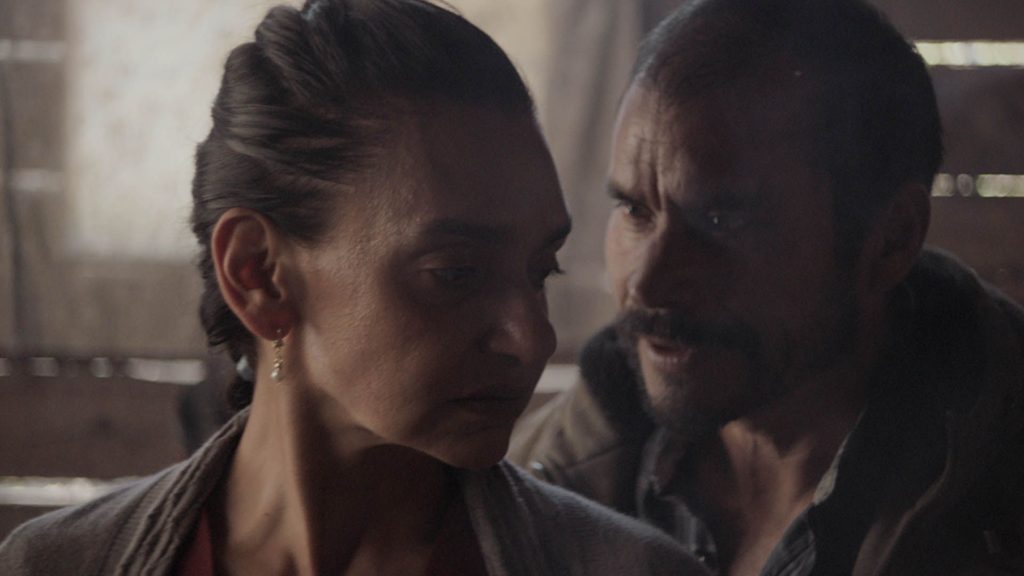
In each story, the women face constraints of patriarchy and traditional culture. An out lesbian has built a life in the city, but her father in the village cannot accept her sexuality, and even blames it for her mother’s death. Another woman also works in the city, and has left her daughter to be cared for by her sister in the village; reports of the daughter’s behavior trigger concern stemming from the mom’s own childhood sexual abuse.
In the third story, a village man has been working in the US. He had promised his wife that he would be gone six months, but it’s been three years. He expects that he can resume their lives as before, but his wife has moved on. Each feels betrayed by the other, and the village is convened to reach a community decision on a just outcome.
Nudo Mixteco is the debut feature for writer-director Angeles Cruz, who has won Ariels (Mexico’s Oscars) for her short films. Cruz is an accomplished actress, who was nominated for a best actress Ariel in 2018.
I screened Nudo Mixteco at SFFILM, where it won a jury award.
A scene from Angeles Cruz’s NUDO MEXTECO. Photo courtesy of SFFILM
Kelley Kali in a scene from Kelley Kali’s and Angelique Molina’s film I’M FINE (THANKS FOR ASKING), playing at the 2021 San Francisco International Film Festival, April 9 -18, 2021. Courtesy of SFFILM
In the winning indie I’m Fine (Thanks for Asking), Danny (Kelley Kali) is a recently widowed mom who has lost her housing and is on a one-woman crusade to get herself and her daughter back into an apartment.
Scraping together her earnings from here and there, she’s only $200 away from enough deposit for a new apartment. That 200 bucks is the MacGufffin of I’m Fine (Thanks for Asking), and Danny frantically roller skates around Pacoima, braiding hair and making app-based food deliveries.
With a one-day deadline, Danny races the clock through a series of comic and tragic misadventures, suffering more than her share of indignities. She’s desperate, but she still bypasses the off-ramps that would sacrifice her independence and personal integrity.
It’s also important to Danny that no one knows that she’s a mom who is homeless. Danny (Kali), Danny has even been telling her precocious 8-year-old daughter Wes (Wesley Moss) that they’re “camping”, but Wes is about to catch on.
Danny does let her situation slip to a couple of friends; (ironically, one’s housing depends on a new boyfriend and the other has inherited his). She gets more judginess than unconditional support.
We hear of “one paycheck away from being homeless”, but what about those hard-working folks in the informal economy who don’t get any paycheck at all? I’m Fine (Thanks for Asking) makes powerful statements about housing security and the gig economy in a oft funny, always accessible movie.
I’m Fine (Thanks for Asking) is an authentic and clear-eyed portrait of a woman navigating out of a fix. Danny is not an artificially noble character – not all of her choices are ideal. But she is driven by devotion to her daughter.
In a tour de force performance, Kelly Kali is a tornado of hustle. They say that acting is reacting, and Kali’s face tells us when she is thinking “I’m not going to go THERE” or “WTF am I going to tell my kid?”. Her Danny puts on the best possible face in a way to convince her acquaintances (without being convincing to the clued-in movie audience).
Deon Cole (Blackish) delivers a brief, magnetic turn as one tempting and very bad potential choice for Danny.
This is the first feature for co-directors Kelley Kali and Angelique Molina, who co-wrote I’m Fine (Thanks for Asking) with Roma Kong (also first feature). (Kali was also one of nine co-directors credited on The Adventures of Thomasina Sawyer). This film is especially well-paced, as Kali and Molina economically set up the situation that Danny and Wes are in and then keep up with Danny as she spurts from vignette to vignette on her quest.
Let’s not overlook that this is another example of female filmmakers, on the hunt for quality source material, writing it themselves. And they shot it on a low budget during a pandemic. With the matter of fact masking of the characters, I’m Fine is ever COVID-conscious.
I’m Fine (Thanks for Asking) won two jury awards at SXSW and can be streamed through April 18 at SFFILM.
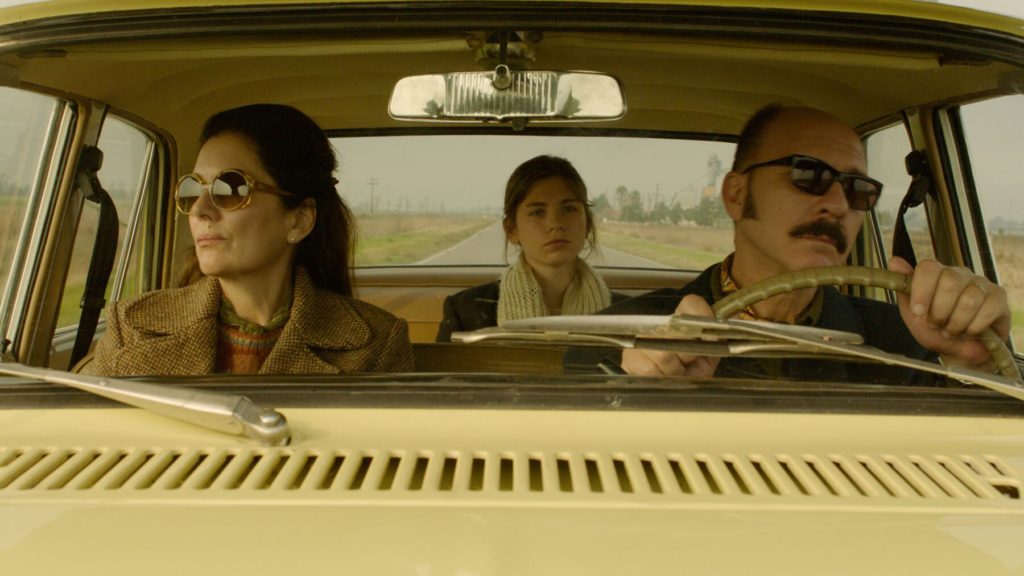
A scene from Marilyn Agrelo’s film STREET GANG: HOW WE GOT TO SESAME STREET, playing at the 2021 San Francisco International Film Festival, April 9 -18, 2021. Courtesy of SFFILM
This year’s San Francisco International Film Festival (SFFILM) opens tomorrow, April 9, and runs through April 18. As always, it’s a Can’t Miss for Bay Area movie fans. This year, you can attend at home: with the exception of a few drive-in events at Fort Mason, the movies can be streamed.
The menu at SFFILM includes 42 feature films and 56 shorts from 41 countries, with 13 world premieres and 20 North American or US premieres. Of the 103 total films, 57% have female directors and 57% are directed by BIPOC.
Besides the streaming, here’s what’s new in this year’s SFFILM:
After years of programs impeccably curated by Bay Area treasure Rachel Rosen, Jessie Fairbanks takes over as Director of Programming. (And this is the first SFFILM fest for new SFFILM Executive DIrector Anne Lai.)
A cross section of movies highlighted as Family-friendly films, something that more film festivals should do. Introduce the kids to good cinema!
Mid-Lengths – a competition of five movies with hard-to-program running times of 30-50 minutes.
The festival’s Closing Night Film is Marilyn Agrelo’s documentary Street Gang: How We Got to Sesame Street, the origin story of the beloved children’s show.
I’ve screened some of the films, and I’ll be recommending some indie gems soon.
The absurdism of Luis Buñuel meets the social awkwardness of Seinfeld in Hong Sang-soo’s Koran comedy Yourself and Yours.
In Yourself and Yours, Minjung (Lee You-young) dumps her boyfriend (Kim Joo-hyuck) after he objects to her heavy drinking (“I’ve stopped drinking – now I stop after only five rounds“). Then another man thinks that he meets Minjung, but she claims that she is Minjung’s identical twin. We’re not so sure about that. And then she meets ANOTHER man, and her identity remains in question. Her original boyfriend is comically bereft, and he’s on the lookout for her, too.
One character says “You men are all pathetic“, and Minjung proves that point at every opportunity. In a deliberate homage to Buñuel’s That Obscure Object of Desire, Lee You-young plays the role of Minjung and her multiple doppelgängers (unless they are all really Minjung herself). There are plenty of LOL moments as Yourself and Yours winds its way full circle to a satisfyingly sly finale.
I saw Yourself and Yours (Dangsinjasingwa dangsinui geot) at the San Francisco International Film Festival (SFFILM). In an Only-At-SFFILM moment, I (a Hong Sang-soo newbie) was surrounded in the audience by devoted Hong Sang-soo fans. During its Bay Area virtual run at the Roxie, you can stream Yourself and Yours at Roxie Virtual Cinema.
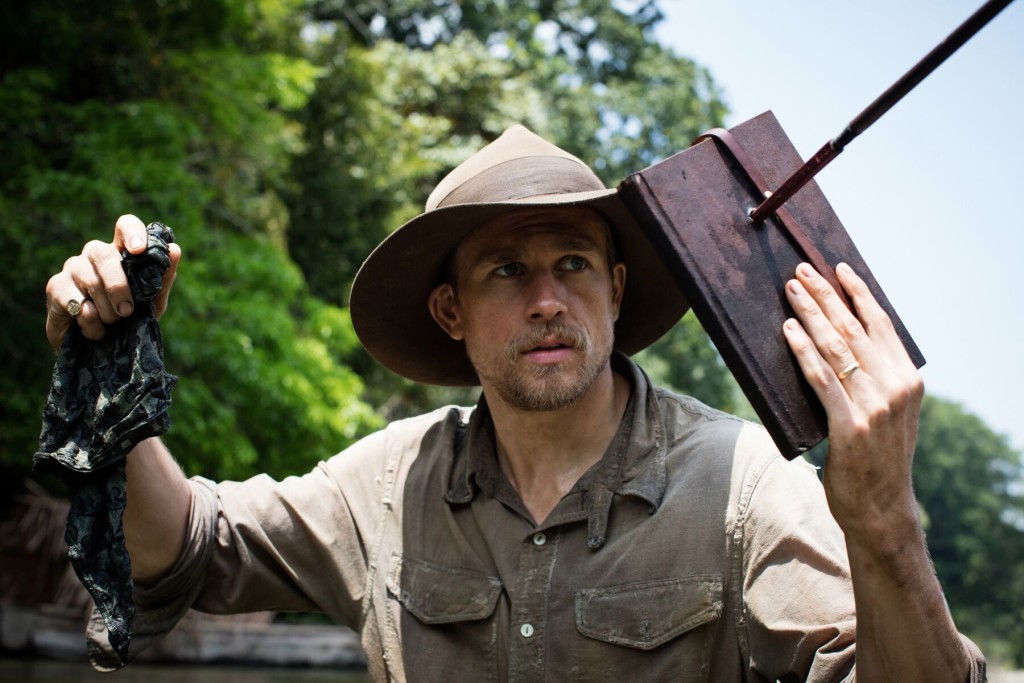
Charlie Hunnam in THE LOST CITY OF Z
photo courtesy of SFFILM
Because the San Francisco International Film Festival (SFFILM) was supposed to be underway now (it’s been cancelled for the COVID-19 emergency), here’s a film from SFFILM’s 2017 program. In auteur James Gray’s sweeping turn of the 20th Century epic The Lost City of Z, a stiff-upper-lip type British military officer becomes the first European to probe into the deepest heart of unmapped Amazonia. Finding his way through the lush jungles, braving encounters with sometimes cannibalistic indigenous warriors, he becomes obsessed with finding the lost city of an ancient civilization. I know this sounds like Indiana Jones, but it’s based on the real life of Percy Fawcett as chronicled in the recent book Lost City of Z by David Grann.
The Lost City of Z begins with an Edwardian stag hunt
through the verdant Irish countryside, complete with horses spilling
riders. This scene is gorgeous, but its point is to introduce the young
British military officer Percy Fawcett (Charlie Hunnam) as a man of
unusual resourcefulness, talent and, above all, drive. Despite his
abilities, he has been chaffing at the unattractive assignments that
have precluded his career advancement. In the snobby Edwardian military,
he has been in disfavor because his dissolute father had stained the
family name. One of Fawcett’s commanders says, “He’s been rather
unfortunate in his choice of ancestors”.
That yearning to earn the recognition that he believes he merits –
and to attain the accomplishments of a Great Man – is the core of this
character-driven movie. Fawcett resists yet another assignment away from
the career-making action, a mapping expedition designed to have a minor
diplomatic payoff. But it takes him on a spectacular Amazon exploration
that brings him celebrity – and backing for more high-profile
expeditions. Fawcett was surfing the zeitgeist in the age of his
contemporaries Roald Amundsen (South Pole), Robert Peary (North Pole)
and Howard Carter (King Tut).
In that first expedition, Fawcett becomes convinced that he can find the magnificent city of a lost civilization deep in the Amazon, a city he calls Z (which is pronounced as the British “Zed”). The Lost City of Z takes us through two more Amazonian expeditions, sandwiched around Fawcett’s WW I service in the hellish Battle of the Somme. That final expedition ends mysteriously – and not well.
No one knows for sure what happened to Fawcett. In The Lost City of Z,
Gray leads us toward the most likely conclusion, the one embraced by
Grann’s book. If you’re interested in the decades of speculation about
Fawcett’s fate, there’s a good outline on Percy Fawcett’s Wikipedia page.
Fawcett comes with his own Victorian upper class prejudices, but he
has the capacity to set those aside for a post-Darwin open-mindedness.
Gray made it a point that the indigenous peoples in the movie are
independent of Fawcett; Gray shows them living their lives in a world
that Fawcett has found, not just advancing the plot points in Fawcett’s
quest. Four real tribes – and their cultures – are shown in the film.
As Percy Fawcett, with his oft-manic obsession and fame-seeking that
color his scientific curiosity and his old-fashioned Dudley Do-Right
values, Charlie Hunnam gives a tremendous, perhaps carer breakthrough,
performance. He’s been a promising actor in Sons of Anarchy and the overlooked thriller Deadfall) (and such a good actor that I never dreamed that he’s really British). Hunnam will next star as the title character in the King Arthur movie franchise.
Robert Pattinson is unexpectedly perfect as Fawcett’s travel buddy Henry Costin. With his Twilight dreaminess hidden behind a Smith Brothers beard, Pattinson projects a lean manliness. It’s probably his best performance.
Sienna Miller shines as Fawcett’s proto-feminist wife Nina. I first
noticed Miller (and Daniel Craig) in the underrated neo-noir thriller
2004 Layer Cake. Now Miller is still only 35 years old and has delivered other fine recent performances in Foxcatcher, American Sniper and (in an especially delicious role) High-Rise.
Director James Gray (The Yard, Two Lovers, The Immigrant) is
a favorite of cinephiles and of other filmmakers, but regular audiences
don’t turn out for his movies. That may change with The Lost City of Z,
a remarkably beautiful film that Gray shot, bucking the trend to
digital, in 35 mm. The jungle scenes were filmed in a national park in
Columbia. The cinemeatographer is the Oscar-nominated Darius Khondji.
Khondji shot The Immigrant for Gray and has been the DP of choice for David Fincher (Se7en) Alan Parker (Evita), Michael Haneke (Amour), and Woody Allen (Midnight in Paris).
Along with the stag hunt and the voyages up and down the jungle rivers,
there is also a breathtakingly beautiful ballroom scene and a gaspingly
surreal nighttime discovery of a rubber plantation’s opera house deep
in the jungle.
There have been other Lost Expedition movies, most famously Werner Herzog’s Aquirre, the Wrath of God and Fitzcarraldo. The Lost City of Z
shares an obsession, a quest and a mysterious tragic end with those
films, but it stands apart with its exploration of the motivation of a
real life character and the authenticity of Gray’s depiction of the
indigenous people.
Movie studios used to make an entire genre of very fun movies from Gunga Din and The Four Feathers through Lawrence of Arabia and Zulu
that featured white Europeans getting their thrills in exotic third
world playgrounds. We often cringe at the racist premises and the
treatment of “the natives” those movies today. Since the 1960s, the best
examples of the genre, like Raiders of the Lost Ark, have had an ironic tinge. With The Lost City of Z, James Gray loses both the racism and the irony, and brings us brings a straight-ahead exploration tale.
The Lost City of Z revives the genre of the historical
adventure epic, with all the spectacle of a swashbuckler, while braiding
in modern sensitivities and a psychological portrait. This is a
beautiful and thoughtful film. The Lost City of Z is available on DVD from Netflix and Redbox and to stream from Amazon, iTunes, Vudu, YouTube and Google Play.
Also see my notes from the director James Gray’s Q & A at the San Francisco International Film Festival. [And here are some completely random tidbits. There’s a cameo by Spaghetti Western star Franco Nero. And the closing credits recognize the “data wrangler”.]
The San Francisco International Film Festival (SFFILM) was set to open tomorrow before it was cancelled for the COVID-19 emergency, so in tribute, here’s a film from SFFILM’s 2019 program.
Rojo is Argentine writer-director Benjamín Naishtat’s slow burn drama. Rojo
is set just before the 1970s coup that some characters expect – but no
one is anticipating how long and bloody the coup will be. Several
vignettes are woven together into a tapestry of pre-coup moral malaise.
A prominent provincial lawyer Claudio (Darío Grandinetti) is invited
to participate in a scam. There’s a scary encounter of lethal
restaurant rage. It looks like Claudio, bobbing on a sea of moral
relativism, may well remained unscathed, but the arrival of crack
detective becomes a grave threat.
As Claudio weaves through his life, his society shows signs of
crumbling. There’s a failed teen seduction, an emotional breakdown at a
formal reception and a natural metaphor – a solar eclipse.
It’s funny when the audience finally connects the dots and
understands who the character nicknamed “the Hippie” is. And Naishtat
and Grandinetti get the most out of the scene where Claudio finally
dons a toupee.
We know something that the characters don’t know – or at least fully
grasp – how bloody the coup will be. Watch for the several references
to desaparecido, a foreboding of the coup. Argentina’s coup was known for the desaparecidos
– the disappeared – thousands of the regime’s political opponents went
missing without a trace, having been executed by death squads. In Rojo,
a very inconvenient madman dies and his body is hidden, there’s a
disappearing act in a magic show, and a would-be boyfriend vanishes.