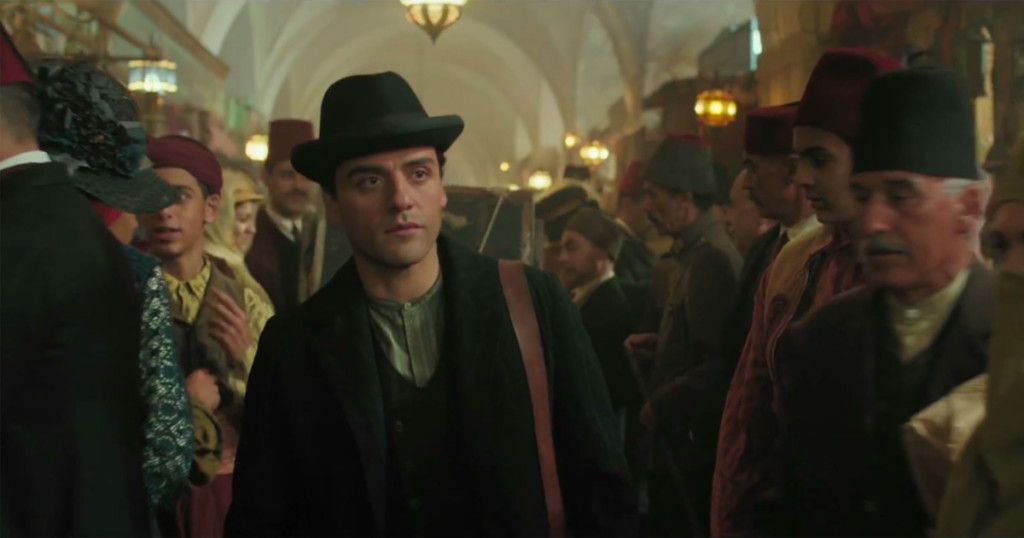
In a predictable trudge through the Armenian Genocide, The Promise delivers nothing that we haven’t seen before. Oscar Isaac plays an impoverished Armenian from the Anatolian outback who dreams of becoming a doctor. To afford medical school in Constantinople, he uses the dowry available after his betrothal to a sweet and prominently-schnozzed local girl. For his studies, he moves alone to the big city, where he meets a cosmopolitan Armenian beauty (Charlotte Le Bon), who has been living in Paris with her boyfriend, an iconoclastic American journalist (Christian Bale). Just as sparks fly between Isaac and Le Bon, World War I erupts and the Turks persecute and then massacre Armenians, causing the two to flee separately for their lives. Isaac’s medical student finds himself hiding in his home village, married to his fiance. Le Bon’s sophisticate is on the run with Bale’s journalist as he covers the developments. Will the Armenian lovers meet again in Eastern Turkey, and will he stay true to his marital vows?
The talents of Isaac and Bale are wasted in this movie. Isaac’s character is so top-to-bottom decent and so buffeted by developments that are not his fault, there just isn’t much texture to portray. Similarly, Bale’s reporter, while purportedly an international man of mystery, is just a Jeff Bridgesey teddy bear of a guy at his core.
The Promise is not as bad as the epically bad epic The Ottoman Lieutenant, and has much higher superior production values and a moderately better screenplay. Both movies share the beginning of World War I and the Armenian Genocide, along with an American protestant mission in southeastern Turkey. As in The Ottoman Lieutenant, there’s an unintentional audience laugh – when Isaac’s mother intones “I told them you were dead”.
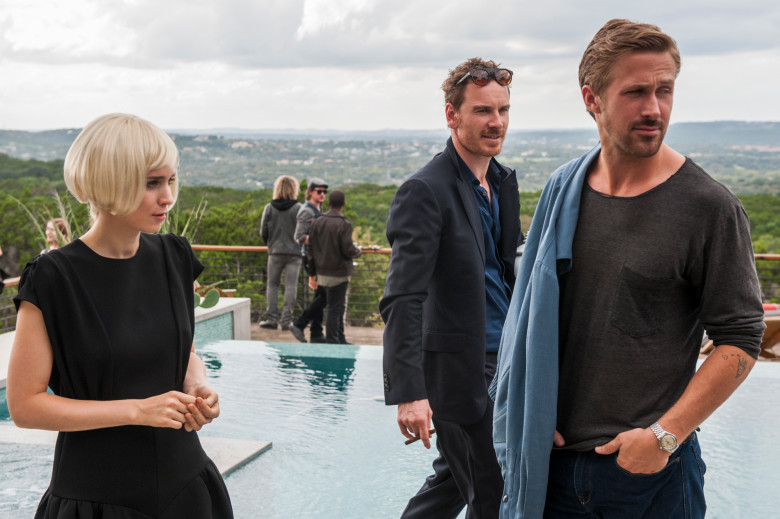
Rooney Mara, Michael Fassbender and Ryan Gosling in SONG TO SONG
After sitting through what seemed like three hours of the 129-minute movie Song to Song, I have identified why I am done with auteur Terence Malick – Malick has essentially become a visual-only filmmaker. But I think of cinema as a storytelling medium, and Malick, with all his eye candy, just can’t make me care about his story.
Ryan Gosling plays an Austin songwriter who is befriended and exploited by a twisted and extremely rich music kingpin (Michael Fassbender). Rooney Mara’s character (purportedly another songwriter) falls for them both, and also jumps in bed with Bond Girl Bérénice Malohe’s mystery woman. Natalie Portman plays a waitress who tragically marries Fassbender’s monstrous mogul. An out-of-towner (Cate Blanchett) breezes in to have a fling with Gosling’s songwriter. Besides Mara and Portman, Fassbender also works his way through a series of groupies and call girls (including the most pockmarked hooker in Texas).
The movie is filled with the goofy, playful things that people do when they are flirting and seducing and in the early flush of love. We also see (TMI?) that Malick is personally fascinated by a slow, teasing prelude to lovemaking, as ritualized as are the early stages of a bullfight, during which women wrap themselves in the curtains and get their stomachs caressed. I like watching these usually compelling actors, but I just don’t care about these characters. Unfortunately for her performance, Mara never seems the least bit musical or artistically inclined.
The only genuine moments in Song to Song come in scenes with the main characters’ concerned parents and two scenes with the starkly and heartbreakingly authentic singer-songwriter Pattie Smith.
There is, however, a lot of visual interest to be found in Texas and Mexico, and Malick makes the most of it: riverfront mansions, high-rise penthouses, beaches, cantinas, Hill Country vistas and backstage at the ACL festival. As usual, Malick is aided by the collaboration of the master cinematographer Emmanuel Lubezki. No contemporary cinematographer can match Lubezki’s stunning body of work. His work with Malick includes the wondrous The New Land. And the three-time Oscar winner Lubezki also shot Alejandro Iñárritu’s Babel,Birdman and The Revenant and Alfonso Cuarón’s Children of Men and Gravity. Lubezki’s work here is remarkable, but I find myself infuriated at wastefulness of a Malick setup that results in 2 seconds in the film, however visually glorious.
There are also what have become unfortunate Malick signatures. Choral music by Handel always signals pretentiousness. And Song to Song contains a completely random montage of horror scenes from silent movies – it had me waiting for the reappearance of the dinosaurs from The Tree of Life.
And here’s a scene that I found paternalistic and offensive – I guarantee you that, if you get wasted and raucous in a Mexican cantina, the Mexicans will not embrace you as those really cool gringos that they have been waiting these many years to roughhouse with.
The absurdism of Luis Buñuel meets the social awkwardness of Seinfeld in Hong Sang-soo’s Koran comedy Yourself and Yours. I just saw Yourself and Yours (Dangsinjasingwa dangsinui geot) at the San Francisco International Film Festival (SFFILMFestival). In an Only-At-SFFILM moment, I (a Hong Sang-soo newbie) was surrounded in the audience by devoted Hong Sang-soo fans.
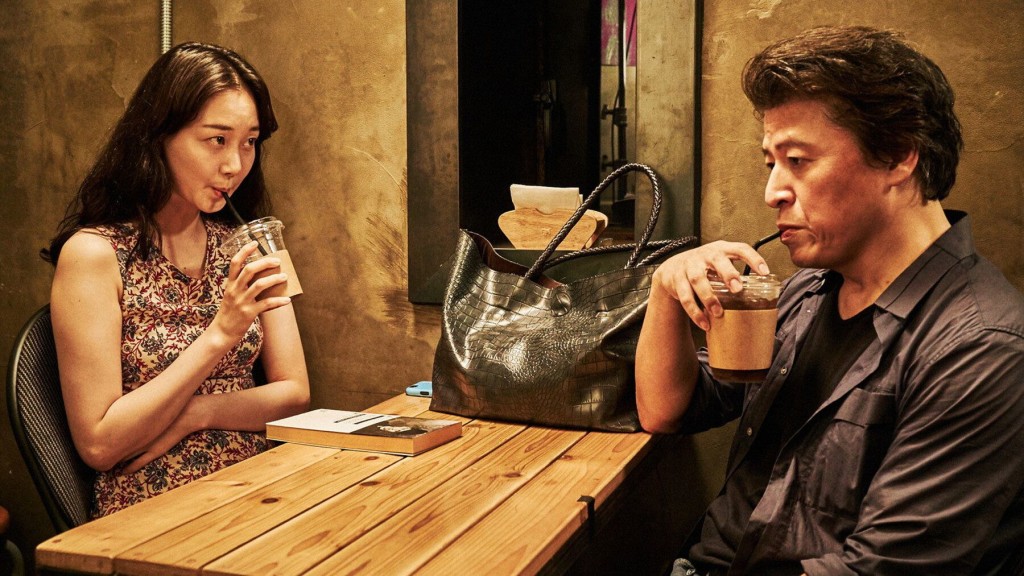
In Yourself and Yours, Minjung (Lee You-young) dumps her boyfriend (Kim Joo-hyuck) after he objects to her heavy drinking (“I’ve stopped drinking – now I only stop after five rounds”). Then another man thinks that he meets Minjung, but she claims that she is Minjung’s identical twin. We’re not so sure about that. And then she meets ANOTHER man, and her identity remains in question. Her original boyfriend is comically bereft, and he’s on the lookout for her, too.
One character says “You men are all pathetic”, and Minjung proves that point at every opportunity. In a deliberate homage to Buñuel’s That Obscure Object of Desire, Lee You-young plays the role of Minjung and her multiple doppelgängers (unless they are all really Minjung herself). There are plenty of LOL moments as Yourself and Yours winds its way full circle to a satisfyingly sly finale.
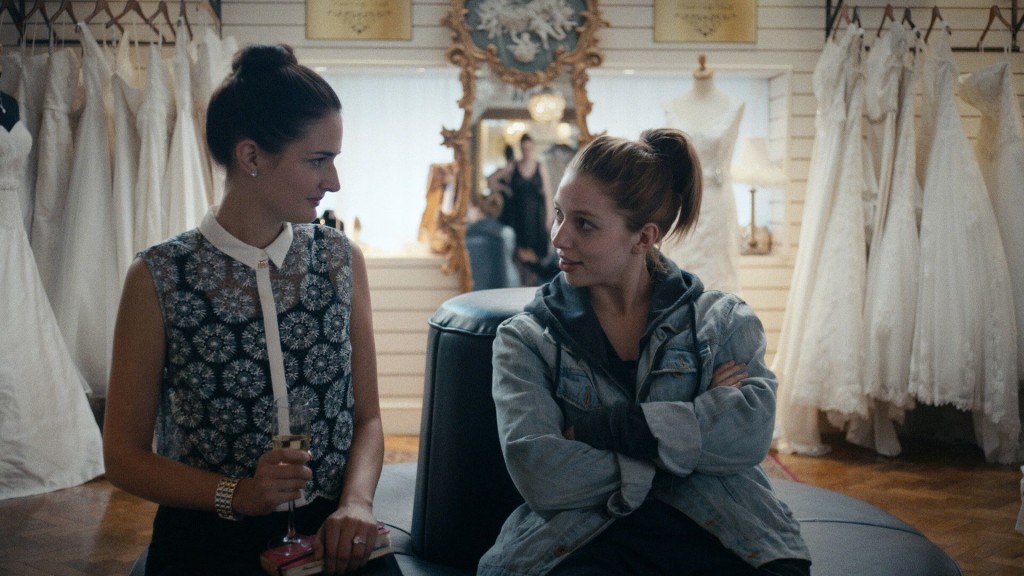
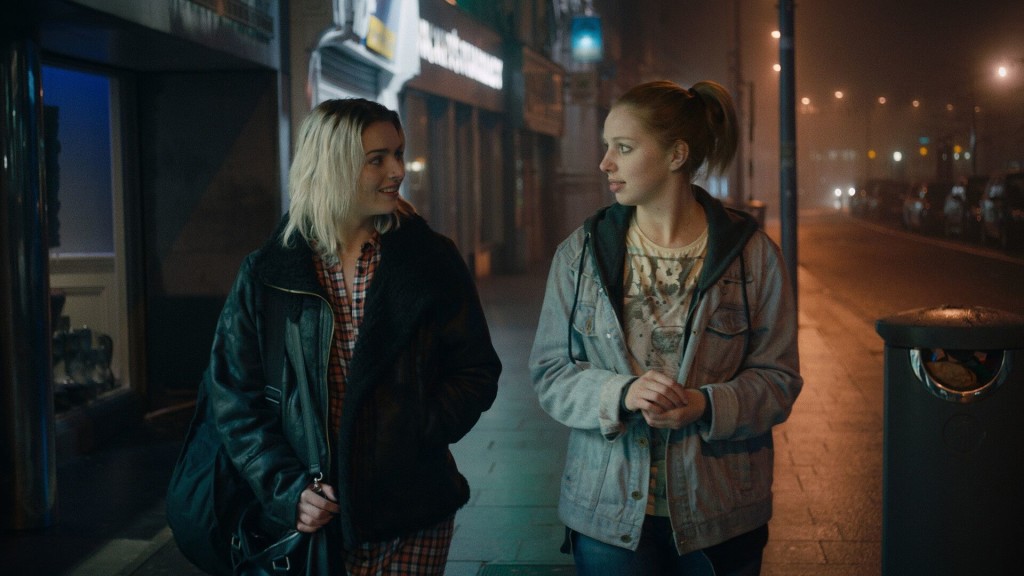
Charleigh Bailey and Seána Kerslake in A DATE FOR MAD MARY photo courtesy of SFFILM
The San Francisco International Film Festival (SFFILMFestival) features the Irish dramedy A Date for Mad Mary. Mary (Seána Kerslake) has just been released from incarceration and faces this challenge: she’s going to be the Maid of Honor at her childhood BFF’s wedding, and she needs a date for the nuptials. This apparently isn’t the first time that Mary’s been locked up for brawling because she quickly resorts to pounding other humans. This is a character flaw which is getting in the way of her, among other normal pursuits, finding a feller.
With this set-up, the audience is expecting a broad Dating-Gone-Wrong comedy, and there is a bit of that, but A Date for Mad Mary drills down to explore the character of Mary, somehow still frozen in her teenage pose. Mary has a major chip on her shoulder and escalates every human contact into an outburst of hostility. She just hasn’t matured into a woman who can navigate any social situation. The annoyingly controlling bride-to-be Char (Charleigh Bailey) has grown out of the teen Tough Girl pose, and has moved on the having a life with a job and a fiance. Mary, on the other hand, can’t keep a job or a guy or anything that will make her satisfied, self-proud or happy. Eventually, Mary meets a new friend Jess (Tara Lee) and wall-bangs her way down the corridor of self-discovery.
Tara Lee and Seána Kerslake in A DATE FOR MAD MARY photo courtesy of SFFILM
Seána Kerslake’s excellent performance is central to the success of the film, playing a character who is confused by her own lack of happiness. Unforgettably, Kerslake’s Mary kisses another character and is overwhelmed by an unexpected, giddy thrill – it’s a special moment. A Date for Mad Mary is the fifth feature since 2012 for up-and-comer Kerslake, who is also starring in an Irish television series.
A Date for Mad Mary is the first feature for director and co-writer Darren Thornton. A Date for Mad Mary will be screened again this weekend at the San Francisco International Film Festival.
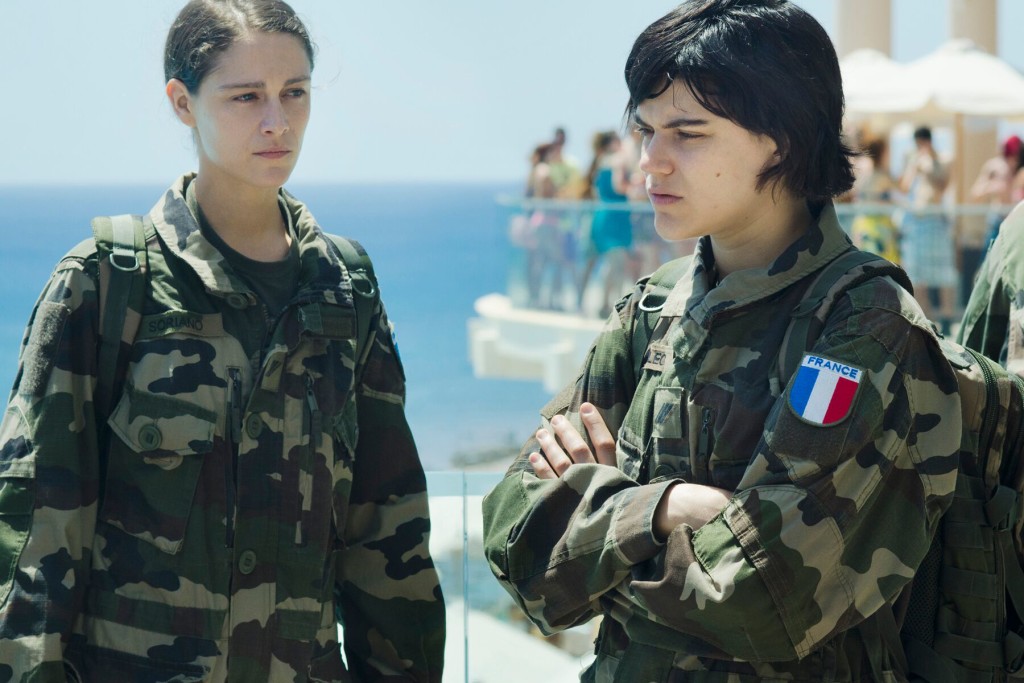
Ariane Labed and Soko in THE STOPOVER photo courtesy of SFFILM
The San Francisco International Film Festival (SFFILMFestival) presents the topical French drama The Stopover, which explores the after-effects of combat in contemporary warfare. We also get a female lens on the acceptance of women in combat roles and on sexual assault in the military from the co-writer and co-directors, the sisters Delphine and Muriel Coulin.
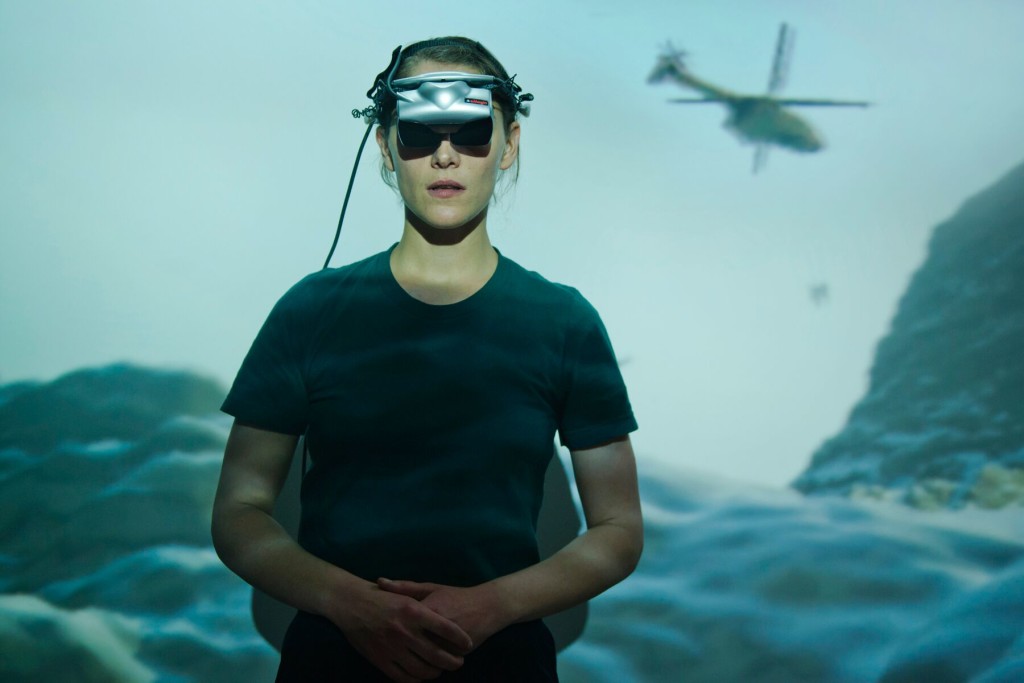
The Stopover’s title refers to a French combat unit’s three-day stay in a luxurious Cypriot seaside resort. The unit, heading back to France after a tour in Afghanistan, is supposed to decompress at the resort. They are required to engage in group therapy, enhanced by virtual reality goggles. As with any group of gung-ho and mostly macho twenty-somethings, talk therapy is not their thing. But they sure need decompression, because their service included a terrifying engagement in which they lost three comrades.
This combat unit includes women, and The Stopover focuses on Aurore (Ariane Labed and Marine (Soko). The strong and purposeful Aurore has physically recovered from an emotionally (and literally) scarring experience in Afghanistan. The more impulsive Marine, on the other hand, is not a deep thinker, but has a serious chip on her shoulder.
Everyone in the unit wound very, very tightly. Some are fighting to keep psychotic outbursts from bubbling over. Plopping these guys amidst tourists and locals in such an absurdly and artificially tranquil setting creates a powder keg. From start to finish in The Stopover, we’re waiting for any and every character to snap or erupt.
Ariane Labed in THE STOPOVER photo courtesy of SFFILM
Labed is excellent as Ariane feels need to suppress her PTSD, to mask it with rowdy fun and, finally, to confront it. Labed won Best Actress at the Venice Film Festival for a completely different kind of movie in 2010, the absurdly goofy Attenberg, which I also watched at the San Francisco International Film Festival.
I just can’t take my eyes of Soko, who is a French pop music star. Here, as Marine, she has a feral fierceness. Soko is also a force of nature in the excellent period drama Augustine. She stars in another movie out this year that I’m looking forward to seeing, The Dancer. She brings a simmering intensity to the screen, in contrast to her offbeat, ironic pop music.
The rest of the cast is excellent, too, particularly Karim Leklou as a sergeant with an unresolved issue or two.
The Stopover plays the SFFILMFestival tonight and again this weekend. It’s also programmed in Film Society of Lincoln Center’s sometimes traveling Rendez-vous with French Cinema series. It’s an engrossing and powerful film.
Here’s an interview with San Francisco filmmaker Travis Mathews, the writer-director of Discreet. Mathews has also directed Do I Look Fat?, I Want Your Love, Interior. Leather Bar. and the In Their Room documentary series. The San Francisco International Film Festival (SFFILMFestival) is hosting the U.S. premiere of Mathews’ newest film Discreet, which debuted at the Berlinale.
The Movie Gourmet: SFFILM is giving your U.S. premiere the prime Saturday 9 PM slot at the Castro. Must be a good feeling.
Travis Mathews: Two of my earlier films have been screened at the Castro in the Frameline Festival, but not at the San Francisco International Film Festival. I can tell you that it’s pretty awesome. It’s my favorite theater in the world.
TMG: Where did you find Bob Swaffar, and just how tall is he? [Bob Swaffer plays John, the child sexual abuser, in Discreet.]
Travis Mathews: He’s really, really tall. 6′ 7″, I think. At least 6′ 5″. I found most of our cast at an open call in Austin – which is its own interesting experience. Bob is a gentle, wise man who makes pottery. I had already decided that his character would not speak.
TMG: Did you see a menace in Bob?
Travis Mathews: No. I knew that menace would be created by the editing and sound design, and that the menace would be projected (on Bob) by the audience. It’s like a Rorschach Test.
TMG: And where did you find Joy Cunningham? She’s great in a brief scene as Alex’ mom Sharon.
Travis Mathews: She’s a friend of mine, a lesbian married to a great woman with a couple of great kids. At the time (of shooting Discreet), they were renting out the house where Sharon lives (in the movie). Joy is a comedic actress. She had never done drama, but I knew that she’d be great. She and her wife Gretchen, they were invaluable when I was writing the film, giving me notes on the screenplay.
TMG: You’ve made a revenge film where the final act of violence is off-camera. It’s kind of anti-Peckinpah, with none of the customary splatter for the genre. What informed this choice?
Travis Mathews: In previous films, I’ve explored the opposite and showed more, especially raw emotion. This time I wanted to play with withholding instead of showing. That was part of the fun in making Discreet. We did a lot of test screenings and the audiences told me, “yeah, I already knew that” or “this wasn’t clear”. That helped with the editing choices of what to withhold.
Travis Mathews: I didn’t want to be so clear who was in the body (the body bag floating down the river) at the end. I have an idea, but it is elliptical. I don’t want to be “I don’t know – who did YOU think it was?”. But it (the ambiguity) strengthened the movie.
[Note: If the body isn’t the most obvious character, as I’d thought, then it’s got to be…Holy Toledo! This movie would be even darker than I’d recognized!]
TMG: Why did you have your characters carry out clandestine acts next to a freeway, when we would expect you to have set them out in the woods where no one could see?
Travis Mathews: I was in Texas for a long time on another film project. I was driving around the same van that Alex drives in Discreet. I became fascinated by the freeway structure in Texas. So many are built almost like roller coasters for reasons that seemed arbitrary. It’s a like a Texas show of strength: We have the tallest freeways! So I found it both absurd and fascinating. I wanted them to be a man-made monster in the background. A freeway is in the background of every setting except Joy/Sharon’s house. It made sense.
TMG: What’s the distribution plan for Discreet?
Travis Mathews: It’s being released (theatrically) in the UK and Ireland. We’re playing the festival circuit (here in the U.S.) as part of our strategy to get distribution. It’s a tough movie. I know that’s it’s not a commercial movie in several respects. I hope that people see it – it is a film that lingers, as it did with you.
TMG: What is your next project?
Travis Mathews: I will be a little coy here. I’m working on two projects. One is a remake of a 1970s film. The other is an original with horror elements. I want to do a horror movie, and Discreet is inching me toward the genre.
TMG: Will these be films that you both write and direct?
Travis Mathews: Yes.
TMG: One last question – and it’s about Interior. Leather Bar. Do you really believe, in your heart of hearts, that Friedkin had to cut an entire FORTY minutes of gay sex from Cruising?
Travis Mathews: Maybe not all gay sex, but forty minutes of what someone found too sexual, too violent or too something. Maybe 37 or 42, but about 40 minutes, yes.
On Sunday evening at 6 PM, Travis Mathews and author Karl Soehnlein will be speaking about art in the age of Trump, including Discreet, at Dog Eared Books, 489 Castro Street, San Francisco.
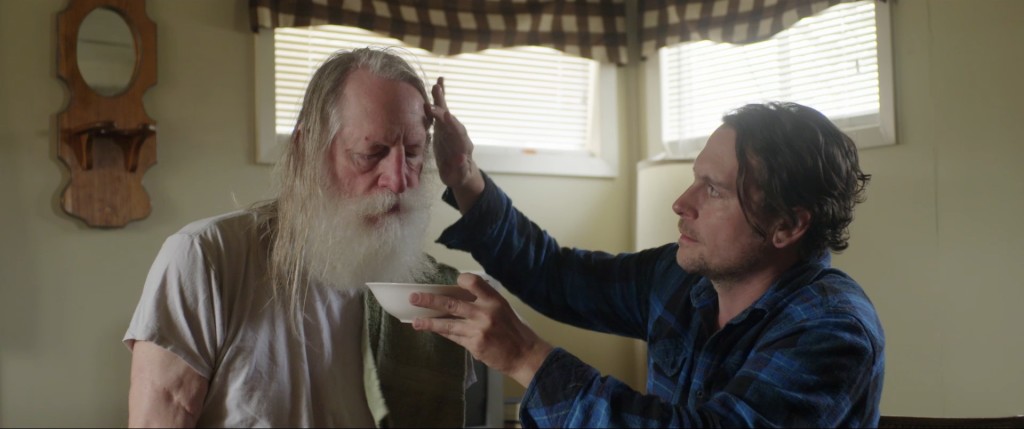
Bob Swaffar (left) and Jonny Mars in DISCREET photo courtesy of m-appeal World Sales
The San Francisco International Film Festival (SFFILMFestival) presents the U.S. premiere of the psychological drama Discreet tomorrow, April 8 – and it should be the indie highlight of the festival.
Within a revenge tale, writer-director Travis Mathews has braided threads of social criticism and political comment. Most of all, Discreet is a compelling portrait of one damaged, very unwell guy and a thoughtful exploration of the alienating aspects of the current American zeitgeist.
Discreet is centered on Alex (Jonny Mars), who has drifted back through his Texas hometown to find that his childhood sexual abuser has re-surfaced. Alex is untethered either to home or sanity. Away from home for a long time, Alex has been roaming the country, oddly stopping to shoot videos of freeway traffic. The most hateful alt-right talk radio plays incessantly from the radio of his van. And, in a creepy juxtaposition, he’s obsessed with a New Agey YouTube publisher (the comic Atsuko Okatsuka).
Alex sets out to find and confront his abuser (Bob Swaffer), and Discreet takes us on a moody and intense journey, filled with unexpected – and even flabbergasting – moments. Only the ultimate vengeance seems inevitable – and even that act is handled with surprising subtlety. The catharsis is intentionally understated, and there is none of the customary splatter.
Swaffer’s physicality, along with his character’s condition, makes him a monster unlike anything I’ve seen in a movie before – a unique blend of the bone-chilling and the vulnerable.
Discreet is only 80 minutes long; keeping it short was a great choice by Mathews, allowing the film to succeed with a deliberate, but never plodding, pace. We’re continually wondering what Alex is going to do next, and the editing by Mathews and Don Swaynos keeps the audience on alert. Cinematographer Drew Xanthopoulos makes effective use of the static long shot and gives Discreet a singular look. The idiosyncratic sound design, with its droning and its use of ambient noises, sets the mood. It’s an effective package – and an impressive calling card for Travis Mathews.
Bob Swaffar (left) and Jonny Mars in DISCREET photo courtesy of m-appeal World Sales
While he’s in town, Alex is on the lookout for secret – and sometimes very kinky – sex with other men. It’s a comment on the repression in Flyover American culture that drives gay sexual expression underground. And furtiveness can make anything seem seamy. Indeed, the movie’s title comes from the Craiglist euphemism for anonymous sexual hookups.
One critic referred to Discreet as “Travis Mathews’ latest queer experiment”. Not that there’s anything wrong with that, but it’s far too narrow a label. True, Discreet definitely comes from the point of view of a gay filmmaker, and it addresses the repression of gay sexual expression. But this is a film, with its broader focus on alienation, that is important for and accessible to every adult audience.
Mathews previously collaborated with James Franco on Interior. Leather Bar., which is nothing at all like Discreet. Interior. Leather Bar. is talky and centered on artistic process with a hint of sensationalism. Discreet more resembles an experimental film such as Upstream Color. Come to think of it, Discreet has more of the feel of a budget indie (and less languorous) version of Antonioni‘s The Passenger.
Jonny Mars is very effective as Alex, a character who is usually stone-faced, but whose intensity sometimes takes him completely off the rails. In her one speaking scene as Alex’s mom, Joy Cunningham’s stuttering affect gives us a glimpse into both her past parental unreliability and her current clinging to sobriety by her fingernails.
But the heart of Discreet is Alex and his unpredictable path. To what degree has Alex’s madness been formed by the childhood abuse? To what extent has he been deranged by absorbing random and unhealthy bits of American popular culture? Stylistically, Discreet is a near-masterpiece, and audiences that embrace the discomfort of the story will be rewarded with a satisfying, ever-surprising experience.
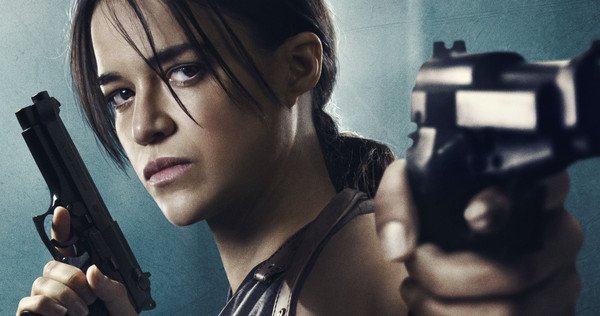
In the gloriously pulpy revenge thriller The Assignment, a vengeful plastic surgeon (Sigourney Weaver) captures a hit man (Michelle Rodriguez) and performs sexual reassignment surgery on him, releasing a new hit woman (also Michelle Rodriguez) into the world – and lethal mayhem ensues.
The Assignment comes from the master of the genre thriller, director Walter Hill (The Warriors, The Long Riders, Southern Comfort, 48 Hrs.). Hill is a story-teller who enjoys a brisk pace, and The Assignment flies along its 95 minutes.
Michelle Rodriguez, the toughest of the Tough Chicks, nails the hit man/hit woman roles. She plays the male character very naturally (with a little CGI help in a glimpse of his naked frontside). When the protagonist becomes a woman, Rodriguez keeps her eyes very male – and very pissed off. Her performance at the moment of gender reveal is perfect.
Sigourney Weaver had the audience roaring at her character’s narcissism. Weaver and Tony Shaloub successfully pull of the highly stylized genre dialogue. Anthony LaPaglia is excellent as a mid-level gangster.
Don’t expect Brokeback Mountain for the trans set. This is, after all, an involuntary gender reassignment. The main character is a man who is turned biologically into a woman, while still identifying internally as a man. The gender reassignment is a plot device, and it is a hostile act, not a means of self-fulfillment.
75-year-old Walter Hill was present at the Cinequest screening. Costing only $2.8 million, The Assignment was shot in Vancouver over only 25 days. Hill said that he was “wanted to do a neo-noir comic booky kind of thing” (which well-describes The Assignment). The film was adapted from Hill’s graphic novel, which has been out in France since last year; it will be released in the US before the end of March. Hill expects a sequel to the graphic novel.
The Cinequest audience – by no means the usual action thriller crowd – reacted very favorably to The Assignment. Shown at Cinequest with the title (re)Assignment, this film is being released with the title The Assignment. It’s available now on Ultra VOD and YouTube. It will opens nationally tomorrow, but only on 30 screens. I’ll let you know when it becomes more widely available – because I enjoyed it!
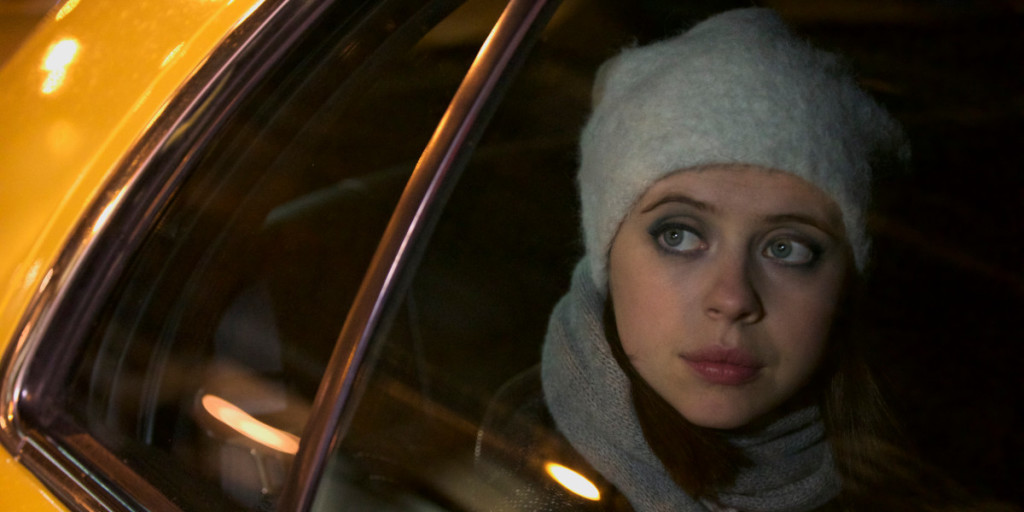
The title character in the agreeable misfit comedy Carrie Pilby (Bel Powley) is literally a genius, a girl with such high intelligence that she enrolled at Harvard at age 14. That experience proved to be better for her intellectual development than for her emotional development. Now she’s 19, a year out of college and holed up in her Manhattan apartment pretending that she’s anti-social because no one is smart enough to engage with her. She emerges only to see her therapist (Nathan Lane), who assigns her some tasks to draw her out, and comic adventures ensue.
Carrie sequentially encounters three dreamy-looking guys and all of the male characters except one are very sensitive. But Carrie Pilby isn’t one of those Chick Flicks that men won’t enjoy.
Powley is very good at making the audience relate to someone by definition very unlike us. She has mastered the comic take and has excellent timing.
I watched Carrie Pilby at a Cinequest screening with director Susan Johnson. Johnson says that the source material, a popular novel, “was about not judging a book by its cover”. She continued, “Think about your own journey and not judging others – that’s kind of deep for a comedy”. Johnson, who shot the film in only 20 days, said that her favorite scene was the prayer scene.
Carrie Pilby is an enjoyable comedy. It opens theatrically on March 31, on VOD on April 4 and will be on Netflix in September.
Kristen Stewart’s brilliant performance isn’t enough to save Olivier Assaya’s murky French drama Personal Shopper. Stewart plays a woman who is working as a personal shopper for an obnoxious celebrity, but she really identifies as a medium. She is grieving her twin brother, who died a few months before. He was also a medium, and the two had resolved that the first to die would contact the survivor from Beyond. As Personal Shopper opens, she is walking around her brother’s house and muttering his name without turning on any lights. Does she find him? Does she find something even scarier? Do we care?
Assayas takes Personal Shopper bouncing along between movie genres – from Ghost Story to a moment of Horror, then to Mystery Thriller and finally Ghost Story again. Some critics have credited him with a highly original approach to an exploration of grief. But, no, Personal Shopper is just a mess. Grief has shocked the main character into a malaise, but Personal Shopper keeps changing its focus to her fears and her sexuality. If you want to see a good movie about grief, try Manchester by the Sea, Five Nights in Maine or Rabbit Hole.
Near the beginning of Personal Shopper, there’s some very clumsy exposition – as if a character were reading from the Wikipedia page on spiritualism. The big mystery in Personal Shopper is who is sending her texts, and that question is never resolved. I’m usually OK with ambiguous movie endings, but this would have bothered me if I had cared.
Nonetheless, Kristin Stewart is superb. Stewart seems completely natural when her character feels deep terror, grief or fascination and also when her emotions are stunted or repressed and her affect is blunted. There’s a moment of auto-eroticism that is very, well, erotic. Stewart holds our attention in every scene. She’s so damned watchable that we always want to know what her character is thinking and about to do.
Stewart may be good, but Personal Shopper is not worth 105 minutes of anyone’s life.