The Belgian writer-director brothers Luc and Jean-Pierre Dardennes are among my very favorite filmmakers. Their movies about everyday people in gritty industrial Belgium have been startlingly authentic and emotionally gripping. However, their latest, The Unknown Girl, is a bit of a slog.
In The Unknown Girl, a compassionate and hardworking doctor (Adèle Haenel) is working late and doesn’t answer the office doorbell after hours. It turns out that a young woman had been trying to get inside just before she was murdered. The cops can’t even identify the victim. The doc is wracked with guilt and embarks on a quest to identify the young woman and to solve the crime.
So this is a murder mystery – the closest thing ever to a Dardennes brothers genre movie. Unfortunately the deliberate, real-time pace that intensifies the emotional experience of the Dardennes’ other work just drags in The Unknown Girl. And there are just one or two coincidences in the plot to swallow.
Adèle Haenel (recently so good in In the Name of My Daughter) is excellent and the best thing about the film. She’s in every scene and portrays a driven and remarkably self-aware character, who often intentionally suppresses her emotions to do the best job possible for her patients.
This isn’t a bad movie, just not a spectacularly good one. By all means, see a Dardennes film, just make it The Son or The Kid with a Bike.
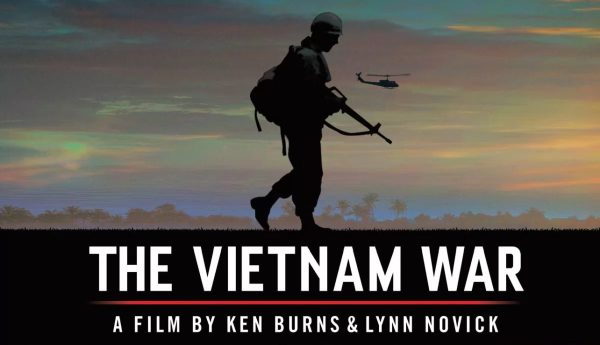
The new PBS documentary by Ken Burns and Lynn Novick, The Vietnam War, is one of the best documentaries of the century and a superb history lesson, crucial to understand the America of today. It’s a Must See for Baby Boomers. For different reasons, it’s a Must See for Americans of later generations. The ten episodes of The Vietnam War can be streamed from PBS through October 15.
It’s impossible to overstate the effect of the Vietnam War upon Americans of my generation. I was watching TV at nine years old when I viewed a Buddhist monk setting himself on fire. Vietnam got my attention on that day and held it throughout my youth. I remember watching the television news, with the weekly “body count” scorecards for dead Americans, Army of the Republic of Vietnam (ARVN), Viet Cong and North Vietnamese Army (NVA). I was almost 15 when, overnight, the Tet Offensive changed the appraisal of the war by the mainstream American public. I was almost 19 when I got my draft lottery number. I was 22 and about to graduate from college when Saigon fell.
Last week, a carpenter about my age did some work at my house. When he arrived, he commented that he heard through the door that I was watching The Vietnam War. It took us about two sentences to get to the draft. Each of us instantly remembered our lottery numbers (mine was 65, his was 322). Both of us remembered where we were on February 2, 1972, the night of that lottery drawing.
For Baby Boomers, The Vietnam War provides context for our experience, along with some new revelations. Younger Americans who watch The Vietnam War will now understand what happened then and how it affects our culture and our politics to this day.
Burns and Novick tell their story mostly through first person accounts, from real people recounting their experiences 40-60 years ago. The American talking heads aren’t big shots, but people who were soldiers, protesters, POWs, journalists and family members who lost loved ones. But Burns and Novick also bring us Vietnamese witnesses – soldiers and civilians from the ARVN, Viet Cong and NVA. Including the Vietnamese points of view – as disparate as the American ones – works to complete the picture.
The Vietnam War also brings us new information about the era’s most iconic photos. We all remember the shocking still photo of the summary pistol-to-the-temple execution of a Viet Cong by a South Vietnamese police official; The Vietnam War brings us the original network TV film clip that was shot and shown only once on the TV news. There’s the unforgettable photo of the Kent State coed, with hands outstretched over the corpse of a fellow student; we also see a never-before-shown home movie clip shot of the scene by another student. Finally, we hear from the journalist who photographed the running Vietnamese girl burned by napalm, and we see film from that scene, too.
Who remembers that “light at the end of the tunnel” was coined by a French general in Vietnam, and later adopted by American brass (a bad choice, given the French experience)? We hear the phrase used again in a very grim joke in late April 1975.
The Vietnam War shows us that Le Duan had shouldered Ho Chi Minh aside and ran the North Vietnamese side of the war for its last eight years. Study of Le Duan provides us with some important lessons. First, never get in a war of attrition with a fanatic. Second, never let a fanatic run your postwar economy or foreign relations.
The Vietnam War is unmatched in tracing the evolution in the American public’s attitude during the long, long war. There was some public opposition to the War almost from the beginning, but the Tet Offensive in early 1968 convinced the great majority that the US could never win and needed to find a way out. But many Americans despised the anti-war protests. It was the protests that divided the American nation. Oddly, at the same time there was both a policy consensus (get out of Vietnam) and a cultural civil war.
And The Vietnam War, through his own words on White House tapes, exposes Henry Kissinger (the favorite of the American press) as the cynical sycophant that he was, ever flattering Nixon and conspiring to delay peace to favor Nixon’s political fortunes.
There is no more evocative aspect of The Vietnam War than its soundtrack, with 120 songs from the era from Jimi Hendrix, Bob Dylan, The Beatles, The Rolling Stones, Buffalo Springfield, Nina Simone, Simon and Garfunkel, Cream, Janis Joplin, Pete Seeger and even the Zombies, Procol Harum, Vanilla Fudge and Link Wray. One episode ends with my choice as the anthem for 1971 in America – Marvin Gaye’s What’s Going On. The songs are absolutely perfectly matched with the usual and spoken content, perhaps the most masterful use of popular music on a soundtrack that I have seen (and heard). You can even review the episode playlists .
Through October 15, you can stream, The Vietnam Warhere.
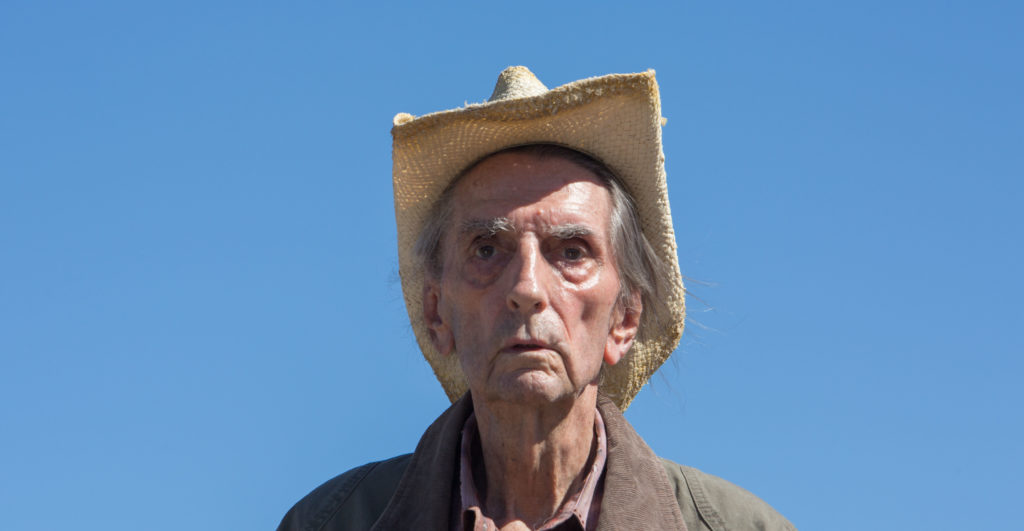
Harry Dean Stanton in LUCKY. Photo courtesy of Magnolia Pictures
Let’s not bury the lede: Lucky is Harry Dean Stanton’s last film. Lucky was written for Harry Dean, and the main character is reportedly not dissimilar to Stanton. Here’s my Harry Dean Stanton remembrance.
Lucky is a vivid portrait of a singular character. It’s also a meditation on life and the end of life and how you can control how you live.
Stanton plays Lucky, a nonagenarian who lives in his isolated house on the edge of a Mojave desert town. The town is so small that everyone knows everyone else. There’s not a lot of action in Lucky. We watch Lucky as he purposefully plods through his modest daily routine: to his refrigerator, to the diner, to the local bar, plopped in front of his TV to watch “my shows”. Lucky is sometimes confused by age, but retains great strength of conviction and a formidable will.
Lucky is not really anti-social but he is minimally social. He values his privacy and doesn’t seek human interaction, but he accepts it as it occurs organically. He is not a stereotypical movie curmudgeon with a heart of gold. He’s prickly, but capable of authentic tenderness, as when he shares a joint with a waitress friend and when he belts out the Mexican tearjerker Volver, Volver.
He’s also an atheist. Being areligious doesn’t mean that someone is amoral. Not at all. Lucky lives by a firm code – he is so offended when thinks someone is exploiting a grieving friend, he fiercely tries to fight a man fifty years his younger.
But as we observe Lucky not doing much, we are pulled into an increasingly profound contemplation. How do we choose to live our lives if there’s no afterlife? How afraid are we of the finality of death? What is meaningful? What’s in our control?
This is also a pretty funny film. Lucky reminds us that Harry Dean was a master of both the deadpan and the sarcastic jibe. And Lucky has lived decades without female or other supervision, and his habits, like watering cactus in his underwear and cowboy boots, are pretty entertaining.
Lucky is the first film directed by the actor John Carroll Lynch, so creepy in Zodiac and so heartbreaking in The Founder. Lynch is a confident enough director to take his time. And, if you have any doubt about where Lynch sees Lucky on the continuum of life, check out this shot.
Harry Dean Stanton in LUCKY. Photo courtesy of Magnolia Pictures
Lynch gets excellent performances out of the rest of the cast: Ed Begley, Jr., James Darren (yes, the 60s heartthrob), Ron Livingston, Barry Shabaka Henley (recently so good in Paterson), Yvonne Huff and, surprisingly, the director David Lynch. Tom Skeritt delivers a moving monologue.
But, in the end, this is Harry Dean Stanton’s film. And, to Lynch’s credit, it’s a fine way to remember Harry Dean.
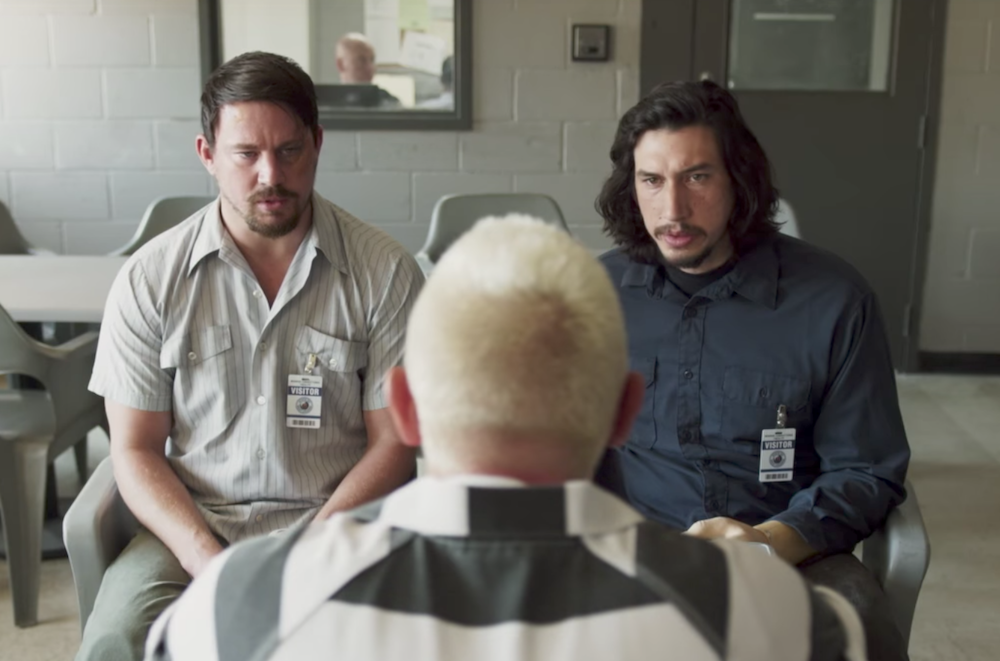
Channing Tatum and Adam Driver face Daniel Craig in LOGAN LUCKY
There’s not much to say about Stephen Soderbergh’s Logan Lucky, except that it’s a benign and sporadically entertaining two hours at the movies. A couple of down-on-their-luck West Virginia brothers, played by the always appealing Channing Tatum and Adam Driver, mastermind a high-profile heist. These guys have never had a bit of success in their lives, and they are Not Bright, but they are seeking to outsmart an icon of American corporate culture. The funniest aspects of Logan Lucky stem from their need to enlist an imprisoned safe-cracker, improbably played by Daniel Craig; Craig, deadpan in his bleached buzz-cut, is very funny.
The heist is cool because I hadn’t seen this particular money delivery system before (it ain’t an armored car), and one of the guys gains some critical intel because he’s a coal miner. There’s an effective plot twist AFTER the heist, and Hilary Swank shows up to presage a sequel.
I was moderately glad that I saw it and haven’t thought much about it since.
On September 21, Turner Classic Movies presents five movies with some of the most unforgettable rock concert footage:
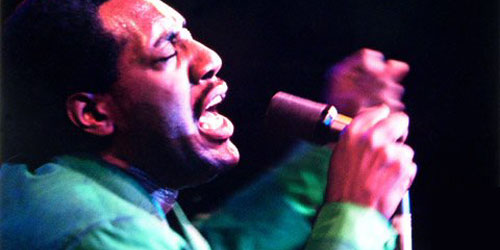
Monterey Pop (1968): This is one of the few DVDs that I still own, for the performances by Mamas and the Papas, Jimi Hendrix, Janis Joplin, Otis Redding, Canned Heat, Simon and Garfunkle, Jefferson Airplane, Eric Burdon and the Animals, Country Joe and the Fish and The Who. It’s okay with me if you fast forward over Ravi Shankar. Pete Townsend and Jimi Hendrix had a guitar-destroying competition, which Hendrix, aided by lighter fluid, undeniably won. The Otis Redding set is epic.
Woodstock (1970): TCM is airing the director’s cut of the film chronicling the most iconic rock concert ever, also a pivotal social and cultural phenomenon. Performers include: Joan Baez, Crosby Still & Nash, Arlo Guthrie, The Who, Sha Na Na, Richie Havens, Joe Cocker, Country Joe and the Fish, Jimi Hendrix, Sly and the Family Stone, Santana and (wait for it…) Ten Years After.
Gimme Shelter (1970): The anti-Woodstock – the ill-fated Rolling Stones concert at Altamont, showing what happened when someone tried to put on a major free concert without Bill Graham or any other adult supervision, depending on the (literally) murderous Hell’s Angels for security. Includes some footage of that notorious publicity grabber, attorney Melvin Belli in real-time negotiations. What’s unforgettable, of course, is watching Mick Jagger dealing with a murder at the foot of his stage.
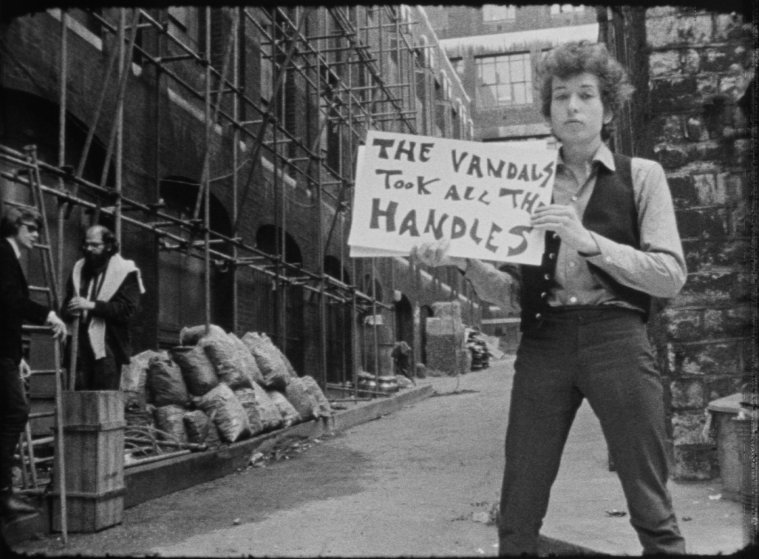
Bob Dylan: Don’t Look Back (1967): The story of Bob Dylan’s 1965 tour of England, when he was transitioning from an acoustic to an electric artist. This film opens with what must be the first music video, as Dylan holds up cards with the lyrics for Subterranean Homesick Blues. The pump don’t work ‘Cause the vandals took the handles
Jimi Hendrix (1973): I haven’t seen this movie, which contains 1967-70 concert footage and interviews with his contemporaries. Here’s a tip for Hendrix fans – the Hendrix display in his hometown’s Seattle Rock and Roll Museum (now Museum of Pop Culture) is superb.
D.A. Pennebaker directed both Monterey Pop and Don’t Look Back. Pennebaker also excels in political documentaries; he was the cinematographer for Primary and the director of The War Room.
I would argue that the Janis Joplin and Otis Redding sets in Monterey Pop are the best live performances ever filmed. Watch for Mama Cass in the audience reacting to Janis with a “Wow”.
Great music and lots of stoned people. Set that DVR.
D.A. Pennebaker invents the music video in BOB DYAN: DON’T LOOK BACK
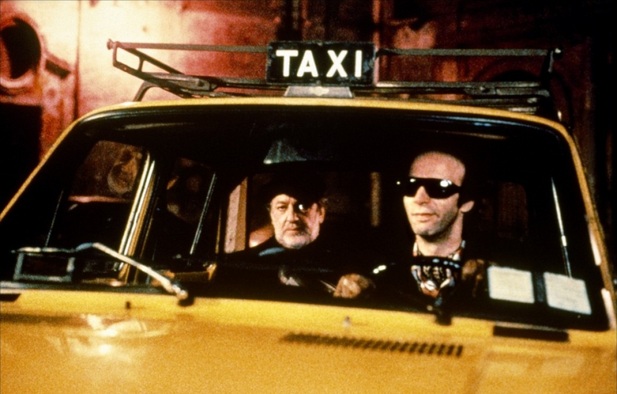
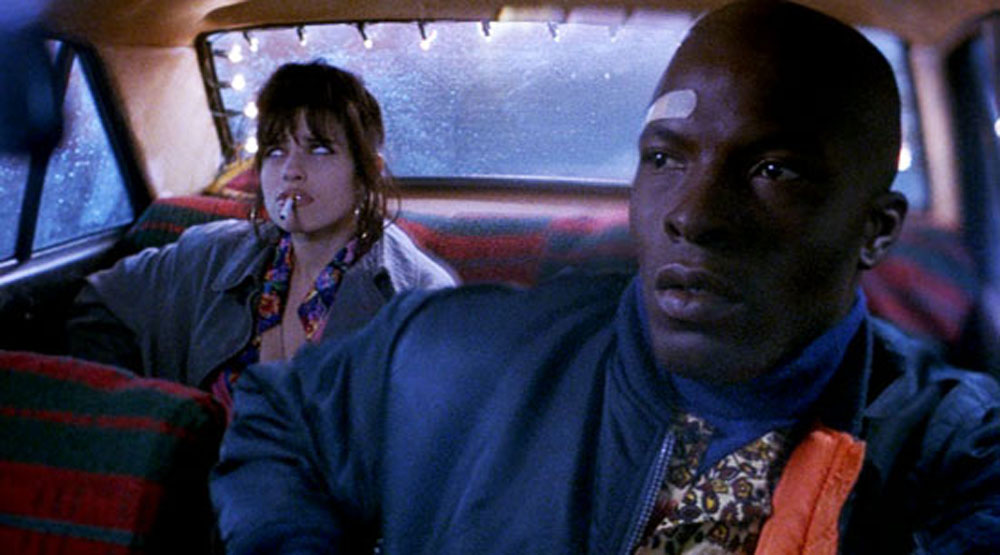
Coming up on Turner Classic Movies on September 8 is Night on Earth, with one of the very funniest scenes and one of the very saddest scenes in the same movie. Written and directed by Jim Jarmusch, Night on Earth is comprised of five vignettes each in a taxi and each in a different city: Los Angeles, New York, Paris Rome and, of all places, Helsinki.
Moving west to east across the time zones, Night on Earth opens with the contrast between a working class driver (Wynona Ryder) and a striver executive (Gena Rowlands) and how they connect – or don’t.
Then we move to New York where a totally disoriented East German immigrant (Armin Mueller-Stahl) gets a job driving a hack (on his first or second day in the US) and picks up potty-mouthed passengers (Giancarlo Esposito and Rosie Perez).
The LA and NYC scenes are good, but Night on Earth really accelerates in Paris when an African immigrant driver (Isaach De Bankolé) picks up a blind woman (the gap-toothed beauty Béatrice Dall). They are both a bit touchy and immediately get underneath each others skins. The prickly conversation that follows teaches each a little about the other.
Now we get to perhaps the funniest episode in the movies (yes, I mean in the history of cinema). A manic, motormouth Roman cabbie (Roberto Benigni) picks up an ailing Catholic cleric and regales him with an unwanted stream of consciousness confession, highlighting his own ever more inappropriate sexual partners, including a pumpkin and a sheep. It’s a rapid fire comedic assault sure to convulse any audience.
Finally, in Helsinki, two guys toss their passed-out buddy into a cab, and explain that he’s had the worst day ever – he has lost his job just when he has a wife looking for a divorce and a pregnant daughter. But the driver (Matti Pellonpää) tells them a story that tops it. Profound sadness.
The cult director and indie favorite Jarmusch made Night on Earth in 1991 after he first made a splash with Mystery Train. He followed it with Dead Man, Ghost Dog: The Way of the Samurai, Coffee and Cigarettes, Broken Flowers and last year’s Paterson. Night on Earth is one of the few movies that I own on DVD, and it’s now available from the Criterion Collection. But you can see it Friday on TCM. Go for it.
The one absolutely essential requisite for a fine documentary film is a fascinating subject, and Obit proves that an insightful filmmaker can find the fascination in the most unlikely place. It’s about the writing of New York Times obituaries. Director Vanessa Gould chose the subject when the NYT published the obit of an acquaintance whom she feared would become overlooked; the story in her own words is here (scroll down).
The writers in Obit explain something counter-intuitive – good obituaries are very little about a person’s death. Sure, they are published upon a death, but the key to an obit is to explain the person’s life. It helps that the NYT obits eschew the old-fashioned and hypocritical canonization of the dead, instead pseudo-resurrecting them by finding what was most interesting about their lives.
Obit is a superb study on writing. We sit on the writers’ shoulders and observe their process in real-time. Obit lives up to its tagline: Life on a Deadline.
Obit was released briefly earlier this year and is now available to stream on Amazon, iTunes, Vudu, YouTube and Google Play.
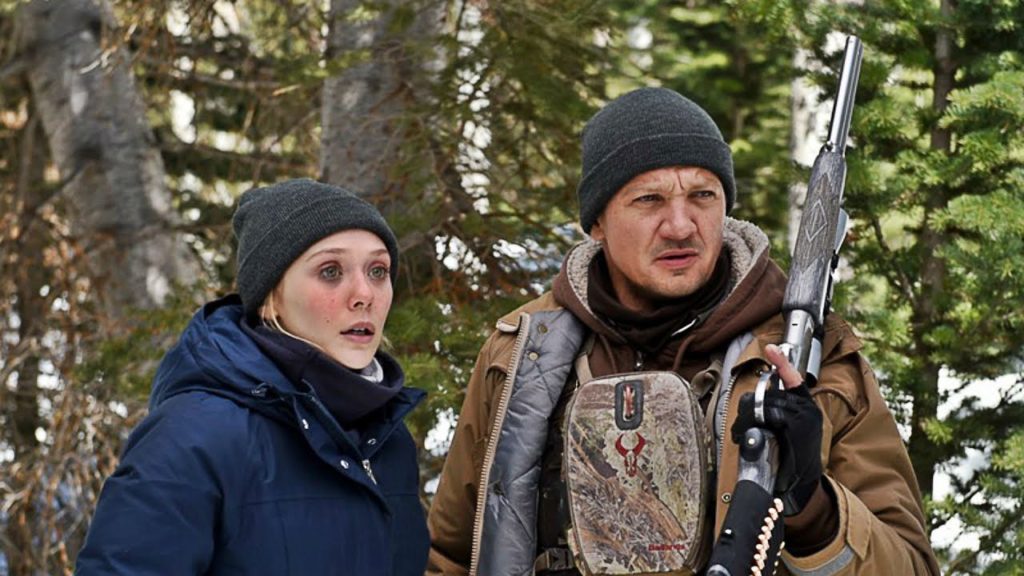
With the contemporary Western thriller Wind River, screenwriter Taylor Sheridan has delivered another masterpiece, this time in his first effort as director. Wind River was probably my most anticipated film of the year because I pegged Sheridan’s previous movie Hell or High Water as the best movie of 2016. Wind River doesn’t disappoint.
The story is set in and around Wyoming’s Wind River Indian Reservation. Cory (Jeremy Renner) is a professional hunter who finds the body of a native American teenage girl. To find out what happened to her and who is responsible, the tribal police chief Ben (Graham Greene) calls for help from the feds. That assistance arrives in the form of FBI agent Jane (Elizabeth Olsen), an inexperienced city slicker who has no clue how to survive in the lethal elements of the wild country. She is canny enough to understand that she needs the help of Cory, who knows every inch of the back country. He has his own reason – very important to the story – to solve the mystery, and the unlikely duo embark on a dangerous investigation, which they know will end in a man hunt.
The man hunt leads to a violent set piece that Sheridan directs masterfully. There’s a sudden escalation of tension, then apparent relief and then an explosion of action. Deadly chaos envelops several characters, but we’re able to follow it all clearly, while we’re on the edges of our seats.
Jeremy Renner’s performance as Cory is brilliant. Cory is a man whose life has been redirected by a family tragedy. He’s a Western stoic of few words, but – unusual for his type – an individual who deals with his grief in a very specific and self-aware way. Playing a character who reloads his own rounds, Renner is able to deliver hard-ass, determined efficiency along with some unexpected tenderness.
Olsen is also very good as Jane who understands that she may appear to be the bottom of the FBI’s barrel because she is a woman and very green and tiny. Resolute and spunky, she moves past what others might take as a slight because no unaided outsider is going to be able to navigate the harsh environment and the culture of the reservation. She isn’t trying to make a name for herself, but just to take responsibility in the old-fashioned way that we would expect from characters played by Glenn Ford, Gregory Peck, John Wayne and Clint Eastwood. She’s got to do the right thing.
As Martin, the dead girl’s father, Gil Birmingham (Hell or High Water) has two unforgettable scenes. His first scene is phenomenal first scene, as he processes the worst possible news with an outside Jane, and then with his friend Cory. Graham Greene and Tantoo Cardinal are also excellent. Kelsey Asbille and Jon Bernthal are also stellar in a flashback of the crime.
Sheridan and cinematographer Ben Richardson (Beasts of the Southern Wild) make great use of the Big Sky country, with the jagged topography of its mountains and the feral frigidity of its forests. Wind River opens as Cory hunts in spectacular postcard scenery; when we first see the reservation, we are jarred – this is a very bad place.
Taylor Sheridan has a gift for writing great, great movie dialogue:
“Who’s the victim today? Looks like it’s gonna be me.”
and
“This isn’t the land of backup, Jane. This is the land of you’re on your own.”
When Cory says, “This isn’t about Emily”, we know that this is precisely about Emily. When Cory says, “I’m a hunter”, we know exactly what his intentions are – and so does Martin.
Sheridan hates that, in much of our society, people are disposable. He has explored that theme in Sicario, Hell or High Water and now Wind River. Wind River begins with a title explaining that the story is inspired by actual events, and ends with a particularly horrifying non-statistic.
Smart, layered and intelligent, Wind River is another success from one of America’s fastest-rising filmmakers.
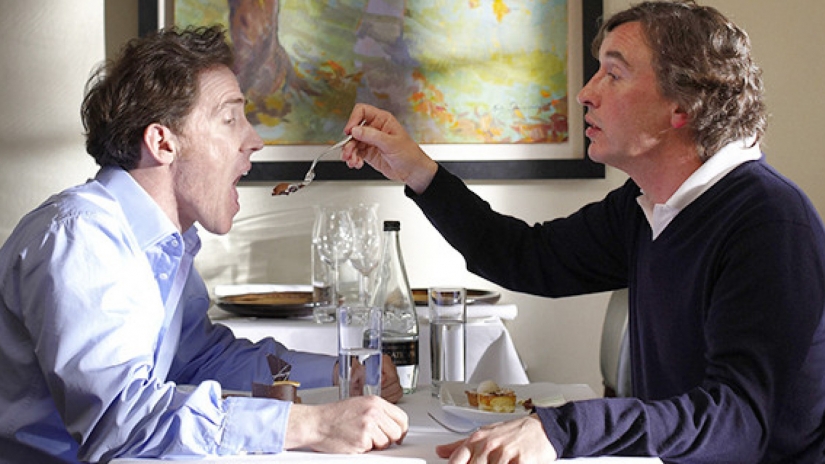
Rob Brydon and Steve Coogan in THE TRIP TO SPAINIn The Trip to Spain, comics Rob Brydon and Steve Coogan play caricatures of themselves assigned to a gourmet road trip, just as in The Trip and The Trip to Italy. Both masters of impressions and improvisation, the amiable Brydon and the snootily competitive (but needy) Coogan banter their way through delectable Spanish cuisine. One of the franchise’s running gags is Coogan’s constant name-dropping and one-upmanship, which begs Brydon to deflate him.
Brydon’s wonderful impressions of Sean Connery and Michael Caine are legendary, and Coogan is no slouch. They do impressions of Marlon Brando and Robert Deniro, and mimic across the British acting greats John Hurt, Ian McKellen, Anthony Hopkins and Michael Holdern. Brydon even “does” Mick Jagger doing Michael Caine and Jagger playing Shakespeare’s Shylock.
In one of the funniest bits, a lunchtime reference to the “Moors in Spain” sparks a Rob Brydon marathon of ROGER Moore riffs; as Coogan and their companions try in vain to change the subject, Brydon is hilariously unstoppable.
There are plenty of other laughs, too, as Coogan tries to pronounces the French name “Aurore” and Brydon quips that the Spanish Inquisition was launched by a “Catalytic Converter”. They even refuse to pass up the obvious joke about Herb Alpert’s Spanish Flea.
As in the other Trip movies, the travel and food porn is exquisite. They cross Spain from the Basque country, through the dinosaur sites of Rioja, the Don Quixote heritage of La Mancha, the streets of Cuenca and the marvels of Granada, ending in Malaga. I didn’t notice any green vegetables until their fifth day of eating (always fine by me). (However, Spain’s ubiquitous jamón doesn’t show up until their final day.)
Frankly, Brydon’s and Coogan’s improvisations are reason enough to make (and see) one of these movies. Unfortunately, someone felt the need to focus the final 15 minutes of The Trip to Spain on the contrast between Brydon’s happly family life and Coogan’s disconnected loneliness and his career and personal insecurities. Blaaaaaaaaaah. Snooooooze.
So it’s simple: go see The Trip to Spain and, when the characters say goodbye to each other in Malaga – leave the theater.
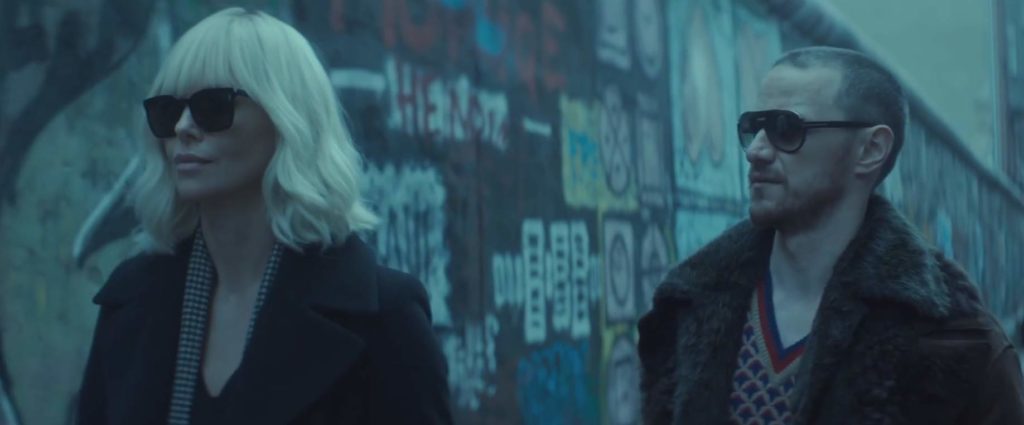
Charlize Theron kicks ass and looks great doing it in the most entertaining espionage action thriller Atomic Blonde. Theron plays a British secret agent on a mission behind the Iron Curtain just before the fall of the Berlin Wall in 1989. The MacGuffins that she must recover are a list of clandestine operatives and the double agent who has memorized the list. She runs into more shady characters than in The Third Man’s Vienna, chief amongst them a debauched British agent gone rogue (James McAvoy).
There is intrigue and backstabbing, double-crossing and at least one major plot twist. The brutal action is exquisitely filmed and edited, and the Atomic Blonde qualifies as a full-fledged martial arts movie. Theron’s character is so Stoli-fuelled, that Stolichnaya Vodka must have paid a fortune for product placement.
Atomic Blonde makes excellent use of a more somber version of 99 luftballons (a 1983 hit by the German group Nena). There’s a Bond-like opening song, too.
Theron is a superb actress with wide-ranging skills (Monster, The Italian Job, In the Valley of Elah). And, as we saw in Mad Max: Fury Road, she can credibly carry an action movie. The rest of the cast is also very good: McAvoy, Toby Jones, John Goodman, Eddie Marsan and a bunch of scary-looking guys who play commie thugs.
Atomic Blonde is the first feature directing credit for David Leitch, a guy with a long resume as a stunt man as and a stunt coordinator Leitch sure knows how to film fights and chases, and Atomic Blonde is really a top-notch action film.