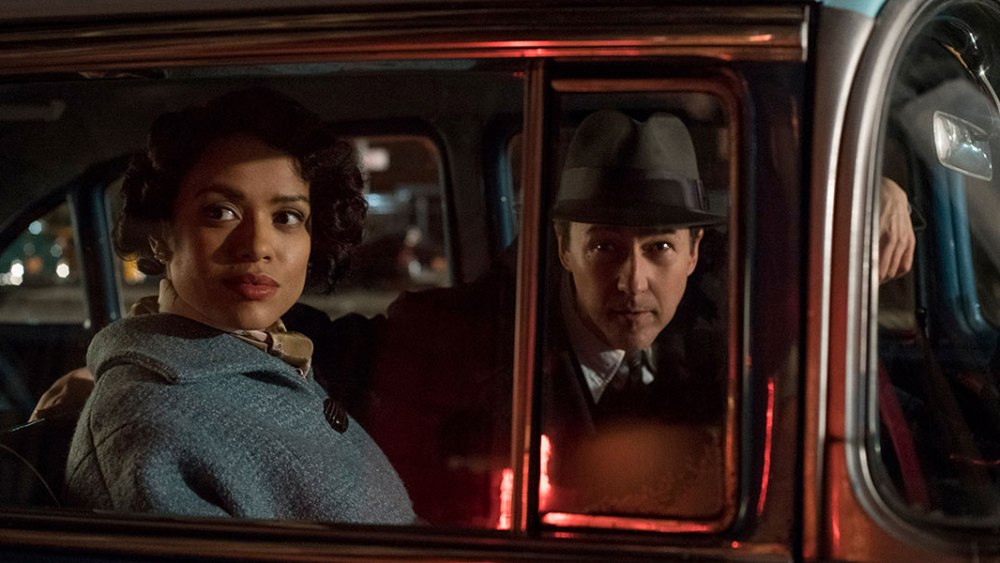
Gugu Mbatha-Raw and Edward Norton in MOTHERLESS BROOKLYN
Edward Norton adapted the screenplay for, directed and stars in the atmospheric mystery Motherless Brooklyn. A detective’s partner is killed, and his search for the killers plunges him into a web of intrigue. It’s a slow burn paranoid thriller, along the lines of Chinatown, although not nearly as good and set in the New York City of the early 1950s and not nearly as good.
Norton gets the postwar NYC pretty much perfect. If you love the automobiles of the period, especially the Plymouths and Chevrolets, you’ll be in heaven.
The paranoia comes from the omnipotence of master urban redeveloper Robert Moses (under a different name in Motherless Brooklyn). It’s actually pretty accurate history, if a bit esoteric for popular entertainment.
Norton plays novelist Jonathan Lethem’s private detective Lionel Essrog, who has Tourette’s syndrome. Tourette’s was even less understood in the America of the early 1950s, so that creates some fodder, along with the fact that detectives who have to sneak around are not well-served by involuntary outbursts. Norton is always good, but it’s hard not to see this as a gimmick performance.
I really liked Bruce Willis as a more seasoned detective. Gugu Mbatha-Raw plays the woman who must be saved, and we all want her saved. Alec Baldwin twirls virtual mustaches as the villainous Moses character, Willem Dafoe is very good as a haunted character; he is wearing his beard from The Lighthouse, but happily not the Long John Silver accent.
Motherless Brooklyn was a labor of love for Norton, and he loves it too much to edit it. The story could be told better in a movie 30 minutes shorter, One nightclub scene in particular goes on for too, too long. If you have two-and-a-half hours on a cold winter’s night, you could do worse than to stream it.
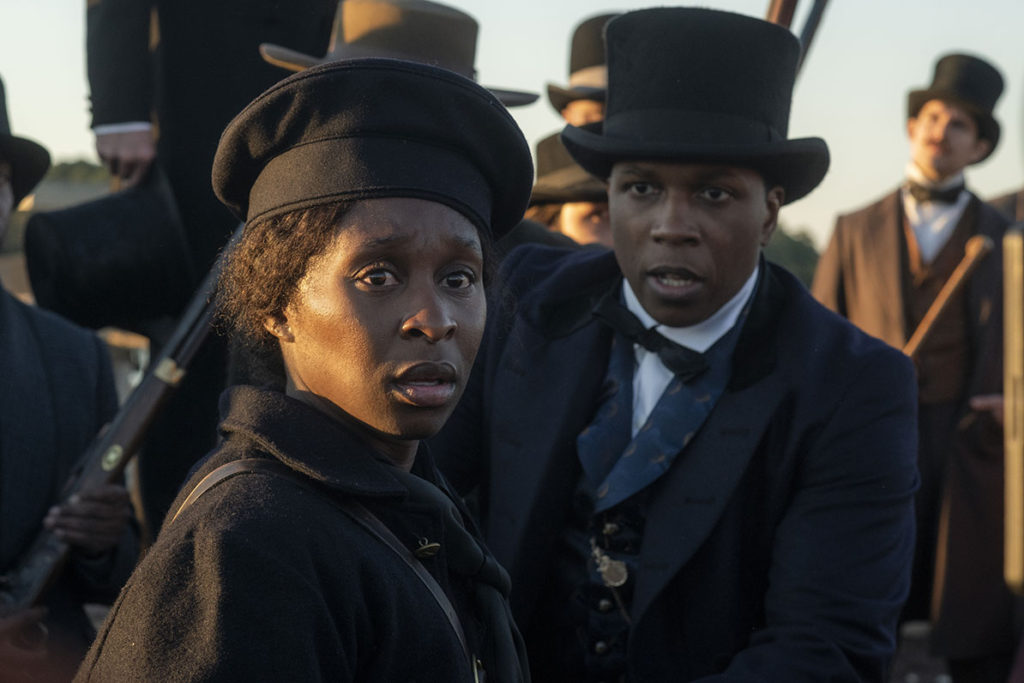
Cynthia Erivo in HARRIET. Photo courtesy of Focus Features.
I first watched the trailer for Harriet askance because the Harriet Tubman action figure I saw on-screen didn’t resemble the tiny, revered Tubman in the sepia photos. But that is because of my own skepticism of Hollywood history and my own woeful ignorance of the historic Tubman. The ancient lady in her photos and the historic Tubman are explained in this fine NYT piece Harriet Tubman Facts and Myths: How the Movie Tried to Get it Right. As Harriet’s director Kasi Lemmons says in this NYT article, “You don’t have an image of what she was like when she was actually doing this work in her late 20s, when she was this young superheroine, this completely badass woman.”
Harriet is good history. The problem is that Lemmons doesn’t trust us to appreciate Tubman’s heroism when we see it – a 100-mile solo escape from slavery, guiding 75 escaped slaves to freedom with the Underground Railroad, leading troops into battle to free 700 more in the Civil War, and becoming a thought leader in the abolitionist and suffragist movements. So we have this swelling music every time Tubman does something inspirational. The constant, obvious beatification is distracting.
Tubman is played with convincing intensity by Cynthia Erivo. Erivo was absolutely the best thing about the Steve McQueen film Widows; since Erivo’s character teamed with those played by Viola Davis, Michelle Rodriguez and Elizabeth Debicki, the fact that she stole the movie is impressive. Erivo is a Broadway musical actress/singer, and Harriet uses her singing talent as well.
If you’re not expecting great cinema, you’ll appreciate this important and compelling history. Harriet makes it clear why Tubman belongs on the twenty dollar bill.
The masterpiece Parasite explores social inequity, with master filmmaker Bong Joo Ho taking us through a series of genres. Parasite opens as a hilarious comedy, then evolves halfway through into a suspense thriller and ends with a shocker and a moment of contemplative heartbreak. This is one of the decade’s best films.
The Kim family lives in a grubby basement apartment, so much on the margins of society that they cadge the neighbors’s wi-fi and even the municipal fumigation. They can’t live on the dad’s sporadic employment in low-end jobs, so the family is always on the hustle. It helps that the Kims, especially the college-age kids, are gifted scoundrels.
The Park family lives in an icon of modern architecture. The dad is a CEO with his own driver, and the mom and two kids are pampered by their live-in housekeeper. They have never had to hustle themselves, and they don’t recognize a hustle when they see it.
The Kim son falls into a job tutoring one of the Park kids. After a series of riotously funny cons, the Kim family positions itself to take advantage of the Parks. The Kims are soon living off the fatted calf, but they must contend with one uncomfortable fact – their newfound fortune is extremely fragile because it all comes at the whims of the rich.
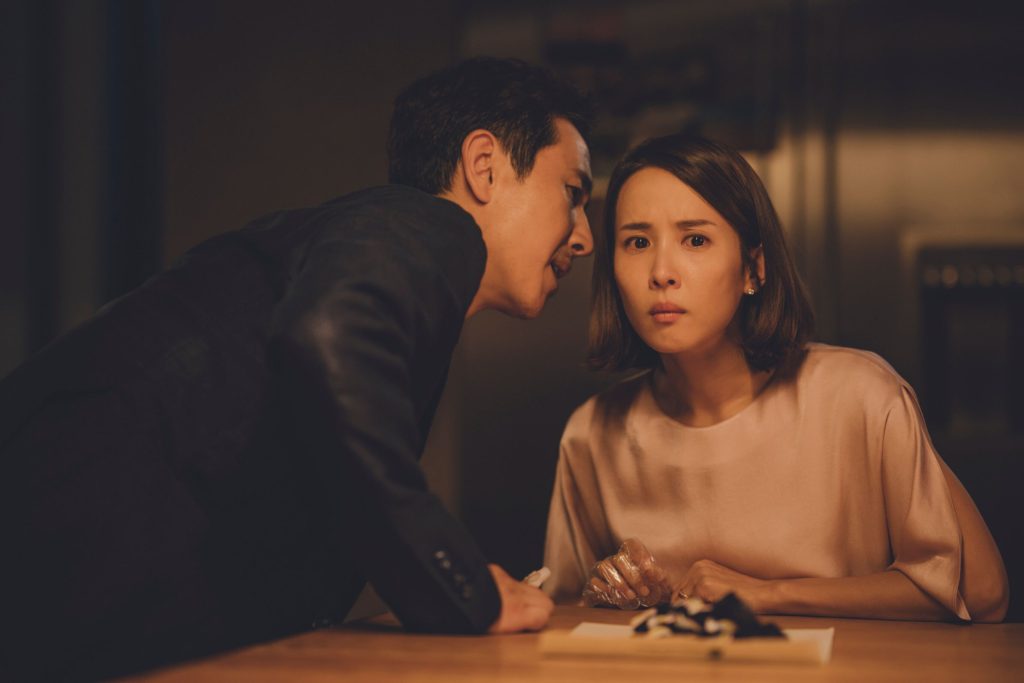
PARASITE. Photo courtesy of Mill Valley Film Festival (MVFF) .
The biggest disconnect between the rich and the rest of us is the understanding of capitalism as a meritocracy – or not. Despite capitalist mythology, working hard and taking risks is often not rewarded with wealth. Conversely, just being wealthy is not an indicator of talent or accomplishment, however entitled the rich feel they are.
Mr. and Mrs. Kim are wily, but uneducated. The Kim kids are trapped by the Korean economy economy; they have no realistic pathway to social mobility, no matter how industrious they are. The kids’ college-educated peers are all under- or unemployed.
Mr. Park is successful in business, but he is a drive-by family man and thinks he can identify the working class by their smell. His wife is a neurotic adornment, his daughter is spoiled and his son is a mess.
Why does Bong shock us with some horror? The stakes of social inequity – impacting generations – are very high and as high as life and death. Bong is reminding us of those stakes after reeling us in with all the fun.
Along with comedy, thriller and horror, Bong even gives a couple minutes of the disaster genre. The Kim’s poor neighborhood is afflicted by a pestilence of biblical scale that would be unthinkable for any affluent community. Let’s just say that the poor live in crap.
Song Kang-Ho in PARASITE
Parasite is superbly acted. The poor family’s dad is played masterfully by Song Kang-Ho. It’s his kids who are directing the scam, but it’s the dad whose slow burn resentment finally explodes.
Bong Joo Ho (Memories of Murder, Mother, Snowpiercer and Okja) makes movies so original that it’s been said that he is his own genre. His Memories of Murder, also starring Song Kang-Ho, is, for my money, the very best serial killer movie. Snowpiercer and Okja, like Parasite, also take on the issues of class and corporate greed.
Martin Scorsese recently said that people watch cinema, as opposed to “worldwide audiovisual entertainment”, to be surprised. Indeed, to view the work of Bong Joo Ho is to be surprised every single time.
Bong Joo Ho himself says, “My goal is to have the audience captivated for two hours by subverting their expectations.” Captivation, check. Subversion of expectations, check.
This is a masterwork. Parasite won the Palme d’Or, the top prize at the Cannes Film Festival, and currently has a meteoric Metacritic score of 95. Parasite will win the Best Foreign Language Oscar and is arguably the best movie of 2019.
Loro is director Paolo Sorrentino’s take on the career end of the despicable Italian media mogul and former prime minister Silvio Berlusconi. The Berlusconi character has a different name, but there’s no mistake that it is the hair-dyed, ever-grinning Berlusconi.
The movie Loro is actually the combination of two television programs. In the first, we see Berlusconi’s corruption through the POV of another amoral grasper, Sergio (Ricardo Scarmacia). Sergio seeks his fortune by collecting a brigade of cocaine-fueled escorts to sexually entertain Berlusconi. In the second half, we follow Berlusconi himself as, out of power, he is unable to climb back into power, he loses his wife and he is sexually humiliated by a 20-year-old aspiring actress. Sorrentino gets his licks in by making Berlusconi, finally, pathetic.
Lorostars Sorrentino’s frequent collaborator Toni Servillo, who is able to play the Berlusconi character as a figure powerful to get all he desires…and then not.
I had high expectations of Loro because I loved Sorrentino’s The Great Beauty and Youth. Sorrentino is a master of the eye candy and those movies are especially beautiful, but also tell stories compelingly. Ultimately, Loro is much more interesting visually than it is thematically.
Loro, which got a screening at the San Francisco international Film Festival, has just concluded a wisp of a theatrical release in the Bay Area. It can be streamed from Amazon, iTunes, Vudu, YouTube and Google Play.
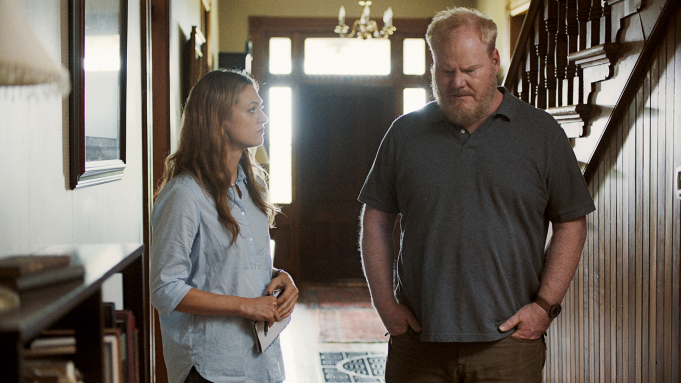
Marin Ireland and Jim Gaffigan in LIGHT FROM LIGHT
Writer-director Paul Harrill’s indie gem Light from Light ingeniously embeds three portraits of personal awakening into what looks like a familiar haunted house movie.
Single mom Sheila (Marin Ireland) has been a paranormal investigator (a ghost hunter), but she isn’t sure that she even believes in ghosts; she had taken up this pursuit because her most recent ex was a true believer. A clergyman asks for her help with a widower that he is counseling; the man (Jim Gaffigan) has experienced some odd happenings and wonders if his dead wife is haunting the house. And so we think we’re off on a thrill ride of chills and jump scares…
Instead, the phenomena that Light from Light explores are down-to-earth: the impacts of absence and loneliness.
Scarred by one too many failed relationships, Sheila is closed down. She’s working a dead-end job behind a rental car counter, doing her best to raise her sensitive teen son and not doing much else; she has isolated herself in her routine. Her son mirrors his mom – a girl is sweet on him, but he’s afraid to have a relationship with her lest it bring him the heartbreak that his mom has experienced. The widower is both immersed in grief and mulling over something about his wife that complicates his feelings.
The plot is about looking for the ghost, but the movie is really about these three people and whether they can self-liberate from their social paralysis and engage with others.
Light from Light is centered around an astonishing performance by Marin Ireland (Hell or High Water, Sneaky Pete and Tony-nominated for reasons to be pretty). Elisabeth Moss is a producer, and she suggested Marin Ireland for the role of Sheila.
The well-known comedian Jim Gaffigan (who also had a serious supporting turn in Chappaquiddick) has impressive screen-acting chops. The grief of Gaffigan’s character does not look “dramatic”; it’s all the more powerful for being matter of fact. Harrill wrote the part with Jim Gaffigan in mind after listening to him on NPR’s Fresh Air, and learning that Gaffigan had almost lost his wife to cancer and understood facing this loss.
This is the second feature for Harrill. Besides successfully subverting a genre, he makes effective use of a quiet, restrained, spare soundtrack. Set and shot in Knoxville, Tennessee and the Great Smoky Mountains, Light from Light excels in bringing us into a very specific time and place.
I saw Light from Light at Cinema Club Silicon Valley, before its release, with a Q&A with Paul Harrill. Thanks to that screening, Light from Light begins a two-week Bay Area theatrical release tomorrow at San Jose’s 3Below. See it if you can.
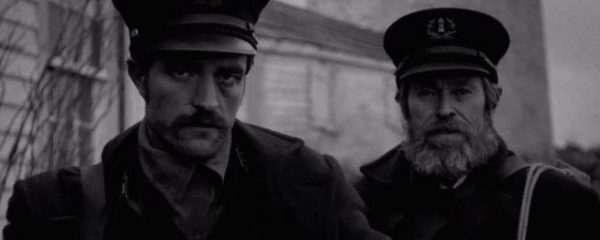
Robert Pattinson and Willem Dafoe in THE LIGHTHOUSE
In The Lighthouse, it’s the 1890s and Wake (Willem Dafoe) and Winslow (Robert Pattinson) are two lighthouse keepers isolated on a New England island. The operative word is “isolated”, because it’s a long time between relief and supply boats, so these guys only have themselves and the gulls for company for weeks on end.
Wake is in charge, which means that he can command Winslow to perform all the tasks. I get the whole chain of command thing, but Wake is a first class jerk, and he unnecessarily makes every moment of Winslow’s life insufferably hard and humiliating. On the surface, not much goes on in The Lighthouse. But a psychological typhoon is brewing, as Winslow’s misery and desperation compounds. The hardship and the annoyances are enough to drive many a person mad, and, as Winslow starts to decompensate, we start expecting something extreme to happen.
Director and co-writer Robert Eggers seems to be aiming at a trippy 21st century take on Gothic Horror, but he fails at basic storytelling. The problem with The Lighthouse is that we don’t really care about these two characters enough to endure the slog. Then, the bleak ending doesn’t justify sitting through the first 90 minutes of bleakness.
I am far more likely than most movie viewers to embrace a slow burn. Here, the “slow” is glacial, and the “burn” seems powered by the hot plate in a 1970s studio apartment.
Willem Dafoe channels Robert Newton from the 1950 Treasure Island to give us the full Long John Silver. It’s an, ahem, unrestrained performance by one of our best screen actors. Dafoe does have one marvelously entertaining dialogue when Wake tags Winslow with a curse from Neptune himself.
Pattinson is the lead here, and he does an excellent job going mad. I admit that I didn’t use to take Pattinson seriously, because of the material, when his career was launched in the Twilight series. But he proves here, as in The Lost City of Z, that he is the real deal.
Because The Lighthouse has an original and artsy look, it’s gotten extra points from many critics. But watching it is an ordeal, no matter how many hallucinatory mermaids there are. I was wondering whether I would go crazy before Pattinson’s Winslow.
Zoey Deutch and Jesse Eisenberg in ZOMBIELAND DOUBLE TAP
The raucous romp Zombieland Double Tap is a fun change of pace to the serious fare in theaters. To set the tone, it begins with the woman in the Columbia Pictures logo dispatching a couple of zombies. This is a worthy sequel to the riotously funny Zombieland, number one on my list of Zombie Movies for People Who Don’t Like Zombie Movies.
In the original Zombieland, our young heroes (Jesse Eisenberg as Columbus, Emma Stone as Wichita and Abigail Breslin as Little Rock – very early in their careers) band together to survive the Zombie Apocalypse with the master zombie killer Tallahassee (Woody Harrelson). Tallahassee’s astonishing skills and unwholesome enthusiasm are very funny.
In Zombieland Double Tap, the characters, like the actors, are all ten years older. The young folks have learned from their mentor and are now equally adept at slaughtering zombies. This time, there is less zombie splatter, replaced by plenty of funny new threads. The four are camped out in the deserted White House and then travel to Graceland.
A new character Madison (Zoey Deutch) shows up, and Deutch practically reinvents the Dumb Blonde. A bit where she thinks up the business plan of Uber may be her funniest bit, but Deutch’s performance by itself makes watching this movie worthwhile.
Little Rock is no longer a kid, and she yearns for the companionship of a guy her age. Of course, she finds exactly the wrong first boyfriend (Avan Jogla) in a survivor who is hippie poser (named Berkeley!); not satisfied to impress Little Rock by plagiarizing Bob Dylan’s Like a Rolling Stone, he even claims that he wrote Lynard Skynard’s Free Bird.
Luke Wilson and Thomas MIddleditch show up as clones of Tallahassee and Columbus. Eisenberg and Middleditch have a lot of fun with their similarly neurotic personae. Rosario Dawson is in this movie, too, and she’s a lot of fun.
In the comedic highlight of Zombieland, the group finds shelter in Bill Murray’s LA mansion where Bill Murray (playing himself) is surviving by impersonating a zombie. If you stay through the closing credits of Zombieland Double Tap, you’ll be rewarded with a taste of Murray.
This a very funny movie. The Wife hates horror, and she enjoyed Zombieland Double Tap, too.
In Ira Sachs’ Frankie, Isabelle Huppert plays the title character, a movie star who, having been diagnosed with a terminal illness, summons her family to a Portuguese vacation villa. She’s used to getting what she wants, and what she wants now is to wrap up some family loose ends.
The loose ends in question are, well, loose. There’s her son, still deciding on his path a little too close to middle age. There’s her husband’s daughter, struggling with her husband and their teen daughter. Her current husband is there, along with her first husband. And she’s invited a friend who happens to be her son’s age, and who lives in the city to which her son is moving… Her husbands are focused with what’s happening with Frankie, but the younger folks are all absorbed in their own crucial life decisions.
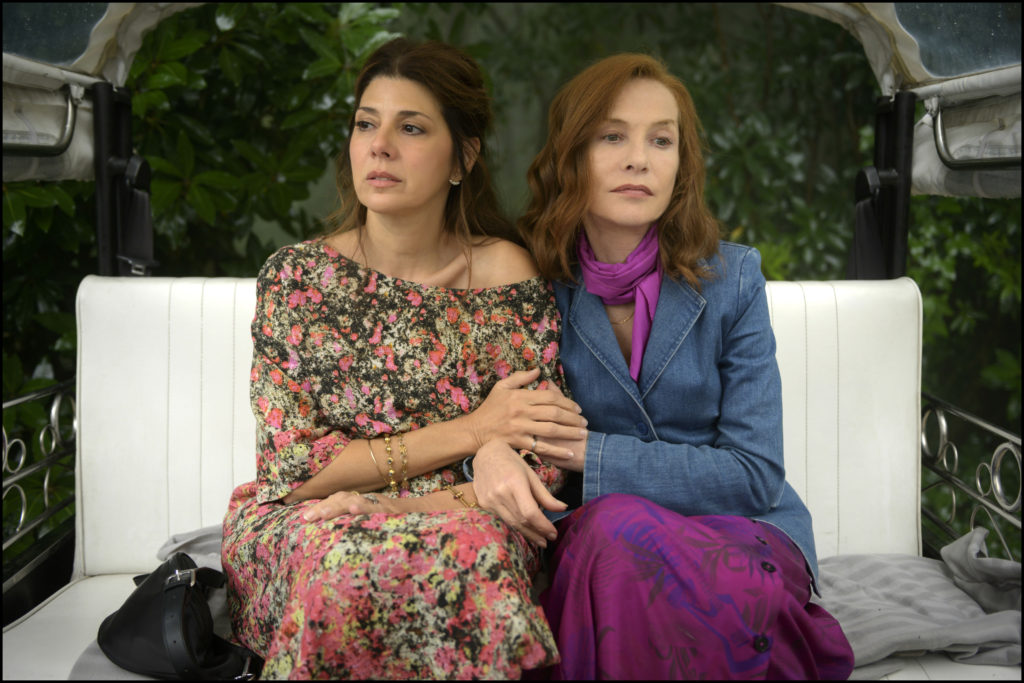
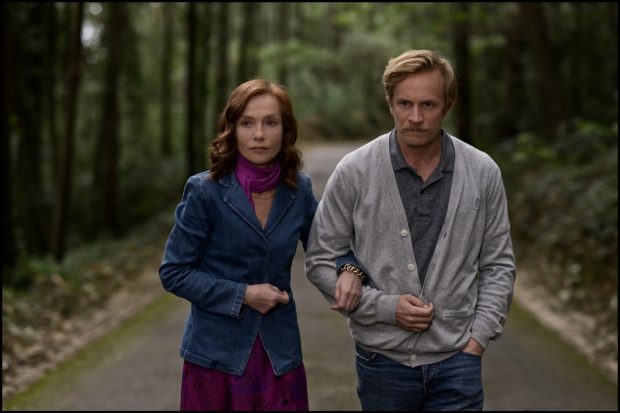
Isabelle Huppert and Jérémie Renier in FRANKIE
As one would expect, Isabelle Huppert is superb as Frankie, a woman who toggles between manipulating her clan and silently contemplating her own fate. The rest of the cast is excellent, too, especially Brendan Gleeson as Frankie’s loyal and observant husband and Marisa Tomei as Frankie’s younger friend who brings along a surprise guest. That guest is played by Greg Kinnear, with just the right mix of decency, earnestness and pathetic cluelessness.
Frankie is set (and was shot) in Sintra, Portugal, and what a beautiful place that must be, with its whitewashed villas, charming cobblestone streets and ocean vistas.
I watched Frankie at the Mill Valley Film Festival, and I really enjoyed it. But the festival audience was very indifferent at the screening; I’m guessing that folks failed to warm to an ambiguous ending that leaves some plot threads unresolved.
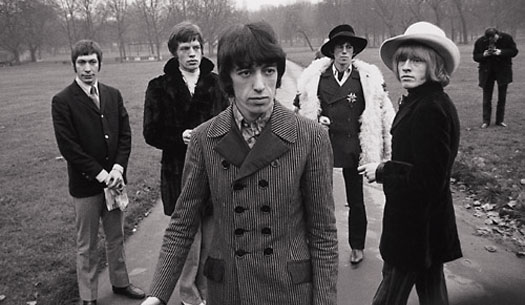
The title character in the documentary The Quiet One is the Rolling Stones bass player Bill Wyman. Wyman is an anti-flamboyant person at the very core of a circus of hedonistic excess and self-promotion.
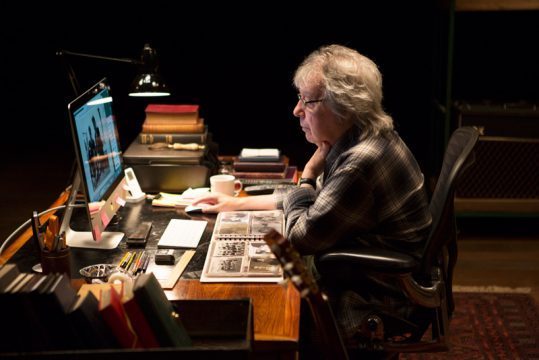
Wyman is also an obsessive collector of memorabilia, and, at age 83, he now burrows into his irreplaceable archive of home movies and concert posters. What’s especially interesting in The Quiet One is the history of the Rolling Stones from his sober and humble perspective.
One famous associate says, “Bill never started acting like he’s famous”. Wyman himself says, “I suppose if you looked at my bookshelves you would understand me better.” What we do see is an astonishingly down-to-earth person, seemingly barely changed by stardom. He is honest about two marriage mistakes, one of them fairly appalling.
In the sweetest scene, we get to see today’s Wyman as a devoted fan, choking up while recalling an encounter with Ray Charles.
The Quiet One is a low key movie about a low key guy, and I recommend it to those interested in rock and roll history. The Quiet One is available to stream on Amazon, iTunes, Vudu, YouTube and Google Play.
The documentary Echo in the Canyon explores a moment in music history – the beginnings of folk rock in LA’s Laurel Canyon in the mid-1960s. Think the Byrds, Buffalo Springfield, the Mamas and the Papas, all influenced by the Beach Boys and the Beatles.
There are some, but not a zillion, nuggets in the interviews with Roger McGuinn, David Crosby, Michelle Phillips, Eric Clapton, Graham Nash and Brian Wilson.
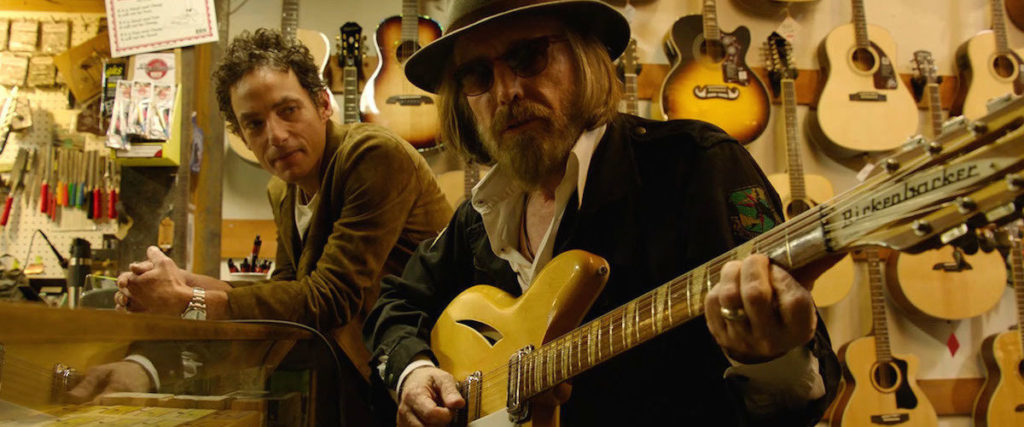
Jakob Dylan leads a band with Regina Spektor, Beck, Fiona Apple and Cat Power that plays some of the hits from the era. This is an excuse for a soundtrack album, but hardly a significant value add. The exception is singer Jade Castrinos, who seems born to sing the Mamas and Papas songbook, both the Michelle Phillips and Denny Doherty parts.
Echo in the Canyon is moderately interesting to fans of 1960s rock and roll and is available to stream on Netflix, Amazon, iTunes, Vudu, YouTube and Google Play.