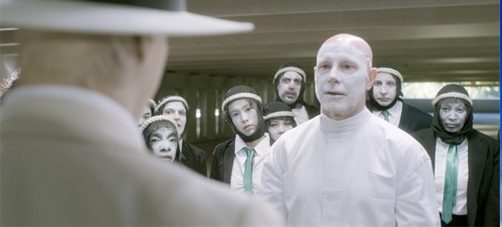
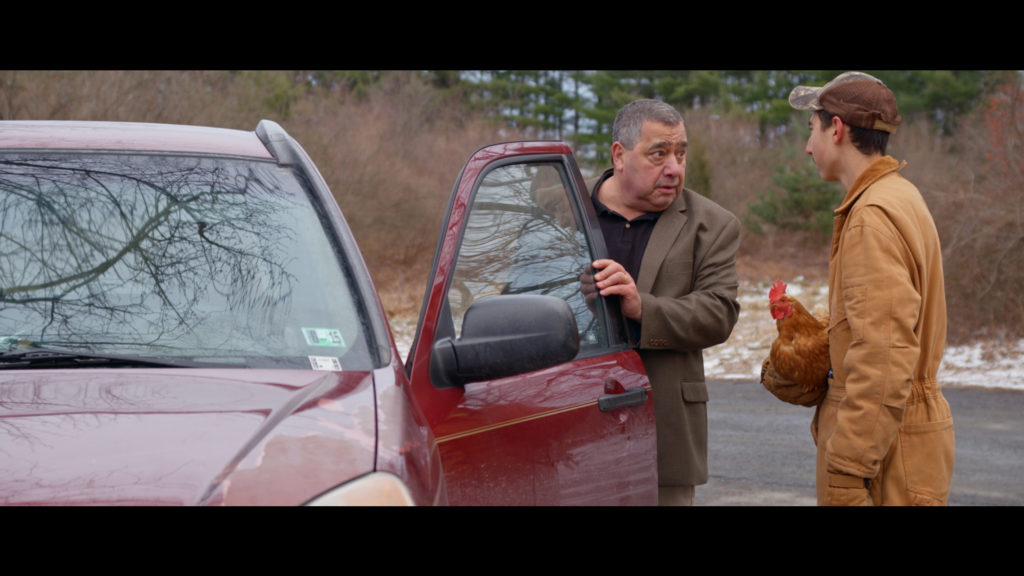
THE BOYS IN RED HATS. Photo courtesy of Shark Dog Films.
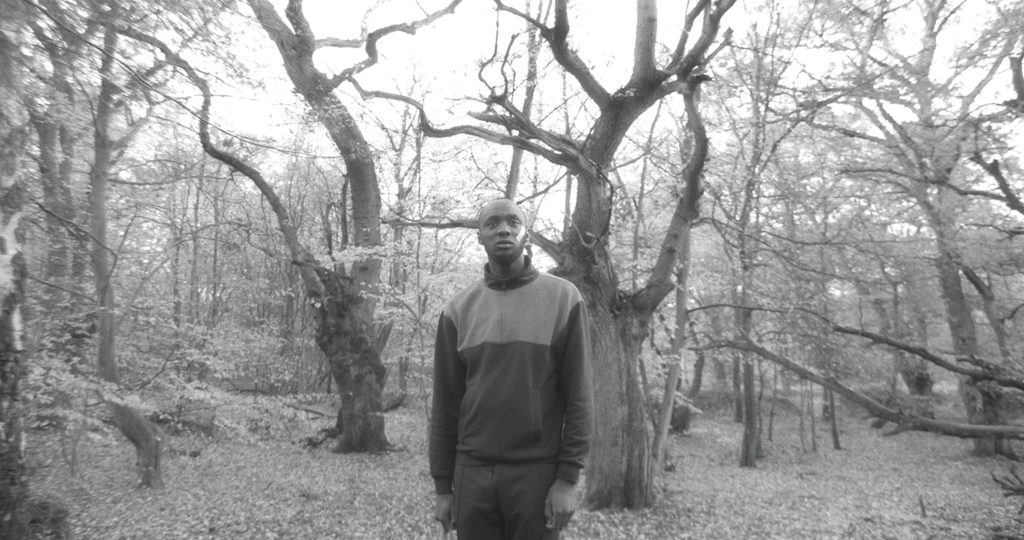
Remember the resulting frenzy when the Kentucky prep school boy at the Lincoln Memorial smirked at the indigenous tribal elder? Documentarian Jonathan Schroder is an alum of that very prep school – Covington Catholic or “CovCath”. In The Boys in Red Hats, his point of view shifts as he peels back the onion on what really happened. It comes down to insights into media, social media and, especially, White privilege.
Like most of us, Schroder was initially outraged at the boys; as more facts emerged, he became sympathetic to what seemed like mistreatment of the boys in social media. Don’t give up on this movie as a whitewash – as the story gets more complicated and Schroder becomes more reflective, his needle sways back and forth until the final payoff.
This was a Rorschach event at the Lincoln Memorial. One thing is for sure, these privileged kids and their chaperones, confronted by a crazy hate group (Black Hebrew Israelites), were unequipped to deal with a momentary convergence of disorder and diversity.
To put my own cards on the table, I am not disposed to sympathize with rich kids who were comfortable in being shipped to an anti-choice rally, wearing MAGA hats. In The Boys in Red Hats, the journalist Anne Branigan’s perspective most resonated with me.
Schroder gives plenty of rope to a professional conservative talking head, two CovCath dads and the school’s alumni director, none of whom display a modicum of sensitivity or empathy to those less rich, less white or less male than they.
Schroder sees the significance when one of his CovCath buddies says, “I like my bubble”. I screened The Boys in Red Hats for its world premiere at Cinequest, and it made my Best of Cinequest 2021.
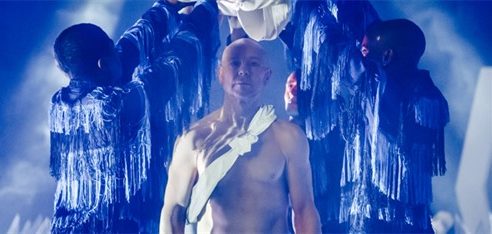
I’M AN ELECTRIC LAMPSHADE. Photo courtesy of Cinequest.
In the winning and surprising documentary I’m an Electric Lampshade, we meet the most improbable rock star – a mild-mannered accountant who retires to pursue his dream of performing.
60-year-old Doug McCorkle is fit for his age and has an unusually mellifluous voice, like a late night FM DJ or the announcer in a boxing ring. Other than that he looks like a total square.
There may be no flamboyance about Doug McCorkle, but it thrives inside him. His own artistic taste is trippy, gender-bending and daring. Think Price Waterhouse Cooper on the outside and Janelle Monáe on the inside.
We follow Doug as he goes to a performance school in the Philippines (where most of his classmates are drag queens) and the montage of his training resembles those in Fame and Flashdance. Doug is a good enough sport to wear MC Hammer pants in a bizarre Filipino yogurt commercial. It all culminates in a concert in Mexico.
Doug’s quest would be a vanity project except he has no apparent vanity. He must have some ego to want to get up on stage, but compared to subjects of other showbiz documentaries, he is most humble, emphatically not self-absorbed and low maintenance. We can tell from how his co-workers, friends and wife react to him, that he is just a profoundly decent guy.
Eminently watchable, this is a successful first feature for writer-director John Clayton Doyle. The stage-setting profile of one of the Filipino artists could have been trimmed, but Lampshade is otherwise well-paced.
The final score: Doug 1, Expectations 0. I screened I’m an Electric Lmpshade for its world premiere at Cinequest, and it made my Best of Cinequest 2021.
I’M AN ELECTRIC LAMPSHADE
I screened I’m an Electric Lampshade for its world premiere at Cinequest, and it made my Best of Cinequest 2021. You can stream it during the festival for only $3.99 at Cinequest’s online Cinejoy.
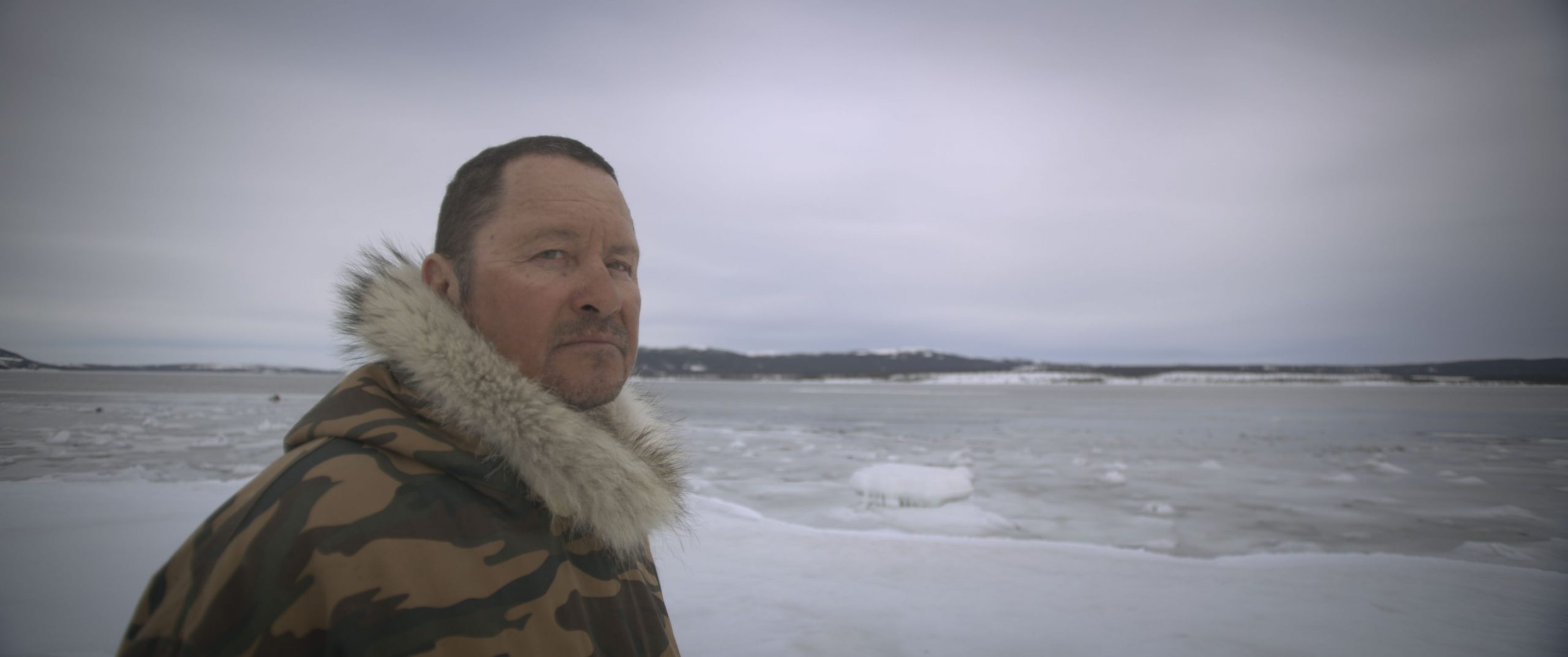
Derrick Pottle in THE MAGNITUDE OF ALL THINGS. Photo courtesy of 2020 Magnitude Productions.
The meditative documentary The Magnitude of All Things explores the emotional response to Climate Change. An Inconvenient Truth is now 15 years old and seems almost quaint today; Al Gore was certainly not an alarmist.
We in California, with our catastrophic wildfires, may think that we are Ground Zero for Climate Change ground zero, but for those that live on flat atolls in the ocean or in the formerly frozen ice and tundra, it’s even more of a RIGHT NOW phenomenon. The Magnitude of All Things takes us from the Amazon to Australia to Labrador. We meet folks from the uber earnest child crusader Greta Thulin to an indigenous youth activist in Amazon.
We see bleached coral reefs (who knew we needed to worry about THAT?) and “snowing” wildfire ash. An indigenous poet surveys the less-frozen North and asks if his grandchildren will see what he sees.
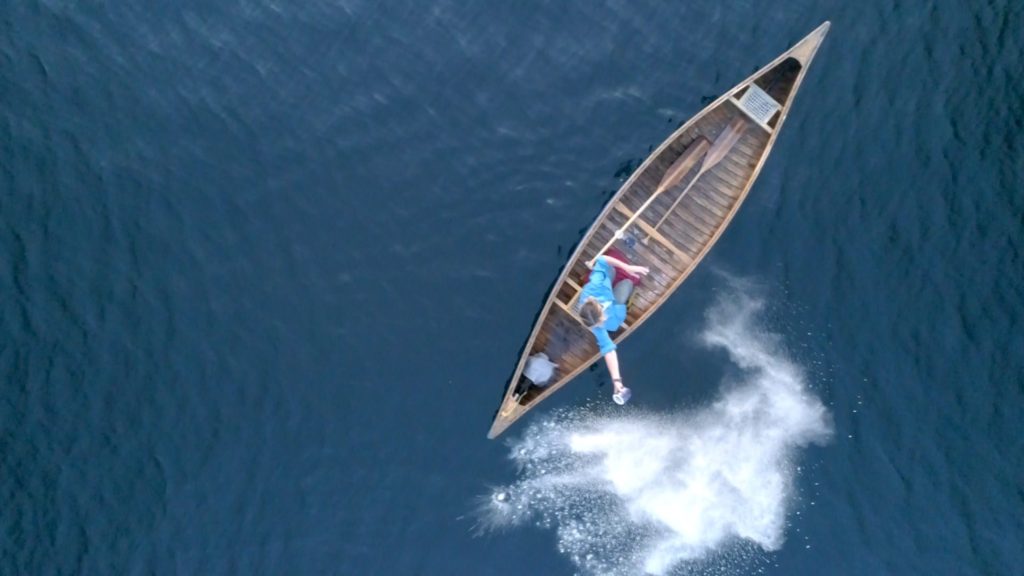
THE MAGNITUDE OF ALL THINGS. Photo courtesy of 2020 Magnitude Productions.
With especially beautiful photography, a contemplative pace and New Agey piano music, The Magnitude of All Things reminds us that, while we may be ruining it, we still live on a beautiful planet. Even the fires are beautiful in their terrible way.
How do we face extinction – self-caused extinction? Will the grief overwhelm us? Documentarian Jennifer Abbott’s sister recently died, and Abbott brings us inside her own grieving process as a parallel. One subject suggests, “Make peace with the grief but don’t just give up“.
Are grief and hope exclusive? Or, as Abbott posits, can hope be found within grief?
I screened The Magnitude of All Things at Cinequest, it’s fourth stop on the film festival tour, and the first in the US.
Ryan Walker-Edwards in DEMON. World premiere at Cinequest. Photo courtesy of Zersetzung Films.
I written about the the very Best of Cinequest and even more Cinequest films. Here’s my take on the rest.
Demon: On the lam from some aggressive bill collectors, Ralph hides out in an off-the-track motel. It doesn’t take long for things to get odd and then surreal. Ralph’s journey to this most mundane setting becomes nightmarish, but this darkly funny film is not a horror movie. As the lead actor, Ryan Walker-Edwards is very appealing in his feature film debut. This is also the first feature for director and co-writer George Louis Bartlett. I screened Demon for its world premiere at Cinequest.
Yutaka Takeuchi in DRIVE ALL NIGHT, world premiere at Cinequest Photo courtesy of Cinequest..
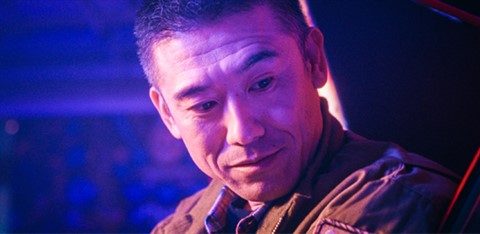
In Drive All Night, a taciturn night shift cabbie (Yutaka Takeuchi) picks up an alluring and mysterious woman (Lexy Hammonds). She has him take her on a bizarre night ride, and he’s guessing what her secret is. Unfortunately, the dialogue is still and hackneyed, and the payoff just isn’t there. Their ride gets trippy at one point, and there’s a parallel thread with another character, but it doesn’t help.
If you’re from Silicon Valley, you’ll recognize lots of San Jose locations like MiniBoss, the Capri Motel, Western Appliance and I-280.
Drive All Night is the first feature for writer-director Peter Hsieh. Hsieh’s nighttime exterior visuals are superb. So far, he’s a far better director than writer. I screened Drive All Night for its world premiere at Cinequest.
In the light and appealing coming of age comedy Drunk Bus, a young slacker (Charlie Tahan) is paralyzed by the disappointment of a breakup. He’s stuck driving the shuttle between a college town’s bars and the dorms (the “Drunk Bus”) until he is mentored by a 300-pound Samoan security guy with facial tattoos (Pineapple Tangaroa). It’s all sweet and predictable. It’s the first feature for co-directors John Carlucci and Brandon LaGanke. I screened Drunk Bus, which had played at the 2020 SXSW, at Cinequest.
Events Transpiring Before, During, and After a High School Basketball Game: This Canadian indie comedy had the best movie title in Cinequest (an even better title than I’m an Electric Lampshade) and an inviting trailer. But the humor – along the same lines as in The Office and Parks and Recreation – just doesn’t get close to that level. Cast and screenplay were shooting for deadpan, but only reached dead. I screened Events Transpiring… for its world premiere at Cinequest.
Hunting Bigfoot: There are very, very few men who believe that they have personally encountered Bigfoot, and this documentary’s interesting premise is that some of them become obsessed with duplicating those events and returning with scientific evidence that Sasquatch exists. We meet a crew of these guys, of varying degrees of eccentriciy, who devote their spare time to this (so far, futile) pursuit. One of them, John Green, has essentially abandoned civilization and his family to live full time out in what he thinks is Sasquatch habitat. Green’s life journey, with his Bigfoot episode coinciding with crises in his business and his family, would be fascinating for 30 minutes, but doesn’t warrant taking up most of this full length feature. I screened Hunting Bigfoot for its world premiere at Cinequest.
Non Western: This aspirational documentary traces the new marriage of Nanci, a White woman with teen and college-age kids, and Thad, a Cheyenne man. Non Western has a lot going for it: an intriguing and underseen setting (the Northern Cheyenne Reservation in Montana) and masterful cinéma vérité filmmaking by Laura Plancarte. But ts very subject lets us all down. It’s impossible to watch this movie without asking what is she doing with this guy?
Nanci’s childhood was so destitute that she was taken in by a Lakota family on the Pine Ridge Reservation, possibly the most socioeconomically deprived community in the US. Somewhere along the line, she had an unsuccessful relationship that produced these kids. Yet she has overcome all this to get her PhD and a job at a college. But Thad just expects her to do all the housework and wait on him, using his embrace of his Cheyenne traditions as an excuse. He’s not traditional – he’s just a dick. It’s painful to watch this dynamic (along with her kids) and observe how low that Nanci’s self esteem seems to have sunk. The Wife HATED this movie.
Ironically, Thad’s mom, who seems close-minded and cruel throughout most of the film, turns out to be the most interesting character when she finally reveals her own view of traditional family culture. I screened Non Western for its US premiere at Cinequest.
Mister Candid Camera: This is an affectionate but clear-eyed biodoc of Allen Funt, who originated the iconic television show Candid Camera and, in the process, invented reality television. It’s written, directed and extremely well-sourced by Allen Funt’s son (and Camera Candid performer) Peter Funt. Peter Funt reveals the secret sauce of the show (e.g., how mean can you be). Baby Boomers will especially appreciate the insider’s look at Allen Funt himself and the nostalgic glimpses of sidekick Durwood Kirby, etc. Everyone will enjoy the classic clips, including the talking mailbox, split automobile and the hilarious utterances of little kids. I screened Mister Candid Camera for its world premiere at Cinequest.
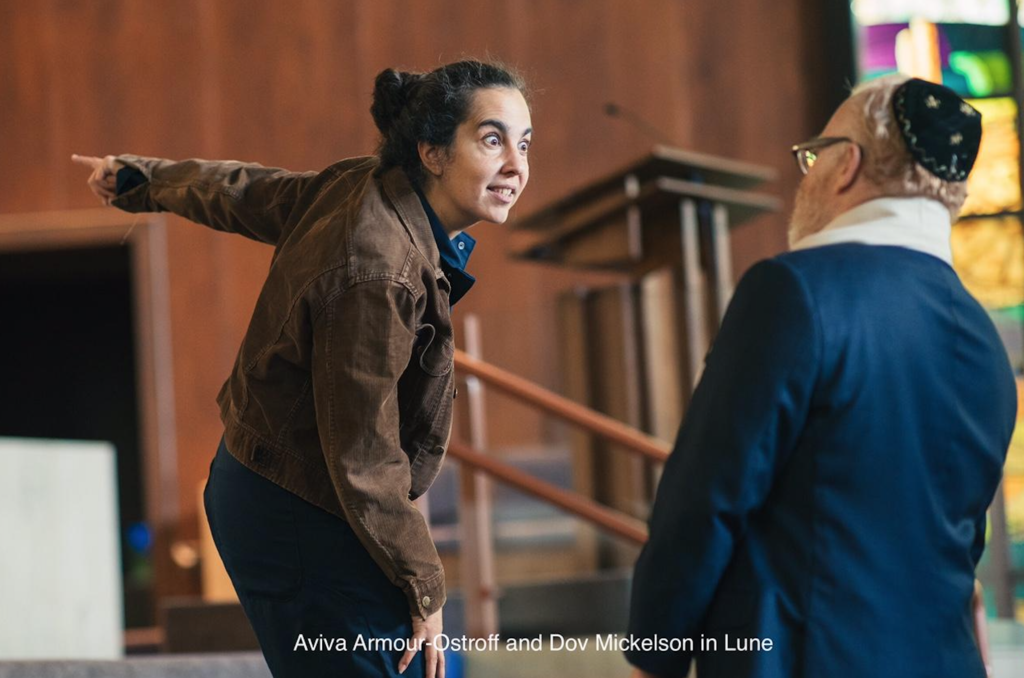
Aviva Armour-Ostroff (left) in LUNE, world premiere at Cinequest. Photo credit: Samantha Falco.
The Must See in this year’s Cinequest is the Canadian indie Lune, an astonishingly authentic exploration of bipolar disorder. Miriam and her teen daughter Eliza must navigate the impacts of the mom’s illness. Played by writer and co-director Aviva Armour-Ostroff, Miriam is the most singular movie character I’ve seen recently.
Miriam is her disease but not just her disease. Smart and funny, and devoted to her daughter without smothering her, she would be the Cool Mom if she weren’t always on be edge of mortifying everyone.
But then there is the bipolar disorder. Miriam’s streams of manic speech have the rhythm of poetry. When she becomes totally absorbed in a manic episode, she tries to enlist everyone she knows in wildly impractical schemes, like a spur-of-the-moment trip back to her native South Africa to vote for Nelson Mandela. And it can get inappropriate, as when she invites Eliza’s high school boyfriend to tag along to Africa.
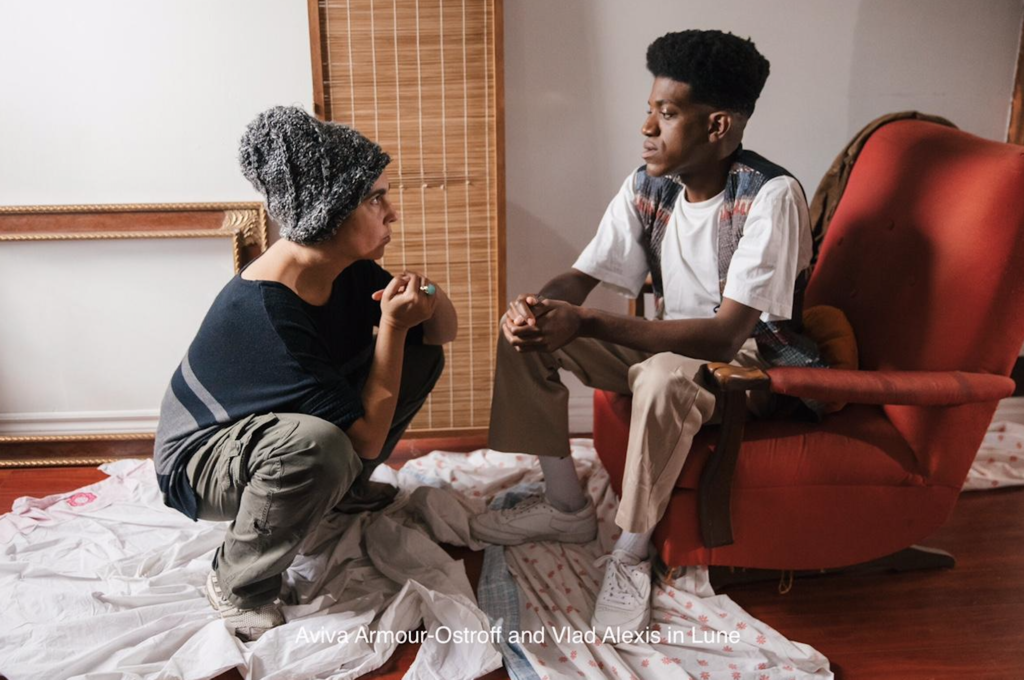
Aviva Armour-Ostroff and Vlad Alexis in LUNE, world premiere at Cinequest. Photo credit: Samantha Falco.
Having survived previous episodes, Eliza is forced to parent her own mom, always beseeching her to take her meds. The illness has led to their being evicted countless times, and Eliza bears the emotional scars. Miriam often makes Eliza cringe, but Eliza knows that it can get even worse. Eliza’s boyfriend, with no reason to expect otherwise, vastly underestimates the consequences of Miriam’s illness.
Armour-Ostroff has made Miriam funny, but not only a subject of comedy, and neither harmless nor a dangerous monster.
Now, this authenticity is not easy to achieve. Having had family members with mental illness, I particularly despise the exploitation of mental illness for entertainment. I am painfully knowledgeable about multiple personality disorder, and I can tell you that it may be unpredictable, but it sure isn’t amusingly entertaining like in The United States of Tara. (The Three Faces of Eve, on the other hand, is acceptable to me.)
Chloe Van Landschoot in LUNE, world premiere at Cinequest. Photo credit: Samantha Falco.
I asked Armour-Ostroff what drew her to the topic of bipolar disorder? She replied “My dad is Miriam. The character of Eliza is based on me.” Wow. There you have it – the key to the authenticity of Lune.
Armour-Ostroff’s performance is riveting. The rest of the cast is excellent, including Chloe Van Landschoot as Eliza and Vlad Alexis as Eliza’s boyfriend.
Lune, which she co-directed with her partner. Arturo Pérez Torres, is the first feature as a director for Armour-Ostroff. The two co-produced 2017’s The Drawer Boy, which Pérez Torres directed. The Drawer Boy can be streamed on Amazon.
I screened Lune for its world premiere at Cinequest, and it made my Best of Cinequest 2021 as the Must See of the festival. Lune‘s next stop on the festival tour is RapidLion – the South African International Film Festival. There’s one more night to stream Lune at Cinequest for only $3.99.
Steven Randazzo (center) in MAKING THE DAY. Photo courtesy of MCM Creative.
In the showbiz comedy Making the Day, a no-longer-in-much-demand character actor (a brilliant Steven Randazzo) struggles to put together the financing for an independent film. Director and co-writer Michael Canzoniero, who is clearly familiar with this problem, begins with the titles “Much inspired by true events. The rest is improvised.”
Our sublimely earnest hero is trying to make a film about his beloved late wife. You just know that, not only is no one going to invest in this film, no one is going to want to see it. But he’s so driven to make his movie that he takes money from a very scary hood (whose primary cinematic interest is in laundering ill-gotten loot).
Things go awry and he needs even more money. A neurotic actress (Juliette Bennett) promises the money if she can star in the movie. Is she going to be ultimately more dangerous to the movie than the mobster? It’s a tossup.
The plot is kind of like an indie movie version of The Producers, only if Zero Mostel’s Max Bialystock were understated and sincere.
The core of Making the Day is the hangdog performance by Randazzo. His character’s sincerity and desperation are so genuine, that he’s the perfect counterpoint to all the screwballs surrounding him.
I screened Making the Day for its world premiere at Cinequest.
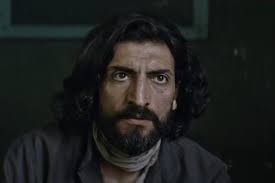
Numan Acar in IN THE SHADOWS. Photo courtesy of Cinequest.
The gripping Turkish dystopian fable In the Shadows imagines a place where people slave in a 19th century-type industry but are monitored by 21st century surveillance equipment. An unseen power dominates and controls the workers. But does it have an Achilles heel?
In the Shadows works largely because of the powerful performance by the Turkish-born German actor Numan Acar. Acar, who played the scary Taliban villain in Homeland, has the charisma and acting chops to move a compelling story with very little dialogue.
This is the third feature for writer-director Erdem Tepegoz, and it’s impressive movie-making.
There are than a few tastes of Orwell’s 1984 in In the Shadows. If you admired the 1984 Super Bowl commercial introducing Apple’s Macintosh, you’ll like this Turkish film. It won last year’s Turkish Film Critics Association Award.
I screened In the Shadows for its North American premiere at Cinequest and it made my Best of Cinequest 2021; you can stream it during the festival for only $3.99 at Cinequest’s online Cinejoy.
Select Closed Caption to get the English subtitles in the trailer.
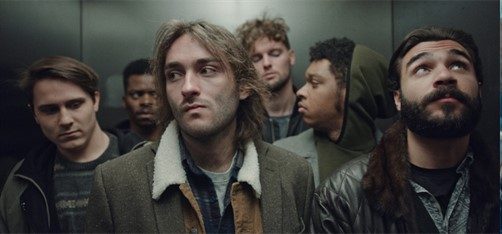
The indie comedy Welcome to the Show plunges the characters and the audience into a puzzle. Four college-age guys, always up for a party, blow off Thanksgiving with their parents to party, but the joke is on them.
They score an invitation to The Show, which they assume will be a party; after getting a little high, they sure like being frisked and blindfolded by sexy women, and driven to an undisclosed location. Now they don’t know where they are or what is supposed to be next in this increasingy mysterious experience.
What is being done to them? By whom? Why? And just where the hell are they? Are they in a elaborate party game or inside a piece of performance art? Or is this a prank or something more sinister? They don’t know and neither does the audience.
The surreal experience exhausts them. And, as is fitting for a surreal film, they stumble around completely spent, resembling the iconic walk on the road to nowhere in The Discreet Charm of the Bourgeoisie.
One of the satisfying running jokes is that, having given up their smart phones at upon admission to The Show, these Millennials are utterly lost without the navigation apps. They have not been air-dropped into the Yukon wilderness, but are in Richmond Virginia, a city with a major river, railroad tracks, highways, landmarks and street signage.
Keegan Garant is the most interesting among a cast of newcomers.
This is the second film for writer-director Dorie Barton, and she resists the temptation to reveal everything to the audience.
I screened Welcome to the Show for its world premiere at Cinequest. You can stream it during the festival for only $3.99 at Cinequest’s online Cinejoy.
Michaella Russell in ECHOES OF VIOLENCE. Photo courtesy of Cinequest.
In the well-crafted revenge thriller Echoes of Violence, a woman (Michaella Russell) entangles an Everyman (Heston Horwin) to help her escape a series of deadly hit men (the first one is played by Chase Cargill). Loyalties change and lethal new skills (and a novelty weapon) are revealed as her position pivots from defense to offense.
The woman has been done a very evil wrong, and she’s clawed herself to some degree of safety, she launches a campaign of vengeance. Michaella Russell is a compelling enough screen presence to drive the story.
Russell is South African and, in real life, found navigating the US immigration system to be fraught with frustration. That experience (not as horrific as in the movie) inspired Nicholas Wood to make the villain an immigration attorney.
The venerable Frank Oz is effective in a turn as the main villain’s even more monstrous father.
Echoes of Violence is the second feature for writer-director Nicholas Wood and demonstrates that he can bring originality to a genre film.
I screened Echoes of Violence for its world premiere at Cinequest, and it made made my Best of Cinequest 2021; you can stream it during the festival for only $3.99 at Cinequest’s online Cinejoy.
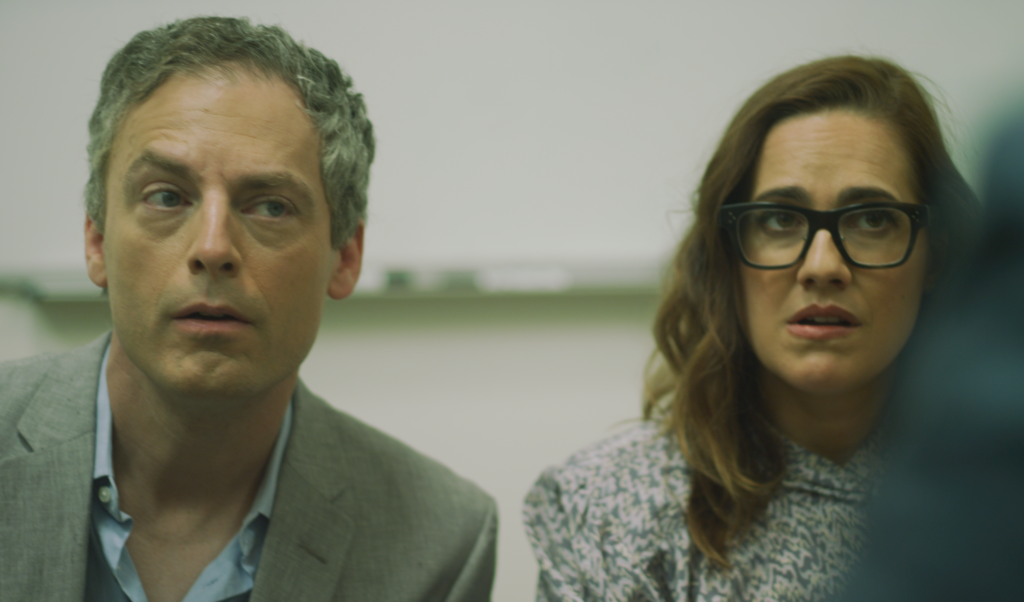
Justin Kirk and Jennifer Prediger in HOLLYWOOD FRINGE. Photo courtesy of Sleeper Cell Films.
Hollywood Fringe is about a married couple of hopeful creatives (Justin Kirk and Jennifer Prediger). They have been pitching their projects to Hollywood execs in futility; (she’s turned forty and her mom still helps with their rent). Popular interest in their experimental theater performances has been (ahem) limited. They give themselves one last chance to make it – but when a studio buys their idea for a series, things don’t go as planned…
We’re used to seeing Hollywood execs lampooned as tasteless capitalist barbarians who always reach for the lowest common denominator, and Hollywood Fringe does skewer the suits. But nobody gets a pass from writer and co-director Wyatt McDill and co-director Megan Huber. The funniest bits send up the artistes for projects that are overly obscure, overly precious or both. And even an impoverished artist on the lowest rung of showbiz can get a comeuppance for White privilege.
The added dimension in Hollywood Fringe is the dynamic of a married couple working in the same competitive industry and often in the same creative projects.
Led by Prediger and Kirk (Mitchell’s boss Charlie Bingham in Modern Family), the entire cast is excellent. Given that the actors live in the world that they get to send up, they must have had a blast shooting Hollywood Fringe.
Filmmakers Megan Huber and Wyatt McDill returned to Cinequest with a complete change of pace from last year’s inventively constructed thriller 3 Day Weekend. No strangers to the Hollywood fringe milieu, Huber and McGill shot some of the scenes in their own Los Feliz apartment.
Hollywood Fringe made my Best of Cinequest 2021 as the best comedy I’ve seen in the fest. You can stream it during the festival for only $3.99 at Cinequest’s online Cinejoy.