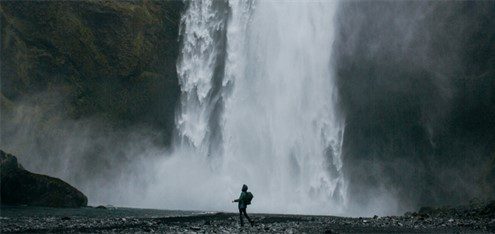
The “End” in the title Everything in the End means, literally, the end of the world. Set in a future where climate change has made human extinction certain and imminent, the story imagines how people would react as they understand that they have only a few days left.
A young man, Paolo (Hugo de Souza), whose mother has died, decides to meet his fate in Iceland, the land of the father he has never met. Paolo meets one stranger after another, each of whom is contemplating the situation in their own way. By now, everyone is beyond the shock, denial, anger and bargaining.
What Paolo doe NOT find is overt rage or a paroxysm of hedonism. One guy swigs from a bottle of booze, but in a half-hearted way.It’s too late for political or commercial exploitation. And this is not a disaster action movie, so heroism does not take the form of battles or chases. More profound than grim, End of Everything takes the sensationalism out of the apocalypse and leaves the humanity.
Lilja Þórisdóttir is especially good as a local who greets Paolo with with kindness and wisdom.
This is the first feature from writer-director Mylissa Fitzsimmons, and it’s a remarkable showcase for the intelligence of her writing and her eye for landscapes. Without her clarity of mission, the story could have easily veered into a downer or an overwrought disaster saga. Fitzsimmons does let us glimpse the actual apocalypse, but in just the perfect number of seconds.
Set in the stark beauty of Iceland, this is a visual stunner. The cinematographer is Todd Hickey.
Everything at the End is a powerful think piece and made my Best of Cinequest 2021; you can stream it during the festival for only $3.99 at Cinequest’s online Cinejoy.
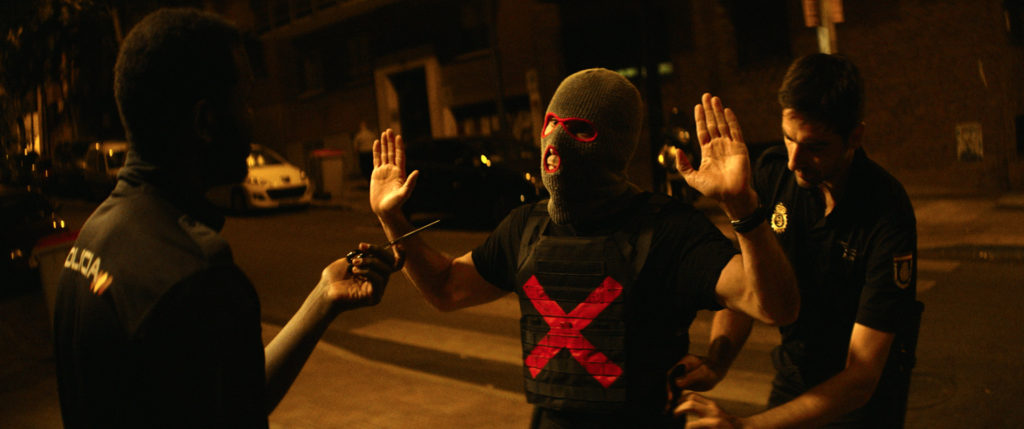
Victor Rivas (center) in CARVER. World premiere t Cinequest. Photo courtesy of Select Films.
In the neo-noirish Spanish thriller Carver, a guy named Ernesto takes on the alter ego of Carver in the wee hours. Carver strides through Ernesto’s gritty urban neighborhood in dressed in a ridiculous, homemade superhero costume. He has no super powers, but is driven to make things right, vigilante-style. A sexy, stoned woman of uncertain reliability engages his interest. Will she bring him down?
Ernesto (Victor Rivas) seems otherwise a normal, salt-of-the-earth guy . He lives a quotidian existence, monitoring a supermarket’s security cameras by day and presiding over his family’s evening meals. But when his wife and kids are ready for bed (and this is Spain, so it is LATE), he heads out on the streets, to his wife’s increasing displeasure.
Why? He’s not a wannabe hanging judge; he’s pretty merciful to the shoplifters that he catches at his day job. But he has this need to personally patrol the streets to keep kids and single women safe. It’s odd behavior, and he does so with an almost child-like naivete; we wonder what emotional trauma might have damaged him.
At first, as he fails to spot her manipultiveness Victor is no match for the femme fatale Alicia (Mar Del Corral) , who is channelling Brigid O’Shaughnessy. Then he begins to appreciate just how unhunged she may be.
This is the first feature for writer-director Evgeny Yablokov, and this character-driven thriller is an impressive calling card.
There are many film actors named Victor Rivas. The star of Carver is not one of the more famous one, but a mournful-faced stage actor in Madrid, who has played Kierkegaard.
Not everybody will be satisfied with the ending of Carver, but I thought it was perfect.
I screened Carver for its world premiere at Cinequest, and it made my Best of Cinequest 2021. You can stream it during the festival for only $3.99 at Cinequest’s online Cinejoy.
The understated but brilliant documentary Atomic Cover-up reveals the story of the long-hidden eyewitness film record of the atomic destruction of Hiroshima and Nagasaki.
Japanese film crews immediately filmed the carnage and destruction, which was quickly suppressed by the Japanese military. Within a month, the US occupation forces were in charge, and American filmmakers took over the filming of Hiroshima and Nagasaki, often with Japanese crews. Censorship continued under the US military.
The films have now escaped the censors and are seen in Atomic Cover-up with the testimonies of the original Japanese and American cameramen. As told matter-of-factly by the men who captured these images, it’s a great story.
I screened Atomic Cover-up for its world premiere at Cinequest, and it made my Best of Cinequest 2021. You can stream it during the festival for only $3.99 at Cinequest’s online Cinejoy.
Well, the French coming of age comedy Jumbo is not one we have seen before. Jeanne (Noémie Merlant) is a painfully shy girl who is embarrassed by every human interaction, but especially by her single mother, who seems to be insisting “Have your sexual awakening, already!”. The mom encourages Jeanne to take a nighttime cleaning job at the amusement park on the outskirts of their provincial town, hoping that she’ll take up with a guy. The mom, who has very modest aspirations for her daughter’s romantic life, is thinking of someone like the supervisor Marc (Basten Bouillion), who is willing, but doesn’t ring Jeanne’s chimes.
Indeed, Jeanne does meet someone (or something) – the amusement ride Jumbo – and she falls in love with a not-really-inanimate object. Yes, here we have an unusual love that is passionate and obsessive, and, yes, consummated. (I told you that you haven’t seen this before.)
In the US, we know the titular amusement ride as the Tilt-a-whirl.
The director Emanuelle Bercot, who is so good in her occasional acting turns (Polisse, My King), plays Jeanne’s mom Margarette. Bercot’s Margarette is a voracious and vulgar force of nature – and she’s not familiar with social boundaries. Hilarious.
Jumbo is the first feature for writer-director Zoé Wittock, and it’s a helluva super-imaginative calling card. Ever bouncing between the sweet and the outre, Jumbo worked for me. I screened it at the 2020 Mill Valley Film Festival, and it’s now available to stream at Laemmle.
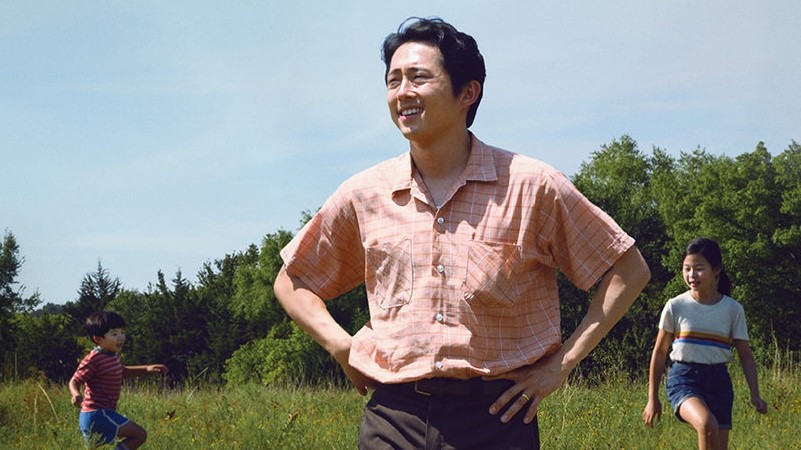
In the family drama Minari, the father (Steven Tuen) in a Korean immigrant family moves them all to rural Arkansas to realize his dream of becoming a landed farmer. But, does everyone share the same dream? Is everyone willing to make the tradeoffs necessary to achieve it?
He’s been working in California for ten years at an industrial hatchery as a lowly paid chicken sexer (yep, ya always learn something at the movies). This is the moment when he can finally afford his own 50 acres, and, upon arriving at his own property, he is triumphant. His wife (Yeri Han), taking the measure of the remote setting and the manufactured-home-on-wheels, doesn’t see it that way.
To make things more tolerable, she moves her spirited mom (Yuh-jung Youn) into the household. (Spoiler: don’t let dotty grandma operate the incinerator.) The family faces the challenges of entrepreneurship and the new surroundings.
Although the story is set in the immigrant experience, I don’t see the film as about immigration. It’s more universal than that. Far from bewildered and exploited, the dad here is confident and dismissive of the locals’ superstitions. He believes and acts as if he were the master of his own fate.
Minari is more about whether the family is a team, cohesively committed to the same goal. Just what is redemption supposed to look like here? The story of Minari is autobiographical – drawn from the childhood of its writer-director Lee Isaac Chung. Chung’s film is well-crafted, but not thrilling.
The prolific character actor Will Patton excels in a fine part as a good-hearted Pentecostal Arkansan, who is determined to build a friendship with the farmer dad.
Alan S. Kim is especially good as the youngest child, the surrogate for director Chung at age seven. Yuh-jung Youn is also stellar as the grandma.
Yuen is a superb actor with an uncanny gift for showing up in really good movies: I Origins, Okja, Sorry to Bother You, Burning. Here, he’s good in a less challenging role than he’s used to.
I saw Minari at an A24 screening accessible to SFFILM members. It releases more widely on VOD this weekend.
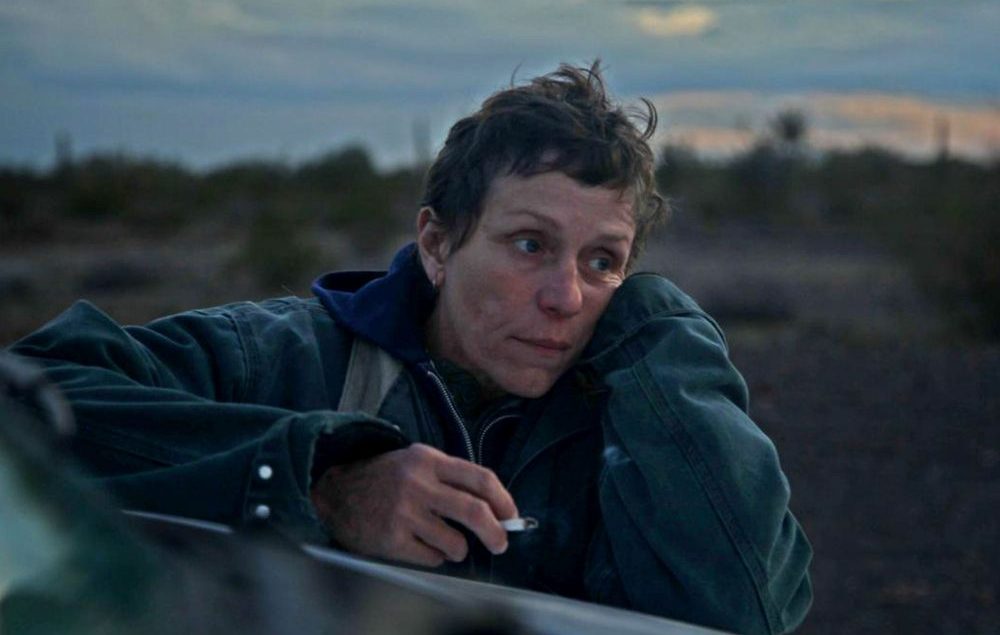
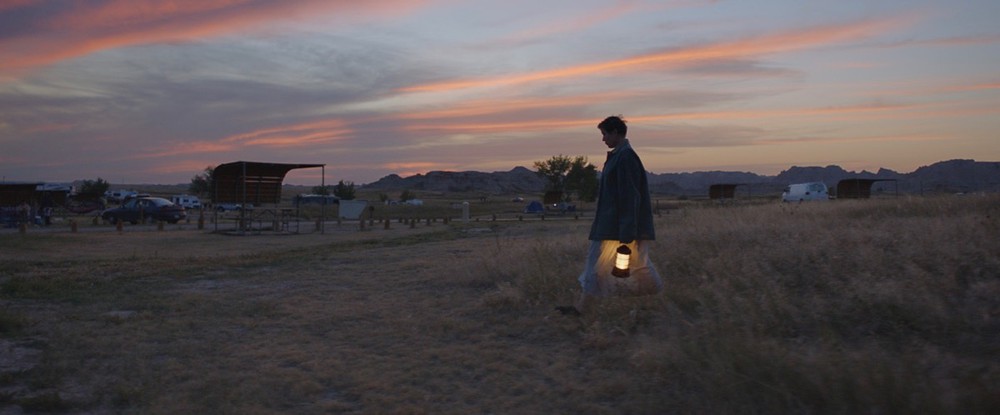
Frances McDormand in NOMADLAND. Photo courtesy of Searchlight Pictures.
Nomadland is an extraordinary film, illuminated with a profound humanity. That humanity stems from the fierce authenticity of Frances McDormand’s performance and Chloé Zhao’s genius with nonprofessional actors.
McDormand plays Fern, a widow who lost her lifestyle when her longtime husband died and when the closing of the gypsum mine killed their hometown – to the extent that even the zip code for Empire, Nevada, was discontinued. Without the means to afford to live in her own house or apartment, she lives in her van and travels between seasonal jobs – at Amazon’s warehouse in Fernley, Nevada, during the holiday crush and at tourist campgrounds during the summer.
Fern is not alone. She finds a community of nomads – Americans her age, who travel the West in their RV homes between subsistence jobs. One of them, Bob Wells, organizes nomad round ups outside of Quartzsite, Arizona.
Zhao deploys these real people as characters in Nomadland and incorporates their real stories into the story that she is telling. Indeed, these nomad perspectives give us two of Nomadand’s most powerful moments – a monologue by a woman named Swankie about her acceptance of her mortality and Bob’s comments on the loss of his son.
McDormand’s Fern misses the life she had with her husband, but she has moved on to another chapter – one in which she has traded convenience and material amenities for independence. She may have to poop in a bucket, but (except when she needs her sister’s help to repair her van) she’s not obligated to anyone or anything. Another nomad, Dave (David Straithern), is attracted to her, but she warily and firmly regards Dave’s sweet bumbling attentions.
Is Nomadland a portrait of victims? Is it a political statement? There’s no question that the American political and socioeconomic systems have failed these people. But the nomads are not people who accept defeat.
McDormand’s flinty performance is a tour de force. Her Fern is as immortal as her Marge Gunderson in Fargo or her Mildred in Three Billboards Outside Ebbing, Missouri.
They say that acting is reacting, and McDormand’s engaged listening magnifies the impact of Swankie’s and Bob’s speeches. Her increasingly purposeful stroll through the Badlands, at first solitary and then observed by Dave, expresses the value she places on her independence. McDormand has almost no dialogue in two of most powerful and indelible scenes – in the Badlands and on the Mendocino Coast.
McDormand, Straithern and Melissa Smith, who plays Fern’s sister Molly, are the only professional actors in Nomadland. Smith is conservatory director and head of acting in the MFA program at the American Conservatory Theater (ACT), but has never before acted for the screen. (As a child, musician Tay Straithern, son of David, appeared in two of his dad’s movies.)
Zhao’s screenplay is based on Jessica Bruder’s nonfiction book Nomadland: Surviving America in the Twenty-first Century, and some of the folks interviewed by Bruder are featured in the film.
Her previous film, The Rider, with a nonprofessional actor as the protagonist, made me into a huge Chloé Zhao fan. Next up for Zhao is a Marvel franchise movie with big stars, she deserves the payday.
I’m annoyed that IMDb and some other sources describe Chloé Zhao as a “Chinese director”. Although she was born in Beijing, I consider Zhao an American filmmaker. As a child, she left China for a London boarding school and finished high school in LA; she graduated from college and film school in the US, and has made all of her movies in America. Besides, what other filmmaker has set her last three movies in South Dakota, for chrissakes?
The reflective nature of Nomadland is enhanced by the vast landscapes that swallow the characters, beautifully shot by cinematographer Joshua James Richards. Richards, Zhao’s partner and the DP on her two previous films, has a gift for celebrating the panoramas and Big Skies of the Mountain West. He seems to specialize in dramatic clouds, multi-hued sunsets and sparks from campfires lifting into the night.
NOMADLAND. Photo courtesy of Searchlight Pictures.NOMADLAND. Photo courtesy of Searchlight Pictures.
The understated music of composer Ludovico Einaudi is perfect for Zhao’s story. Einaudi’s music is often featured on Radio Paradise., the blogging soundtrack of The Movie Gourmet.
Nomadland is the critical consensus choice as the year’s best film and tops my Best Movies of 2020. It is streaming on Hulu.
Thanks to the unique gifts of Aubrey Plaza, writer-director Lawrence Michael Levine’s dark comedy Black Bear is a cauldron of surprises. This is an edge-of-the-seat movie where you cannot predict what is going to happen next – or at least how it is going to happen.
At first, Black Bear seems like a dark comedy of manners. And then there’s a complete reset. In a movie-within-a-movie, the tone goes from broadly comic to nail-biting, with a satisfying final payoff about the creative process. I’m not going to spoil the story by getting anymore explicit about the its construction – but the audience needs to be a bit nimble.
As Levine unspools his story, reels it back in and unspools it again, Black Bear is a roller coaster. As Sheila O’Malley writes, “This is a disturbing film, and much of it is unpleasant, but it’s also very, very funny.“
Plaza plays Allison, a film writer-director who becomes the only guest at a woodsy lakeside B&B owned by (Gabe) Christopher Abbott and (Blair) Sarah Gadon. Allison is isolating to work on writer’s block, but she soon becomes absorbed by Gabe and Blair, a couple whose unnecessary bickering signals that they are on each other’s very last nerve. Two of the characters tell significant lies, and why they lie is revealing about each of them.
As to Allison, from her first kinda-flirty-but-with-sharper-elbows banter, you can tell she’s trouble. Plaza excels in playing a character who is hiding her acidly judgy thoughts with a mask of deadpan social almost-appropriateness. Mick LaSalle describes Plaza thusly: “This is someone who has made her name in comedies, but whose distinct quality — a certain unknowability, a certain watchfulness, a certain suggestion of some underlying hostility — always seemed like it would lend itself to drama, at least theoretically.”
Blair (exasperated): You’re really hard to read.
Allison (brightly): I get that a lot.
The playwright Paola Lázaro is especially good as the harried AD trying to hold it together as shooting the last scene of the film-within-the-film becomes ever more imperiled. There’s also a very funny running joke about script supervisor who doesn’t grasp the concept of you have one job.
When you watch Black Bear, keep one thing in mind – Allison is trying to devise a story for her next film.
Black Bear is streaming on Amazon, AppleTV, Vudu, YouTube and Google Play.
The documentary Bruce Springsteen’s Letter to You, sometimes sage and sometimes exhilarating, is a companion movie to the latest studio album from Springsteen and the E Street Band.
This is an obvious MUST SEE for devoted Springsteen fans like The Wife. For everyone else, Bruce Springsteen’s Letter to You is worthwhile for Bruce’s comments (in narration and in song), the creative collaboration in the recording studio and the songs themselves.
Springsteen is now 71 and this film was shot a year-and-a-half-ago. He is frankly conscious of mortality, the explicit subject of two of the songs. I’ll See You in My Dreams is a heartbreaking call to friends who have passed. Last Man Standing came to Bruce when he found himself the sole survivor of his high school band, The Castiles. (BTW that’s a way cool band name for back when Ricardo Montalban was hawking “rich Corinthian leather”.)
Springsteen’s reflections bring poignancy without melancholy.
On the upbeat side, The Power of Prayer is about devotion and charismatic experience – but the kind we get from pop music. We recognize that this is from the songwriter of Girls in their Summer Clothes.
The best song IMO – and the hardest rocking – is Burnin’ Train. Turn up the volume and settle into Max Weinberg’s drumming and Garry Talent’s bass line. Sounds like an extremely tight band of 20-somethings.
In the studio, we get a glimpse into the collaborative aspect of songwriting and recording, where the musicians and producers get the charts and then start making suggestions about how to hone each song.
Writing rock music is usually a young person’s jam, with the best and the most productivity front-loaded in the earliest segments of songwriting careers. It’s remarkable that Springsteen still is imagining and forging such vital songs. And it’s remarkable that the E Street Band, almost all of them about 70, still can crush and shred.
Director Thom Zimny is Bruce’s personal filmmaker, and also made the fine HBO doc Elvis Presley: The Searcher. The quick cutting of the scenes in the recording studios allow us to miss the drudgery of repeated takes and highlight the sparks of creativity. The exterior shots of the winter-bare woods of rural New Jersey remind me of Alexander Payne’s Nebraska. This is a very handsome black-and-white film.
Bruce Springsteen’s Letter to You is streaming on AppleTV.
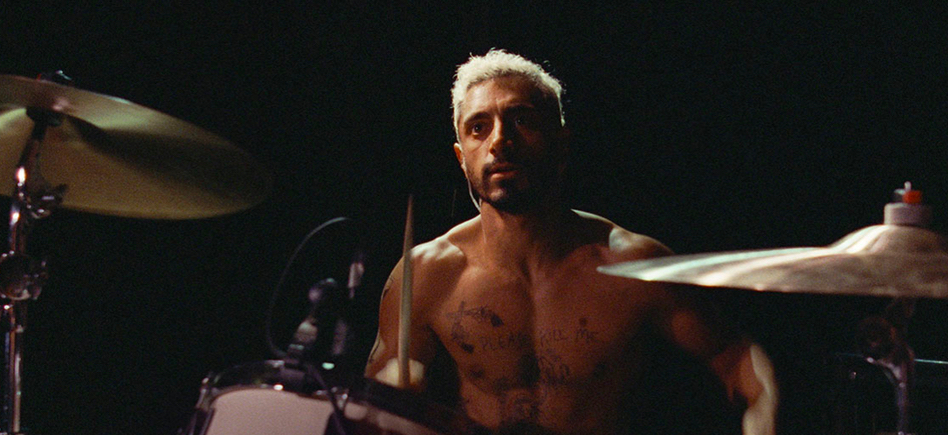
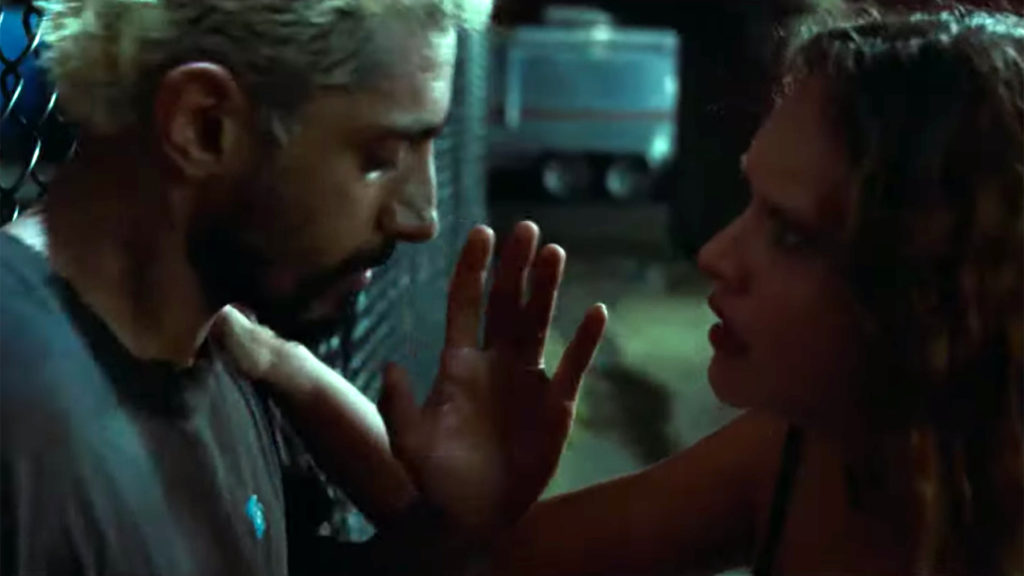
In Sound of Metal, Ruben (Riz Ahmed) is a heavy metal drummer who suffers immediate and severe hearing loss, complicated because he’s also an addict who has been clean for an uneasy four years. He and his guitarist girlfriend Lou (Olivia Cooke) have been barnstorming through a series of one-nght engagements in their Airstream RV. Ruben is emotionally devastated, and Lou, fearing his relapse, drops him off with drug counselor Joe (Paul Raci) at a twelve-step residence within an all-deaf community.
Ruben may not be using, but he may not be “in recovery”, either. His sobriety hangs on a scaffold of performance, Lou, healthy exercise and constant travel. When his musicianship is snatched away by hearing loss, he panics. The very idea of deafness paralyzes Ruben with terror.
Ruben cycles through denial, anger, bargaining, depression, escape and resistance. Will he get to acceptance and redemption? Joe tells Ruben that he needs to attain the ability to sit with himself in stillness, but Ruben wants anything but that.
Sound of Metal is a super intense ride, but there’s a payoff. The powerful ending is perfect. Director and co-writer Darius Marder follows Billy Wilder’s advice – don’t stick around.
Riz Ahmed’s totally committed and gripping performance as Ruben will likely garner him an Oscar nod. In thinking about his performance days later, I realized that Ahmed was convincing as Ruben played heavy metal, as he veered in desperation and as he mentored deaf children with gentleness and humor.
At one point, I said, “he’s acting just like an addict” seconds before Joe says something like “From where I sit, you’re acting like an addict“.
Olivia Cooke, so good in Me and Earl and the Dying Girland Thoroughbreds, is okay here as Lou. In the first part of the movie, she’s unrecognizable with unflattering bleached eyebrows.
Paul Raci, an actor who became fluent in ASL to communicate with his deaf parents, is just a perfect delight as Joe. I’m suspecting that this character actor/musician (he has a Black Sabbath tribute band) will get more movie work after this turn.
The French actor/director Mathieu Amalric is absolutely superb as Lou’s father. Amalric is a big deal actor who is cast in a lot of prestige films (The Diving Bell and the Butterfly), and I am usually indifferent to him. But here, he absolutely nails a character who is comfortable in his own skin, wise enough to discern what is going on with others less experienced than he and willing, with patience and gentleness, to let life play out. His character is a guy who probably hasn’t gotten to where he is by being kind, so his kindness is a choice.
The brilliant, Oscar-deserving sound design brings us to experience what Ruben can hear and not hear. Make sure that you watch this film on a system or device with excellent sound. Walter Murch will appreciate this movie (which is very high praise from me.).
Sound of Metal is one of my Best Movies of 2020. It is streaming on Amazon (included with Prime).
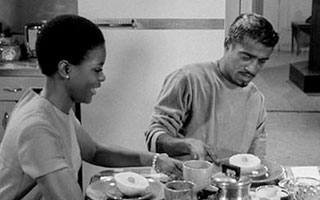
In the underappreciated 1966 drama, A Man Called Adam, Sammy Davis Jr. plays Adam, a self-destructive jazz star. Adam draws people in with his talent and charisma, and, racked by guilt, pushes away those closest to him with selfish and cruel behavior. You can catch A Man Called Adam on Turner Classic Movies on January 31.
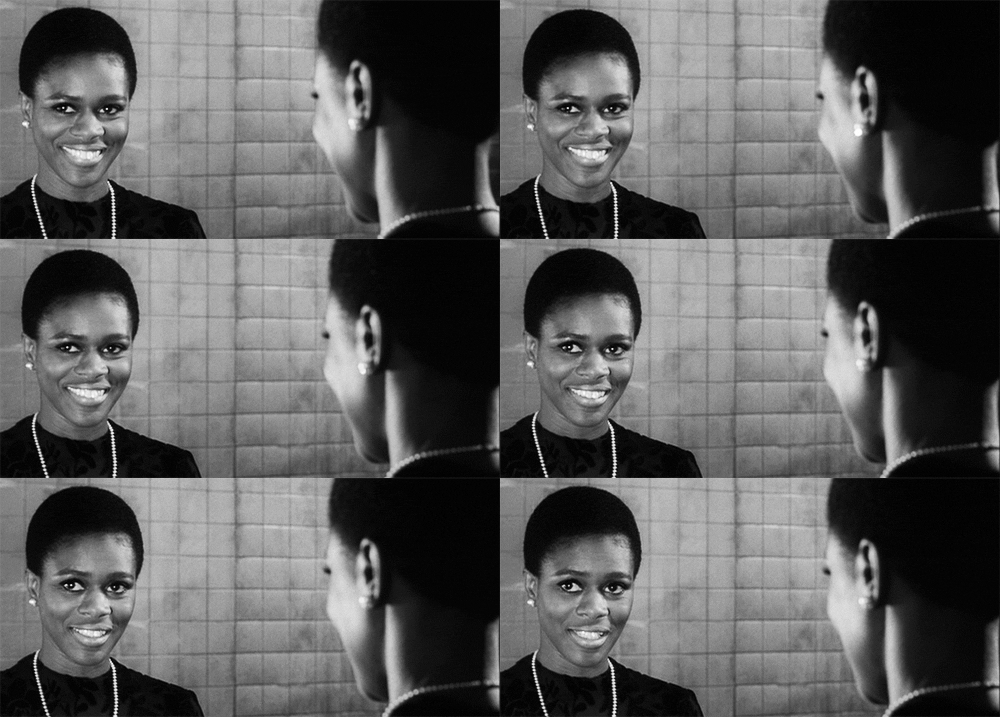
Claudia (Cicely Tyson) is drawn to Adam and tries to save him, anchoring herself in the roller coaster of his life. Remember that, after all the ups and downs, a roller coaster always ends up at the bottom.
Cicely Tyson in A MAN CALLED ADAM
Cicely Tyson, in her first credited movie role, is radiant. Two great speeches, in which she absolutely commands the screen, showcase her talent; you can tell that this is going to be a movie star.
While no Cicely Tyson, Sammy Davis, Jr., is excellent as the protagonist. This shouldn’t be so surprising, given that Sammy was an artistic savant, a dancing genius also known for his crooning. (And Sammy’s Rat Pack pals Frank Sinatra and Dean Martin were good movie actors, too, when they wanted to be.)
I also strongly recommend the insightful documentary Sammy Davis, Jr.: I’ve Gotta Be Me, which reveals Sammy’s struggle to fit into each of the six decades of his entertainment career; it can streamed on Amazon (included with Prime), iTunes, Vudu, YouTube and Google Play.
American race relations figure large in A Man Called Adam. Adam faces hostile racist thugs in the South and experiences “vacationing while black” in the North. This is one of the few films that depicts tension between Northern and Southern Black Americans. We also get to here Adam use the racial slur ofay, a word I had seen in print but never heard anyone use in a spoken sentence.
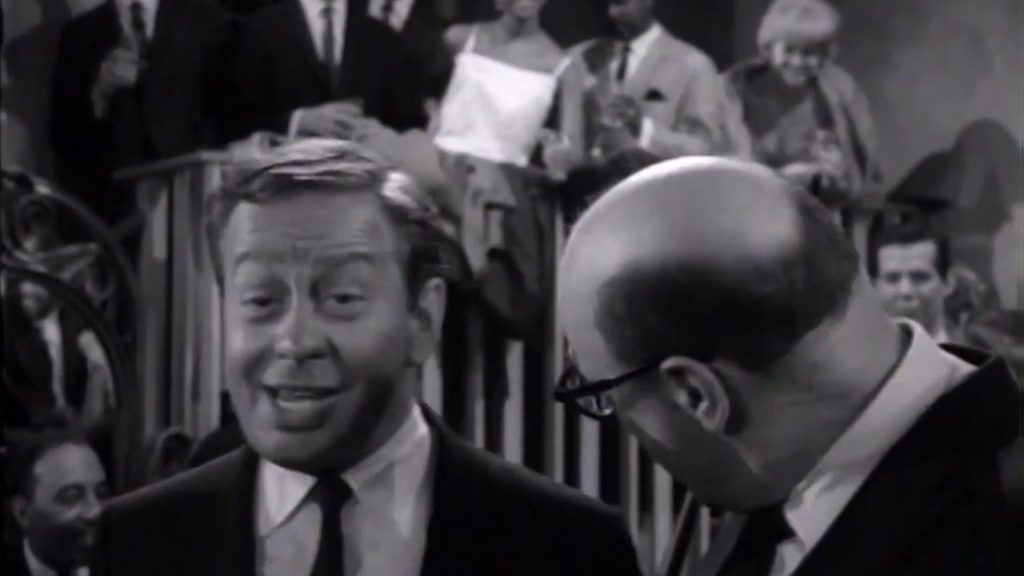
Mel Torme in A MAN CALLED ADAM
The jazz in the movie s good and Sammy looks credible as a musical prodigy. In real life, Sammy was a multi-instrumentalist who did perform with the trumpet. The best musical performance in A Man Called Adam is by Mel Torme, playing himself at an after-hours musicians party.
Rat Packer Peter Lawson plays a powerful gatekeeper of a booking agent; this role, a bitter, simmering guy who is ever ready to explode into a rage, seems written for Rod Steiger, and Lawson is no Steiger. Come to think of it, this is a rare role where Lawford is not asked to be debonair. (And where are those “debonair” roles today for actors like Lawford, David Niven, Charles Boyer or Roger Moore?)
Louis Armstrong plays an old time musician, and he’s really, really good as an actor. Frank Sinatra, Jr., is OK as Adam’s goofy protege. The great Ossie Davis plays the guy who tries to warn Claudia off Adam. Lola Falana appears in her screen debut. An uncredited Morgan Freeman is a party guest – right after the Mel Torme song and before Mel tries to get Adam to play, look for a guy with a cigarette, in conversation along the back wall.
A Man Called Adam was directed by prolific television director Leon Penn in his only big screen credit. Penn (father of actors Sean Penn and Chris Penn) deploys especially inventive camera placements and makes excellent us of use of closeups. From its setting in the jazz world to the portrait of Adam’s relationship carnage, A Man Called Adam is always realistic.
Penn’s direction really elevates this movie, as does Tyson’s performance. I saw A Man Called Adam, a bit of a lost film, on Turner Classic Movies. It’s not streamable, but you can find the DVD on Amazon and eBay.