DON’T LOOK UP: hilarious satire or…?

Photo caption: Jennifer Lawrence and Leonardo DiCaprio in DON’T LOOK BACK. Courtesy of Netflix.

In the wickedly funny Don’t Look Up, filmmaker Adam McKay and a host of movie stars hit the bullseye as they target a corrupt political establishment, a souless media and a gullible, lazy-minded public.

The satire begins when an astronomy grad student (Jennifer Lawrence) discovers a new comet, and her professor (Leonardo DiCaprio) calculates that it will certainly strike Earth in 6 months and 14 days. This is a very big comet, so the scientists have pegged it as an “extinction level event”. In other words, the approaching calamity is apocalyptic enough to rule out any post-apocalyptic movies.

They get an immediate audience with the President (Meryl Streep), and they expect that their news will trigger an urgent, globally-coordinated effort to deflect the comet before it can end life on Earth. That rational and responsible response is not what they get. (Then again, you wouldn’t expect that vaccinating everyone against a deadly pandemic would be controversial, either.)

Instead, they find a public consumed with celebrity fluff and eager to turn any substantive conversation into tribalism. And a very greedy capitalist, who steers the US response into the ultimate example of privitization.

The media is represented by Cate Blanchett and Tyler Perry as the hosts of a popular television infotainment show. Expert in cynically dumbing down every subject, Blanchett and Perry are hilarious every time they are on-screen. Never sexier in a movie, Blanchett also gets to play a sexually voracious social climber (“I’ve slept with two former Presidents“).

McKay’s takedown of the media includes a televised meltdown worthy of Paddy Chayefsky’s Network.

Other comic highlights:

  • Mark Rylance as a tech billionaire, kind of a worst case cross between Steve Jobs and Elon Musk. He bullies his way through every situation with a forced confidence (although mere mortals in his presence are advised “not to make eye contact and to avoid negative facial expressions”).
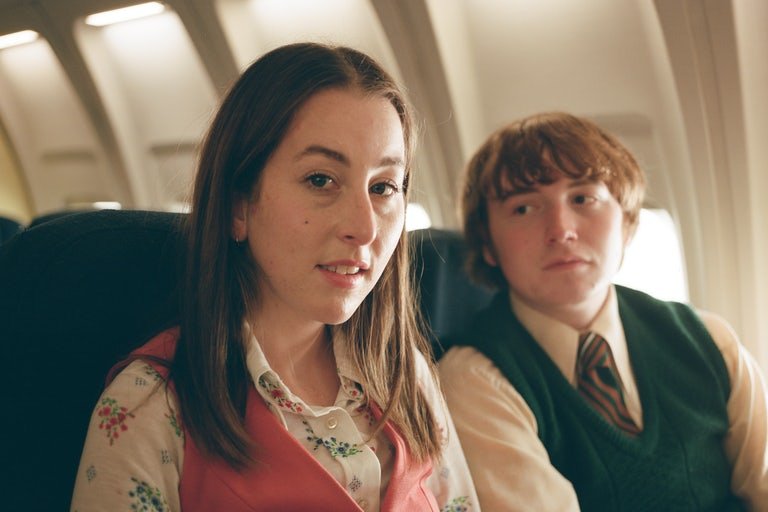
  • Noah Hill as the President’s son, Chief of Staff and Brat-in-Chief. This is what the Trump kids would be like if they were witty. ‘You’re the working class, and we’re the cool rich.’
  • Ariana Grande as a vacant pop diva who is ultra savvy about social media.
  • Lawrence’s grad student just can’t get over a general’s (Paul Guilfoyle) scam with snacks.
  • Melanie Lynsky plays the astronomy professor’s long-suffering wife, and no one throws off a muttered killer line better than Lynsky.

In The Big Short, McKay took us inside the subprime mortgage scam. His genius was in taking the story of guys in front of their computers figuring out the current and future values of other people’s home mortgages. – and turning it into an edge-of-your-seat thriller. Watching The Big Short, we laugh, and then we get mad.

Don’t Look Up is very funny but is it a somber prophecy in the clothes of a comedy? It’s very plausible that everything really would happen this way. In fact, the human response to Climate Change IS NOW happening this way (although it will take more than six months and 14 days to end life on the planet). And our rocky test drive with COVID does not inspire confidence, either.

This one of the Best Movies of 2021. I saw Don’t Look Up in a theater, but it will be streaming on Netflix beginning December 24.

Cate Blanchett and Tyler Perry in DON’T LOOK BACK. Courtesy of Netflix.

KURT VONNEGUT; UNSTUCK IN TIME: when tragedy begets humor

Kurt Vonnegut: Unstuck in Time” Review – Music City Drive-In
Photo caption: Filmmaker Robert Weide and Kurt Vonnegut in KURT VONNEGUT: UNSTUCK IN TIME. Courtesy of IFC Films.

Kurt Vonnegut: Unstuck in Time is an uncommonly rich biodoc of the social critic/humorist/philosopher Kurt Vonnegut. Most importantly, there’s a heavy dose of Vonnegut himself, which is very entertaining because Vonnegut was so damn funny.

All of the Vonnegut is because filmmaker Robert Weide, early in his career, began to make this documentary of his literary hero, with Vonnegut’s participation. The film had to be paused and restarted several times, mostly due to the usual indie film obstacle of funding. Finally, Weide became very successful as the producer and director of Larry David’s Curb Your Enthusiasm and didn’t have the time to finish. As a result, Weide collected hours of filmed interviews with Vonnegut in different decades.

Over the years, Weide and Vonnegut developed a personal friendship that facilitated even more access and allowed Vonnegut to be even more forthcoming.. Weide filmed Vonnegut in visits to the homes in which he had pivotal experiences (including the one where he found his mother after her suicide on Mother’s Day).

In Unstuck in Time, Weide adds lots of file footage and interviews with all of Vonnegut’s kids (he sired three and raised his sister’s four sons).

(Incidentally, Vonnegut’s hometown is Indianapolis, which has embraced him posthumously to the extent there is a multi-story Vonnegut mural in downtown Indy.)

Vonnegut’s anti-war attitude came out of his especially horrific experiences in WWII, and he had his share of peacetime family tragedies. But I need to emphasize that Unstuck in Time is anything but grim because of Vonnegut’s humor. Kurt Vonnegut: Unstuck in Time is in some art house theaters and streaming on Amazon and AppleTV.

LISTENING TO KENNY G: derision, devotion and a hard-working guy

LISTENING TO KENNY G. Courtesy of HBO.

Listening to Kenny G is director Penny Lane’s surprisingly revelatory biodoc of smooth jazz icon Kenny G. Lane chose Kenny G as a subject to focus on the dramatic and passionate conflict of opinion about his music. Kenny G has sold over 75 million albums and has millions of fans, many of whom have gotten married to his music. The consensus of music critics and academics, however, is that his music is insipid, shallow, commercial crap.

It turns out that Kenny G and his critics may disagree about whether it is Good Music or Bad Music, but not on the underlying facts that Kenny G isn’t trying to challenge listeners, to express ideas or to engage in any cultural conversation. He is just trying to be very technically proficient and to make people feel good, especially relaxed and romantic.

We spend a lot of time with Kenny G, a nice guy who is very comfortable in his skin. He doesn’t show the least bit of bitterness toward those who spew torrents of bile at his work. Kenny G, who comes from the any publicity is good publicity school of public relations, is the perfect subject for a documentary film, very accessible, open and transparent. What you see is what you get. And he gladly points out the moments that he got lucky.

Listening to Kenny G works – even if you have zero interest in Kenny G – because of the Penny Lane’s imaginative approach. Lane (Our Nixon, Hail Satan?, NUTS!) has become one our funniest and most trenchant documentarians. Just watch the faces of the critics as they try to express, in a socially acceptable way, their views of Kenny G’s music.

Near the beginning, Lane asks Kenny G what he loves about music and gets this UNEXPECTED answer: “I don’t know if I love music that much. When I listen to music, I think about the musicians and I just think about what it takes to make that music and how much they had to practice.”

What Kenny G DOES love is doing something very well. His need to be the very best, without a bit of self-consciousness, drives him to work relentlessly at his skill on the saxophone – and at golf and aviation.

And here’s something I didn’t know: Kenny G’s Going Home from the Kenny G Live album has become the unofficial national closing song for businesses in China; every day, the song is looped over and over for the final half hour or so that businesses are open.

Listening to Kenny G is streaming on HBO. I highly recommend the 32-minute interview with director Penny Lane in HBO’s Extra Features.

BENEDETTA: a mystery of belief, made scandalous

Photo caption: Daphné Patakia (second from left), Virginie Efira (center) and Charlotte Rampling (right) in BENEDETTA. Courtesy of IFC Films.

Benedetta is Paul Verhoeven’s extraordinary film about belief, embedded in scandalous Renaissance history.

Let’s get right to the scandalous part, which has earned Benedetta notoriety since its premiere at Cannes. As a filmmaker, Paul Verhoeven has proven himself to be an enthusiastic provocateur with the lurid Basic Instinct and Showgirls and the more mature (and still subversive) Elle.

So, everybody expects something outrageous from Verhoeven, but, in Benedetta, he plunged right past naughty to sacrilege – two nuns pleasuring each other with a figurine of the Virgin Mary adapted into a dildo. I had originally titled this review “two nuns, a dildo and the Black Death“.

But Benedetta is really a highly entertaining parable, albeit a cynical one, about belief and class. Here’s the story.

It’s the early 1600s in Tuscany, and Benedetta, the precocious and spirited eight-year-old daughter of a rich family (more on that later) enters a convent. Even as a child she attracts strange happenings, which could be miracles or coincidences. She grows into a talented young woman (Virginie Efira of Sibyl). With a gift for performance and her education, she becomes indispensable to the abbess (Charlotte Rampling), whether as the star of religious pageants or in keeping the convent’s books.

When the earthy and saucy Bartolomea (Daphné Patakia) joins the convent, the two become secret lovers.

Benedetta starts having more intense visions – visions of a very tangible Jesus. She starts speaking in a male register, as if possessed by Him. Then she develops stigmata. Holy moly!

Are these real miracles on earth produced by God – supernatural events that result from sincere faith? Or are they a hoax, dishonestly manufactured by Benedetta for her own benefit? Or is she experiencing delusions, hallucinations and disassociation due to what we understand today as a mental disorder?

The canny abbess (Rampling) and the provost (Olivier Rabourdin) the town’s chief religious leader, both from the educated upper class, disdain any possibility of miracles here, but cynically choose to accept the financial benefits of their very own destination for pilgrims. The parish priest, mindful of his superiors’ authority and the new money, turns a blind eye. It’s established early in Benedetta that the convent is run on money, not only on devotion, and that the hierarchy of the Church is entirely corrupt. Unfortunately for the locals, the papal nuncio to Florence (Lambert Wilson) gets wind of the possible chicanery, and he won’t be made a fool of.

Of course, people tend to believe what conforms to their own narratives. In Benedetta, belief in the supernatural is presented not as faith, but as superstition – and it runs along class lines. Benedetta, the abbess, the provost and the nuncio are privileged to have been born to wealth, which brings education and power. The townspeople and the nuns from humble backgrounds are ignorant and gullible – why wouldn’t God appear in my time and my town?

Bartolomea is most assuredly from among the ignorant and powerless, but, between orgasms, she sees what is happening with her own eyes.

Benedetta is based on Judith C. Brown’s book Immodest Acts: The Life of a Lesbian Nun in Renaissance Italy. Benedetta Carlini, Sister Bartolomea, Father Ricordati and the papal nuncio Alfonso Giglioli are real historical characters. Benedetta and Bartolomea’s sexual liaison, Benedetta’s claims of stigmata and supernatural visions and the Plague in northern Italy all really happened. Verhoeven took some liberties with the ending (and the dildo).

Verhoeven sure lets us know that we are in 17th Century Italy. A hundred years before, Michelangelo and Brunelleschi may have been changing the world’s culture 45 miles away in Florence, but this is still an age where the Church can have someone burned at the stake. This is a world of the bubonic plague, roving bands of mercenary brigands, self-flagellation by the devout and horrific (off-screen) torture.

One of the pleasures of Benedetta is the medieval and Renaissance music on the soundtrack.

There isn’t a bad performance in Benedetta. I gotta say that Charlotte Rampling remains one of my favorite screen actors, with her eyes ranging from the most piercing to the saddest and most knowing. Benedetta is far from her most transgressive film, having starred in The Night Porter (1974). Rampling has delivered some of her most powerful work in the past decade: 45 Years and The Sense of an Ending.

Ever the carnival barker, Paul Verhoeven draws an audience into the tent with over-the-top sex and sacrilege for a thoughtful exploration of faith and superstition. Benedetta is now in a few art house theaters.
C’MON C’MON: parenting, even an adorable kid, is hard

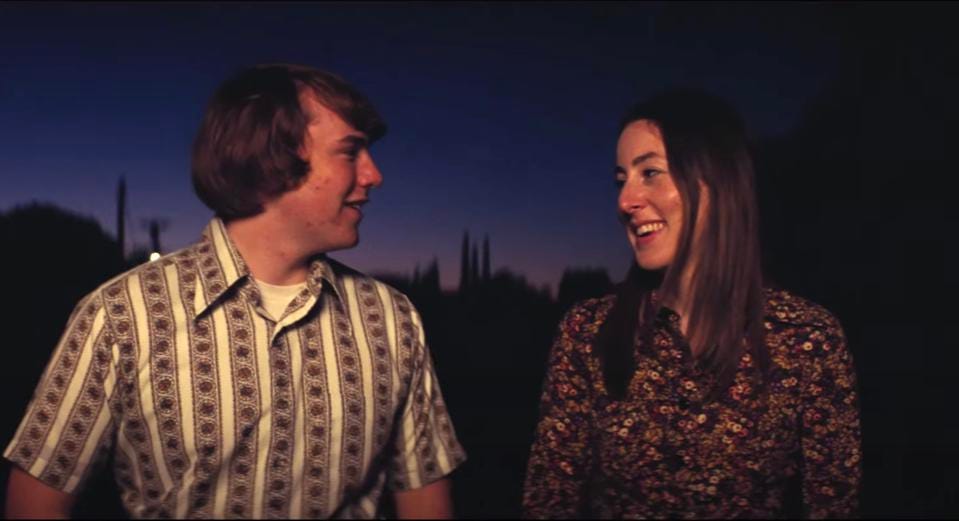
Photo caption: Joaquin Phoenix and Woody Norman in C’MON C’MON. Courtesy of A24.

In the charming and authentic C’mon C’mon, Joaquin Phoenix plays a well-intentioned, emotionally intelligent guy who gets an immersion course in parenting.

Phoenix plays Johnny, an NPR-style radio journalist whose current project is interviewing children, getting their views on their world, their parents and our future. Johnny is really good with his subjects, but he is not responsible for the 24/7 welfare of these kids.

His Los Angeles sister Viv (Gaby Hoffman) has to deal with an out-of-town emergency, so she asks Johnny tocome from New York and watch her nine-year-old son Jesse (Woody Norman) for a couple days. The emergency becomes extended, and Johnny takes Jesse back home to New York with him, and then on an assignment in New Orleans.

Fortunately, Jesse enjoys using Johnny’s professional sound equipment for recording the ambient sounds of Venice Beach’s Ocean Front Walk, a skate park, the bustling NYC streets, Central Park and a New Orleans street parade.

But Jesse’s life has been disrupted, and Johnny learns that parenting a kid whose life has been disrupted is hard. Jesse may be just a kid, but he’s more than a match for Johnny.

C’mon C’mon is written and directed by Mike Mills, who makes a feature film every five or so years: 2005’s Thumbsucker, 2010’s Beginners (Christopher Plummer won a Supporting Actor Oscar) and 2016’s 20th Century Women (Mills was nominated for a screenwriting Oscar). I wish his movies came more often. Mills is interested in making films for adults about inter-family issues.

Joaquin Phoenix is utterly believable as this well-intentioned and sympathizing character. Phoenix has never been more relatable. One critic had even described him as “endearing” (Joaquin Phoenix?) and, surprisingly, that adjective fits.

Woody Norman, a kid absolutely brimming with personality, plays Jesse.

Gaby Hoffman is excellent in a far less neurotic role than the ones she often gets; her Viv is a solidly competent working mom who is highly-stressed and then even more highly-stressed.

C’mon C’mon is playing in theaters.

HOUSE OF GUCCI: don’t wish, you may get it

Photo caption: Lady Gaga and Adam Driver in HOUSE OF GUCCI. Courtesy of MGM

Lady Gaga and Adam Driver shine in House of Gucci, a story of sordid behavior among the rich and famous, “inspired by true events”. Driver plays Maurizio, the feckless scion of the famed Gucci clan. Lady Gaga plays Patrizia, the humbly born striver who snares Maurizio as a husband. In filmmaker Ridley Scott’s telling, the conniving Patrizia molds the charmingly goofy naif into someone with the wherewithal to screw his relatives out of the business.

This is Shakespearean family treachery – and Patrizia will learn the price of turning someone into a cutthroat. Lady Gaga is once again (A Star Is Born) absolutely magnetic on-screen. Driver makes the character of Maurizio very, very interesting as he evolves into (almost) what Patrizia wants him to be.

The flashiest role – and performance – is Jared Leto’s as Maurizio’s cousin Paolo. Leto is physically unrecognizable in the role – chubby, with the hair of the The Three Stooges’ Larry Fine and corduroy suits of absurdly wide wale. In The House of Gucci, every other character explicitly and correctly describes Paolo as an idiot. Many critics have compared Paolo, as the family’ weakest link, to Fredo in The Godfather; however, John Cazale’s performance as Fredo brought subtlety that was not on the written page, and Paolo is written to be a full-out buffoon. Leto is very funny, though.

Al Pacino and Jeremy Irons are excellent as the Gucci generation that built the business. Pacino’s Aldo (Paolo’s father) is a shameless hustler and Iron’s Rodolfo (Maurizio’s father) has reinvented himself as a patrician recluse.

Although it’s a smidgen too long, I was entertained by The House of Gucci. But The Wife, even less tolerant of long running times than am I, was bored and disgruntled by what she saw as a lack of redemption.

(For some reason, I keep calling this movie “House of Pizza” after the legendary San Jose joint.)

House of Gucci is now in theaters.

THE POWER OF THE DOG: one man’s meanness and another man’s growth

Photo caption: Benedict Cumberbatch in THE POWER OF THE DOG. Courtesy of Netflix.

Set in 1925 on a vast Montana cattle ranch Jane Campion’s simmering drama The Power of the Dog is a portrait of a seething man and three pivotal relationships.

That man is Phil (Benedict Cumberbatch), who owns the ranch with his brother George (Jesse Plemons). Phil is a natural leader, quick-witted and verbal, with the cowboy skills and machismo to single-handedly castrate 1500 steers…without wearing gloves. He acts like he is living in 1870, but not out of ignorance – he was Phi Beta Kappa at Yale and has chosen his retro persona.

George has also been to college, but one senses that George didn’t have the intellectual curiosity to finish. George is quiet but not self-conscious about it. Comfortable in his own skin, he dresses like a prosperous 1925 businessman, even when on horseback. Phil has excitement, and George has decency.

There is no alpha in the brothers’ relationship. With all his overt masculinity- Phil defers to George socially and in business. Despite their contrasting personalities, they complement each other comfortably, and they even sleep in the same hotel bed.

Kirsten Dunst in THE POWER OF THE DOG. Courtesy of Netflix.

Phil is rocked when George suddenly brings home a bride, the widow Rose (Kirsten Dunst). (Dunst and Plemons are a couple in real life.) Phil reacts with a toxic campaign intended to inflict misery on Rose. He bullies her son and os so mean to her that she won’t even come down to dinner in her own house without her husband. Once capable of running an inn and restaurant, she is now shattered, hiding booze around the house so she can sneak self-medication, and she sinks into a puddle of drunkenness.

But Phil’s most pivotal relationship is with Rose’s teen son Peter (Kodi Smit-McPhee), who is sensitive, artistic and effeminate. From his first sighting of Peter, Phil unleashes a torrent of bullying with merciless hostility and incites the entire bunkhouse full of cowboys to join in. Peter’s life at the ranch becomes as filled with dread as his mother’s.

Campion doesn’t linger on the point, but Peter returns to the ranch from a year of medical studies, having developed a close friendship with another guy at school. Peter is much more self-confident, and then he discovers one of Phil’s secrets. At this point, the scales are tipped, and Phil and Peter’s interactions evolve into more of a duel. After all, Peter is the only character who is at least as smart as Phil. What happens is utterly unexpected.

The ending of The Power of the Dog is the ultimate irony – on multiple levels.

Benedict Cumberbatch and Kodi Smit-McPhee deliver two of the year’s finest performances. Benedict’s Phil is fundamentally mean, with a meanness driven from rage just below the surface, perhaps from self-loathing. Or, perhaps the rage is from Phil’s resenting that he has any vulnerability.

There is (hopefully) a time when each boy becomes a man. In the culture, we usually see this depicted physically, but it has more to do with developing a new psychological toughness than physical toughness. Late in the film, The Power of the Dog morphs into a singular coming of age story. Smit-McPhee’s performance as Peter finds his own mental and emotional power and takes psychological command is the key to The Power of the Dog’s success.

The Power of the Dog: Kodi Smit-McPhee on his breakout performance | EW.com
Kodi Smit-McPhee in THE POWER OF THE DOG. Courtesy of Netflix.

The entire cast is very good, including Keith Carradine, Frances Conroy (Six Feet Under), and Thomasin McKenzie (Leave No Trace, Jojo Rabbit, Last Night in Soho).

The Power of the Dog is directed by Jane Campion (The Piano), and Campion adapted the screenplay from the Thomas Savage novel.  Campion is a historic figure, the second woman to be nominated for a directing Oscar, the first to win the Palme d’Or; and a favorite of critics and cinephiles.  I have not warmed to her other work, except for the first season of the episodic series Top of the Lake, starring Elisabeth Moss.  But The Power of the Dog is a perfectly paced film, as the story builds from an exercise in dread into the unforeseeable.

The Power of the Dog is also a beautiful film, thanks to Campion and rising cinematographer Ari Wegner (Zola). I wouldn’t have suspected that New Zealand is standing in for Montana. Campion found enough dust and dry, yellow grassland in New Zealand to make it work very well.

The Power of the Dog has been in theaters and is now streaming on Netflix.

THE SOUVENIR PART II: her emotional recovery

Photo caption: Honor Swinton Byrne in THE SOUVENIR PART II. Courtesy of A24.

In The Souvenir Part II, writer-director Joanna Hogg continues the autobiographical story from her The Souvenir, where the young filmmaker Julie (Honor Swinton Byrne) has been devastated by the sudden death of her lover, which reveals that he was NOTHING that he had seemed to be. Part II follows Julie’s emotional recovery.

Grieving and shattered, Julie is consumed by investigating, Who WAS he, REALLY? The central question in this story is whether she be able to process the loss and get on with her life. And then, as she moves on, will she get to make her movie?

I called The Souvenir certainly…the most profoundly sad film of the year”. Part II is more relaxed and sometimes even funny (and less challenging to watch than the first film).

Hogg is a remarkably gifted filmmaker. Making use of static shots, and glimpsing characters through doorways and in mirrors, she frames each shot exquisitely. The most economical of storytellers, Hogg relies on a MINIMUM of exposition ithrough dialogue,and lets the audience pick up the story through the telling visual hints.

Honor Swinton Byrne’s quiet but powerful performance as Julie is exceptional. Her scene in a pub where Julie begins to connect with a sympathetic and supportive film editor (Joe Alwyn) is one of the year’s best.

Julie’s mom is played by Swinton Byrne’s mother, Tilda Swinton, who is flawless. Richard Ayoade shines as Julie’s most talented and temperamental classmate.

You don’t need to have first watched The Souvenir to appreciate The Souvenir Part II. Part II is playing in theaters, but won’t be for long.

THE HARDER THEY FALL: forgettable Old West shoot ’em up, but with soul

Jonathan Majors and Zazie Beetz in THE HARDER THEY FALL. Courtesy of Netflix.

The Harder They Fall is a neo-spaghetti western, pretty much like Quentin Tarantino’s The Hateful Eight, except that all the gunslingers are of African ancestry. As in Taratinoesque film, there is lots of bloody violence prefaced by clever speechifying.

Technically, this is a revenge film, with a heinous act in the opening scene sure to to be avenged in the last. But it’s really an excuse for some of the finest Black screen actors (Regina King, Idris Elba, LaKeith Stanfield, Delroy Lindo) to don cowboy gear and engage in the Western genre.

The protagonist is played by Jonathan Majors, who broke through in The Last Black Man in San Francisco, and it’s great to see him leading a Hollywood movie. Because I don’t watch much TV, I’m late to the party in recognizing Zazie Beetz as a compelling screen presence; man, she’s a force.

Deon Cole (Blackish, I’m Fine, Thank You or Asking) so good in broadly comic roles, gets to show off his dramatic chops.

There is plenty of humor sprinkled throughout and one LOL moment when the protagonists ride into a White Town. That joke is an homage to one in Blazing Saddles.

There’s nothing original about The Harder They Fall except for the all-Black cast. There’s nothing memorable about it, either – just 2 hours and 19 minutes of amusing shoot ’em up with some really excellent actors.

The Harder They Fall is streaming on Netflix.

JULIA: cooking right through the glass ceiling

Photo caption: Julia Child in JULIA. Courtesy of Sony Pictures Classics.

The charming documentary Julia is an affectionate but clear-eyed portrait of the iconic Julia Child. Child became a best-selling author and TV star in her fifties; besides outlining her importance, Julia tells the unlikely story of how she got to that point.

Indeed, one of the most remarkable aspects to Julia Child was how she broke through every expectation of her gender, class and upbringing. She was liberated by WW II, which gave her the chance to reject the societal limitations of her background.

To mark her impact, Julia shows us both pre-Julia educational TV and pre-Julia American cuisine (think TV dinners and jello salad).

Julia is very well-sourced and based on no fewer than THREE books. We get to hear from some of Julia’s family and friends, and a slew of celebrity chefs.

Julia highlights Julia Child’s life-changing first French meal – sole meunière at La Couronne in Rouen. Through TripAdvisor, I found the restaurant online, and it still offers the dish on a Julia Child menu.

Julia was directed by Julia Cohen and Betsy West, the team behind the excellent Ruth Bader Ginsberg biodoc RBG. Julia is now playing in theaters.