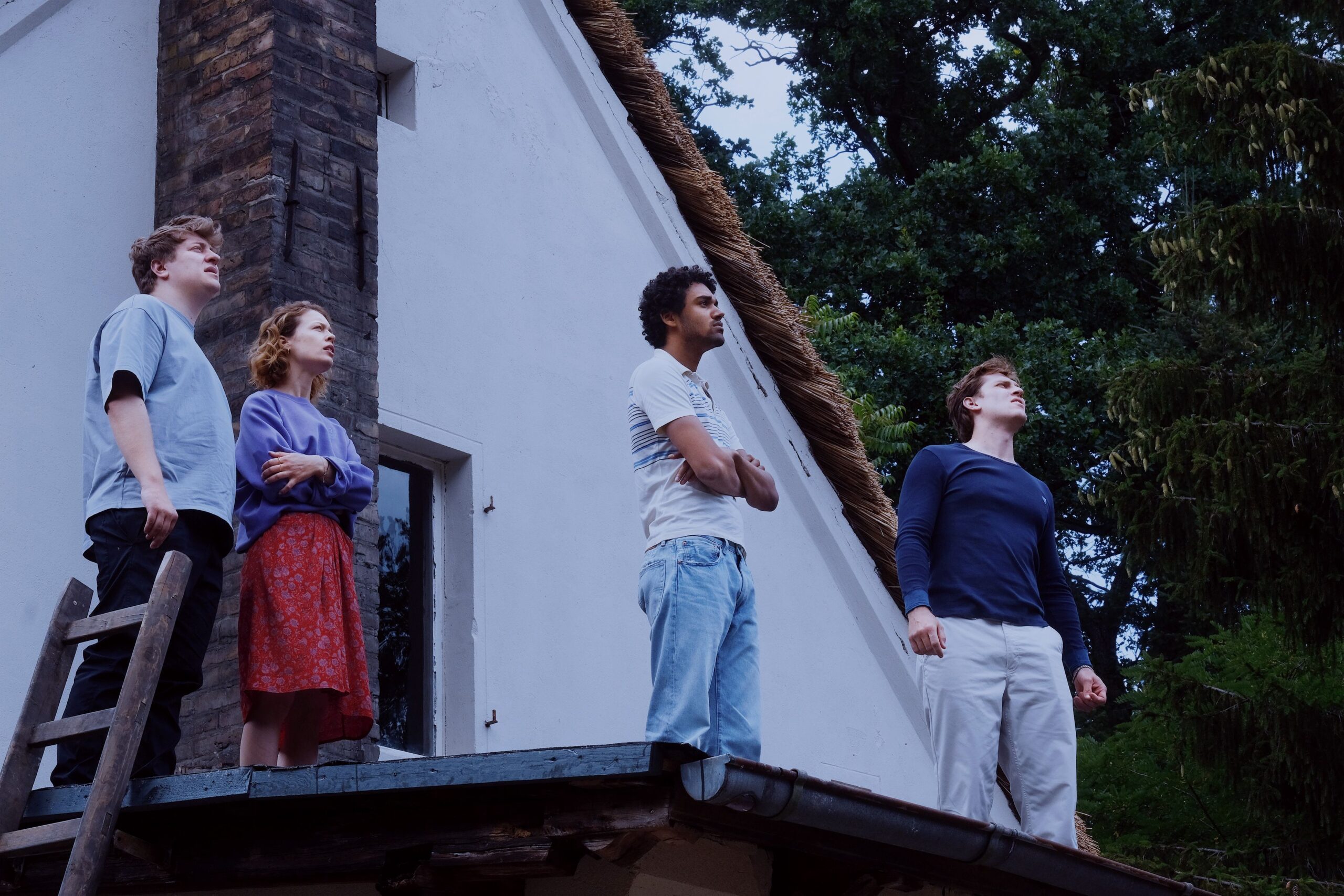
NO HARD FEELINGS: an amusement with Jennifer Lawrence

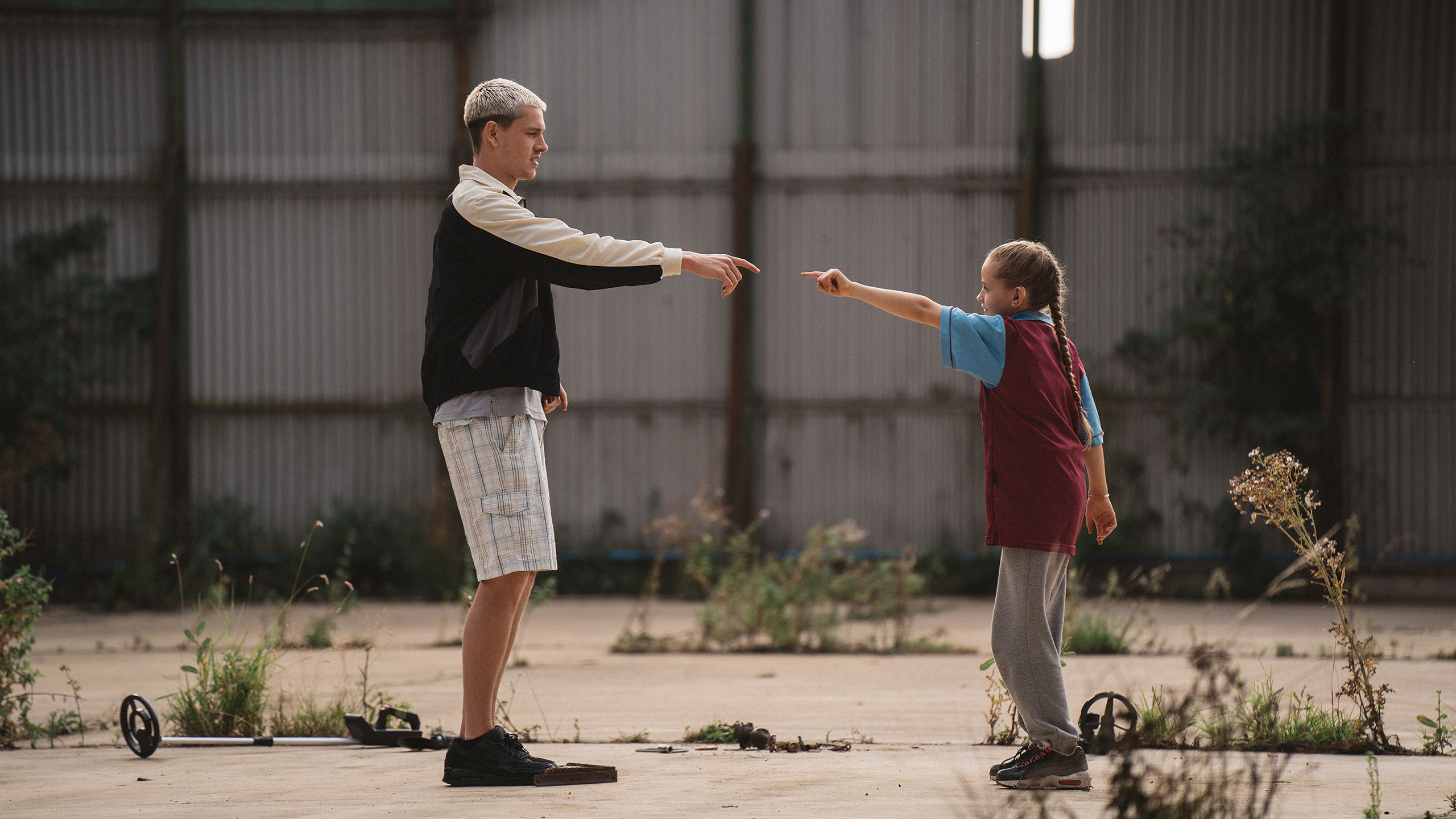
Photo caption: Jennifer Lawrence and Andrew Barth Feldman in NO HARD FEELINGS. Courtesy of Sony Pictures.

In the comedy No Hard Feelings, the summer season is beginning in Montauk, and the introverted rich kid Percy (Andrew Barth Feldman) is slated to enter Princeton in the fall. His over-protective and intrusive parents worry that his social immaturity will stunt his future, so they hire a financially strapped Uber driver/bartender (Jennifer Lawrence) to date him and get him out of his shell – essentially to take his virginity for a used Buick Regal.

Of course, it’s absurd that Jennifer Lawrence would have 103 minutes of difficulty in seducing a high school senior, and part of the fun is in suspending disbelief. It all makes for good, dirty fun, and No Hard Feelings is an amusing diversion because of Jennifer Lawrence.

After her stunning dramatic debut in Winter’s Bone, Lawrence has shown a gift for comedy in Silver Linings Playbook, American Hustle and Don’t Look Up, establishing that she can soar in wise-cracky role. She cracks wise here, too, and also shows off a gift for broad physical comedy in bits like climbing concrete stairs on roller skates.

Lawrence has achieved fame and fortune from eight fantasy movies as Katniss and Raven, respectively, in the Hunger Games and X-Men franchises. She has recently voiced her desire to return to human-scale stories, and No Hard Feelings is one of these, along with the much better Don’t Look Up and Causeway. Good for her.

No Hard Feelings skewers helicopter parents and the invasion of rich outsiders pricing the locals out of their hometowns. Matthew Broderick and Laura Benanti are excellent as the parents, and Broderick’s rich guy haircut is priceless.

The Wife and I laughed together at some scenes; she laughed at some others and I laughed at some more. I liked the movie more than she did, but neither of us complained about wasting an hour-and-a-half of our lives. We talked about it on the way to dinner, and I haven’t thought about it since.

Co-writer and director Gene Stupitsky wrote for the American version of The Office, earning some Emmy nominations, so he is capable of better comedy than this, I’m not embedding the trailers because both the Sony red band trailers make No Hard Feelings look like a very stupid teen comedy and, although it has elements of that type, it’s much better that that overall.

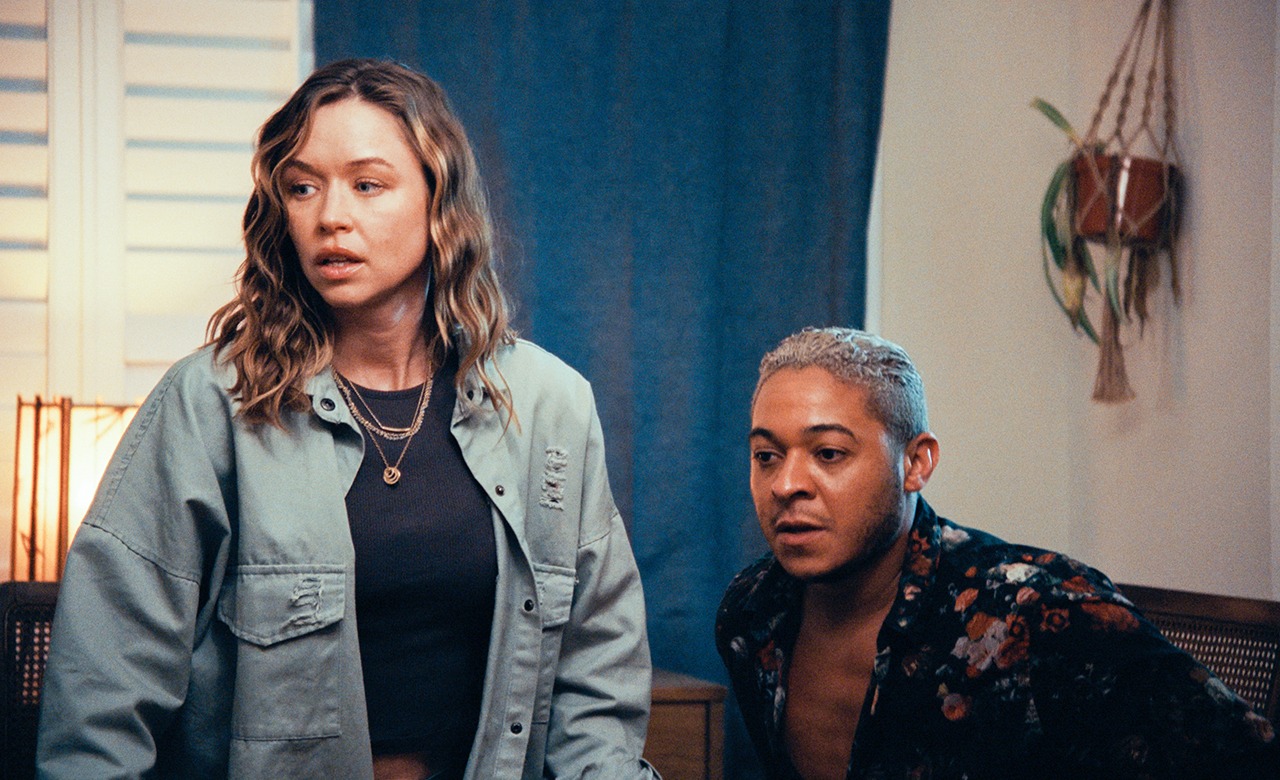
Photo caption: Jennifer Lawrence in NO HARD FEELINGS. Courtesy of Sony Pictures.

TETRIS: corporate thriller amid communist collapse

Photo caption: Taron Egerton in TETRIS. Courtesy of AppleTV.

Tetris, the story of the race for the rights to the video game, is an entertaining corporate thriller.

Taron Egerton (unrecognizable from Rocketman) plays Henk Rogers, a small-time entrepreneur who is betting everything on snaring the rights to Tetris for Nintendo. As written and as played by Egerton, Henk Rogers is an ever-earnest hustler (in the best sense), with a Ted Lasso-like moral core. Rogers is plunged into a competition where the other players, a seasoned software merchant and a British billionaire, have no compunction about cheating.

To complicate things, the video game rights are owned by the government of the USSR, which is in the throes of imminent collapse. It’s unclear who can ink the deal for the Soviet state, which always moves with cumbersome suspicion and xenophobia. Here, the Soviets don’t really appreciate the value of Tetris, but they know it’s valuable and are desperate not to be taken by Westerners.

Egerton is good, and benefits from vivid supporting performances by Robert Allam as Robert Maxwell, the blustering magnate on the precipice of financial collapse, Igor Grabuzov as a menacing wannabe oligarch and the ever-reliable Toby Jones as a crooked competitor.

It’s a fun watch. Tetris is streaming on AppleTV.

BODY PARTS: on-screen sex from the female gaze

Photo caption: A scene from BODY PARTS. Courtesy of Shout! Studios.

The documentary Body Parts is about moviemaking and sex – and from a female point of view. That is, of course, overdue because we’ve had a century of movies greenlit, financed and made by men, operating from a male perspective and generally without accountability. Of course, movies have always reflected our society and culture. How movies have been made – and how they’re being made now – is fascinating stuff. Especially the sex part.

With Body Parts, director Kristy Guevara-Flanagan and producer Helen Hood Scheer have created an impressively comprehensive survey of history and current practices. We get unflinching looks at titillation and exploitation, the casting couch and worse (Harvey Weinstein). And there are fascinating, behind the scenes procedurals on the filming of scenes of sexual intimacy, including the new deployment of intimacy coordinators in filmmaking.

Jane Fonda leads a brigade of actress talking heads who share their experiences. Of course, Fonda is an Oscar-winning movie star and a feminist icon. But before that, she was a starlet in an age where there were essentially zero women’s voices in filmmaking. While the Production Code was still in its final days in the US, she was acting in European films that were free of those restrictions, but before the women’s liberation movement had traction. Fonda’s candor (and ruefulness) adds important perspective to Body Parts.

On IMDb’s User Reviews, one perceptive contributor has noted that “men are giving this an average rating of 5.8 while women are averaging an 8.3.” I understand why women love Body Parts, but not why some men don’t. It’s decidedly not a screed, and, as a man, I didn’t find it at all scolding, threatening or unpleasant.

I screened Body Parts for the SLO Film Fest. Body Parts is streaming on Amazon, AppleTV, Vudu and YouTube.

THE EIGHT MOUNTAINS: two men, each finding himself

Photo caption: Cristiano Sassella and Lupo Barbiero in THE EIGHT MOUNTAINS. Courtesy of Janus Films.

The sweeping Italian drama The Eight Mountains is a mesmerizing exploration of of male friendship and self-discovery. Pietro is the 11-year-old son of a successful engineer in bustling, industrial Turin. When his parents rent a summer apartment in a tiny village high in the Italian Alps, he meets the only local child, Bruno, also an 11-year-boy. The two become inseparable and forge the profound, lifelong bond that can only come from a friendship you are lucky enough to make in childhood.

Each summer, the two cavort together in the mountains. Pietro’s father (Filippo Timi), a force nature, revels in climbing the local mountains and brings the boys along, not afraid to challenge them with a treacherous cliff or a bottomless abyss.

In contrast to Pietro’s, Bruno ‘s family shows him neither warmth nor affection, and values him only for his manual labor. Pietro’s parents generously offer to take in the teenage Bruno so he can realize his potential, but Bruno’s ignorant and selfish father nixes the arrangement.

There’s a pause in their relationship as each man grows as a man. A family event draws Pietro (Luca Marinelli) and Bruno (Alessandro Borghi) back together as adults. Bruno is committed to living in his mountains. Pietro has been drifting, an undisciplined wannabe writer, but he, too, is drawn to the mountains where he spent the best days of his youth with Bruno. As Neil Young sang, “All my changes were there”. Both men are sons of Pietro’s father, one literally, and both chase the father’s dream in their individualistic ways.

The Eight Mountains is a remarkably genuine portrait of a masculine friendship, between boys and then between men. It captures the way such a friendship can resume instantly after a years-long pause. And it authentically depicts how male friends can communicate without verbalizing.

This story of two men’s individual growth and common friendship over 30 years, an intimate and tightly focused human story, is juxtaposed against an epic setting. The scenes of mountaineering in the Italian Alps are stunning enough, and then part of the story moves to the Nepali Himalayas.

Directors Felix van Groeningen and Charlotte Vandermeersch adapted the screenplay from a novel by Paolo Cognetti. I am getting very grumpy about movies that are too long, and I was skeptical of The Eight Mountains’ 2 1/2 hour duration (even vowing beforehand to walk out if it became a slog).  But the story really does take that long to unwind, and I’m glad that van Groeningen and Vandermeersch didn’t rush it.

The Eight Mountains is playing in select arthouse theaters. I’ll let you know when it becomes more widely accessible.

THE ROUNDUP: NO WAY OUT: a loveable lug with a gift for the one-punch knockout

Photo caption: Don Lee as Detective Ma in THE ROUNDUP: NO WAY OUT. Courtesy of Capelight Pictures

Sometimes we just need an unapologetic gene movie, and the Korean action comedy The Roundup: No Way Out is just that. Our burly hero, detective Ma Seok-do (Don Lee), is a loveable lug with a gift for the one-punch knockout. Ma is also the smartest cop on the force and must suffer the fools around him. But it’s his singular physicality that makes for bull-in-the-china shop mayhem when he is forced into violence.

The Roundup: No Way Out is the third movie in the Detective Ma franchise, following The Outlaws (2017) and The Roundup, Korea’s #1 hit film of 2022.

Don Lee (right) as Detective Ma in THE ROUNDUP: NO WAY OUT. Courtesy of Capelight Pictures

I think that much of Detective Ma Seok-do’s appeal is that, as determined as he is to get the bad guys, he doesn’t have any of the meanness, bitterness or alienation of a Dirty Harry-type cop hero. Interestingly, the character’s name resembles Don Lee’s non-stage name, Ma Dong-seok.

The plot of The Roundup: No Way Out involves the interruption of a designer drug deal, which results in two gangs racing the cops to find a missing $30 million drug stash. Each villainous gang leader villains is more ruthless and cruel than the last. This time, for a little added umami, one of the gangs is from Japan.

The charm of The Roundup: No Way Out is that it doesn’t take itself too seriously. There are no deep themes to explore here and no message – just an amiable protagonist, some laughs and almost non-stop action.

CHILE ’76: simmering suspense

Photo caption: Aline Kuppenheim in CHILE ’76. Courtesy of Kino Lorber.

Chile ’76 is a masterfully understated thriller set in the first days of Pinochet’s coup in Chile and the resultant reign of terror.

Carmen (Aline Kuppenheim), the wife of a prosperous Santiago physician, is away at the family’s beach house when she is approached by the small coastal town’s priest. Knowing that she has medical training, the priest asks her to secretly nurse a young man (Nicolás Sepúlveda) with a gunshot wound. The priest says that he is hiding the young man because he had become a petty criminal through hard luck and deserves a break; but Carmen is savvy enough enough to know that the young man must be a leftist who is hunted by Pinochet’s secret police. To care for the young man would be taking a grievous risk. If discovered, the consequences for Carmen, and perhaps for her family, would be unspeakable.

Carmen embraces the risk, and the tension simmers. The audience follows her, knowing that her secret could be uncovered at any moment. All the time, she is carrying on the appearance of a privileged matron, directing servants and focused on interior decorating and the children’s birthday cakes.

Chile ’76 is the first feature for director and co-writer Manuela Martelli. What Martelli achieves in Chile ’76 is a remarkably subtle suspenser, without jump scares or on-screen violence. Instead, Martelli builds tension in the minds of the audience, as we wonder if her phone is tapped and if she is being followed. Carmen’s each chance encounter becomes more sinister. Even the meticulous tissue wrapping of new store-bought shoes is chilling. Without seeing it, we are ever conscious of the horrors of merciless repression.

Aline Kuppenheim and Nicolás Sepúlveda in in CHILE ’76. Courtesy of Kino Lorber.

Aline Kuppenheim is excellent as Carmen, a cipher who seems so confident in her role as affluent doctor’s wife and grandmother. She likes her cigarettes and a drink, and lets others lead the cocktail party banter. Her family takes her presence for granted and would never suspect her of going on a potentially deadly secret mission.

So, why is Carmen doing this? There are clues. Although she is not overtly political, she doesn’t embrace the rightwing sentiments of her peers. She is a bit of a do-gooder, volunteering to read to the vulnerable. Because of her gender, she wasn’t able to choose a career more important (or dangerous). The answers are behind Carmen’s impassive affect. Still waters run deep.

Chile ’76 is all about how Kuppenheim’s Carmen navigates her situation. In deciding “where to look from”, Martelli says that she and cinematographer Yarará Rodríguez adopted a “rule…to always be with her, sometimes to look at her, and sometimes to look at what she was looking.”

(Back in 2004, Martelli was one of the kid actors in the fine coming of age film Machuca.)

Chile ’76 is now playing in select theaters, including in LA and the Bay Area.

PERSIAN LESSONS: walking the tightrope

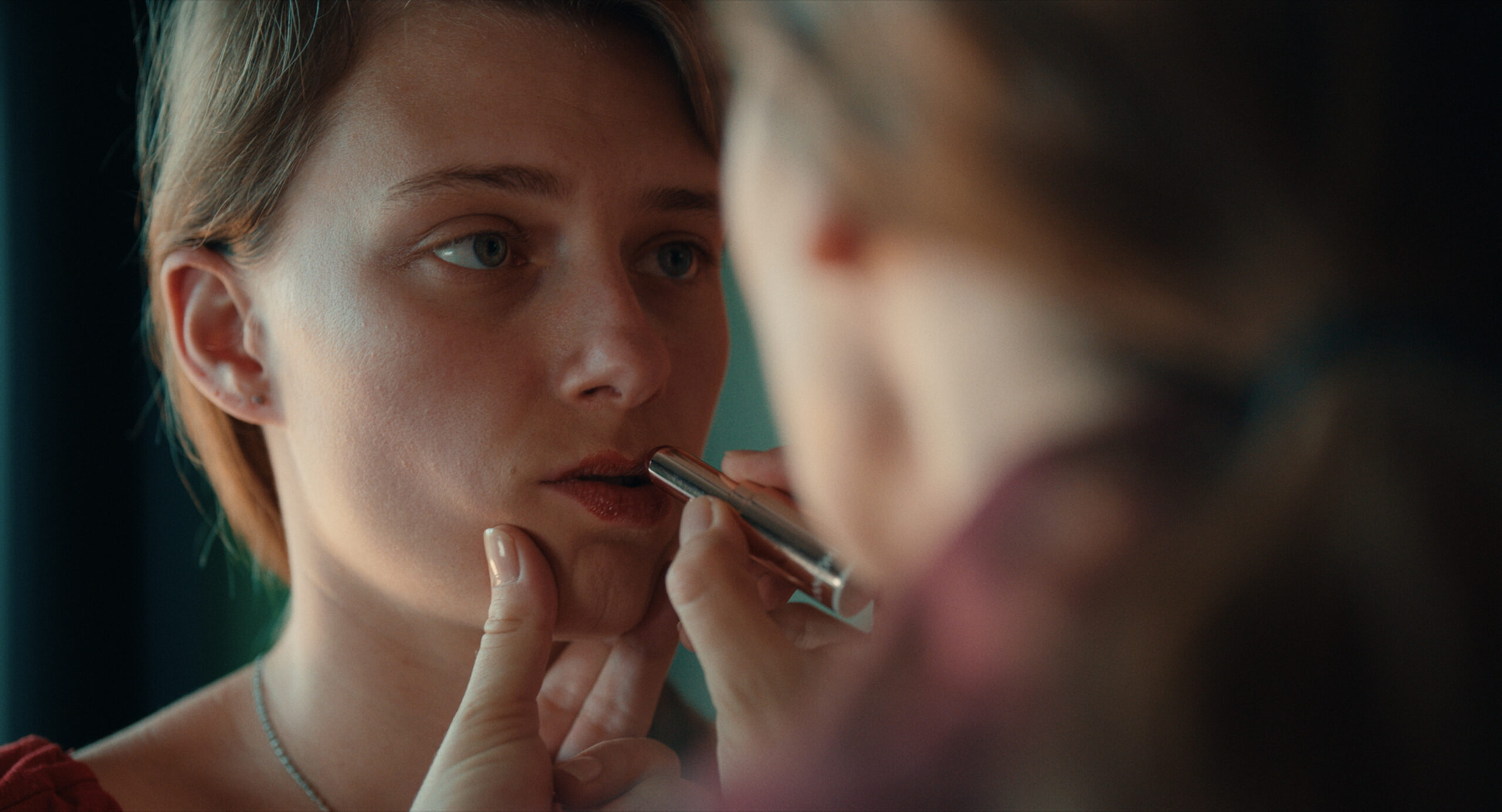
Photo caption: Nahuel Pérez Biscayart in PERSIAN LESSONS. Photo courtesy of Cohen Media Group.

The Holocaust thriller Persian Lessons walks a tightrope of tension, and the ending is very emotionally powerful. Gilles (Nahuel Pérez Biscayart) is a Belgian Jew sent to a German concentration camp. He seeks to avoid death by claiming to be Persian named Reza. He is not anticipating that a Nazi officer will demand to be taught Farsi. That officer, Koch (Lars Eidinger), aspires to a postwar future as a Tehran restaurateur.

Gilles/Reza, who doesn’t know ANY Farsi, must invent an entire faux Farsi language, word-by-word, and remember it. All the while, he’s sweating out the likelihood that his ruse will be discovered.

The blustery Koch, with his Persian fixation, is an oddball. A chef when he opportunistically joined the Nazi Party, he’s not a True Believer, although he is very comfortable with genocide. In another time or place, he could have easily been a corrupt official or a mafioso. While Gilles/Reza is the protagonist, the story rises and falls on Koch’s whims, and Eidinger’s performance is excellent.

Nazis were bullies at their core, and some of Persian Lessons’ lighter moments are when Gilles/Reza is offscreen and the Nazis’ own foibles, with their sexual peccadilloes and their petty internal power plays, are on display. There’s an especially funny scene when Koch gets a leg up on his boss, the camp’s Commandant.

Nahuel Pérez Biscayart and Lars Eidinger in PERSIAN LESSONS. Photo courtesy of Cohen Media Group.

Persian Lessons was directed by Ukrainian-born Vadim Perelman (2003’s Oscar nominated House of Sand and Fog). Belarus tried to submit Persian Lessons for an Academy Award, but it was too international to qualify as a Belarus film. IMDb catalogues it as a Russian/German/Belarus film; Biscayart is Argentine, Eidinger is German, and screenwriter Ilja Zofin is Russian.

I screened Persian Lessons for its North American premiere at the San Francisco Jewish Film Festival in July 2021. It opens June 9 at the Laemmle Royal in LA and more widely on June 16, including San Francisco’s Opera Plaza and the Landmark Pasadena.

SAM NOW: solving a mystery…only part of the story

Reed Harkness in SAM NOW. Courtesy of HA/HA Productions.

In the surprisingly complex documentary Sam Now, two brothers go on a road trip to solve a family mystery – but that’s only part of the story. Beginning as a teenager, writer-director Reed Harkness spent his teen years shooting movie projects that starred his younger half-brother Sam. Reed and Sam grew up in a blended family of spirited brothers, a family with one striking anomaly – Sam’s mother had suddenly vanished.

Shortly after the disappearance, the family learned that the mom was alive, having left of her own volition. She was choosing to live elsewhere secretly, severing all contact with her family. Reed and Sam’s family went on with their lives, and the subject of the missing mom was no longer discussed.

Years later, as young men, Reed and Sam decide to get in the car with Reed’s cameras and track down Sam’s mom. Will they find her? Why did she abandon her children? Can they resume/salvage their relationship or work out a new one?

The subject Harkness famiy in SAM NOW. Courtesy of HA/HA Productions.

Those are compelling questions, but the quest to find the mom isn’t the whole movie. Once the initial mystery is solved, Reed Harkness kept his camera focused on the participants over the next decade.

Beginning with home movies when the brothers were kids, Sam Now documents 25 years of family life and individual personal growth. It’s all complicated, as we might expect with multigenerational trauma.

Reed Harkness’ use of music in Sam Now is particularly strong. Reed and Sam’s rowdy boyhood and the brother’s road trip is accented with boisterous garage rock. More contemplative music accompanies the personal reflections later in the film.

Sam Now garnered various film fest awards, aired on PBS’ POV, and releases on streaming platforms, including Amazon and Vudu, on June 6.

32 SOUNDS: a concept movie, and the concept is kinda boring

32 SOUNDS. Courtesy of Abramorama.

The documentary 32 Sounds strives to be an immersive dive into sounds of all types and the impact of sounds on humans. It’s an anthology of 32 bits, each related to sound in different way.

The immersive quality is where 32 Sounds falls short. After seeing the trailer, I made an effort to see 32 Sounds in a theater with surround sound. But, after the filmmakers address the audience at the beginning, the surround sound is not really necessary to enjoy (or, in my case, NOT enjoy) the film.

The two most powerful scenes don’t have much to do with the technical or artsy stuff that comprise much of 32 Sounds. In one, a scientist listens to a long-forgotten letter to his future self that he taped as an 11-year-old. Later, a man muses on “ghost voices” – how he can ALMOST recall the voices of his dead loved ones.

Overall, the 95 minutes I invested in slogging thru 32 Sounds was wasted, except for the ten minutes that I drifted into a deep, blissful nap.

DEALING WITH DAD: two serious topics in an ok comedy

Peter S. Kim, Ally Maki and Hayden Szeto in DEALING WITH DAD. Courtesy of 1091 Pictures.

Dealing with Dad is a topical family comedy with an Asian-American cast. Three adult siblings – the super-achiever oldest sister, the passive middle brother and the infantilized youngest brother, a gaming slacker – meet at their parents’ home. The dad, whose harsh and never-bending expectations battered them as kids, has become paralyzed (and defanged) by severe depression.

Although Dealing with Dad is a comedy, its strengths are in addressing two serious subjects – depression and the issues that many second-generation Asian-Americans face because of their immigrant parents’ parenting styles.

The differences between the siblings spawn lots of laughs, but I found the banter a bit too sit-commy for my taste.

Bay Area audiences will appreciate that Dealing with Dad is set in MILPITAS.

I screened for the 2022 Cinequest. It started rolling out in theaters on May 19.