THE LAST LULLABY: backing out of a contract hit

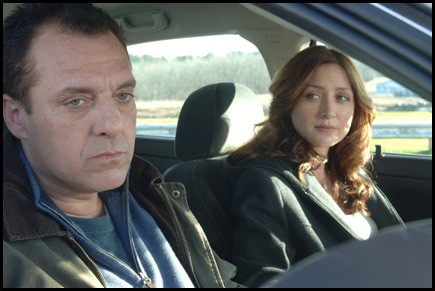
Photo caption: Tom Sizemore and Sasha Alexander in THE LAST LULLABY. Courtesy of Chaillot Films.

The Last Lullaby is a surprisingly brilliant contemporary noir film from 2008 (that I KNOW that you haven’t seen).  Tom Sizemore plays a retired hit man, a professional loner now living what would be a comfortable loner life (except for his chronic insomnia).  He is offered a very large sum to take out a librarian (Sasha Alexander), but he is attracted to her and wonders why someone wants her dead?  And we ask, as in any noir film, is she the innocent that she seems? 

Sizemore, who just died this March,  is most remembered for his Oscar-nominated performance as Tom Hank’s sergeant in Saving Private Ryan. Sizemore was intense and charismatic and hugely talented, but his longtime cocaine addiction kept him off the screen and in the tabloids, rehab and jail. The Last Lullaby was a rare leading role for Sizemore, and showcased his magnetism.
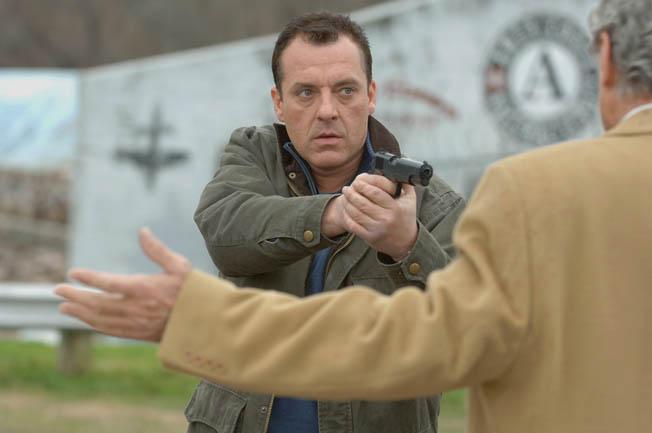
Tom Sizemore in THE LAST LULLABY. Courtesy of Chaillot Films.

The Last Lullaby is the only feature directed by Jeffrey Goodman, and he adds the appropriate level of neo-noir dread to the suspense. Sizemore’s performance and a smart screenplay by Peter Biegen and Max Alan Collins carry this film, and Alexander is good, too.

Ray McKinnon, who played the heartbreakingly unhinged Reverend H.W. Smith in Deadwood and created the TV series Rectify, is credited here as Ominous figure.

The Last Lullaby is available to stream from Amazon (included with Prime), Vudu and redbox. 
BEST WORST MOVIE: a romp through cinematic awfulness

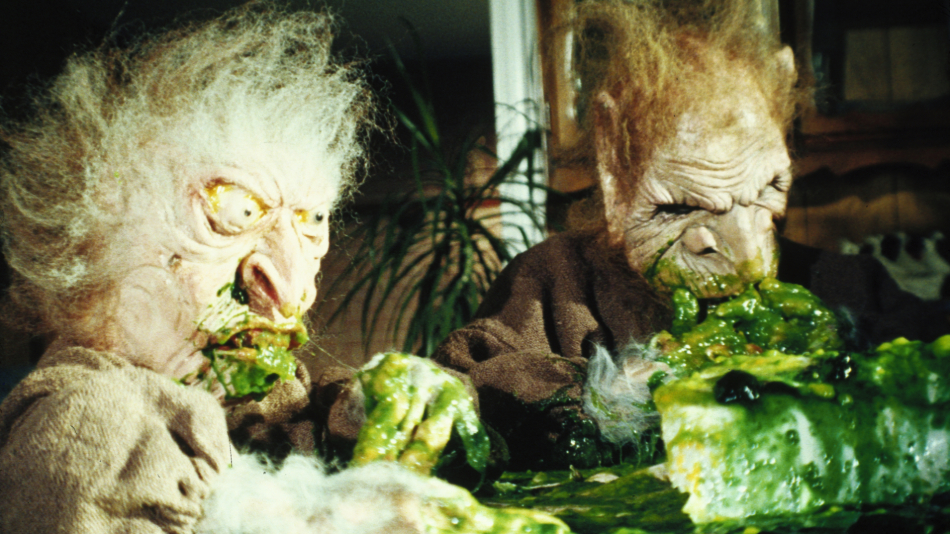
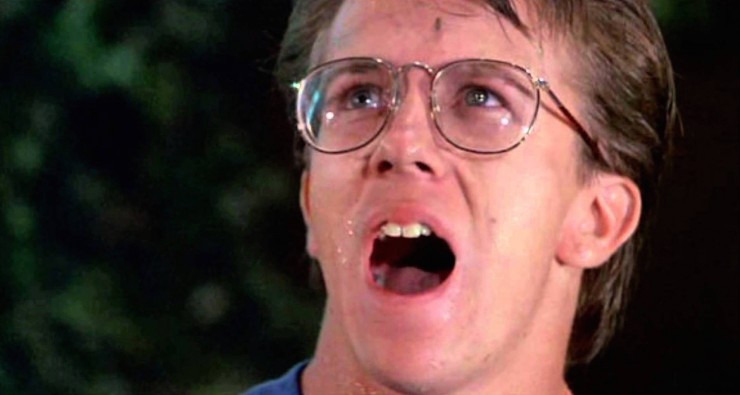
The notorious “O My God” TROLL 2 scene in BEST BAD MOVIE

Troll 2 was so bad that it earned its very own documentary, Best Worst Movie. Despite its title, Troll 2 was completely unrelated to the earlier movie Troll – and has no trolls in it.

Troll 2 is about a white bread suburban family that vacations in the mountain village of Nilbog (“Goblin” spelled backwards, get it?). The family doesn’t know that all of the locals are vegetarian predator goblins who can take the form of regular humans. The goblins are able to turn humans into vegetative matter (a green slime) that the goblins can ingest.

TROLL 2 scene in BEST WORST MOVIE

Troll 2 was made in 1990 with very primitive production values – and by a non-English speaking Italian crew and a non-Italian speaking Z-list American cast. Best Worst Movie showcases the inept acting and directing aside, but Troll 2’s screenplay is probably the source of the most laughs:

  • Dead Grandpa Seth keeps appearing to the boy.
  • The boy saves his family by urinating on the family dinner.
  • There’s a teen make out scene so “hot” that it literally pops popcorn.

You can see some of the finer bits by doing a YouTube search for “You can’t piss on hospitality” and “Troll 2 O my God”.

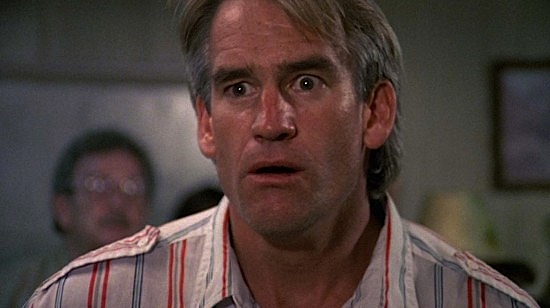
Best Worst Movie contains some squirmy scenes with cast members whose mental health issues have since worsened. And the Italian director is a jerk who is narcissistically unwilling to acknowledge its badness, but is all to happy to bask in Troll 2‘s new found cult status. But the goodhearted goofiness of star George Hardy, a cast of good sports and Troll 2‘s cult following dominates.

George Hardy in a TROLL 2 scene in BEST WORST MOVIE

Troll 2 is one of the films in my Bad Movie Festival. Best Worst Movie can be streamed from Amazon (included with Prime) and AppleTV.

JEWS OF THE WILD WEST: desperadoes, cowpunchers…and Jews

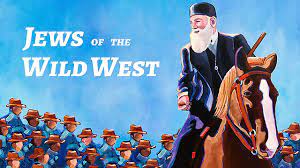
Okay, so this is one of those rare movies that had me at the title. One doesn’t automatically think of Jews among the wagon trains, desperadoes and cowpunchers of the Wild West. But, in Jews of the Wild West, documentarian Amanda Kinsey brings us an anthology of impressively well-researched Jewish experiences on the Western frontier.

Kinsey starts off with a saloon girl who married an iconic gunslinger (and buried him in Colma’s Jewish cemetery) and the marketer of the clothing item most identified with the American West (hint – not Wranglers). As a Western history buff, I was familiar with those first two stories, but then I started learning a lot:

  • Why many of the first mayors of frontier towns were Jewish;
  • How Eastern European occupational restrictions on Jews prepared them for a pivotal role in the development of the great Denver and Greeley, Colorado, cattle stockyards;
  • That most Jews found markedly less antisemitism in the West than in the East;
  • That teenage Golda Meir ran away to high school in Denver.

My jaw dropped at the shocking story of the Hebrew Emigrant Aid Society, which in 1881-84, until taken over by the reputable United Hebrew Charities, was helping new Jewish emigrants resettle in the remote West. The seeming benevolence, it turns out, was motivated by an earlier wave of now prosperous Jews who didn’t want the impoverished Orthodox arrivals from Eastern Europe to challenge capitalism and make them look bad.

Interestingly, filmmaker Kinsey, a longtime NBC News producer and five-time Emmy winner, is NOT herself Jewish.

I attended a screening of Jews of the Wild West at the San Luis Obispo Jewish Film Festival that included a Q&A with Kinsey and local historians. Jews of the Wild West is streaming on Amazon, AppleTV, Vudu and YouTube.

HALLELUJAH: LEONARD COHEN, A JOURNEY, A SONG: a reflective artist, a reflective movie

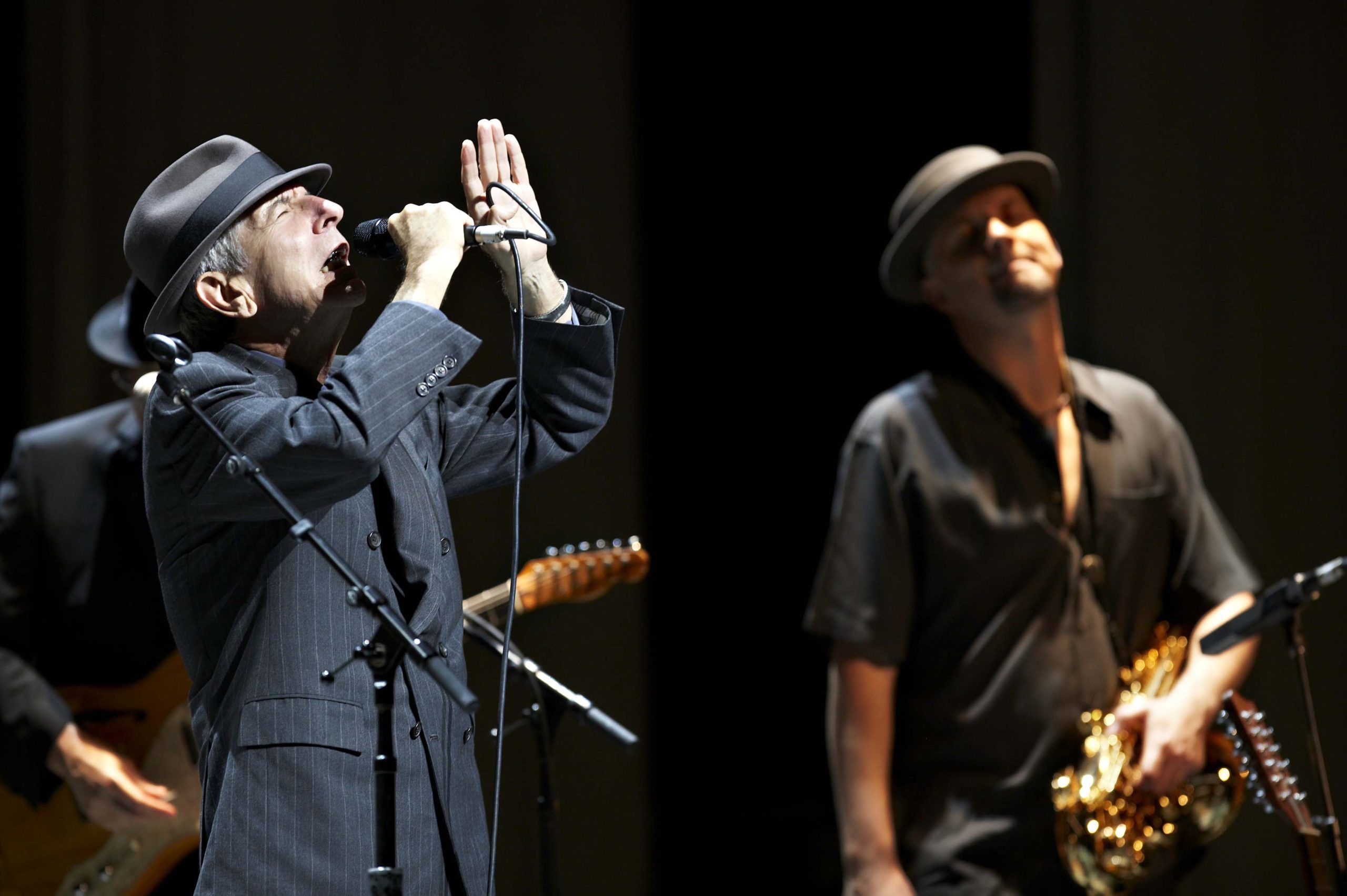
Photo caption. Leonard Cohen in HALLELUJAH: LEONARD COHEN, A JOURNEY, A SONG. Courtesy of Leonard Cohen Family Trust.

Hallelujah: Leonard Cohen, a Journey, a Song is a biodoc as reflective as the subject himself. That subject is poet/singer/songwriter Leonard Cohen, creator of profound verse and ear-worm melodies. Cohen was such a seeker that he secluded himself for five years at a Buddhist monastery on Mount Baldy. I’m reposting about this film because it is finally widely available to stream.

Co-writers and co-directors Daniel Geller and Dayna Goldfine have comprehensively sourced the film with Cohen intimates and a substantial dose of Cohen himself. Geller and Goldfine have braided together Cohen’s journey with that of his most sublime song, Hallelujah.

One doesn’t think of a song even HAVING a journey, but Cohen wrote Hallelujah over years and years, possibly composing over 150 verses, only to have Columbia refuse to issue the album that it had commissioned. Then the song was rescued by John Cale, rejuvenated in the animated movie Shrek, and became iconic with the spectacular cover by Jeff Buckley. Along the way, Cohen himself would reveal alternative lyrics in live performance. Helluva story.

I’ve seen splashier documentaries – this is, after all, about a poet. The one forehead-slapping shocker for me was the initial rejection of Hallelujah. At almost two hours, Hallelujah: Leonard Cohen, a Journey, a Song is a settle-in-and-be-mesmerized experience.

(BTW, could there be a bigger producer/artist mismatch than Phil Spector and Leonard Cohen?)

Hallelujah: Leonard Cohen, a Journey, a Song is now available to stream from Amazon, AppleTV, Vudu, YouTube and redbox.

LITTLE RICHARD: I AM EVERYTHING: never denying his identity, but renouncing it

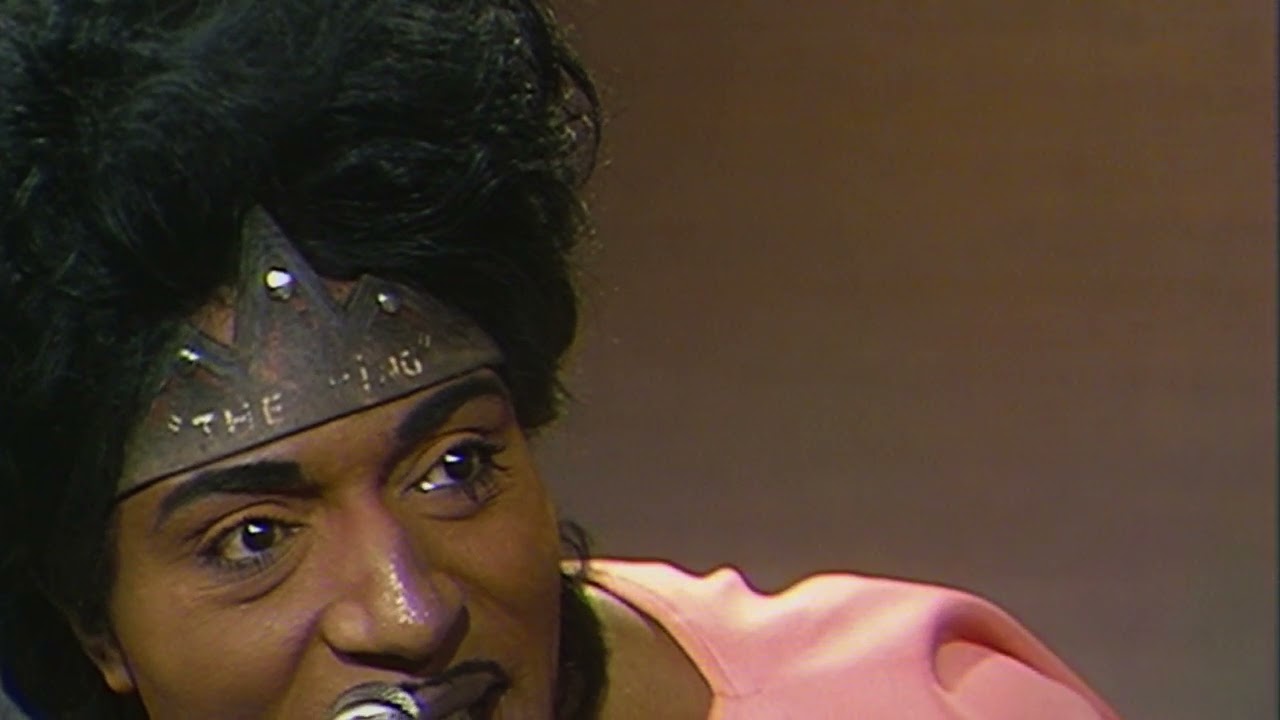
Photo caption: Little Richard in LITTLE RICHARD: I AM EVERYTHING. Courtesy of Magnolia Pictures.

Little Richard: I Am Everything traces the life of the trailblazing rock-and-roller, and it is NOT your paint-by-the-numbers showbiz biodoc. Director Lisa Cortés (Primetime Emmy winner) has superbly framed the two defining aspects of Little Richard – an unfettered confidence in his exuberant performances and an uneasy assessment of himself as a flamboyant gay man.

As one would expect, Cortés lays out Little Richard’s importance in the very beginning of rock and roll – writing hard-driving hits, many with unmistakably sexualized lyrics and performing them with then unseen animation. Before Elvis. During Jim Crow. Before African-American music was played on mainstream radio.

Most strikingly, from the very beginning, Little Richard never tried to dress or act like a heterosexual male. (Baby Boomers will recall that this was the age of an unconvincingly closeted Liberace and no other hints of homosexuality in American mass culture)

As much as we see Little Richard in later work by artists like David Bowie, Elton John and Prince, there were performers that Little Richard himself emulated. In a staggering achievement in sourcing, Cortés brings us photos and film of queer black performers of the 1940s whom Little Richard saw – and some he worked with as a teenager. I’ve seen plenty of documentaries on showbiz, LGBTQ and African-American history, and I’ve never seen much of this material.

Little Richard is a difficult case for queer people because, although he was an important role model who never DENIED being a gay man, he sporadically RENOUNCED his own sexual identity. He is a difficult case for all of us, because his music would celebrate sex as naughty fun, but then he would occasionally scare himself back into backwoods religion.

Little Richard: I Am Everything also reveals the original lyrics of Tutti Frutti, and how they were cleaned up to Tutti frutti, oh rootie.

David Bowie is joined by Mick Jagger, Paul McCartney and Tom Jones in appreciating Little Richard’s pioneering career. John Waters reveals that his own pencil-thin mustache is an homage to Little Richard’s.

Little Richard: I Am Everything touches on rock music, race in America, drugs, sex and sexual identity – and spends a lot of time on sex and sexual identity sex drugs. It’s a remarkable insightful profile of a complicated man who was himself very fun for us to watch.

HANNAH HA HA: what makes for human value and fulfillment?

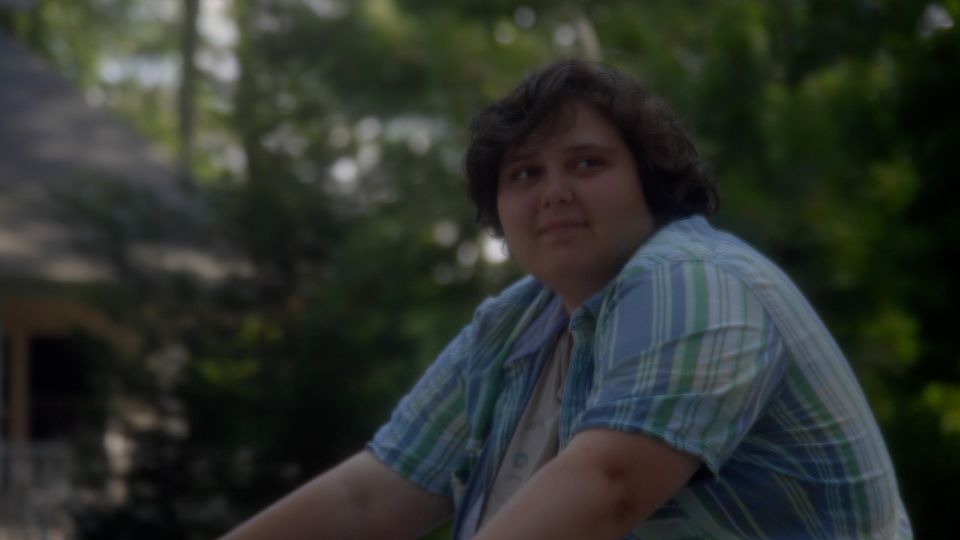
Hannah Lee Thompson in HANNAH HA HA. Courtesy of Nashville Film Festival.

The indie Hannah Ha Ha is an extraordinary film about an ordinary person. Hannah (musician Hannah Lee Thompson in her first film) is content with her life in a small town – helping her dad (he would be lost without her) and giving music lessons. She touches lives, and townfolks eagerly help celebrate her 26th birthday,  But her brother Paul (Roger Mancusi) points out that she is comfortable with a path that will leave her without a career or, critically, health insurance.

Here’s the rub – Hannah’s family and her community recognize her contributions, but our economic system doesn’t.

Paul wants what is best for Hannah, but every time he talks to her, he makes her feel bad about herself, finally shaming her into finding her place in the conventional economy (which is not at the top of the pyramid). Paul’s advice is sensible – if she wants health insurance and secure housing, she will need a job; it’s just that the entry level jobs in the small town’s fast food chains are so soul-crushing for her. (The movie was filmed in Sharon, Massachusetts.)

Thompson, whose Hannah is smart, witty, capable and utterly ill-suited for life as a corporate pawn, is excellent. With her sarcastic charm, she’s sympathetic and relatable. Thompson perfectly captures how defeated even a talented person can feel when forced into a harsher environment.

Mancusi lets the audience glimpse that Paul himself is not as upwardly mobile as he thinks or portrays. Paul has bought into the “work hard and get rich” ethic, and there’s a hint of desperation and self-loathing that he’s not further up the corporate ladder. He’s like a two-bit insurance salesman who votes Republican because he thinks he’s a “businessman”; in reality, no one in the 1% is going to let Paul control capital.

Filmed in a cinéma vérité style, Hannah Ha Ha is the first feature written and directed by Joshua Pikovsky and Jordan Tetewsky, and it’s masterfully edited by Tetewsky. The 75-minute running time allows for the characters and the plot to meander without dragging.

We are our choices – but who frames those choices? Hannah Ha Ha is a thought-provoking film that explores the profound question of what makes for human value and fulfillment.

Hannah Ha Ha premiered last year at Slamdance, played Tribeca, and I screened it for the Nashville Film Festival, where I featured it in Under the Radar at Nashville. It’s now streaming on Amazon, AppleTV, Vudu and YouTube. Hannah Ha Ha is one of the Best Movies of 2023 – So Far.

A DARK, DARK MAN: rounding up the usual suspects in Kazakhstan

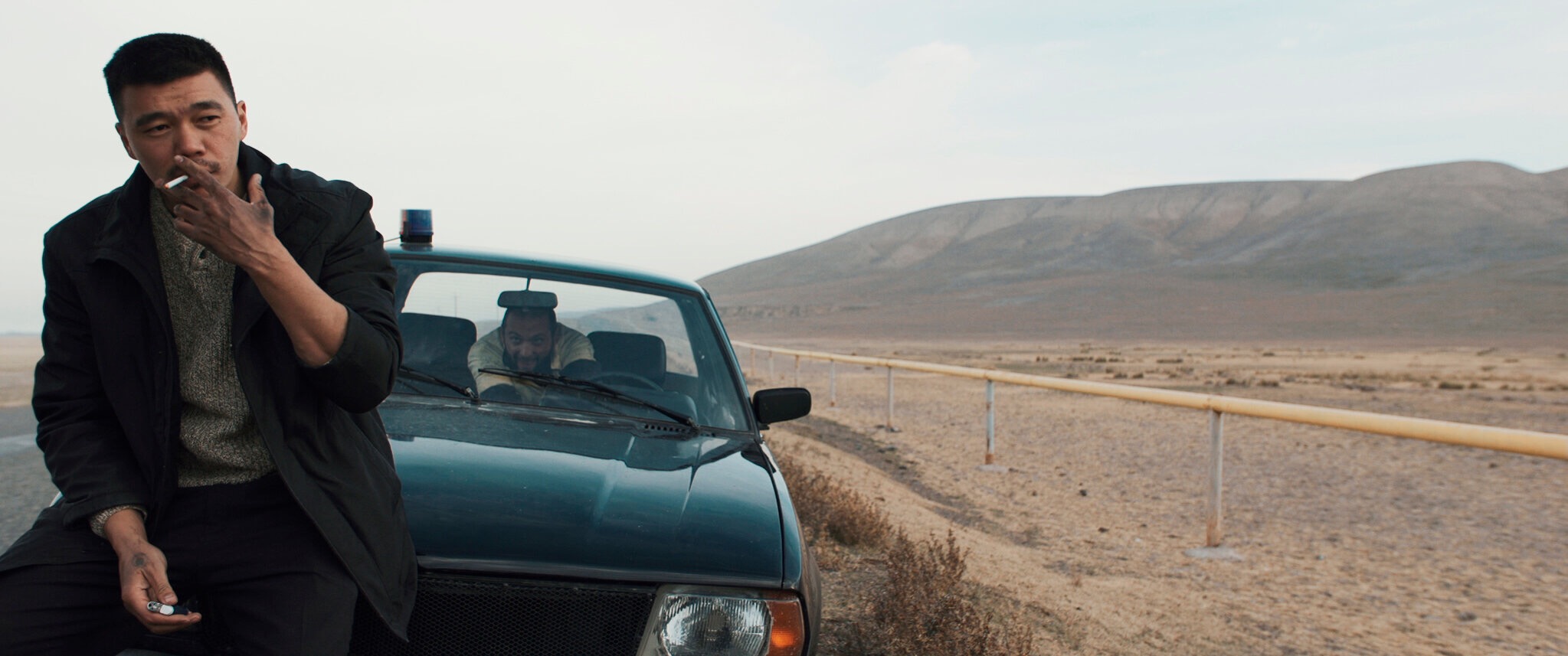
Photo caption: Daniyar Alshivnov in A DARK, DARK MAN. Courtesy of MHz.

In the Kazakh neo-noir A Dark, Dark Man, a provincial detective is stationed in a place that is remote, even by the standards of Kazakhstan. The authorities are unaccountable and utterly corrupt, and human life isn’t so much cheap as it is valueless. A boy has been murdered and wheels having no relation to justice begin to grind.

The cop is Bekzat (Daniyar Alshivnov), a smart guy whose moral compass drives him to solve the crime, not to cover it up. But he’s also practical, and he understands that he doesn’t have the power to undermine his bosses, who have decided that Pukuar, a mentally disabled local, is the suspect.

The sordid order of things is rocked by the arrival of a nosy journalist Ariana (Dinara Baktybaeva), who uncomfortably points out that 11 suspects have died in police custody in the past year, and that this murder shares convincing similarities with a series of local murders over the past decade. It appears that someone has been getting away with serial murder while the cops “round up the usual suspects”.

In a compelling performance, Alshivnov has us hanging on Bekhat’s moral decision. Which choice will he make, and at what risk? How can he survive?

Yes, this is my first Kazakh film. Director and co-writer Adilkhan Yerzhanov uses absurdism to depict the incompetence of the rural police. The violence in A Dark, Dark Man is anything but stylized – Yerzhanov makes it up-close-and-personal and messy.

Teoman Khos is superb as the innocent Pukuar, both half-witted and pranksterish, and understanding more of what is going on than it seems.

Make sure you watch the interview with star Daniyar Alshivnov (embedded below the trailer). You will be surprised.

A Dark, Dark Man is streaming on MHz. MHz has split it into 3 episodes, but it’s a coherent 2 hour, ten minute movie that is easy to binge.

THE LOST KING: not all cranks are cranky

Photo caption: Sally Hawkins in THE LOST KING. Courtesy of IFC Films.

In the The Lost King, an otherwise unfulfilled woman becomes a history hobbyist and literally digs up a British monarch. That monarch is the Shakespearean villain Richard III. The woman in question is Philippa (Sally Hawkins), who joins a cadre of misfits obsessed with rehabilitating Richard III’s image, which has suffered from the view that he murdered his own 12- and 10-year old nephews to cement his claim on the throne.

The story is based on fact. The real Phillipa didn’t succeed in turning Richard into a popular Good Guy, but she led a successful campaign that located Richard’s long-lost remains, buried under a parking lot in Leicester, and reinterred them in a historically more appropriate setting. Along the way, she had to battle lots of snooty academics and officials who “knew better”.

It’s a standard underdog story with two enhancements:

  • Sally Hawkins is a singular, irrepressible actress who gets to shine in a lead role, as she did in her art house hit Happy-Go-Lucky and the Oscar-winning The Shape of Water.
  • The character of Philippa is interestingly and unexpectedly textured, with her chronic fatigue syndrome and her unusual relationship with her ex-husband (Steve Coogan, who also co-wrote).

The little cadre of Richard III cranks is especially funny.

Steven Frears is famous for directing movies like The Grifters and The Queen, for which he received Oscar nominations, and Dangerous Liaisons and High Fidelity. But it’s worth remembering that he has also made made many much smaller, but satisfying, movies: My Beautiful Launderette, Dirty Pretty Things, The Hit, Tamara Drewe, Philomena. The Lost King is one of these.

This is an enjoyable, non-challenging movie. It may not be a Must See, but it’s not a waste if time.

REGGIE: it’s not just about Reggie

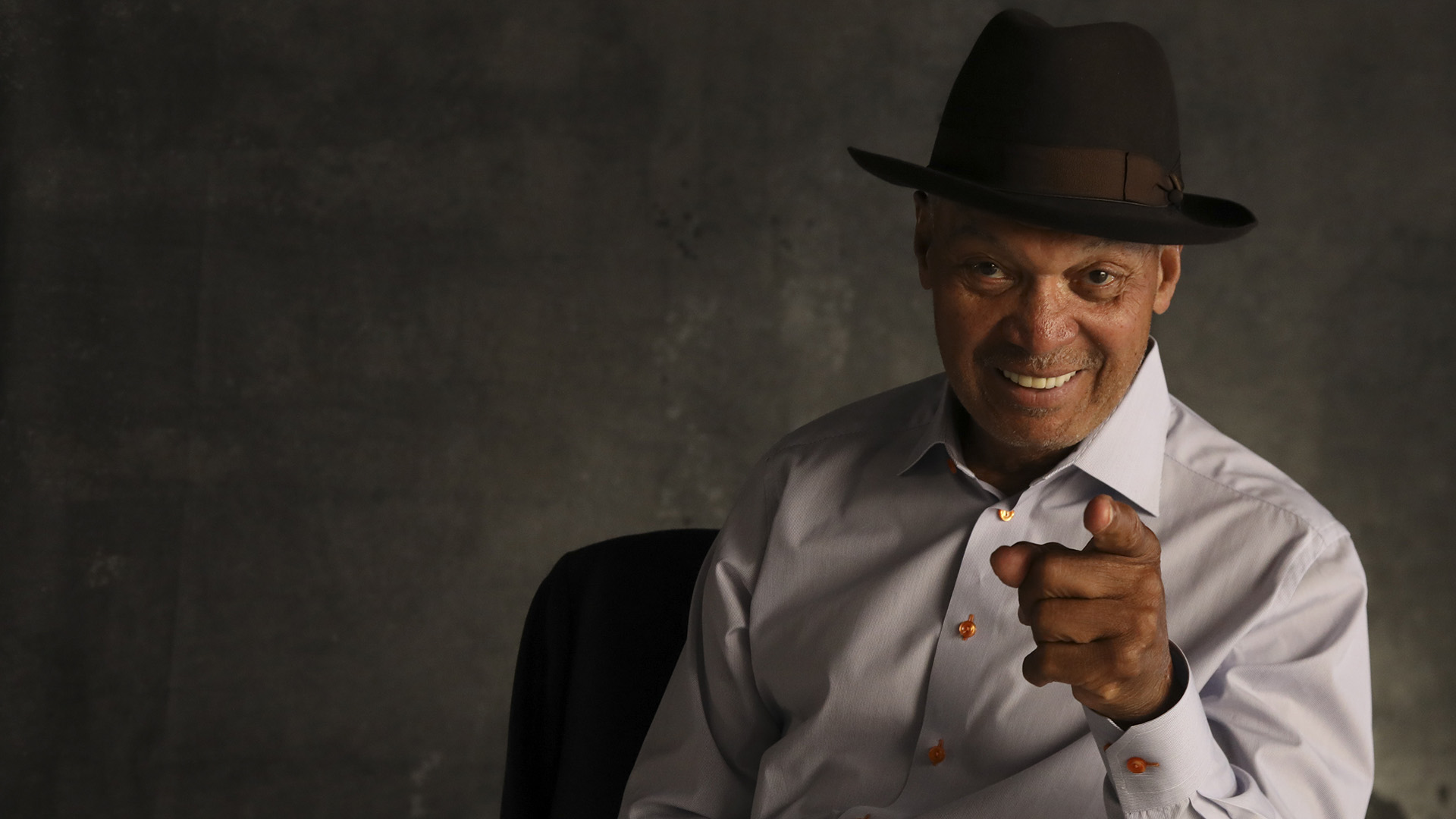
Photo caption: Reggie Jackson in REGGIE. Courtesy of Amazon Prime Video.

After watching the documentary Reggie, I was surprised that I found spending 104 minutes with Reggie Jackson so rewarding. In the 1970s, Jackson seemed to me such an egotist, so consumed by his own stardom. Of course, the media were always asking him about himself. Here, where Jackson has the platform, he talks about himself in the context of larger issues of racial justice, economic justice, righting past wrongs and creating a more equitable future – for everybody, not just for Reggie.

The film could have been titled The Life and Times of Reggie Jackson. America’s struggle with race is in the forefront of Reggie, understandably because of the times. In addition, Reggie sees many of the pivotal events in his life as impacted by race – and he makes a convincing case.

Reggie contains lots of tidbits, many not well known:

  • Reggie’s own experiences with racial prejudice as a child and young man
  • Reggie’s shielding from the dangers of Alabama Jim Crow by minor league teammates Joe Rudi, Rollie Fingers and Dave Duncan
  • His early mentorship by Joe DiMaggio
  • His chafing at Charley Findley – and Findley giving him a $2500 pay cut for “too many strikeouts” in a season when Reggie led the league in homers
  • Reggie’s prickly relationship with Thurman Munson, his incendiary mismatch with Billy Martin, and an evolved friendship with George Steinbrenner
  • The origin of the “Mr. October” sobriquet.

Reggie can be streamed from Amazon (included with Prime).

I’M AN ELECTRIC LAMPSHADE: the final score is Doug 1, Expectations 0.

Photo caption: I’M AN ELECTRIC LAMPSHADE. Courtesy of Cinequest.

In the winning and surprising documentary I’m an Electric Lampshade, we meet the most improbable rock star – a mild-mannered accountant who retires to pursue his dream of performing.

60-year-old Doug McCorkle is fit for his age and has an unusually mellifluous voice, like a late night FM DJ or the announcer in a boxing ring. Other than that he looks like a total square.

There may be no flamboyance about Doug McCorkle, but it thrives inside him. His own artistic taste is trippy, gender-bending and daring. Think Price Waterhouse Cooper on the outside and Janelle Monáe on the inside.

We follow Doug as he goes to a performance school in the Philippines (where most of his classmates are drag queens) and the montage of his training resembles those in Fame and Flashdance. Doug is a good enough sport to wear MC Hammer pants in a bizarre Filipino yogurt commercial. It all culminates in a concert in Mexico.

Doug’s quest would be a vanity project except he has no apparent vanity. He must have some ego to want to get up on stage, but compared to subjects of other showbiz documentaries, he is most humble, emphatically not self-absorbed and low maintenance. We can tell from how his co-workers, friends and wife react to him, that he is just a profoundly decent guy.

Eminently watchable, this is a successful first feature for writer-director John Clayton Doyle. The stage-setting profile of one of the Filipino artists could have been trimmed, but Lampshade is otherwise well-paced.

The final score: Doug 1, Expectations 0. I screened I’m an Electric Lmpshade for its world premiere at Cinequest, and it made my Best of Cinequest 2021. It’s now available to stream from Amazon, AppleTV, Vudu and YouTube.