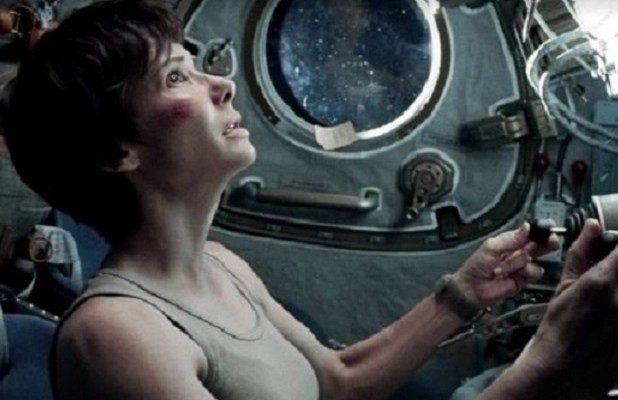
Gravity: woman against nature – an infinitely vast nature

The gripping visually spectacular Gravity is less a sci-fi film than it is a basic Man Against Nature (mostly Woman Against Nature) survival tale set in space. A catastrophe strikes a space station, and it’s in doubt whether the two survivors (Sandra Bullock and George Clooney) will be able to make it back to Earth or be forever lost in space.

The skeleton of the story may be simple, but Gravity is an exceptional experience because  writer-director Alfonso Cuarón, in a triumph of special effects, captures both the messy nuts and bolts of space travel and the potential lethality of the space environment.  I’ve seen my share of space movies, but I’ve never experienced a better sense of the terrifying dark and silent vastness of space.  A human in space is suspended in an infinity in which, without a man-made propulsion device, he/she can only helplessly drift.  Space is not so much hostile to humans as it is indifferent to our tiny existences.

The technical marvels of manned space missions have dulled us to the reality that space-walking astronauts are just one broken tether or one lost grip from floating away and becoming lifeless space lint.  Cuarón brings his audience into that reality, and keeps our tension acute during Ms. Bullock’s Wild Ride.

The Mexico City-born Cuarón will certainly receive an Academy Award nomination for directing.  Now Cuarón is an amazingly gifted filmmaker – he also wrote and directed Children of Men, my #2 movie of 2006 and Y Tu Mama Tambien, my #1 movie of 2002.  Along the way, he also directed one of the best Harry Potter movies – Harry Potter & The Prisoner of Azbakan (the one with the Dementors, Sirius Black and the werewolf).

There are essentially only two characters on the screen, and Cuarón benefits from two instantly sympathetic movie stars, Sandra Bullock and George Clooney.  Clooney, of course, can do anything on the screen, and he nails the less complex role of a The Right Stuff style space jock.  (In a wonderful nod to Apollo 13 and The Right Stuff, Ed Harris voices the earth-based NASA control chief.)

I’m generally not a huge fan of Bullock but acknowledge her ability to sometimes excel in comedy (The Heat) and to bring something extra to action (Speed).  But I’ve gotta say that she’s never been better than she is in Gravity.  Here she plays the Everyman role of a person with ordinary skills thrust into overwhelming peril – the kind of cinematic part that made icons out of James Stewart and Tom Hanks.  There isn’t a false moment in Bullock’s performance, and she keeps us rooting for her on whole wild ride.

Gravity currently has an unbelievably high 96 Metacritic rating because critics are rightly acknowledging Cuarón’s achievements in directing and special effects.  Gravity is without flaws, and it’s damn entertaining, but I’m not going to rate it as the year’s best; I think that some indies and foreign films are more emotionally compelling and have more textured stories.  But Gravity is definitely the best Hollywood film of the year so far.
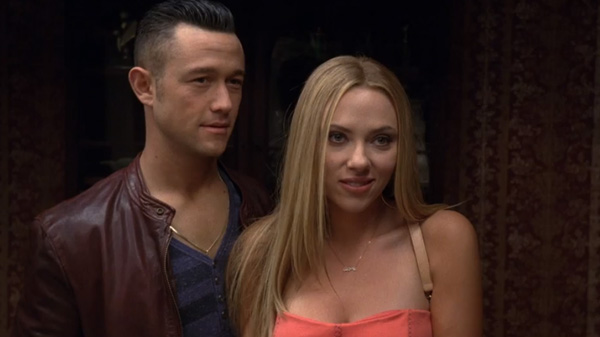
Don Jon: guffaws and self-discovery

Joseph Gordon-Levitt wrote/directed/stars in Don Jon, the story of a Guido whose pursuit of a stunning hottie (Scarlett Johansson) is stymied by his porn addiction.  With help from an older woman (Julianne Moore), he recognizes what will really make him happy.

It’s just a light comedy, but Gordon-Levitt has a very smart take on romantic comedy – one that takes some unexpected turns until a moment of self discovery.  Gordon-Levitt is getting good parts (Inception, 50/50, Looper, Lincoln) and big paychecks (The Dark Knight Rises), so he doesn’t have to write his own stuff – but I’m glad that he gave us Don Jon.

Tony Danza is pretty funny as the Guido dad.

Populaire: witty French rom com from the Mad Men era

POPULAIRE

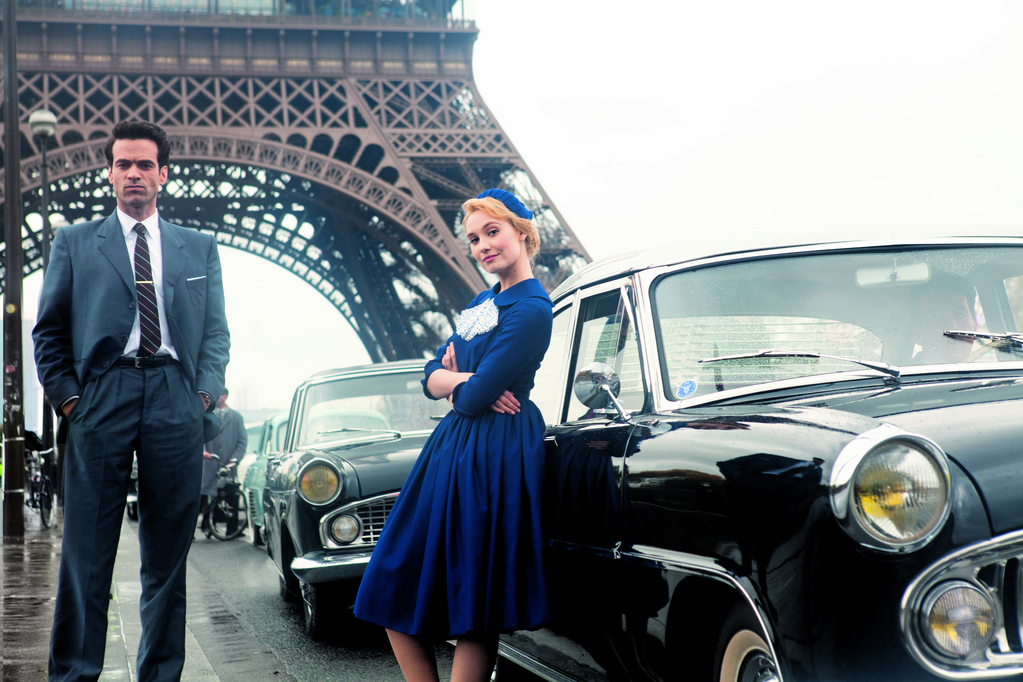
The witty French Populaire cleverly dresses up a conventional romantic comedy with a Mad Men-esque 1959 setting and the flavor of absurdity. The result is a pleasing confection that triggers some chuckles, if not guffaws.

A very attractive bachelor hires a very attractive but clumsy young woman as his secretary. As in any rom com, they’re clearly meant for each other, but they must battle through his obsession that she win a speed typing championship that is – and here is the absurdity – portrayed as just a rung below the World Cup in public prominence.

Populaire takes full advantage of its 1959 setting to spoof the fashions, decor and culture of the period, including a wickedly cheesy cha cha cha performance. It’s harmless and good-hearted fun.

(The radiant Berenice Bejo (The Artist) sparkles in a small role.)

Prisoners: intricately plotted and unrelentingly tense

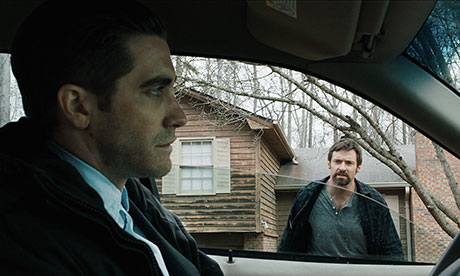
In the pulsating thriller Prisoners, two girls go missing, and one of their dads (Hugh Jackman) goes vigilante as the lead detective (Jake Gyllenhaal) struggles to solve the case.  Both men are driven and desperate, and they clash as they each race against the clock to find the girls, resulting in unrelenting tension for 2-and-a-half hours.

The tension comes from standard suspense devices (characters peering into basements and entering boarded-up rooms and dark hallways, prowlers slipping though a sleeping household, etc.), but there isn’t a hokey moment in Prisoners.  That’s a tribute to director Denis Villenueve, who directed Incendies (my top movie of 2011).  Plus, an intricately plotted story from Aaron Guzikowski adds a dimension to Prisoners and elevates it from a conventional thriller.   As Gyllenhaal’s cop proceeds through the whodunit, he encounters what we assume are dead-end leads and red herrings.  But everything – and I mean EVERYTHING – ties together at the end.  I sure didn’t see it coming.

The one aspect of Prisoners that didn’t work for me is that Jackman is dialed up all the way from the get go, and there’s little if any modulation in his performance.  I guess that may be the point of the character – he’s a tightly wound guy BEFORE his daughter appears to be abducted – and then he goes full-out maniac for over two hours.

Gyllenhaal is solid in the other lead role.   Terrence Howard is superb as the other dad, a guy  who wants his daughter back just as much, but is more passive, rational and empathetic (and consequently more interesting to me).   Viola Davis, Maria Bello and Melissa Leo turn in their expected fine performances.  And Paul Dano (perhaps his generation’s Christopher Walken or James Spader) is excellent in another of his weirdo roles.

Haute Cuisine: chef battles sexism and bureaucracy

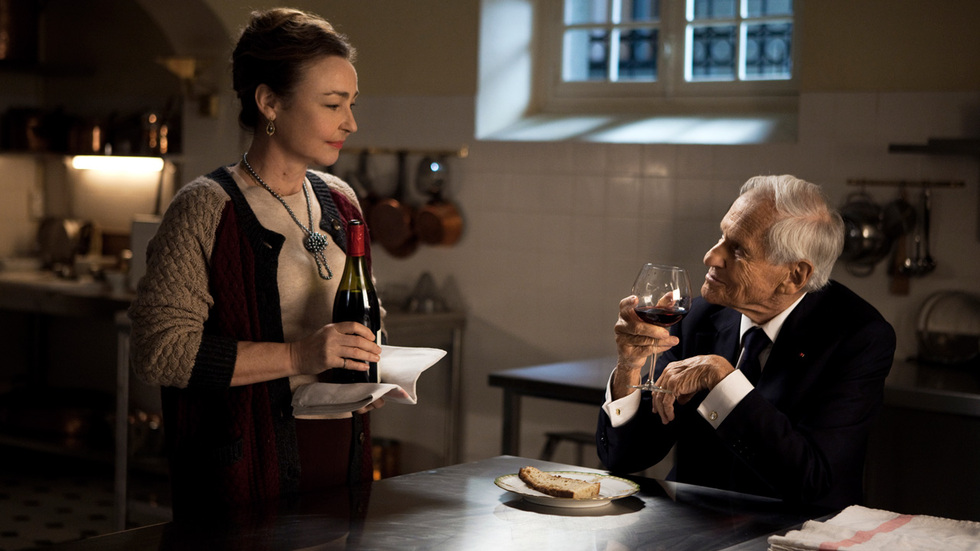
Haute Cuisine is the French foodie saga of the woman who rose to work as personal chef to France’s president, based on the true story of Daniele Mazet-Delpeuch.  She is remarkably obsessed with sourcing premium ingredients, and it’s not hard for her to satisfy the President, who prefers simple country cooking.   But palace intrigue takes its toll as she battles both sexism in the downstairs kitchens and a soul-killing bureaucracy upstairs.

Veteran French actress Catherine Frot successfully portrays the chef’s determination and moxy.  Haute Cuisine is watchable, but not particularly compelling.  The food, however,  is outrageously tantalizing, and Haute Cuisine goes on my list of Best Food Porn Movies.

Captain Phillips: flawless true life thriller

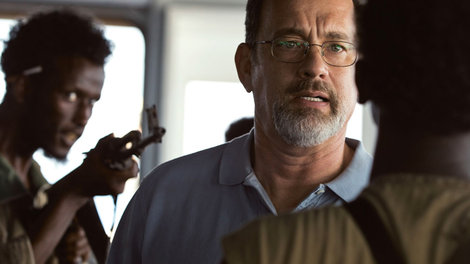
In Captain Phillips, Tom Hanks stars as the real-life ship captain hijacked by Somali pirates and rescued by American commandos in 2009.   The real-life Phillips survived his terrifying ordeal with guts and smarts, and Hanks and director Paul Greengrass bring the story alive.  Greengrass is an old hand at movies with urgency and tension: Bloody Sunday, two movies in the Bourne franchise and an Oscar nomination for United 93.

Another key is that Captain Phillips was shot on the high seas on an actual container ship, an actual lifeboat and a skiff just like the real pirates use.  As a result, it’s amazingly real when the pirates clamber up the side of the massive ship while both vessels roll in the waves and when the seamen and pirates play hide-and-go-seek below decks in the dark.

That being said, the movie wouldn’t work without Tom Hanks, who is unsurpassed at playing an Everyman thrust into a perilous situation.  Hanks is our generation’s Jimmy Stewart, and I can see Hanks playing Stewart’s roles in Rear Window, Vertigo, Anatomy of a Murder and The Man Who Shot Liberty Valance.

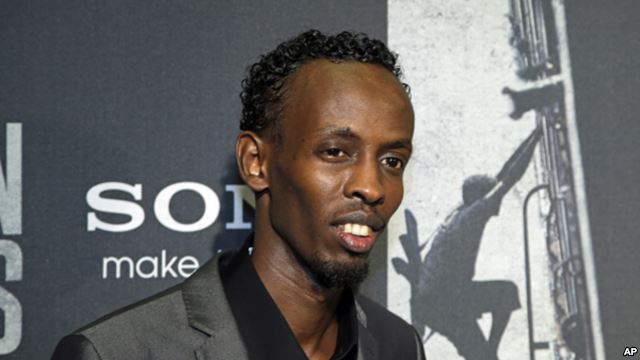
Most of the pirates are standard types, but the lead pirate is a much more textured character, superbly played by Barkad Abdi, hitherto a Somali-American limo driver from Minneapolis.  The depth in Abdi’s performance is also essential to the film’s success.  The cast also features character actor Michael Chernus, so good in Higher Ground and Men in Black 3, as the #2 on the ship.

All in all, Captain Phillips is a flawless true story thriller.

Barkad Abdi

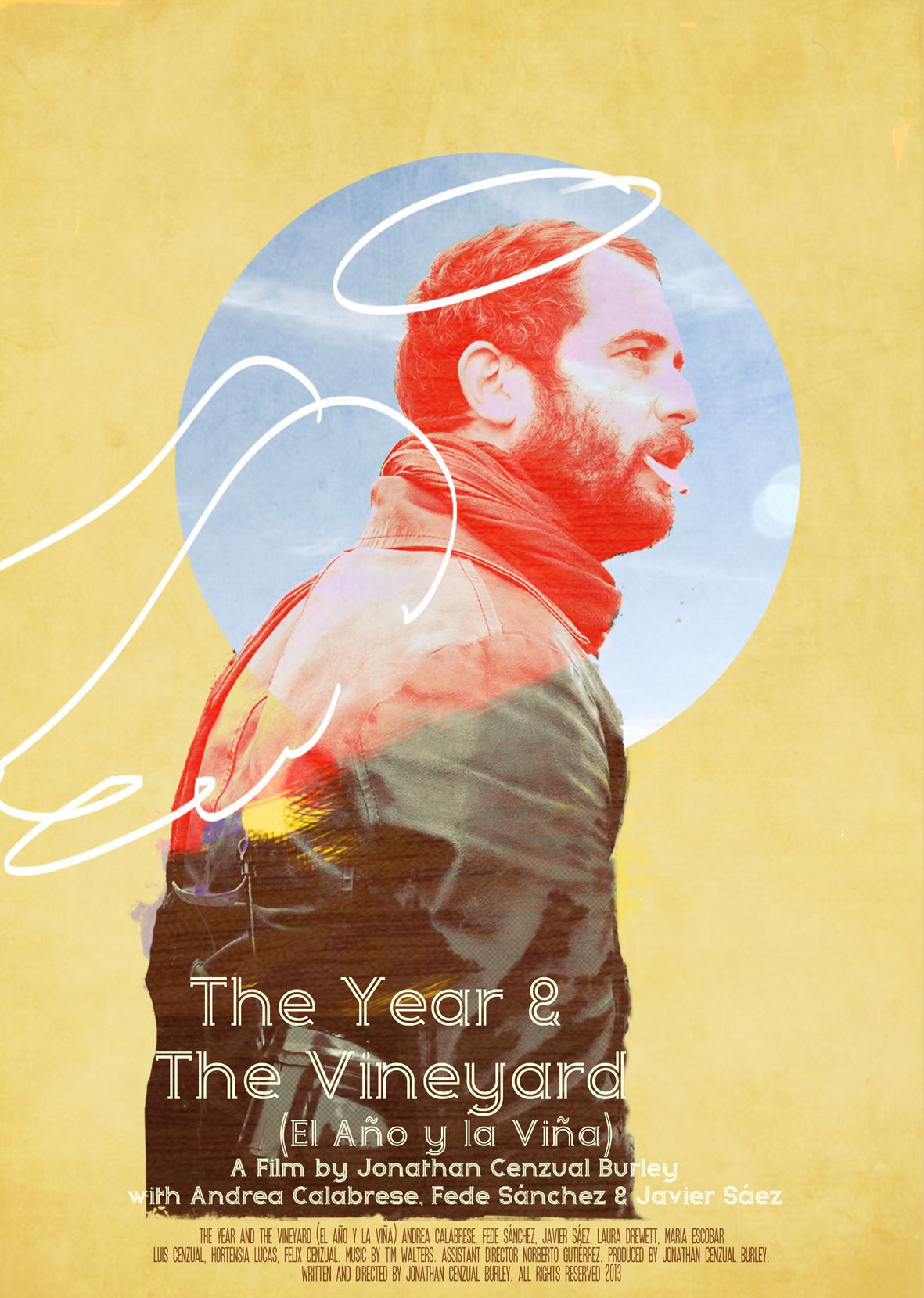
From Mill Valley Film Festival: The Year & the Vineyard

by Zeke Ortiz

The Year & the Vineyard is an interesting, funny, original movie, shot without a budget. It was written, directed and edited by Spanish director Jonathan Cenzual Burley. The story is set in a small village in the beautiful countryside of Spain in 2012. It begins when a strong macho Italian, who is a fighter for the International  Brigade, literally falls through a hole in the sky and lands in a vineyard. He believes he is fighting the Spanish Civil war in 1937. The local priest, who is very funny, flamboyant and  a little odd, is convinced the Italian is either an angel or a saint, and, after a thorough examination, concludes that neither is correct.

The Italian stays at the home of a very shy teacher and the 2 men become friends. The teacher is in love with a local girl and the priest and the fighter encourage him to sing to her to minimize his nerves, so that he can actually declare his love to her through song. The scene reminded me of Romeo and Juliet when Romeo declares his love to Juliet when she is standing on a balcony. 

The Italian sees a picture of his lover from 1937 in a history book and notices that  she is also fighting in the war. His sole desire is to be reconnected with her back in 1937, and so the men try to figure out how he fell out of the sky in the first place.  Finally, by throwing stones up in the air close to where he fell, they finally realize that there is a hole in the sky that he is able to climb over to go back to 1937.  He does this with the help of a ladder and his friends.

What struck me about the director is his absolute passion and belief in what he is doing. His Grandfather fought in the civil war and played a small role in the movie. In addition, filming took place where Burley spent his summers as a child,  so his personal connection was apparent. You could see how hard he worked to put this piece together. It took him about a year to make the whole film from start to finish without a budget.  His actors are not well-known, but I was impressed with their ability. He finally finished the movie on Sunday, days before the world premiere at the Mill Valley Film Festival, and I was lucky enough to attend and see him introduce it to the audience.  It was exciting to see  how dedicated Jonathan Burley is to his work.

The Year & the Vineyard was funny and cute and, even though the start was slow, I really enjoyed the whole production. The audience was clearly engaged, and being present and hearing the answers to our questions, you can see that this man is committed to his art.

Our Marin correspondent Zeke Ortiz represented us at this year’s Mill Valley Film Festival.

Museum Hours: visual and intellectual, but meh

Critics love the artsy Museum Hours (it has a Metacritic rating of 83), in which a Canadian woman visits Vienna and meets a museum guard;  I found it intellectually interesting but not emotionally compelling.  The museum guard sits behind a velvet rope all day watching visitors peruse the oil paintings; he passes his time with mental games, like counting the eggs depicted in the paintings or imagining the museum patrons without their clothes.  The woman’s last surviving relative, a cousin whom she has not seen in years, has become comatose and she feels obligated to visit her.

We piece together the essence of the characters from nuggets in the screenplay.  The man managed unsuccessful rock bans in his youth, is gay, lost his partner along the way and now isolates himself by spending his free time on the Internet.  The woman, who gets by with a series of part-time, dead-end jobs, is also socially isolated.  They strike up a platonic friendship.

Here’s the interesting part – director Jem Cohen has filled the film with visually arresting shots of the bleak parts of Vienna, sometimes in direct juxtaposition with the artworks in the museum, allowing us to contemplate composition, subject and colors.  In the middle of the film, a docent engages a tour group in a provocative discussion of Breugel.

That’s all fine, but it doesn’t make for much entertainment.  There’s not much story, and the characters, while interesting, are not in themselves enough to carry the 107 minutes.  Museum Hours is a worthy choice, but not a Must See, for art film devotees.


The Family: when a very violent family settles into a new neighborhood

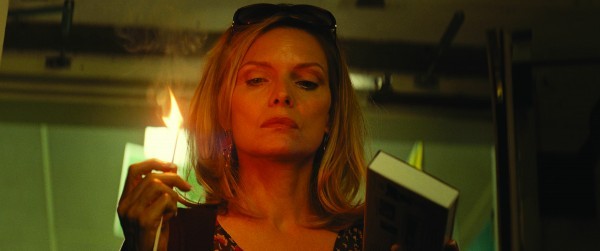
Michelle Pfeiffer in THE FAMILY

In the dark comedy The Family, the family of an American mafioso has been relocated to Europe under the witness protection program.  However, they are so violent that they keep blowing their cover and have to move again.  Here, they have just failed to fit themselves in to the sunny French Riviera and have been moved again to chilly Normandy.

The recurring joke in The Family is that these people escalate almost every human interaction into severe violence and that all the family members are highly skilled.  The mafioso is played by Robert De Niro, his wife by Michelle Pfeiffer, and both very ably deliver the deadpan comedy.  But the best performances (in the best written roles) are by Dianna Agron (Quinn in Glee)  and John D’Leo as the couple’s teenagers.  Tommy Lee Jones is also VERY briefly in the movie, as are Vincent Pastore and Dominic Chianese of The Sopranos.

Luc Besson (The Professional, District B13), the French director who celebrates American action movies, gets to make an American action comedy set in France.  I enjoyed The Family much more than I thought I would because I expected another lame culture clash comedy and instead got a darker comedy.  Still, it is what it is – a broad comedy – but a competent one.

You Will Be My Son: a good movie with a great ending

YOU WILL BE MY SON

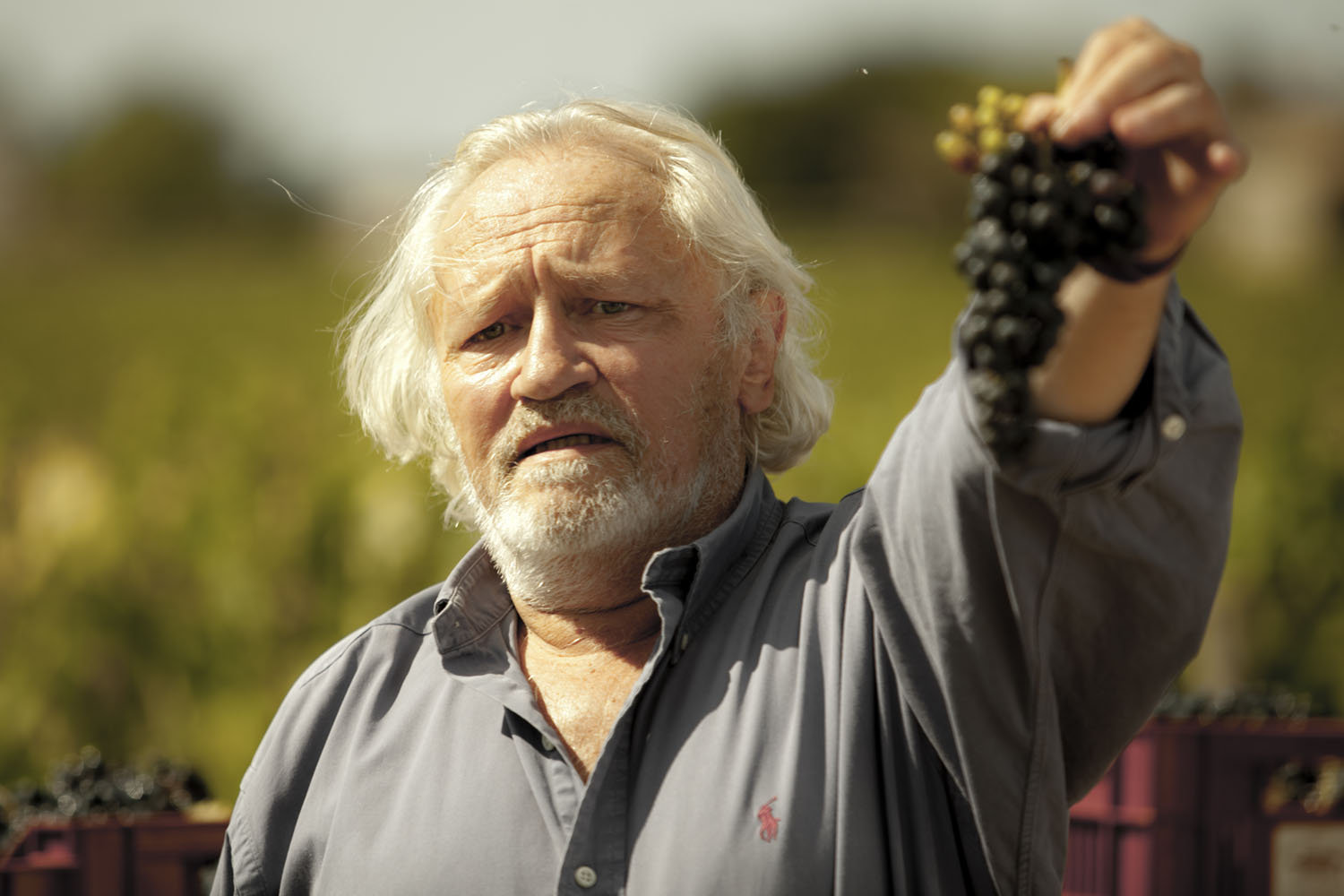
Niels Arestrup (A Prophet, War Horse) stars as the owner of French wine estate who places impossible expectations on his son, with lethal results.  The poor son has gotten a degree in winemaking, has worked his ass off on his father’s estate for years and has even married well – but it’s just not enough for his old man.  The father’s interactions with the son range from dismissive to deeply cruel.

The father’s best friend is his longtime estate manager, whose health is faltering.  The son is the natural choice for a successor, but the owner openly prefers the son’s boyhood friend, the son of the manager.  The first half of You Will Be My Son focuses on the estate owner’s nastiness toward his son, which smolders throughout the film.  But then the relationship between the sons turns from old buddies to that of the usurper and the usurped.  And, finally, things come down to the decades-long relationship between the two old men.

Deep into the movie, we learn something about the father that colors his view of his son.  And then, there’s a startling development that makes for a thrilling and operatic ending.

It’s yet another good 2013 film about fathers and sons, like The Place Beyond the Pines and At Any Price.

(This is also a food porn movie, with some tantalizing wine tasting scenes that should earn a spot on my Best Food Porn Movies.)