LEVIATHAN: the overwhelming crush of corruption

LEVIATHAN
LEVIATHAN

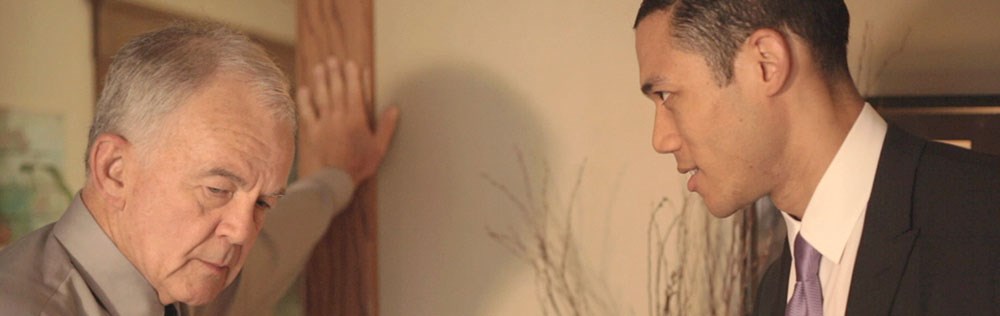
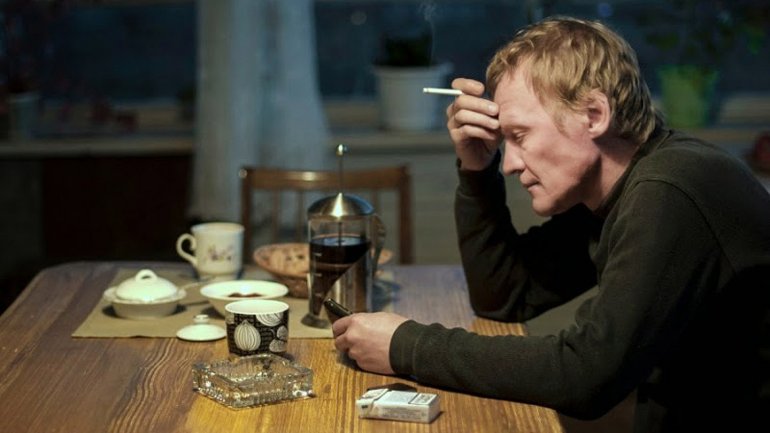
The extraordinary Russian drama Leviathan is a searing indictment of society in post-Soviet Russia – and it’s one of the best movies of the year.  A Job-like Everyman struggles to protect his home from the clutches  of the town’s corrupt mayor – and he has to battle the corruption that has permeated the political and justice systems.  The very struggle takes its toll in his relationships, too, and the audience begins to wonder just how much he’s going to be left with at the end of the story.

Despite being deliberately paced and darkly themed, Leviathan is very watchable.  The characters are superbly crafted and the story is filled with “what’s going to happen next?” moments.  Writer-director Andrei Zvyagintsev and co-writer Oleg Negin are keen observers of human nature and season Leviathan with plenty of wry humor (e.g., the mayor runs his criminal Sopranos-like enterprise from a desk under a portrait of Putin).  And there’s a surprise at the end.

Our Everyman is Kolya (Vladimir Vdovichenkov), who is hotheaded and drinks too much.  He fixes cars out of his seafront home in a bleak village on the Barents Sea.  His younger second wife Elena Lyadova is cipher.  His teenage son (Sergey Pokhodaev) is a good kid, but troubled by the death of his mother.   The performances are exceptional, along with that of Roman Madyanov as the corrupt-to-his-marrow mayor.  The mayor wants to take Kolya’s property, and their battle plays out in the courts – and in extra-judicial arenas.

And then there’s the vodka abuse.  The amount of vodka consumption by virtually every character is astounding. Expect (along with your fellow audience members) to gasp and giggle at the size of the pours.

The film’s only shortcoming is the heavy-handed symbolism employed to hammer home the hopelessness of the protagonist’s struggle,  There’s a biblical quote (from Job, of course): “Can you draw out the Leviathan with a fishhook?”, and then shots of whales and of the skeleton of a long-dead beached whale.  All this isn’t really necessary, especially with the courtroom scenes, which make the filmmakers’ point exceedingly well.

Andrei Zvyagintsev has solidified his place as one of the masters of world cinema.  Leviathan is just his fourth feature, after Elena , which made my Top Ten list for 2012, and The Return, which made my Best Movies of 2004.  Elena is available on DVD from Netflix and streaming on Vudu and Xbox Video. The Return is available on DVD from Netflix.

Leviathan was nominated for this year’s Best Foreign Language Picture Oscar, and has been critically acclaimed, currently scoring 92 on Metacritic.com. ,

Cinequest: GEMMA BOVERY

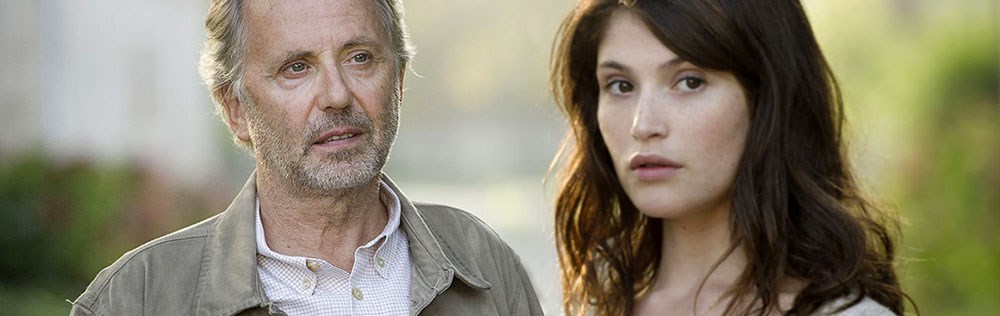
Fabrice Luchini and Gemma Arterton in GEMMA BOVERY

In the delightful dark comedy Gemma Bovery, Fabrice Luchini plays a guy who has left his Type A job in Paris to take over his father’s bakery in a sleepy village in Normandy. He gets new neighbors when a young British couple named Bovery moves in. The young British woman (played by the delectable Gemma Arterton) is named Gemma Bovery, and only the baker notices the similarity to Emma Bovary. But, like the protagonist of Madame Bovary, the young British woman is also married to a Charles, becomes bored and restless and develops a wandering eye. The baker rapidly becomes obsessed with the Flaubert novel being re-enacted before his eyes and soon jumps into the plot himself. Gemma Bovery, which I saw at Cinequest 2015, is a French movie that is mostly in English.

Fabrice Luchini is a treasure of world cinema. No screen actor can deliver a funnier reaction than Luchini, and he’s the master of squeezing laughs out of an awkward moment. For me, his signature role is in the 2004 French Intimate Strangers, in which he plays a tax lawyer with a practice in a Parisian professional office building. A beautiful woman (Sandrine Bonnaire), mistakes Luchini’s office for that of her new shrink, plops herself down and, before he can interrupt, starts unloading her sexual issues. It quickly becomes awkward for him to tell her of the error, and he’s completely entranced with her revelations, so he keeps impersonating her shrink. As they move from appointment to appointment, their relationship takes some unusual twists. It’s a very funny movie, and a great performance.

Gemma Bovery is directed and co-written by Anne Fontaine (The Girl from Monaco, Coco Before Chanel). Fontaine has a taste for offbeat takes on female sexuality, which she aired in the very trashy Adore (Naomi Watts and Robin Wright as Australian cougars who take on each other’s sons as lovers) and the much better Nathalie (wife pays prostitute to seduce her cheating hubby and report back on the details).

Gemma Bovery isn’t as Out There as Nathalie, but it’s just as good. The absurdity of the coincidences in Gemma Bovery makes for a funny situation, which Luchini elevates into a very funny movie.

Cinequest: THE HOUSE ON PINE STREET

Emily Goss in THE HOUSE ON PINE STREET

So here’s the thing with every movie ghost story – either the ghost is real or the protagonist is crazy enough to hallucinate one. The beauty of The House on Pine Street is that the story is right down the middle – ya just don’t know until the end when the story takes us definitively in one direction – and then suddenly lurches right back to the other extreme.

Jennifer (Emily Goss) is a very pregnant urbanist, who reluctantly moves from her dream life in Chicago back to her whitebread hometown in suburban Kansas.  Unlike Jennifer, her husband hadn’t been thriving in Chicago and Jennifer’s intrusive and judgmental mother (Cathy Barnett – perfect in the role) has set up an opportunity for him in the hometown.  They move to a house that is not her dream home AT ALL, “but it’s a really good deal”.

Jennifer is pretty disgruntled, and, generally for good reason – her mom’s every sentence is loaded with disapproval.   But she’s  a little too alarmed about some crumbling plaster.  Her mom’s housewarming party would be a social nightmare for anyone – but it’s too literally nightmarish for her.  One of the guests, an amateur psychic (an excellent Jim Korinke), observes, “the house has interesting energy”.

Then some weird shit starts happening: knocks from unoccupied rooms, a crockpot lid that keeps going ajar.  And we ask is the house haunted or is she hallucinating?  Her sane and sensible and skeptical BFF comes from Chicago to visit as sounding board, and things do not go well.

Co-writers and co-directors Aaron and Austin Keeling keep us on the edges of our seats.  Their excellent sound design borrows from The Conversation and The Shining – and that’s a good thing.

The Keelings also benefit from a fine lead – Emily Goss’ eyes are VERY alive.  She carries the movie as we watch her shifting between resentfulness, terror and determination.

The total package is very successful.  The House on Pine Street deserves a theatrical release.

Cinequest: SLOW WEST

SLOW WEST
SLOW WEST

I love Westerns, but Slow West just didn’t work for me. It’s a film of some ambition, and it won an award at Sundance, but the movie kept sliding in and out of self-consciousness, and I could never settle in to the story.

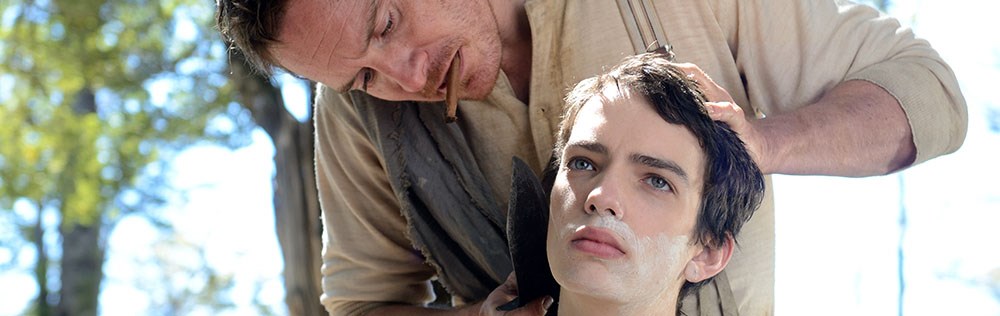
Kodi Smitt-McGee plays a sixteen-year-old Scot completely unsuited for survival in the Old West. Nonetheless, he is devoted to a young woman and he launches a determined quest to track her down. He soon picks up a veteran Westerner (Michael Fassbender) who can guide and guard him. The two, of course, have a series of adventures along the way.

There’s some appealingly dark and droll humor in Slow West (quite a few good laughs, actually). The problem is that Slow West can’t figure out whether it should have the tone of a straight Western (Unforgiven, The Homesman) or wink at the audience (Little Big Man). Accordingly, some of the period details are so wrong that they distracted me from the story.   For example, in an otherwise very funny scene with arrows and a clothesline, the Indians look like tiny, skinny Asians. Smitt-McGee employs a Scots accent in every fifth line.  And Fassbender sounds like he just stepped out of a time machine from 2015.

Slow West was filmed in New Zealand, so there are grand vistas that kind of look like the American West, but then kinda don’t. This DID work for me, because it contributed an almost subconscious edge to heighten some scenes.

Bottom line: Slow West is a mess.


Cinequest: 40 DAYS OF SILENCE

40 DAYS OF SILENCE
40 DAYS OF SILENCE

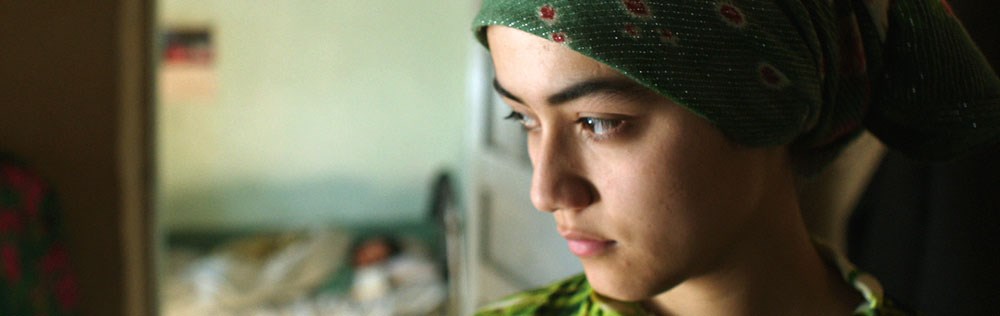
In the Uzbek drama 40 Days of Silence, a teenage Tajik girl undertakes a ritual vow of silence for forty days.  The mystery for a non-Tajik or -Uzbek audience is why she would do this?   And, we wonder, what is going to happen?

These questions are not answered definitively in 40 Days of Silence, but we sense that the stakes are life and death.  The girl’s progress is related dreamily, and it’s not always clear what is happening – or whether it is really happening.

The most outstanding aspect of 40 Days of Silence is its sound design, a collection of noises not EXACTLY music, but musical in effect.

40 Days of Silence is slow but mesmerizing.  It works as an art film, but is not for audience members that are uncomfortable with ambiguity.

Cinequest: THERE WILL BE NO STAY

THERE WILL BE NO STAY

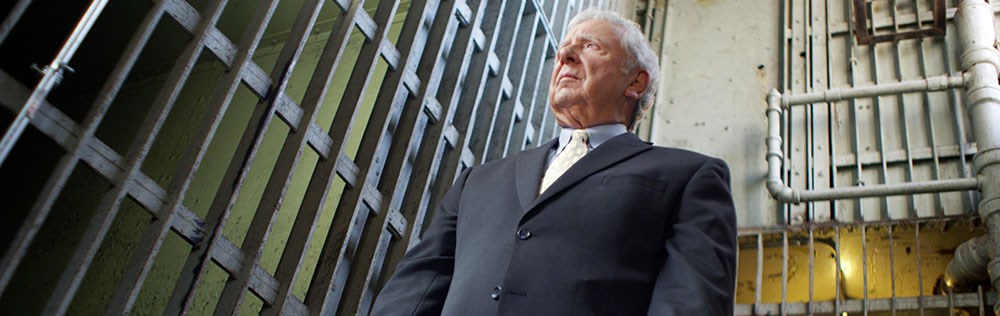
In a society with capital punishment, someone must perform the executions.  There’s a paradox inherent in the act of killing to punish killing.  In Patty Dillon’s powerful documentary There Will Be No Stay, we meet the people who live with that paradox most personally:

  • a Georgia warden who has given the order to commence executions;
  • a Texas chaplain assigned to keep the condemned placid on the gurney ;
  • and two South Carolina correctional officers who have plunged the vials for lethal injections and mashed the buttons for the electric chair.

The effect that capital punishment has had on these men – connected to neither the victims or perpetrators, is profound and thought-provoking.

Filmmaker Dillon (who also narrates) starts with an anti-death penalty point of view, but There Will Be No Stay is anything but a screed.  Having the sense to keep the movie focused on these four personal stories makes it stronger stuff.

There Will Be No Stay is filled with chilling statements like “Our eyes would meet…my eyes would be the last he would see on this planet” and “73% of Texas is in favor of execution.  I can tell you that 73% of people who have witnessed an execution are NOT in favor”.  And there are lots of factoids about the workaday aspects of contemporary American executions.  (Alarmingly, South Carolina offers no training in the operation of the electric chair – the guards just have to wing it.)

I saw the deeply affecting There Will Be No Stay at Cinequest 2015.

Cinequest: DERMAPHORIA

DERMAPHORIA
DERMAPHORIA

In the paranoid thriller Demaphoria, an amnesiac is trying to re-discover his identity and learns that he has been involved in some pretty shady and dangerous business. It’s a familiar but promising set-up. Unfortunately director Ross Clarke, who adapted the screenplay from the Craig Clevenger novel, drives this movie version right into the ground.

To start with, the beginning of the film looked so slick and superficial that I thought it was a commercial until I saw Ron Perlman, who I knew was in the film (but not for long enough). There is so much quick-cutting in Dermaphoria that I started counting the seconds between them – and I only came up with three shots that lasted over three seconds in the first eight minutes of the film. This is a bad sign – if you’re timing the duration of the cuts, you’re not engaged in the story.

Things brightened up once actor Walton Goggins (Justified) showed up. But then I realized that he was just playing Boyd Crowder while dressed as John Waters (bow tie and pencil thin mustache). And the role of his idiot henchman (Lucius Falick) was the worst screen acting I’ve seen in at least a year.

It takes a lot to keep me from sticking around to see the ending of a thriller set in New Orleans with actors that I enjoy (Perlman, Goggins), but I had to walk out.

Cinequest: EIGHTYSEVEN

EIGHTYSEVEN
EIGHTYSEVEN

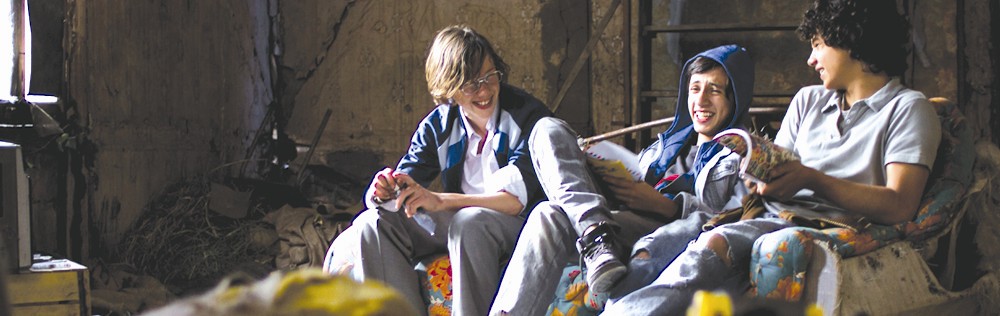
The Ecuadorian coming of age film Eightyseven traces three teenage buddies through an eventful 1987 and shows us a reunion in 2002.  Their families range from inattentive to hostile, so the guys are able to hang out at a hideaway, get up to some nocturnal hellraising and become entangled with a free-spirited girl.  And then there’s a pivotal event that changes them forever.

Eightyseven is thoughtfully written and well-crafted by promising co-writers and co-directors Daniel Andrade and Anahí Hoeneisen.  It’s a fine little film.  I saw it at Cinequest 2015.

Cinequest: IN THE COMPANY OF WOMEN

IN THE COMPANY OF WOMEN

In the Company of Women begins with a sixty-something guy hiring a male gigolo – not for sexual favors – but to be his wing man for a night on the town. The older guy’s long marriage has ended, and he thinks he needs some tips about prowling for women. This is a classic Boys Behaving Badly set-up, but In the Company of Women morphs into an unexpectedly sweet tribute to enduring love.

Along the way, there are plenty of War of the Sexes and Odd Couple laughs. There’s a very funny set of dating “rules”, and lines like “How do you expect to be yourself around women without alcohol?”.

Writer Shoji Silver stars as the cocksure and incredibly glib younger man. He is exceedingly handsome and perhaps even more cynical. As the younger man verbally jousts, the older man’s (Paul Eenhoorn) sincerity and depth come through. Eenhoorn is perfect as a guy who is earnest, but also very perceptive (he recognizes how the younger man’s emotions are sparked by the mere mention of his father). If you don’t remember Eenhoorn from the geezer road trip comedy Land Ho!, make sure you see that delight.

Director Khalil Silver (Shoji’s brother) masterfully changes the tome of the movie without a bump. The young guy starts out giving the advice on dating, but then he receives the advice from the older man on life. I saw In the Company of Women at its Cinequest 2015 world premiere, and women audience members, in particular, seemed to love it.

WILD TALES: the first Must See of 2015

WILD TALES
WILD TALES

Okay, here’s the first Must See of 2015 – the hilariously dark Argentine comedy Wild Tales. Writer-director Damián Szifron presents a series of individual stories about revenge.

We all feel aggrieved, and Wild Tales explores what happens when rage overcomes the restraints of social order. Think about how instantly angry you can become when some driver cuts you off on the highway – and then how you might fantasize avenging the slight. Indeed, there is story that has the most severe case road rage since Spielberg’s Duel in 1971.  Now Wild Tales is dark, and you gotta go with it. The humor comes from the EXTREMES that someone’s resentment can lead to.

One key to the success of Wild Tales is that it is an anthology.  In a very wise move,  Szifron resisted any impulse to stretch one of the stories into a feature-length movie.  Each of the stories is just the right length to extract every laugh and pack a punch.  The funniest stories are the opening one set on an airplane and the final one about a wedding.

The acting is uniformly superb. In one story, Oscar Martínez plays a wealthy man in a desperate jam, who buys the help of his shady lawyer fixer (Osmar Núñez) and his longtime household retainer (Germán de Silva) – until their prices get just a little too high. The three actors take what looks like it’s going to a thriller and morph into a (very funny) psychological comedy with a very cynical view of human nature.

One of the middle episodes stars one of my favorite film actors, Ricardo Darín, who I see as the Argentine Joe Mantegna. I suggest that you watch Darín in the brilliant police procedural The Secrets in Their Eyes (on my top ten for 2010), the steamy and seamy Carancho and the wonderful con artist movie Nine Queens.

Wild Tales has been a festival hit (Cannes, Telluride, Toronto and Sundance) around the world and was nominated for the Best Foreign Language Picture Oscar. I saw Wild Tales at Cinequest 2015.