MVFF: DEATH BY DESIGN – the environmental price of tech

DEATH BY DESIGN
DEATH BY DESIGN

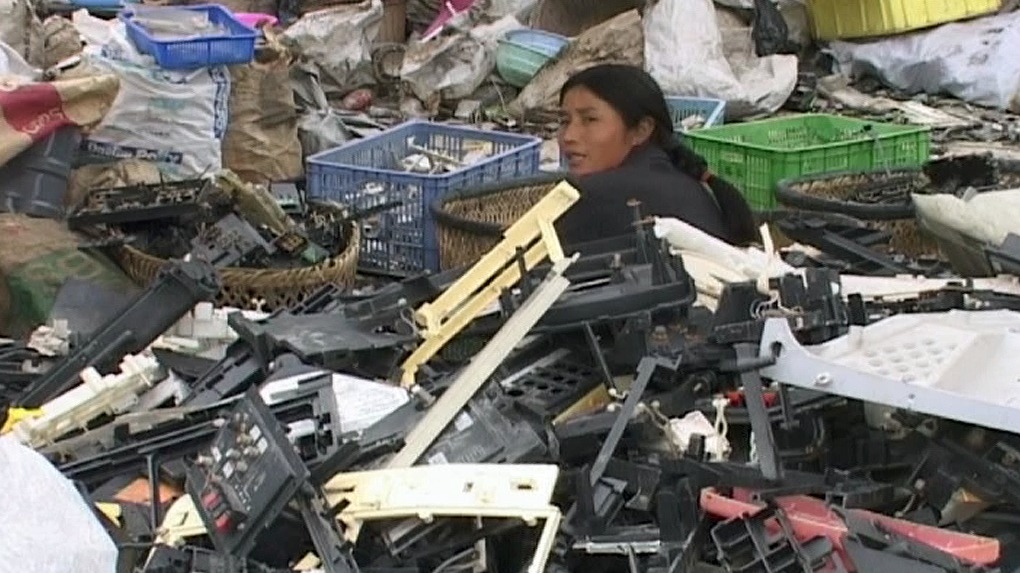
This year’s Mill Valley Film Festival features Death by Design, an important environmental exposé on the toxic impact of personal electronics. Most of us have heard that some very dangerous materials and some horrific working conditions are used in the manufacturing of our favorite devices. Death by Design is the first film to successfully tie it all together, with historical perspective, global sweep and a possible way out.

Death by Design begins with the dark side of Silicon Valley’s history, related by the sonorous voice of environmental pioneer Ted Smith, founder of the Silicon Valley Toxics Coalition.  Smith takes us through the discovery that the supposedly clean semiconductor manufacturing industry had been polluting the drinking water in some Silicon Valley neighborhoods.  Groundbreaking occupational lawyer Amanda Hawes shows us the heartbreak caused when humans ingested those toxics.

Pioneering environmental heroes, Smith and Hawes saw this coming before anyone else.  Although Smith bemoans the centuries-long impact of toxic pollution and Hawes shows us the very personal cost of occupational exposure, the two played a pivotal role in Silicon Valley history – they saved the geographic Silicon Valley from becoming much more widely and permanently despoiled.  Thanks to their efforts, Silicon Valley, ironically, is more attractive than ever for the workers and investors fueling the current tech boom.

However, economic globalization has allowed the electronics industry to simply export the environmental impact from California to developing nations, and Death by Design tours us through a tech chamber of horrors in China.

We learn that 20% of China’s arable land and 60% of its groundwater are already contaminated (not ALL the fault of high-tech). We visit the “recycling” of e-waste in Guiyu – an unimaginable industrial catastrophe. We throw stuff away, and Death by Design asks us to consider the question, “Where is away?”.

But not all of the environmental costs have been have been moved away from us. In Death by Design, we also meet scientists who fly through the sky, sampling the chemical composition of clouds and collecting aerosols; they can detect pollution in North America and trace it back to Asia.

Death by Design’s Chinese segments – in factories, homes and bodies of water – is especially impressive.  What must be shrewdly obtained footage helps us understand the plight of workers employed by the suppliers to international tech companies, including the major Apple supplier Foxconn, whose workers can suffer through 12-hour days and 7-day weeks.  Death by Design pins the labor cost at 1 percent of an iPhone’s price; the movie leaves the math for the viewers: if you triple a 1% labor cost, a $400 phone would sell for $408.

As fitting for a techie movie, Death by Design also brings us some geeks to show us that Apple designs the iPhone for an 18-month life;  you can’t extend the life by replacing the battery or other parts because Apple locks the case with proprietary screws so we can’t open it up.

If there’s a particular Bad Guy in this story, it’s Apple. I became ever more conscious that I was watching Death by Design on an iPad with Apple ear buds.

One hopeful glimmer is the introduction to the Chinese environmental entrepreneur Ma Jun, who has compiled a database of environmental impacts as a tool to press for change from within China. Another is an Irish startup that has developed fair trade computers that are updatable and reusable; their cases are built from an unexpected raw material.

Director Sue Williams maintains the topical urgency without creating a screed.  She also covers a lot of ground in a crisp 73 minutes.  And, most impressively, Williams delivers the Chinese footage necessary to complete the story.  Death by Design is one of the most important environmental documentaries – and one of the most watchable.  It plays the Mill Valley Film Festival on October 7 and 11.
DEATH BY DESIGN
DEATH BY DESIGN

THE HOLLARS: the great Margo Martindale in an unabashed crowd pleaser

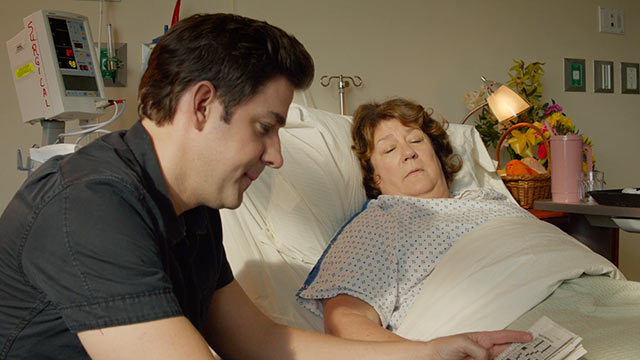
John Krasinski and Margo Martindale in THE HOLLARS

The indie dramedy The Hollars is the year’s most sure-fire crowd pleaser.  And it’s yet another showcase for the best screen actress working today, Margo Martindale.  Martindale plays the glue that tenuously holds together an otherwise dysfunctional family.  Her husband and two adult sons are each facing both career and personal struggles, and when the mother is diagnosed with a brain tumor, each member of the family starts to crumble.

As the characters face commitment anxiety, job struggles, outright failure and even death, there are lots of laughs.  I saw The Hollars in a theater and there were many LOLs from the audience, some a little delayed as the audience processed, “did he really say that?”.  For example, an oncologist greets the worried family members with a deadpan “Sorry to be late.  I was golfing.”

The actor John Krasinky directs.  He and screenwriter Jim Strouse are economical story-tellers.  The first few vignettes tells us what we need to know about the family members and their relationships to each other.

The Hollars is really about the journeys of the father and the two sons, with the mom serving as the men’s mirror, sounding board and coach.  But Margo Martindale is so good as the woman who is very wise but doesn’t have the need to let everyone know.  Every second that she’s on the screen, we feel lucky to be watching her.  The toughest job in cinema must film editor on a Martindale movie; it’s gotta be painful to leave any Martindale moments off the screen.

We first noticed Martindale in 2004 as Hilary Swank’s venal mother in Million Dollar Baby.  In Justified, she made the character of the ruthless and crafty backwoods crime matriarch Mags Bennett unforgettable.  Her heartbreaking performance in Paris je t’aime was similarly indelible.  Now age 65, she’s still at her peak.

Martindale is paired with the great character actor Richard Jenkins, who has at least two Oscar-worthy scenes as her befuddled, denial-embracing husband.  As one of the sons, Krasinksy is as appealing as usual.  Anna Kendrick is perfectly cast as the pregnant girlfriend – being nine months pregnant is a vulnerable position from which to watch your partner figure out his life.  In small parts, we are blessed with Mary Elizabeth Winstead’s piercing vibe and Mary Kay Place’s non-nonsense charm.  Josh Groban, of all people, is effective carrying off the role of the ever-smiling youth pastor who is dating one of the sons’ ex.

With all its humor, The Hollars is a weeper. Its ending is sentimental, but not maudlin or phony. I usually resist movie sentimentality, but a movie can EARN a sentimental ending with authenticity throughout, a stellar example being The Best Years of Our Lives. That’s the case here.

The Hollars is a wonderful movie to see with a companion. It looks like its theatrical run is going to fade out. But I predict that the word of mouth is going make it into a video hit once it appears on PPV and the streaming/DVD rental services. A gem.

THE DRESSMAKER: an offbeat tale of Aussie revenge

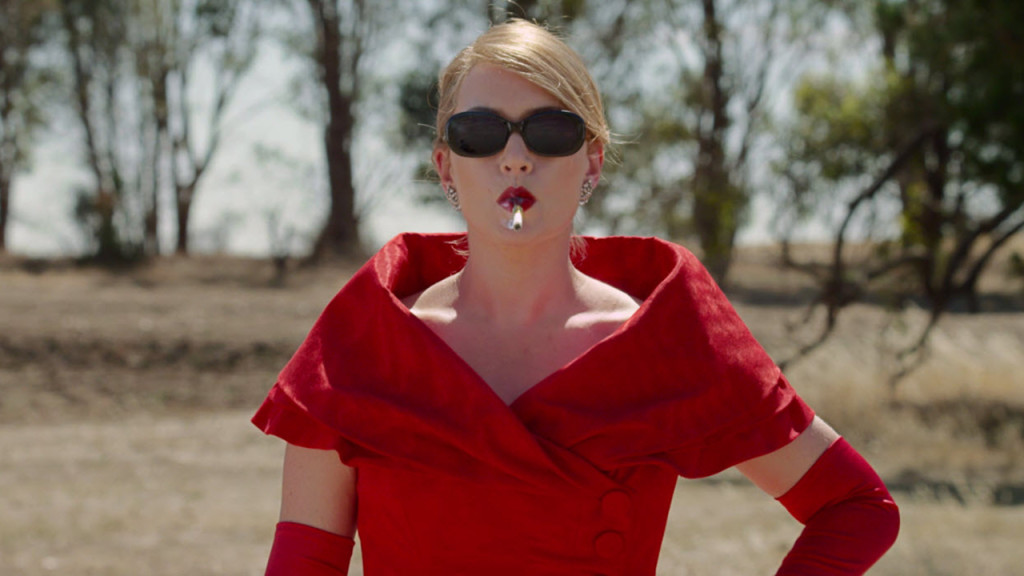
Kate Winslet in THE DRESSMAKER

In the comedy The Dressmaker, a woman (Kate Winslet) returns to her remote Australian home village with revenge on her mind.  She was run out-of-town as a child for something that she can’t remember, and has become a successful Parisian dress designer.  She’s come back to resolve the mystery and, when she finds that the hateful townspeople have left her mother (Judy Davis) to decompensate, she’s ready to unleash vengeance on a Biblical scale.  It’s set in the early 1950s.

Be ready for this comedy to darken considerably in its final segment.  The first 90 minutes weave together an excellent comedy, an ordinary whodunit and a run-of-the-mill romance.  Then a tragic occurrence takes the movie to very serious place and unspools  a VERY darkly funny revenge finale, which is both over-the-top and satisfying.  But the shift in tone is jarring, and the movie as a whole is very uneven.

The Dressmaker is, however, very well-acted.  Winslet is good in a very broad role.  Judy Davis, 37 years after becoming an art house favorite in My Brilliant Career,  gleams with energy as the vibrant and demented mother.  Sarah Snook is particularly notable in one of the great “makeover” roles, transitioning from ugly duckling to local princess while retaining the same nasty personality.

My favorite performance in The Dressmaker is Hugo Weaving’s.  I’ve been a fan of Weaving since he so compellingly played a blind man in the 1991 Proof (also our first look at a very young Russell Crowe).  Since then, Weaving has earned iconic roles in the Matrix movies and V for Vendetta and is usually the most interesting performer in big budget movies.   In The Dressmaker, Weaving plays the town constable, a minor official with a very peculiar secret proclivity.  Totally committed to the part, Weaving is flamboyant fun.

All in all, The Dressmaker is generally entertaining, if not cohesive.

Stream of the Week: A COUNTRY CALLED HOME – to move on, she needs another look at her past

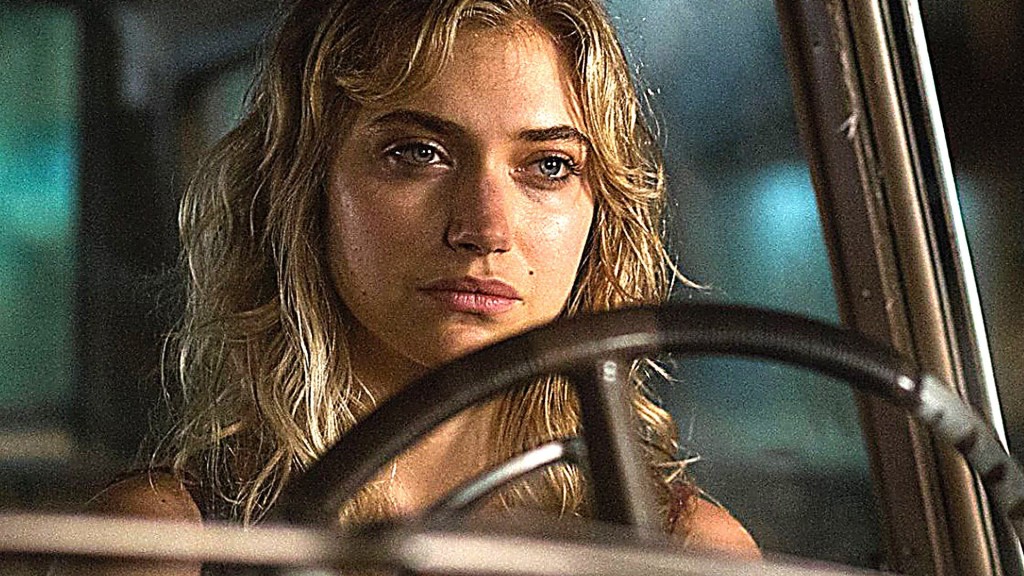
Imogen Poots in A COUNTRY CALLED HOME

This week’s video recommendation is a totally overlooked drama from earlier this year, A Country Called Home. Somehow A Country Called Home missed out on any significant theatrical release even though it’s a very satisfying Finding Yourself drama.

Imogen Poots plays Ellie, a young Los Angeles woman with an underachieving job and a lousy boyfriend who takes her for granted. She hears that her estranged father has become gravely ill, and we learn that she has escaped a Texas childhood with an alcoholic father. Her brother (Shea Whigham) also lives in Los Angeles; he is flourishing and doesn’t care a whit about their father – the brother has moved on from his upbringing. But Ellie is a poster girl for low-self esteem, and she feels obligated to travel to her father’s bedside.

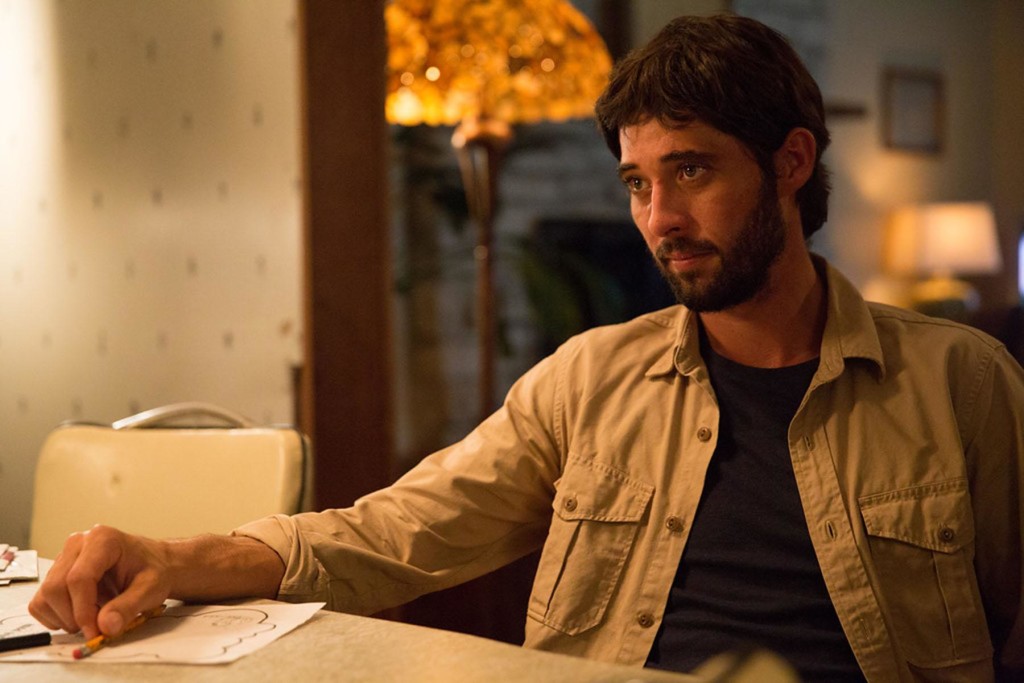
Ryan Bingham in A COUNTRY CALLED HOME

Once in Texas, she finds that her father has just passed, leaving the detritus of his alcoholic life. Everything in her old hometown is trashy, complicated or just plain unsupportive. She meets a misfit wannabe singer-songwriter (Mackenzie Davis unrecognizable from Bad Turn Worse). And there’s a pressured-out single dad played by the sad-eyed Ryan Bingham (the Oscar-winning songwriter for Crazy Heart).

A Country Called Home is the debut feature for director and co-writer Anna Axster, and it’s a successful and engaging study of a woman finally emerging from a childhood with an alcoholic parent. It turns out that, to move on with her life, she needed another look at where she came from.

A Country Called Home can be streamed from Netflix Instant, Amazon Instant, iTunes, Vudu, YouTube and Google Play.

DON’T THINK TWICE: dramedy in the world of comedy

DON'T THINK TWICE
DON’T THINK TWICE

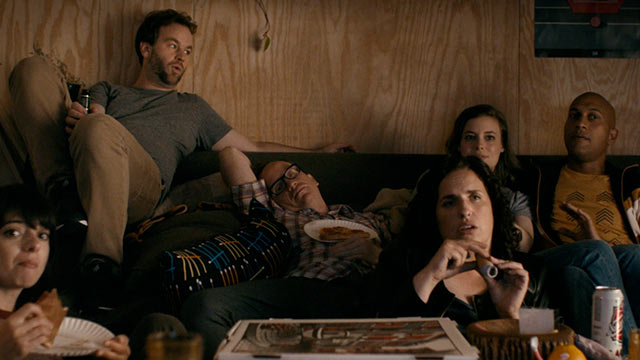
Don’t Think Twice is a dramedy set in the world of comedy. Six artists of varying talent have formed an improvisational comedy troupe. They’re scraping by without much affirmation and with no financial success when one of them gets a chance to join the cast of a hit show a la Saturday Night Live. How do they react when only one attains the stardom that they all crave?

The comic Mike Birbiglia wrote and directed Don’t Think Twice about a world that he knows well. Like his previous Sleepwalk with Me, Don’t Think Twice is smart, funny and filled with authentic human reactions.

Here are the questions that Don’t Think Twice explores. When is “following your dream” an excuse for staying comfortable? When is it delusional? When is it an excuse to sabotage your own success? And when does following your dream keep you from following a more promising dream? When do you call it off?

Keegan-Michael Key and Gillian Jacobs flash the best performances, but the entire troupe is watchable. Generously, Birbiglia plays the least sympathetic character himself. Birbiglia, who is in real life a brilliant comic, is up to the challenge of playing someone whose talent just falls short.

Key is half of Comedy Central’s Key and Peele, creators of the hilarious viral sketches Obama’s Anger Translator and East/West College Bowl (Ozamataz Buckshank!).

Because it is about very funny people who work in comedy, Don’t Think Twice is very witty. It’s also packed with moments of Cringe Humor, and we’re cringing because we’ve seen these behaviors in our own lives. This is another good little movie by Mike Birbiglia.


coming up on TV: THE CONVERSATION

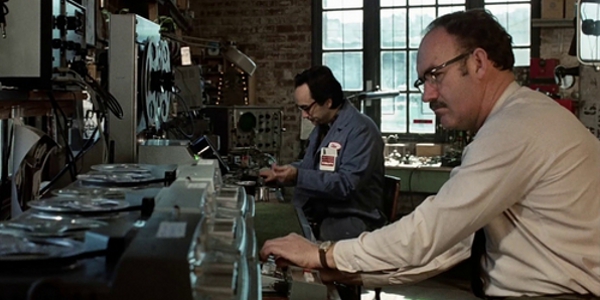
John Cazale and Gene Hackman in THE CONVERSATION

Friday, September 9, Turner Classic Movies is presenting one of the greatest movies ever – The Conversation (1974).  At the height of his powers, Francis Ford Coppola directed The Conversation between The Godfather and The Godfather: Part II, and The Conversation is every bit the masterwork as the others.

In a role just as iconic as in The French Connection, Gene Hackman plays an audio surveillance expert entangled in a morally troubling assignment – and then obsessed. Veteran character actor Allen Garfield is just as good and the irreplaceable John Cazale makes us cringe and ache as always. Look for a very young Harrison Ford and for a glimpse of an uncredited Robert Duvall as a corpse.

The most significant achievement in The Conversation, however, is the groundbreaking sound editing by Walter Murch. After experiencing The Conversation, you’ll never again overlook movie sound editing.

HELL OR HIGH WATER: best movie of the year so far

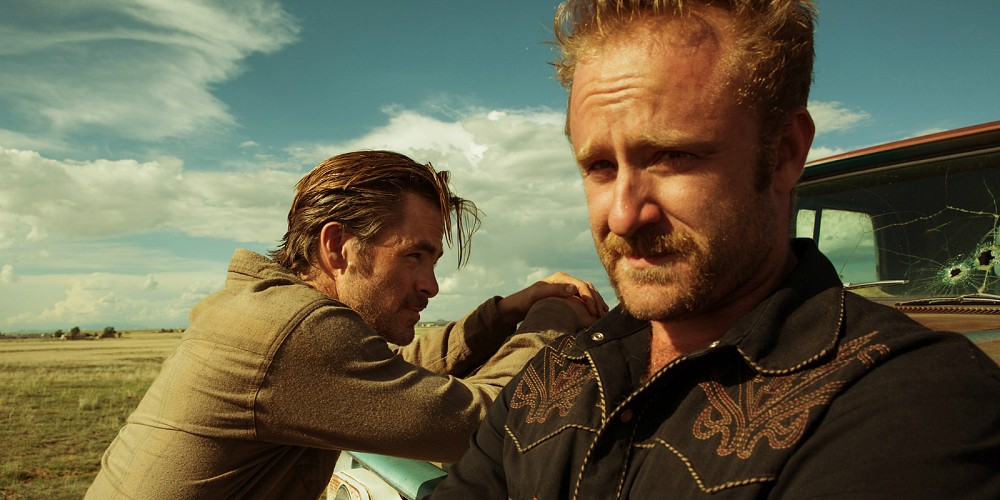
Chris Pine and Ben Foster in HELL OR HIGH WATER

Toby: “You’re talkin’ like you don’t think we’re going to get away with it.”
Tanner: “I never met anyone who got away with anything.”

The character-driven crime drama Hell or High Water is remarkably atmospheric and gripping, and I’ll be putting it at the very top of my Best Movies of 2016 – So Far.  As it begins, we think we’re watching a very well-made film about white trash losers on a crime spree, but eventually, as we understand how original the characters are and how intricate the plot is, we understand that we’re watching a triumph of the perfect crime genre – and with an embedded political point of view.  Screenwriter Taylor Sheridan, an actor who wrote last year’s Sicario, has proven that he is an artist of uncommon depth.

Director David Mackenzie imbues Hell or High Water with an astonishing sense of time (the present) and place (rural West Texas).  The story is set in the dusty flatlands between Lubbock and Wichita Falls (shot just over the border in eastern New Mexico).    Mackenzie employs Giles Nuttgens’ cinematography and the music, some composed by Nick Cave, to evoke an environment that is rich in horizons but, except in the bursts of occasional oil booms, dirt poor in every way.  He begins Hell or High Water with a 360 degree shot of a bank branch parking lot with a teller sneaking the last cigarette before her shift; the starkness and anonymity of the dying downtown immerses us right where Mackenzie wants us.

It’s a place where people know the difference between Dr. Pepper and Mr. Pibb – and it’s important.  It’s also a place where many civilians are gun-totin’, which adds a whole new element to the average bank robbery.

Toby (Chris Pine) and Tanner (Ben Foster) are brothers.  Toby is the more complex – both poorly educated and wise.   While Toby takes personal responsibility for the bad choices of his youth that have ruined a marriage and left him unable to contribute to the future of his two sons, he appreciates that generational poverty and the economic system have stacked the odds against him.  Toby cared for his dying mother and is now committed to making things right for his sons and ex-wife; he is highly moral but he’s not about to follow rules that he sees as unjust.  He looks like another unemployed oilfield roughneck, but he’s surprisingly cagey and strategic.

Tanner is the classic lowlife psychopath, whose impulses have always led him into trouble with the law.  Asked “How have you stayed out of jail for a year?”, Tanner replies,  “It’s been difficult.”  He’s also a little smarter and lot more charming than he looks, but it’s clear that he is destined for a bad end.

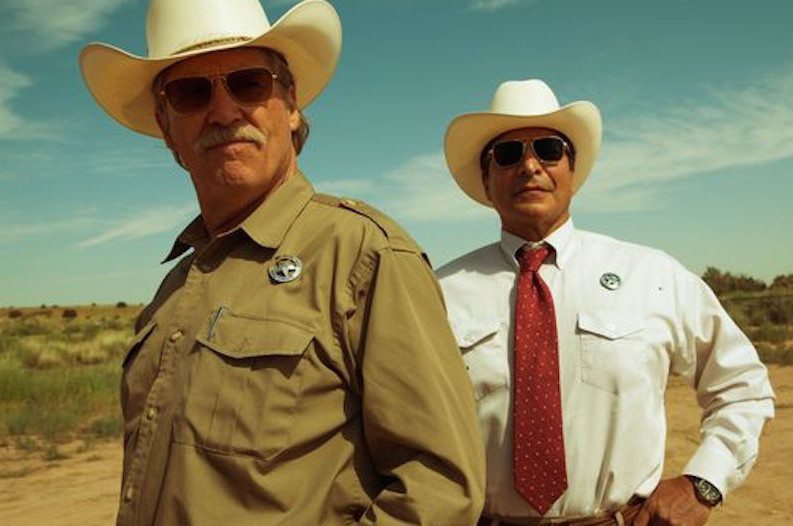
Marcus Hamilton (Jeff Bridges), an aged Texas ranger who is three weeks from retirement, is on the brothers’ trail.  Marcus is an astute and unsentimental student of human behavior.  Marcus relishes a good whodunit, and the wheels in his mind are always turning. His partner Alberto (Gil Birmingham) offers that, for a happy retirement “you’ll need someone to outsmart”.  Indeed, it’s from Marcus, not the brothers themselves, that we learn that the bank robbers are likely raising money for some cause, against some deadline

In Hell or High Water, the banks are the real robbers.  Marcus spots a bank manager with “Now this looks like a man who could foreclose on a house”. In the world of Bonnie and Clyde, victims of the Depression lost farms to foreclosure, but many banks failed, too; that movie’s anti-heroes were misfits like Tanner. In the world of Hell or High Water, the game is fixed so that the banks can’t fail, and so banking is just legalized criminality.

Jeff Bridges and Gil Birmingham in HELL OR HIGH WATER

Hell or High Water is exceptionally well-acted. This is the best work so far by Chris Pine (Kirk in Star Trek). Ben Foster, unsurprisingly, nails the Born To Lose character of Tanner. Gil Birmingham (Billy Black in the Twilight movies) is stellar as Marcus’ reflective and long-suffering partner Alberto. Jeff Bridges has matured into a master actor who delivers absolute perfection and makes it look effortless.

And the high quality performances just keep coming throughout Hell or High Water. The film opens with nice turns by Dale Dickey (unforgettable in Winter’s Bone) and veteran Buck Taylor. Marin Ireland is excellent as Toby’s ex-wife, and Margaret Bowman sparks a diner scene as the world’s most authoritarian waitress. Katy Mixon is Oscar-worthy in a role as a waitress who may long for companionship, but really, really needs to keep her tip; I just hope enough people see this movie and experience Mixon’s eyes narrowing and gleaming with resolve.

While Jeff Bridges is reason enough to see Hell or High Water, all of its elements add up to a masterpiece.  Not that Chris Pine needs a star-making breakthrough performance, but Hell or High Water certainly proves that he can carry a better movie than Hollywood franchises allow.  I’m going to see Hell or High Water again; then I’m going to line up to see Taylor Sheridan’s next film, whatever and whenever that will be.

coming up on TV: DOWNHILL RACER

DOWNHILL RACER
DOWNHILL RACER

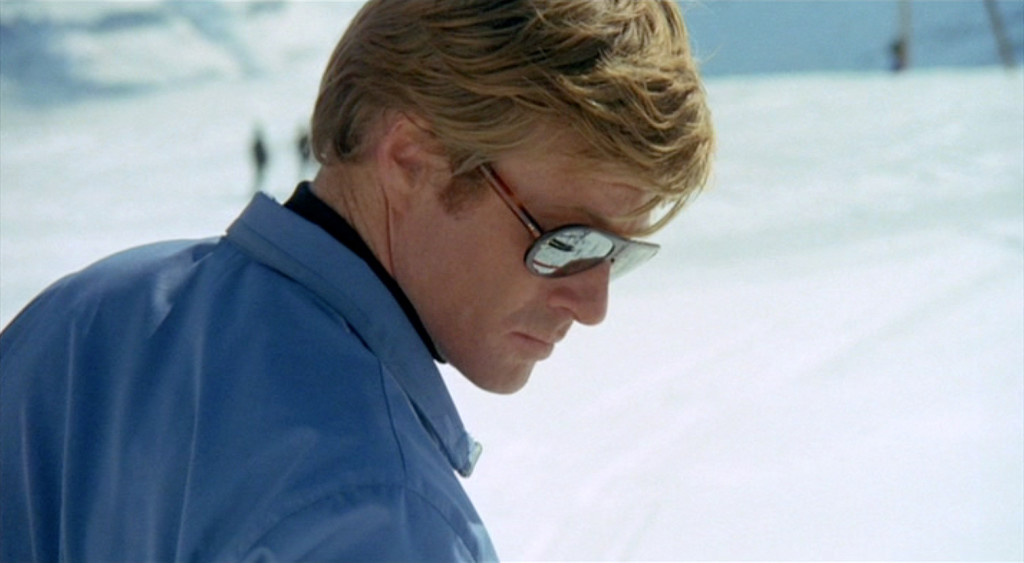
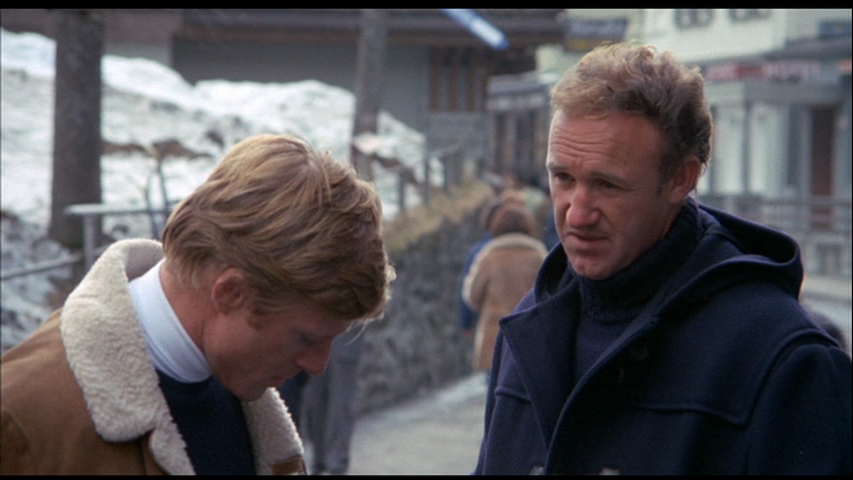
On September 2, Turner Classic Movies is airing 1970’s Downhill Racer, set in the world of competitive Alpine skiing. Robert Redford plays a handsome and talented, but insolent, ski star with daddy issues and a tendency to self-sabotage. As he strives to make the US team, he clashes with the no-nonsense coach (Gene Hackman). Downhill Racer came at a pivotal point in the careers of Redford, Hackman and the director Michael Ritchie.

As a filmmaker, Ritchie was comfortable telling a story without much dialogue – very spare, Hackman’s character is terse, and Redford’s is a sphinx. Redford’s character, especially, is often quietly observed as he goes about his business, emphasizing his self-isolation. The ski races are classic, with soundtrack adorned only with the swishing of the skis and the crunching of the snow.

Downhill Racer remains at the top of the ski movie genre. The great sound is matched by beautiful mountain visuals and groundbreaking camerawork.

To most Americans, alpine skiing was pretty new and sexy in 1970. We had become familiar with the sport through ABC’s Wild World of Sports and the 1968 Olympics, dominated by the handsome Jean-Claude Killy. The sport’s American stars were not from the among the affluent Americans who took ski vacations, but from workaday kids who grew up in the Rockies – just like Redford’s character.

When they made Downhill Racer, the three principals were each at the cusp of stardom. Ritchie had directed lots of TV, but this was his first theatrical feature. He followed it with his masterpiece The Candidate, still the best film ever about American politics. He followed that with work that included The Bad News Bears, Semi-tough, Fletch, The Scout and The Positively True Adventures of the Cheerleader-Murdering Mom; note that, except for Fletch, those films centered on competition in sports and politics.

Redford became well-known for Barefoot in the Park in 1967 and then a huge star with Butch Cassidy and the Sundance Kid (1969). In 1970, he was poised for an amazing run with The Candidate, Jeremiah Johnson, The Way We Were, The Sting, The Great Gatsby, The Great Waldo Pepper, Three Days of the Condor and All the President’s Men – all made in the FIVE years 1972-1976

Gene Hackman had a memorable supporting turn in 1967’s Bonnie and Clyde and then starred in The Gypsy Moths (1969). He made Downhill Racer just before his career exploded with I Never Sang for My Father, The French Connection, The Conversation and his two Oscars.

Robert Redford and Gene Hackman in DOWNHILL RACER

THE BANDIT: a buddy movie about a buddy movie

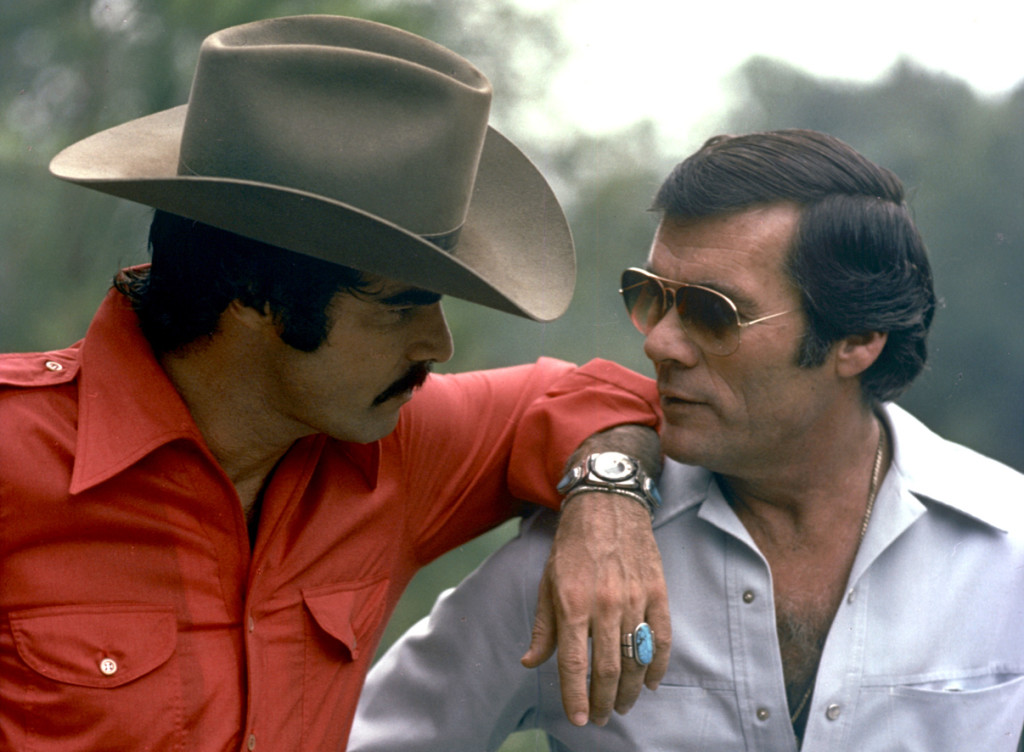
Burt Reynolds and Hal Needham in THE BANDIT. Photo courtesy of the San Francisco Film Society.

Writer-director Jesse Moss describes The Bandit as “a buddy movie about a buddy movie”, and he’s right. The buddies are mega-star Burt Reynolds and his stuntman/friend/roommate Hal Needham, who directed the enormously successful Smokey and the Bandit franchise.

Needham, one of only two stuntmen with an Oscar, is arguably cinema’s greatest stunt performer and stunt coordinator. Reynolds did many of his own stunts, and we we see some hard, hard falls in The Bandit. But Burt did nothing to nothing to match Needham, whose FIRST career stunt was jumping off an airplane wing to tackle a rider off his horse. We see many instances where Needham became a LITERAL car crash test dummy.

One of The Bandit’s highlights is the Needham stunt that broke his back – jumping a car off a dock and onto a barge – and slamming into the barge a little short.

There’s rich source material here from Burt’s garage (Reynolds calls it “King Tut’s Tomb for documentarinans”), which stored tapes back to 1956.

For added color, Needham and Reynolds were epic partiers, who embraced and exemplified the Mad Men era. Needham was a vivid character and lived a helluva life. I strongly recommend Terry Gross’ Fresh Air interview with Needham.

Hal’s widow told Bay Area filmmaker Jesse Moss that Needham hated documentaries because they were boring, so Moss aimed to make a documentary that Hal would enjoy. Indeed, The Bandit opens with the sly Reynolds, in maroon leisure suit with flared pant legs, mocking his own image outrageously. And, it’s a hoot throughout.

(Moss’ first movie was at San Francisco’s Castro Theater in 1979, when his dad took him a double feature of Erroll Morris’ Gates of Heaven and Hardware Wars, a documentarian born!)

I saw The Bandit at its premiere at the San Francisco International Film Festival (SFFILM). It played on TV channel CMT, and now can be streamed on Amazon, Vudu, YouTube and Google Play.

CAFE SOCIETY: does she pick the big shot or her soul mate?

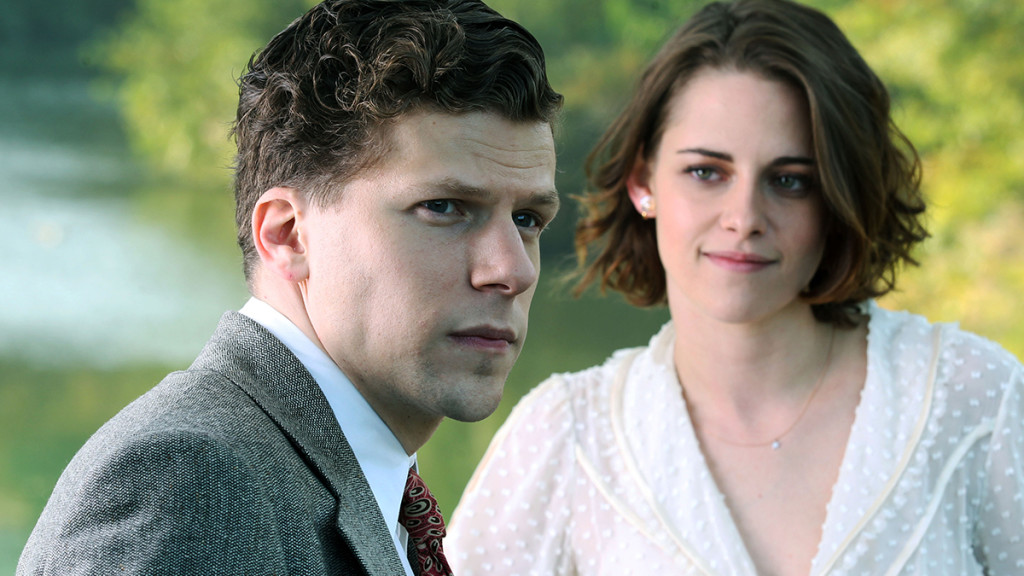
Jesse Eisenberg and Kristen Stewart in CAFE SOCIETY

Woody Allen’s Café Society is an entertaining comedy centered on a love triangle. Because it takes awhile for all of the characters in Café Society to catch on to the identities of those involved in the triangle, there is an element of Shakespearean comedy of errors.  It’s witty and well-crafted, but not compelling enough to make it a Must See.

The three stars – Jesse Eisenberg, Kristin Stewart and Steve Carell – are excellent.  Corey Stoll (so compelling as Congressman Peter Russo in House of Cards) makes for a fine gangster-in-the-family.  And it’s great to see Jeannie Berlin, who has only made six other features since 1972’s The Heartbreak Kid, have so much fun as a solidly Jewish mother and exasperated wife.

Café Society is an example of why Kristin Stewart is a movie star.  Repeatedly, the camera lingers on her face in close up as the audience watches her silently express thoughts and feelings that she is withholding from the other characters.  I found her performance to be magnetic and compelling.  Now, on the way to dinner after watching this film, my opinion was shot down by The Wife, who continues to view Stewart’s acting as grossly overrated.  So there’s that.

Stewart showed much promise at the beginning of her career by effectively playing emotionally tortured and rebellious young women in Into the Wild, Adventureland and The Runaways.  That launched her stardom in the Twilight franchise, in which she was oft criticized for biting her lower lip in seemingly every scene.  I admired her performance in another recent movie that I didn’t like (Clouds of Sils Maria), and I think that she’s developed into a fine actress.

Woody’s DP for Café Society is Vittorio Storaro, the storied cinematographer for Apocalypse Now, The Last Emperor and the beautifully shot 1990 Sheltering Sky (with Debra Winger and John Malkovich). Café Society’s Old Hollywood and 30’s nightclub scenes look authentic and enticing.

The core of Café Society‘s story is whether two soul mates are destined to be together or be apart. To explore this theme with better movies, I recommend the comedy Drinking Buddies and the drama Mademoiselle Chambon.

As I promised yesterday, here’s a link to Ronan Farrow’s My Father, Woody Allen, and the Danger of Questions Unasked.

Woody Allen is 81 and continues to make a movie each year.  In the last decade, his ten features have included some stinkers (Irrational Man, To Rome with Love), an excellent comedy (Vicky Christina Barcelona),  an unforgettable acting showcase (for Cate Blanchett in Blue Jasmine) and a masterpiece (Midnight in Paris).  Any auteur should be satisfied with that record. In the middle of that pack, Café Society is a well-made diversion.