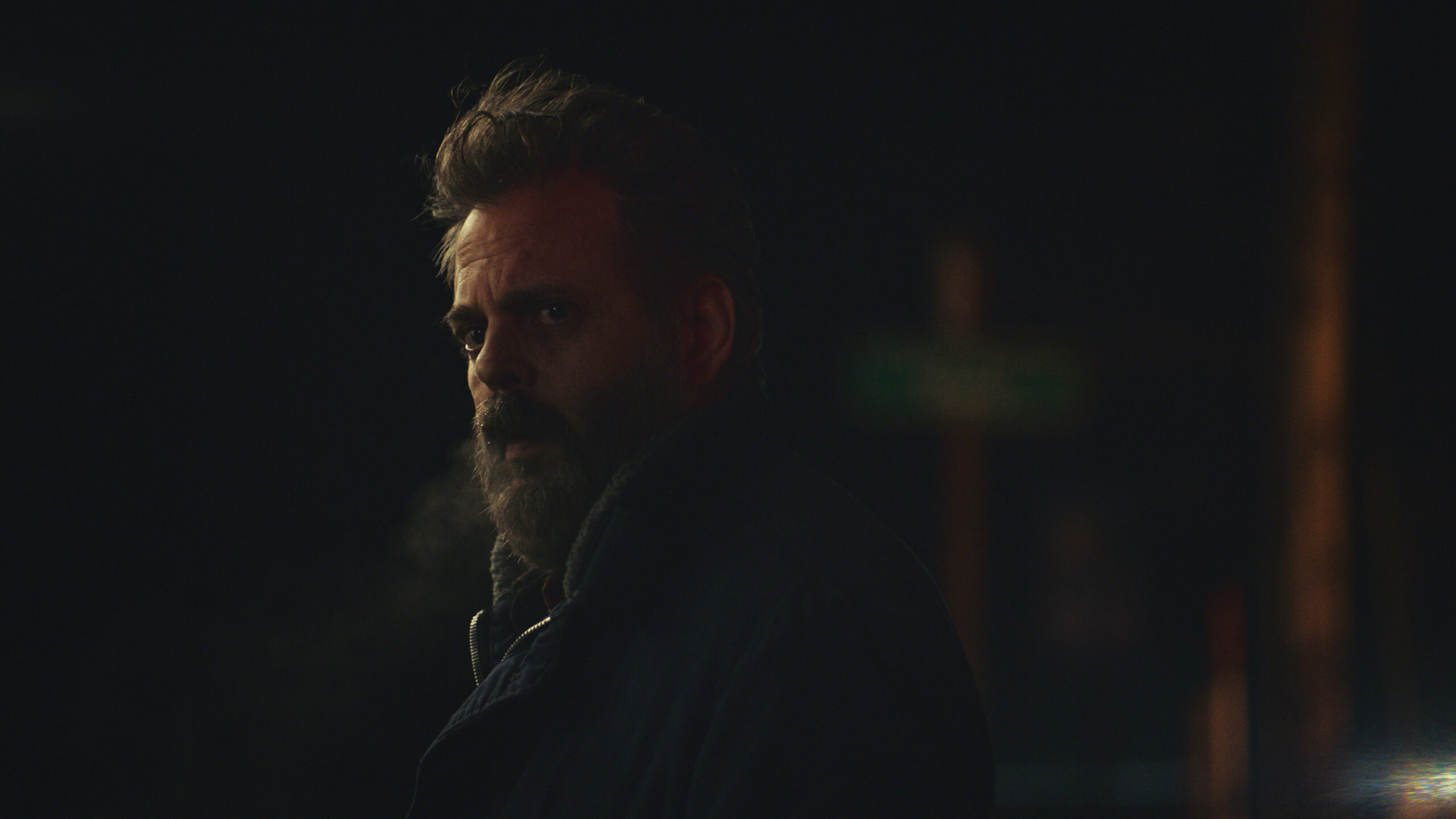
Photo caption: Mohammed Ghassan (right) in TO A LAND UNKNOWN. Courtesy of Watermelon Pictures.
The searing thriller To a Land Unknown takes us to Athens, into the underground world of Palestinian migrants stuck until they acquire false passports that will get them into Germany. Yasser (Mohammed Ghassan) is a decent family man forced into low level criminality to survive and raise money for the forged passport; he is also burdened by responsibility for his cousin, whose drug addiction is a ticking bomb. Repeatedly exploited and defrauded, Yasser conceives of one very risky way out – to scam the very human traffickers preying on him.
Ghassan is excellent, as is Angeliki Papoulis as a fun-loving but clear-eyed Greek woman also living in the margins.
To a Land Unknown is the gripping first feature for Dubai-born Mahdi Fleifel, who works between Britain, Denmark and Greece.
I screened To a Land Unknown for the Nashville Film Festival and recommended it in my Under the radar at Nashville. After a brief arthouse run, To a Land Unknown is streamable from Amazon, AppleTV and YouTube.
If you have Amazon Prime, you currently have free access to some top-rate thrillers:
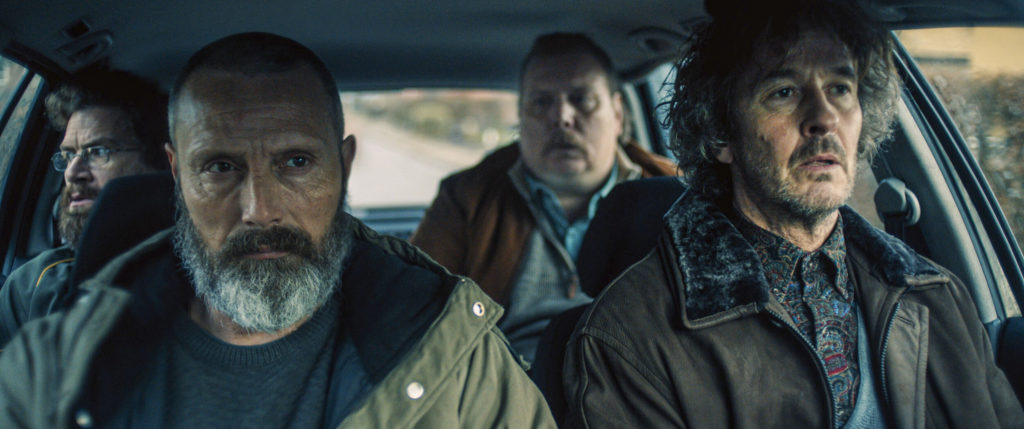
Riders of Justice: This overlooked gem finished #2 on my Best Movies of 2021. Mads Mikkelsen stars in a character-driven story that has been inadequately described as a revenge thriller and as an action comedy. It is gloriously satisfying as entertainment, but the more I think about it, Riders of Justice explores grief, revenge and mortality – they’re all in here. And it’s still very, very funny.
Locke: An extremely responsible guy (Tom Hardy) has made one mistake – and he’s trying to make it right. But trying to do the responsible thing in one part of your life can have uncomfortable consequences in the others. The title character drives all night trying to keep aspects of his life from crashing and burning. The story is actually a domestic drama – there are no explosions to dodge, no one in peril to rescue and no bad guys to dispatch. But it’s definitely a thriller because we care about whether Locke meets the two deadlines he will face early the next morning.
Blue Ruin: In this entirely fresh take on the revenge thriller, we are following a homeless man (Macon Blair) and observing his survival tactics; once we’re hooked, we learn that a traumatic incident led to his homelessness. Then we watch him methodically prepare for an entirely different mission. There is very little dialogue in the first 30 minutes. And then we have 60 minutes of lethal cat-and-mouse, with intense suspense about which of the characters will survive and how. As a thriller, this is first class.
The Hunt (Jagten): In a terrifyingly plausible story, Mads Mikkelsen plays a man whose life is ruined by a false claim of child sexual abuse. It’s a magnificent performance by Mikkelsen.
The Hit: Terence Stamp plays a London gangster who, after ratting out his colleagues, is ten years into a new life in sunny Spain. His former associates track him down and send a determined professional killer (John Hurt) and his goofy young sidekick (Tim Roth in his movie debut). A tense road trip ensues.
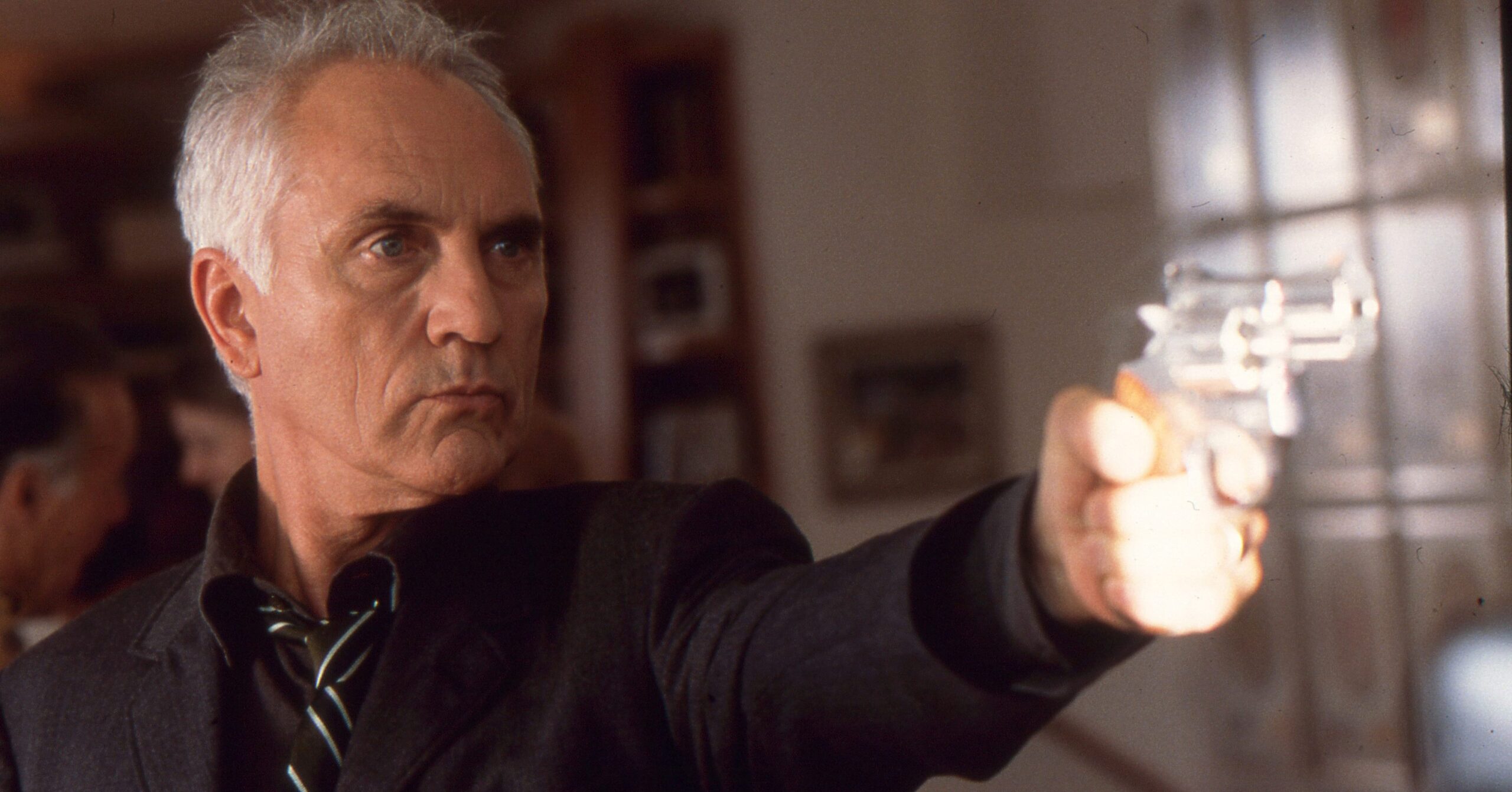
Terence Stamp in THE LIMEY
The Limey: This time, Terence Stamp plays a tenacious British hood who shows up in Los Angeles to investigate the death of his daughter. He suspects foul play on the part of a wealthy record producer (Peter Fonda) who hunkers down in a guarded compound in Big Sur.
The Last Seduction: I just wrote about this 1994 neo-noir as part of my The Last Movie Title series. Linda Fiorentino dazzles in a career-topping performance as delicious performance as a sociopath more outrageously devious than any character that Barbara Stanwyck, Audrey Trotter, Jane Greer or Claire Trevor ever got to play.
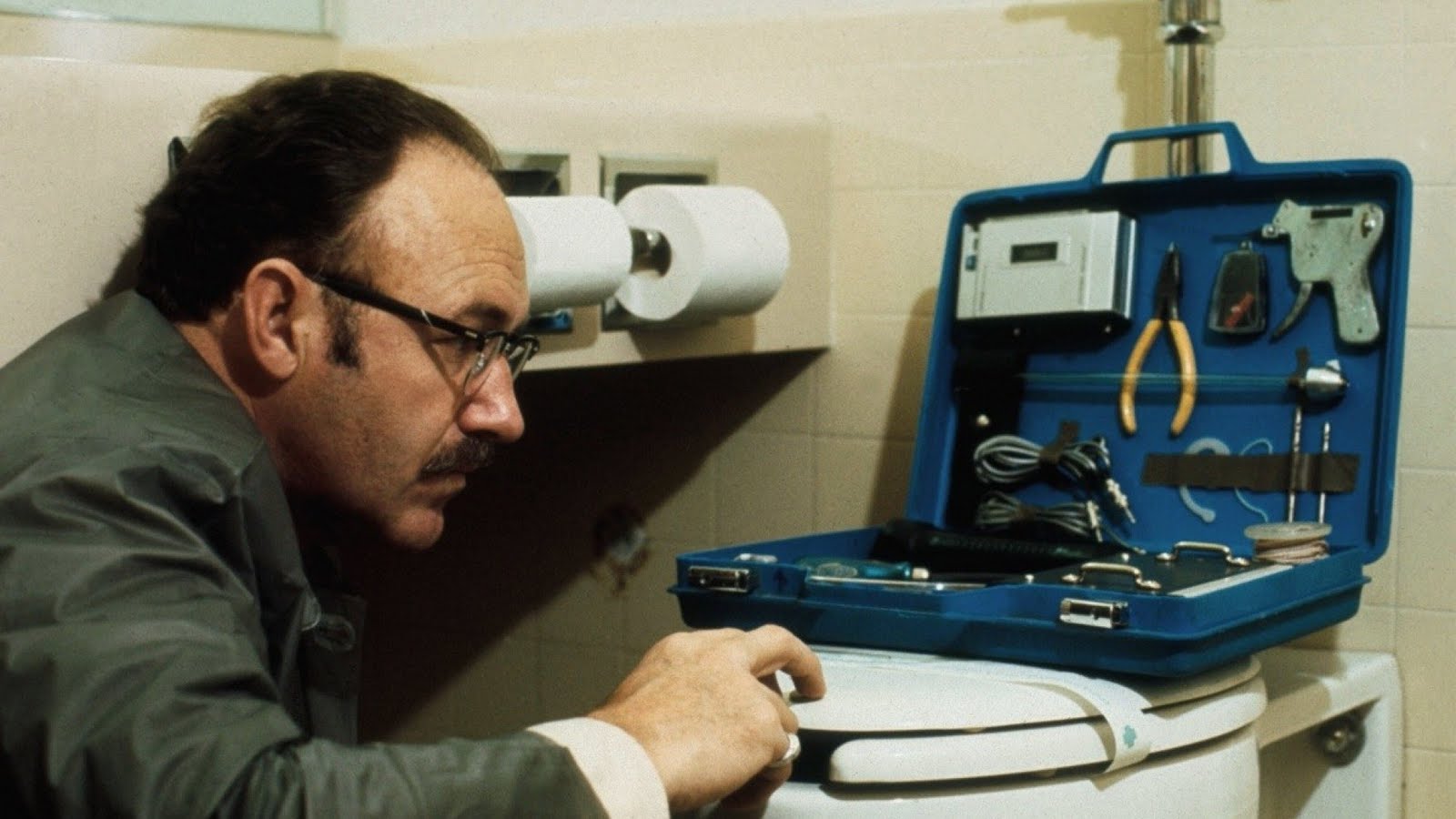
The Conversation: At the height of his powers, Francis Ford Coppola directed The Conversation in 1974 between The Godfather and The Godfather: Part II, and The Conversation is every bit the masterwork as the others. In a role just as iconic as in The French Connection, Gene Hackman plays an audio surveillance expert entangled in a morally troubling assignment – and then obsessed. The most significant achievement in The Conversation, however, is the groundbreaking sound editing by Walter Murch. After experiencing The Conversation, you’ll never again overlook movie sound editing.
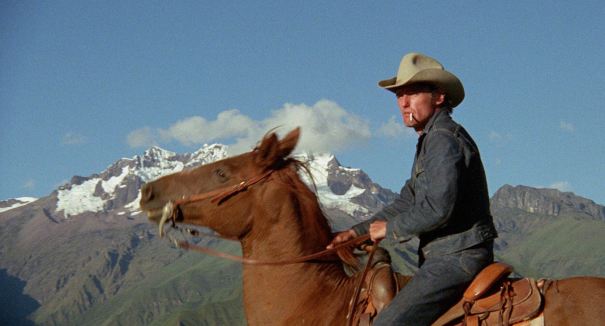
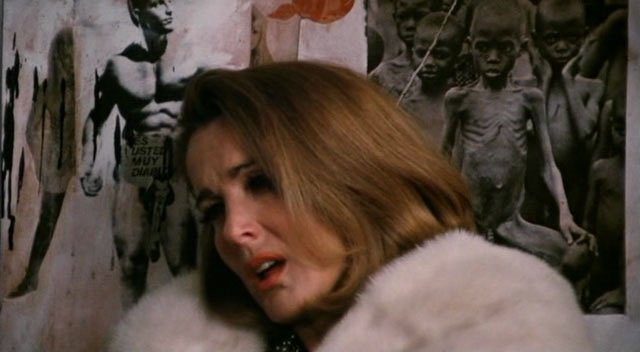
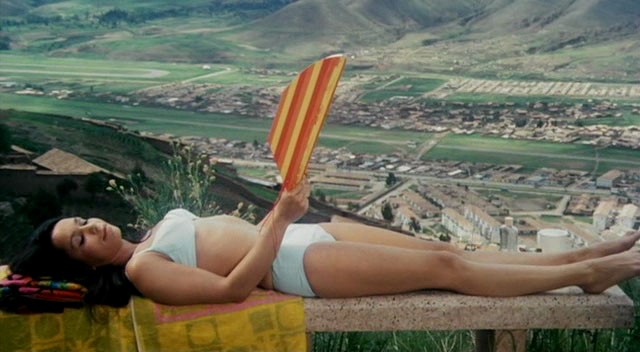
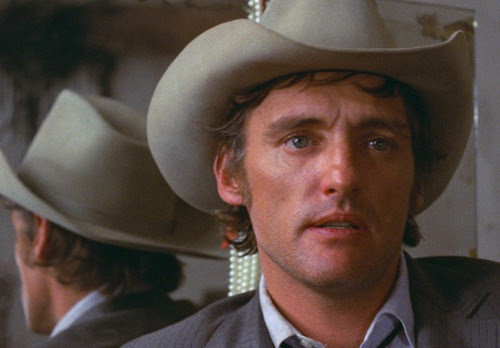
The Last Movie is Dennis Hopper’s notoriously “lost film”, buried by a hostile movie studio in 1971 and still generally unavailable. Given Hopper’s drug addled, out-of-control state during this decade, I was expecting a mess. But what is on the screen is an excellent 1970s art film, beautifully shot by László Kovács. There is a surreal thread that not everyone will buy into, but I think the movie works as a whole.
Hopper plays a Hollywood horse wrangler who is in Peru for a location shoot. He has gone native. setting up local girlfriend Maria (Stella Garcia) in a modern house. He’s already alienated, but a fatal accident on the movie set triggers him into rejecting Western modernity in favor of indigenous Peru. His paradise in the Andes becomes elusive as he meets Ugly American visitors. And then things get really weird, as the local indigenous people begin acting out the movie shoot – only without film. It is a parable of colonialism.
That weirdness, Hopper’s experimentation with the non-chronological construction of the film and some disjointedness/incoherence in the story will be off-putting for many viewers and keeps The Last Movie from being a Great Film. Roger Ebert called it “a wasteland of cinematic wreckage” and condemned it to one star. That said, the setting and Kovács’ cinematography make for a visually stunning film.
Julie Adams in THE LAST MOVIE
Hopper is always interesting as an actor, but The Last Movie features excellent, perhaps career-topping, performances by Stella Garcia, Julie Adams and Don Gordon.
Stella Garcia in THE LAST MOVIE
Garcia projects the inner strength and ambition of a Maria who sees herself as far more than the gringo’s plaything. On the face of it, Maria seems exploited. but she has a strong sense of her value and she insists on getting her due. Anyone who sees her as only arm candy is underestimating her at their own risk. Garcia had already amassed 23 of her 30 screen credits before The Last Movie, then played the top female character in Joe Kidd, and didn’t do much screen acting afterwards.
Julie Adams plays the sexually voracious wife of a visiting American businessman, capable of cruelly inflicting humiliation. With a career that started in the Studio Era (she co-starred with James Stewart and Rock Hudson in 1952’s Bend of the River), I can’t imagine that she got many scripts like this, and her performance is incendiary.
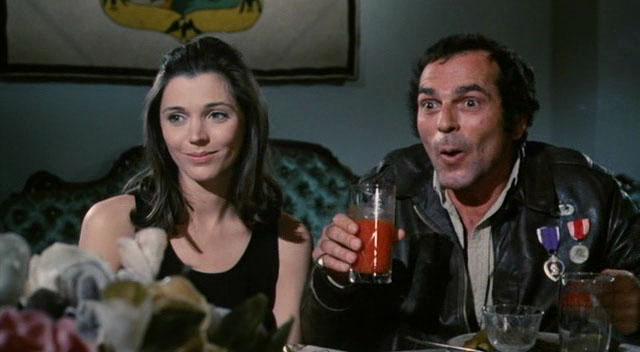
Prolific character actor Don Gordon plays Neville, another American expat. Neville is the guy who thinks up a get-rich-quick idea but doesn’t take into account that someone richer, more powerful and with more business sense can take the whole thing away from him. Gordon’s drunk scene is just perfect, especially in capturing how really drunk people don’t notice things about themselves or others. Gordon had the fourth lead in Bullitt and Papillon, and guest-starred in scores of television shows, but his very best work was in The Last Movie and in Hopper’s searing Out of the Blue (aka No Looking Back).
Don Gordon (right) in THE LAST MOVIE
And here’s some fun for movie fans. Fabled outlaw director Sam Fuller plays the director of the movie-within-the-movie. Various cinema notables show up as part of the film crew and at the cast party: Toni Basil, Rod Cameron, Peter Fonda, Henry Jaglom, Kris Kristofferson, Dean Stockwell, Sylvia Miles, John Philip Law, James Mitchum, Michelle Phillips (Dennis Hopper’s wife for eight DAYS), Dean Stockwell and Russ Tamblyn.
What happened to The Last Movie and why did it become a Lost Film? First, Dennis Hopper’s self-indulgence and drug abuse caused him to discard his script, co-written by Stewart Stern, and wing it on the principal photography by cobbling together improvisations that appealed to him at the time. Then Hopper hung on to the film, constantly re-editing it, blowing past his deadline by six months. Universal Pictures mogul Lew Wasserman had given Hopper $i million and creative control; finally getting a movie that was late and grievously over budget – and a movie he found incoherent – Wasserman was outraged and buried The Last Movie’s distribution and publicity. The fiasco ruined Hopper’s reputation in the industry, and he wasn’t able to direct another movie until Out of the Blue in 1980.
I got to see The Last Movie at a 2017 special event curated by the now defunct Cinema Club Silicon Valley. The screening of The Last Movie was preceded by Along for the Ride, the 2016 Dennis Hopper documentary from the perspective of Satya De La Manitou, Hopper’s personal assistant and wing man for forty years. (Along for the Ride is streamable from The Criterion Channel, Amazon, Vudu and YouTube.) The double feature was accompanied by a panel discussion with Along for the Ride director Nick Ebeling, filmmaker Alejandro Adams, film professor Sara Vizcarrondo and critic Fernando Croce.
Hopper regained the rights to The Last Movie in 2006, but was unable to release it on DVD before his death in 2010. Still close to a Lost Film, The Last Movie is only streamable on kanopy, and it occasional screens at repertory arthouses. I’m choosing not to embed the trailer because it unforgivably gives away the last shot.
Don’t overlook the beginning the Best Movies of 2025 – So Far, the running list that I update throughout the year. The big Oscar movies, with their November and December release dates, await. I am most eagerly anticipating Joachim Trier’s Sentimental Value, Richard Linklater’s Nouvelle Vague, Lynne Ramsey’s Die My Love, Kathryn Bigelow’s A House of Dynamite, Shih-Ching Tsou’s Left-handed Girl, Kelly Reichardt’s The Mastermind, Christian Petzold’s Mirrors No. 3 and the Palm d’Or winner at Cannes, It Was Just an Accident.
CURRENT MOVIES
Ivan Martin in TO KILL A WOLF. Courtesy of To Kill a Wolf.
Sorry, Baby: smart, funny and on the path to healing. Amazon, AppleTV, YouTube, Fandango.
Honey Don’t: kinda funny, disposable. In theaters.
Caught Stealing: Aronofsky picked off first base. In theaters.
ON TV
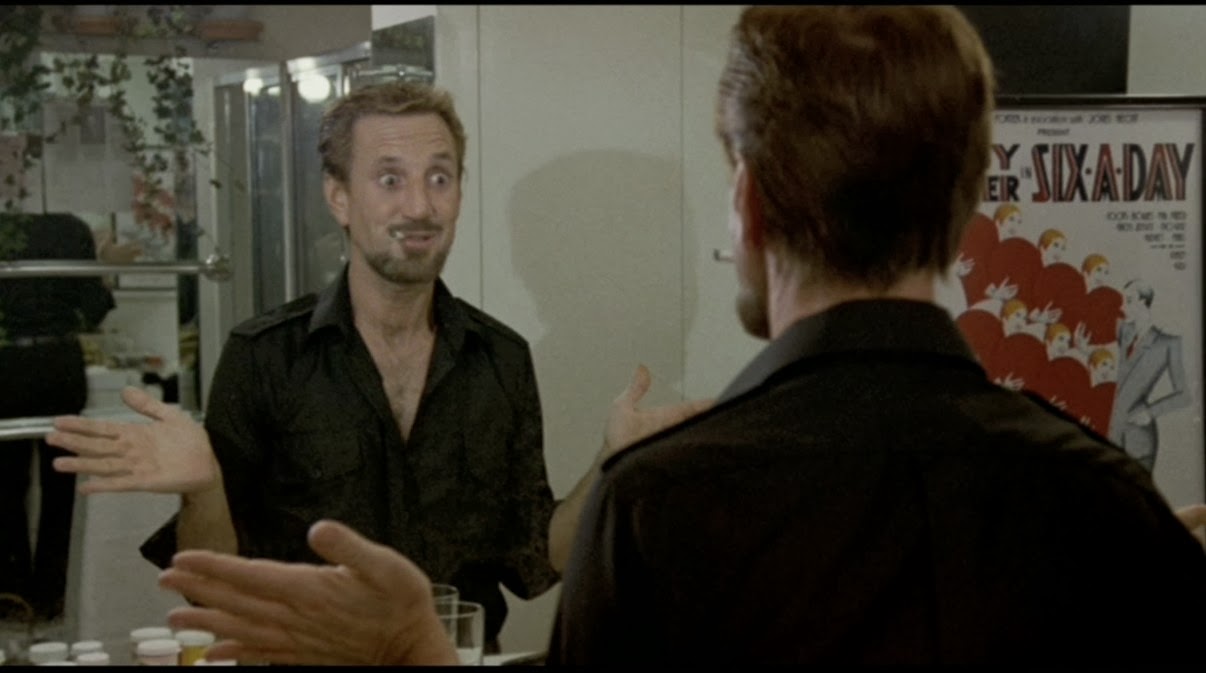
Roy Scheider in ALL THAT JAZZ
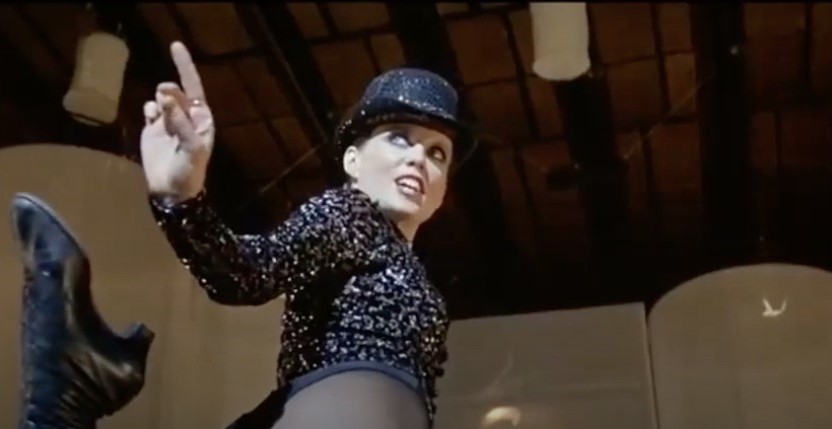
On October 4, Turner Classic Movies will air a big Oscar movie from 1979 that we don’t hear that much about anymore – All That Jazz. The director and co-writer Bob Fosse unsparingly tells his own story of artistic obsession peppered with compulsive womanizing and drug use. Fosse was a great and groundbreaking dancer and choreographer, and won five Tonys for Broadway choreography. He is the only person to win a directing Oscar (Cabaret), Tony and Emmy in the same year (1973). Roy Scheider garnered one of All That Jazz’s eight Oscar nominations for his searing performance as Fosse’s on-screen surrogate. The supporting performances are outstanding, especiallyAnn Reinking’s, essentially playing herself and Leland Palmer’s, playing a character much like Fosse’s wife and longtime collaborator Gwen Verdon. Try not to tear up at the birthday number performed by Reinking and the director’s tween daughter (Erzebet Foldi). All That Jazz is on my list of the 50 Greatest Movies of All Time.
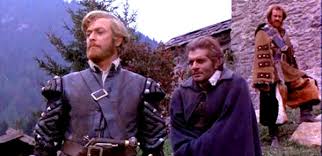
Photo caption: Michael Caine (left) and Omar Sharif (center) in THE LAST VALLEY
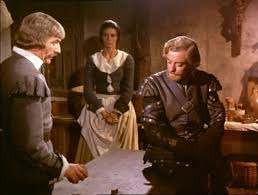
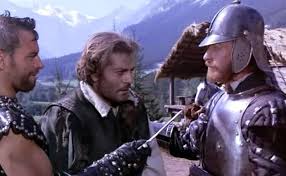
The historical epic The Last Valley is set in 1643 when a band of mercenaries led by The Captain (Michael Caine) is foraging. They happen upon a remote hamlet tucked deep in the Tyrolean Alps that, miraculously has not yet been ruined by warfare. The Captain has conscripted a wandering refugee, the teacher Vogel (Omar Sharif), for his value in an illiterate time. The Captain and Vogel broker a deal with village’s headman Gruber (Nigel Davenport) for the soldiers to spend the winter in the village, a respite from the combat, starvation and plague prevalent everywhere else.
It’s a great deal for the mercenaries – they get food and shelter (and some designated women companions) for the winter. In return, the soldiers will refrain from massacring the villagers and will protect them from other raiders.
Of course, the arrangement comes with underlying tensions. The peasants would rather not be sharing their village with strangers who are professional killers. The villagers are Catholic and most of the soldiers are nominally Protestant, although they have switched sides from time to time. The one local ideologue is a fanatic priest (Per Oscarsson), who fumes at what he sees as intolerable heresy.
There’s also always the threat of thuggish behavior from the newcomers, who are used to taking whatever they want at the point of a sword. All civil order depends on the discipline enforced remorselessly by the Captain.
The Captain and Gruber agree that Vogel, who serves as The Last Valley’s moral center, will decide disputes.
By the way, the Captain has taken Gruber’s beautiful wife (Florinda Bolkan) as his live-in companion, which Gruber accepts only because he has no choice. Gruber simmers.
Nigel Davenport, Florinda Bolkan and Michael Caine in THE LAST VALLEY
Will the two sides be able to co-exist for the entire winter? What will happen in the springtime? This was a time of superstition, cruelty and total war, so it’s unlikely that everyone will survive unscathed.
The Last Valley is set amid the Thirty Years’ War, when political power in Europe was being reset by the Reformation. Catholic emperors tried to resist losing parts of their realms to new Protestant states. From 1618 through 1648, armies fought their way back and forth across Central Europe. Smaller armed bands, both sectarian and mercenary, preyed on civilians, plundering, raping and, incidentally, spreading plagues. Europe in the mid 17th Century was a bad time to be a soldier, and far worse to be a peasant. Over five million lost their lives, and the population was reduced by 50% in parts of Germany.
So, this must clearly be the best movie about the Thirty Years War. But is it a good movie, and does it stand up today? On the plus side, the characters of the four main characters – Vogel, the Captain, Gruber and Erica – are textured and novel, and the performances of Sharif, Caine, Davenport and Bolkan are excellent (although Caine is the only actor who chose to speak English with a German accent). On the minus side, the minor characters (the best example is Hansen, played by Michael Gothard) are one-note stereotypes that only exist to create conflict for the plot. And the dialogue is often stilted or lame.
What The Last Valley does very well is to replace the the perspective of popes, emperors and kings with that of ordinary Europeans on the ground, both soldiers and civilians. This isn’t the history book (or Wikipedia) account of the Thirty Years War, it’s what most Europeans experienced.
The Last Valley features an international cast, from the UK (Caine, Davenport, Brian Blessed, Jack Shepherd, Andrew McCulloch, John Hallam), Egypt (Sharif) Brazil (leading lady Florinda Bolkan), Sweden (Per Oscarsson), Poland (Vladek Sheybal)), Greece (Yorgo Voyagis) and the US (Arthur O’Connell).
The Last Valley was directed by James Clavell, who adapted a novel by J.B. Pick.. Clavell had worked as a screenwriter, beginning with the original 1950s The Fly, before he harnessed his own experience as a WW II POW to write the autobiographical King Rat (which he got to direct) and the global hit The Great Escape. His success allowed him the time to write the novel Tai-Pai, which became a massive best-seller. Back at directing in 1967, Clavell then had a hit with To Sir, With Love. At this point in his career, Clavell directed The Last Valley.
The Last Valley was not a commercial success. I think that’s because it was marketed as a super widescreen epic; but almost a decade had passed since Spartacus, Cleopatra, How the West Was Won and The Bible – and cinema culture had moved on. That’s too bad, because The Last Valley, with its revisionist politics and dark view of humanity, fits in with the maverick cinema of the 1970s.
After directing The Last Valley took time to write another blockbuster novel, Shogun. This novel and the 1980 spin-off television series Shogun, both monster hits, were Clavell’s biggest successes and most memorable works.
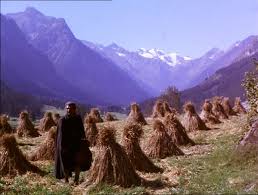
The Last Valley was shot around Gschnitz in the Austrian Tyrolean Alps, a scenic place that must be immeasurably more livable than it was four hundred years ago.
The Last Valley is not yet available to stream and is very hard to find, except on pre-owned DVDs.
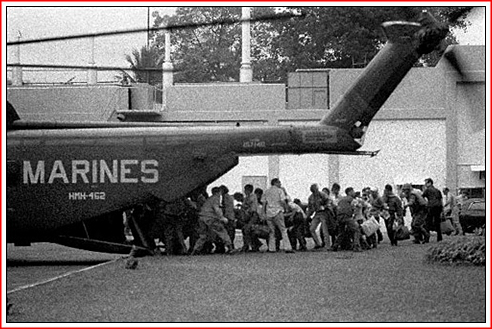
History is a compendium of individual human stories, oft caught up in a world event. That’s what drives the riveting documentary Last Days in Vietnam, which chronicles the desperate attempts of many South Vietnamese to escape before the Communist takeover in 1975. Over 140,000 got out in the initial exodus, including 77,000 through the means depicted in this film – mostly compressed into just two panicked days.
As if there weren’t enough American folly in Vietnam, the first evacuation plan didn’t include any non-Americans, even including the Vietnamese dependents of Americans. Then there were evacuation plans that were never implemented because of the blockheadedness of the US Ambassador. In the final week, young American military and intelligence officers took matters into their own hand, and began a sub rosa evacuation – ignoring the chain of command, breaking immigration laws and risking career-killing charges of insubordination.
Last Days in Vietnam is directed by Rory Kennedy (daughter of RFK), who recently made Ethel, the affecting bio-doc of her mother. Kennedy does a good job of setting the historical stage for those who didn’t live through the era, and then letting the witnesses tell their compelling personal stories.
The talking heads include:
the six-year-old who jumped out of a helicopter and then watched his mother drop his baby sister on to a ship’s deck;
the US Navy vet who plays the taped diary that he sent home to his wife after the fateful day;
the CIA analyst who unsuccessfully tried to convince the deluded US Ambassador that the end was at hand;
the college student who managed to get over a wall inside the embassy, but found that his freedom was not guaranteed;
Ford Administration officials Henry Kissinger and Ron Nessen, who relate the White House view of the events.
One heroic young American officer managed with ingenuity and chutzpah to get out hundreds of Vietnamese. In the film’s most poignant moment, it falls to him to tell the final American lie to the 400 Vietnamese remaining in the US embassy, for whom there were no more helicopters.
I saw the movie in San Jose with an audience that was about half Vietnamese-American, some of the age to have lived through this period. San Jose’s 100,000 Vietnamese population is largest of any city outside Vietnam, and many Vietnamese-Americans still memorialize the subject of this film as Black April. The exit from the theater was somber.
Last Days in Vietnam is a PBS American Experience film, and there are many clips, images and audio on their site; the entire film can be streamed from YouTube.
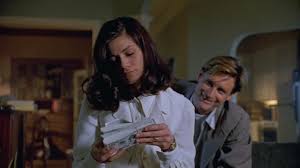
Photo caption: Linda Fiorentino in THE LAST SEDUCTION
There’s just one reason to watch the 1994 neo-noir The Last Seduction, and that’s the delicious performance by Linda Fiorentino as a sociopath more outrageously devious than any character that Barbara Stanwyck, Audrey Trotter, Jane Greer or Claire Trevor ever got to play.
Fiorentino plays Bridget Gregory, who steals her husband Clay’s entire stash of drug deal money and moves away to start a new life under a false identity. Beholden to extremely unpleasant loan sharks, Clay (Bill Pullman) sends a private eye top track her down. Bridget must escape the detective and then enlist a sap to get rid of Clay. She finds her sucker in Mike (Peter Berg), and the tale spins into a web of double-crosses.
Linda Fiorentino and Bill Pullman in THE LAST SEDUCTION
Bridget is fun to watch because she takes the role of femme fatale to unsurpassed heights (or depths?). Her super power is the gift to contrive lies that are both pathological and extraordinarily imaginative. She brazenly employs her sexuality, unmatched audacity and a ruthlessness without any glimmer of empathy. She is just so, so bad.
Both her role and her performance were the best in Fiorentino’s career. However, because The Last Seduction aired on TV before its theatrical release, it didn’t qualify for the Academy Awards. This meant that Fiorentino was denied what would have been a certain Oscar nomination. Some not-so-great movies followed (two with TV heartthrob and movie bust David Caruso), and then her career fizzled out.
The Last Seduction was director John Dahl’s third feature and his third neo-noir after Kill Me Again and Red Rock West (which he had co-written). Since 2009, Dahl has specialized in directing episodes of top tier TV (Breaking Bad, Homeland, The Americans, Californication, Outlander, The Bridge, House of Cards, Justified, Hannibal, Ray Donovan, Yellowstone).
The Last Seduction may not be as good as the apogee of all neo-noirs, Chinatown, but it’s right up there with One False Move as the best neo-noir of the 1990s. The Last Seduction can be streamed from Amazon, AppleTV and Fandango.
Linda Fiorentino and Peter Berg in THE LAST SEDUCTION
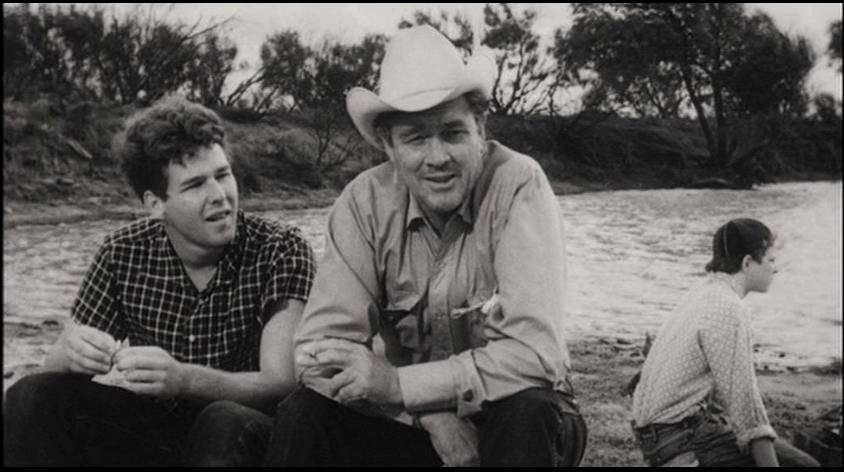
Timothy Bottoms, Ben Johnson and Sam Bottoms in THE LAST PICTURE SHOW
This will sound random – because it IS random. I realized that there have been a wide range of movies with “Last” in the title, and was surprised to learn that, since 2010, I had written about SEVENTEEN of them myself. What really struck me was how disproportionately good these “last” movies have been. Among the very best in their genres:
The Last Picture Show – among the most evocative coming of age dramas.
The Last of the Mohicans – on anybody’s short list of great adventure movies.
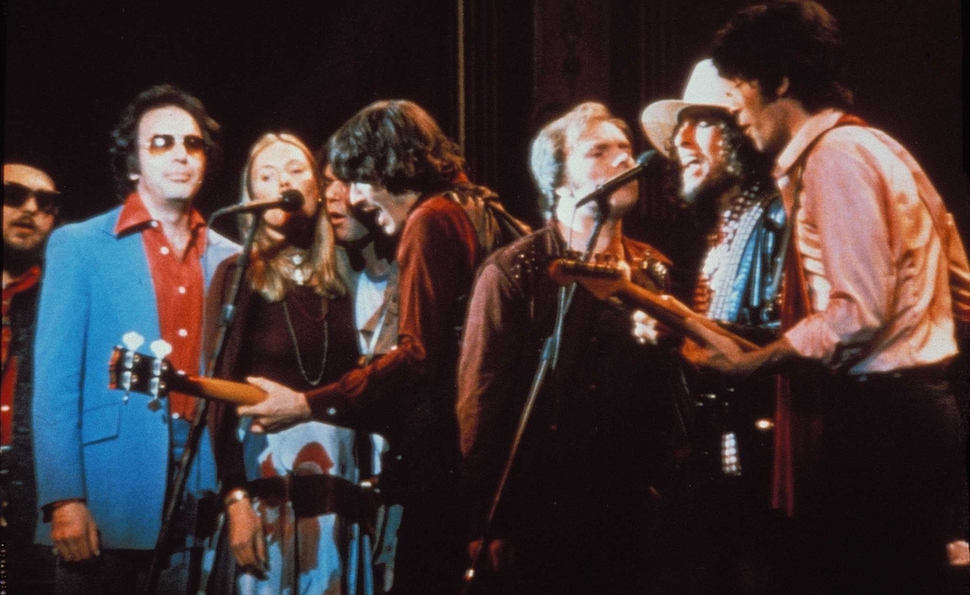
The Last Waltz– one of the top four concert films of all-time.
The Last Emperor – an epic that won Best Picture and nine total Oscars.
And then there’s The Last Detail (Jack Nicholson at the height pf his powers), The Last Samurai (Tom Cruise), The Last Movie Star (Burt Reynolds’ poignant farewell), The Last King of Scotland (Forest Whitaker won an Oscar), The Last Vermeer, Last Action Hero (Arnold Schwarzenegger), Suddenly Last Summer, I Know What You Did Last Summer, and Last Days (with Michael Pitt’s haunting performance as the doomed Kurt Cobain). And Jeff Bridges followed The Last Picture Show with The Last Unicorn and The Last American Hero.
Dr. John, Neil Diamond, Joni Mitchell, Neil Young, Rick Danko, Van Morrison, Bob Dylan and Robbie Robertson in THE LAST WALTZ
Now, I must point out that there are “last” movies, even iconic ones, that I don’t like:
Last Tango in Paris: There’s no question that Marlon Brando’s performance as a man imploding in despair and self-loathing is one of most searing in cinema. But, ultimately, why should we care about him? After reading Maria Schneider’s account of the shoot, where Brando and director Bernardo Bertolucci contrived a situation where she felt raped, I just can’t bring myself to watch it.
Last Year at Marienbad: it’s part of the cinema canon, but it’s so pretentiously abstruse that I’ve hated it since my college film class; four decades later, I watched it again to see whether I had missed something about it and I came to the same conclusion.
The Last Tycoon: This film had lots going for it – an F. Scott Fitzgerald novel directed by Eli Kazan, starring Robert De Niro and with a cast including Robert Mitchum, Jack Nicholson, Jeanne Moreau, Theresa Russell, Dana Andrews, Ray Milland, Peter Strauss, Donald Pleasance, Angelica Huston, John Carradine, Jeff Corey and Seymour Cassell. Unfortunately, the filmmakers bet big on Ingrid Boulting as an ingenue who would obsess De Niro’s studio exec, and she just wasn’t leading lady material. Boulting, a South African model, went on to make only two more forgettable features. I just rewatched The Last Tycoon, and it really drags,
But some of the “last” movies are grievously overlooked. So, over the next two weeks, I’ll be featuring four of the most underrated “last” movies, including, notably, The Last Movie itself.
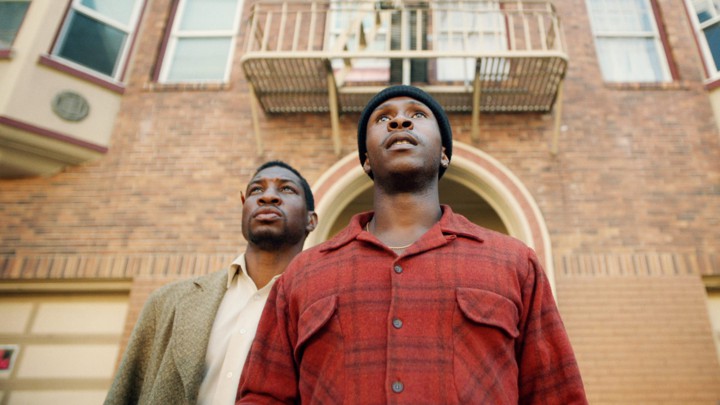
Jonathan Majors and Jimmie Fails in THE LAST BLACK MAN IN SAN FRANCISCO. Photo: Peter Prato/A24
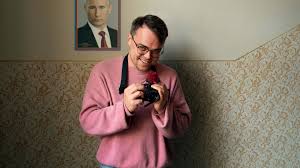
Photo caption: Pavel Talankan in MR. NOBODY AGAINST PUTIN. Courtesy of the SLO Film Fest.
This Week on The Movie Gourmet – a new review of the character-driven indie drama To Kill a Wolf. If you missed today’s TCM broadcast of my TV pick, the rare serial killer movie El Vampiro Negro, you can still stream it on kanopy. And you can stream Caught by the Tides, the top film on my Best Movies of 2025 – So Far, on Amazon, AppleTV, Fandango and Criterion.
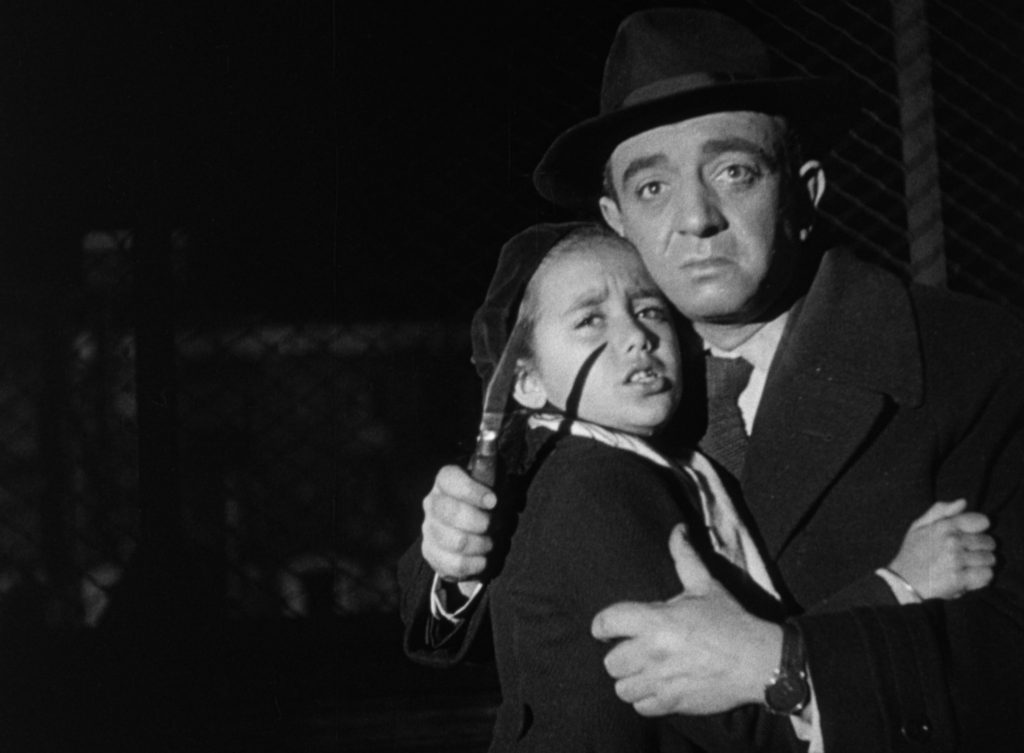
Set your DVR to record the September 26 early morning airing of El Vampiro Negro on Turner Classic Movies. This is NOT a vampire movie – it is a serial killer movie – and an unforgettable one. Restored by the Film Noir Foundation, it is on my list of Overlooked Noir, and is very hard to find, although you can stream it on kanopy..
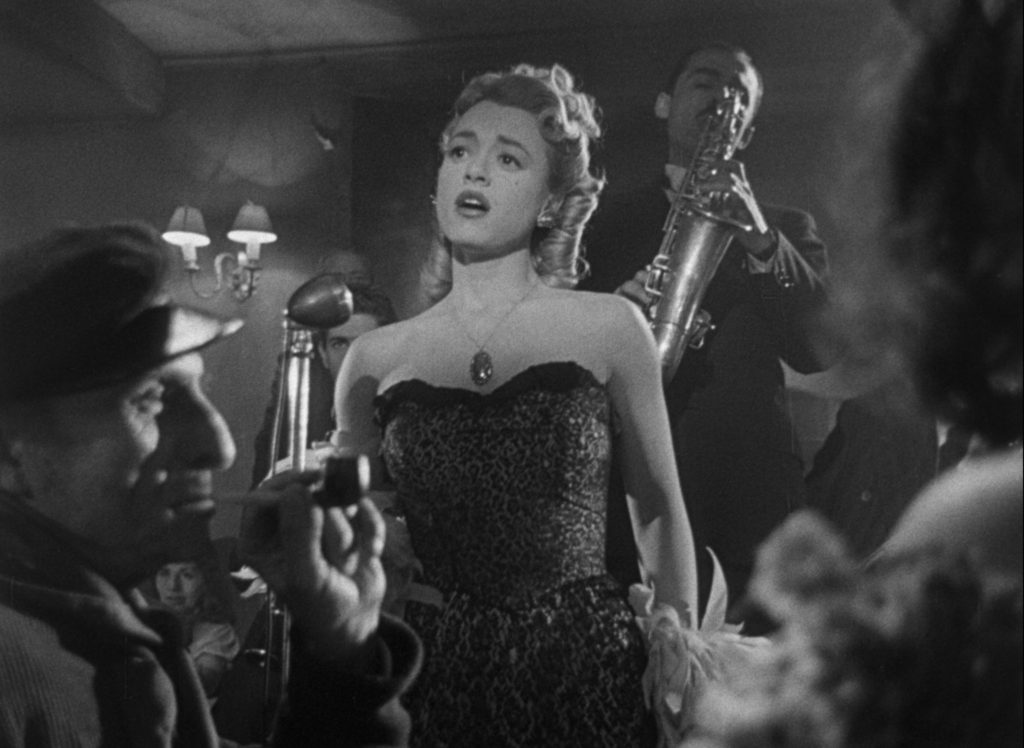
The Argentine suspense classic The Black Vampire opens with a man stumbling on steps, then with a Rorschach test, and then with a nightclub in which each of the patrons is a different version of Up To No Good. We’re in the underworld, but an underworld that is rocked by serial murders. And we can tell that this is no run-of-the-mill crime movie.
The city is consumed by a child murderer on the prowl, and the police are turning the city upside down. With the cops disrupting business, the criminals launch their own man hunt. If this plot sounds familiar, it’s because The Black Vampire is a remake of Fritz Lang’s 1931 M. As in the 1931 M, there is a blind balloon vendor, a killer whistling In the Hall of the Mountain King and and an underworld dragnet.
As the lead, Nathán Pinzón is AT LEAST AS GOOD as was Peter Lorre in the original M. Often sweat-beaded, Pinzón tightropes the line between scary and pathetic. This character is a complete pervert, but he’s aware of and tries to restrain his horrific compulsions.
Pinzón was chiefly known as a usually comic actor; he played the leering, cynical Carpax in The Beast Must Die. Pinzón’s birth surname was Garfunkle.
In contrast to the monstrous killer animated by Pinzon’s charisma, the prosecutor (Roberto Escalada) is a stick-in-the-mud; but, for some perverse spice, he is sexually frustrated because his wife is physically disabled.
The director Román Viñoly Barreto is known for beginning and ending each film with a Biblical verse – and for the death of a child in each movie. Here he makes The Black Vampire as trippy as any 1953 movie could be. It’s best when it’s set in the nightclubs and streets and the haunts of the lowlifes, and highly stylized. When it is set in the prosecutor’s office and his apartment, The Black Vampire drags.
The Film Noir Foundation restored both Román Viñoly Barreto’s The Black Vampire and The Beast Must Die. I attended the premiere of both restorations at Noir City in 2020. The Film Noir Foundation has since DVD. You can also stream El Vampiro Negro from kanopy.
One of the highly stylized nightclub scenes in THE BLACK VAMPIRE