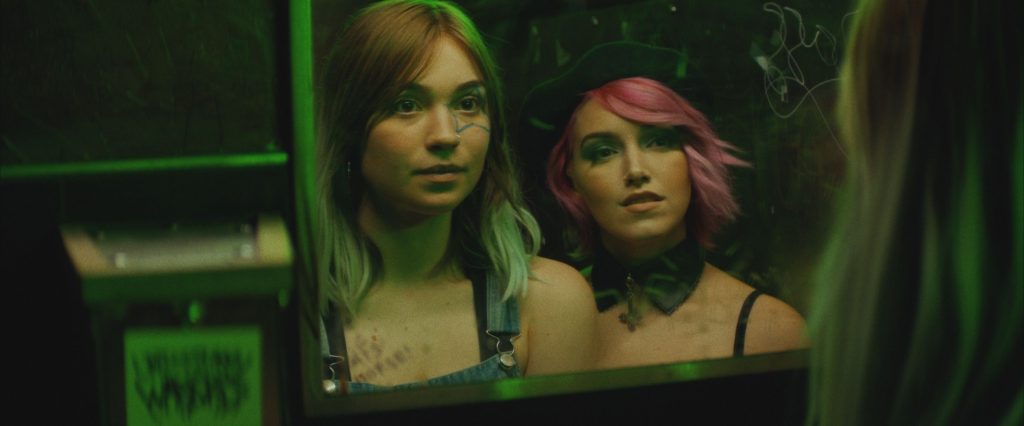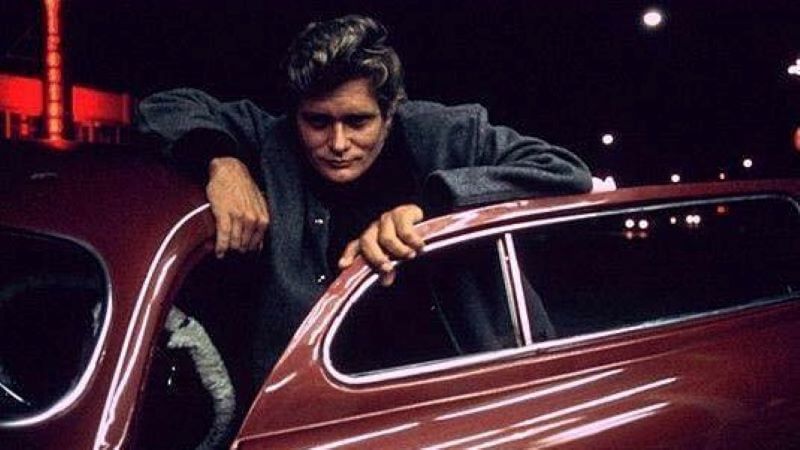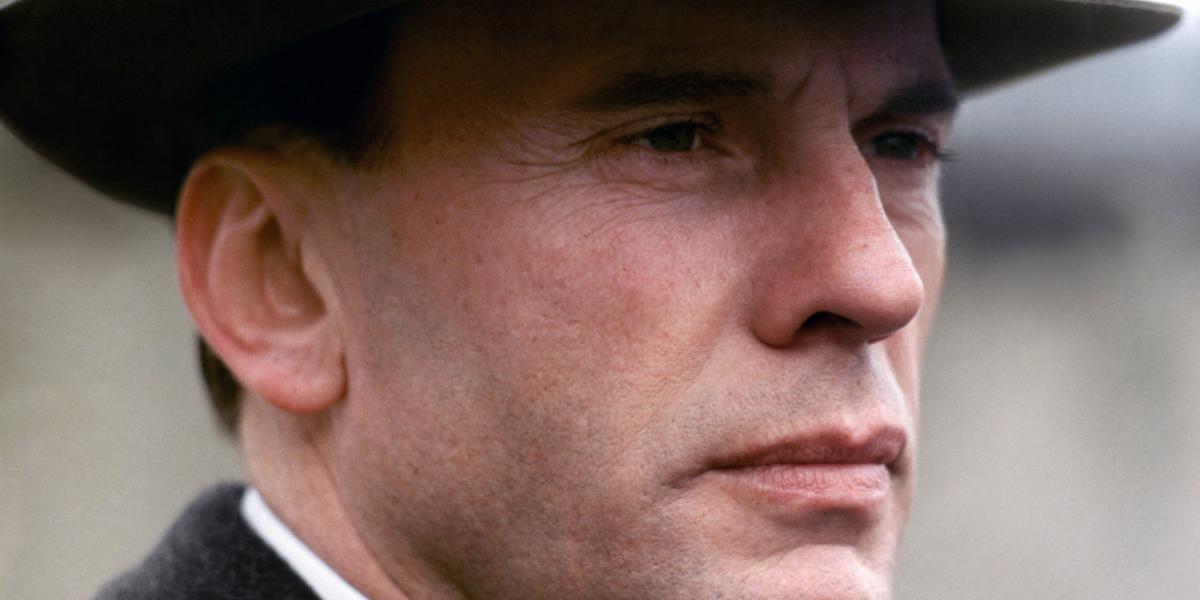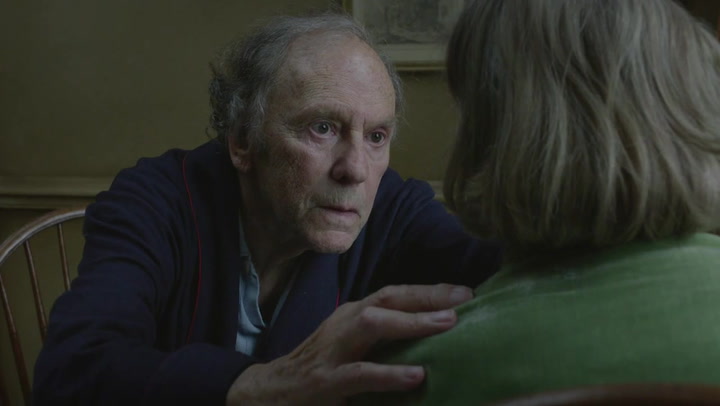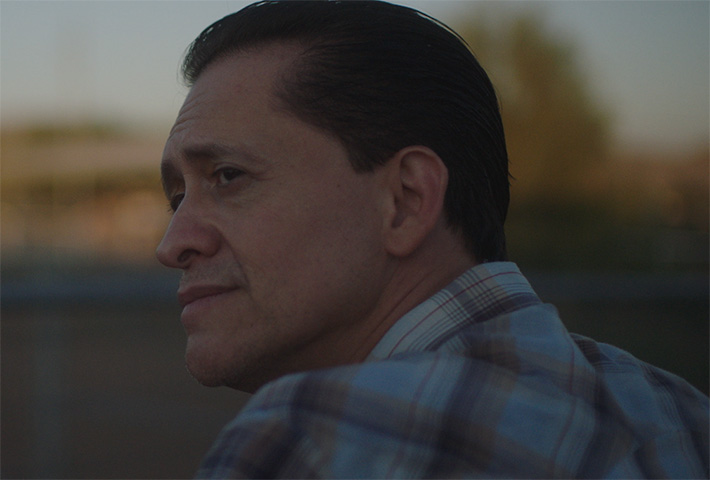
PIG: he may LOOK deranged, but…

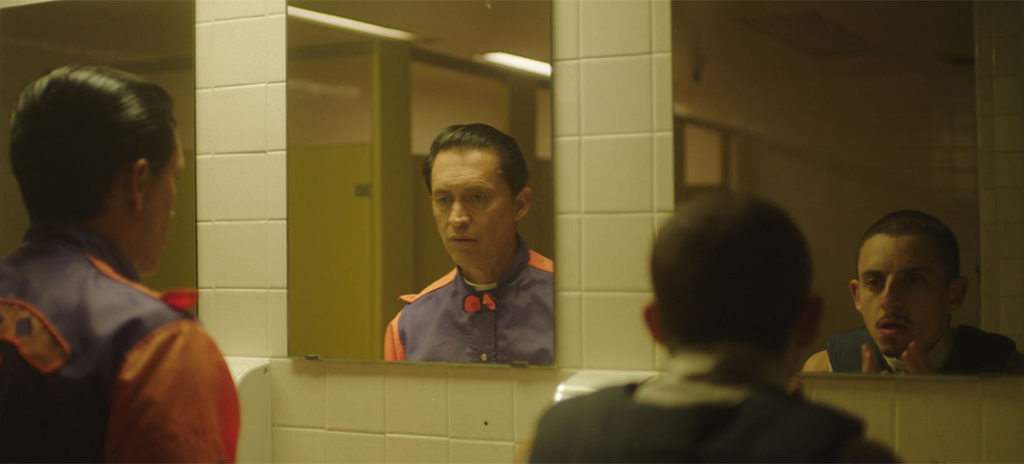
Photo caption: Nicolas Cage (right) in PIG. Courtesy of NEON.

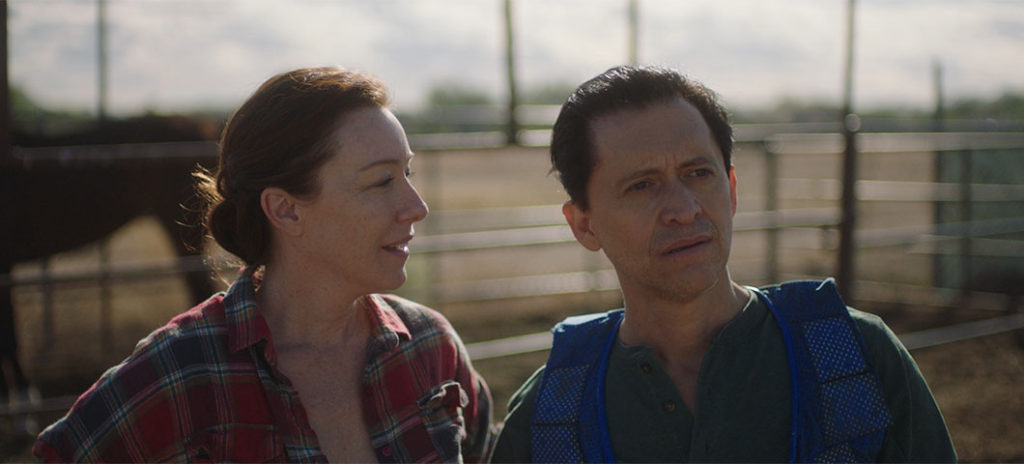
When we first meet Pig’s protagonist Rob (Nicolas Cage), he is living off the grid deep in a Pacific Northwest forest. Rob hunts truffles with his beloved pig. Once a week, Amir (Alex Wolff), a hustler from Portland, arrives to buy the week’s harvest. That is Rob’s only interaction with the human race, and he prefers not to converse with Amir. Rob is filthy, even in comparison to the pig.

When the pig is kidnapped (or pignapped?), Rob forces Amir to drive him into and around Portland on a quest to rescue the pig. As the quest continues, we learn some surprising things about Rob.

Initially, we would assume that Rob, with his crazy homeless guy look, is a broken man, withdrawing from society because a trauma, a failure, a mental breakdown or an addiction has sapped him of his abilities. It turns out that Rob has suffered a loss, but we’re surprised to learn that Rob is revered by an entire community within Portland. In personal grief, and motivated by his assessment of a coming environmental apocalypse, he has chosen to withdraw. He may LOOK like a deranged derelict, but, when he chooses to be, he is very functional.

Pig is the first feature for writer-director Michael Sarnoski, and it’s pretty entertaining.

Sarnoski has created an extreme character in Rob, and who is better at extreme characters than Nicolas Cage? This is Cage’s best performance in years. Rob is a man with a firm beliefs and a rigid code – and he takes them to their logical extremes, however uncomfortable they seem, and Cage credibly shows us a character with resolute self-assurance and impressive skills.

Alex Wolff is suitably annoying as the callow and loquacious Amir, who fashions himself more of a player than he really is. Amir is smart enough to know that he is no match for his father Darius – a very serious guy. Adam Arkin plays Darius’ ruthlessness (and his one vulnerability) convincingly.

Pig is streaming on Amazon, AppleTV, Vudu, YouTube, Hulu and redbox.

Movies to See Right Now

Photo caption: Renate Reinsve in THE WORST PERSON IN THE WORLD. Courtesy of NEON.

This week at The Movie Gourmet – new reviews of My Best Part and Sundown. And here’s my rant on the troubled state of Bay Area cinema. I’ m going to strongly recommend The Worst Person in the World, which is now out in theaters, but I’ll have to mull it over before I write about.

Since its Oscar nomination, the year’s best film, Drive My Car, has opened more widely, including at the AMC Mercado 20 in Santa Clara, the AMC Eastridge 15 in San Jose and the Landmark Aquarius in Palo Alto.

CURRENT FILMS

  • Drive My Car: director and co-writer Ryûsuke Hamaguchi’s engrossing masterpiece about dealing with loss – and it’s the best movie of 2021. Layered with character-driven stories that could each justify their own movie, this is a mesmerizing film that builds into an exhilarating catharsis. In theaters.
  • Nightmare Alley: enough burning ambition for a thousand carnies. In theaters.
  • Belfast: a child’s point of view is universal. If you have heartstrings, they are gonna get pulled. In theaters.
  • The Power of the Dog: One man’s meanness, another man’s growth. Netflix.
  • Don’t Look Up: Wickedly funny. Filmmaker Adam McKay (The Big Short) and a host of movie stars hit the bullseye as they target a corrupt political establishment, a soulless media and a gullible, lazy-minded public. Netflix.
  • The Tragedy of Macbeth: No surprise here: Joel Coen, Denzel Washington and Frances McDormand deliver a crisp and imaginative version of the Bard’s Scottish Play. AppleTV.
  • Bad Luck Banging or Loony Porn: completely different than any movie you’ve seen. AppleTV, Drafthouse On Demand.
  • Parallel Mothers: Pedro Almodovar gives us a lush melodrama, sandwiched between bookend dives into today’s unhealed wounds from the Spanish Civil War. In theaters.
  • Jagged: Insightful biodoc of Alanis Morissette, who is really not that angry, after all. HBO.
  • The Lost Daughter : Great, Oscar-nominated performances by Olivia Colman and Jessie Buckley in this dark, unsettling exploration of the obligation of parenting. Netflix.
  • House of Gucci: Lady Gaga and Adam Driver shine in this modern tale of Shakespearean family treachery. In theaters.
  • Licorice Pizza: When nine years is a big age difference. In theaters.
  • The Pact: a pawn in someone else’s story. In theaters.
  • The Hand of God: Filmmaker Paolo Sorrentino’s own coming of age story – and a time capsule of 1986 Naples. Netflix.
  • Sundown: Checked out – really checked out. In theaters.
  • Being the Ricardos: a tepid slice of a really good story. Amazon (included with Prime).

Remember to check out all of my Best Movies of 2021.

MORE RECOMMENDATIONS ON VIDEO

ON TV

Noir City 18: South Korea: The Housemaid & Black HairNOIR CITY: INTERNATIONAL II
#NoirCity18
www.NoirCity.com
Sunday, January 26, 2020
SOUTH KOREA
2:00, 7:00 PM
THE HOUSEMAID (HANYO)
A middle-class Korean family spirals into a delirious nightmare...
THE HOUSEMAID

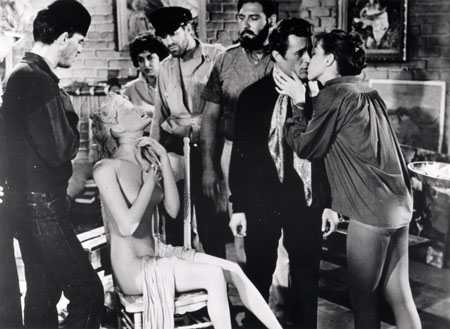
On February 28, Turner Classic Movies airs a WOWZER – the 1960 Korean horror/noir The Housemaid. A couple hires a maid, who turns out to be the domestic from hell. Seduction, deception, threats follow…and who will poison whom? I screened this film for a recent Noir City, and although I can’t say that it’s one of my favorites, it does keeping stunning the audience with ever darker twists. Often considered one of the top Korean films of all time.

On March 1, TCM airs Laura, perhaps my favorite thriller from the noir era, with an unforgettable performance by Clifton Webb as a megalomaniac with one vulnerability – the dazzling beauty of Gene Tierney. The musical theme is unforgettable, too.

Gene Tierney startles Dana Andrews in LAURA

Cinema in the Bay Area – the news ain’t good

Photo caption: Hidetoshi Nishijima and Tôko Miura in DRIVE MY CAR. Courtesy of The Match Factory.

I was the only patron at a 1 PM Thursday screening of Sundown at the Aquarius in Palo Alto, a solo screening experience that I usually relish, since it had only happened twice in the thirty years before 2021. Given the fragile state of Bay Area cinemas, it’s now problematic. This was my third solo screening in the past four months; (the others were screenings of The Souvenir Part II at San Francisco’s Landmark Embarcadero and Benedetta at Berkeley’s Landmark Shattuck).

I guessing that this current trend is, at least mainly, a COVID-influenced hesitancy to gather indoors. Indeed, vax’d and boosted as I am, I’m not ready to sit in a crowded weekend screening of a popcorn movie. But an art house screening at 10% capacity in the Bay Area, where cinephiles, from the oldest and most well-educated cohorts, are almost 100% vax’d, should be pretty low-risk.

No one can say for sure if the cinemas that present independent, international and documentary films will recover from the pandemic. At all. Ever. It’s especially worrisome that Landmark’s Embarcadero has now closed permanently, right on the heels of the Castro’s purchase by live entertainment promoters.

In particular, the high quality cinemas have been completely devastated in Silicon Valley. CIneArts’ Palo Alto Square has closed, following Downtown San Jose’s Camera 12. Campbell’s Camera 7 has transitioned into the Pruneyard Dine-in, which still offers some good fare, but the new business model has squeezed out the art films. Camera 3 has been turned into 3Below, whose flaky and buffoonish operators have essentially gutted it as a serious venue for cinema. Landmark’s Guild in Menlo Park closed for the pandemic and hasn’t reopened. Fortunately, the AMC and CInemark/Century theaters are still devoting a few screens to the very best major studio films (Belfast, Nightmare Alley, Don’t Look Up, etc.). The bottom line, though: there was no place in Silicon Valley to see the year’s best film, Drive My Car, when it was released (although it has just popped up at two AMC theaters since it was Oscar-nominated).

Indeed, Landmark’s Shattuck and the Alamo Drafthouse New Mission remain alive, along with the smattering of 1-2 screen venues like the Roxie, Balboa, Vogue and 4-Star in San Francisco, the Rafael in San Rafael, the Aquarius in Palo Alto and the New Parkway in Oakland. But, over the past decade, the Bay Area has lost about half of our art house screens, and Silicon Valley art house cinema has been essentially wiped out.

There’s a been a harsh domino effect on Bay Area film culture itself. The film festivals that I cover – Cinequest, SFFILM, Mill Valley, Frameline, Noir City and the SF Jewish Film Festival – had to go virtual during the pandemic, a real body blow. As they re-emerge to in-person festivals, their recovery is uncertain.

The Castro will still host SFFILM and Frameline in 2022, perhaps for the last time. But the first post-pandemic Noir City had to be relocated to another vintage movie palace much smaller than the Castro. When COVID hit us, Cinequest was still adapting to the loss of Camera 12.

It’s all sobering, but there it is.

MY BEST PART: growing up, with a boost from mom

Photo caption: Nicolas Maury in MY BEST PART. Courtesy of Altered Innocence.

In the French coming of age dramedy My Best Part, the young actor Jérémie (Nicolas Maury) is teetering on the verge of a breakdown. Not that Jérémie is generally a stable person – he is so needy and dramatic that he attends Jealous Anonymous.  But he loses a gig that he was counting on, his credit card is declined, and worst of all, Jérémie’s smothering jealousy sabotages his relationship with his veterinarian boyfriend (Arnaud Valois), Jérémie’s neurotic fit having disrupted ferret surgery.

With his tail between his legs, Jérémie Paris retreats to hos boyhood home in rural Limousin (the area around Limoges) and the arms of his mother (Nathalie Baye). Jérémie is open to infantilization, but the matter-of-fact Mom is anything but neurotic. With prodding from his mom, will he start behaving like a sane, stable grownup and get his life back on the rails?

Nathalie Baye and Nicolas Maury in MY BEST PART. Courtesy of Altered Innocence.

I’ll watch ten-time César Award nominee Nathalie Baye in anything. Here, in an unchallenging role, she brightens every scene with the sniveling son.

One of the world’s funniest actors, Laure Calamy gets to play a hilarious meltdown in a brief turn as a narcissistic film director.

My Best Part is the feature directing debut for Maury, who also co-wrote the screenplay. My Best Part was nominated for the César for Best First Film.

Parts of My Best Part drag, especially a slooooooow nighttime poolside scene. The final scene, in which Jérémie sings lyrics that explicitly detail his character’s growth, is off-putting and self-indulgent.

My Best Part opens Feb 25 on VOD and at the Glendale Laemmle.

SUNDOWN: checked out, really checked out

Photo capon: Tim Roth in SUNDOWN. Courtesy of Bleecker Street.

In Sundown, Neil Bennett (Tim Roth) and the hard-charging CEO Alice Bennett (Charlotte Gainsbourg) are vacationing with two college age kids at a luxurious Acapulco resort. Their family matriarch unexpectedly dies and – of course! – they immediately head to the airport to organize the funeral in the UK. But Neil fakes an excuse and avoids getting on the plane, vowing to come along soon. Instead, he does the unthinkable and essentially hides out from the family.

Instead of returning to the resort, Neil moves into a downscale hotel near Acapulco’s public beach. Other than wandering to the beach to commandeer a plastic chair and an ice bucket of cerveza, Neil doesn’t do much for the rest of Sundown. Notably, he does make the acquaintance of a friendly local woman, Berenice (Iazua Larios). Berenice speaks very little English, and Neil speaks essentially no Spanish.

Iazua Larios in SUNDOWN. Courtesy of Bleecker Street.

Writer-director Michel Franco gradually unspins his tale, and we learn how the Bennetts are related and how wealthy they are. But Franco leaves it to us to figure out why Neil is behaving in this way. Is it just awful behavior – irresponsible and selfish? Is he suffering from a psychiatric or neurological disorder?

From the very beginning of Sundown, Neil’s affect is oddly detached and passive. Is he blissed out on vacation? Is he stoned? Bur he soon becomes bizarrely avoidant. And Neil is firmly purposeful in his detachment. A much better director than writer, Michel gives us so little back story, that we really don’t know how divergent Neil’s behavior is. The critic Mick LaSalle observes, “He consistently seems calmer than he should be, so we wonder what he knows.“.

In any case, Sundown is a portrait of a man who is checked out – for an unknown reason and to an explicable extent. We are curious and decidedly not empathetic; his withdrawal from normal obligations causes harm to others – others who at least deserve an explanation.

Sundown’s 82 minutes is hypnotic. Franco is a Mexico City native and brings verisimilitude to the contrasting tiers of Acapulco beach life.

Tim Roth is excellent as a man who is determined to get what he wants, even though what he wants is essentially nothing. Franco and Roth worked together on Chronic.

Iazua Larios is extraordinarily compelling as Berenice, who seems, well, very casual at first, and becomes more complicated. The character of Berenice starts out as an adornment, but she will become the ultimate test of whether there is any limit to Neil’s detachment.

Sundown is a paradox – an unenjoyable observation of an unsympathetic character doing nothing, yet an engaging portrait of an extreme and puzzling personality.

Movies to See Right Now

Cate Blanchett and Tyler Perry in DON’T LOOK BACK. Courtesy of Netflix.

This week on the Movie Gourmet – a reminder that The Pact is opening in art houses this weekend and that you can catch up on streaming many of the Oscar Movies at home (The Power of the Dog, Don’t Look Up, The Tragedy of Macbeth, The Lost Daughter, Being the Ricardos (and Belfast if you’ll pay $19.99).

CURRENT FILMS

  • Drive My Car: director and co-writer Ryûsuke Hamaguchi’s engrossing masterpiece about dealing with loss – and it’s the best movie of 2021. Layered with character-driven stories that could each justify their own movie, this is a mesmerizing film that builds into an exhilarating catharsis. In theaters.
  • Nightmare Alley: enough burning ambition for a thousand carnies. In theaters.
  • Belfast: a child’s point of view is universal. If you have heartstrings, they are gonna get pulled. In theaters.
  • The Power of the Dog: One man’s meanness, another man’s growth. Netflix.
  • Don’t Look Up: Wickedly funny. Filmmaker Adam McKay (The Big Short) and a host of movie stars hit the bullseye as they target a corrupt political establishment, a soulless media and a gullible, lazy-minded public. Netflix.
  • The Tragedy of Macbeth: No surprise here: Joel Coen, Denzel Washington and Frances McDormand deliver a crisp and imaginative version of the Bard’s Scottish Play. AppleTV.
  • Bad Luck Banging or Loony Porn: completely different than any movie you’ve seen. AppleTV, Drafthouse On Demand.
  • Parallel Mothers: Pedro Almodovar gives us a lush melodrama, sandwiched between bookend dives into today’s unhealed wounds from the Spanish Civil War. In theaters.
  • Jagged: Insightful biodoc of Alanis Morissette, who is really not that angry, after all. HBO.
  • The Lost Daughter : Great, Oscar-nominated performances by Olivia Colman and Jessie Buckley in this dark, unsettling exploration of the obligation of parenting. Netflix.
  • House of Gucci: Lady Gaga and Adam Driver shine in this modern tale of Shakespearean family treachery. In theaters.
  • Licorice Pizza: When nine years is a big age difference. In theaters.
  • The Hand of God: Filmmaker Paolo Sorrentino’s own coming of age story – and a time capsule of 1986 Naples. Netflix.
  • Being the Ricardos: a tepid slice of a really good story. Amazon (included with Prime).

Remember to check out all of my Best Movies of 2021.

MORE RECOMMENDATIONS ON VIDEO

ON TV

JFK in CRISIS: BEHIND A PRESIDENTIAL COMMITMENT

On February 20, Turner Classic Movies airs Crisis: Behind a Presidential Commitment, which takes us behind the scenes of the the two-day University of Alabama integration crisis of 1963. Defying a federal court order, Alabama Governor George Wallace LITERALLY stands in the schoolhouse door to bar Black students from registering at the University of Alabama; Wallace is emboldened by (and politically trapped) by howling mobs of racist constituents. The Kennedy Administration must find a way to enforce the law while minimizing violence. Documentary director Robert Drew (Primary) got unheard-of access, and Crisis traces the episode in real time with actual recordings of conversations between JFK, RFK and Wallace. JFK and Wallace engage in a remarkable verbal dance. It’s edge-of-your-seat history. Famed documentarian D.A. Pennebaker was one of the cinematographers.

George Wallace literally at the schoolhouse door facing Nicholas Katzenbach in CRISIS.

Movies to See Right Now

Olivia Colman in THE LOST DAUGHTER. Courtesy of Netflix.

This week on The Movie Gourmet: new reviews of The Lost Daughter and The Pact – and my first thoughts on the Oscars.

CURRENT FILMS

  • Drive My Car: director and co-writer Ryûsuke Hamaguchi’s engrossing masterpiece about dealing with loss – and it’s the best movie of 2021. Layered with character-driven stories that could each justify their own movie, this is a mesmerizing film that builds into an exhilarating catharsis. In theaters.
  • Nightmare Alley: enough burning ambition for a thousand carnies. In theaters.
  • Belfast: a child’s point of view is universal. If you have heartstrings, they are gonna get pulled. In theaters.
  • The Power of the Dog: One man’s meanness, another man’s growth. Netflix.
  • Don’t Look Up: Wickedly funny. Filmmaker Adam McKay (The Big Short) and a host of movie stars hit the bullseye as they target a corrupt political establishment, a soulless media and a gullible, lazy-minded public. Netflix.
  • The Tragedy of Macbeth: No surprise here: Joel Coen, Denzel Washington and Frances McDormand deliver a crisp and imaginative version of the Bard’s Scottish Play. AppleTV.
  • Bad Luck Banging or Loony Porn: completely different than any movie you’ve seen. AppleTV, Drafthouse On Demand.
  • Parallel Mothers: Pedro Almodovar gives us a lush melodrama, sandwiched between bookend dives into today’s unhealed wounds from the Spanish Civil War. In theaters.
  • Jagged: Insightful biodoc of Alanis Morissette, who is really not that angry, after all. HBO.
  • The Lost Daughter : Great, Oscar-nominated performances by Olivia Colman and Jessie Buckley in this dark, unsettling exploration of the obligation of parenting. Netflix.
  • House of Gucci: Lady Gaga and Adam Driver shine in this modern tale of Shakespearean family treachery. In theaters.
  • Licorice Pizza: When nine years is a big age difference. In theaters.
  • The Hand of God: Filmmaker Paolo Sorrentino’s own coming of age story – and a time capsule of 1986 Naples. Netflix.
  • Being the Ricardos: a tepid slice of a really good story. Amazon (included with Prime).

Remember to check out all of my Best Movies of 2021.

MORE RECOMMENDATIONS ON VIDEO

ON TV

OSCAR MICHEAUX: THE SUPERHERO OF BLACK FILMMAKING. Courtesy of TCM.

On February 13, Turner Classic Movies airs the documentary Oscar Micheaux: The Superhero of Black Filmmaking. I haven’t seen it, but I have seen some Oscar Micheaux films, and, if you don’t know who he is, you should. As writer/director/producer, the African-American Michaeux created so-called “race films” – movies made for black audiences from a black perspective during the most shameful years of American racial segregation. Michaeux himself directed 42 feature films DURING Jim Crow. It’s an important story, and Michaeux’s films, freed of the White Hollywood lens, are eyeopening. I am presuming that University of Chicago cinema professor Jacqueline Stewart, TCM’s silent film expert, will introduce the screening.

THE LOST DAUGHTER: maddening mothering

Photo caption: Olivia Colman in THE LOST DAUGHTER. Courtesy of Netflix.

The Lost Daughter is a dark thinkpiece about the impact of maternal obligation to a talented and ambitious woman. We meet Leda (Olivia Colman), a middle-aged comparative literature professor as she arrives for a vacation at a Greek beach. Leda is comfortable traveling alone, and decidedly not sociable.

Leda’s tranquility is harshly disrupted when a large, rambunctious family spills onto the beach from a nearby rental villa, shepherded by their force of nature alpha female Callie (Dagmara Dominczyk). This crowd is a course, vulgar and shady family of Greek-Americans from Queens. Leda is resentful, but she is also intrigued by Nina (Dakota Johnson), a young mother who is unhappily exhausted by parenting her little girl.

When Callie makes neighborly chitchat, Leda pointedly says to Nina, “Kids are a crushing responsibility“. When Leda takes an action that is inexplicable and troubling, we start wondering, “what is going on with her?”. Thereby launches a slow burn exploration of how custodial parents, trapped by their responsibility to always be “on the job” without respite or support, can become drained, depressed, even maddened.

We see flashbacks of a young Leda (Jessie Buckley), a promising scholar on the verge of emerging as a major thought leader, getting whipsawed by her two young daughters, who are adorable yet relentlessly needy.

The young Leda meets a backpacker, who gives her an insight into obligation: “Attention is the rarest and purest form of generosity”. Then, young Leda makes a decision that has major ramifications for her career, her family and which still molds the person who is on the Greek beach today.

The Lost Daughter does not take a Hallmark card, children are such a joy view of motherhood. Parenting is complicated, and it challenges different people differently.

The actress Maggie Gyllenhaal directed (this is her debut) and adapted the screenplay from the novel by Elena Ferrante.

Olivia Colman in THE LOST DAUGHTER. Courtesy of Netflix.

Olivia Colman is brilliant as Leda – so contained and self-confident yet utterly unpredictable. You just gotta keep watching this seemingly staid woman and see how she is going to surprise us next. Colman has earned a best actress Oscar nomination for this performance..

Olivia Colman is now 48, but I didn’t appreciate her until the 2013-17 series Broadchurch. Since 2018, she’s compiled an astonishing body of work – winning the Best Actress Oscar for The Favourite, being Oscar-nominated for The Father, and wining the best actress Emmy for playing Queen Elizabeth II in The Crown.

Jessie Buckley in THE LOST DAUGHTER. Courtesy of Netflix.

Jessie Buckley, one of my favorites since her debut in the psychological thriller Beast, has earned a best supporting actress nomination.

Ed Harris and Peter Sarsgaard (Gyllenhaal’s real-life hubbie) are excellent in minor supporting roles.

The Lost Daughter is a thinker with two superb performances, but it may be too dark and unsettling for many audiences. The Lost Daughter is streaming on Netflix.

First thoughts on the Oscars

The Power of the Dog: Kodi Smit-McPhee on his breakout performance | EW.com
Photo caption: Kodi Smit-McPhee in THE POWER OF THE DOG. Courtesy of Netflix.

The Oscar nominations are out, and I am NOT howling with outrage. I’m generally pleased that the year’s best movies are receiving lots of recognition: The Power of the Dog, Belfast, Nightmare Alley, Don’t Look Up and CODA – and even my top choice Drive My Car, which I feared would be overlooked (because it is a fairly obscure, three-hour long Japanese movie).

Being the Ricardos is nominated for several major awards despite being a so-so movie; my guess is that Aaron Sorkin, Nicole Kidman and Javier Bardem are so popular and respected among the Academy voters, that voters expected it to be really good and somehow failed to recalibrate after watching it.

Emilia Jones, Troy Kotsur, Marlee Matlin and Daniel Durant in CODA. Courtesy of AppleTV.

The most exciting category is Best Supporting Actor, where three exquisite performances are recognized. Kodi Smit-McPhee takes over the final third of The Power of the Dog and elevates it. Deaf actor Troy Kotsur is as fine an actor as any hearing person, as he demonstrates in his moving performance in CODA. Always very good, Ciaran Hinds knocks a grandpa role out of the park in Belfast (and gets to deliver the film’s most moving line). I will be elated whichever of the three win the statuette.

In the Best Actress category, Olivia Colman delivered another performance for the ages, but in The Lost Daughter, a film that is just not going to be popular.

My biggest quibble is in the Best Supporting Actress category, which bypassed Cate Blanchett despite her TWO spectacular supporting performances in Don’t Look Up and Nightmare Alley.

Since summer, I’ve found it inevitable that Summer of Soul (…Or, When the Revolution Could Not Be Televised) would win the Best Documentary Oscar. I wasn’t expecting the Academy to spurn The Velvet Underground in this category, though.

Drive My Car and The Worst Person in the World should contend for the International Cinema Oscar. I’m dissatisfied that the Academy failed to nominate Riders of Justice, Bad Luck Banging or Loony Porn or Lamb. (To be fair, Riders of Justice wasn’t even submitted by Denmark, which went wih Flee instead.) Instead, Academy nods went to a movie I had never heard of – Luriana:A Yak in the Classroom from Bhutan – and to the underwhelming The Hand of God.

The Animated Feature category is usually thought of as a category for children’s films. It’s interesting that a film decidedly for adults (Flee) has a chance.

Finally, I know this is geeky, but I was especially pleased that Tamara Deverell was nominated for Best Production Design for Nightmare Alley. She created an astonishing art deco office suite for Cate Blanchett’s character and an extraordinary world of mid-century carnivals.

Judi Dench, Jude Hill and Ciarán Hinds in BELFAST. Courtesy of Focus Features

THE PACT: a pawn in someone else’s story

Simon Bennebjerg and Birthe Neumann in THE PACT. Photo by Rolf Konow courtesy of Juno Films.

The Pact is the story of a real life Faustian bargain. In 1948, Karen Blixen (Birthe Neumann) was the rock star of Danish literature, having written Out of Africa under the pen name Isak Dinesen. Blixen was also a baroness, and from her seafront country estate near Copenhagen, she presided over a salon of leading Danish intellectuals and artists.

Thorkild Bjørnvig (Simon Bennebjerg) was an unknown poet whose promise intrigued Blixen. Blixen offered Bjørnvig the titular pact – she would help him achieve his artistic potential, but only if he followed all her guidance. She is transparent – she only cares about elevating his writing, not about his family or his personal happiness. Driven by ambition and entranced by her magnetism, he takes the deal.

She immediately finds him a financial patron and moves him into her estate to write without the distractions of his wife and their adorable but chirpy toddler. His writing starts to blossom, but then her direction becomes more and more intrusive. Soon she dictates his daily schedule, where he lives and even who he sleeps with.

She isolates him from his family, and he doesn’t know what, if any, power he still has.

Does a real life Faustian bargain sound farfetched? This really happened. Director Bille August (the Oscar winning Pelle the Conqueror) adapted the screenplay from Bjørnvig’s memoir.

Simon Bennebjerg and Birthe Neumann in THE PACT. Photo by Rolf Konow courtesy of Juno Films.

Although the story is told from Bjørnvig’s point of view, it’s really about what makes the singular Blixen tick. The Pact works because of Birthe Neumann’s exquisite performance as a woman who masks her neediness with a steely willfulness. Neumann had a key role in the 1998 classic Festen.

Tellingly, Blixen says, “It’s you who need to understand that we’re all playing a role in the story.” Not A story, but THE story. Blixen’s story.

Bennebjerg ably portrays Bjørnvig, a character difficult to sympathize with because of his submissiveness and his willingness to expose others to Blixen’s cruelty.

Naturally, Bjørnvig’s wife finds herself whipsawed as he follows Blixen’s whims. Nanna Skaarup Voss is very good in a role that seems doomed to passive victimhood until she delivers a definitive insight near the end of the story.

Asta Kamma August is also excellent as a sweet innocent whose life is upended by Blixen’s manipulation.

Throughout the film, other characters address Bjørnvig as magister, an unfamiliar word for me. Magister is a medieval term for scholar still in use in 1940s Denmark.

The Pact is opening in theaters, including at the Bay Area’s Opera Plaza and the Rafael on February 18.