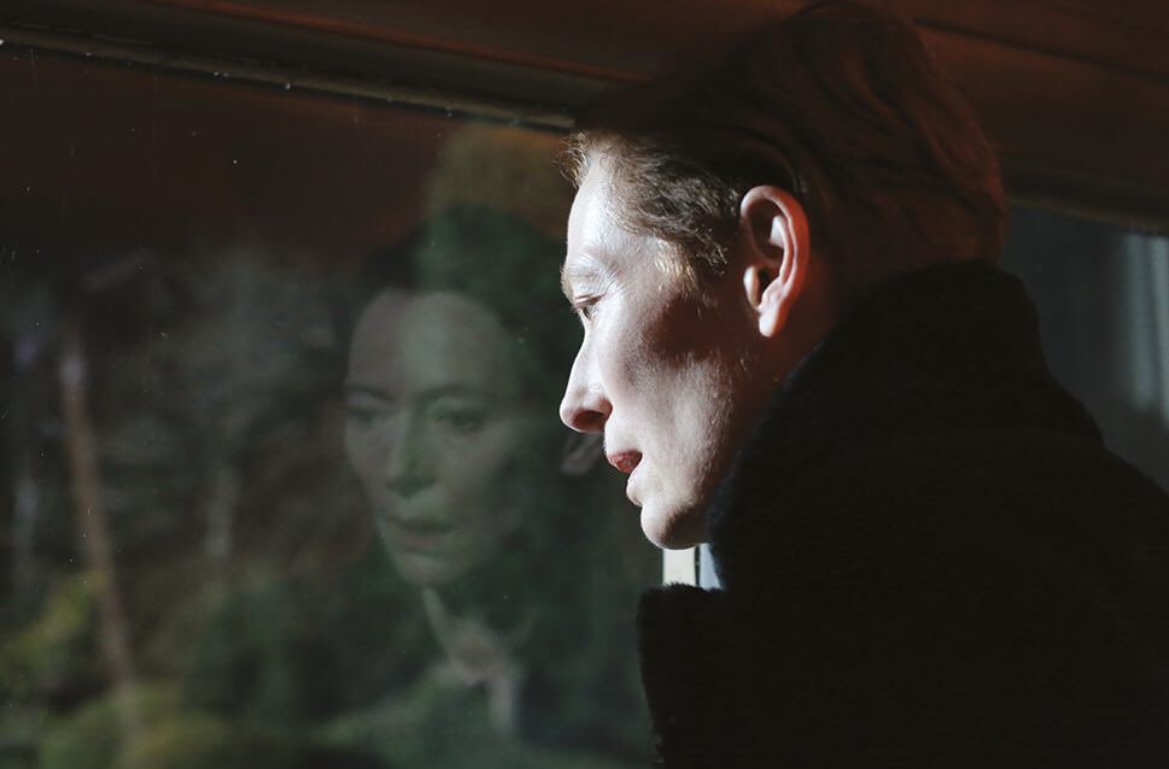
Photo caption: Tilda Swinton in THE ETERNAL DAUGHTER. Courtesy of A24.
The Eternal Daughter begins with the filmmaker Julie (Tilda Swinton) bringing her elderly mother (also Tilsa Swinton) for a getaway at an Welsh country hotel. It’s an enormous, sinister-looking edifice, a Victorian building of Gothic design. When the building creaks and goes bump in the night, mysterious figures appear at windows and there’s knocking from supposedly unoccupied rooms, The Eternal Daughter has all of the trappings of a haunted house movie.
Mom and daughter appear to be the only visitors, although hotel staff insists otherwise. They are at the mercy of the hotel’s receptionist/manager/server (Carly-Sophia Davies), who, to a hilarious extent, could not be any more disinterested in her guests’ happiness ,comfort or approval.
Julie’s experience at the hotel is one of persistent dissatisfaction. She wants to work, but the only WiFi signal is three floors above their room, and she has sporadic cell phone service only in one special spot outside. Her requests to get the room they actually reserved and the expected amenities are stonewalled by the receptionist.
Her hot button, however, is that she doesn’t feel that she is bringing her mother any happiness. It turns out that this trip is a birthday treat for her mother, who had stayed in this house as a child during WW II. The mother is serene and uncomplaining, except to object to Julie “fussing” over her. Julie has microplanned every detail, down to lighting the candle on the mom’s birthday cake, but Julie doesn’t think she is doing anything right.
What’s going on in this slow burn? It turns out that writer-director Joanna Hogg isn’t taking us to a haunted house or to a comedy of manners in a bad hotel. This is a psychological drama. Julie is haunted, alright, but it’s by her relationship with her mother, which she’s having a very hard time figuring out.
Joanna Hogg is a veteran director who got the chance to become an auteur at age 59, beginning in 2019 with The Souvenir and The Souvenir Part IIin 2021.The Eternal Daughter is the third of these highly personal, apparently autographical films, with the Julie character as Hogg’s alter ego. In those films, Julie was played by Honor Swinton Byrne (Tilda Swinton’s real life daughter) and Swinton played Julie’s mom.
All three films are personal, as in specific and decidedly NOT universal. Although I am generally not a fan of naval-gazing, Hogg’s genius as a filmmaker is such that The Eternal Daughter and its siblings, slow burns all, are mesmerizing.
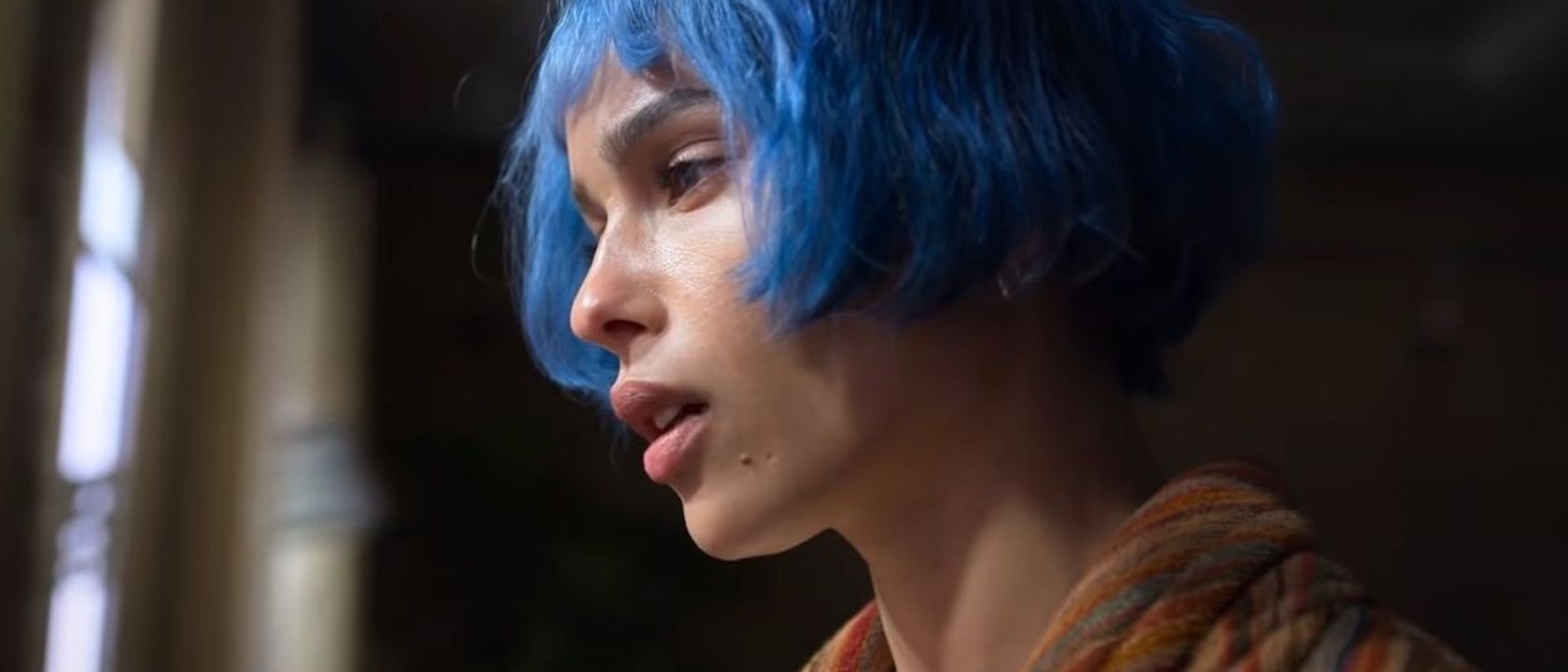
Photo caption: Zoe Kravitz in KIMI. Courtesy of HBO.
Steven Soderbergh is very good at making tight little thrillers, and there’s nothing wrong with that. In his Kimi, Angela (Zoe Kravitz) is a Seattle techie living and working in her loft apartment during the COVID lockdown, where she and the loft apartment dwellers across the street watch each other being locked down. But she’s not really trapped in her apartment by public health protocols, which have eased – she’s agoraphobic.
Angela works for a big, sinister tech firm that harvesting way too much private information from each of us and that is the basis for the paranoid facet of this paranoid thriller. She believes that she has heard a violent crime, as in an audio version of Rear Window. Now she knows too much, and she’s in danger.
Kimi is an okay paranoid thriller until the finale, when it turns into a superb action movie. It turns out that the tiny, sniveling Angela has some commando resourcefulness in her. The final set piece is like Wait Until Dark on steroids – very tight, very imaginative and very entertaining.
Photo caption: Margaret Qualley in STARS AT NOON. Courtesy of A24.
In the atmospheric neo-noir Stars at Noon, it’s the early 1980s in Nicaragua, and wannabe journalist Trish (Margaret Qualley) is learning that one can not always live by ones wits. She’s hoodwinked a magazine into paying her way to write a travel puff piece, while always intending to write a political expose; that article has annoyed the government to the point of revoking her press pass and confiscating her passport. Now she’s broke, unable to pay her way out of the city’s cheapest motel and into the airport, cadging meals from hotel buffets and obsessing on how to procure some shampoo for her increasingly sweaty scalp.
What she has going for her is command of the Spanish language and having learned her way around the country, geographically and culturally. She’s mastered the alphabet soup of Central American intelligence and security entities, each nastier and more ruthlessly repressive than the last. Trish is also highly manipulative and eager to sleep with any man who might help her in any way.
She picks up the handsome Brit Daniel (Joe Alwyn) at his upscale hotel, intending to get a roll in the hay, 50 dollars US and some stolen hotel shampoo out of the encounter. When Trish finds a hidden gun in his stuff, she (and the audience) think he must be dangerous, like a hit man or an intelligence operative. When she finds that he’s also in over his head, she and he have fallen in love with each other.
He’s not dangerous to others – he’s dangerous to be with. She was in desperate circumstance, but now the two of them are desperate for their lives. It’s too late – their fates are now entangled. And they’re going to have to make a mad dash for the border.
Stars at Noon won the Grand Prixe, essentially second place at Cannes, and this must have been because of the jury’s reverence for Claire Denis, the iconic French director, and a glass ceiling-busting female filmmaker at that. As one would expect from a Denis film, Star at Noon is competently crafted, but it’s just way too long at two hours and twenty minutes. Although Qualley and Alwyn spend a lot of that time unclothed and grinding away, I didn’t find their chemistry to smoke. Stars at Noon is too needlessly languorous and not sizzling enough to be a really good movie.
Qualley pulls her dress over her head within minutes of meeting any man; if the director weren’t female, Stars at Noon would face criticism for male gaze exploitation.
Denis also has oddly chosen a sound track that could have lifted from Showtime soft porn.
Qualley with her fidgety energy and her hyper-direct gaze, is perfectly cast as Trish. I first saw Qualley when she jumped off the screen as a Manson Girl in Once Upon a Time..In Hollywoodand then in Fosse/Verdon. She has the charisma to carry a movie much better than Stars at Noon.
Joe Alwyn is dreamy enough to make it credible that Trish would fall hard for Daniel.
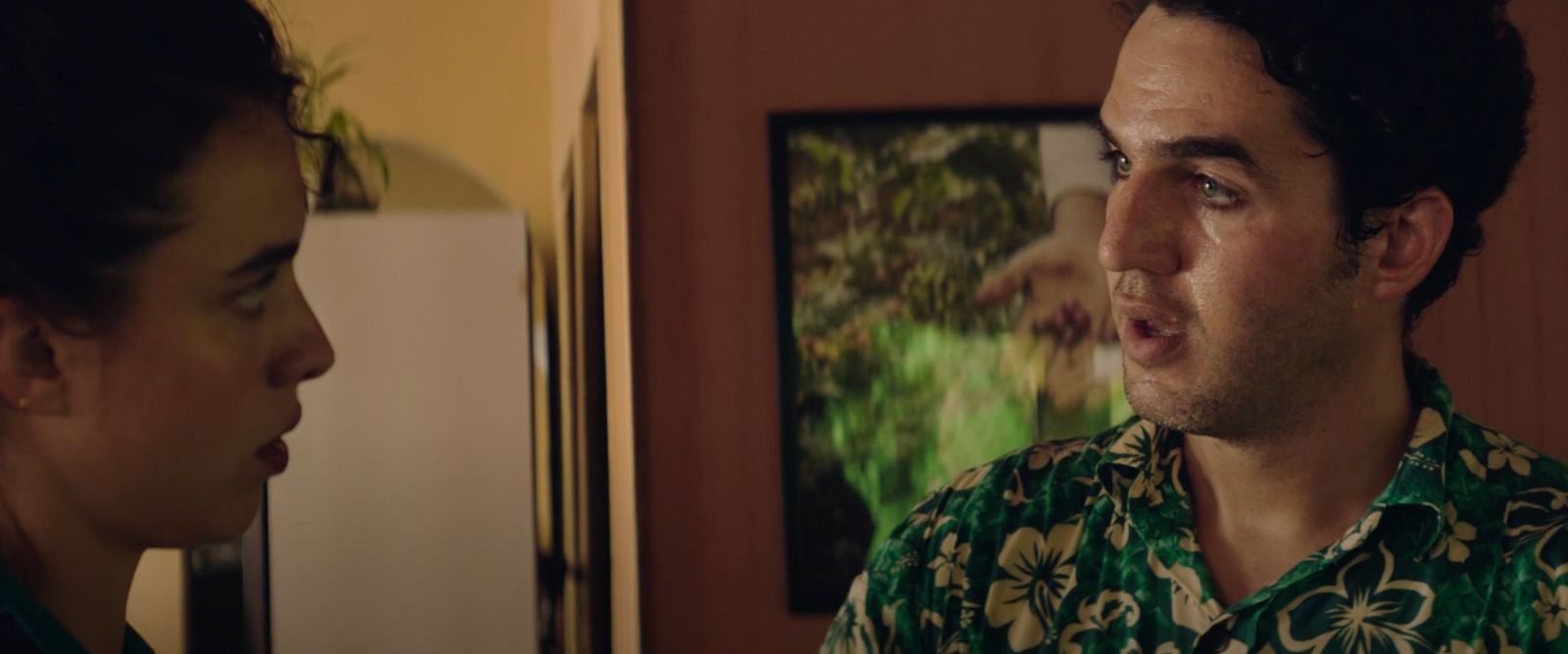
Photo caption: Margaret Qualley and Benny Safdie in STARS AT NOON. Courtesy of A24.
I can’t say enough about Benny Safdie’s performance as a character credited as CIA Man. His affability makes him all the more sinister. The CIA Man knows that he holds all the cards, and there’s no need to seem like a brute, even if he is going to compel Trish into an egregious and traumatizing act. It’s all business, thank you very much.
I usually think of Benny and his brother Josh as indie directors (Uncut Gems), but Benny has been acting and he has real chops. In Licorice Pizza, he nailed the role of the closeted, charismatic do-gooder politician,
John C. Reilly shows up briefly, wearing a wild 1980s-perm-gone-wrong as the editor that Trish has burned her very last bridge with, and his cameo is hilarious.
I watched Stars at Noon on Amazon, one of the many streaming platforms which offer it.
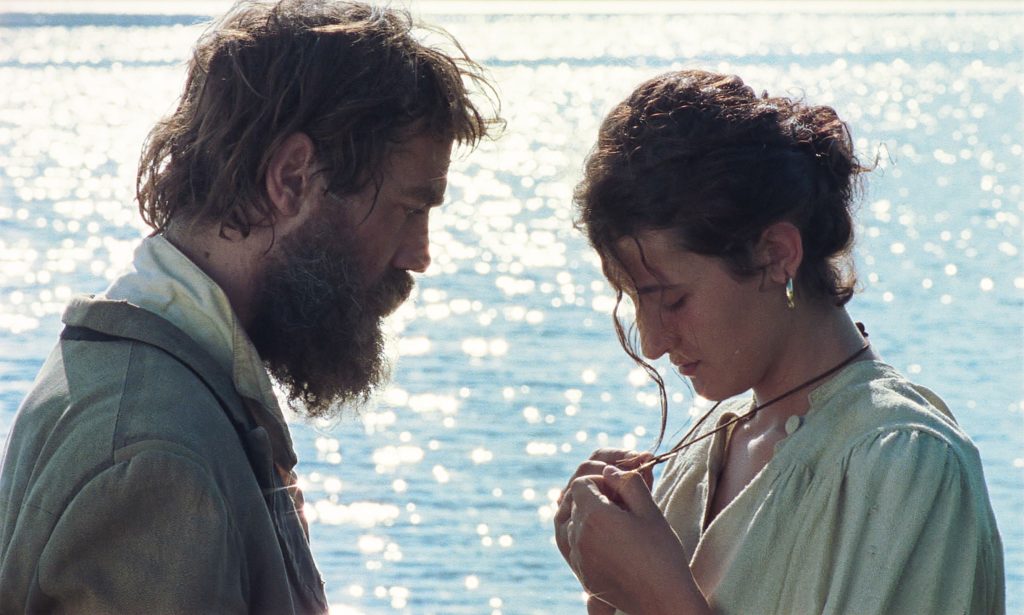
TALE OF KING CRAB. Courtesy of Oscilloscope Films.
During the Holidays, I suspend my usual The most eclectic watch-at-home recommendations you’ll find ANYWHERE so I can highlight the very best movies from earlier in 2022. These are on my list of Best Movies of 2022, and they shouldn’t be overlooked. Now you can watch them all at home.
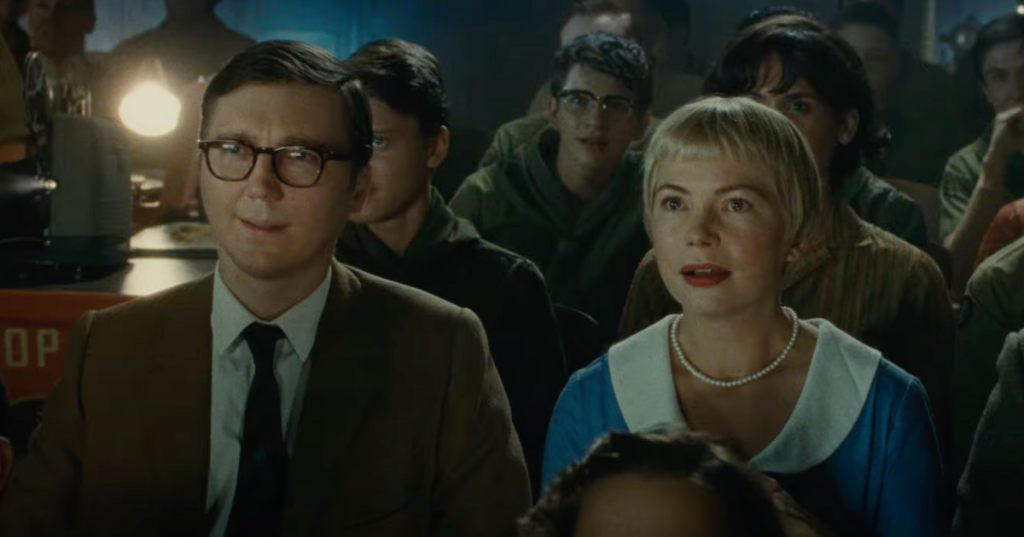
Photo caption: Paul Dano and Michelle Williams in THE FABELMANS. Courtesy of Universal Pictures.
In his cinematic memoir The Fabelmans, that great storyteller Steven Spielberg relates two braided narratives – one about the origins of his own dedication to filmmaking and a second about his parents, two people who loved each other but could not be happily married. Both parents were creatives in their way. His dad (Paul Dano) was an electronic engineer in the transistor age who could imagine modern computing. His mom (Michelle Williams) was an aesthete, a pianist-turned-house mom whose exuberance often manifested in song, dance and visual arts. And, importantly, both parents were dreamers who would come to understand their son’s passion.
The story’s stand-in for Spielberg is Sammy Fabelman (Gabriel LaBelle). We watch as his parents drag him to his first movie. That first film, incidentally, was The Greatest Show on Earth, always in the conversation as the worst movie ever to win the Best Picture Oscar. Nevertheless, it contains a thrilling rain wreck sequence, which definitely left its mark on the young Spielberg. You can draw a line from the train wreck scene in The Greatest Show on Earth and the very young Sammy’s home movie version with a Lionel model train to the final scene in Spielberg’s first real-life feature, the TV movie Duel.
Young Sammy starts making his own home movies, and after the family moves to Arizona, starts enlisting his sisters and his friends in increasingly sophisticated amateur film productions, including a WWII movie with an robust combat finale.
Gabriel LaBelle in THE FABELMANS. Courtesy of Universal Pictures.
When the dad gets a job at IBM in San Jose, it’s one too many moves for mom. She misses a friendship that made her husband’s absences bearable, she decompensates and the differences between the two simmer and finally boil over.
The kids aren’t happy in what will become Silicon Valley either. Sammy and his sisters attend Saratoga High, which is thinly disguised as “Grand View High”, and Sammy suffers antisemitic bullying (and I have read about Spielberg’s bitterness at his experience there). Indeed, Saratoga High in The Fabelmans looks like a camp for Hitler Youth.
Although high school is hellacious and his parents split, Sammy survives to try to break into the film industry. Each parent is able to provide support in his or her own way, and Sammy gets some valuable advice from other adults along the way, including one very famous one.
Gabriel LaBelle, who looks like the teenage Spielberg and who is much shorter than the Aryans at Saratoga High, is completely believable as Sammy. While his performance as this specific character is more than adequate, I’m really not hoping to see him as Mercutio or Holden Caulfield or Billy the Kid. And, as befits the title, The Fabelmans is at least as much about the parents’ impact on Sammy as it is about his own actions and inner life.
How many times can you call an actor’s performance a “revelation”? That’s the challenge in describing what will be another Oscar-nominated turn by Michele Williams. The Fabelman family really revolves around the mom – for better when she is the glue that holds the family together through its moves across the US. And for worse, when she experiences moments of instability and then breaks down completely. Williams’ performance (as always) brings texture and subtlety, along with the strong emotions of joy and despair. There’s a moment when the dad, experiencing unrestrained joy, carries her over the threshold of a new house, one that she has been yearning for; she smiles appropriately for the moment, and then the expression in her eyes slightly changes to hint that things cannot be made right, after all. It’s a singular Michelle Williams moment.
Paul Dano excels as the Fabelman Dad, who is trying so damn hard within the confines of 1950s gender roles, but is often confounded by his wife and his own children.
The rest of the cast is good, too, including Seth Rogen, unrecognizable but for his voice. Julia Butters (who stole a scene from Leonardo DiCaprio in Once Upon a Time..In Hollywood) and Keely Karsten are really excellent as Sammy’s sisters. Judd Hirsch, who is now 87, has a hilarious cameo as the mom’s long-unseen grand uncle, who parachutes in with what amounts to a bizarre pep talk for Sammy. Another great filmmaker, David Lynch, has a priceless and gut-bustingly funny and dead-on cameo at the end as an even more famous filmmaker; Lynch and Spielberg must have been howling with laughter between takes.
Personal digression: The protagonist’s first movie – and the rest of the film – made me think about whether there was one moment in my life that steered me toward my own day-job career in law and politics – certainly there was a zeitgeist of the times in the 1960s, but I ‘ll have to reflect more to come up with a single catalytic moment. For my love of movies, however, there’s a clear spark – seeing movies like Casablanca, Double Indemnity, All About Eve, Strangers on a Train, The Man Who Shot Liberty Valance, The Rules of the Game and 8 1/2 for my sophomore History of Film class at Stanford, along with The Godfather, Chinatown, Five Easy Pieces, The Last Picture Show, American Grafitti and other, then contemporary, work by the New Directors in the early 1970s; imagine seeing those 12 movies for the first time within a couple years.
I’ll be adding The Fabelmans to my Best Movies of 2022. It’s peeked out in a few theaters, and I expect a much wider theatrical release after Oscar nominations are announced in late January.
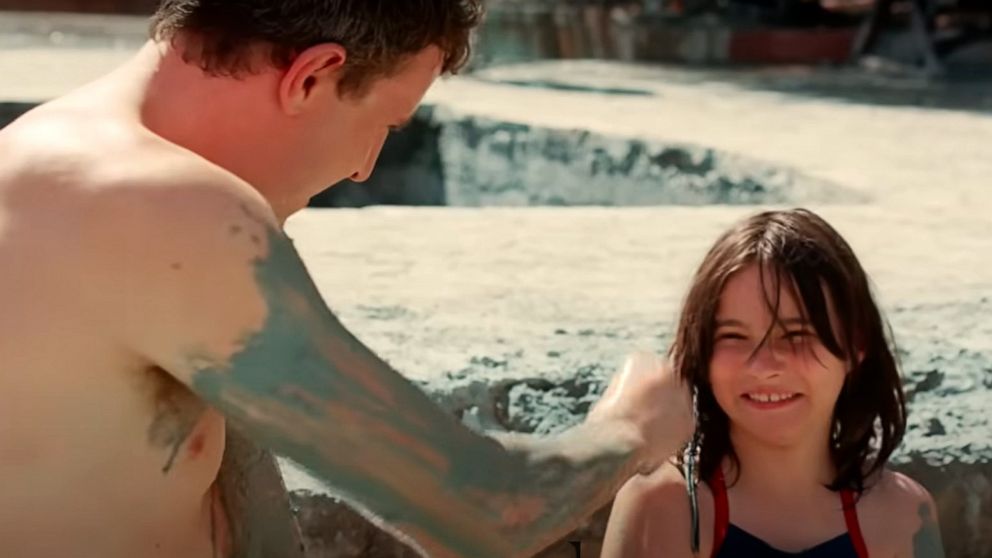
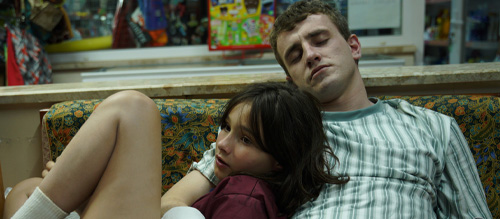
Photo Caption: Frankie Corio and Paul Mescal in AFTERSUN. Courtesy of A24.
The authentic, thought-provoking and entirely fresh Aftersun follows a British dad and daughter on their weeklong holiday at a budget seaside resort in Turkey in 1999.
She is 11, and he is 30. Although he’s always been in her life, he’s not the custodial parent, and perhaps never has been. (If you do the math, he was only 19 when he impregnated her mom.) Dad and daughter are playful ,affectionate and entirely comfortable with each other – and they are both eager for her Week With Dad.
The daughter, Sophie (Frankie Coro), is bright, bouncy and engaged with the present. She’s curious about the dad whom she doesn’t live with and about the older teens at the resort.
The dad, Calum (Paul Mescal of Normal People and The Lost Daughter) is charming and decent. He wants Sophie to enjoy a carefree, fun week, and maybe learn a few things about the culture of the country they are visiting.
But when Calum is not engaged with his daughter, he is moody and tired. There are hints of bad choices in his personal history – his very limited financial means, his not remembering the origin of physical injuries, his buying something that he can’t afford, and a probably unintended early parenthood. He’s experiencing melancholy at where he is and is not as he approaches 31. Calum is too young for a mid-life crisis, but there it is.
Sophie and Calum’s holiday week is a pleasant enough slow burn – playing at the pool and the beach, arcade games, umbrella mocktails, an outing to ancient mud baths and low-grade and corny dinner entertainment at the resort. The week starts very playfully and becomes more tense and forced as Calum’s dissatisfaction with himself begins to leak out.
We glimpse the adult Sophie (Celia Rowson-Hall), now her dad’s age back then, reflecting on her dad in strobe-lit dreams and when awakened in the middle of the night by her own kid. Now with adult life experience, she’s trying to figure out her dad.
The young Sophie is ever watchful. She doesn’t miss much, and we observe her observations. She’s getting a rare full dose of Calum, all from her 11-year-old perceptive. As Sherri Linden writes in The Hollywood Reporter: “ Charlotte Wells’ sharp and tender Aftersun is the rare father-and-child drama that leaves you wondering who the dad will grow up to be. ”
[MILD SPOILER: This is not a child in peril movie, When Calum makes choices that will cause more vigilant parents in the audience to gasp, Sophie can still rely on her uncommon good sense and some good luck to stay safe. ]
This is the first feature for writer-director Charlotte Wells, and it’s a remarkable and promising debut. Wells tells an intimate dad-daughter while refusing to deploy any cliches. She elicited superb performances from her cast, one of whom is11-years-old in her very first movie. And credit Well’s originality for the very idea of a coming of age movie for the adult in a child’s life.
Aftersun is also the acting debut for Frankie Corio, a major discovery. She’s so charismatic that we can’t keep from watching her, and she has an uncommon gift of letting us in on her thoughtfulness.
Paul Mescal is also excellent as Calum. I always respect performances when the role is mostly passive, and the actor has to portray an individual’s inner life without getting to do anything flamboyant.
I’ll be adding Aftersun to my Best Movies of 2022. It’s currently rolling out in a few theaters.
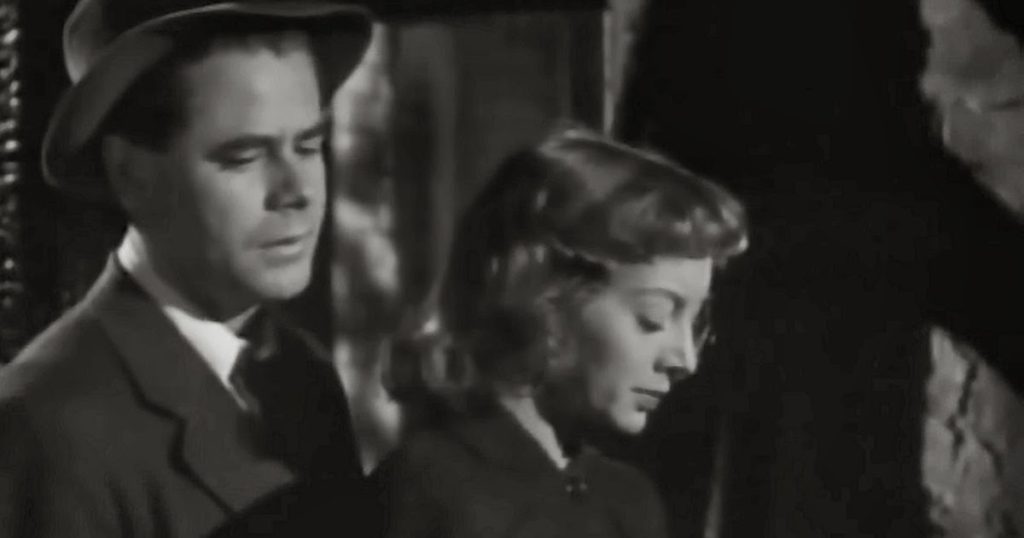
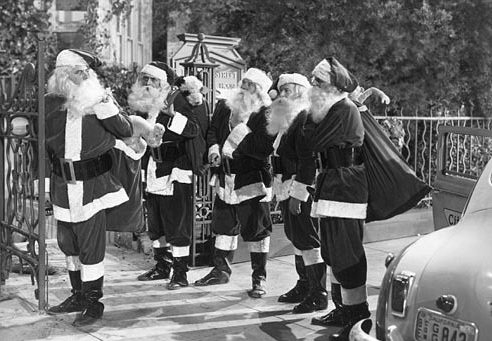
On December 17, Turner Classic Movies is airing the little-seen Mr. Soft Touch from 1949, which is undeniably Christmas film noir. The Holiday season is integral to the plot, which revolves around a Christmas tree, a Christmas party, Christmas decorations and a horde of ne’er-do-wells in Santa suits.
Nightclub owner Joe Miracle (Glenn Ford) returns from WWII to find that the mob has looted his nest egg. He’s able to rob it back, but now he’s got to hide out from the gangsters until his ship literally sails. As circumstances develop, he pretends to be a down-and-outer so he can stay in in the settlement house (isn’t that quaint?) run by social worker Jenny Jones (Evelyn Keyes).
MR. SOFT TOUCH. Photo Credit: Underwood and Underwood Corbis.
Mr. Soft Touch has many of the elements of classic film noir:
a cynical underworld where shady characters are robbed by even shadier types.
the WWII vet who has gotten screwed, and his only option to make himself whole is illegal.
a protagonist whose actions are driven to please a beautiful woman.
a hero who takes a bullet in the street.
a cast packed by recognizable characters of the period: John Ireland, Beulah Bondi, Percy Kilbride and Ted de Corsia.
gritty 1949 San Francisco locations.
That being said, Mr. Soft Touch is light comic noir and often silly. We accept the plot contrivances because the film doesn’t take itself too seriously.
Here, Evelyn Keyes isn’t a femme fatale for once; she’s a naïve do-gooder, but she’s sexy all the same, and sparks fly between Ford and Keyes as she inches him toward altruism and redemption.
I watched on Mr. Soft Touch last year on TCM because it is not available to stream. Set your DVD for a rarity.
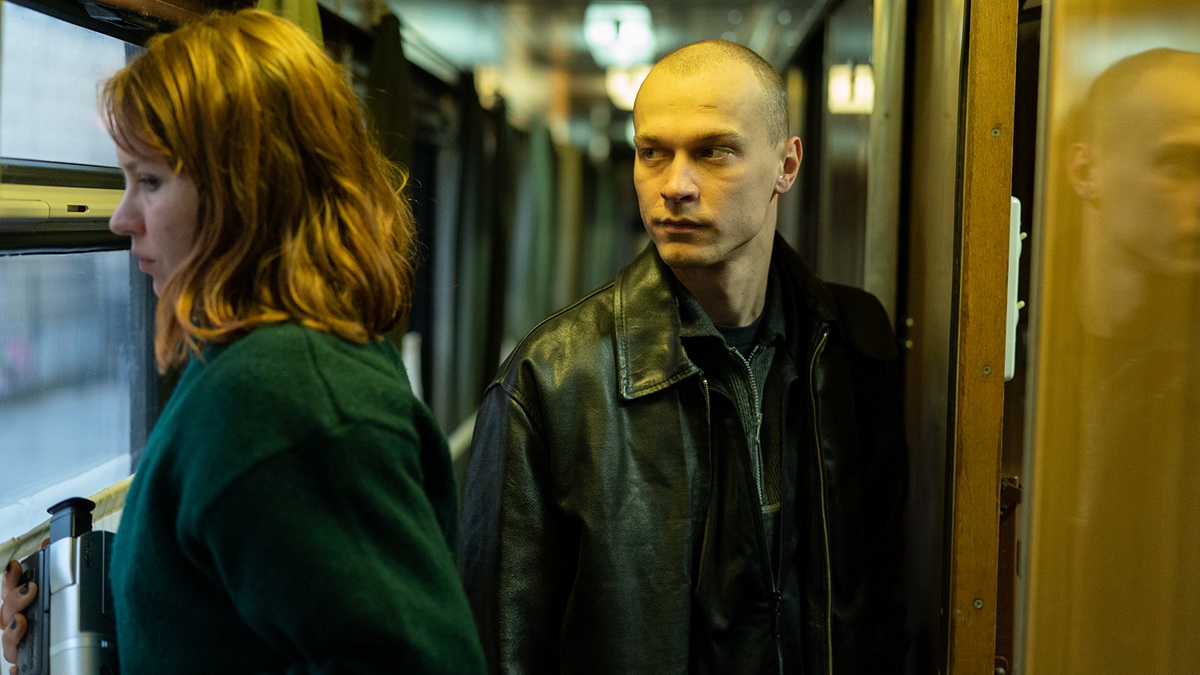
Photo caption: Seidi Haarla and Yuri Borisov in COMPARTMENT No. 6. Courtesy of Sony Pictures Classics.
During the Holidays, I suspend my usual The most eclectic watch-at-home recommendations you’ll find ANYWHERE so I can highlight the very best movies from earlier in 2022. These are on my list of Best Movies of 2022 – So Far, and they shouldn’t be overlooked. Now you can watch them all at home.
Montana Story: a family secret simmers, then explodes. Amazon, AppleTV, Vudu, YouTube, redbox.
Compartment No. 6: a surprising journey to connection. Amazon, AppleTV, Vudu, YouTube, redbox.
Poser: personal plagiarism. Amazon, AppleTV, Vudu, YouTube, redbox.
The Tale of King Crab: storytelling at its best. Amazon, AppleTV, Vudu, YouTube, redbox.
12 Months: an authentic relationship evolves. Amazon.
ON TV
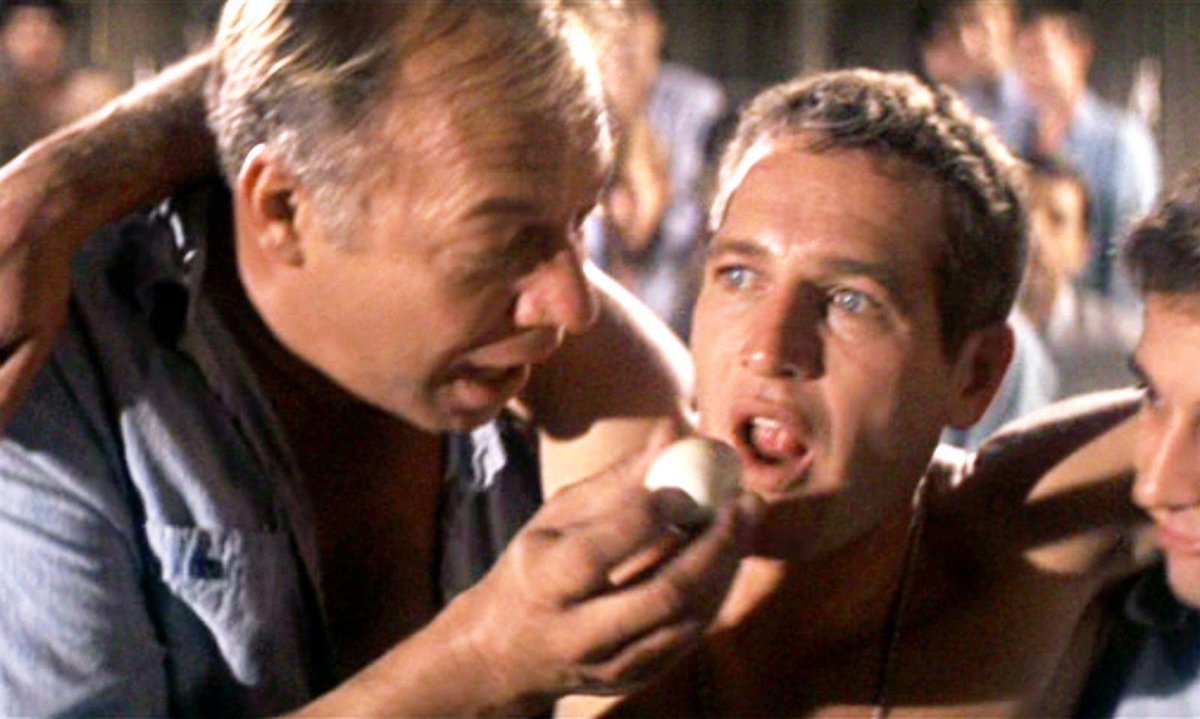
George Kennedy and Paul Newman in COOL HAND LUKE.
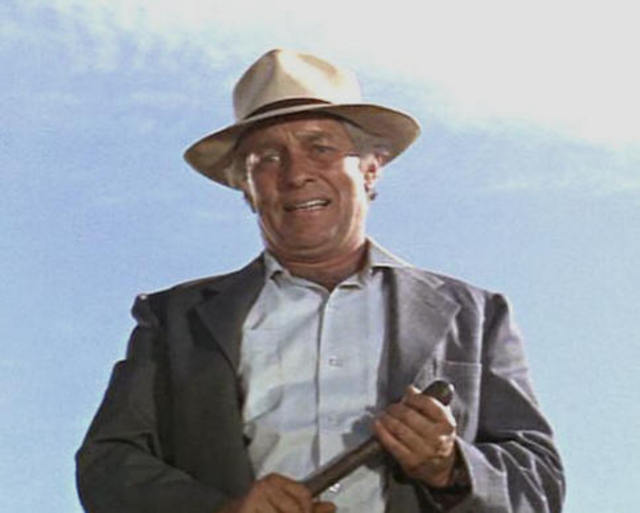
On December 12, Turner Classic Movies brings us Paul Newman as an iconic 1960s anti-hero in Cool Hand Luke. Along with Newman being pretty doggone cool, there’s a charismatic supporting performance by George Kennedy, the unforgettable boiled egg-eating contest and the great movie line “What we have here is a failure to communicate”.
How to Run a Chain Gang and Influence People in COOL HAND LUKE
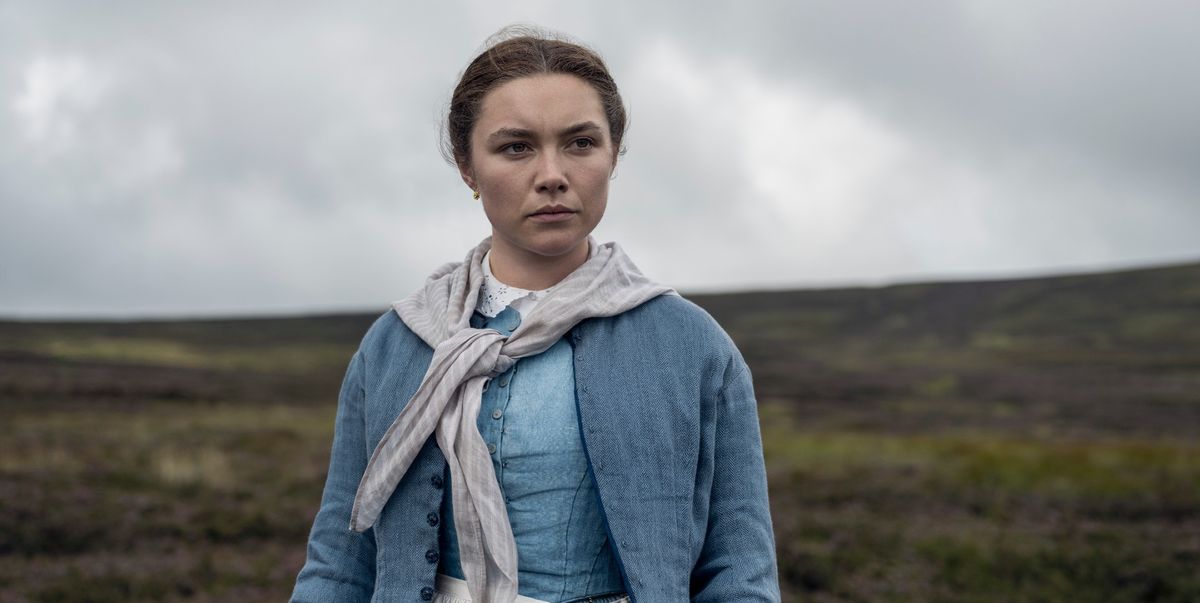
Photo caption: Florence Pugh in THE WONDER. Courtesy of Netflix.
In the intense, somber and profoundly dull drama, The Wonder, Florence Pugh plays an English nurse in 1862 Ireland with an unusual assignment. A local 11-year-old girl has survived for months while purportedly refusing all food. Village leaders commission the nurse as part of a team to watch the girl 24 hours per day and ascertain whether this is a miracle or a hoax.
The nurse takes this task seriously, and proceeds with integrity, diligence and compassion, and Florence Pugh takes it seriously, too, widening her eyes and furrowing her brow. There are many solitary shots of the nurse plodding across the landscape or eating her own meals. However, there are holes in the story which keep the audience from suspending disbelief about the extreme behavior of some of the characters.
The result is that watching The Wonder is drudgery. It’s a misfire by Chilean director Sebastián Lelio, who performed so well with A Fantastic Woman and Gloria.
This isn’t the fault of Pugh, although I’m not ready to anoint her as the next Kate Winslet. I still don’t see what the big deal is about Pugh.
The Wonder does reflect the genius of cinematographer Wegner, who has recently shot The Power of the Dog and Zola. The Wonder is a beautiful film to watch. One shot of the nurse in her sapphire dress, the girl in a gold dress and the girl’s mom in a green dress, all in a candlelit room, reminded me of a Vermeer. Stunning work by Wegner.
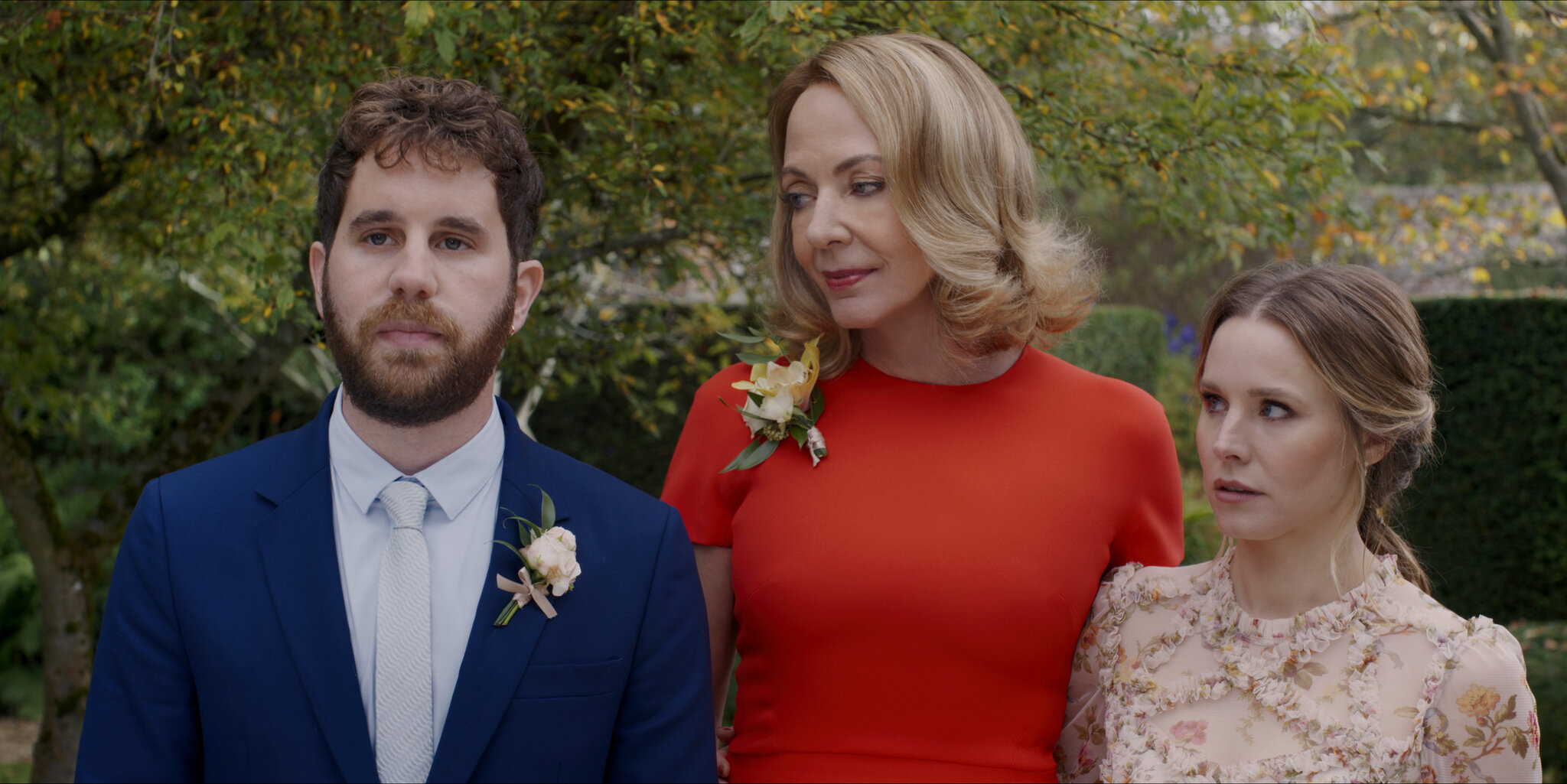
Ben Platt, Allison Janney and Kristen Bell in THE PEOPLE WE HATE AT THE WEDDING. Courtesy of Amazon.
The purported comedy The People We Hate at the Wedding feels like an agency deal that attached the talent and was sold to Amazon before there was any story to justify the film. The story, if you chose to call it that, is a compendium of rom com tropes – the anxious bride, the Bridezilla, the bride keeping a Big Secret from the groom, the brides’ estranged parents, the mom not comfortable with her out gay son and his partner, and some more. The tropes are there, but there just isn’t a single moment of authenticity. Nor any reason to care about the characters. Nor laughs.
I’ll watch just about anything with Allison Janney and/or Kristin Bell, but they’re hopelessly wasted in this stinker. The usuallycompelling French actor Isaach De Bankole is surprisingly wooden (perhaps because his lines are in English?).
If you must, The People We Hate at the Wedding is streaming on Amazon (included with Prime).