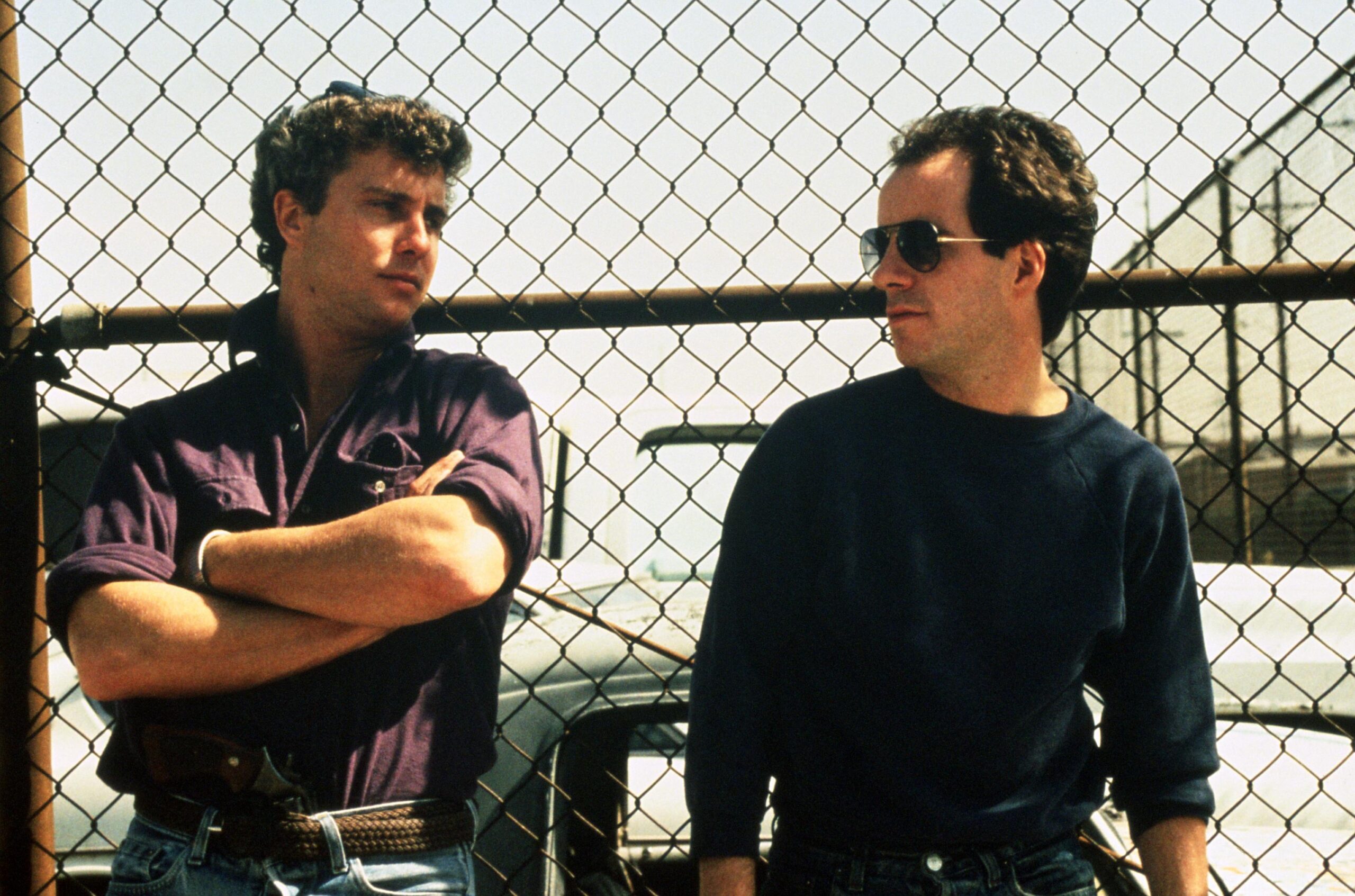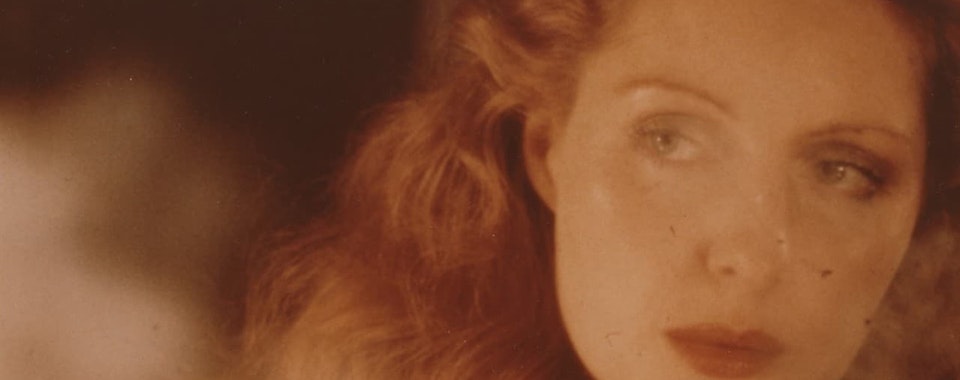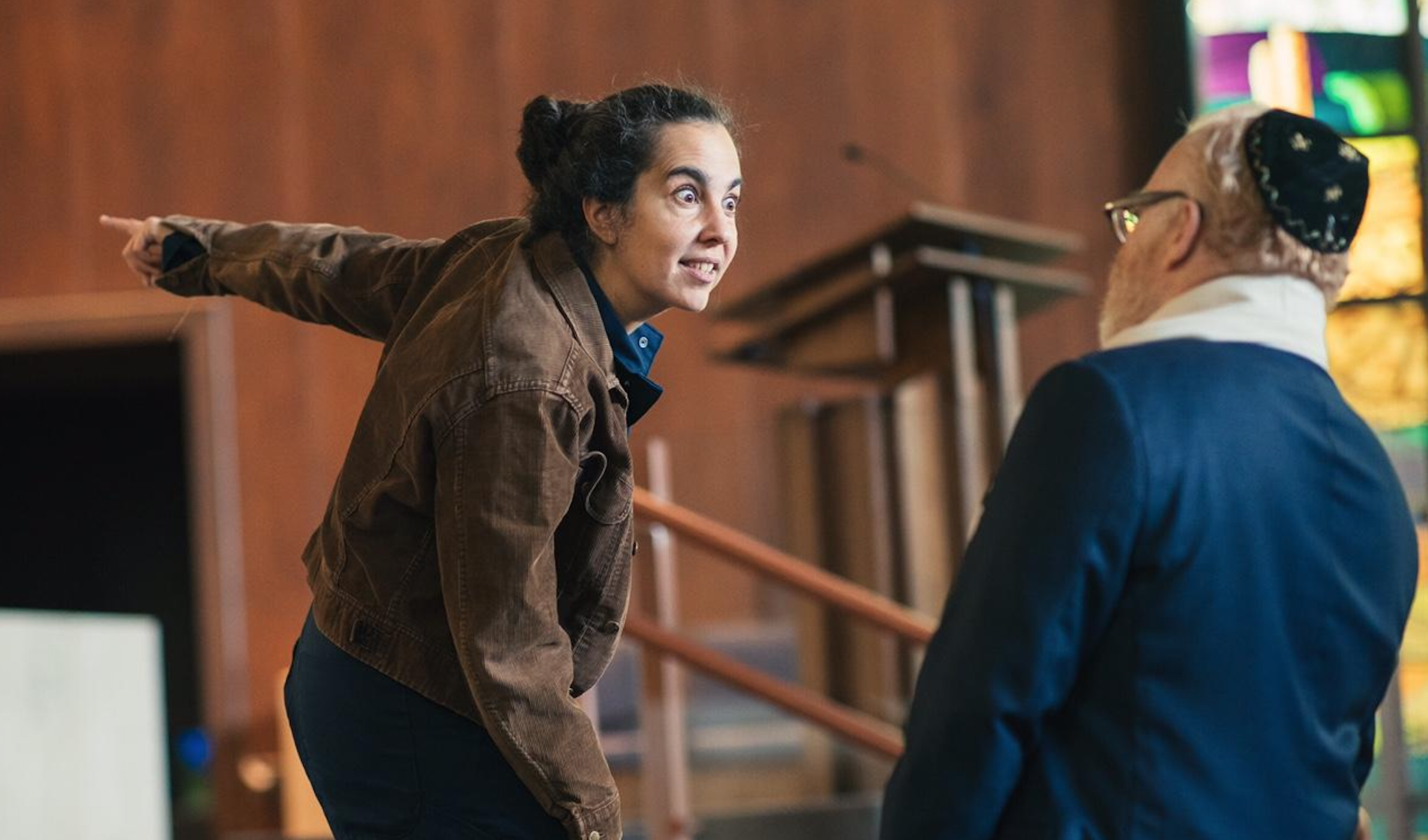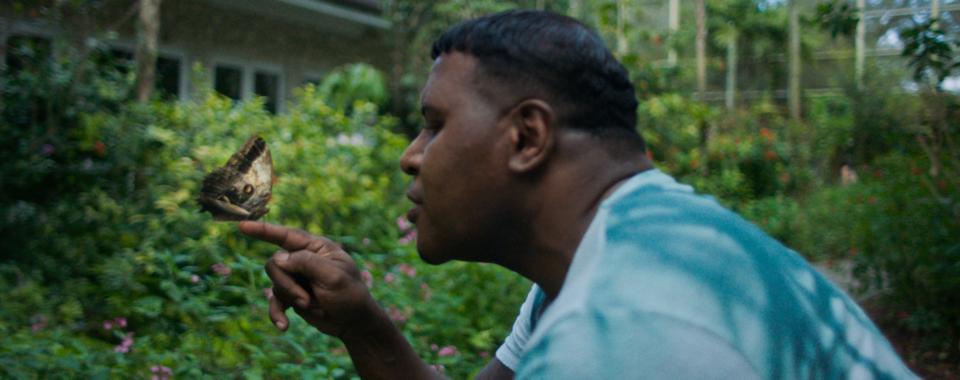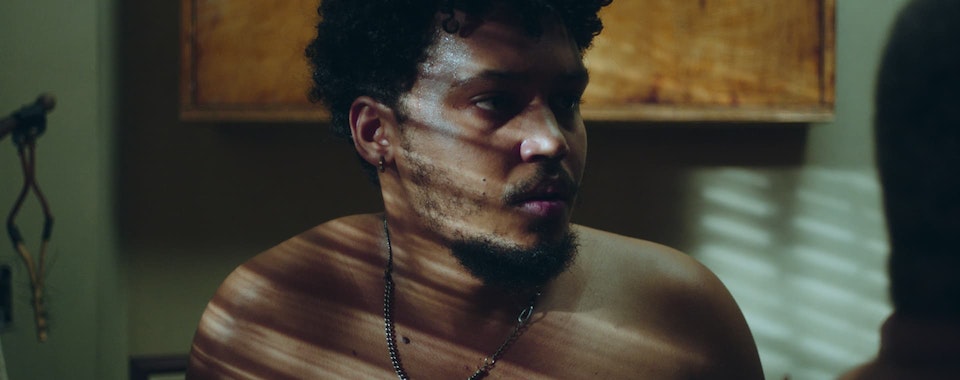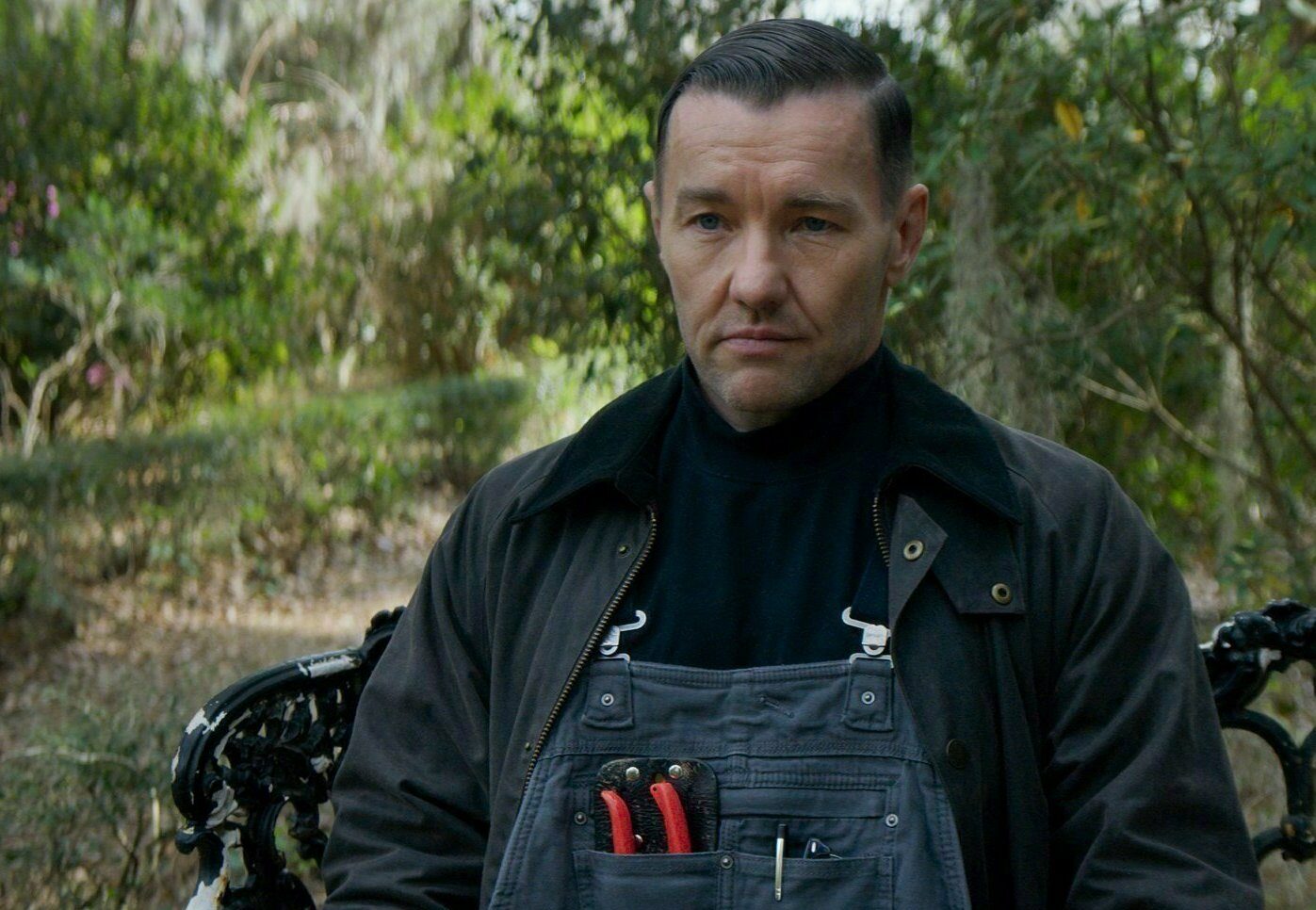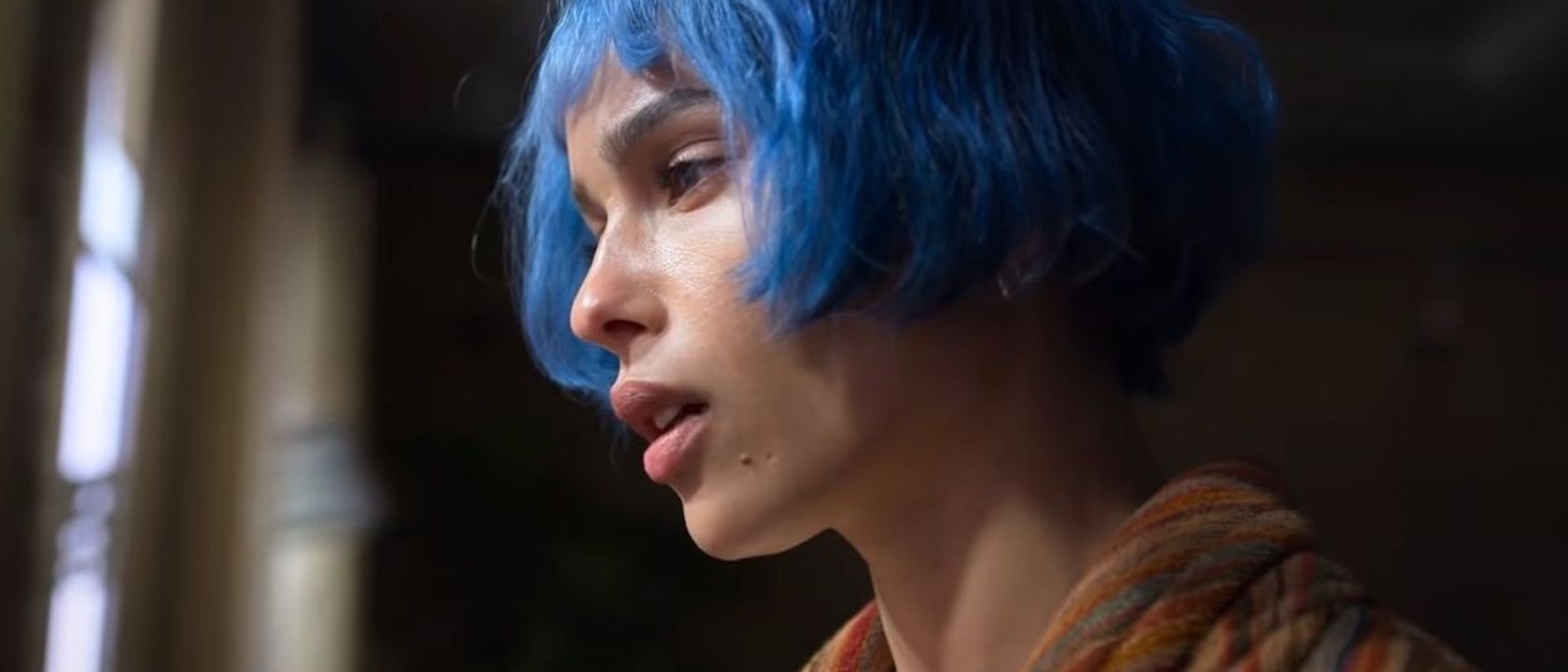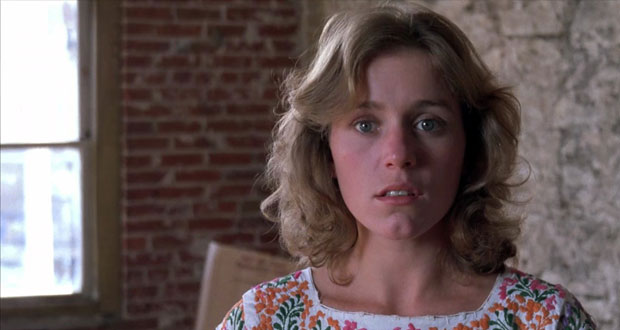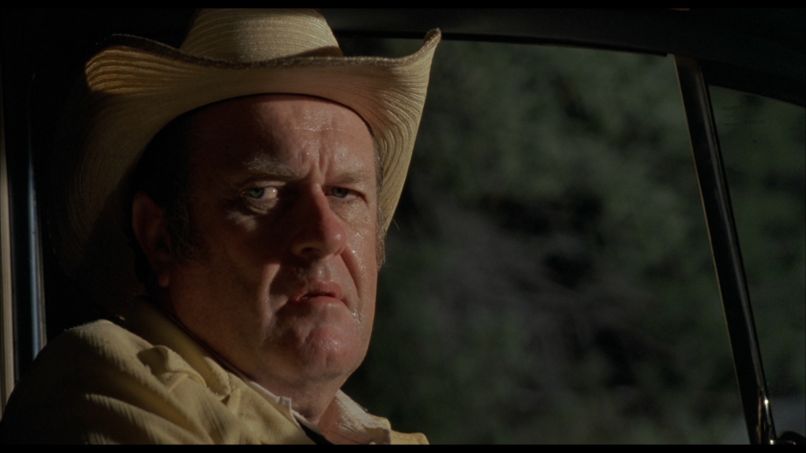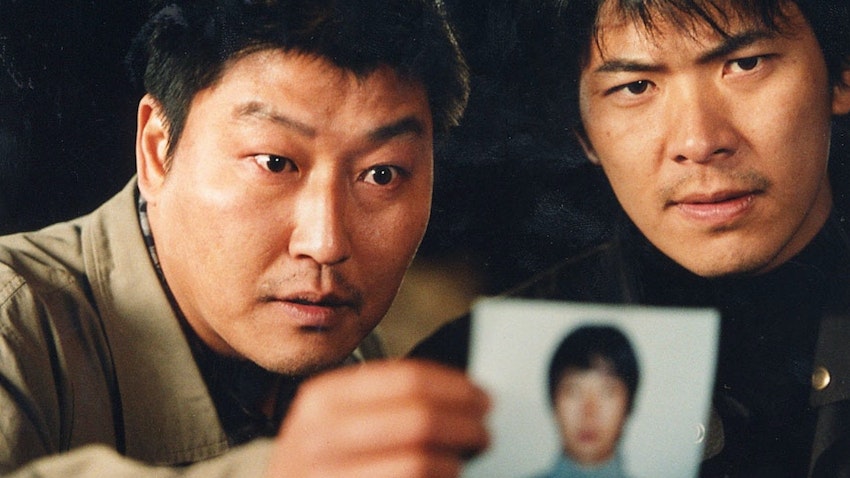
Photo caption: Julie Ledru in RODEO. Courtesy of Music Box Films.
In the ever-kinetic Rodeo, a remarkably fierce young woman invites herself into a crew of dirt riders. Rodeo is set with remarkable verisimilitude in a subculture of young bikers from France’s hardscrabble immigrant communities. It’s an edgy scene, and Julia (newcomer Julie Ledru) penetrates it only because she’s a little scary herself.
Julia is a force of nature, and she is able to back off guys with an explosive hostility. When she is ready to adopt a dangerous new passion on two wheels, no one can stand in her way. Off she rides, on a journey with life-and-death stakes.
Rodeo is the first feature for French director Lola Quivoron, who is the real star of this roller coaster of a movie. If she wants to, Quivoron will be making big Hollywood action films like The Fast and the Furious.
Rodeo won the Un Certain Regard coup de coeur prize at Cannes, and I screened it for the SLO Film Fest. Rodeo is now available to stream from Amazon, Apple TV and Vudu.
In the droll Swedish dramedy Force Majeure, a smugly affluent family of four vacations at an upscale ski resort in the French Alps. The wife explains to a friend that they take the vacation because otherwise the husband never sees the family. But, while the wife is blissed out, the kids fidget and complain, and the hubby sneaks peeks at his phone.
Then there’s a sudden moment of apparent life-and-death peril; the husband has a chance to protect the wife and kids, but instead – after first securing his iPhone – runs for his life. How do they all go on from that revealing moment? The extent that one incident can bring relationships into focus is the core of Force Majeure.
Clearly, the family has a serious issue to resolve, but there’s plenty of dry humor. In the most cringe worthy moments, the wife tries to contain her disgust, but can’t keep it bottled up when she’s in the most social situations. The couple repeatedly huddle outside their room in their underwear to talk things out, only to find themselves observed by the same impassive French hotel worker. The most tense moments are interrupted by an insistent cell phone vibration, another guest’s birthday party and a child’s remotely out-of-control flying toy.
Force Majeure is exceptionally well-written by writer-director Ruben Ostlund. It was just his fourth feature and the first widely seen outside Scandinavia. He transitions between scenes by showing the machinery of the ski resort accompanied by Baroque organ music – a singular and very effective directorial choice. Ostlund has gone on to direct The Square and Triangle of Sadness, both of which won the Palm d’Or at Cannes; (but Force Majeure is his best film.)
Force Majeure was Sweden’s submission for the Best Foreign Language Oscar. It is available to stream from Amazon, AppleTV, Vudu and YouTube and is free on HBO.
[I’ve included the trailer as always, but I recommend that you see the movie WITHOUT watching this trailer – mild spoilers]
Photo caption: Fanny in FANNY: THE RIGHT TO ROCK. Courtesy of PBS.
Fanny: The Right to Rock documents the first all-female rock band to get signed by a major record label and churn out five albums. Fifty years ago, the band Fanny was breaking ground for women musicians – and for lesbians and Filipinas. Women rockers were a novelty in the early 1970; imagine layering on LGBTQ identity and Asian-American heritage.
Although you probably haven’t heard of them, this was no garage band. They had a major label record deal, European tours, and hung out with big name peers. Unlike many male bands of the period, Fanny didn’t crash and burn due to drug use or clashing egos. They just never caught on with record-buyers.
FANNY: THE RIGHT TO ROCK. Courtesy of PBS.
It’s pretty clear that sexism in the music industry and media, combined with maybe being a little ahead of their time to deny Fanny stardom. Too bad – I would have loved to listen to them in their heyday.
Their music fits right into the stuff I was listening to in the 1970s. I’m guessing that the reason why I hadn’t heard of them is that they didn’t get played on FM radio in the Bay Area.
These women can still really rock in their 70s, and they’re a hoot. Tomorrow night, May 17, they’ll perform for one time at the Whisky A-Go-Go to commemorate the 50 year anniversary of their now infamous club performance at the Whisky.
Fanny in FANNY: THE RIGHT TO ROCK. Courtesy of PBS.
Fanny: The Right to Rock is filled with colorful anecdotes from back in the day. Todd Rundgren, an important early associate of Fanny, and Bonnie Raitt appear as eyewitnesses. Cherie Curry of the Runaways, Cathy Valentine of the Go-Go’s and Kate Pierson of the B-52s testify to Fanny’s trailblazing status.
I screened Fanny: The Right to Rock last year at the Nashville Film Festival. On May 22, you can watch it on your very own television when It will be broadcast on PBS and begin streaming on on PBS.ORG and the PBS APP.
Caroline Valencia and Nardeep Khurmi in LAND OF GOLD. Courtesy of Land of Gold.
In the indie drama Land of Gold, Kiran (Nardeep Khurmi, also the film’s writer and director) is a Punjabi truck driver in Southern California who is mere days away from becoming a father for the first time – and he’s panicking. To the dismay of his wife, he decides to take on a long haul to the East Coast (and risks not being present for the birth). Of course, he’s really running away from the pressure. Part way across the country, he discovers that there’s a stowaway in his truck – a ten-year-old girl, whom he deduces is undocumented.
Kiran’s family are also immigrants, so he understands that presenting her to the authorities would have consequences. It turns out that she is on the run, too, but toward a family connection. The two continue their road trip, and Kiran learns enough from her to address his personal crisis.
The girl is played by Caroline Valencia, and she’s exceptional. Khurmi’s screenplay handles the kindling of their relationship and the girl’s determination adeptly and with authenticity.
Land of Gold is certainly not a bad movie, but it didn’t engage me when Caroline Valencia was off-screen. That’s because I never bought into Kiran’s own angst.
I screened Land of Gold for the SLO Film Fest, where it won the audience award for Best Narrative Feature. It begins streaming on HBO on May 15th.
Photo caption: Jay Baruchal and Glenn Howerton in BLACKBERRY. Courtesy of IFC Films.
This week on The Movie Gourmet – a review of the new audience-pleaser BlackBerry, opening today. Also streaming recommendations of The Last Lullaby, an overlooked neo-noir, and Best Worst Movie, an entertaining documentary about a laughably bad horror movie. I also highlighted Preston Sturges’ wickedly funny satires Sullivan’s Travels and Hail the Conquering Hero; if you missed them on TCM this week, you can still stream them from the major services – after eighty years, they’re still hilarious.
Sasha Alexander and Tom Sizemore and in THE LAST LULLABY. Courtesy of Chaillot Films.
Rodents of Unusual Size: 5 million orange-toothed critters and a Cajun octogenarian. Amazon, AppleTV.
The 11th Green: a thinking person’s paranoid conspiracy. Amazon, AppleTV, Vudu, YouTube.
Magallanes: some wrongs cannot be righted. AppleTV.
ON TV
Audrey Totter and Richard Basehart in TENSION.
On May 16, Turner Classic Movies will present the deliciously sordid Tension, where Quimby (Richard Basehart), the wimpy night manager of a drugstore, has one of the worst wives in film noir. Claire (Audrey Totter) spends her daytime hours belittling Quimby and her nighttime hours cuckolding him. When she moves into Barney’s beach house and lets the hairy-chested Barney (Lloyd Gough) beat up her nerdy hubbie, the humiliated Quimby has had enough. There’s a murder and a frame. Will the cops find the real murderer? Rising star Cyd Charisse plays the good girl, and Barry Sullivan plays the cop who outsmarts them all.
Photo caption: Jay Baruchal in BLACKBERRY. Courtesy of IFC Films.
BlackBerry is the funny true story of Canadian geeks who find themselves suddenly dominating the nascent smartphone market…but not for long. The improbable rise of BlackBerry’s parent company is a tale of the Odd Couple partnership co-CEOs, Mike Lazaridis (Jay Baruchal), who ran the engineering side, and Jim Balsillie (Glenn Howerton), who managed finance and sales.
Mike Lazaridis solved the technical challenge that had kept cell phones from becoming the email machines that they have been since. As played by Baruchal, Lazaridis is reserved, even shy, supremely confident in all things tech and not all confidant with other humans.
Lazaridis needed a pitchman, and that was the hard charging Balsillie, who, as played by Howerton ranged between hard-charging and abusive. A tech exec I knew in Silicon Valley was described to me as having “too much testosterone” and that’s Howerton’s Balsillie.
Lazaridis’ engineering brilliance, combined with Balsillie’s sheer will and audacity, allowed the company to nimbly pivot through various product cycles. Balsillie’s hubris even began to leak into Lazaridis. But then came an advance in product design that Lazaridis hadn’t anticipated, and Balsillie had cut one too many corners in finance.
I’ve mostly seen Baruchal in much more broadly funny roles (Tropic Thunder, This Is the End). Here, Baruchal successfully carries the leading role with a much more subtle and textured performance. One nice (and slyly underplayed) touch is that when Baruchal’s character transitions from the CEO of a start-up to the CEO of a company with a massive market cap, his haircut transitions, too.
For much of the movie, we see Howerton playing Balsillie as a one-note, hard charger. He refuses to acknowledge any obstacle, until, in a wonderful moment of performance, his face shows when knows he’s finally been had.
BlackBerry was directed by Matt Johnson, who also co-adapted the screenplay and plays one of company co-founders.
Make sure you watch the end credits to see what happened to the real guys.
I screened BlackBerry for the San Luis Obispo Film Festival, where it won the audience award for Best of Fest. BlackBerry opens in theaters tomorrow, and it’s a surefire audience-pleaser.
Photo caption: Tom Sizemore and Sasha Alexander in THE LAST LULLABY. Courtesy of Chaillot Films.
The Last Lullaby is a surprisingly brilliant contemporary noir film from 2008 (that I KNOW that you haven’t seen). Tom Sizemore plays a retired hit man, a professional loner now living what would be a comfortable loner life (except for his chronic insomnia). He is offered a very large sum to take out a librarian (Sasha Alexander), but he is attracted to her and wonders why someone wants her dead? And we ask, as in any noir film, is she the innocent that she seems?
Sizemore, who just died this March, is most remembered for his Oscar-nominated performance as Tom Hank’s sergeant in Saving Private Ryan. Sizemore was intense and charismatic and hugely talented, but his longtime cocaine addiction kept him off the screen and in the tabloids, rehab and jail. The Last Lullaby was a rare leading role for Sizemore, and showcased his magnetism.
Tom Sizemore in THE LAST LULLABY. Courtesy of Chaillot Films.
The Last Lullaby is the only feature directed by Jeffrey Goodman, and he adds the appropriate level of neo-noir dread to the suspense. Sizemore’s performance and a smart screenplay by Peter Biegen and Max Alan Collins carry this film, and Alexander is good, too.
Ray McKinnon, who played the heartbreakingly unhinged Reverend H.W. Smith in Deadwood and created the TV series Rectify, is credited here as Ominous figure.
The Last Lullaby is available to stream from Amazon (included with Prime), Vudu and redbox.
The notorious “O My God” TROLL 2 scene in BEST BAD MOVIE
Troll 2 was so bad that it earned its very own documentary, Best Worst Movie. Despite its title, Troll 2 was completely unrelated to the earlier movie Troll – and has no trolls in it.
Troll 2 is about a white bread suburban family that vacations in the mountain village of Nilbog (“Goblin” spelled backwards, get it?). The family doesn’t know that all of the locals are vegetarian predator goblins who can take the form of regular humans. The goblins are able to turn humans into vegetative matter (a green slime) that the goblins can ingest.
TROLL 2 scene in BEST WORST MOVIE
Troll 2 was made in 1990 with very primitive production values – and by a non-English speaking Italian crew and a non-Italian speaking Z-list American cast. Best Worst Movie showcases the inept acting and directing aside, but Troll 2’s screenplay is probably the source of the most laughs:
Dead Grandpa Seth keeps appearing to the boy.
The boy saves his family by urinating on the family dinner.
There’s a teen make out scene so “hot” that it literally pops popcorn.
You can see some of the finer bits by doing a YouTube search for “You can’t piss on hospitality” and “Troll 2 O my God”.
Best Worst Movie contains some squirmy scenes with cast members whose mental health issues have since worsened. And the Italian director is a jerk who is narcissistically unwilling to acknowledge its badness, but is all to happy to bask in Troll 2‘s new found cult status. But the goodhearted goofiness of star George Hardy, a cast of good sports and Troll 2‘s cult following dominates.
George Hardy in a TROLL 2 scene in BEST WORST MOVIE
Troll 2 is one of the films in my Bad Movie Festival. Best Worst Movie can be streamed from Amazon (included with Prime) and AppleTV.
Veronica Lake and Joel McCrea in SULLIVAN’S TRAVELS
On May 9, Turner Classic Movies will be presenting the best work of Preston Sturges, the first workaday Hollywood screenwriter to transition into a major writer-director. TCM will be screening The Lady Eve, The Palm Beach Story, Sullivan’s Travels, Hail the Conquering Hero and The Great McGinty, an impressive body of work that Sturges churned out between the ages of 42 and 46. Unfortunately, his turbulent personality led to conflict in his business affairs, which exacerbated his drinking. He burned out and was dead at age 60, but he left behind some of the very, very smartest and funniest movie comedies.
Preston Sturges’ masterpiece is Sullivan’s Travels, a fast-paced and cynical comedy about a pretentious movie director who goes on the road to be inspired by The Average Man – and gets more of an adventure than he expects. There has never been a better movie about Hollywood. (See the clip below.) It’s on my A Classic American Movie Primer – 5 to Start With.
And don’t miss the brilliantly funny Hail the Conquering Hero. It’s one of Preston Sturges’ less well known great comedies. Eddie Bracken plays a would-be soldier discharged for hay fever – but his hometown mistakenly thinks that he is being sent home a war hero. Hilarity ensues. All the funnier when you realize that this film was made in 1944 amid our nation’s most culturally patriotic period.
Eddie Bracken surrounded by his new Marine pals in HAIL THE CONQUERING HERO.