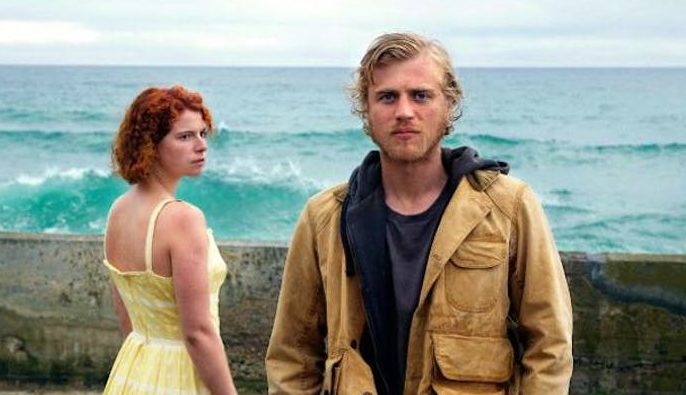
Photo caption: Molly Gordon and Ben Platt in THEATER CAMP. Courtesy of Searchlight Pictures.
The good-hearted and relentlessly funny Theater Camp sends up the world of drama nerds without a hint of meanness. When the beloved founder (Amy Sedaris) of a summer theater camp for kids falls into a coma, the camp staff must run the summer program themselves. One challenge is that the founder’s son Troy (Jimmy Tatro) is now in charge, and he is a bozo brimming with misplaced confidence, one of those guys whose every instinct is enthusiastically wrong.
Because the camp staff are show people and the campers are show people in the making, there’s plenty of grist for comedy. The kids are budding prima donnas and the staff are flamboyant, temperamental and eccentric.
It’s an affectionate skewering by filmmakers who know the subculture well. Theater Camp was written by Molly Gordon, Ben Platt, Noah Galvin and Nick Lieberman. Gordon and Lieberman directed, and Gordon, Platt and Galvin play major roles as the camp’s faculty.
An avalanche of funny bits bury the audience as directors Gordon and Lieberman and editor Jon Philpot keep the laughs coming at a madcap pace. There are big jokes and little jokes; I found it very funny that Gordon’s character is named Rebecca-Diane.
The Big Show at the end, a tribute to their comatose founder titled Joan Still, is destined to surpass Springtime for Hitler in The Producers as the worst musical-within-a-movie until it is rescued by an unexpected tour de force by Noah Galvin.
Galvin’s performance is the showiest, but everyone in the cast is excellent, particularly Gordon and Platt. Patti Harrison is very good as a corporate predator with Troy in her sights, and Owen Thiele sparkles as the camp’s most flamboyant teacher.
And where did they find these kids? Some of the kids who play the campers are unbelievably talented.
Thomas Schubert and Paula Beer in AFIRE. Courtesy of Janus Films.
Christian Petzold’s Afire is an agreeable slow burn that builds to a revelatory conclusion. The lumpy, dour Leon (Thomas Schubert) needs to polish off his second novel. He and his friend Felix (Langston Uibel) head off for a week at the woodsy vacation cottage owned by Felix’s family, a short walk to the beach on the Baltic Sea. They are seeking artistic inspiration, Leon for his novel and Felix for his photography portfolio. But they’re not even there yet when things start going off the rails.
Felix’s car breaks down and they have to hoof it through the forest. Upon arrival, they learn that Felix’s mother has also invited another guest, Nadja, and the guys will need to share the remaining room. They go to bed without meeting Nadja, but she returns late with company, and the guys are kept awake by the boisterous lovemaking in her room next door.
Focused on their own situation, Felix and Leon are vaguely aware that wildfires are raging inland, but they’re a few meters from the sea and the ocean winds are blowing across them toward the fire, As people at the nearby seaside resort town go about their holidays, faraway sirens and the fire-fighting aircraft overhead are ominous.
Felix rolls with the punches, but each setback makes the grumpy Leon more aggrieved. Each annoyance makes Leon harrumph, roll his eyes and stalk off complaining about the distraction to his work. Leon is creatively blocked, but is it from the distractions?
He’s really afraid that his manuscript is shitty, and his day of reckoning, a meeting with his kind publisher (Matthias Brandt), is this week. Self-absorbed in the best of times, Leon’s insecurities are making him beat himself up and mask it all with offended self-importance.
Leon and Felix meet Nadja (Paul Beer), who turns out to be charming. Felix befriends the handsome lifeguard Devid (Enno Trebs), who has been Nadja’s nocturnal playmate, and soon the four are hanging out together – Leon grudgingly.
Thomas Schubert, Paula Beer, Langston Uibel and Enno Trebs in AFIRE. Courtesy of Janus Films.
As we watch Leon stumble around in his behavioral misfires, it seems that we are watching a comedy of manners. But Afire evolves into a study of creative self-sabotage until a heartbreaking tragedy, a moment of redemption, and a final hopeful glimmer of personal fulfillment. It’s the best final fifteen minutes of any film this year, unpredictable but grounded in reality and humanity, and emotionally powerful.
Afire works because the protagonist doesn’t alienate the audience, even though he is irritable and irritating. Petzold’s writing and Schubert’s performance is such that we don’t give up on this unlovable loser. As much as his thoughtlessness vexes the others, his behavior is really only mean-spirited once. Clearly, he must be talented because his first novel was good enough to get him an advance on his second, and he seems to be a decent person underneath all his fussiness. He just needs to learn how to get out of his own way.
Petzold has also written some segments of novels-within-the-movie, one that is extraordinarily moving and one that is just awful, awful, awful.
Beer, the star of Petzold’s Transit and Undine, is irresistible here as Nadja. Her Nadja teaches Leon that a woman can be sunny and fun-loving without being a ditz.
Petzold is one of cinema’s most significant contemporary auteurs. I loved and admired his simmering paranoid thriller Barbara and his Phoenix, a riveting psychodrama with a wowzer ending. He followed those with the more aspirational but, IMO, less successful Transit and Undine. Afire is his most intimate and funniest film, and I think, his most subtle and his best. Afire won the Silver Bear Grand Jury Prize at the 2023 Berlinale.
Afire opens this weekend in theaters, including the Roxie in San Francisco. It’s one of the Best Movies of 2023 – So Far.
Photo caption: Ryan Gosling and Margot Robbie in BARBIE. Courtesy of Warner Brothers.
Thanks to a brilliant screenplay by Greta Gerwig and Noah Baumbach, Barbie is a spectacular marriage of the intelligent and the silly, and manages to celebrate a commercial brand amid pointed social satire. It’s delightfully funny throughout, and the third act is a crescendo of hilarity.
Gerwig and Baumbach have imagined a world in which the various versions of Barbie dolls, including Stereotypical Barbie (Margot Robbie), live in Barbie land, a female-centered but naïve, utopia. Developments force Barbie to leave Barbie Land on a mission to the human-populated Real World, and Ken (Ryan Gosling) stows away on her quest; because they live in a fantasy world, the two are unprepared for the harshness and ambiguity of the Real World, and their return to Barbie Land sparks disharmony. Will Barbie and Ken figure out their respective places in the universe?
Gerwig and Baumbach have somehow crafted a film that will satisfy those who treasure their Barbie doll, memories, those who are disturbed by Barbie’s impact on women’s body images and sexual objectification, and those who just dismiss the Barbie silliness. (I came to Barbie with one indelibly painful Barbie memory – from my bare feet stepping on Barbie shoes.) The biggest laughs come from Barbie’s relentless skewering of toxic masculinity.
America Ferrera in BARBIE. Courtesy of Warner Brothers.
Robbie and Gosling are both excellent, and there’s a huge cast of familiar stars playing various Barbies and Kens. I think that the real star of Barbie is America Ferrera, who plays Gloria, an actual human woman who befriends Barbie in the Real World. Gloria is a workaday Every Woman struggling to navigate life under the withering scorn of her teenage daughter Sasha (Ariana Greenblatt). Both Ferrera and Greenblatt deliver superlative performances, and Ferrara gets to deliver the pivotal monologue in the film.
Because much of the humor derives from surprising the audience, I am being very careful to avoid spoilers, but I can say that Barbie’s many highlights include:
an inspired use of the Indigo Girls’ song Closer to Fine; it’s very funny to hear Barbie characters singing it, and it has the lyrics of existential inquiry, which is what Barbie is engaged in, as silly as that sounds.
the performance of Kate McKinnon, perfectly cast as Weird Barbie.
a hilarious turn by Michael Cera as Ken’s Friend Allen;
a breaking-the-fourth-wall aside by narrator Helen Mirren that brings down the house.
one of the funniest final lines of any movie comedy.
closing credits with real Barbie toys, including the discontinued ones: Growing Up Skipper, pregnant Midge, etc.
It’s been a while since a movie made me laugh until I cried, but that happened when i watched the campfire guitar serenades and the “battle of the Kens”.
I rarely complement capitalists, but I am grateful to Warner Brothers for assigning a project that could have been simplistic, exploitative schlock to an artist like director Greta Gerwig. And Mattel is a very good corporate sport to have have its corporate culture, its CEO (Will Ferrell) and even its headquarters building thoroughly mocked.
At a minimum, Greta Gerwig and Noah Baumbach certainly deserve Oscar nominations for Original Screenplay and America Ferrara should get an Oscar nod for Supporting Actress. Barbie is one seriously funny movie.
Photo caption: Cillian Murphy in OPPENHEIMER. Courtesy of Universal Pictures.
This week on The Movie Gourmet – a new review of Christopher Nolan’s epic masterpiece Oppenheimer. Also, a review of The Anonymous People, about some of the over 23 million Americans in long-term recovery from addiction who are coming out of the closet..
Photo caption: Cillian Murphy in OPPENHEIMER. Courtesy of Universal Pictures.
Christopher Nolan’s epic masterpiece Oppenheimer is a thrilling, three-hour psychological exploration of physicist Robert J. Oppenheimer (Cillian Murphy), who was brilliant enough to lead the development of the first atomic bomb, but could not grasp that he would then lose all control on its use.
Oppenheimer was a prima donna, but the team he assembled of star academics (31 of which had won or would win their own Nobel Prizes) was filled with prima donnas. Both a natural leader and manipulative, Oppenheimer was smoother, more practical and less politically naïve than the other scientists. But he was no match for real practitioners of politics. One character reminds him, genius is no guarantee of wisdom. The smartest person in the room makes a mistake in thinking that he can ALWAYS outthink everyone else.
Cillian Murphy, with his searing eyes and prominent cheekbones, is an actor with a striking appearance and presence. He’s always good, but he’s not the guy I would immediately think of to carry an epic; but this is Murphy’s sixth movie with Nolan, and Nolan knew that Murphy had the chops. Looking unusually gaunt, Murphy becomes Oppenheimer as he ranges from arrogant self-confidence to a creature in torment. It’s a magnificent, career-topping performance.
Himself a practitioner of the empirical, Oppenheimer, could not conceive of or understand the arena of public opinion, where lies and fear can triumph over fact and virtue. Robert Downey, Jr., in a great performance, plays Oppenheimer’s foil Lewis Strauss, a man who understands influence, political positioning and spin.
Nolan’s screenplay is based on the Oppenheimer bio American Prometheus. The mythological Prometheus brought fire to human, and was punished by the gods with perpetual torment, specifically by an eagle, each day of eternity, eating his liver anew. Oppenheimer gets the heartache of being victimized by the communist witch hunt of the 1950s and the nightmare that his monstrous creation is in the hands of those less ethical, less smart and less virtuous than he.
The Manhattan Project, the mastering of all the scientific and technological challenges in developing the first nuclear weapon, in a race with the worst villains in the history of the world – that’s fodder for an epic movie in itself. Yet that’s the backdrop to this psychological study. Together, the stories of the Bomb and Oppenheimer make for a movie that’s an astounding achievement.
The stakes could not be higher – not just life and death, but life and death on a heretofore unimagined scale. Not to mention the primary goal of stopping the Nazis. And the survival of the planet itself.
At the time, physicists could not rule out the possibility that a nuclear reaction would continue until it incinerated the atmosphere. In Oppenheimer, the scientists calculate a “near zero” chance of destroying the entire planet, giving serious pause to the scientists and alarm to lay people.
The bomb needed to be assembled and tested, of course, and the scenes of the fisrt bomb test are harrowing. Imagine putting together an atomic bomb and arming it, with 1940s technology (no robots or laser-precision machining) and THEN waiting out the winds and rain of a fierce desert storm.
There’s an emotionally surreal scene as the Los Alamos team rapturously celebrates the atomic bomb blast at Hiroshima – consumed by pride and relief that their work of over two years was successful and that it would surely end the war more quickly; but unthinking about the very real, inevitable and horrific human carnage on the ground in Hiroshima and the threat of nuclear annihilation that the world would tremble under for the rest of time. Nolan shows Oppenheimer leading the celebration, and then envisioning the horrors.
Oppenheimer is visually thrilling, thanks to Dutch-Swedish cinematographer Hoyte Van Hoytema, who already has an impressive body of work: Nope, Spectre, Ad Astra, Her, The Fighter, and Nolan’s Interstellar, Dunkirk and Tenet. Nolan, Van Hoytema and editor Jennifer Lame will undoubtedly be honored with Oscar nominations for Oppenheimer. Ludwig Göransson’s music is pretty great, too.
The cast is deep, and there are many excellent supporting performances in Oppenheimer, including:
Emily Blunt as Oppenheimer’s wife Kitty, who doesn’t get a lot of screen time, but becomes a force as Oppenheimer comes under attack.
Florence Pugh as a needy Oppenheimer girlfriend. I have not understood why Pugh is trending toward the A-list, but she’s really steamy here.
Matt Damon as General Leslie Groves, the military commander who job it was, while Oppenheimer was managing a town full of divas, to manage Oppenheimer himself., once observing you’re not just self-important; you ARE important.
Benny Safdie as the mercurial Edward Teller, who Oppenheimer keeps inside the tent, so as to not disrupt the Manhattan Project, with autonomy to develop a hydrogen bomb.
Rami Malek is glimpsed, oddly gecko-like, in the middle of the story and then pops up with a surprise near the end.
Mick LaSalle, writing on Oppenheimer, quipped that Gary Oldman “who played Winston Churchill in “The Darkest Hour,” is President Harry Truman here. If Oldman ever plays Stalin, he could do the Potsdam Conference as a one-man show.‘
Christopher Nolan and his collaborators have made a movie that runs for three hours without a single slow or dry moment, despite spending two hours on nuclear physics. I am confident in predicting that Oppenheimer will receive (and deserve) at least ten Oscar nominations and could challenge the record of fourteen.
Over 23 million Americans are living in long-term recovery from addiction. How many (or how few) of us know this, is the core of the thought-provoking 2013 advocacy documentary, The Anonymous People.
We all know about Alcoholics Anonymous, where anonymity makes it possible for alcoholics to work on their recovery without stigma. Anonymity is an integral pillar of AA, but some in AA interpret this to preclude publicizing their own recoveries. The Anonymous People challenges that orthodoxy.
The anonymity of those in long-term recovery also keeps the manifestations of recovery invisible to the general public, including the addicts who need it and the policy makers who need to know about it.
The carnage of celebrity addiction, as with Lindsay Lohan and Charlie Sheen, is high profile fodder for the popular media. But comparatively few of us know the stories of Samuel L. Jackson and Russell Brand, who are open about their own long term recovery.
The Anonymous People is about the open recovery movement (or public recovery movement). We hear from John Shinholser, President of The McShin Foundation, a leader in the movement, and others in long term recovery like actress Kristen Johnson of Mom. They advocate that folks come out of anonymity to say, “I am a person in long term recovery, and for me that means that I have been sober for X years.”
After all, who needs a role model more than someone struggling with addiction?
There is a strong parallel to the AIDS activists in the 1980s who defeated the stigma of AIDS by shedding the secrecy.
I saw The Anonymous People at a special screening, in an audience with over 90% people in recovery, and they loved it; (I am what people in recovery call a “Normie”). The Anonymous People will also resonate with anyone also for anyone interested in public policy issues like treatment and incarceration.
The Anonymous People can be streamed from Amazon, AppleTV, Vudu and YouTube.
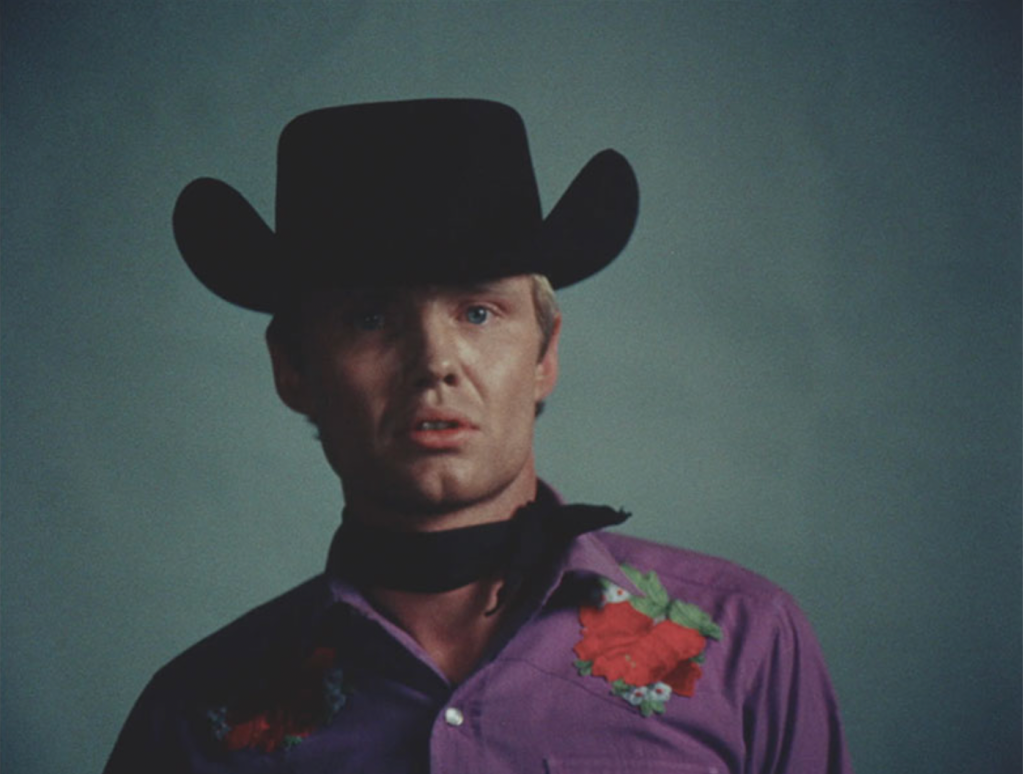
Jon Voight in his screen test for Midnight Cowboy from DESPERATE SOULS, DARK CITY AND THE LEGEND OF MIDNIGHT COWBOY. Courtesy of Kino Lorber.
One of the Bay Area’s top cinema events is back – the San Francisco Jewish Film Festival (SFJFF) , running through August 6 at the Castro, the Piedmont and the Vogue. The SFJFF is the world’s oldest and largest Jewish film festival, and the program offers 68 films from 18 countries. Here are four movies to seek out:
Desperate Souls, Dark City and the Legend of Midnight Cowboy: This remarkably insightful documentary explores the making of Midnight Cowboy and its place both in cinema and in American culture. Midnight Cowboy won Oscars for Best Picture, Director and Adapted Screenplay, all with an X-rating. Sure, we know Midnight Cowboy as a groundbreaking film, but Desperate Souls argues that it both reflected the zeitgeist of the moment and opened new possibilities in American filmmaking. Filmmaker Nancy Buirski builds her case with superb sourcing, including the unique perspective of Jennifer Salt who observed her father, screenwriter Waldo Salt, and director John Schlesinger birth the film; she also acted in the movie and came to date its star, Jon Voight. Voight himself bookends the film with emotionally powerful reflections.
Erica Jong: Breaking the Wall: Erica Jong, celebrity author of bestsellers and popularizer of feminist and erotic writing, has led a fascinating life, and documentarian Kaspar Kasics has the good sense to let a great storyteller unspool her own story. We get a full dose of Erica Jong, both in contemporary footage and in archival television interviews. For all her notoriety, Jong has consistently served as what we used to call a public intellectual (and now call a thought leader). Jong is remarkably prescient in her 20th century television interviews (and faced some cringeworthy sexism from the likes of David Susskind and Merv Griffin). Kasics also lets us hear Jong and her sister recalling their unusual childhood and gives us a glimpse inside Jong’s current marriage.
My Neighbor Adolph: In this wry fable from Russian-born Israeli filmmaker Leon Prudovsky, chess master Polsky (David Hayman) has lost all his family in the Holocaust. Consumed by grief and bitterness, he lives the life of a misanthropic recluse in a remote South American countryside. Polsky is rocked when the long-vacant house next door becomes occupied by a mysterious German (the piercing-eyed Ugo Kier), who Polsky becomes convinced is Adolph Hitler himself. To convince skeptical authorities of his theory, Polsky must get past his terror and loathing to personally engage with the neighbor. A battle of wits between two strong-willed men ensues, and Hayman and Kier are superb.
The Secret of Human Flight: Always expect something we’ve never seen before from director H.P. Mendoza, this time working from a screenplay by Jesse Orenshein. Ben (Grant Rodenmeyer) is shocked by the sudden death of his wife and writing partner (Rena Hardesty). His grief plunges the neurotic Ben into psychosis and he is vulnerable enough to embrace a self-help guru (Paul Raci – Oscar-nominated for his unforgettable performance in The Sound of Metal as a tough rehab counselor for the hearing-impaired). Everyone except Ben can see red flags blaring that this purported mystic is really a con man – he has only one handwritten copy of the book that he hawks on infomercial videos, he lives in an RV with New Mexico plates and his name is Mealworm. H.P. Mendoza is a Bay Area treasure, having written and directed the rollicking and refreshing comedy Colma: The Musical, the genre-bending art film I Am a Ghost and the topical dark comedy Bitter Melon. (Watch for a cameo by L.A. Renigen, star of Colma: A Musical.) Check out bits of Raci’s performance in the irresistible trailer below.
Photo caption: Cillian Murphy in OPPENHEIMER. Courtesy of Universal Pictures.
Last night I saw Christopher Nolan’s Oppenheimer. It’s a masterpiece, so it will take me a few days to write about it. Suffice it to say that many in the audience applauded at the end, and I predict it will receive at least ten Oscar nominations.
Another summer blockbuster with a artistically proven director opens today – Greta Gerwig’s Barbie.
I won’t be writing about the raunchy comedy Joy Ride, which I found very disappointing. I had high hopes because it was directed and co-written by a co-writer of Crazy Rich Asians, which I loved. Kind of an Asian-American Bridesmaids, Joy Ride has some smart cultural observations, but it’s just not funny enough. For example, if you think about the most alarming potential tattoo location on a woman’s body – that’s funny; but when the image is revealed in Joy Ride, it’s not as funny. Big miss.
REMEMBRANCE
Jane Birkin is remembered as a model, fashion icon, pop singer and a celebrity jet setter in the Mod 60s. She appeared in an extraordinarily good movie, Michelangelo Antonioni’s Blow-up, but in a cameo playing a Mod Era jet set model. She was the mother of a very gifted screen actress, Charlotte Gainsbourg.
CURRENT MOVIES
Past Lives: a profound and refreshing romance. In theaters.
Asteroid City: deadpan, witty, whimsical…and who cares? In theaters.
On July 23, Turner Classic Movies the beautiful and intense Deliverancefrom 1972. It’s one of my all-time favorites – still gripping today – with a famous scene that still shocks. That scene and the Banjo Boy immediately became indelible in the culture, but Deliverance is much more than a thriller with some unforgettable moments.
There has never been a more studly image in the history of cinema than Burt Reynolds, brandishing a bow-and-arrow and clad in a sleeveless neoprene vest. The performances of Jon Voigt, Ned Beatty and Ronny Cox fill out other manifestations of masculinity.
Deliverance was beautifully and dramatically shot by the late great cinematographer Vilmos Zsigmond. John Boorman also directed Point Blank and Hope & Glory, but this was his masterpiece IMO.
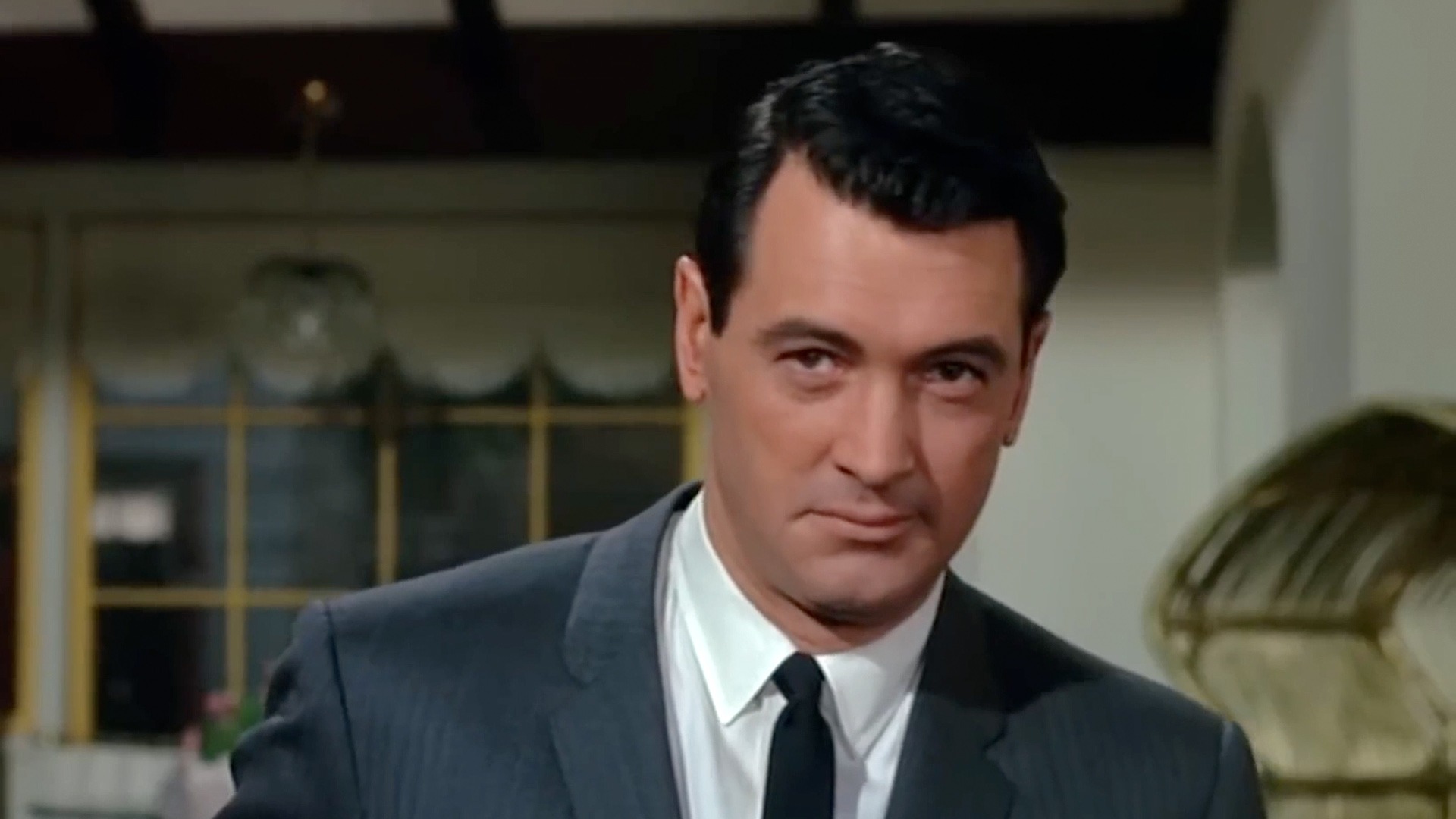
Photo caption: Rock Hudson in ROCK HUDSON: ALL THAT HEAVEN ALLOWED. Courtesy of HBO Max.
The insightful and often witty showbiz biodoc Rock Hudson: All That Heaven Allowed has an unbeatable leading man – Rock Hudson. From Magnificent Obsession in 1954 through 1962 (Come September and Lover Come Back) Rock earned eight straight years on the list of America’s top ten most popular movie stars. The basis for his popularity was a series of melodramas and romantic comedies that showcased him as the nation’s to heterosexual sex symbol, while he was secretly gay.
Rock’s Hollywood story begins when, as a young Navy vet, he is discovered by the prominent (and sexually predatory) agent Henry Willson, who groomed over a dozen of the beefcake stars of the 50s, many of whom were also closeted gays (e.g., Tab Hunter). Willson gets Rock a contract with Universal and the studio went to to work on re-creating the raw Adonis into leading man material.
Rock Hudson: All That Heaven Allowed unspools the story of Rock’s closeted but vibrant lifestyle, with his decades-long friendship with a Hollywood couple, George Nader (74 screen credits, including the lead in Robot Monster) and Mark Miller. We meet Lee Garlington, Rock’s companion in the early 60s. We hear from author Armistead Maupin (Tales of the City), who joined Rock’s social set in the 70s and kept urging him to come out. We also meet a smattering of Rock’s fellow actors and casual lovers. Rock’s poolside parties resembled a gay version of the Playboy Mansion.
Rock Hudson and Lee Garlington in ROCK HUDSON: ALL THAT HEAVEN ALLOWED. Courtesy of HBO Max.
And then Rock Hudson: All That Heaven Allowed takes us back to Rock’s sad finale, as he wasted away from AIDS, early in the epidemic, before there was any real hope from therapeutic medication. We cringe as we revisit Rock’s harrowing kiss of Linda Evans in Dynasty while AIDS-positive – and hear from Evans herself. And we hear of the cruel blow-off by First Lady Nancy Reagan. Isolated by his fear of the AIDS stigma, he still refused to come out of closet, while finally publicly acknowledging his AIDS diagnosis essentially on his deathbed.
While Rock Hudson: All That Heaven Allowed is generally sympathetic to Rock and his closeted plight, it takes an unflinching look at his chain-smoking, heavy drinking, sometimes ruthless ambition and his stubborn refusal to come out.
While the arc of Rock’s life is ultimately tragic, director Stephen Kijak has made Rock Hudson: All That Heaven Allowed very fun to watch by peppering it with clips from Rock’s films. Of course, juxtaposition with the revelations of Rock’s private lifestyle, many, many melodramatic and sexy lines have become hilarious double entendres. The effect of the snippets is poignant as Rock’s story becomes sadder.
Rock Hudson: All That Heaven Allowed is streaming on HBO Max.
The Bra: Just your average silent Azerbaijani comedy. Amazon, AppleTV, Vudu, YouTube.
ON TV
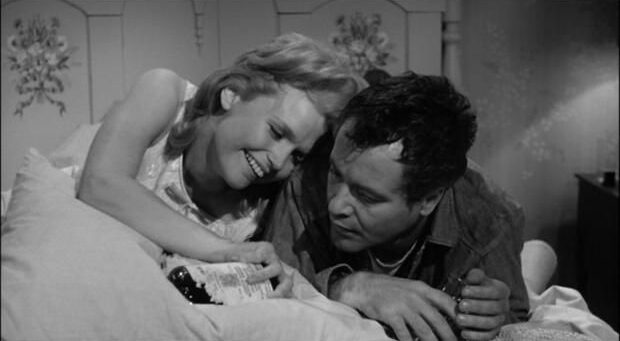
Lee Remick and Jack Lemmon in DAYS OF WINE AND ROSES
On July 19, Turner Classic Movies airs Days of Wine and Roses, Blake Edwards’ unflinching exploration of alcoholism, featuring great performances by Jack Lemmon and Lee Remick (both nominated for Oscars) and Charles Bickford.