NIGHT ON EARTH – the funniest and the saddest

Photo caption: Roberto Benigni (right) in NIGHT ON EARTH.

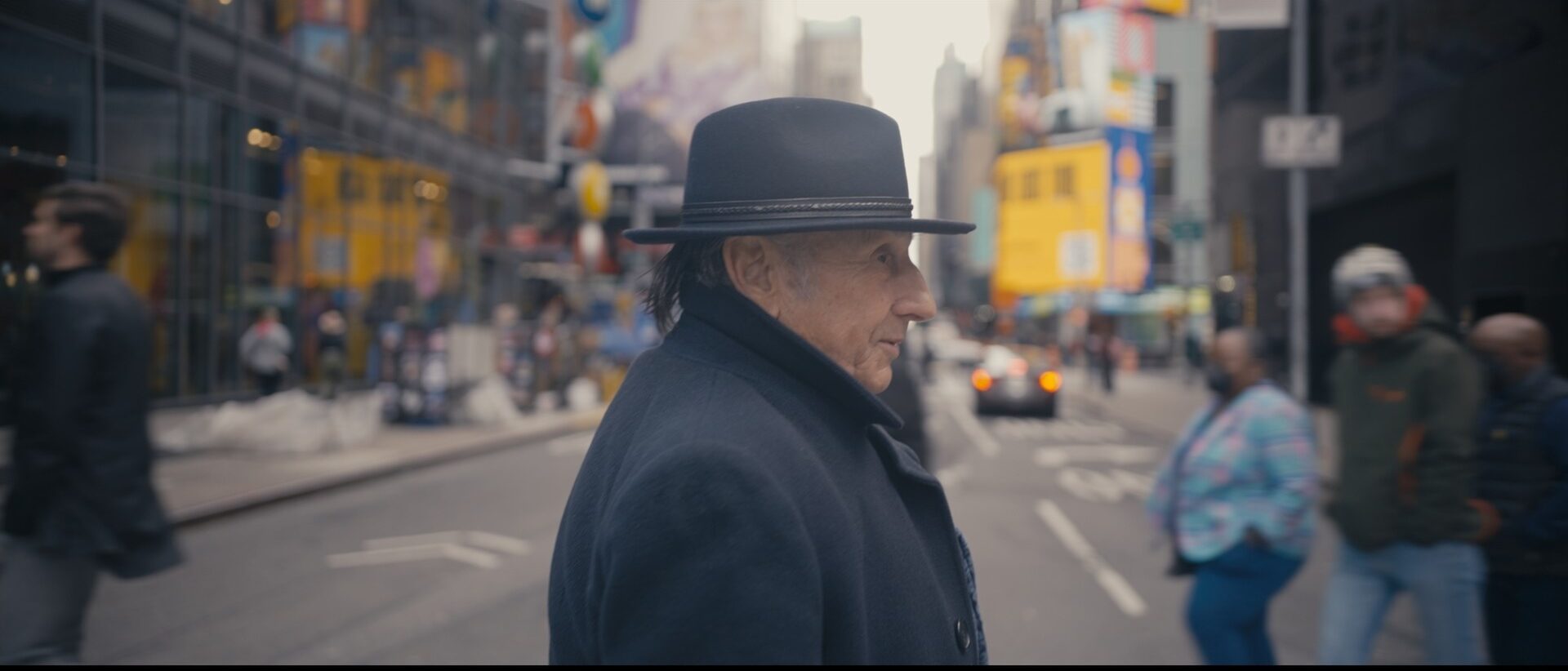
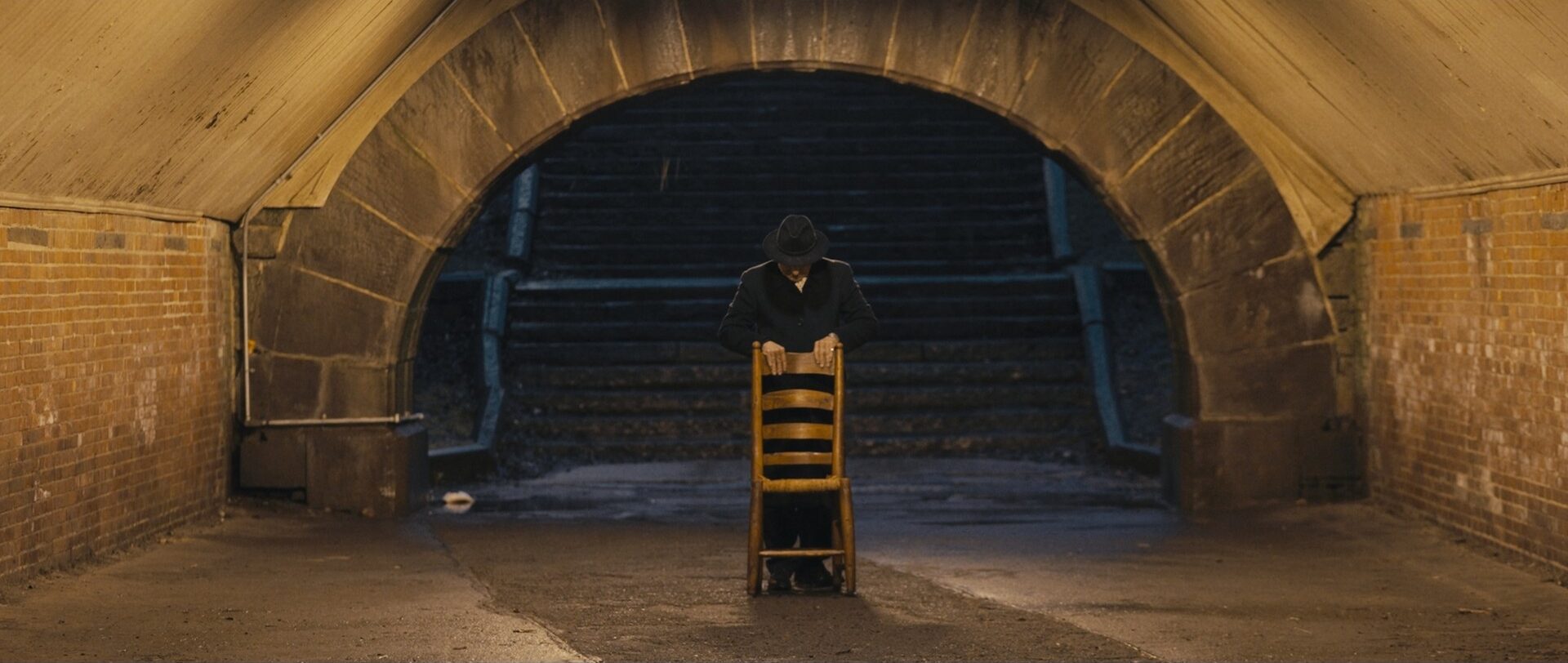
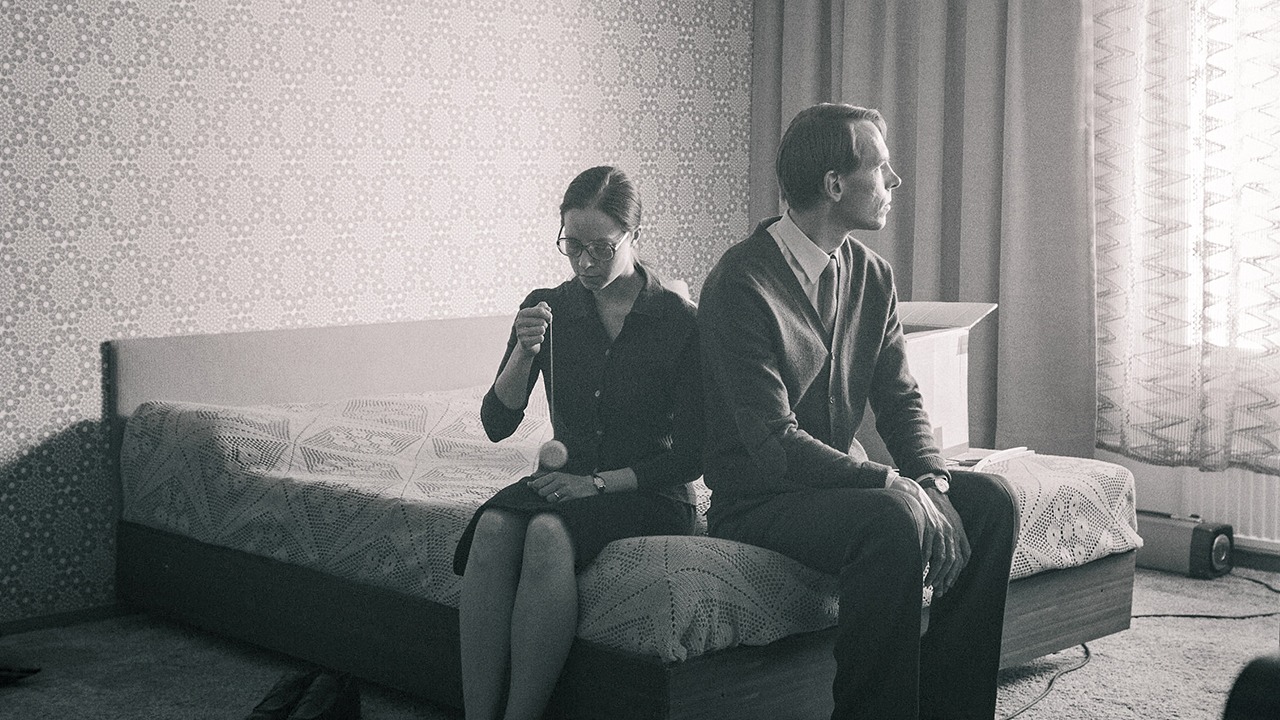
Coming up Friday, November 10 on Turner Classic Movie, Night on Earth has one of the very funniest scenes and one of the very saddest scenes – in the same movie.  Written and directed by Jim Jarmusch in 1991, Night on Earth is comprised of five vignettes, each in a taxi and each in a different city: Los Angeles, New York, Paris, Rome and, of all places, Helsinki.

Moving west to east across the time zones, Night on Earth opens with the contrast between a working class driver (Wynona Ryder) and a striver executive (Gena Rowlands) and how they connect – or don’t.

Then we move to New York where a totally disoriented East German immigrant (Armin Mueller-Stahl) gets a job driving a hack (on his first or second day in the US) and picks up potty-mouthed passengers (Giancarlo Esposito and Rosie Perez).

The LA and NYC scenes are good, but Night on Earth really accelerates in Paris when an African immigrant driver (Isaach De Bankolé) picks up a blind woman (the gap-toothed beauty Béatrice Dall). They both are a bit touchy and immediately get underneath each others skins. The prickly conversation that follows teaches each a little about the other.

Now we get to perhaps the funniest episode in the movies (yes, I mean in the history of cinema).   A manic, motormouth Roman cabbie (Roberto Benigni) picks up an ailing Catholic cleric and regales him with an unwanted stream of consciousness confession, highlighting his own ever more inappropriate sexual partners, including a pumpkin and a sheep. It’s a rapid fire comedic assault sure to convulse any audience.

Finally, in Helsinki, two guys toss their passed-out buddy into a cab, and explain that he’s had the worst day ever – he has lost his job just when he has a wife looking for a divorce and a newly pregnant daughter. But the driver (Matti Pellonpää) tells them a story that tops it. Profound sadness.

The cult director and indie favorite Jarmusch made Night on Earth in 1991 after he first made a splash with Mystery Train.  He followed it with Dead Man, Ghost Dog: The Way of the Samurai, Coffee and Cigarettes, Broken Flowers and Paterson.  Night on Earth is one of the few movies that I own on DVD, and it’s now available from the Criterion Collection, and you can now stream it from Amazon. (Do not confuse this 1991 Jarmusch film with the 2020 miniseries of the same name.) DVR it for free on TCM.

Béatrice Dall and Isaach De Bankolé in NIGHT ON EARTH

PRISCILLA: icky, then unpleasant

Photo caption: Cailee Spaeny in PRISCILLA. Courtesy of A24.

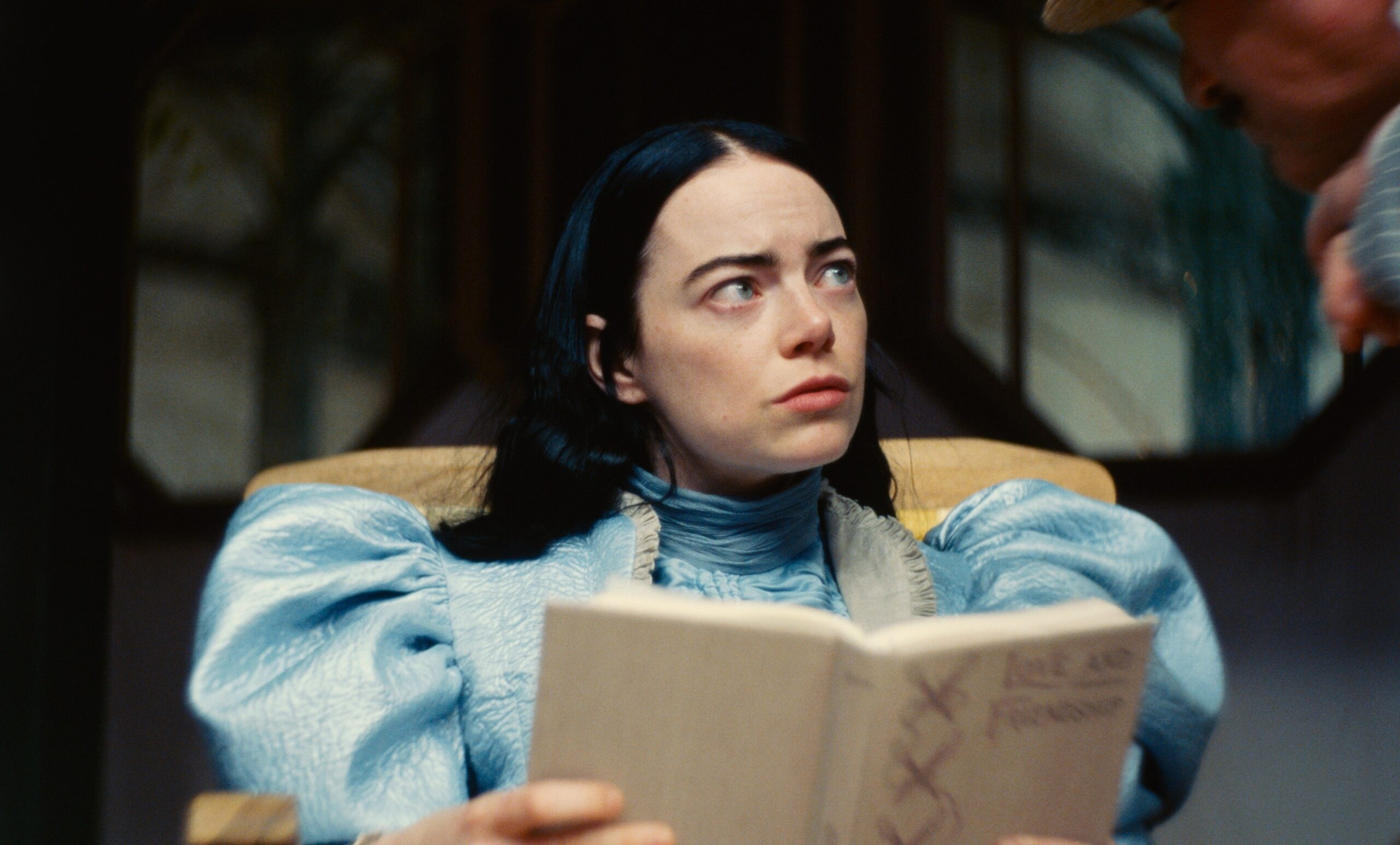
Priscilla is the story of Priscilla Presley’s ten year relationship with Elvis Presley. It’s a 113-minute experience of sustained unpleasantness. Leaving the theater, The Wife asked, “How come we don’t know much about Priscilla after watching a movie titled PRISCILLA?” Mulling that over, I think that the answer is that there’s not much to learn about someone who was essentially maintained and treated as someone else’s pet.

Here’s the arc of the story. Already a multimillionaire superstar when he is drafted, Elvis’ Army service takes him to Germany. He meets, and is fascinated by, a 14-year-old ninth grader, Priscilla Beaulieu. (Yes, you’re right, this is really creepy.) He courts her, and, when she is still seventeen, moves her to Memphis to become his live-in girlfriend at Graceland. He, however, according to Priscilla, does not have sexual intercourse with her until they marry when she is 22. Priscilla is played by Cailee Spaeny and Elivis by Jacob Elordi.

Surrounding himself with yes men and enabled by great wealth, Elvis dominates everyone in his life except Colonel Parker. Elvis’ every whim is indulged, dangerous for someone so immature, selfish and TWISTED.

In the pre-Memphis segment of the movie, I squirmed in my seat at the overt grooming of this child. It’s sick and icky.

Any global sex symbol who can have tabloid affairs with Anita Ekberg, Nancy Sinatra and Ann-Margret, not to mention limitless groupies, can sweep a fifteen-year-old girl off her feet – if he is a sick enough bastard to WANT to. Elvis has the desires of any man (see Ann-Margret). But he also has a fantasy of marrying a virgin (it’s sacred to me, he says), and he goes pretty deep in the cradle to find one.

As the movie settles in Memphis, I shifted to my usual distaste of a controlling man dominating his woman, a woman whom he never allows to become his partner in any sense. He’s basically like the pathetic loser divorced guys who get mail order brides from the Philippines, in (vain) hopes of finding a submissive wife.

Spaeny shot the film when she was 24 (Elordi was 25) and is believable as a teenager. Spaeny is very believable as a young person whisked into a bizarre environment that no one could possible be prepared for.

Jacob Elordi, of course, has to play somebody that everyone in the audience has an indelible image of. He’s not bad, in that I was never thinking THAT’S not Elvis, but he’s nowhere is a good as Kurt Russell, the gold standard movie Elvis.

All the stuff in Priscilla at Graceland is surreal (which is what we would expect). If you know anything about Elvis, you spot the Memphis Mafia and the fried banana peanut butter sandwich.

Coppola herself wrote the screenplay, based on Priscilla Presey’s Elvis and Me, written with Sandra Harmon. A distinguished writer, Coppola won an Oscar for the Lost in Translation screenplay, and is known for telling familiar stories from a female point of view (The Beguiled, Marie Antoinette).

(I tend to look down at the trashiness and oversharing in celebrity memoirs. In fact, I haven’t bought the tell-all memoir of a contemporary celebrity since Ball Four by Jim Bouton in 1970. My curiosity is as prurient as anybody else’s, so I do read the news coverage of such books, to gobble up the juicy parts.)

Priscilla may be accurate storytelling, but it is not engaging storytelling. I’m an outlier here – Priscilla has a 77 rating on Metacritic. I suspect that’s because critics are overrating the film because they admire the director. The director is admirable, but not for this work.

[Note: The movie’s story ends in 1973, when Elvis was still trim, and I couldn’t help thinking that he was to die within four years. Priscilla herself is now 78.]

Priscilla, initially wowed by Elvis’ attentions and the privileges of great wealth, finally gets fed up by Elvis’ treatment and leaves him. That’s not enough of a pay off for an audience that has endured almost two hours of dysfunction and human debasement.

Movies to See Right Now

Photo caption: Jason Clarke (left) and Jake Lacy in THE CAINE MUTINY COURT-MARTIAL. Courtesy of Showtime.

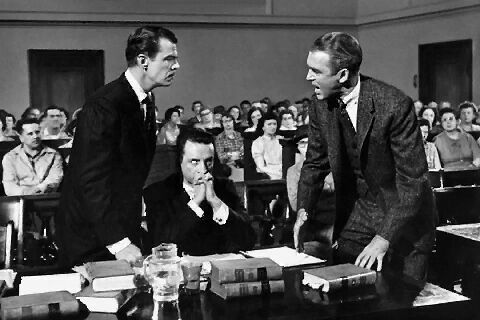
This week on The Movie Gourmet – new reviews of The Caine Mutiny Court-Martial and In the Court of the Crimson King.

Set your DVR to record Turner Classic Movies’ airing of Harry Dean Stanton’s masterpiece performance in Wim Wenders’ Paris, Texas LATE TONIGHT (see below)

CURRENT MOVIES

WATCH AT HOME

Ewen McGregor and Stellan Skarsgaard in OUR KIND OF TRAITOR. Courtesy of Roadside Attractions and SFFILM.

The most eclectic watch-at-home recommendations you’ll find ANYWHERE:

  • Our Kind of Traitor: Skarsgård steals this robust thriller. Amazon, AppleTV, Vudu, YouTube, redbox.
  • Undefeated: an Oscar winner you haven’t seen. Amazon, Vudu, YouTube, redbox.
  • Kimi: an adequate REAR WINDOWS ends as a thrilling WAIT UNTIL DARK. Amazon, AppleTV, Vudu, YouTube, redbox.
  • Lune: funny, searing, and richly authentic. Amazon.
  • Summertime: no longer invisible and unheard, giving voice through verse. Amazon, AppleTV, Vudu, YouTube, redbox.
  • Phoenix: riveting psychodrama, wowzer ending. Amazon, AppleTV, Vudu, YouTube.
  • I’m Fine (Thank You for Asking): a desperate dash for dignity. Amazon, AppleTV, Vudu, YouTube.
  • Making Montgomery Clift: exploding the myths. Amazon, AppleTV, Vudu, YouTube.
  • ’71: keeping the thrill in thriller. Amazon, AppleTV, Vudu, YouTube, redbox.

ON TV

Harry Dean Stanton in PARIS, TEXAS

Late TONIGHT, Turner Classic Movies will air Harry Dean Stanton’s masterpiece in Wim Wenders’ Paris, Texas. In Paris Texas, Harry Dean plays Travis, a man so traumatized that he has disappeared and is found wandering across the desert and mistaken for a mute.  As he is cared for by his brother (Dean Stockwell), he evolves from feral to erratic to troubled, but with a sense of tenderness and a determination to put things right.  We see Travis as a madman who gains extraordinary lucidity about what wrong in his life and his own responsibility for it.

At the film’s climax, Travis speaks to Jane (Natassja Kinski) through a one-way mirror (she can’t see him).  Spinning what at first seems like parable, Travis explains what happened to him – and to her – and why it happened.  It’s a 20-minute monologue so captivating and touching that it rises to be recognized as one of the very greatest screen performances.

Paris, Texas is on my list of the fifty or so Greatest Movies of All Time.

Natassja Kinski and Harry Dean Stanton in PARIS, TEXAS

IN THE COURT OF THE CRIMSON KING: a perfectionist and his jester

Robert Fripp in IN THE COURT OF THE CRIMSON KING. Courtesy of Monoduo Films.

The documentary In the Court of the Crimson King chronicles the 50-year run of the progressive rock band King Crimson, culminating in a celebratory performance at the Royal Albert Hall.

The key to the band’s history is that the one constant has been founder/leader Robert Fripp, an insufferable perfectionist. Fripp is such a control freak that he unashamedly intrudes on the interviews of his bandmates to edit them in real time. And he reflects admiringly on a guru who doesn’t like people, either.

Besides Fripp, there have been twenty-two other members of King Crimson in fifty years. Several lasted as many as eight years with Fripp but only one got to nineteen years. We meet the final ensemble of the band, as well as several alums.

The ever-witty band member Bill Riesling is especially fun to spend time, but it becomes progressively more wrenching to watch his final two years of cancer.

Director Toby Amies embeds himself with the band as a waggish presence. Amies is a jester, which is a perfect counterpoint to Fripp, who needs and deserves a court jester more than any medieval monarch.

In the Court of the Crimson King opens November 3 in LA at the Alamo Drafthouse and in the Bay Area at the Roxie and the Lark.

THE CAINE MUTINY COURT-MARTIAL: just what, not who, is on trial here?

Photo caption: Kiefer Sutherland in the THE CAINE MUTINY COURT-MARTIAL. Courtesy of Showtime.

William Friedkin died in August at age 87, leaving us his final film, the gripping courtroom drama, The Caine Mutiny Court-Martial. It’s a fine film, and a suitable way for Friedkin to go out.

Friedkin chose not to remake the iconic Edward Dmytryk film The Caine Mutiny, starring Humphrey Bogart. Instead, Friedkin went straight to the original source material, Herman Wouk’s novel, and left out the scenes on the ship itself, leaving the courtroom scenes. Friedkin also reset this film in the Persian Gulf in place of WW II, which also allowed for diversification of the cast.

You’re probably familiar with the basic of the story: Lieutenant Maryk has seized command of a naval vessel foundering in a storm from his superior, Captain Queeg, alleging that Queeg’s mental and emotional condition has put the ship and its crew at risk. Back on shore, Maryk faces a court-martial for mutiny, and his lawyer has to prove that Queeg is dangerously unbalanced. You’ll enjoy this movie, even if you know what will happen at the trial and its epilogue.

The Caine Mutiny Court-Martial is a showcase for Jason Clarke who plays the defense counsel, a role more central to this film than that of Maryk or even Queeg. Clarke plays the role as a fierce advocate who never warms to his client.

Kiefer Sutherland is no Humphrey Bogart, but he does a fine job as Queeg, a man who, in the end, just can’t control his impulses. Monica Raymund is especially good as the driven and relentless prosecuting attorney, with the capacity to gather herself after an unexpected development. The prolific Lance Reddick is excellent as the judge; (Reddick died a few days after filming, and the movie is dedicated to him).

Jake Lacy (White Lotus) is good as Maryk, as is Lewis Pullman as Maryk’s fellow officer and friend of uncertain steadfastness.

I love William Friedkin, a master filmmaker and a superb raconteur, whom I once got to hear spinning tales in person after a screening. Besides The French Connection and The Exorcist, his work included To Live and to Die in L.A.Bug and Killer Joe, all of which I’ve recently featured.

Because of Friedkin’s age, the film’s insurers required a back-up director to sit at Friedkin’s side through the film shoot – just in case; that understudy director was actor Benicio del Toro.

The Caine Mutiny Court-Martial is now streaming on Showtime, which is now available with Paramount+.

Movies to See Right Now

Photo caption: Lily Gladstone in KILLERS OF THE FLOWER MOON. Courtesy of AppleTV.

This week on The Movie Gourmet – new reviews of Martin Scorsese’s epic Killers of the Flower Moon and of The Pigeon Tunnel, Erroll Morris’ fine biodoc of espionage novelist John le Carré.

REMEMBRANCE

Richard Roundtree in SHAFT.

Richard Roundtree’s FIRST MOVIE role was as the iconic John Shaft in Shaft. He went on to over 250 more screen credits, including four more as John Shaft. Although in my mind, the biggest star of Shaft was Isaac Hayes’ music, Richard Roundtree was, along with Pam Grier, the most significant on-screen force in Blaxploitation cinema.

CURRENT MOVIES

  • Killers of the Flower Moon: an epic tale of epic betrayal. In theaters.
  • The Pigeon Tunnel: a great storyteller’s story, told at last. AppleTV.
  • Fremont: self-discovery and a fortune cookie. Amazon, Vudu.
  • Flora and Son: a bad mom turns it around. In theaters and AppleTV.
  • Reptile: a neo-noir showcase for Benicio del Toro. Netflix.
  • Oppenheimer: creator of a monster controlled by others. Still in theaters.
  • Past Lives: a profound and refreshing romance. Amazon, AppleTV, Vudu, YouTube.

WATCH AT HOME

MAKING MONTGOMERY CLIFT. Courtesy of Frameline.

The most eclectic watch-at-home recommendations you’ll find ANYWHERE:

  • Making Montgomery Clift: exploding the myths. Amazon, AppleTV, Vudu, YouTube.
  • Undefeated: an Oscar winner you haven’t seen. Amazon, Vudu, YouTube, redbox.
  • Kimi: an adequate REAR WINDOWS ends as a thrilling WAIT UNTIL DARK. Amazon, AppleTV, Vudu, YouTube, redbox.
  • Lune: funny, searing, and richly authentic. Amazon.
  • Summertime: no longer invisible and unheard, giving voice through verse. Amazon, AppleTV, Vudu, YouTube, redbox.
  • Phoenix: riveting psychodrama, wowzer ending. Amazon, AppleTV, Vudu, YouTube.
  • I’m Fine (Thank You for Asking): a desperate dash for dignity. Amazon, AppleTV, Vudu, YouTube.
  • Our Kind of Traitor: Skarsgård steals this robust thriller. Amazon, AppleTV, Vudu, YouTube, redbox.
  • ’71: keeping the thrill in thriller. Amazon, AppleTV, Vudu, YouTube, redbox.

ON TV

Ross Martin and Lee Remick in EXPERIMENT IN TERROR

There’s an early neo-noir on Turner Classic Movies on October 29 – 1962’s Experiment in Terror. It’s not one of the great noirs, but it’s a nailbiter with some high points and some curiosities. A criminal (Ross Martin) tries to heist a bank by threatening a bank teller’s little sister; he’s stalking her and scaring her over the phone, so the FBI leader (Glenn Ford) only has the crook’s asthmatic voice as a clue. The bank teller is played by Lee Remick, who is always worth watching, and the role of the little sister was one of the first for 20-year-old Stefanie Powers. Like Stefanie Powers (The Girl from U.N.C.L.E. and Hart to Hart), Ross Martin became a well-known TV star (Artemus Gordon in The Wild, Wild West). The climax is a chase in San Francisco’s Candlestick Park – right where the departing throngs bottle-necked at the entrance to the long escalator – a point always to be remembered by Giants fans; oddly, the bad guy is trying to be inconspicuous by being the only person in the crowd to wear a hoodie – not yet ubiquitous ballpark fashion. Blake Edwards, much more well known for comedies, directed.

Lee Remick catching a Giants game at Candlestick in EXPERIMENT IN TERROR
Ross Martin in EXPERIMENT IN TERROR

THE PIGEON TUNNEL: a great storyteller’s story, told at last

Photo caption: John le Carré in THE PIGEON TUNNEL. Courtesy of AppleTV.

The espionage novelist John le Carré was one of our greatest storytellers over the past sixty years, and, in The Pigeon Tunnel, the great documentarian Errol Morris cajoles le Carré (real name David Cromwell) to tell his own life story – and what a story it is.

I love the twists and turns in le Carré’s stories, which are set in the world which le Carré himself experienced in his youth as a Cold War British spy. But the underlying theme of le Carré’s work is that his characters are engaged in the highest stakes when it really doesn’t matter who wins;. The comic strip character Pogo wisely told us: We have met the enemy and he is us. The spymasters are incented by their own bureaucratic imperatives and the gamesmanship itself, not by righteousness or utility. His credo seems to be, rage against the machine, with futility.

Indeed, the title of the film stems from a most unsettling and revelatory image from the young le Carré’s trip with his father to Monaco – a grim analogy about the hopeless position of those who are pawns in the games of others.

What formed the cynical rage behind the cultured and ever so pleasant le Carré? As Morris probes le Carré’s childhood, we learn of his father, a sociopath and career con artist, a man so psychotically selfish that his mother abandoned her sons as the only way to escape their father.

Le Carré also explains the impact on him of the British traitor Kim Philby, the pivotal moment of his time in British espionage, which cemented Le Carrie’s own fascination with betrayal.

It is important for le Carré to take the measure of Morris as interviewer/interrogator. It is so interesting that le Carré/Cromwell’s storytelling (the means? the depth? the very content?) depends on whom he is engaged with.

Erroll Morris has created some of the best ever American documentary films, including Gates of Heaven and The Thin Blue Line. He is the master of the interview doc, where he uses a gizmo to photograph his subjects while they maintain direct eye contact with him; he has employed the technique to let Robert McNamara (The Fog of War) and Donald Rumsfeld (The Unknown Known) reveal more of themselves than they intended and to introduce us to the woman who kidnapped a Mormon missionary as a sex slave and later cloned her pet dogs (Tabloid) and the designer of execution techniques who denied the Holocaust (Mr. Death: The Rise and Fall of Fred A Leuchter, Jr.).

Many le Carré novels and stories have been made into excellent films, which are available to stream, including

My favorite is the 1979 Alec Guinness version of Tinker Tailor Soldier Spy, which is not currently available to stream, but you can find the DVD.

The Pigeon Tunnel is streaming on, AppleTV.

KILLERS OF THE FLOWER MOON: an epic tale of epic betrayal

Photo caption: Lily Gladstone, and Leonardo DiCaprio in KILLERS OF THE FLOWER MOON. Courtesy of AppleTV.

Martin Scorsese’s three-and-a-half-hour Killers of the Flower Moon is an absorbing epic of betrayal, betrayal on many levels.

In the 1920s, the Osage people, having been cast into the apparently worthless dry prairie of northern Oklahoma, have the good fortune to discover oil on their land. Suddenly, tribe members become instant, Pierce Arrow-driving oil millionaires. It doesn’t take long for tribe members to start dying mysterious deaths, with their oil rights passing to local Whites. Despite the entreaties of the Osage, local and state law enforcement is, at best, indifferent, and the bodies pile up.

This a true story that was essentially little known before a 2017 bestseller by David Grann. Osage country in the 1920s is an unfamiliar setting for us, the audience. Scorsese takes the time to bring this society alive for us. Bejewelled Native Americans are consuming luxuries while White men scurry around in menial jobs and hucksterish scams. Lazy nogoodniks are looking for gold-digger marriages to rich Osage women. We’re not that far along from an Old West of saloons, gunfights and Indian Wars, and, despite the new fangled automobiles, there are plenty of working cowboys.

A recent WW I vet, Ernest Burkhart (Leonardo DiCaprio) arrives with few prospects. His uncle William King Hale (Robert De Niro) is an established bigshot, and takes Ernest under his wing. The uncle, who likes to be called King, is a major cattle rancher with a unique and longstanding relationship with the Osage, even speaking the Osage language and having an Osage drinking buddy. King enjoys being a Big Fish in a Little Pond, and is a very wily Big Fish.

Ernest on the other hand, is not at all smart, but he’s amiable and ambitious, and he’s lucky enough to meet Mollie (Lily Gladstone), an Osage woman, and marry up.

Mollie is very smart, a keen and clear-eyed observer of human behavior. She is strong willed and knows what she wants. She only has two vulnerabilities – her diabetes and a (temporary) inability to imagine the depth of someone’s worthlessness.

Gladstone’s performance is especially brilliant as she sizes up Ernest. Mollie is under no illusions about Ernest’s qualities, and she knows that he is attracted to her money. But he’s more good-hearted and less lazy than the other available White men, and he’s much better looking. She knows what she wants, and she knows what she’s getting. Near the end of the film, Mollie asks Ernest a question, and, upon his answer, Gladstone’s eyes silently sum up the entire story, with all its themes. It’s a superb, highly nuanced performance and certainly award-worthy.

DiCaprio ably portrays Ernest Burkhart, a protagonist who is a spineless dimwit. The centrality of Killers of the Flower Moon becomes the story of the weak-willed Ernest, pulled between his much smarter and strong-willed uncle and wife.

Robert DeNiro and Leonardo DiCaprio in KILLERS OF THE FLOWER MOON. Courtesy of AppleTV.

The story starts as a whodunit, but then it’s revealed who is responsible, and we are immersed into the portraits of the three main characters, with the story is framed against the greater themes. One of those themes is the racism that devalues the lives and welfare of Native Americans, and the even more universal human history of the powerful unapologetically taking from the less strong. And then there’s the exploration of trust – just whom can you trust and to what degree?

Heeding the plight of the Osage, the federal government finally dispatches an FBI team, headed by the pleasant but implacable former Texas Ranger Tom White (an excellent Jesse Plemons). The agency is so young that it isn’t yet known as the “FBI” but as the “Bureau of Investigation”. Solving the Osage Murders was an important early benchmark in FBI history (which is emphasized in Grann’s book but not explicit in the movie).

In this case, the villain is a sociopath who can hide in plain sight with audacity, and who recognizes, and is able to leverage, the racism in the environment. Tom White, however, is immune to bullshit, and hones in on the crimes, regardless of who the victims may be. And the villain’s soft underbelly is his reliance on some very dumb henchmen.

Again, this story really happened, and the characters played by De Niro, DiCaprio, Gladstone and Plemmons are actual historical figures. Another writer has noted that’s it’s interesting that, although this is a serial killer movie, Scorsese chose not to focus on either the murderous mastermind nor on the detective trying to corner him. Indeed, I’ve also read that DiCaprio was originally slated for the FBI role, but advocated to make the role of Ernest central enough for him to play.

The cast is impossibly rich, including Oscar winners and nominees De Niro, DiCaprio, Plemmons, John Lithgow, and Brendan Fraser, plus Tantoo Cardinal, who SHOULD have been nominated for Dancing with Wolves, among other work. Scorsese gets memorable performances from Cara Jade Myers, Louis Cancelmi (Billions, The Eyes of Tammy Faye) and Ty Mitchell. One of the most vivid performance is from Tommy Schultz, a guy with no previous screen credits.

One of my favorite musicians, Jason Isbell, plays a key character, and he’s excellent. There’s one scene where Isbell’s and DiCaprio’s characters are isolated in a parlor and have a verbal confrontation. Although DiCaprio’s character has the best lines, it’s an acting standoff, and you really can’t tell that one of these guys is a movie star and the other is just learning the business. Very impressive.

Speaking of musicians, this was the last time Robbie Robertson composed music for a film, and his score is magnificent. Robertson, of course, had been a close friend and collaborator of Scorsese’s since The Last Waltz (and was also a Canadian of Cayuga and Mohawk heritage). Blues harmonica great Charlie Musselwhite and rock star Jack White also have acting cameos.

I rarely mention a movie’s sound mixing, but the extraordinary sound mix when Ernest, in a panic, buttonholes King at a boisterous town street party, strongly contributes to the storytelling.

What of the three hour, twenty-six minute running time? I agree with the critical consensus that Killers is long, but never slow. After all, it is an epic, even several epics braided together.

Killers of the Flower Moon is an excellent movie, and will receive lots of recognition. I’m sure that it will be nominated for a Best Picture Academy Award (although it’s not nearly as good as Oppenheimer IMO) and will garner Oscar nominations for Lily Gladstone and Robbie Robertson, who will be favorites in their categories. Other Oscar nods are likely.

Killers of the Flower Moon is in theaters, and will stream on AppleTV sometime after December 4, perhaps as late as January.

Movies to See Right Now

Photo caption: Piper Laurie as Margaret White in CARRIE.

This week on The Movie Gourmet – a new review of the neo-noir Reptile and two remembrances.

REMEMBRANCES

Piper Laurie was, in her middle age, recognized as a great actress of stage and screen, thrice nominated for Oscars. She was unforgettable as the religious fanatic mom in Carrie. What I didn’t know until recently was that she was a starlet in the Hollywood Studio era, co-starring at age 20 with Rock Hudson, Tyrone Power and Tony Curtis (three times); Laurie disdained those roles as empty adornments, and quit Hollywood in search of better material. Good for her.

Burt Young was one of those stellar character actors who make each supporting turn memorable. I first noticed Young when he elevated such a role in Chinatown. Of course, his signature (and Oscar-nominated)role was as Paulie in Rocky, alternatively devoted, blustery and vulnerable.

CURRENT MOVIES

WATCH AT HOME

Kelley Kali in I’M FINE (THANKS FOR ASKING). Courtesy of SFFILM

The most eclectic watch-at-home recommendations you’ll find ANYWHERE:

  • I’m Fine (Thank You for Asking): a desperate dash for dignity. Amazon, AppleTV, Vudu, YouTube.
  • Undefeated: an Oscar winner you haven’t seen. Amazon, Vudu, YouTube, redbox.
  • Kimi: an adequate REAR WINDOWS ends as a thrilling WAIT UNTIL DARK. Amazon, AppleTV, Vudu, YouTube, redbox.
  • Lune: funny, searing, and richly authentic. Amazon.
  • Summertime: no longer invisible and unheard, giving voice through verse. Amazon, AppleTV, Vudu, YouTube, redbox.
  • Phoenix: riveting psychodrama, wowzer ending. Amazon, AppleTV, Vudu, YouTube.
  • Making Montgomery Clift: exploding the myths. Amazon, AppleTV, Vudu, YouTube.
  • Our Kind of Traitor: Skarsgård steals this robust thriller. Amazon, AppleTV, Vudu, YouTube, redbox.
  • ’71: keeping the thrill in thriller. Amazon, AppleTV, Vudu, YouTube, redbox.

ON TV

Charlton Heston in SOYLENT GREEN

On October 25, Turner Classic Movies is screening the 1973 cult sci-fi classic Soylent Green, which was utterly under appreciated until the past decade or so. Set in a dystopian future (like those so popular in today’s sci-fi), humans have pretty much destroyed the environment and most are impoverished, even homeless. The dietary staple is a green pellet provided by a mega-corporation. Charlton Heston is surprisingly effective as a jaded and solitary cop, whose investigation leads him to a horrifying discovery. The cast is very good, including Edward G. Robinson in his final performance. Soylent Green was directed by the versatile Richard Fleischer, 21 years after The Narrow Margin.

REPTILE: neo-noir showcase for Benicio del Toro

Photo caption: Benicio del Toro in REPTILE. Courtesy of Netflix.

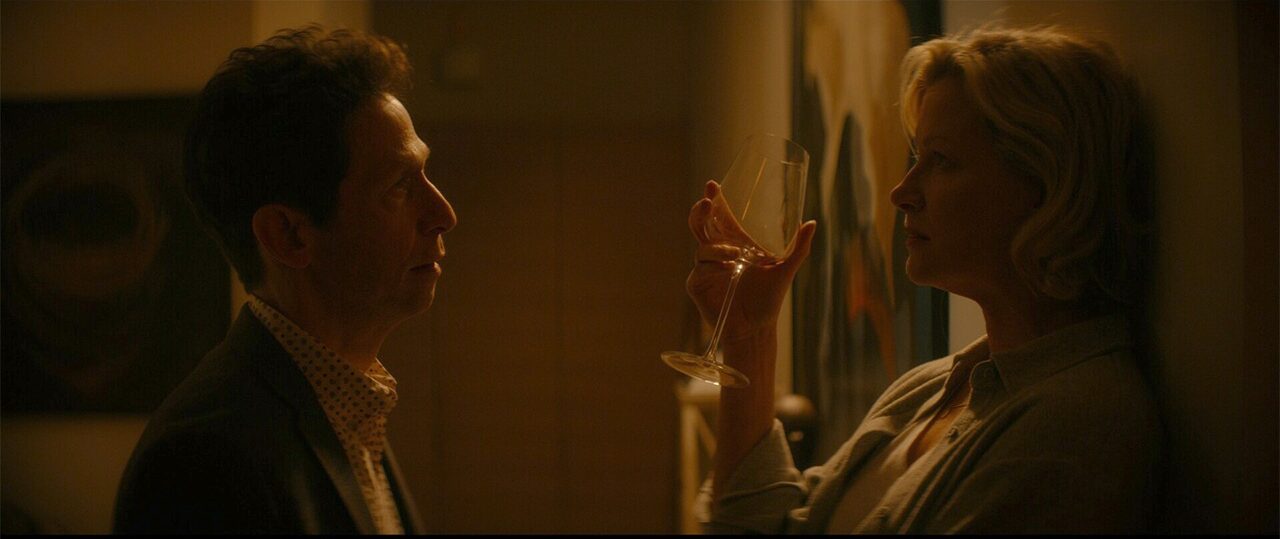
I really enjoyed the Netflix neo-noir mystery Reptile, starring Benicio del Toro as Tom, a veteran Philadelphia detective who finds himself the new man on the police force of an affluent town in Maine. Tom and his wife Judy (Alicia Silverstone) have left the big city because Tom’s partner was sent up for corruption, and now the other Philly cops don’t trust Tom. They landed in Maine because Judy’s uncle (Eric Bogosian) is a captain on the local force. The girlfriend of a shady Realtor (Justin Timberlake) is murdered, and the local cops are happy that they can put a seasoned pro like Tom on the case.

The boyfriend is a suspect, of course, as is the victim’s tweaked-out ex-husband (whom she’s been seing on the side)(Karl Glusman). A stringy-haired local psycho (Michael Pitt – where’s he been since I Origins and Seven Psychopaths?) pops up, but this quasi-Manson just might be too obvious.

DNA evidence comes in, there’s a shootout, and it looks like the case is solved. Tom is recognized as a literal hero, but he has a lingering doubt and keeps poking around, which is when the police procedural become a paranoid thriller – all the way to its bloody, and deeply satisfying, finale.

Reptile is a showcase for the sublime performance by Benicio del Toro. Using del Toro’s hulking physicality, Tom moves imposingly but silently. Oozing street cred, he keeps his own counsel. Tom busts balls with the other cops, but you can tell that he’s always holding something back. A very smart guy, Tom spots things right away, but mulls them over before sharing them with others. Del Toro is an Oscar-winning actor with a substantial body of work, but this is his most vivid work in years. Even critics who don’t like the movie Reptile have raved about del Toro’s performance. (Here’s some del Toro trivia – he had the good fortune to break in with a part in a James Bond film; unfortunately, it was the one starring Timothy Dalton.)

Alicia Silverstone is perfect as the spunky cop’s wife Judy – a Howard Hawkes-type wife if there ever was one. One of the most agreeable aspects of Reptile is the trust and partnership between Tom and Judy. She’s got real balls, and he wouldn’t confide in her if she didn’t. If Reptile had been made in the classic Hollywood era, Judy would have ben played by Ella Raines, Katharine Hepburn or Lauren Bacall.

Ato Essandoh is very good as Tom’s less experienced partner. Frances Fisher is remarkable as the frosty matriarch of the shady real estate business, and the reason that the Timberlake character never grew his own spine.

Timberlake and Bogosian are very good. So are Domenick Lombardozzi and Mike Pniewski as police commanders.

Reptile was directed by Grant Singer, who has chiefly directed music videos before; Singer co-wrote the screenplay with del Toro and Benjamin Brewer.

The critical reception for Reptile has been mixed. I really don’t understand criticism of the pacing, the plot twists and of Timberlake’s performance (his character is SUPPOSED to be weak and slimy). I see a lot of neo-noir crime mysteries, and, trust me, this is a good one.

Reptile is streaming on Netflix.