DISCREET: untethered to home or sanity

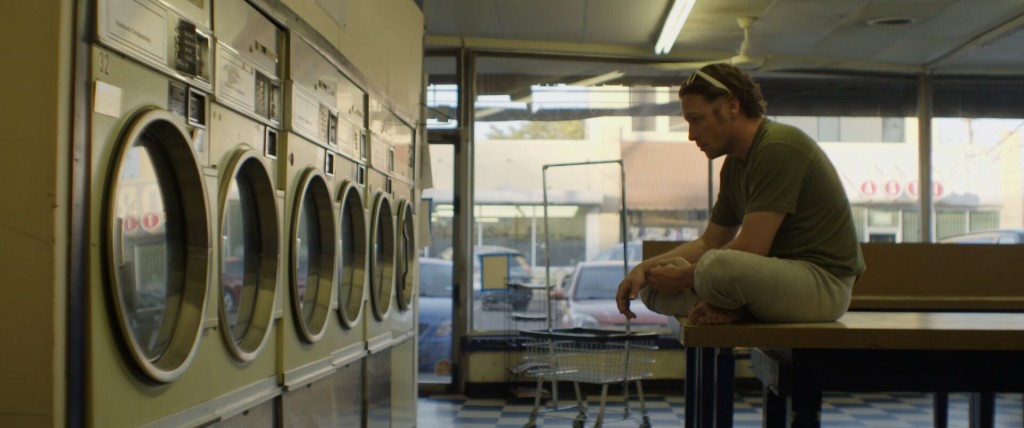
Jonny Mars in DISCREET photo courtesy of SFFILM
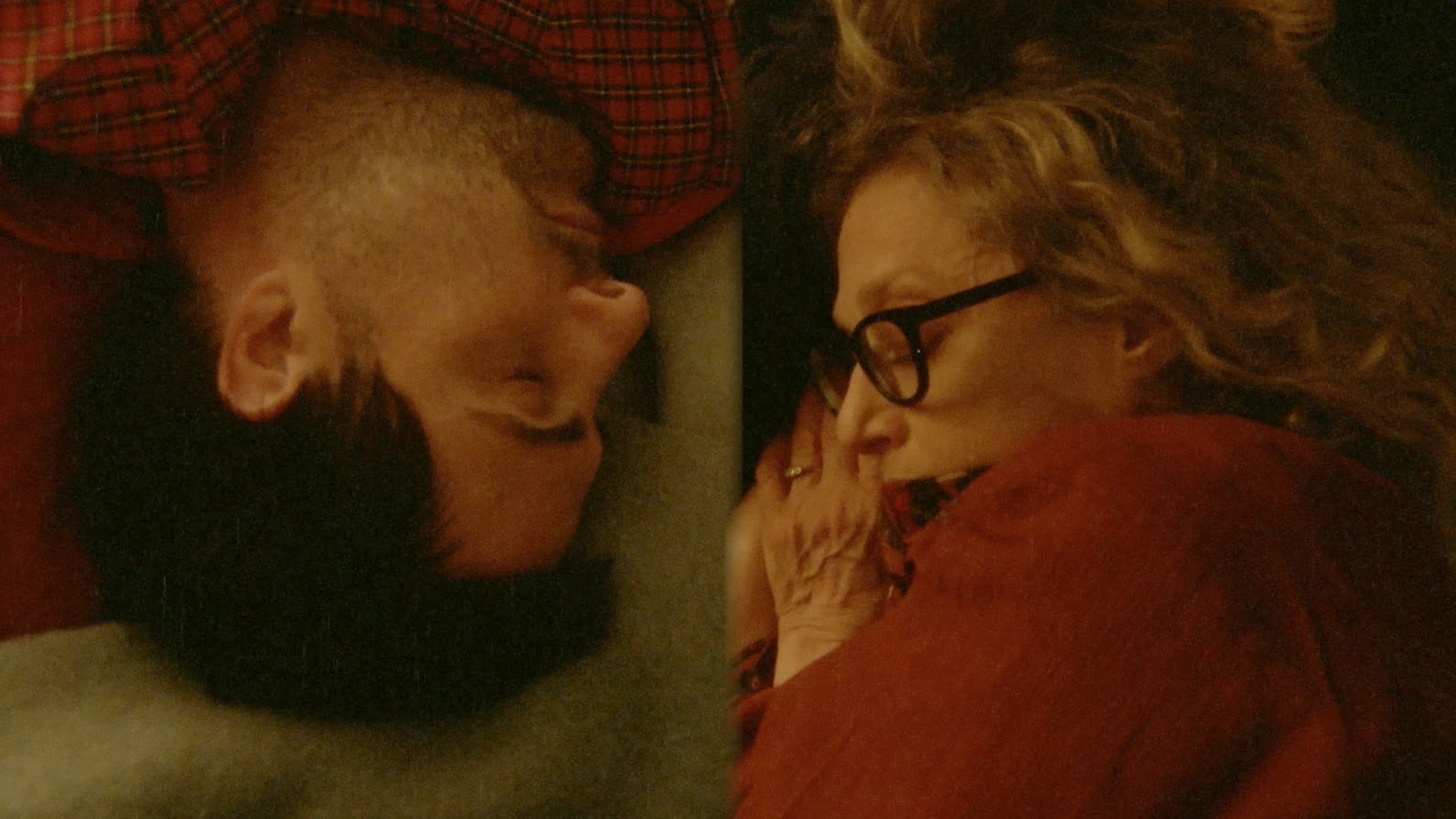
Photo caption: Jonny Mars in DISCREET. Courtesy of Uncork’d Entertainment.

The psychological drama Discreet is breathtakingly original. Within a revenge tale, writer-director Travis Mathews has braided threads of social criticism and political comment.  Most of all, Discreet is a compelling portrait of one damaged, very unwell guy and a thoughtful exploration of the alienating aspects of the current American zeitgeist.

Discreet is centered on Alex (Jonny Mars), who has drifted back through his Texas hometown to find that his childhood sexual abuser has re-surfaced.   Alex is untethered either to home or sanity.   Away from home for a long time, Alex has been roaming the country, oddly stopping to shoot videos of freeway traffic.   The most hateful alt-right talk radio plays incessantly from the radio of his van.  And, in a creepy juxtaposition, he’s obsessed with a New Agey YouTube publisher (the comic Atsuko Okatsuka).

Alex sets out to find and confront his abuser (Bob Swaffer), and Discreet takes us on a moody and intense journey, filled with unexpected – and even flabbergasting – moments.  Only the ultimate vengeance seems inevitable – and even that act is handled with surprising subtlety.  The catharsis is intentionally understated, and there is none of the customary splatter.

Swaffer’s physicality, along with his character’s condition, makes him a monster unlike anything I’ve seen in a movie before – a unique blend of the bone-chilling and the vulnerable.

Discreet is only 80 minutes long; keeping it short was a great choice by Mathews, allowing the film to succeed with a deliberate, but never plodding, pace.  We’re continually wondering what Alex is going to do next, and the editing by Mathews and Don Swaynos keeps the audience on alert.  Cinematographer Drew Xanthopoulos makes effective use of the static long shot and gives Discreet a singular look.  The idiosyncratic sound design, with its droning and its use of ambient noises, sets the mood.  It’s an effective package – and an impressive calling card for Travis Mathews.
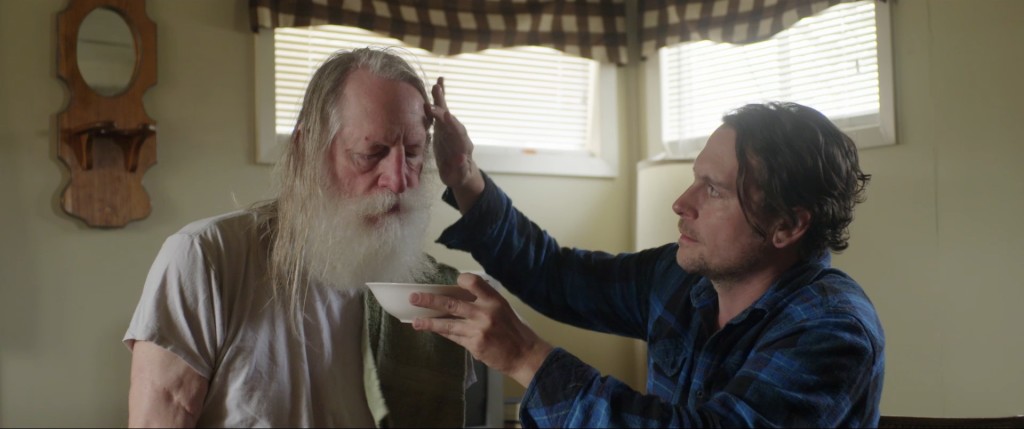
Bob Swaffar (left) and Jonny Mars in DISCREET photo courtesy of m-appeal World Sales
Bob Swaffar (left) and Jonny Mars in DISCREET. Courtesy of Uncork’d Entertainment.

While he’s in town, Alex is on the lookout for secret – and sometimes very kinky – sex with other men.  It’s a comment on the repression in Flyover American culture that drives gay sexual expression underground. And furtiveness can make anything seem seamy.  Indeed, the movie’s title comes from the Craiglist euphemism for anonymous sexual hookups.

One critic referred to Discreet as “Travis Mathews’ latest queer experiment”.  Not that there’s anything wrong with that, but it’s far too narrow a label.   True, Discreet definitely comes from the point of view of a gay filmmaker, and it addresses the repression of gay sexual expression. But this is a film, with its broader focus on alienation, that is important for and accessible to every adult audience.

Mathews previously collaborated with James Franco on Interior. Leather Bar., which is nothing at all like Discreet.   Interior. Leather Bar. is talky and centered on artistic process with a hint of sensationalism.  Discreet more resembles an experimental film such as Upstream Color.  Come to think of it, Discreet has more of the feel of a budget indie (and less languorous) version of Antonioni‘s The Passenger.

Jonny Mars is very effective as Alex, a character who is usually stone-faced, but whose intensity sometimes takes him completely off the rails.  In her one speaking scene as Alex’s mom, Joy Cunningham’s stuttering affect gives us a glimpse into both her past parental unreliability and her current clinging to sobriety by her fingernails.

But the heart of Discreet is Alex and his unpredictable path.  To what degree has Alex’s madness been formed by the childhood abuse?  To what extent has he been deranged by absorbing random and unhealthy bits of American popular culture?  Stylistically, Discreet is a near-masterpiece, and audiences that embrace the discomfort of the story will be rewarded with a satisfying, ever-surprising experience.

I screened Discreet and interviewed director Travis Mathews for the 2017 SFFILM. Discreet can be streamed on Amazon (included with Prime,) AppleTV, YouTube and Fandango.

Movies to See Right Now

Photo caption: Dakota Johnson in DADDIO. Courtesy of Sony Pictures Classics.

This week on The Movie Gourmet – I’m covering the San Francisco Jewish Film Festival, which opened Thursday. Here’s my SJFJFF preview and my festival recommendations. Also, a new review of the evocative and highly evocative psychodrama I Saw the TV Glow.

REMEMBRANCE

Shelley Duvall in THE SHINING

Shelley Duvall will be best remembered for playing the wife of Jack Nicholson’s decompensating writer in The Shining. It’s hard to discuss American cinema of the 1970s without mentioning Duvall because six of her first seven movies were Robert Altman films (Brewster McCloud, McCabe and Mrs. Miller, Thieves Like Us, Nashville, Buffalo Bill etc., and 3 Women; the seventh was Annie Hall, in a hilarious turn as an Alvy Singer sex partner. She also played the waitress who prods Steve Martin’s Cyrano character into wooing Daryl Hannah’s Roxanne in Roxanne.

CURRENT MOVIES

  • Ghostlight: a family saves itself, in iambic pentameter. In theaters.
  • The Bikeriders: they ride, drink and fight, and yet we care. In theaters.
  • Daddio: intimacy between strangers. In theaters.
  • Perfect Days: intentional contentment. Amazon, AppleTV, YouTube, Fandango, Hulu (included).
  • Sorry/Not Sorry: revelatory, and posing the smartest questions. In theaters.
  • Confessions of a Good Samaritan: of course, wouldn’t you?…WHAT? In theaters, primarily arthouses.
  • Hit Man: who knew self-invention could be so fun? Netflix.
  • Thelma: too proud to be taken. In theaters.
  • I Saw the TV Glow: brimming with originality. Back in some theaters and Amazon, AppleTV; Fandango.
  • Mother Couch: obstreperous mom, surreal situation. In theaters, primarily arthouses.
  • Challengers: three people and their desire. Amazon, AppleTV, YouTube, Fandango.
  • La Chimera: six genres for the price of one. Amazon, AppleTV, YouTube, Fandango.
  • The Grab: important, engrossing and sobering. Amazon, AppleTV, YouTube.
  • Run Lola Run: still sprinting after 25 years. In theaters and Amazon, AppleTV and YouTube.
  • Relative: a loving, but insistent investigation. Amazon (included with prime), AppleTV, Vudu, YouTube. 
  • Wicked Little Letters: a sparkling Jessie Buckley and an interesting take on repression. Amazon, AppleTV, YouTube.
  • How to Have Sex: searing and authentic. MUBI.
  • Civil War: a most cautionary tale. Amazon, AppleTV, YouTube, Fandango, but still expensive.
  • The Dead Don’t Hurt: such a bad movie. In theaters.
  • Kinds of Kindness: disgustingly indulgent. In theaters, primarily arthouses.

WATCH AT HOME

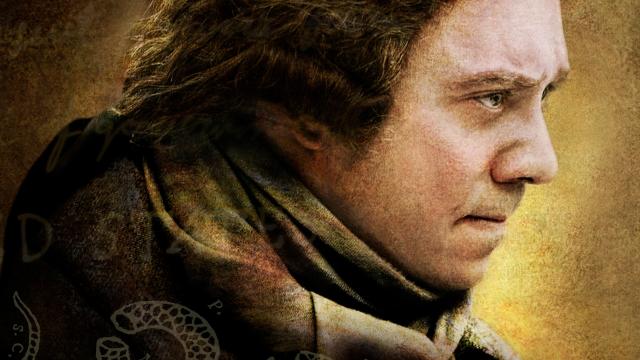
Paul Giamatti in JOHN ADAMS

The most eclectic watch-at-home recommendations you’ll find ANYWHERE:

ON TV

SAY AMEN, SOMEBODY

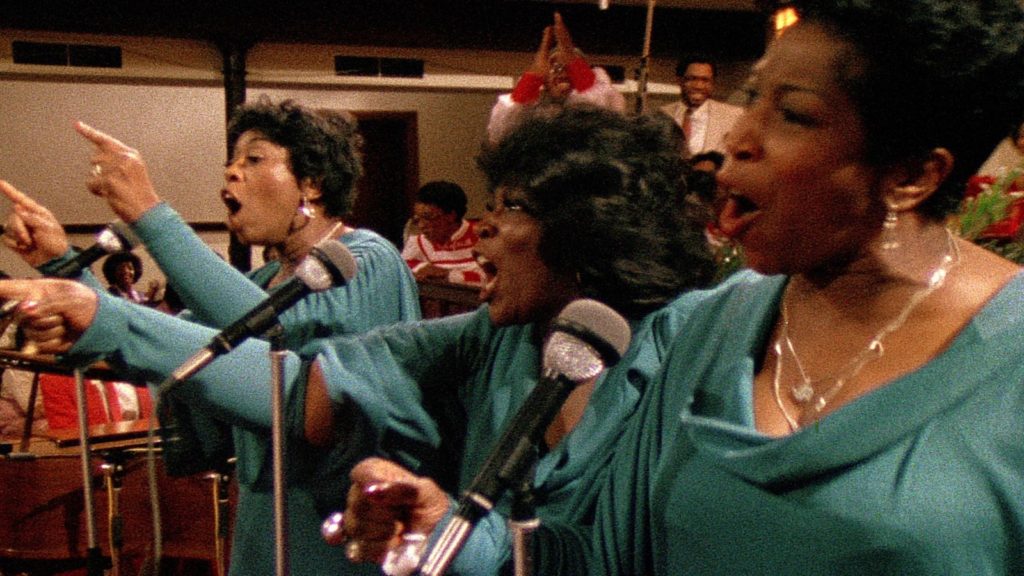
Need 100 minutes of emotional uplift? On July 20, Turner Classic Movies brings us the gospel music documentary Say Amen, Somebody. This 1982 art house hit is almost never on television, and has been hard to find, although you can now stream in on Criterion, AppleTV, YouTube and Fandango. The film traces the genre from gospel pioneers Willie Mae Ford Smith and Thomas A. Dorsey to contemporary artists. The music is stirring and infectious.
MEDITERRANEAN FEVER: the depressed writer and the crook

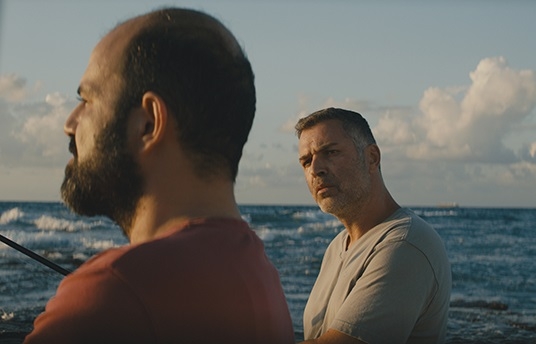
Amer Hlehel and Ashraf Farah in Maha Haj’s MEDITERRANEAN FEVER. Courtesy of SFJFF.

In Mediterranean Fever, a depressive writer becomes friends with his shady neighbor and the two embark on a dark journey.

Waleed (Amer Hlehel) is an Arab Israeli living in Haifa, and he’s left his job as a bank clerk to write a novel. His wife’s job as a nurse supports them, and Waleed handles the laundry and schleps the kids to school. The novel is not going well because Waleed suffers from depression; he is so paralyzed with hopelessness that he wants to give up on the therapist that his wife sends him to.

Waleed initially disdains his new, less-educated neighbor Jalal (Ashraf Farah), who day drinks, smokes and, when Waleed is staring at his blank screen, listens to obnoxiously loud music. Jalal is a whiz at anything construction-related and is generous with Waleed’s family. But Waleed is finally drawn to Jalal’s sketchiness: Jalal owes well more than he can pay to some menacing gangsters, is comfortable with his own brutal means of informal debt collection, has a girlfriend on the side and knows his way around the underworld.

Waleed’s wallowing in despair is only brightened when he recognizes that Jalal is a crook (but for an especially morbid reason we learn later). And he sparkles when he finally figures out the cause of his young son’s gastrointestinal distress (the movie’s title is a play on this).

In her second feature, Israeli Arab writer-director Maha Haj has created two memorable guys, and the story of Mediterranean Fever is entirely character-driven. Much of the humor stems from the odd couple of Waleed and Jalal.

I don’t want to describe the tone of Mediterranean Fever, as I do many films, as “darkly funny” because its tone is singular. Haj has written a story about that unfunniest of topics, depression, and keeps us watching with subtle, observational humor.

After a slow burn, Mediterranean Fever pays off with a shocking twist, followed by an epilogue with a character’s hilarious reaction to learning a new neighbor’s occupation. And, yes, that scene is darkly hilarious.

Most of the Arab films we see from this part of the world are about people living in Palestine and occupied territories. In Mediterranean Fever, we glimpse into the day-to-day life of Israeli Arabs – and middle-class Israeli Arabs at that. We also see a Haifa where middle- and working-class families occupy apartments right across the road from a glorious beach; (In the US, these would all be converted into short-term vacation rentals.)

Mediterranean Fever won the Un Certain Regard screenplay prize at Cannes. I screened Mediterranean Fever for the SLO Film Fest; it’s playing at the 2024 San Francisco Jewish Film Festival – July 19 at the Vogue and July 31 at the Piedmont.

The SFJFF is here

Photo caption: Amer Hlehel and Ashraf Farah in Maha Haj’s MEDITERRANEAN FEVER at the SLO Film Fest Courtesy of San Francisco Jewish Film Festival.

The San Francisco Jewish Film Festival (SFJFF) always a major event for Bay Area cinephiles, opens today. The SFJFF is the world’s oldest and largest Jewish film festival, and the program offers over 60 films from Israel, Palestine, Australia, Canada, Colombia, Cyprus, Ethiopia, France, Germany, Hungary, Italy, Poland, Ukraine, the US and the UK. Here’s my festival preview.

This year, I’m recommending three comedies.

  • Mediterranean Fever: A depressive writer becomes friends with his shady neighbor and the two embark on a dark journey. Second feature for Israeli Arab director Maha Haj. Although it’s dark and funny, I don’t want to describe Mediterranean Fever, like I do many films, as “darkly funny” because the tone is singular. Haj has written a story about that unfunniest of topics, depression, and keeps us watching with subtle, observational humor.  In Mediterranean Fever, we glimpse into the day-to-day life of Israeli Arabs – and middle-class Israeli Arabs at that. Won the Un Certain Regard screenplay prize at Cannes. Here’s my full review.
  • The Monkey House: This witty, twisty comedy is the latest from popular and prolific Israeli writer-director Avi Nesher. Set in pre-Internet 1989, novelist Amitay (Adir Miller) has gone a long time without a best seller, and sees his literary legacy fading. His ego is uplifted by an American grad student who plans to publish about his body of work; but, when that falls through, Amitay plans an elaborate ruse – he hires the flighty, wannabe actress Margo (Suzanna Papian) to impersonate the grad student. Plenty of unanticipated complications threaten to derail the scheme and humiliate Amitay, especially to his recently-widowed, longtime crush Tamar (Shani Cohen). Nesher, evidently a gimlet-eyed observer of human behavior, delivers lots of plot twists in this smart and funny movie. Nominated for 11 Israeli Academy Awards.
  • Between the Temples: In Nathan Silver’s comedy, Jason Schwartzman plays a cantor whose wife’s death the year before has plunged him into despair; he is so paralyzed by depression, he has even lost his ability to sing. He has a chance meeting with his childhood music teacher (Carol Kane), now a retired widow. Despite her age and his resistance, she insists on joining the bat mitzvah class he teaches at the temple. She’s a force of nature and may have enough gusto to overcome his angst. As their friendship evolves, will it bring him out of his funk? There are plenty of LOL moments. Kane is excellent, and so is Madeleine Weinstein as the rabbi’s lovelorn daughter. Dolly De Leon, who stole Triangle of Sadness, sparkles as a relentlessly determined Jewish mother.

The SFJFF runs through August 4 in select San Francisco and Oakland venues. Peruse the program and purchase tickets at SFJFFHere’s the trailer for Between the Temples.

I SAW THE TV GLOW: brimming with originality

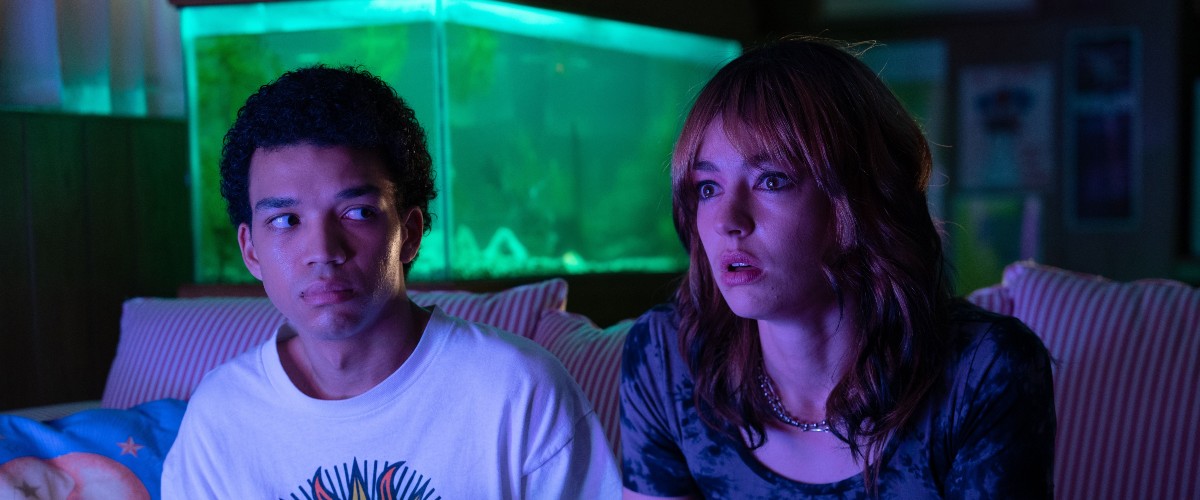
Photo caption: Justice Smith and Bridgette Lundy-Payne in I SAW THE TV GLOW. Courtesy of A24.

The evocative psychodrama I Saw the TV Glow is unlike any movie you’ve seen and marks the emergence of gifted filmmaker. Set in 1996, in the last days of what we now know to be the pre-Internet age, two suburban teens are captivated by a very trippy, highly stylized TV show. The fictional show, The Pink Opaque, has its own internal mythology, and kid characters, Isabel and Tara, battle the the monster of the week sent by Mr. Melancholy. The teens, Owen and Maddy, follow The Pink Opaque with the devoted fervor of fans of The Prisoner and Doctor Who.

Both Maddy and Owen feel alienated by mainstream high school culture, and Maddy (Bridgette Lundy-Payne) is okay with that. She is comfortable with being gay and confident that the burbs have nothing to offer her. Unplagued by self-doubt, she’s is eager to leave for an environment with more excitement and diversity.

Two years younger, Owen (Justice Smith as the young man Owen) is a puddle of anxiety, hesitance and awkwardness. He isn’t confident about ANYTHING, let alone his identity. Maddy tells him that she likes girls and asks about Owen’s preference; he responds, “I think I like TV shows”.

Owen’s parents won’t let him stay up to watch The Pink Opaque at 10:30 pm Saturday night, so Maddy slips him VHS tapes. The show speaks to them in away that nothing else in their lives does, and they bond in their earnest devotion.

Suddenly, Maddy disappears without a trace, with only her TV burning in the backyard. And then, The Pink Opaque gets abruptly cancelled. Now Owen must navigate the harshness of life without his most pivotal supports, and it’s a rough ride. The story skips ahead eight years, and then twenty more, to the present.

I Saw the TV Glow is the third feature for writer-director Jane Schoenbrun (their first two films were credited to Dan Schoenbrun). I Saw the TV Glow is a mesmerizing slow burn that doesn’t spoon feed the audience, but requires active engagement. Masterful in tone, Schoenbrun spins their tale with the eerie and suspenseful fell of a horror film, but it is not horror – the only thing that gets slashed and splattered is a young man’s nostalgia.

Most of I Saw the TV Glow takes place at night, in darkness highlighted with vivid neon-like colors. The cinematographer was Eric Yue (A Thousand and One). The kids’ perspective, attitudes and speech resonate with perfect pitch; these characters are utterly authentic (in sharp contrast to Disney Channel sitcoms). Brimming with originality, Jane Schoenbrun is gifted with very special talents.

This should be a breakthrough performance by Justice Smith. Everything about his Owen telegraphs his discomfort in his own skin and his fear of doing something embarrassing. His voice quavers with hesitation. It’s a haunting performance, and the audience’s fear for what will happen to Owen drives the movie.

Lundy-Payne gets to deliver a remarkably chilling monologue as Maddy.

How popular will this film be with teens? Hopefully, teens will be attracted by the horror look-and-feel and seduced by the realism of the teen characters.

I Saw the TV Glow stands to become a cult film for all the right reasons – it’s unlike any prior movie and it resonates with anyone who felt like an outsider in adolescence. Trippy and spooky, midnight screenings await.

That being said, I Saw the TV Glow is not for everyone. Some viewers may become impatient with the pace or confused by the construction of the narrative. This isn’t conventional storytelling.

I Saw the TV Glow debuted at Sundance and was nominated for awards at the Berlinale and SXSW. After a limited release in the spring, it’s back in some theaters now; I Saw the TV Glow can be streamed from Amazon, AppleTV and Fandango.

Good news for cinephiles – the SFJFF is back

Photo caption: Carol Kane as Carla Kessler, Jason Schwartzman as Ben Gottlieb in BETWEEN THE TEMPLES. Image: Sean Price Williams. Courtesy of Sony Pictures Classics.

One of the Bay Area’s top cinema events is back – the San Francisco Jewish Film Festival (SFJFF), running from July 18 to August 4. The SFJFF is the world’s oldest and largest Jewish film festival, and the program offers over 60 films from Israel, Palestine, Australia, Canada, Colombia, Cyprus, Ethiopia, France, Germany, Hungary, Italy, Poland, Ukraine, the US and the UK.

This year’s festival (the 44th!) expands to eighteen days and six Bay Area venues. Films will screen at San Francisco’s Palace of Fine Arts, Vogue and Roxie, and Oakland’s Landmark Piedmont Theater, as well as additional programming at the Jewish Community Center of San Francisco.

The SFJFF is a major Jewish cultural event held against the backdrop of current events in Israel and Gaza, and the SFJFF is leaning right into what would otherwise be the elephant in the room.

At SFJFF44, JFI is dedicated to maintaining a respectful environment for filmmakers and audiences from diverse cultures and perspectives to reflect on the current climate through the lens of domestic and international filmmakers, including Israeli and Palestinian filmmakers and collaborative projects.

Over the last 44 years, SFJFF has presented many groundbreaking films that probe the unexpected and nuanced corners of history, identity, and artmaking to create opportunities for audiences and artists alike to look closely at the complexity all around them. At SFJFF44, JFI is dedicated to maintaining a respectful environment for filmmakers and audiences from diverse cultures and perspectives to reflect on the current climate through the lens of Israeli, Palestinian, and domestic/international filmmakers. Audiences are invited to ask questions, find solidarity in community, and experience multiple programs (to be announced) which will exist in dialogue with one another to explore the past and present complexities of the Israeli-Palestinian conflict.

    I’ve been covering the SFJFF since 2016, I’m not Jewish and I can attest that this attitude is nothing new. I’ve seen SFJFF films with Palestinian voices, by Palestinian and Israeli Arab filmmakers, and about the Israeli-Palestinian conflict.

    Amer Hlehel and Ashraf Farah in Maha Haj’s MEDITERRANEAN FEVER. Courtesy of SFJFF.

    My favorite film at this year’s SFJFF is Mediterranean Fever, from Israeli Arab director Maha Haj, whose story glimpses into the day-to-day life of Israeli Arabs – and middle-class Israeli Arabs at that. It’s a character-driven dark comedy, and I’ll be writing about it on Thursday.

    At previous SFJFFs, I’ve found very strong documentaries: What She Said: The Art of Pauline KaelSatan & AdamBombshell: The Hedy Lamarr StoryThe MossadLevinsky Park, Sammy Davis Jr.: I’ve Gotta Be Me, Charm Circle and Desperate Souls, Dark City and the Legend of Midnight Cowboy.

    This year, the SFJFF presents a strong menu of comedies, including Mediterranean Fever. The Centerpiece Narrative is Between The Temples, starring Jason Schwartzman as a cantor experiencing a crisis of faith and Carol Kane as his childhood music teacher and adult Bat Mitzvah student. Between the Temples generated buzz at its premiere at the 2024 Sundance Film Festival. Kane (Hester Street, Annie Hall, The Princess Bride) is a force of nature, and Dolly De Leon (Triangle of Sadness) sparkles as a relentlessly determined Jewish mother.

    I’ll be posting my SFJFF recommendations on Thursday. Peruse the program and purchase tickets at SFJFF. Here’s the festival trailer.

    Movies to See Right Now

    Photo caption: Jodie Comer in THE BIKERIDERS. Courtesy of Focus Features.

    This week on The Movie Gourmet – new reviews of two fine documentaries and an acting showcase – Penny Lane’s exploration of shocking altruism, Confessions of a Good Samaritan, a thoughtful dive into #MeToo accountability, Sorry/Not Sorry, the sweet, but not overly sentimental Perfect Days, and the Dakota Johnson-Sean Penn two-hander Daddio.

    CURRENT MOVIES

    • Ghostlight: a family saves itself, in iambic pentameter. In theaters.
    • The Bikeriders: they ride, drink and fight, and yet we care. In theaters.
    • Daddio: intimacy between strangers. In theaters.
    • Perfect Days: intentional contentment. Amazon, AppleTV, YouTube, Fandango, Hulu (included).
    • Sorry/Not Sorry: revelatory, and posing the smartest questions. In theaters.
    • Confessions of a Good Samaritan: of course, wouldn’t you?…WHAT? In theaters, primarily arthouses.
    • Hit Man: who knew self-invention could be so fun? Netflix.
    • Thelma: too proud to be taken. In theaters.
    • Mother Couch: obstreperous mom, surreal situation. In theaters, primarily arthouses.
    • Challengers: three people and their desire. Amazon, AppleTV, YouTube, Fandango.
    • La Chimera: six genres for the price of one. Amazon, AppleTV, YouTube, Fandango.
    • The Grab: important, engrossing and sobering. Amazon, AppleTV, YouTube.
    • Run Lola Run: still sprinting after 25 years. In theaters and Amazon, AppleTV and YouTube.
    • Relative: a loving, but insistent investigation. Amazon (included with prime), AppleTV, Vudu, YouTube. 
    • Wicked Little Letters: a sparkling Jessie Buckley and an interesting take on repression. Amazon, AppleTV, YouTube.
    • How to Have Sex: searing and authentic. MUBI.
    • Civil War: a most cautionary tale. Amazon, AppleTV, YouTube, Fandango, but still expensive.
    • The Dead Don’t Hurt: such a bad movie. In theaters.
    • Kinds of Kindness: disgustingly indulgent. In theaters, primarily arthouses.

    WATCH AT HOME

    VERY SEMI-SERIOUS

    The most eclectic watch-at-home recommendations you’ll find ANYWHERE:

    ON TV

    On Saturday, July 13, Turner Classic Movies airs John Sayles’ 1988 Eight Men Out, which tells the true story of the Black Sox Scandal – the Chicago White Sox players who fixed the 1919 World Series.  Sayles used actors, not baseball players, but the baseball scenes are totally authentic.  The characters of star players Eddie Cicotte (David Straithern), Buck Weaver (John Cusack) and Shoeless Joe Jackson (D.B. Sweeney) and owner Charles Comiskey (Clifton James) vividly come alive. Watch for Sayles himself and Studs Terkel playing sportswriters Ring Lardner and Hugh Fullerton.

    DADDIO: intimacy between strangers

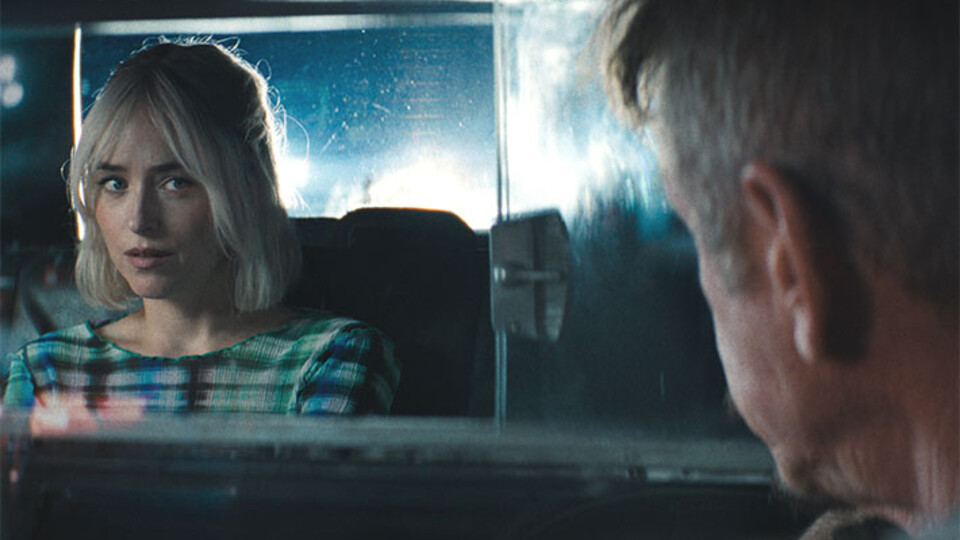
    Photo caption: Dakota Johnson and Sean Penn in DADDIO. Courtesy of Sony Pictures Classics.

    In the absorbing Daddio, Dakota Johnson plays a woman who gets into a cab at JFK for the final leg of her trip to Midtown Manhattan. The driver (Sean Penn) engages her in chitchat. She is amused to find herself with one of those philosopher cabbies. He likes that she is a New Yorker, not a tourist, and that she doesn’t ignore him in favor of her smartphone.

    He fancies himself an acute judge of people, and proves it by correctly guessing an important fact about her current relationship. As he probes about her personal life, she probes back, and soon they are revealing intimate secrets to each other.

    It’s possible that a conversation can cause you to rethink your life – even if it with someone you’ve never met and will never see again. That relatively instant and profound bonding is the core of Daddio.

    Their conversation is limited by the duration of the cab ride, but the 40-minute trip is extended when traffic is stopped to clear a major accident up ahead. Daddio is a story told in real time – a story of two people talking inside a car – and I was captivated the entire time. Daddio is the first feature for writer-director Christy Hall, creator of TV’s I Am Not OK with This.

    Dakota Johnson in DADDIO. Courtesy of Sony Pictures Classics.

    It’s a good story, but Daddio is so good because the performances are superb. Their faces, in closeup and extreme closeup. tell us what they’re not saying – whether they are guarded, offended, surprised, hurt, annoyed, intrigued. Their eyes mostly meet in the rear view mirror.

    Dakota Johnson is a very able actor, and has done excellent work lately – The Lost Daughter, Cha Cha Real Smooth and here in Daddio.

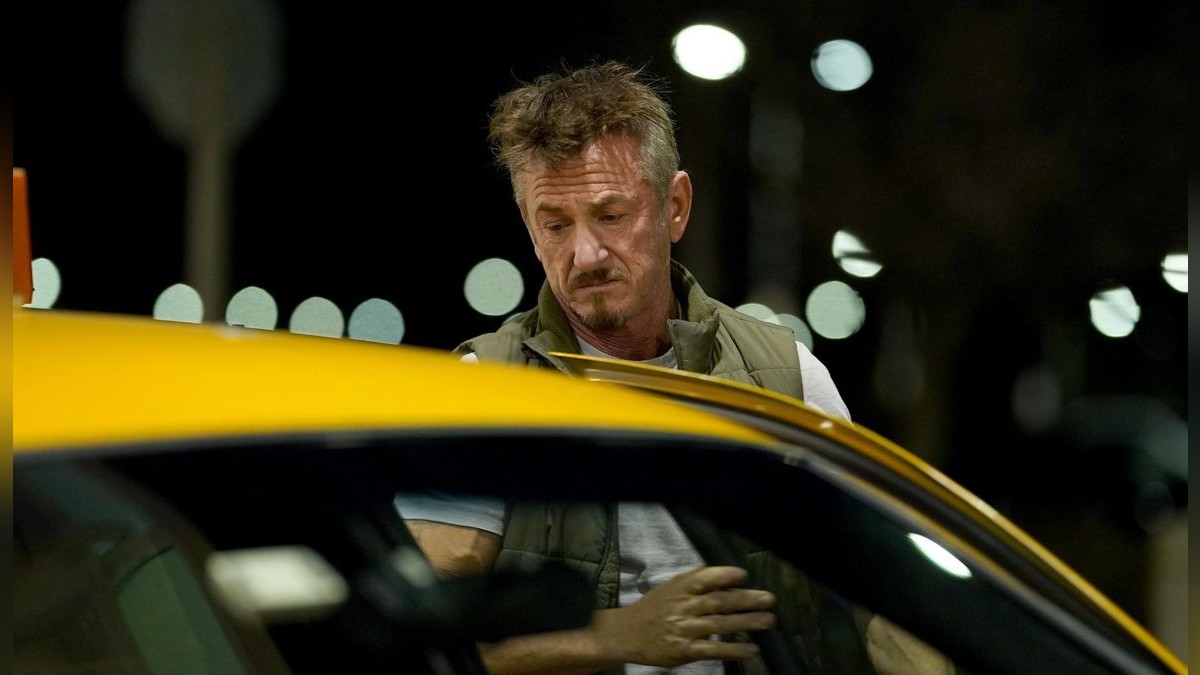
    Penn’s cabbie is devilish, and enjoys being a provocateur. It’s been a long time (his Spicoli in Fast Times at Ridgemont High) since I’ve thought of Sean Penn as funny, but he sure is funny here. And, of course, Penn is unsurpassed in embodying profound sadness.

    Sean Penn in DADDIO. Courtesy of Sony Pictures Classics.

    It’s really surprising how two actors in a car can make for such an engrossing experience. Daddio, with its penetrating humanity, is thoughtful and entertaining.

    SORRY/NOT SORRY: revelatory, and posing the smartest questions

    Photo caption: Louis C.K. photographed at the Toronto International film festival 9/17/17 for The New York Times’ article Asking Questions Louis C.K. Doesn’t Want to Answer by Cara Buckley. Photo Credit: Angela Lewis for The New York Times.

    The unusually thought-provoking documentary Sorry/Not Sorry uses the Louis C.K. scandal to explore the issues of consent, cancel culture and #MeToo accountability while protecting survivors. Produced by the New York Times, Sorry/Not Sorry traces comic Louis C.K.’s ascendancy, his abhorrent behavior over a long period of time, its exposure by the NYT, his demise and comeback. That story is well-researched and comprehensive, but the real value of Sorry/Not Sorry is in its discussion of consequence for everyone involved – the perpetrator, the survivors and those who at least should have known.

    This story, as have other #MeToo episodes, involved a power imbalance; in this case between C.K. and other comedy professionals who were not as famous as he was. In social situations, C.K. would ask if is was OK if he pulled out his penis and pleasured himself. Apparently, no one voiced the actual words, “I would ask you not to do that because it would offend me and make me feel unsafe“. But who can consent if they can’t imagine that it is a literal request for permission? It’s not consent if someone’s jaw drops and they fidget in their seat.

    As icky as this was for women, men were also confounded. After all, heterosexual men generally seek sexual gratification in a woman’s body – looking at it, touching it, uniting with it. Louis C.K. wasn’t seeking a woman’s body to get off, just her presence. Who does that? What kind of sick power trip is that?

    In Sorry/Not Sorry, three strong women – Jen Kirkman, Abby Schachner and Megan Koester – give first-hand accounts of what transpired. The NYT investigative team of Jodi Kantor, Cara Buckley and Melena Ryzik explain how they ran down the story. C.K., with remorse, confirmed what had happened, and ceased performing.

    You probably already knew these facts, but now Sorry/Not Sorry takes the story further. C.K.’s exposure made Kirkman, Schachner and Koester relive the unpleasantness and subjected them to torrents of hate from anonymous internet trolls; their careers were certainly not helped by the publicity, and were probably hurt. Remember – all they did was to be present when someone else behaved transgressively, and to be truthful when asked about it years later. (Plus, they were mocked by Dave Chappelle, who is more the villain of Sorry/Not Sorry than is Louis C.K.)

    In stunning contrast, C.K. revived his public career, albeit at a much lower level, within less than a year. Sorry/Not Sorry raises the question of, at what point should a disgraced transgressor be able to re-enter the mainstream? And just what is the so-called cancel culture?

    It’s pretty clear that, in the case of a serial rapist like Harvey Weinstein, the offender should be incarcerated to protect the public and never be allowed to enjoy a public career again. But, as #MeToo offenses go, Louis C.K. presents a somewhat unique case in two ways. First, he didn’t physically hurt or violate the women; he disgusted and appalled them. Second, he honestly and contritely answered the charges with “These stories are true“, which is a long way from the standard #MeToo response, which is more like “I never met the woman in my life, and it was all her idea“. So, in this case, it doesn’t seem like justice requires his permanent exile, public silencing and unemployment.

    But, if not permanently, for how long?

    Louis C.K. did endure public disgrace, had his career sidelined for most of a year and lost the ability to earn TENS of millions of dollars. But he has resumed making mere MILLIONS of dollars and being idolized by his diehard fan base. Given the relative situations of the women involved, it doesn’t feel right.

    These questions are pondered in Sorry/Not Sorry by an array of talking heads, the most sensible being Parks and Recreation creator Michael Schnur and comedian Aida Rodriguez.

    This is a smart and revelatory film. Sorry/Not Sorry releases on July 12th, both into select LA and NYC theaters and digitally.

    CONFESSIONS OF A GOOD SAMARITAN: of course, wouldn’t you?…WHAT?

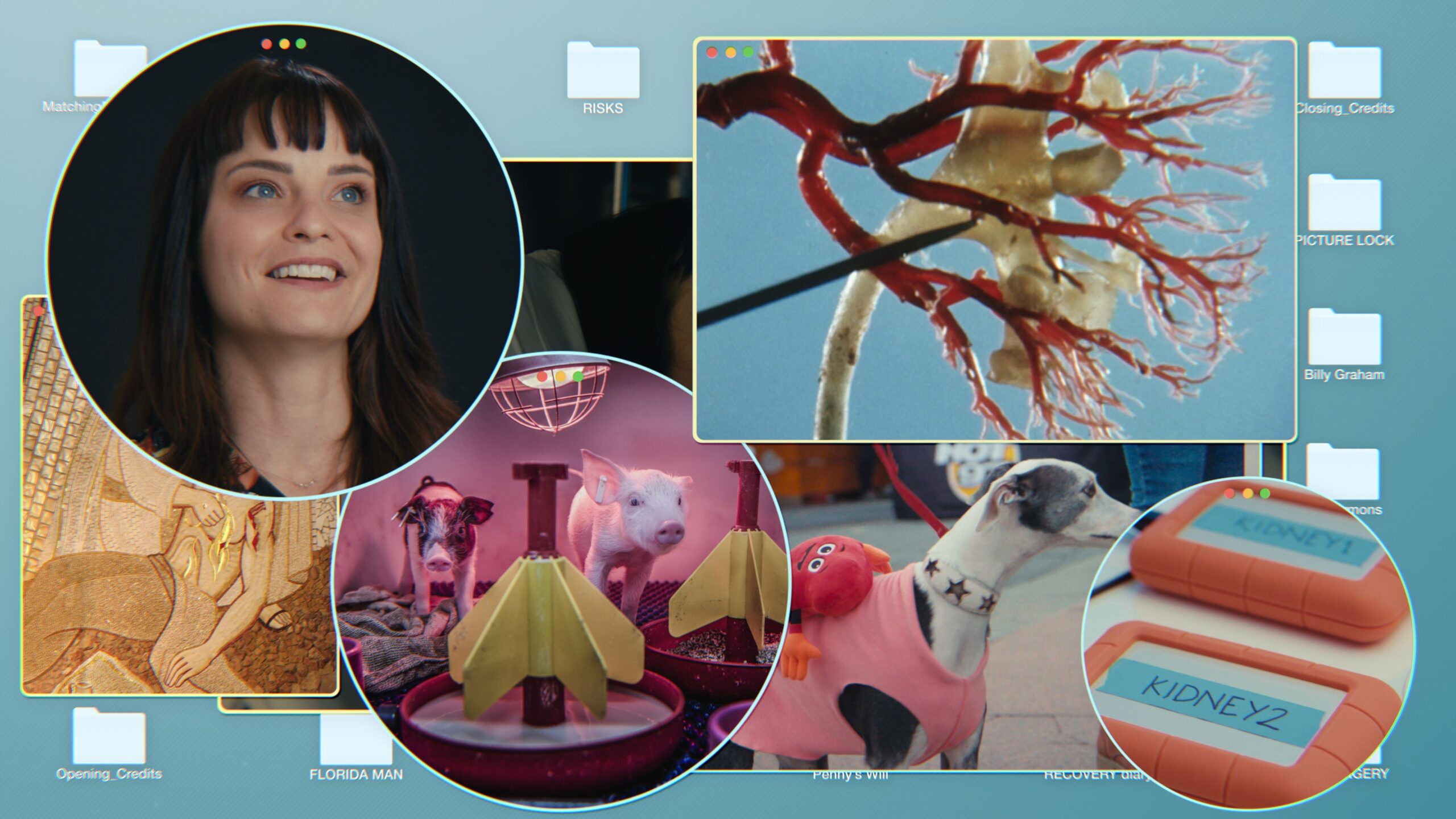
    Photo caption: Penny Lane in her CONFESSIONS OF A GOOD SAMARITAN. Courtesy of Sandbox Films.

    Documentarian Penny Lane is known for her choice of offbeat subjects (Nuts!, Hail Satan?) and her unexpected takes on the familiar (Our Nixon, Listening to Kenny G). In Confessions of a Good Samaritan, she turns her camera upon herself as she decides to donate one of her kidneys to a person that she doesn’t know and will never meet. An in-depth exploration of both kidney transplants and altruism ensues – all from the very personal perspective of a person about to go under the knife herself. Lane herself is a delightful subject, and she courageously shares her most intimate feelings, making Confessions of a Good Samaritan ever more engrossing.

    I screened Confessions of a Good Samaritan for the SFFILM; this week, it opens at Laemmle’s Royal, NoHo and Monica Film Center in LA and the Roxie in San Francisco.