What a story! A Detroit construction laborer named Sixto Rodriguez was also a singer-songwriter who cut two albums in 1970 and 1971. The albums didn’t sell in the US, and he faded back into obscurity. Yet in South Africa – completely isolated by the sanctions of the apartheid era – the artist known as Rodriguez became huge, and his songs fueled a protest movement. Rodriguez never knew of his success, and South Africans believed that he had suffered a dramatic rock star death. The powerful documentary Searching for Sugar Man is the story of some stubborn South African music geeks trying to find out what really happened to Rodriguez, and the startling truths that they uncovered. (The title comes from Rodriguez’ most iconic anthem, the song Sugar Man.)
I have never seen a biographical documentary of a contemporary figure with less comment from the subject himself. There is a brief filmed interview with the eccentric Rodriguez, who reveals very little of his perspective on his own story. His songs can only be written by a reflective person, but Rodriguez is the farthest thing from self-absorbed. Still, the interviews with his family, friends and fans and his songs help us feel like we know him.
It’s a flabbergasting and unpredictable story and well told. It’s worth searching out Searching for Sugar Man.
The inventiveRuby Sparks is about romance and it’s very, very funny, but it transcends the genre of romantic comedy. A shy writer who has produced a great novel at an early age is now drifting, his writing is blocked and he has isolated himself into a lonely existence. He imagines his perfect love object, and he can suddenly write in torrents about her until…she becomes real. Yes, suddenly he has a real life girlfriend of his own design.
This is everyone’s fantasy of a perfect partner – but what are the limits of a partner that you have designed yourself? Because he can tweak her behavior by rewriting it, this brings up the adage “Be careful what you ask for”. When he is threatened by her independence, he changes her personality on the page and she becomes unattractively clinging and needy. Can his realized fantasy make him happy?
Paul Dano is outstanding as the writer and screenwriter Zoe Kazan (granddaughter of Elia Kazan) dazzles as his creation. (Off screen, Kazan and Dano are a couple.) Chris Messina is dead on perfect as the writer’s brother, and the film benefits from an especially strong cast: Annette Bening, Antonio Banderas, Steve Coogan, Aasif Mandvi and Elliot Gould. Ruby Sparks is ably directed by Jonathan Dayton and Valerie Faris, the co-directors of another exceptional indie comedy, Little Miss Sunshine.
The biggest star in Ruby Sparks is Zoe Kazan’s ingenious screenplay. It’s funny without being silly, profound without being pretentious, bright without being precious. Every moment is authentic. It’s clear that Kazan is a major talent as a screenwriter.
The excellent documentary Bill W.tells the story of Bill Wilson, the founder of Alcoholics Anonymous, and it’s quite a story. We see Wilson’s own battle with the bottle, including a pivotal moment when he is about to enter a hotel bar in Akron, but instead decides “to call another drunk”. The story follows his cobbling together what became the 12 step model and his keeping alive the AA movement in its early days. But the most compelling story – and the heart of the film – is Bill Wilson.
Wilson was a reluctant movement leader. His primary passion was for business, in which his drinking killed his potential success. Instead, he achieved fame and historical importance in a field not of his choosing. As the founder, he could have easily formed AA into a hierarchy with himself at the top – and AA as his personal power base. But, once AA could stand on its own, he chose to walk away from its leadership. His decision not to commercialize AA deprived himself of a millionaire’s lifestyle.
Producer and co-director Dan Carracino reminded the audience at my screening that the movie aims to tell the story of Bill Wilson, not to be an exhaustive history of AA.
Because Bill W. primarily uses historical film footage and photos for visuals, and the recorded voice of Wilson himself, along with talking heads who knew him, the audience gets a solid sense of his personality. There are some visual re-enactments (of Wilson’s drinking days and early AA meetings) that are successful because they are narrated by the real Bill W. himself.
I was fortunate to see the film in an audience that contained over 200 AA members, and they responded especially favorably to the film. At its core, Bill W. tells a fascinating story, and I would recommend it for anyone. Bill W. is being self-distributed with both special screenings and theater runs in various cities.
Eleven (count ’em, eleven) main characters traipse through Paris, London, Bratislava and Denver and each faces choice that can change the direction of a life. Unfortunately, we don’t care that much about any of the characters and their stories aren’t that compelling or even original. It’s not a bad movie, but the story (stories) make it a snoozer.
360 is otherwise well-made by acclaimed director Fernando Meirelles (The Constant Gardener) and well-acted by an international ensemble cast that includes Jude Law and Rachel Weisz (completely unrecognizable behind a full set of bangs). The two most interesting characters are the father of a missing crime victim (Anthony Hopkins) and a convicted sex offender in a very fragile recovery (Ben Foster). Foster (The Messenger, Rampart, 11:14) is one of my favorite actors, as is also Jemel Debbouze (Let It Rain, Angel-A, Amelie). But even these actors can’t really punch up a story that isn’t there.
William Colby was a daring saboteur in World War II, an effective espionage agent in the Cold War, an architect of an especially brutal aspect of the Vietnam War and, in the post-Watergate 70s, the nation’s top spy and the Director of Intelligence who made public the CIA’s historic misdeeds. His son, Carl Colby, explores the man who lived that life in The Man Nobody Knew: In Search of My Father, CIA Spymaster William Colby (2011).
Carl Colby makes use of family photos and filmed interviews with Colby’s colleagues, rivals and observers beginning with his secret missions in WW II. Chief of these is Barbara Colby, William’s wife of 39 years and Carl’s mother. The talking heads also include the likes of James Schlesinger, Robert McFarland, Brent Scowcroft, Bob Woodward, Seymour Hersh and even Oleg Kalugin (the KGB’s chief spy in the US). We also hear the White House audio of Colby, along with JFK, RFK and Averell Harriman, discussing the upcoming overthrow of Vietnam’s Diem government.
Carl Colby admires his father’s smarts, toughness, principles, physical bravery and compulsion to serve. He also recognizes the impact that such devotion to duty has on family responsibilities. “It’s a terrible thing to say, but sometimes I think I would have rather worked for him than be his son,” Carl said. “I would have been closer to him.”
Carl Colby interviewed his father’s second wife but did not use the footage in the film, and he did not interview his siblings. As discussed in this Washington Post article, those family members disagree with the film’s portrayal of Colby as an absentee parent and a suicide victim.
But those are comparatively minor parts of the story. The most historically significant (and interesting) segments are:
Colby’s successful secret support of Italy’s Christian Democratic Party, resulting in election victories over the Italian Communist Party.
His inside view of the November 1963 anti-Diem coup in Vietnam (which Colby opposed).
His decision to resist the Ford Administration and lay bare the CIA’s “Family Jewels”, the past illegal activities, including assassination attempts and domestic surveillance. Not surprisingly, the always smirking Don Rumsfeld, Henry Kissinger and Dick Cheney are the bad guys in this episode.
The Man Nobody Knew is available on DVD and on Netflix streaming. Incidentally, it now #6 on my list of Longest Movie Titles, between Can Heironymus Merkin Ever Forget Mercy Humppe and Find True Happiness? (1969) and Don’t Be a Menace to South Central While Drinking Your Juice in the Hood (1996).
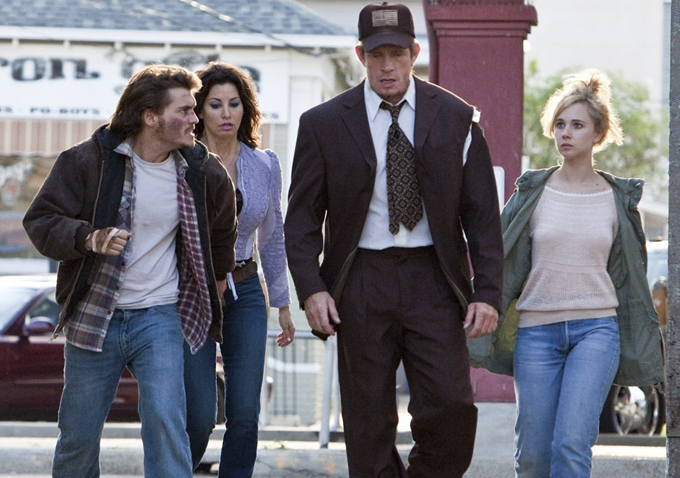
Emile Hirsch, Gina Gershon, Thomas Haden Church and Juno Temple in KILLER JOE
Killer Joe, which opens this week, is NC-17 for a reason and will either thrill or disgust you; that notwithstanding, it pops and crackles with excellent performances by Mathew McConaughey and Juno Temple.
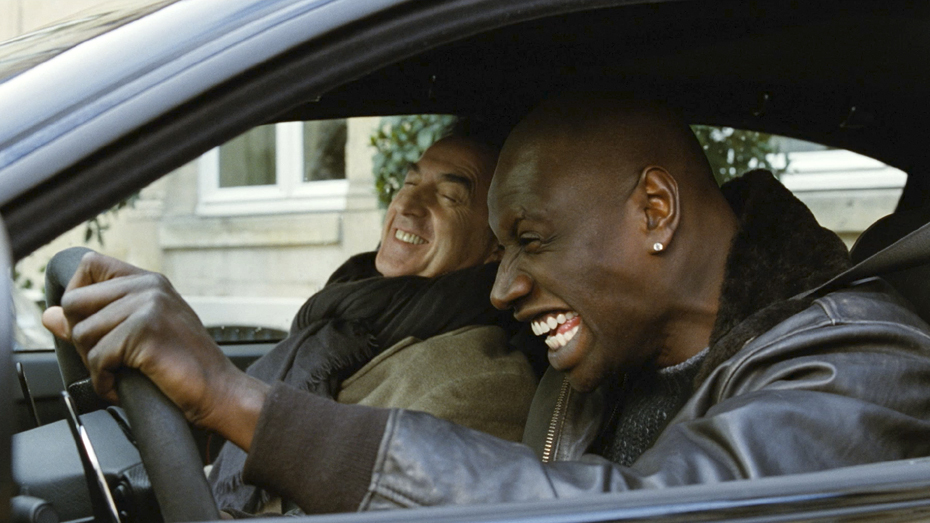
The Intouchables is a crowd pleasing odd couple comedy – an attendance record breaker in France.
Farewell, My Queen is a lavishly staged and absorbing French drama of Marie Antoinette’s Versailles at the onset of the French Revolution; it features excellent performances and was shot at Versailles itself.
Dark Horse is an engaging dramedy from writer-director Todd Solondz (Welcome to the Dollhouse, Happiness); it has his trademark quirkiness, but without the trademark perversion.
The wistfully sweet and visually singular Moonrise Kingdom is another must see. Adults will enjoy Brave, Pixar’s much anticipated fable of a Scottish princess, and it’s a must see for kids. To Rome with Love is an amusing Woody Allen comedy, but not one of Woody’s masterpieces. If you really like Neil Young, then see Neil Young Journeys. The exceptionally popular The Best Exotic Marigold Hotel is continuing its long run in second-run houses.
The Dark Night Rises is too corny and too long, but Anne Hathaway sparkles. Magic Mike has male stripping, but no magic.
My DVD pick this week is from Turkey, the long, enthralling and profound Once Upon a Time in Anatolia. I must add that The Movie Gourmet is the only place where you can read about Killer Joe and Once Upon a Time in Anatolia in the same week!
Here’s a movie that will either thrill or disgust you. Either way, you sure ain’t gonna be bored.
In Killer Joe, Thomas Haden Church, Gina Gershon and Emile Hirsch play a white trash family with a get rich quick scheme. They give a hit man (Matthew McConaughey) the teen daughter (Juno Temple) as a deposit. They’re all as dumb as a bag of hammers, so what could go wrong?
Killer Joe was directed by William Friedkin (The French Connection, The Exorcist) and shot by cinematographer Caleb Deschanel (The Right Stuff, The Natural) in just 20 days. These guys know how to tell a story, and Killer Joe pops and crackles.
Killer Joe is rated NC-17 for good reason and Friedkin accepts the rating without complaint. Indeed, Killer Joe has its share of Sam Peckinpah style screen violence and an unsettling deflowering scene. But the piece de resistance is an over-the-top sadistic encounter between McConaughey and Gershon involving a chicken drumstick, at once disturbing and darkly hilarious. But Sam Fuller and Quentin Tarantino would have loved it, and so did I. Nevertheless, some viewers will feel like they need a shower after this movie.
The cast does a good job, but the picture really belongs to McConaughey and Temple. McConaughey is currently recalibrating his career a la Alec Baldwin – he’s moving from playing pretty boys in the rom coms to taking meatier, more interesting roles. He is both funny and menacing as Killer Joe (and I liked him in Bernie and Magic Mike, too). I’m really looking forward to seeing him in Mud and The Paperboy.
The movie slowly makes Juno Temple’s character more and more central, until she takes command of the denouement. Temple is always sexy (Kaboom and Dirty Girl), and here she is able to ratchet down her intelligence to play a very simple character, always exploited by others, who is finally empowered to take control.
I saw Killer Joe at a screening where Friedkin said that the screenwriter saw Juno Temple’s character as the receptacle for all feminine rage. Friedkin himself sees it as a Cinderella story – just one where Cinderella’s Prince Charming is a professional killer. hat’s all pretty deep sledding to me – I see Killer Joe as a very dark and violent comedy – kinda like In Bruges with twisted sex.
Once Upon a Time in Anatolia, one of the best movies of the year and an extraordinary achievement in filmmaking, is too long and too slow for most audiences. That’s okay with its director Nuri Bilge Ceylan, who says that it’s just fine with him if audiences give up halfway through. That sounds self-indulgent, but there isn’t a bit of self-indulgence in the film’s 2 hours and 37 minutes. It’s just that the movie demands that you meet it halfway. If you don’t, you’re going to be bored. If you patiently settle in to the tempo of the film, you’ll be as transfixed as I was.
Technically, it’s a police procedural because the cops are solving a crime – and, indeed, by the end, we know who committed the crime and why and how. But those aren’t the most important questions posed in the movie, which probes fundamental aspects of the human condition – love, betrayal, loss and decency.
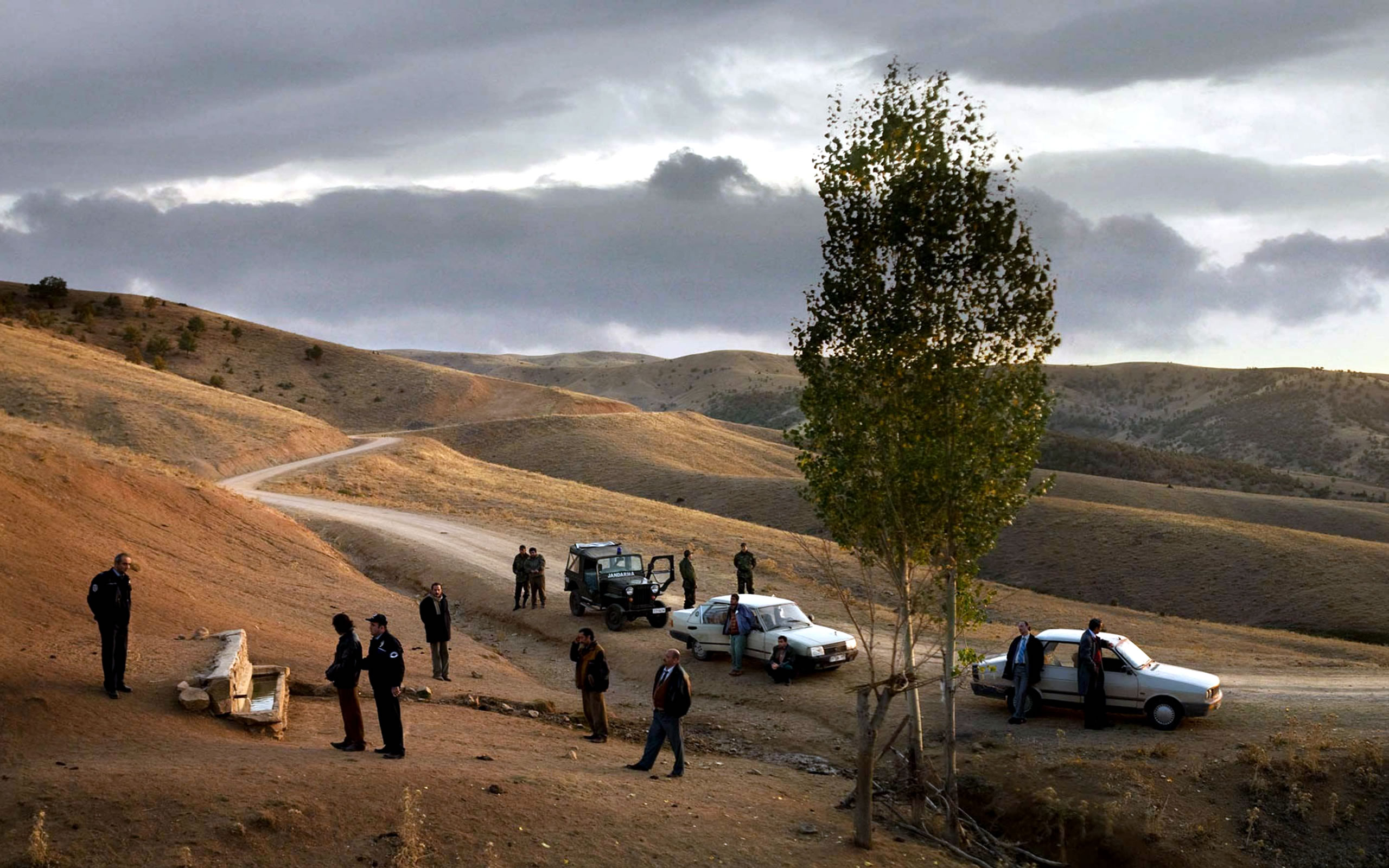
As the movie begins, three carloads of men are driving at night through rural Turkey. They think that they are wrapping up a murder investigation. Two guys have confessed to killing a man and burying his body out in the sticks. The cops are taking the culprits out in the country to locate the body. But the desolate hills and lonely roads all look alike. One of the killers was asleep on the drive and can’t help find the grave. The other one was drunk, and he only remembers a nearby fountain and, unhelpfully, “a round tree”.
They arrive at a potential crime site, but it isn’t the right place. So they drive to another, but strike out again. One group argues about the best unpasteurized yogurt. The men are becoming fatigued and irritable, and, as we listen to snippets of conversation, we learn about each of the characters. We piece together that they all defer to the prosecuting attorney. He has brought along a doctor to observe the corpse; the doctor is living a rut-like existence in a nowhere town, not able to move on after a divorce. The provincial police chief is burned out but puts in long hours to avoid the stress at home (he has a son with a condition, maybe autism or epilepsy). One affable cop goes to the country and shoots his guns to blow off steam. One man is haunted by an event in his past.
This first one hour and twenty minutes of the film is at night – lit only by the headlights of the three cars. Although nothing seems to be advancing the plot, the story is spellbinding as we lean in and try to deconstruct the characters. By now, the rhythm of the story is hypnotic.
The men take a predawn break in a tiny village. The mayor gives them food and tea, acting out of Middle Eastern courtesy and also taking advantage of a chance to pitch a public works project to the official from the capital. The power goes out, and they sit in darkness. Then a door creaks open and the mayor’s teenage daughter brings in a tray with an oil lamp and glasses of tea. She is modestly dressed, beautiful and lit only by the lamp. As she serves tea to each of the exhausted men, we can see that she looks to them like an angel. They wonder how such beauty could appear out of nowhere and about her fate in such a remote village. It’s a stunning scene.
Now the convoy sets off again, and dawn breaks. We see the Anatolian steppe in widescreen desolate vistas like a Sergio Leone spaghetti western. As in the nighttime scenes, when they get out of their vehicles, the camera shoots the men in extreme long shot, so they are tiny against the endless steppe. The cinematography is superb.
Forty minutes in, a character begins telling an anecdote to another, but they are interrupted. After another thirty minutes, the listener presses the teller to finish the story and weighs in with some questions of his own. Near the end of the movie, the two revisit the story. This time the teller of the anecdote connects the dots and finally understands a pivotal moment in his own life. This moment, drawing on profound acting by Taner Birsel, is raw and searing.
Once Upon a Time in Anatolia won the jury prize at Cannes. I felt well rewarded for investing in its 2 hours and 37 minutes. This visually striking movie, with its mesmerizing story, is uncommonly good. Once Upon a Time in Anatolia is now available on DVD.
It’s no surprise that we open August with some thrillers. In The Bourne Legacy, Jeremy Renner (The Hurt Locker, The Town) takes over the lead role from Matt Damon. (Except the protagonist is named Aaron Cross, not Jason Bourne.) Tony Gilroy, who wrote the two earlier Bourne films, directs this one.
The oft-delayed Killer Joe is a dark crime comedy/thriller. A white trash family gives a hitman (Matthew McConaughey) the teen daughter (Juno Temple) as a deposit. It is directed by 70s guru William Friedkin (The French Connection, The Exorcist). I’ve seen it, and it rocks.
In 360 , acclaimed director Fernando Meirelles (The Constant Gardener), intersects the stories of several relationships in a film with some very suspenseful moments. The ensemble cast includes Jude Law, Rachel Weisz, Anthony Hopkins and an even creepier than usual Ben Foster.
You can read descriptions and view trailers of upcoming films at Movies I’m Looking Forward To. Here’s the trailer for 360.
Farewell, My Queen is a lavishly staged and absorbing French drama of Marie Antoinette’s Versailles at the onset of the French Revolution; it features excellent performances and was shot at Versailles itself.
Dark Horse is an engaging dramedy from writer-director Todd Solondz (Welcome to the Dollhouse, Happiness); it has his trademark quirkiness, but without the trademark perversion.
The wistfully sweet and visually singular Moonrise Kingdom is another must see. Adults will enjoy Brave, Pixar’s much anticipated fable of a Scottish princess, and it’s a must see for kids. To Rome with Love is an amusing Woody Allen comedy, but not one of Woody’s masterpieces. If you really like Neil Young, then see Neil Young Journeys. The exceptionally popular The Best Exotic Marigold Hotel is continuing its long run in second-run houses.
The Dark Night Rises is too corny and too long, but Anne Hathaway sparkles. Magic Mike has male stripping, but no magic.