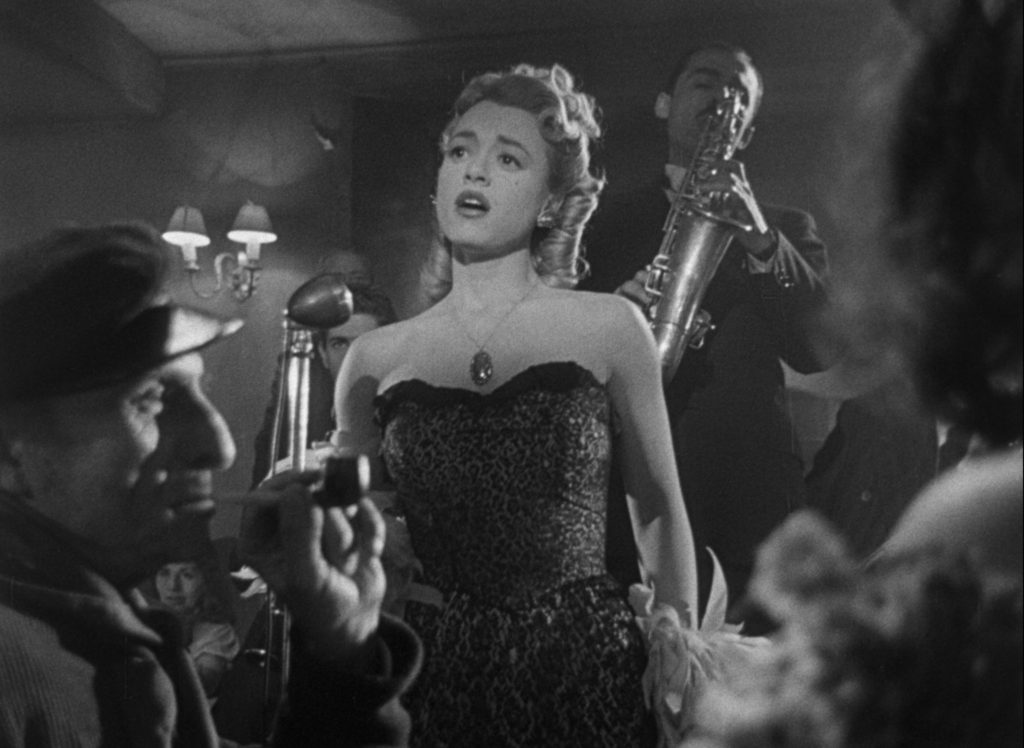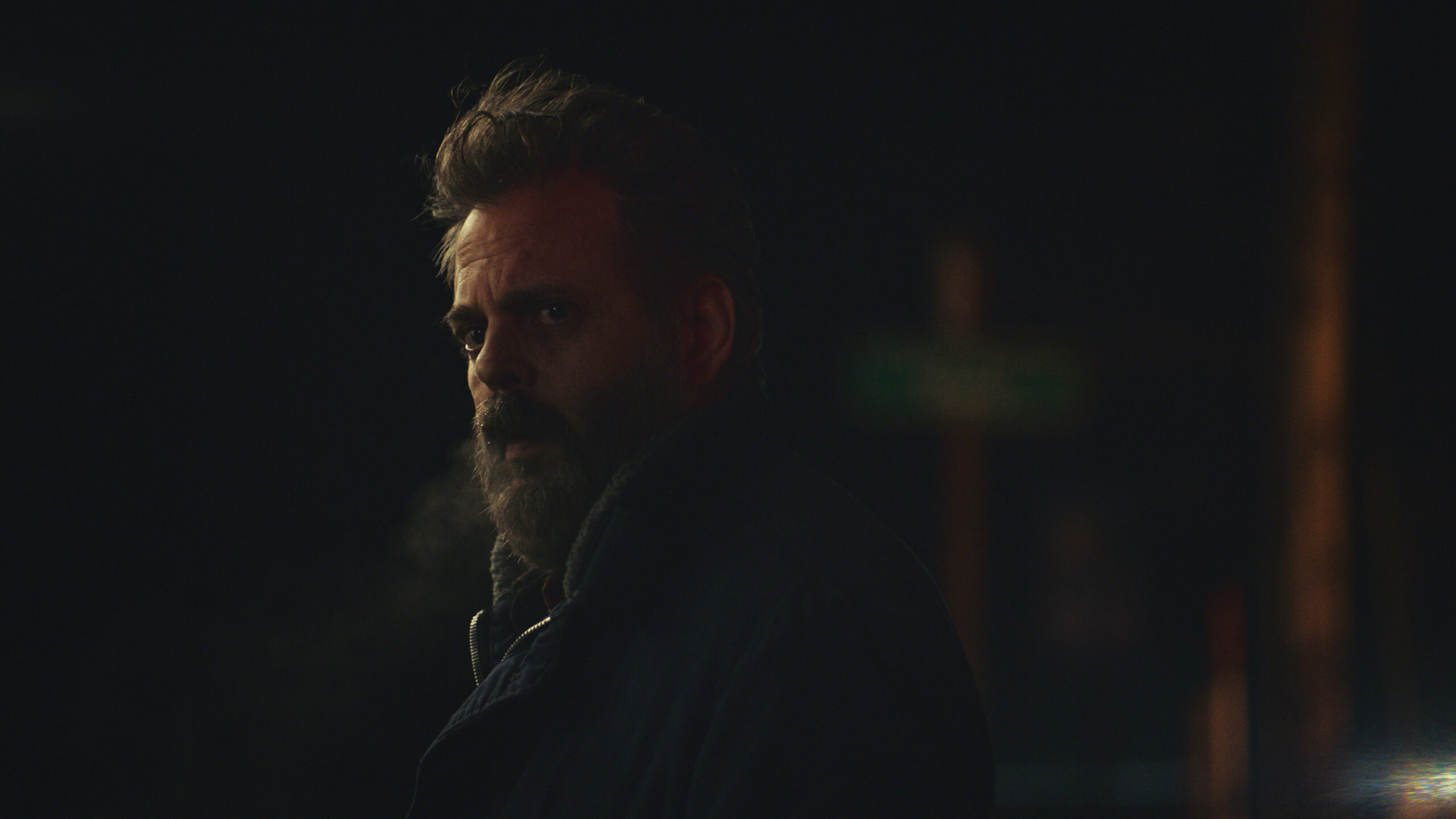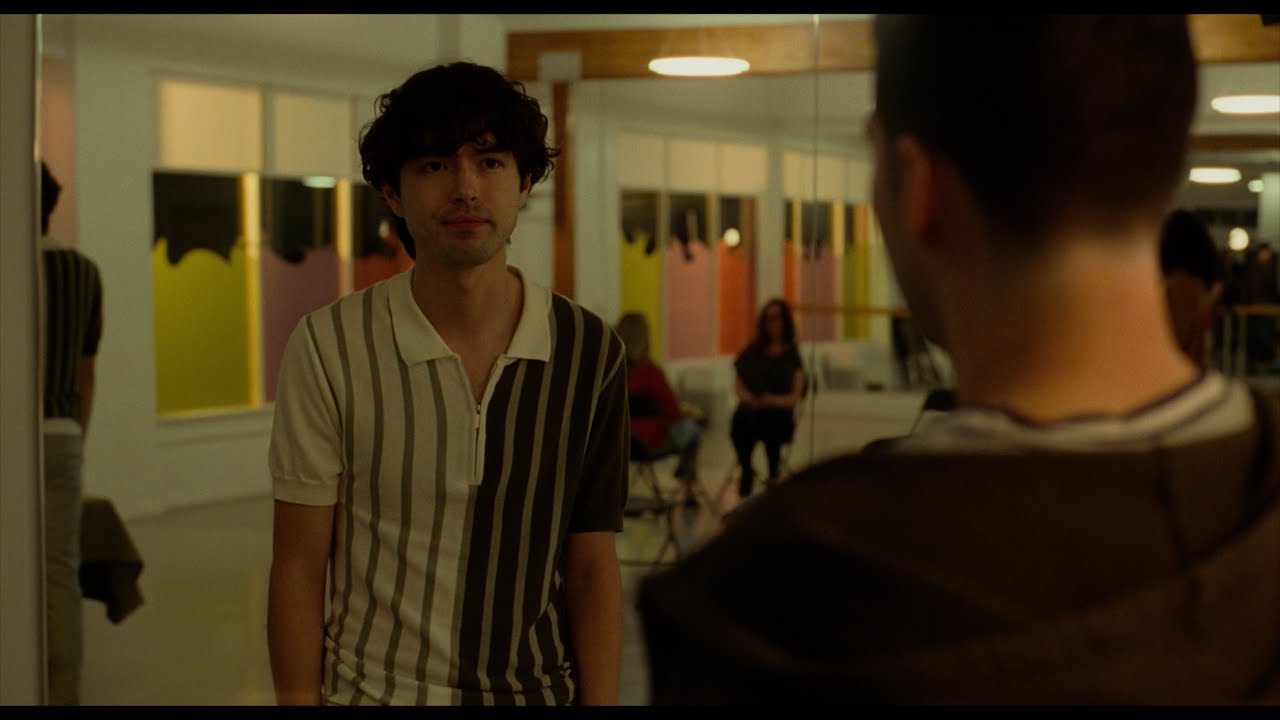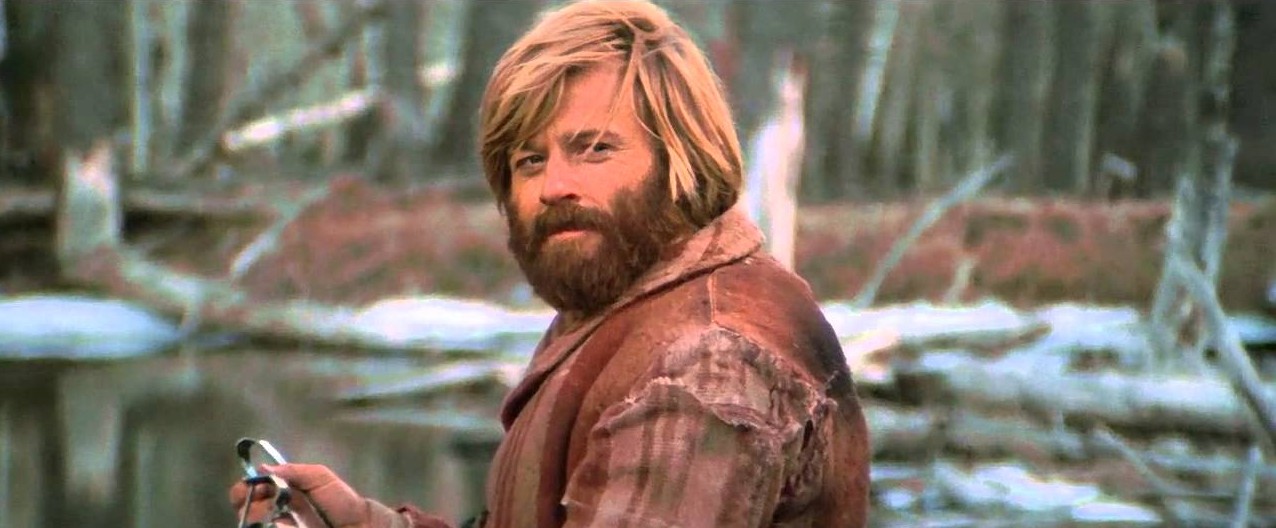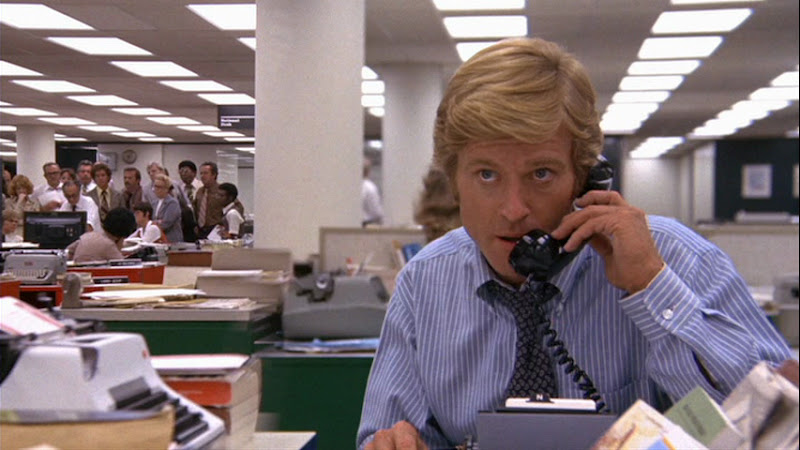
Photo caption: Paul Reubens in PEE-WEE AS HIMSELF. Courtesy of HBP Max.
Tomorrow, HBO Max begins airing the bio-doc Pee-Wee as Himself, from the acclaimed Silicon Valley native, New York-based documentarian Matt Wolf. Wolf has an uncanny gift for finding compelling stories that everyone else has overlooked: Teenage, Recorder: The Marion Stokes Project, Spaceship Earth and Rustin.
The delightfully wacky character Pee-Wee Herman sprang on the scene, seemingly from nowhere, sweetly celebrating his own weirdness. Pee-Wee was the creation of actor Paul Reubens. Reubens, of course, had a life before Pee-Wee, and he had a very private personal life distinct from his invented persona. Sadly, Reubens lost his privacy in a career-killing tabloid scandal.
Wolf had elicited permission from Reubens to make a film about Reubens’ life, and secured hours of on-camera interview footage. But the mercurial Reubens, highly ambivalent to sharing his personal story, kept pulling the plug on the project. When Reubens fell ill, Wolf was in a race against mortality to get Reubens back on board. Fortunately, Wolf succeeded.
Pee-Wee as Himself runs three hours and twenty-five minutes and will be aired in two parts on HBO Max, beginning tomorrow.
The surprisingly uplifting documentary Matter of Mind: My Parkinson’s shines a light on Parkinson’s disease, and what we need to know about it. An estimated one million Americans are living with Parkinson’s, and the key to Matter of Mind’s success is in introducing us to three of them – a Brooklyn optician, a San Francisco fitness trainer and an Alaskan cartoonist – and their families. All three films in the Matter of Mind trilogy, including My ALS and My Alzheimer’s will be available to stream between May 15 to June 3, 2025.
I am looking forward to Matt Wolf’s HBO biodoc Pee Wee Herman as Himself, which begins airing on the weekend after next. The week after, theaters will offer Caught by the Tides, from the Chinese master filmmaker Jia Zhang-ke and his muse and leading lady Tao Zhao and the buzzed-about The Life of Chuck.
Note: I recommended the highly innovative The Accident after screening it for the 2024 Slamdance, and it’s now streaming on Fandor. The Accident went on to win the Narrative Feature Grand Jury Prize at Slamdance.
Lino Ventra, Jean Gabin and Jean Moreau in TOUCHEZ PAS AU GRISBI.
Tomorrow night, May 17, Turner Classic Movies is airing a great and underappreciated film, the French film noirTouchez pas au grisbi on its Noir Alley with intro and outro by the czar of noir, Eddie Muller. A seasoned and very, very cool gangster (Jean Gabin) has hidden a massive haul of stolen gold bullion as his retirement fund. The gold is from a notorious heist that he has never acknowledged masterminding, and the movie’s title translates as “don’t touch the loot”. He has kept his secret with remarkable discipline and cleverness, but his longtime partner may become the weak link.
Probably the greatest male French movie star ever, Jean Gabin had dominated prewar French cinema, and, after the war, he aged into noir and, in the 1960s, into neo-noir. Gabin oozed a seasoned cool (like Humphrey Bogart) and imparted a stately gravitas to his noir and neo-noir characters. Jean Gabin is on my very short list of the most perpetually cool humans to ever walk the planet, along with Dean Martin, Ben Gazzara, Joan Jett and Barack Obama.
Jeanne Moreau appears in an early role. So does that most watchable of French stars, Lino Ventura, whose bloodhound face had been reshaped by his earlier careers as a professional wrestler and boxer. Touchez pas au grisbi is one of my top five film noirs and one of my top fifty movies of all time.
Photo caption. Isa and Veronica Garcia-Hayes in MATTER OF MIND: MY PARKINSON. Courtesy of PBS Independent Lens.
The surprisingly uplifting documentary Matter of Mind: My Parkinson’s shines a light on Parkinson’s disease, and what we need to know about it. An estimated one million Americans are living with Parkinson’s, and the key to Matter of Mind’s success is in introducing us to three of them – a Brooklyn optician, a San Francisco fitness trainer and an Alaskan cartoonist – and their families. On April 8, Matter of Mind: My Parkinson’s becomes available on PBS’ Independent Lens and the PBS App..
Parkinson’s is incurable and degenerative, and attacks motor abilities. Matter of Mind does not sugar coat the symptoms, ranging from from tremors, falling and speech impairment to dementia and depression. Nevertheless, there are now medicines and surgeries ((including deep brain stimulation)) that can impact the symptoms.
We watch the three subjects and their families, all engaging and relatable, explore the medical treatments, with their risks and tradeoffs, and adapt to getting the most out of their lives, even with Parkinson’s. Matter of Mind emphasizes the impacts on family members and the importance of family in supporting each sufferer’s response.
The 54-minute format of Independent Lens fits this subject matter exceptionally well – long enough to explain the science without becoming an eat-your-broccoli slog.
This is the second in a series of three documentaries on neurodegenerative diseases from co-writers and co-directors Anna Moot-Levin and Laura Green; all three films in the Matter of Mind trilogy, including My ALS and My Alzheimer’s will be available to stream between May 15 to June 3, 2025.I’m usually not keen on disease movies, but Matter of Mind: My Parkinson’s is so good, and Parkinson’s so prevalent and inadequately understood, that this is essential viewing.
Fortunately, the insightful documentary John Singer Sargent: Fashion and Swagger spends much of its running time staring at the subjects of the painter’s portraits, who gaze back at us is if they were alive.
The doc traces Sargent’s life, and talking heads try to explain how his brushwork results in such compelling art, but I didn’t find that stuff as compelling as when the camera zooms in and lingers on the face of a subject. Sargent really had a gift for making it seem as if the subject is alert to your walking into the room and then engaging with you. They seem in mid-conversation instead of mid-pose.
We get to spend so much time unhurriedly locking eyes with these folks, mostly rich women from 150 years ago, that it’s like being inside a John Sargent Singer coffee table book.
The title refers to “swagger portraits” (which I didn’t know was a thing) – vanity portraits commissioned by the rich and famous to depict their subjects as grand, important and fashionable. Sargent excelled at these.
John Singer Sargent: Fashion and Swagger is streaming free on kanopy.
Photo caption: Pierre Niney in THE COUNT OF MONTE-CRISTO. Courtesy of Samuel Goldwyn Films.
The French epic The Count of Monte Cristo is a relentlessly entertaining three hour plunge into betrayal, revenge and forgiveness – and some spectacular French real estate. Alexander Dumas published the original adventure novel 185 years ago, and it’s been made into over 100 movies and episodic series. This version, by writer-directors Alexandre de La Patelliere and Matthieu Delaporte, is pretty fun, and gorgeous to look at.
The sweeping story spans 24 years, beginning in 1815 when the protagonist, Edmond Dantes, (Pierre Niney) is nineteen years old and on the verge of a wonderful life. A seafaring prodigy, he has just earned the captaincy of his own ship, which will earn him affluence, and he’s about the marry the stunningly beautiful love of his life. But three other jealous and resentful men manufacture a false charge and railroad into a life sentence of solitary confinement in a remote island dungeon. Before he know what has hit him, Dantes has been suddenly and unjustly stripped of everything he had or could have had.
After languishing in hopeless squalor for six years, he makes contact with another prisoner who has a plan for an escape – but it will take them another eight years to implement. In The Count of Monte-Cristo‘s most thrilling scene, he manages a skin-of-the-teeth escape. He then tracks down an immense medieval fortune and returns to France with a new identity – the Count of Monte-Cristo – and the power and status of great wealth.
He can no take revenge on the three men who betrayed him, but killing them is not enough for Dantes – this is not the kind of revenge movie that we’re used to. Dantes needs to break them completely – he needs to deprive them of their wealth, their status, their families and their own sense of self-worth. To do that, he creates and manipulates an elaborate web of traps.
The base assumptions and societal mores of early 19th century France, of course, are utterly anachronistic to our modern sensibilities , but de La Patelliere and Delaporte make Dantes’ situation relatable. The first two hours of the story is remarkably adherent to the source material. De La Patelliere and Delaporte reworked the some of the revenge devices at the end, but they were true to Dumas’ overall story arc. And, who, these days, has actually read the original? (I’ll admit that I have only read the Classics Illustrated comic book as a boy.)
De La Patelliere and Delaporte, along with cinematographer Nicolas Bolduc make this a visually splendid film, aided by impressive chateaus, period costumes and the attractive cast.
Niney is an able enough actor to carry the film, appearing in 90 percent of the scenes and aging 24 years. The rest of the cast is fine, too, with Patrick Mille sparkling as the ever-grinning, vile speculator Danglers, one of Dantes’ three main targets.
The Count of Monte-Cristo is available to watch for free on kanopy and to rent from Amazon,AppleTV, YouTube and Fandango. There are many similar titles, including a 2025 mini-series,so be sure to get the 2024 French movie with the hyphen in the title.
The riveting final twelve minutes of the 1952 film noirSudden Fear is movie perfection. Now, it’s a pretty good movie for the first hour and thirty-eight minutes, but its ending takes Sudden Fear up a couple of notches.
Here’s the set-up – a highly successful woman (Joan Crawford) marries a guy (Jack Palance) who really just wants her money; he plots with his longtime girlfriend (Gloria Grahame) to do in his wife for the inheritance. The wife discovers their scheme, and plans to get them before they can get her.
The wife has sneaked into an apartment when the husband unexpectedly returns, and she becomes trapped and defenseless in a closet, just hoping against hope that he won’t discover her. The tension mounts as he putters around the apartment, and there’s an ingenious use of a wind-up toy to build even more suspense. After several excruciating minutes, her cover is blown, and she manages to bolt. As she runs for her life through the hilly sidewalks and alleys of San Francisco, he careens after her in a large sedan.
Jack Palance in SUDDEN FEAR.
In this extended sequence, there’s almost no dialogue except for his yelling her name. The storytelling rises to the level of Hitchcock’s, and the storyboard could be taught in film school.
Director David Miller directed over forty features, many with big stars (Billy the Kid with Robert Taylor, Flying Tigers with John Wayne, Twist of Fate with Ginger Rogers, and The Story of Esther Costello with Crawford and Two decades later, he directed another thriller, the cheesy and tasteless conspiracy movie Executive Action with Burt Lancaster. But there’s nothing in his body of work that would indicate that Miller could create those twelve minutes of perfection in Sudden Fear.
Miller had a lot of help from cinematographer Charles Lang, who makes the best of the shadows and the natural Dutch angles of San Francisco’s sloped streets. Lang went on to shoot two of the most iconic film noirs, Ace in the Hole and The Big Heat. Lang had lots of ucess outside the noir genre, too: The Gunfight at the O.K. Corral, Some Like It Hot, The Magnificent Seven, One-Eyed Jacks, The Flim-Flam Man, Wait Until Dark. Lang was nominated for an Oscar for his work in Sudden Fear, as were Crawford, Palance and costume designer Sheila O’Brien.
Jack Palance in SUDDEN FEAR.
I’m not a big Joan Crawford fan, but even I recognize the power of her best two scenes here. In the first, she silently listens to a conversation between the two plotters, and her face registers the changing emotions as she connects the dots. In he climactic scene, she recognizes what she can and cannot do, and changes her course of of action, but then, initially frozen with terror, must rally herself to escape from her husband. The sequence concludes with a final close-up that is vintage Joan Crawford.
Gloria Grahame in SUDDEN FEAR.
Palance, oozing physicality and intensity, is perfectly cast. Grahame, whose performance is very understated next to Crawford’s and Palance’s, is excellent.
Sudden Fear can be streamed from Amazon, AppleTV, YouTube, Fandango and is free on kanopy; it also occasionally plays on Turner Classic Movies.
Photo caption: Asahi Hirano and Sabrina Jie-A-Fa in EGGHEAD & TWINKIE. Credit: Olivia Wilson, Courtesy of CanBeDone Films and Orange Cat Films.
This week on The Movie Gourmet – I’m trying to get you thru the movie doldrums with the delightful coming of age story Egghead & Twinkie and the genre-busting reenactment doc Starring Jerry as Himself. May is Asian-American and Pacific Islander Heritage Month, and both movies feature Asian American filmmakers and lead characters.
I am looking forward to Matt Wolf’s HBO biodoc Pee Wee Herman as Himself, which begins airing on the weekend after next. The week after, theaters will offer the buzzed-about The Life of Chuck and Caught by the Tides, from the Chinese master filmmaker Jia Zhang-ke and his muse Tao Zhao.
Note: I recommended the highly innovative The Accident after screening it for the 2024 Slamdance, and it’s now streaming on Fandor. The Accident went on to win the Narrative Feature Grand Jury Prize at Slamdance.
REMEMBRANCES
Mariko Kaga and Ryô Ikebe in PALE FLOWER
Director Masahiro Shinoda was a groundbreaking auteur, best known for his bracing neo-noir Pale Flower.
Character actor Craig Richard Nelson’s first film role was as a snobby, fastidious preppy in The Paper Chase (1973), and he nailed a similar character in Robert Altman’s A Wedding (1978). In this period, he had small roles in Altman’s 3 Women (1977) and Tony Bill’s My Bodyguard (1980). Even though he worked in TV and film through 1998, his performances were increasingly less memorable.
On May 13, Turner Classic Movies is honoring Gene Hackman by airing Night Moves, along with his better known movies, The French Connection, Hoosiers and Mississippi Burning. In the1975 character-driven neo-noir Night Moves, Hackman plays an LA private eye who follows a trail of evidence to steamy Florida. Hackman shines in the role – the detective is deeply in love with his estranged wife (Susan Clark), but unsuited for marriage. Night Moves also features Melanie Griffith’s breakthrough role as the highly sexualized teen daughter in the Florida family; Griffith was right around eighteen-years-old when this was filmed, and had already been living with Don Johnson for three years. Night Moves features an impressive ensemble of supporting actors: Harris Yulin, James Woods, Edward Binns, Max Gail (Wojo on Barney Miller) and the sui generis Kenneth Mars.
In the documentary Starring Jerry as Himself, a Florida senior sees himself recruited as an operative by Chinese police. The story is told in a re-enactment with the subject playing himself. We later learn why the filmmakers chose re-enactment, and what could have been a conventional true crime exposé or a weeper, is illuminated by the subject family’s humanity.
Starring Jerry as Himself is the first feature for director Law Chen, who also edited, co-produced and shot some of the footage. Law Chen and his co-producer and subject Jonathan Hsu were responsible for the decision on how to structure the film. That decision turned what could have been a heartbreaking downer into an engaging and satisfying family story, albeit a cautionary one.
I highlighted Starring Jerry as Himself as a MUST SEE in my Slamdance: discovering new filmmakers, and it won Slamdance’s Documentary Feature Grand Jury Prize. It’s now available to stream at home from Amazon, AppleTV and YouTube.
Photo caption: Sabrina Jie-A-Fa and Louis Tomeo in EGGHEAD & TWINKIE. Credit: Olivia Wilson, Courtesy of CanBeDone Films and Orange Cat Films.
In the funny, sweet and genuine coming of age film Egghead & Twinkie, Twinkie (Sabrina Jie-A-Fa) is finishing high school and trying to navigate her sexual awakening as aa lesbian – and it’s not easy. Her lifelong bestie is the neighbor boy Egghead (Louis Tomei), and he’s now sweet on her; (Egghead and Twinkie are their nicknames for each other), Twinkie impulsively commandeers her dad’s car and heads out on a cross country road trip to join her Internet object of desire (Tik Tok star Ayden Lee). Egghead is so loyal, smitten and cluelessly hopeful that he comes along.
Along the way, they have their share of zany road trip experiences. Twinkie meets the girl (Asahi Hirano) who REALLY is perfect for her, but Twinkie is first destined to learn a cruel lesson about being infatuated with a player. It’s a hoot, and there’s not one false note. For all their kooky antics, the kids’ feelings are remarkably authentic.
The entire cast is very good. Sabrina Jie-A-Fa is a charming force of nature as Twinkie. She’s in every scene, and she’s a real talent.
Asahi Hirano and Sabrina Jie-A-Fa in EGGHEAD & TWINKIE. Credit: Olivia Wilson, Courtesy of CanBeDone Films and Orange Cat Films.
Egghead & Twinkie is the first feature for writer-director Sarah Kambe Holland, and it’s an impressive calling card. Egghead & Twinkie is perfectly paced, and Kambe Holland sprinkles in just enough animation to help leaven the angst with the whimsical. Kambe Holland says,
“The kernel of an idea that turned into EGGHEAD & TWINKIE was more of a question: Can I find humor in the coming out process? I was nineteen years old at the time, and I had just come out to my own parents a few months before. The stress of coming out was fresh in my mind, but so was the hilarious awkwardness of it all. I challenged myself to write a short film script about a teenage girl who comes out to her parents, but I was adamant that it wouldn’t be a drama. It would be a comedy, and the message would be one of hope and friendship.“
Of course, given Kambe Holland’s inspiration for the story, Twinkie just doesn’t HAPPEN to be gay or HAPPEN to be Asian-American, but the themes are universal, and Egghead & Twinkie is one of the best coming-of-age films of the decade.
I screened Egghead & Twinkie for its premiere at Cinequest.. After a strong festival run, Egghead & Twinkie is available on VOD, including Amazon, AppleTV and YouTube, beginning today.
Photo caption: Neil Young in COASTAL. Courtesy of SLO Film Fest.
This week on The Movie Gourmet – a new review of the British farce The Trouble with Jessica and extended coverage of the San Luis Obispo Film Festival – a film fest that punches above its weight:
Note that the delightful doc We Want the Funk is available for free on the PBS YouTube channel.
REMEMBRANCE
Val Kilmer in TOMBSTONE.
I’ve been on vacation, so this is my first chance to write about the late Val Kilmer. Kilmer applied his magnetism in unforgettable performances: Iceman in Top Gun, Jim Morrison in The Doors and Batman in Batman Forever. My favorite Val Kilmer turn was as an insouciant Doc Holliday in Tombstone.
Robert De Niro and Vincent Gardenia in BANG THE DRUM SLOWLY.
On April 29, Turner Classic Movies plays the Bang the Drum Slowly from 1973. A worldly MLB pitcher (Michael Moriarity) helps his slow-witted catcher (Robert De Niro), afflicted with aterminal illness, finish the season. It’s a weeper, but a very genuine one. This was the performance that got De Niro noticed. His next three movie roles were Johnny Boy in Mean Streets, Vito Corleone in The Godfather Part II and Travis Bickle in Taxi Driver.