WHAT THEY HAD Blythe Danner and Hilary Swank star as Ruth and Bridget Keller in WHAT THEY HAD, a Bleecker Street release. Photo courtesy of Bleecker Street
In the family drama What They Had, two siblings (Hilary Swank and Michael Shannon) face their mom (Blythe Danner) sinking into Alzheimer’s, and their father (Robert Forster) refusing to take action. To heighten the pressure, the out-of-town daughter wants to give the old folks more slack than does the local son. He’s been dealing with this situation up close, and he’s fed up. The dad is used to always being in charge, and he doesn’t cope well with needing help.
Despite the subject, What They Had is not a depressing movie, mostly because of the sunniness of Danner’s character. This is a character-driven story that benefits from this stellar cast. This is the first feature for writer/director Elizabeth Chomko, and she delivers an authentic and well-crafted story.
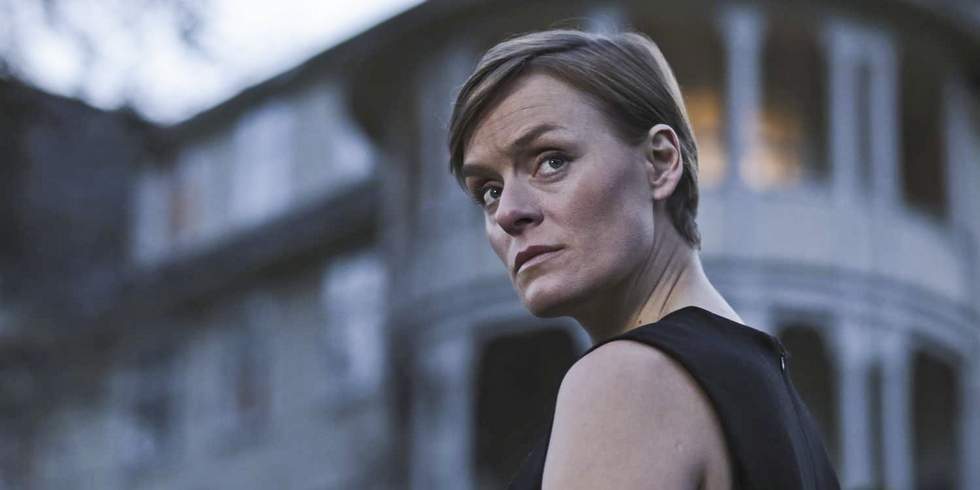
In the Norwegian suspense thriller Revenge, the slightly creepy Rebekka (Siren Jørgensen) appears at a hotel on a remote fjord under the false pretense that she is a travel writer. The hotel is otherwise empty because it is off-season (think The Shining). She ingratiates herself with the hotel’s owner Morten, the most economically and socially significant person in town, and his wife (Maria Bock). It turns out that twenty years before, Morten date-raped Rebekka’s little sister, leading to her suicide. Now Rebekka wants to exact vengeance.
Revenge becomes a tick-tock suspenser as Rebekka deliberately lays her trap. We’re able to see some, but not all, of the web that she spins, which will put in jeopardy Morten’s reputation, marriage, business and his very health and survival. Can she pull it off? And how lethal will her revenge be?
It’s the first feature for Kjersti Steinsbø, who adapted the screenplay and directed. She has created a real page-turner here. In one very effective touch, it turns out that one of the characters knows FAR more than we initially suspect.
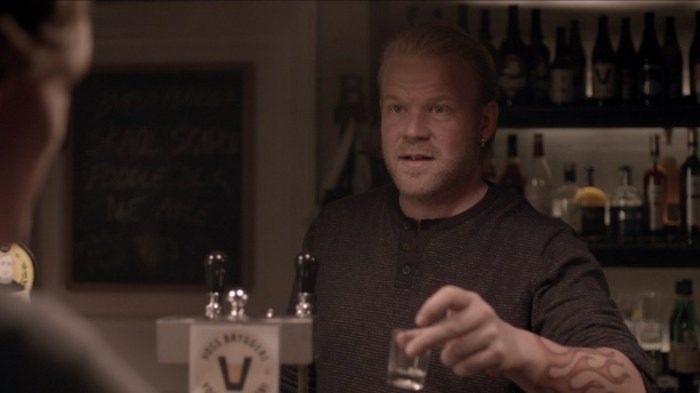
Anders Baasmo Christian in REVENGE
Revenge is uniformly well-acted, but Anders Baasmo Christian, as Bimbo the bartender, is exceptionally good. Just keep your focus on Bimbo. There’s more there than initially meets the eye. And Bimbo’s relationships with both Rebekka and Morten are very conflicted and complicated.
The ending is satisfying, and Morten’s ultimate fate is unexpected. Revenge was one of the world cinema high points of the 2017 Cinequest. Revenge can be streamed from Amazon, iTunes, Vudu, YouTube and Google Play.
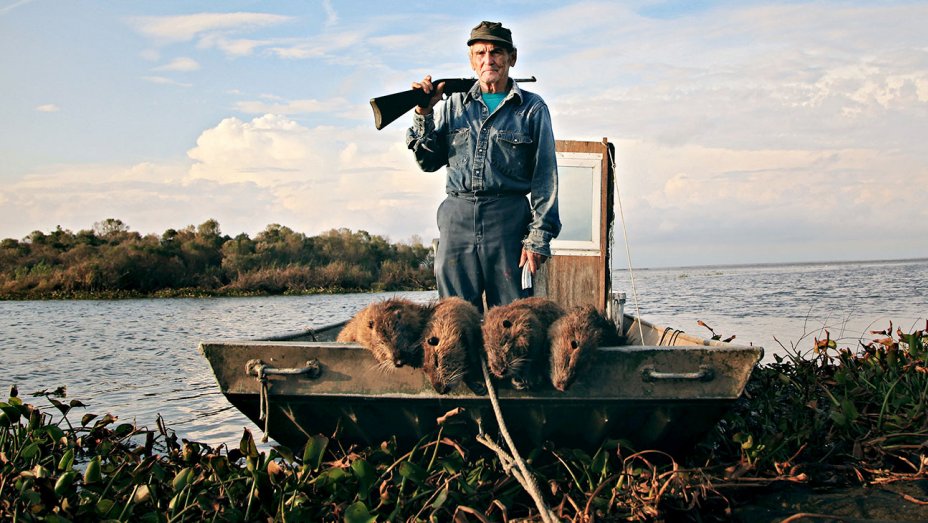
The offbeat documentary Rodents of Unusual Size, with its bizarre subject, is charmingly addictive. That subject is the nutria, a 20- to 30-pound Argentine rodent that threatens Louisiana’s wetlands and coastline. Yes, 30-pound swamp rats with orange teeth.
Although Rodents of Unusual Size is decidedly non-preachy, the nutria is serious business. Imported for the commercial potential of its fur by a Tabasco sauce heir, nutria escaped into the Louisiana wilds and propagated wildly. When the US fur market crashed in the 1990s, the locals stopped trapping them, and Louisiana’s nutria population exploded to 20 million.
The problem is that nutria eat the roots of the vegetation in the Louisiana wetlands, causing erosion that has converted at least 42 square miles of land into open water. Worse, those wetlands are the storm buffer for the rest of the state.
Louisiana offers hunters a $5 bounty for the tail of each dead nutria, which has reduced the nutria population to a more manageable 5 million. We even meet a guy whose official job title is Nutria Tail Assessor.
One of the reasons I love Louisiana is that folks just don’t take themselves too seriously there. Even when they are focused on the grave environmental impacts of the nutria invasion, they still appreciate the absurdity of a 30-pound, orange-toothed swamp rat. (And, fittingly, Rodents of Unusual Size is narrated by Louisiana native Wendell Pierce.)
Along the way, we are also introduced to nutria fur and the fur company Righteous Fur, nutria meat, nutria sports mascots and even nutria as pets.
But most compellingly, we meet Thomas Gonzalez, an 80-year-old bayou native, nutria hunter and bon vivant. Gonzalez is a force of nature, complete with strong-willed opinions and some impressive dance moves. Gonzalez serves as the voice of Louisiana and finishes the movie with a profound perspective on the nutria.
I saw Rodents of Unusual Size at Silicon Valley’s Cinema Club with filmmaker Chris Metzler available for Q&A. Metzler and his colleagues Jeff Springer and Quinn Costello filmed Rodents of Unusual Size over four years during Louisiana’s nutria season (November to April). The affable Metzler is a font of nutria knowledge, full of tidbits like albino nutria being prized by taxidermists. Because nutria are very difficult to spot and film in the wild, the filmmakers used Nooty the stunt nutria throughout the film. Nooty joined the filmmakers in creeping along the red carpet at various film festivals and has her own Facebook page.
Thomas Gonzalez alone is worth meeting on film, and, as told by Rodents of Unusual Size, the story of the nutria is quirkily fascinating. This weekend, Rodents of Unusual Size will be opening a new run at theaters in Marin and the East Bay.
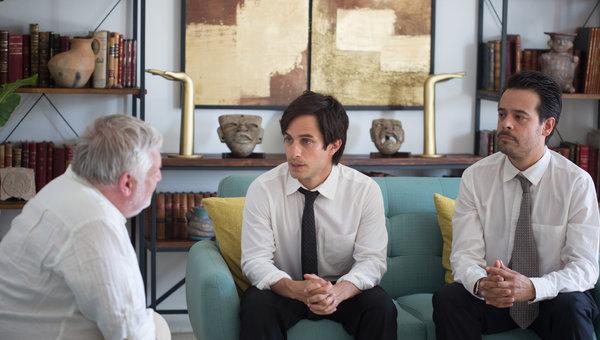
The true life Mexican heist film Museo is really a portrait of alienation – and immature alienation at that. It’s about a young middle class guy in a third world country, and he has first wold problems; his prospects are not unlimited, but he’s way better off than his less educated compatriots. So he and his weak-willed buddy pull off an audacious art theft.
Unusually, and perhaps uniquely, among heist films, hardly any time is invested in assembling the team (here it’s the guy and his buddy) or in the heist itself. The guys steal the most famous ancient Mexican artifacts from the National Museum, essentially the heart of the nation’s heritage. The theft becomes a sensation that dominates the national zeitgeist, triggers an all-out manhunt and a political scandal. How could this have happened?
Of course, there can’t possibly be any buyers for such high visibility objects (just like in this year’s other real life slacker heist film American Animals). Most of the film is figuring out what to do next – and good options are non-existent.
The protagonist is played by the fine actor Gael Garcia Bernal. Unfortunately, this character really isn’t that interesting; I think that is because his alienation is based on petulance and not on rage (see the great Jack Nicholson ragingly alienated roles of the 70s).
Museo does a good job of evoking the Mexico City and Acapulco in the mid 1980s. But without the central thrill of a heist, we are left with an unsympathetic protagonist and his predicament, and that’s really not enough for a two-hour movie. I saw Museo at the Mill Valley Film Festival.
The year’s best movies are about to flood the theaters.
OUT NOW
Lady Gaga illuminates Bradley Cooper’s triumphant A Star Is Born. Don’t bring a hankie – bring a whole friggin’ box of Kleenex.
Spike Lee’s true story BlacKkKlansmanis very funny and, finally, emotionally powerful.
The first-rate thriller Searching is more than just a gimmick (it entirely takes place on computer screens) and is filled with authentic Silicon Valley touches.
Jane Fonda herself spills her most intimate secrets in the irresistible HBO biodoc Jane Fonda in Five Acts.
ON VIDEO
My Stream of the Week is the Norwegian suspense thriller Revenge, one of the world cinema high points of the 2017 Cinequest. Revenge can be streamed from Amazon, iTunes, Vudu, YouTube and Google Play.
ON TV
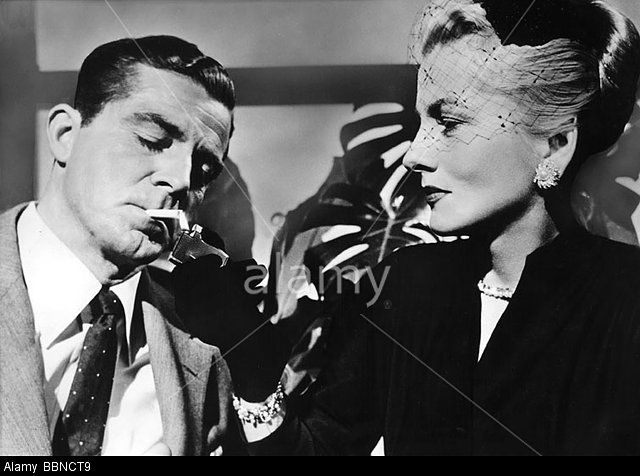
On October 22, Turner Classic Movies brings us Beyond a Reasonable Doubt, another film noir from the great Fritz Lang: seeking to discredit capital punishment, a reporter (Dana Andrews) gets himself charged with and CONVICTED of a murder – but then the evidence of his innocence suddenly disappears! Crackerjack (and deeply noir) surprise ending.
Dana Andrews and Joan Fontaine in BEYOND A REASONABLE DOUBT
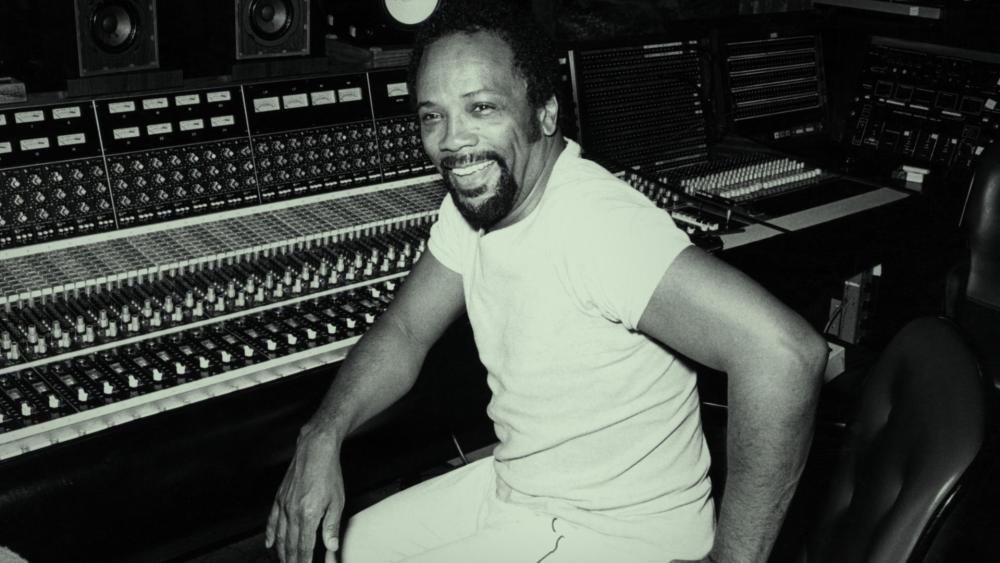
Let’s start with the subject of the biodoc Quincy, the musician, music producer and musical impresario Quincy Jones. Jones is a giant of 20th Century music, one of the most important and prolific musicians ever. This is an individual who has composed 51 screen scores and over 1000 original compositions. He was the musical partner of Frank Sinatra and Michael Jackson during their most creative periods. Jones produced the best selling album of all time (Thriller) and the best selling single (We Are the World). Along the way, he picked up 79 Grammy noms and 27 Grammys, and is one of only 18 EGOT winners (Emmy, Grammy, Oscar, Tony).
Quincy Jones amassed that legacy though multiple decades and musical genres and broke color barriers throughout his life. That makes wonderful fodder for this biodoc, co-written and co-directed by his daughter Rashida Jones.
Besides the archival footage and talking heads, Rashida Jones is able to share Quincy Jones himself in moments of unusual intimacy, where he contemplates his relationships with his ex-wives, his kids and his vodka, not to mention his schizophrenic mother and workaholic father.
The popular actress Rashida Jones is an accomplished filmmaker. This is the fifth film she has directed, and she co-wrote the unusually intelligent romcom Celeste and Jess Forever.
Spike Lee’s true story BlacKkKlansmanis very funny and, finally, emotionally powerful.
The first-rate thriller Searching is more than just a gimmick (it entirely takes place on computer screens) and is filled with authentic Silicon Valley touches.
Jane Fonda herself spills her most intimate secrets in the irresistible HBO biodoc Jane Fonda in Five Acts.
Crazy Rich Asians is wildly popular for a reason – it’s damn entertaining and probably the year’s most appealing date movie. You’ll laugh, you’ll cry and you’ll wait for the chance to see Awkwafina in her next movie.
ON VIDEO
My Stream of the Week is the alternatively jaw-dropping and visually amazing documentary Brimstone & Glory, about fireworks manufacturing and the National Pyrotechnical Festival in Tultepec, Mexico. Brimstone & Glory can be streamed from Amazon (included with Prime), iTunes and Vudu.
ON TV
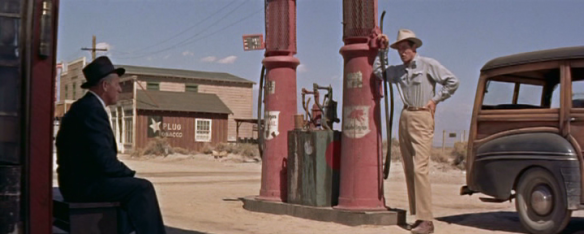
On October 14 Turner Classic Movies presents the John Sturges masterpiece Bad Day at Black Rock with Spencer Tracy investigating a disappearance in an especially hostile, racist and sinister town. Besides having Tracy at his best and being a great looking movie, Bad Day at Black Rock is notable for its menacing crew of Bad Guys – Robert Ryan, Ernest Borgnine and Lee Marvin.
Spencer Tracy and Robert Ryan in BAD DAY AT BLACK ROCK
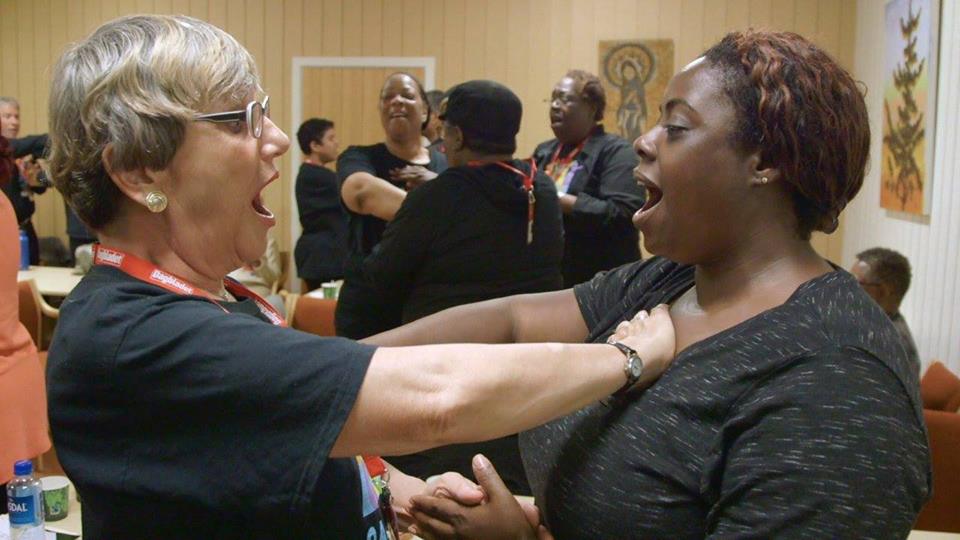
The documentary One Voice: The Story of the Oakland Interfaith Gospel Choir is my under-the-radar pick at the Mill Valley Film Festival. Suffice it to say, when I screened this film, the very first thing I did (while still on the couch with the credits rolling on my screener) was to buy online tickets for a live performance of the Oakland Interfaith Gospel Choir.
Gospel music is generally thought of as a Protestant, and especially a Black Protestant, form of worship and art, but the Oakland Interfaith Gospel Choir is unusually inclusive. Members come from all ethnicities and sexual preferences and from up to 14 faiths. Even predominantly Black church audiences that are initially skeptical of an interracial gospel group appreciate their chops.
The Rainbow makeup of the choir, with folks from all backgrounds so passionately working together in the cause of gospel music, is the core of the movie. The warmth and authenticity of the diverse OIGC members are in sharp contrast to the current atmosphere of suspicion and hate in our national culture. As such, this is a powerfully optimistic and uplifting film.
That’s not to say that it’s saccharine Happy Talk. Artistic Director Terrance Kelly and the OIGC don’t sugarcoat the historic origin of the old spirituals.
The music in the film ranges from infectious to profoundly moving. The performance highlight of the film is soprano Nicolia Bagby Gooding’s solo on Lawd, How Come We Heah?.
Documentarians Spencer Wilkinson (director) and Mark R. DeSaulnier (producer) have created a crisp (64 minutes) and intoxicating film. One Voice will have its world premiere at the Mill Valley Film Festival on Oct 10 and 13.
Life in Tultepec, a city of about 90,000, just north of Mexico City is dominated by the main local industry – fireworks manufacturing. That’s the subject of the documentary Brimstone & Glory, which is alternatively jaw-dropping and visually amazing.
The overwhelming majority of Mexico’s fireworks are handmade in Tultepec. Brimstone & Glory traces the townspeople’s march toward their annual National Pyrotechnic Festival. At the festival, giant toros are set afire as they roll blazing down the commercial streets. People actually dance within a cacophony of fireworks.
This may not sound entirely safe to you. Indeed, Brimstone & Glory takes us into the pre-festival training sessions, where paramedics review their triage protocols. During the festival, we’re in the medical tent as the actual injuries flood in.
One of the festival highlights is a competition with 75-foot high towers embedded with fireworks. As a lightning storm approaches, one guy climbs the metal tower to repair some wind damage. It’s clear that Mexican safety regulations, if they exist, are quite relaxed. Brimstone & Glory is probably a fantasy movie for American personal injury lawyers.
Remember that the manufacturing is by hand. Without comment, Brimstone & Glory observes an old fireworks craftsman working with three digits left on one hand and none on other.
Brimstone & Glory follows one local kid, the boy Esau (“Santi”). Everyone expects him to follow in the family fireworks tradition, but his own feelings about fireworks are very ambivalent.
Cinematographer Tobias von dem Borne and director Viktor Jakovleski deliver a feast for the eyes, as you can tell from the photos above. Slo mo is used very effectively, and the night photography is very special.
Brimstone & Glory can be streamed from Amazon (included with Prime), iTunes and Vudu.
Don’t bring a hankie when you see A Star Is Born – bring a whole friggin’ box of Kleenex.
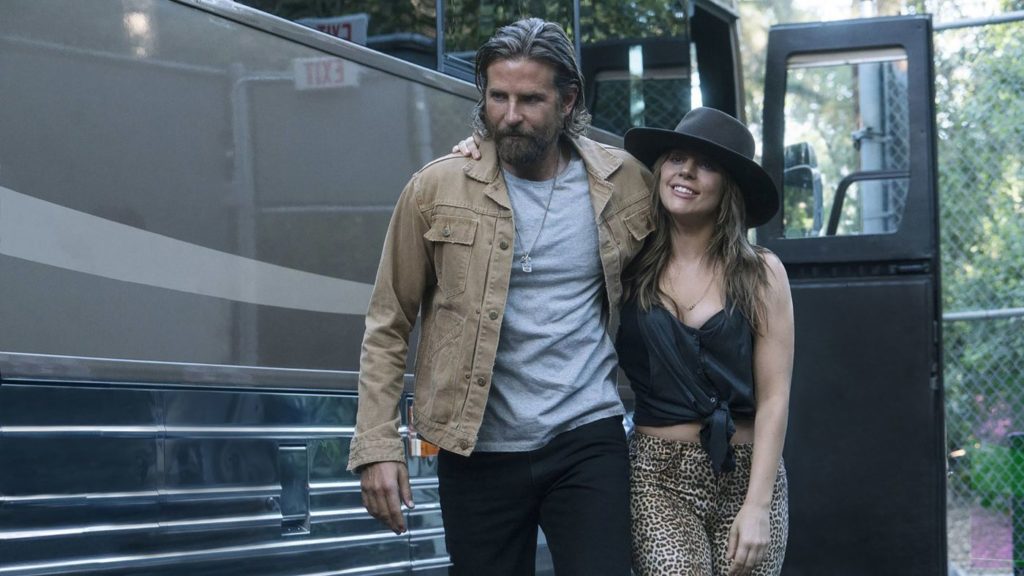
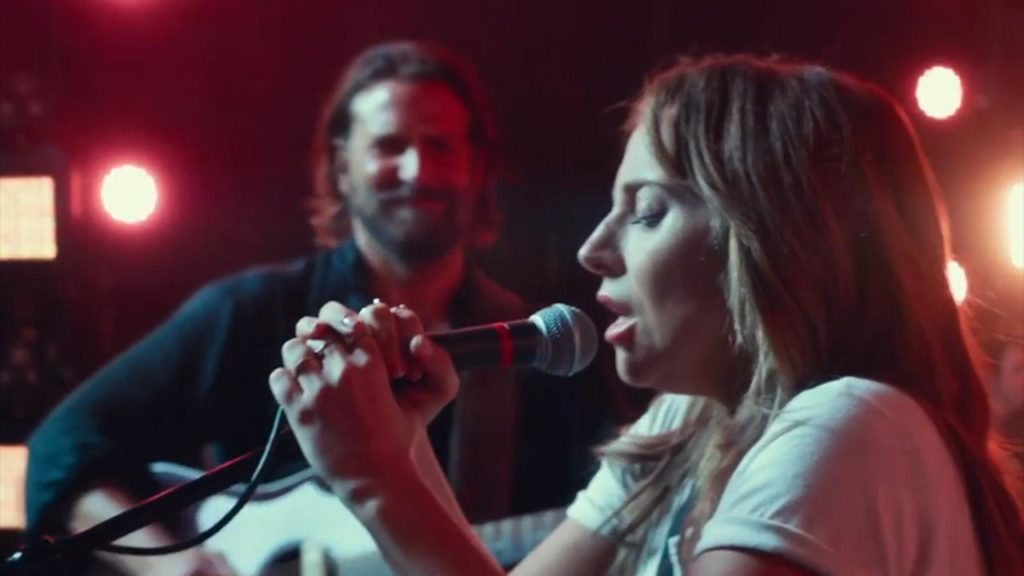
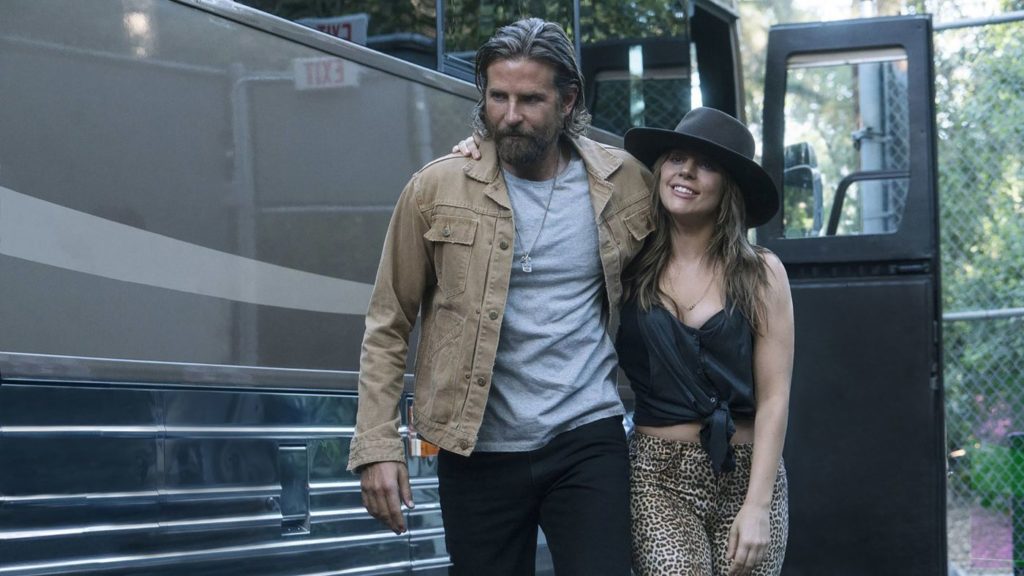
Actor Bradley Cooper directs this fourth movie version of A Star Is Born, and the story is essentially the same. A celebrity artist struggles with addiction, enough to have his career teetering on the downward arc. He befriends and mentors a young artist. They become a couple. Then her career skyrockets. Will their relationship last? Will he drag her down? Can she save him? In this version, Cooper himself plays the alcoholic rock star Jackson and Lady Gaga plays the unknown singer-songwriter Ally.
It’s a remarkably effective drama, with plenty of laughs and affecting romance. I’m not quite sure whether A Star Is Born is technically a melodrama or a tragedy, but I know that it’s a wonderful movie.
Bradley Cooper and Lady Gaga in A STAR IS BORN
The key to this triumph is that it’s the creation of director Bradley Cooper, who could be well on his way to a Clint Eastwood career as both a movie star and an important filmmaker. Cooper masterfully modulates the pathos, injecting just enough humor to leaven the tragedy. But here’s the marker of artistic genius: there 7.6 billion people alive on this planet and EXACTLY ONE of them thought of remaking A Star Is Born with Lady Gaga.
Lady Gaga turns out to be a fine movie actress and perfect for the role of Ally. In this film, she’s funny, spunky, sassy, passionate, vulnerable, grieving and an overall force of nature; and when she sings – look out.
As an actor, Cooper is always appealing. Here, he’s especially good – acting only with his eyes – when he receives a harsh appraisal of his effect on Ally’s career. The wonderful Sam Elliott plays Jackson’s brother, and Cooper intentionally lowered his voice to the Sam Elliott (and Bruce Bochy) level. Rafi Gavron is especially effective as an icy, slick and ruthless Svengali. Andrew Dice Clay, Anthony Ramos and Dave Chappelle are all very good in supporting roles.
A Star Is Born is a Must See and one of 2018’s best movies.