Stream of the Week: CUSTODY: the searing essence of domestic violence

Thomas Gioria in CUSTODY. Courtesy Kino Lorber.

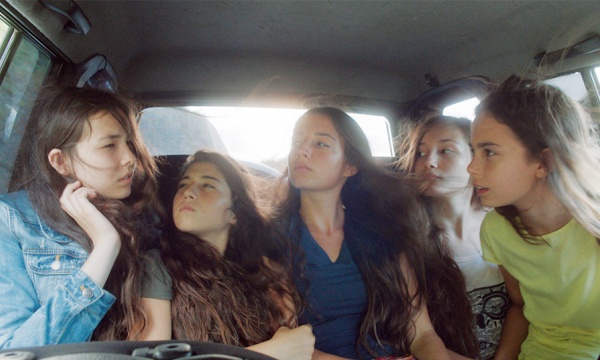
In his searing French thriller Custody, writer-director Xavier Legrand paints the most elemental and realistic depiction of domestic violence that I’ve seen.  Custody begins with a child custody hearing over an almost 18-year-old daughter and an 11-year-old son.  Neither kids wants anything to do with the dad, and there’s more than a hint of spousal abuse in their past, but the court awards the father weekend visits with his son.

The father (Denis Ménochet) is acting very reasonably at the custody hearing, of course, but we soon see signs of the need for domination and control that is the core of domestic violence.  He can’t bear not knowing where his ex-wife (Léa Drucker) lives.  He needs to be the “winner” in every transaction.  With naked entitlement, he says “I get an extra hour because I picked you up an hour late”.   Too vile even for his own parents, the father is an insistent stalker.

Especially through the eyes of the son (Thomas Gioria in a miraculous performance),  Legrand helps the audience understand the traumatization of family violence.  Every family member lives with dread of the father surprising them like a bogeyman.  The boy takes on responsibility to protect his mom and sister by keeping the dad away from them – it’s an emotionally wracking burden that no child should bear.  The mom is not a hero or a feminist icon – she just wants to survive and not be a victim.

Intimate partner violence is about power and control.  In Custody, the father doesn’t react physically until the movie’s midpoint, and he doesn’t touch another character until almost the end.  But, without hitting anyone, he is successful in terrorizing the family.  By buzzing the mom’s doorbell in the middle of night, he proves that he really is a terrorist.  And his lethality emerges in the thriller ending.  LeGrand says that the thriller aspect of Custody comes organically from fear.

Léa Drucker and Denis Ménochet, in CUSTODY. Courtesy Kino Lorber.

Every performance is excellent, and Menochet’s has received plaudits.  But the child actor Thomas Gloria goes places you don’t expect a child to go; his performance is stunning.  Menochet discusses his performance and Gioria’s in this Inside Picturehouse interview on YouTube.

As the sister, Mathilde Auneveux delivers a mesmerizing performance of Proud Mary at her birthday party.  She is clearly distracted by at least one event in her life, but which is it?

In Custody, Legrand has also filmed the most perfectly shot pregnancy test scene ever.

Custody is the remarkable first feature from Xavier Lagrand.  The story grew out of his Oscar-winning short film with the same actors, Just Before Losing EverythingCustody won Legrand the Silver Lion (Best Director) at the Venice film festival.  I saw it at Silicon Valley’s Cinema Club months before its release.

Custody can be streamed from Amazon, iTunes, Vudu, YouTube and Google Play.

TCM’s Billy Jack extravaganza

BILLY JACK (1971)

On November 14, Turner Classic Movies will present the Billy Jack trilogy. The iconic character of Billy Jack was created by the groundbreaking independent filmmaker Tom Laughlin. Laughlin originated the character in his biker exploitation movie Born Losers (1967), and then fully unleashed him in Billy Jack (1971), The Trial of Billy Jack (1974) and Billy Jack Goes to Washington (1977).

Billy Jack is a Vietnam vet who embraces his own combo of New Age mysticism and Native American spiritualism.  Billy Jack uses martial arts to kick the crap out of the bad guys who bully women, Native Americans and teenagers. Laughlin played a character along similar themes in his The Master Gunfighter (1975), only bearded and wielding a samurai sword.

The prickly Laughlin made and distributed his films independently, and Billy Jack and Trial were huge box office successes, among the most financially successful indies ever. For The Trial of Billy Jack, Laughlin engineered the then-unheard-of simultaneous release on 1500 screens. This excellent Bill Gibron article in Pop Matters describes this precursor of the Hollywood blockbuster strategy.  Billy Jack was also the first widely seen martial arts movie in America.

Despite his innovations in the movie business, Laughlin never succeeded in making a good movie. Filled with clumsy acting and hackneyed dialogue, the films are still pompous, self-important and humorless.

Laughlin’s signature as a screenwriter is heavy-handedness. It’s never enough for the bad guys in the Billy Jack movies to be bad. They also have to be racist AND mean to animals AND sexually perverted. Billy Jack opens with the bad guys illegally raiding an Indian reservation to steal a herd of wild mustangs and to herd them to a corral where they will be shot at pointblank range to bring in six cents per pound as dog food. One of the Billy Jack villains seduces a 13-year-old, insists on forcing a willing floozie at knifepoint and, for good measure, stakes a saintly teacher to the ground for a ritual rape. In The Trial of Billy Jack, a government henchman shoots a child – in the back – while he is cradling a bunny.

I have a Bad Movie Festival that features unintentionally bad movies that are fun to watch and mock. The Billy Jack movies are too painful for this list. While bad enough, they are gratingly platitudinous.

Laughlin died at age 82 in 2013. Laughlin was married since 1954 to his Billy Jack co-writer and co-star Delores Taylor, who died earlier this year.

THE OUTLAW KING: medieval slaughter, falling flat

Chris Pine in THE OUTLAW KING

Chris Pine has the title role in Netflix’s The Outlaw King.  It’s the story of Robert the Bruce, who wrested control of Scotland from the English and became the Scottish king in the early 1300s. I like Chris Pine, and he makes a medieval warlord very relatable, but this movie is pretty flat. I was especially disappointed because I admired director David Mackenzie’s last movie (Hell or High Water – also with Chris Pine) so much.

I’m guessing from Mackenzie’s surname that he was drawn to Bruce as an icon of Scottish nationalism. But all these historical struggles of conquest and rebellion in the feudal era were really just tugs of war between rival warlords – the moral equivalent of the Soprano Family. To its credit, The Outlaw King (as do Shakespeare’s histories) does not overly romanticize the self-serving motivations of the nobility

The Outlaw King is kinda historically accurate – it captures the overall arc of the story, although Bruce’s archenemy, the future Edward II, was not at the battle of Loudin Hill and, hence did not engage in a mano a mano showdown with Bruce there as depicted.

On the other hand, there isn’t much in the historical record about most women in the early 1300s, particularly Bruce’s second wife, Elizabeth (Florence Pugh).  The filmmakers have constructed a pretty interesting character in Elizabeth, so that’s all to the good.

We do know that Edward II was a pretty interesting cat (not a complement), but, while The Outlaw King portrays Edward’s problems with Dad and hints at his narcissistic bravado, it misses the chance to go deeper.

There is a lot of the hacking and hewing of medieval combat a la Braveheart, in The Outlaw King, chiefly in Bruce’s pivotal victory at the battle of Loudon Hill. But the overall emptiness of the movie leaves the battle scenes, as well-crafted as they are, less thrilling than those in Orson Welles’ Chimes at Midnight and Kenneth Branagh’s Henry V.

The Outlaw King exists for those who need a dose of medieval slaughter and a spunky queen, but there’s not enough there for the rest of us.

Movies to See Right Now

MONROVIA, INDIANA

The film I’m most excited about is The Other Side of the Wind, a great Orson Welles film from the 1970s finally completed after his death. I’ll be writing about it and two companion documentaries soon.

OUT NOW

  • The masterful documentary Monrovia, Indiana is a fascinating movie about a boring subject.
  • Skip First Man – a boring movie about a fascinating subject.
  • The Great Buster: A Celebration is Peter Bogdanovich’s biodoc of the comic genius Buster Keaton, filling in what we need to know of Keaton’s life and body of work.
  • Lady Gaga illuminates Bradley Cooper’s triumphant A Star Is Born. Don’t bring a hankie – bring a whole friggin’ box of Kleenex.
  • Rodents of Unusual Size is a charmingly addictive documentary about a bizarre subject.
  • What They Had is an authentic and well-crafted dramatic four-hander with Hilary Swank, Michael Shannon, Blythe Danner and Robert Forster.
  • Quincy is Rashida Jones’ intimate biodoc of her father, that most important and prolific musical figure Quincy Jones.

ON VIDEO

My Stream of the Week is the wonderfully dark comedy I Don’t Feel at Home in this World Anymore. Melanie Lynskey plays a workaday schlub who suffers one indignity too many and goes postal. This movie is available to stream on Netflix Instant.

ON TV

On November 10, Turner Classic Movies presents Where Eagles Dare, a crackerjack thriller from the WWII commando subgenre (think The Guns of Navarone and The Dirty Dozen). The seemingly impossible target is a cliff-side Nazi stronghold only accessible via a funicular. And not all the commandos understand the true mission. The oddly matched stars are Richard Burton (nearing the end of his second marriage to Elizabeth Taylor) and Clint Eastwood (after the Leone spaghetti westerns but before his Dirty Harry franchise). It all works.

Clint Eastwood and Richard Burton in WHERE EAGLES DARE

THE GREAT BUSTER: A CELEBRATION: comic genius unleashed and then squandered

Buster Keaton’s THE GENERAL in THE GREAT BUSTER: A CELEBRATION. Courtesy of Cohen Media Group.

The documentary The Great Buster: A Celebration traces the life and career of the filmmaking genius Buster Keaton.  Every chance I get, I recommend Keaton’s silent masterpieces Seven Chances and The General. But The Great Buster puts Keaton’s work in helpful context.

First, director/film historian Peter Bogdanovich introduces us to Keaton’s upbringing as the child star in his parent’s vaudeville act. This is a CRAZY story, about Keaton working one-night performances from the age of FOUR in an act where he was essentially a guided missile in a fake leprechaun beard.

Next we learn about the young adult Keaton being introduced to the movie business by San Jose’s own, Fatty Arbuckle, and then moving on to creating his own two-reelers. Then The Great Buster focuses on the ten great features on which Buster had complete creative control. And then Bogdanovich takes us through MGM’s mishandling of Keaton’s career and the resultant decline. I thought that I had a good handle on Keaton’s body of work, but The Great Buster is essential to understanding it.

The Great Buster gives us many cool tidbits from his work in TV commercials through his final happy marriage. And 100-year-old actor Norman Lloyd relates an anecdote about performing a scene in Limelight with Keaton and Charlie Chaplin.

Peter Bogdanovich in THE GREAT BUSTER: A CELEBRATION. Courtesy of Cohen Media Group.

The Great Buster: A Celebration opens this weekend in the Bay Area.

Stream of the Week: I DON’T FEEL AT HOME IN THIS WORLD ANYMORE – schlub goes postal

Elijah Wood and Melanie Lynskey in I DON’T FEEL AT HOME IN THIS WORLD ANYMORE

In the wonderfully dark comedy I Don’t Feel at Home in this World Anymore, Ruth (Melanie Lynskey) is wallowing in a lonely, depressing, humdrum existence, when she has one of those days where everything goes wrong. When she staggers home in abject failure, she finds that her home has been burglarized. It’s the last straw, and Ruth becomes energized in an obsessive quest to track down the thieves. She picks up her geeky neighbor (Elijah Wood) an a confederate. Soon the lovable loser and her oddball sidekick follow the clues to a very dangerous gang, and they find themselves in a lethal thriller.

I DON'T FEEL AT HOME IN THIS WORLD ANYMORE
Melanie Lynskey and Mcon Blair in I DON’T FEEL AT HOME IN THIS WORLD ANYMORE

I Don’t Feel at Home in this World Anymore is the directorial debut of actor Macon Blair, an actor who has elevated a slew of indies, especially the refreshingly original thriller Blue Ruin. Blair has a tiny but very funny role as spoiler-dropping bar patron.

Melanie Lynskey is a comic treasure, and her deadpan earnestness carries I Don’t Feel at Home in this World Anymore. What’s so funny here is that her Ruth, a workaday schlub, only needs to become SLIGHTLY deranged before she falls into a life-and-death adventure.

After a Blink-And-You’ve-Missed-It theatrical run, I Don’t Feel at Home in this World Anymore is available to stream on Netflix Instant.

Movies to See Right Now

MONROVIA, INDIANA

This week brings us a bewildering contrast. We have the masterful documentary Monrovia, Indiana – a fascinating movie about a boring subject. And First Man – a boring movie about a fascinating subject.

OUT NOW

    • Lady Gaga illuminates Bradley Cooper’s triumphant A Star Is Born. Don’t bring a hankie – bring a whole friggin’ box of Kleenex.
    • Rodents of Unusual Size is a charmingly addictive documentary about a bizarre subject.
    • What They Had is an authentic and well-crafted dramatic four-hander with Hilary Swank, Michael Shannon, Blythe Danner and Robert Forster.
    • Quincy is Rashida Jones’ intimate biodoc of her father, that most important and prolific musical figure Quincy Jones.
    • Museo is a portrait of alienation that plays out in a true life heist, but the alienation is just not that compelling.

ON VIDEO

My DVD/Stream of the Week for Halloween Week is the 1960 masterpiece Peeping Tom – far scarier and more unsettling than Psycho. Until the last decade, Peeping Tom was unavailable, but you can find it now on DVD from Netflix and streaming from Amazon, iTunes and Google Play. There’s also a Criterion Collection DVD with lots of extra features. HIGHLY RECOMMENDED.

ON TV

On November 3, Turner Classic Movies will air Director Elia Kazan’s noirish thriller Panic in the Streets. This Kazan’s other movie set in a gritty waterfront, and he shot it on location in New Orleans. In his screen debut, Jack Palance plays a hoodlum who commits a murder and unknowingly becomes infected with pneumonic plague. Richard Widmark plays the public health expert who is trying to prevent an epidemic by tracking down Patient Zero (Palance) without causing a panic in the city. Of course, the cops are trying to solve the murder, and the man hunt for the murderer will lead them o the same target. Jack Palance was nothing if not intense, and he brings the right combination of viscious thuggery and escalating desperation to his performance. In an unusual dramatic role, Zero Mostel plays a Palance henchman.

And here’s a curiosity – TCM also airs the 1933 submarine movie Hell Below on November 9. It’s a pretty contrived Robert Montgomery vehicle, but there are some elements worth fast-forwarding to. The comic relief is provided by Jimmy Durante, who plays the cook Ptomaine; Baby Boomers tend to remember Durante for his shtick on variety shows of the 1950s and 1960s – here’s the unadulterated Durante. Durante even boxes with a kangeroo! Hell Below also features Walter Huston, who was a major star at the time and who I think would be very successful today.

Jack Palance in PANIC IN THE STREETS

FIRST MAN: making mankind’s greatest achievement boring

Ryan Gosling (left) as Neil Armstrong in FIRST MAN

First Man is the astoundingly boring story of mankind’s greatest achievement – sending men to the moon and returning them safely to earth.  It’s a major whiff for Damian Chazelle, the director of indie hit Whiplash and the refreshingly original La La Land.  Chazelle also wrote Whiplash and La La Land, but not the screenplay for First Man.

Ryan Gosling is the moon-walking astronaut Neil Armstrong, and Claire Foy (The Crown) is his wife Janet.  Much of the film is consumed in the story of their marriage, damaged by the loss of a child and stressed by the danger of Neil’s missions.

With the ingenuity, courage and sacrifice that produced the moon mission, this should have been a thrilling story.  Instead, it drags morose characters through a meandering procedural.

Gosling gets to prove that he can play taciturn, which gets old fast.  Foy dances along the continuum from aggrieved to highly aggrieved.  Their talent is wasted, as is an excellent cast overall.  Ciarán Hinds and Kyle Chandler are the NASA managers, and Jason Clarke and Cory Stoll (excellent) are other astronauts.  Shea Whigham and Lukas Haas are in here somewhere.

As the end credits rolled, The Wife and I turned to each other in wonder at how unentertaining this film was.  First Man especially suffers in contrast to The Right Stuff, Apollo 13 and Hidden Figures.  Worst true-to-life NASA movie of all time?  Here’s  a contender.

Stream of the Week: PEEPING TOM: scarier than Psycho

PEEPING TOM, coming up on Turner Classic Movies and better than PSYCHO
Anna Massey and Karlheinz Böhm in PEEPING TOM

Here is the best-ever psycho serial killer movie. Peeping Tom was released in 1960, the same year as Psycho. The British film critics didn’t know what to make of a thriller where the protagonist was so disturbing, and they trashed Peeping Tom so badly that its great director Michael Powell (The Life and Death of Colonel Blimp, Stairway to Heaven, Black Narcissus, The Red Shoes) wasn’t able to work again in the UK. But I think Peeping Tom is an overlooked masterpiece and even better than its iconic counterpart Psycho.

Karlheinz Böhm plays a mild-mannered urban recluse who most people find socially awkward, but wouldn’t necessarily suspect to be a serial killer. The very innocent downstairs neighbor (Anna Massey) finds him dreamy and in need of saving – not a good choice.

Two aspects elevate Peeping Tom above the already high standards of Hitchcockian suspense. First, he’s not just a serial killer – he’s also shooting the murders as snuff films. Second, we see the killer watching home movies of his childhood – and we understand that ANYONE with his upbringing would be twisted; he’s a monster who repels us, but we understand him.

Until the last decade, Peeping Tom was unavailable, but you can find it now on DVD from Netflix and streaming from Amazon, iTunes and Google Play.  There’s also a Criterion Collection DVD with lots of extra features.  HIGHLY RECOMMENDED.

MONROVIA, INDIANA: not much happens, except life itself

MONROVIA, INDIANA

Master documentarian Frederic Wiseman peels back our prejudices and reveals the humanity and beauty – even in Fly-over America  – in Monrovia, Indiana.  His static camera and patient editing give us unadulterated doses of life in Monrovia, a 1,000-person hamlet amid the cornfields and pig farms of central Indiana.  In a 2 hour, 23 minute tour, we visit the barber shop, the high school, pig farm, the grocery store, the coffee shop, the town council, the hair salon, a livestock auction, the liquor store, the grain silo and the town’s annual festival.

Not much happens, except life.

We do see a Masonic Lodge ritual (a first for me) and the entire sermon at a funeral.

This is deeply Red State territory and a land of bad haircuts.  But people care about what they do and about each other. Wiseman introduces us to Monrovia as a reflection upon humanity and upon life itself. There has never been a more fascinating documentary about a more boring subject. Surprisingly, this is a mesmerizing film.