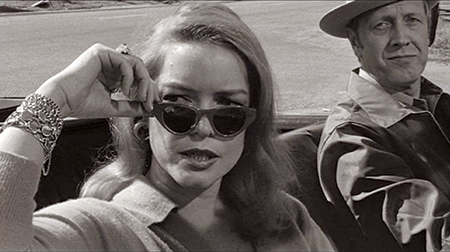
Writer-director Rian Johnson explodes the genre of the drawing room murder mystery in the gloriously entertaining Knives Out.
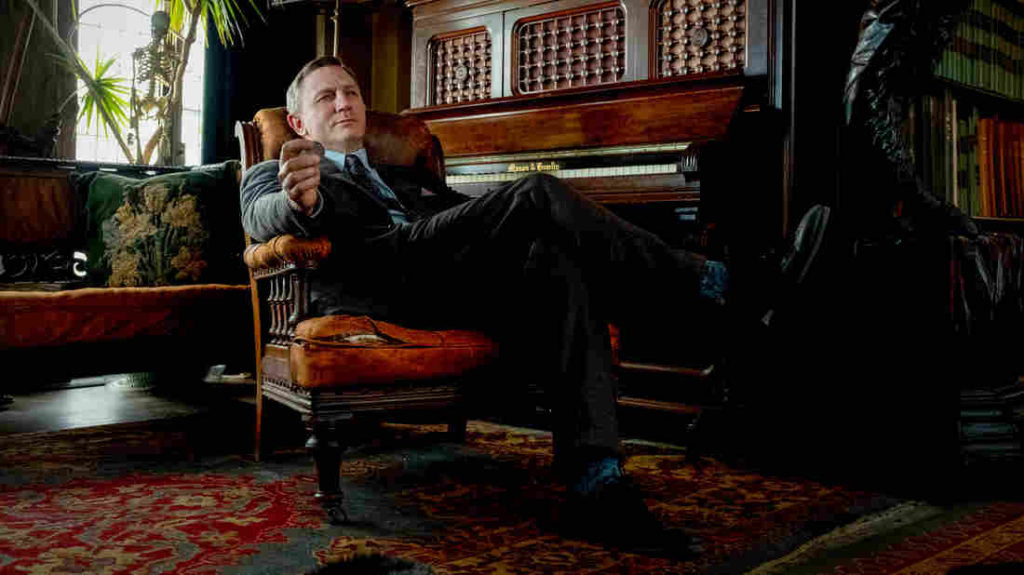
Knives Out opens at the country estate of a multi-millionaire author (Chistopher Plummer), where he is found dead. If he was murdered, it had to be at the hands of his sweet caregiver Marta (Ana de Armas) or a member of his icky family of ingrates (Jamie Lee Curtis, Don Johnson, Michael Shannon, Toni Collette, Chris Evans). A Hercule Poirot-type consulting detective (Daniel Craig with a Southern accent) arrives to investigate, and the game is afoot.
I’ve met plenty of folks like the author’s family, who were born on third base and thought they hit a triple. That’s what Knives Out is really about – a wickedly funny send-up of totally unjustified entitlement. One of the running jokes is that they claim that Marta is “one of the family”, but none can remember which Latin American country she’s from.
Despite Daniel Craig’s turn as the famed detective, this is really Ana de Armas’ movie, and she is superb. All of the cast are excellent, but everyone except de Armas and Plummer play very broad characters. BTW De Armas plays Paloma, the Bond Girl, to Craig’s James Bond in No Time to Die (coming in April 2020).
Ana de Armas in KNIVES OUT
I recently wrote about Rian Johnson’s 2005 breakthrough Brick, which inhabited the form of another familiar movie genre – film noir. In Nate Jones’ interview in Vulture, Johnson says “One thing I don’t believe in is the notion that this is a dusty old genre and you have to find a way to flip the old tropes on their heads. The basic machinery of it, the tropes of it, are why it works.”
Johnson slyly (and without comment) inserts a shot of Marta’s mom watching a rerun of Angela Lansbury in a Murder, She Wrote, dubbed in Spanish. And the great M. Emmet Walsh has a cameo as the aged security guy who proudly explains the VHS-based security camera system.
Knives Out works as a darkly funny murder mystery and as a pointed social satire. It’s one of the year’s smartest and funniest films.
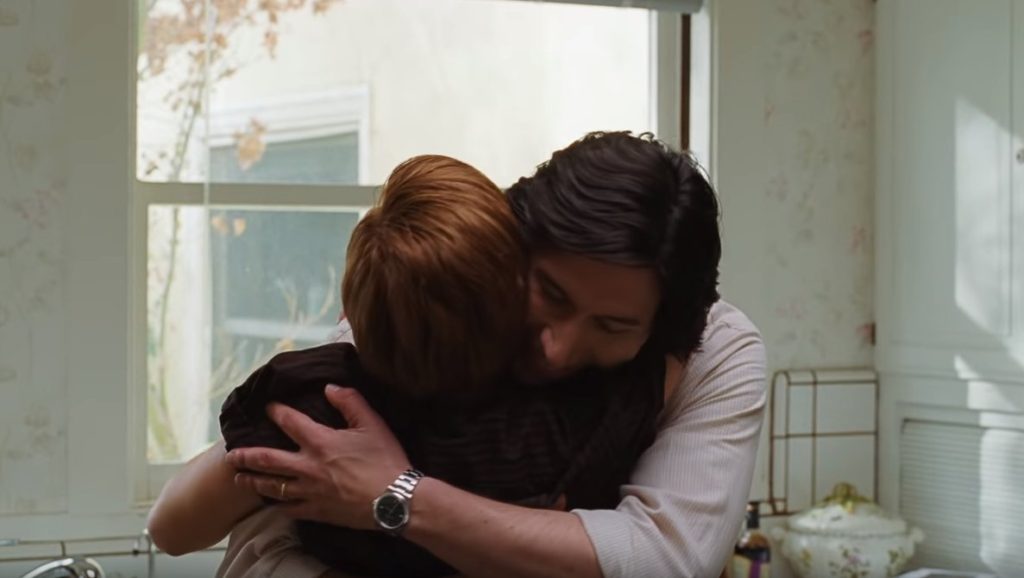
Scarlett Johannson and Adam Driver in MARRIAGE STORY
Of the four top movies of the year, you can still find Parasite in theaters and you can already stream Marriage Story, The Irishman and Once Upon a Time…in Hollywood.
Watch out for the very special opportunity to see a virtually lost film from 1976, Joseph Losey’s Mr. Kleinat the Roxie and BAMPFA.
If you enjoy Rian Johnson’s Knives Out, check out his equally inventive take on another genre, the neo-noir Brick.
OUT NOW
The masterpiece Parasite explores social inequity, first with hilarious comedy, then evolving into suspense and finally a shocking statement of the real societal stakes. This is one of the decade’s best films.
Adam Driver and Scarlett Johannson are brilliant in Noah Baumbach’s career-topping Marriage Story. A superb screenplay, superbly acted, Marriage Story balances tragedy and comedy with uncommon success. Marriage Story is playing in just a couple Bay Area theaters and is now streaming on Netflix.
Martin Scorsese’s gangster epic The Irishman is tremendous, and features performances by Al Pacino and Joe Pesci that are epic, too. It’s both in theaters and streaming on Netflix.
Filmmaker Taika Waititi takes on hatred in his often outrageous satire Jojo Rabbit. I saw Jojo Rabbit at the Mill Valley Film Festival, where the audience ROARED with laughter.
In his Pain and Glory, master filmmaker Pedro Almodovar invites us into the most personal aspects of his own life, illuminated by Antonio Banderas’ career-topping performance.
Harriet is excellent history (and Harriet Tubman belongs on the twenty dollar bill), but it’s not great cinema.
The atmospheric slow burn neo-noir Motherless Brooklyn gets postwar New York City right, but it’s too long.
Loro, Paolo Sorrentino’s send-up of Silvio Berlusconi is much more interesting visually than it is thematically.
Noah Baumbach’s family dramedy Marriage Story,
one of the very best films of 2019, traces two good people who care for each
other at the end of their marriage. It’s
a heartfelt film about a personal tragedy that has some of the funniest moments
on screen this year.
Charlie (Adam Driver) is a theater director and Nicole
(Scarlett Johannson) is an actress.
They are married with an eight-year-old son Henry. Nicole’s career is taking her to California,
while Charlie’s is anchored to his beloved New York. Adults might be able to manage a bicoastal
relationship, but the kid needs to have his school and his friends in one place
or the other.
The two try to complete an amicable divorce, but their disagreement over the kid’s primary home unintentionally plunges them into a litigation nightmare, with a cascade of stress added by the lawyers and the courts. It’s been written elsewhere, but I need to add that Nicole and Charlie are horrified by a system that is working as designed. There’s a wonderful shot of Charlie and Nicole sitting apart on an near-empty subway car, exhausted, bereft and unable to support each other.
In a masterstroke, Baumbach introduces his lead
characters with each spouse’s assessment of what is so lovable about the
other. Then we sober up when we learn
what prompted the essays.
We relate to both Charlie and Nicole, and Driver and Johansson perfectly inhabit these good folks, slipping into a deeper nightmare with each step in the process. Near the end, the two have the raw argument that they had each been too nice to have before.
I think that the reason Marriage Story works is
that Johansson and Driver can go through their characters’ pain with complete
authenticity while amidst all the funny supporting characters.
Laura Dern and Ray Liotta play top echelon Divorce
Lawyers to the Stars. Alan Alda plays a sage older attorney who has lost
something off his fastball. Dern’s
riotously funny performance is a lock for an Oscar nomination for Best
Supporting Actress. Dern, Liotta, Alda,
Julie Haggerty, Merritt Wever and Wallace Shawn are each hilarious. Azhy Robertson (Juliet, Naked) is very
good as the kid.
At one point, the court appoints a child evaluator to visit Charlie and judge his relationship with his child. Having any stranger parachute into your home, with your parenting rights at stake, would be stressful. Martha Kelly is superb as an especially humorless evaluator, an oddball impervious to Charlie’s charms and oblivious to any of his positive attributes. As things start going wrong, Charlie gets more and more desperate and the scene gets funnier.
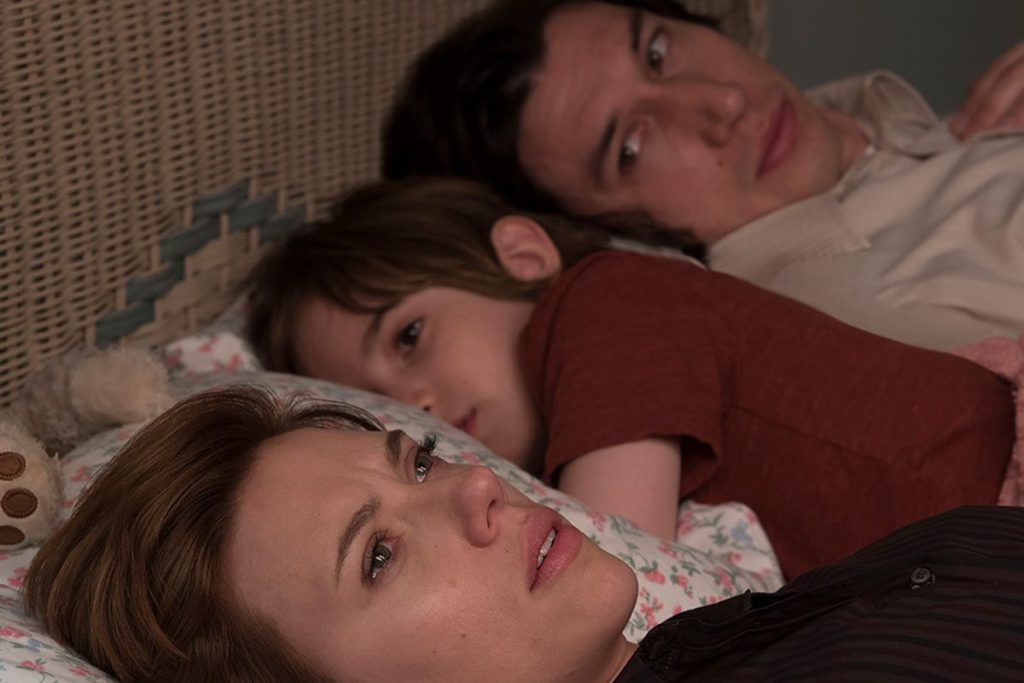
Scarlett Johannson and Adam Driver in MARRIAGE STORY
Director Noah Baumbach’s screenplay is informed by the end of his own marriage to actress Jennifer Jason Leigh. He acknowledges “a connection to the material”, but that it’s not only about his divorce. He is generous enough to write the character of Charlie with self-absorbed cluelessness about his impact to Nicole’s career aspirations.
I liked Baumbach’s first movie The Squid and the Whale, about his own parents’ divorce. But my reaction to all his subsequent work until now has ranged from to indifference to antipathy; “detest” is the adjective that springs to mind. Despite my bias, I gotta admit that Marriage Story is so, so good that it solidifies Baumbach’s place as an American auteur. Baumbach should head into awards season as the favorite for the screenplay Oscar.
A superb screenplay, superbly acted, Marriage Story balances tragedy and comedy with uncommon success. It’s a masterpiece, and among the very best cinema of 2019. It’s a Must See. I saw Marriage Story in early October at the Mill Valley Film Festival. You can find it theaters now, and it will stream on Netflix beginning on Friday, December 6.
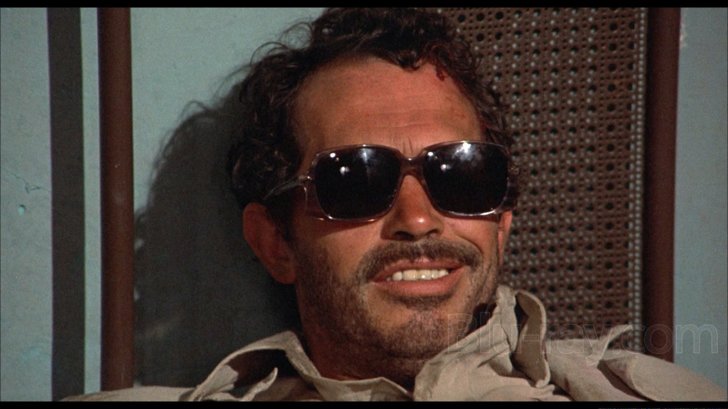
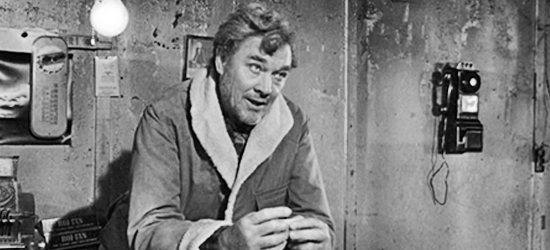
Warren Oates in BRING ME THE HEAD OF ALFREDO GARCIA
One of my favorite actors is Warren Oates, whose crowning achievement, Bring Me the Head of Alfredo Garcia, plays on TCM on December 6. This is a Sam Peckinpah film, one of those 1970s neo-noirs that was perfect for Oates. Oates plays a hard scrabble grasper, and you just know things are not going to go well for him.
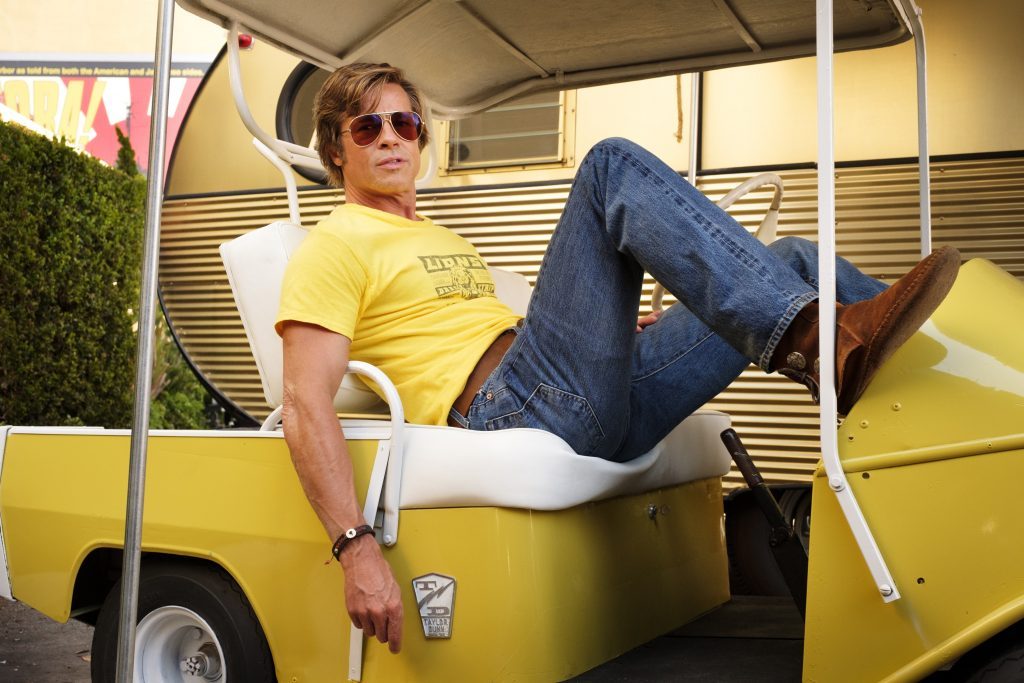
Six of my Best Movies of 2019 – So Far are already available to stream. This week, I’m featuring Once Upon a Time…in Hollywood: masterpiece. Quentin Tarantino’s exquisite filmmaking skills blend together verisimilitude of time and place, vivid performances and a rock ’em, sock ’em story to make Once Upon a Time…in Hollywood an instant classic. Brad Pitt, Margot Robbie, Leonardo DiCaprio and a host of others create tremendous performances, and Tarantino delivers the most startling ending in recent cinema. And it’s a love letter to a Hollywood that six-year-old Quentin Tarantino lived near to, but was not a part of. This is a Tarantino masterpiece, right up there with his best, Jackie Brown and Pulp Fiction. It’s available to stream on Amazon and the other major platforms.
Also available to stream:
The Last Black Man in San Francisco: the most stark reality, only dream-like. This uncommonly clear-eyed love letter to San Francisco is an absorbing exploration of the inner lives of two friends as they react to their changing city. The brilliantly original filmmaking by director and co-writer Joe Talbot portrays the starkly real as dreamlike. It’s available to stream from Amazon, iTunes, Vudu, YouTube and Google Play.
Long Day’s Journey into Night: obsession and a vivid darkness. This brilliantly original film explores memory – a man obsessed with a doomed romance from twenty years ago plunges into a neo-noir underworld. After a slow burn beginning, his search reaches its climax in a spectacular ONE-HOUR single shot. It can be streamed on Amazon, iTunes and Vudu.
They Shall Not Grow Old: a generation finally understood. Lord of the Rings filmmaker Peter Jackson has, for the first time, layered humanity over our understanding of World War I. By slowing down the speed of the jerky WWI film footage and adding sound and color, Jackson has allowed us to relate to the real people in the Great War. This film is a generational achievement. Now you can stream it from Amazon, iTunes, Vudu, YouTube and Google Play.
Amazing Grace : pure, sanctified Aretha. This Aretha Franklin concert filmis, at once, the recovery of a lost film, the document of an extraordinary live recording and an immersive, spiritual experience. Amazing Grace can be streamed on Amazon, iTunes, Vudu, YouTube and Google Play; the DVD can be rented from Redbox.
Booksmart: smart, fresh and hilarious. This wildly successful comedy is an entirely fresh take on the coming of age film, and a high school graduation party romp like you’ve never seen. Directed and written by women, BTW. It’s available to stream from Amazon, iTunes, Vudu, YouTube and Google Play.
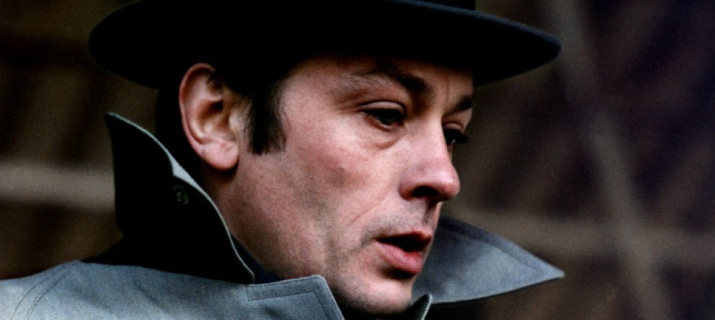
Here’s a chance to see a brilliant movie almost nobody has seen in 43 years. The Roxie and BAMPFA are screening Joseph Losey’s slowburn thriller Mr. Klein, a searing critique of French collaboration with the Nazis. Mr. Klein stars Alain Delon as a predator trapped by his own obsession.
To make sure we understand the stakes, Mr. Klein opens with a sobering pseudo-medical exam, absurdly intended to determine if a woman is Jewish; the waiting room overflows with others awaiting the humiliating and terrifying “examination”.
Only then do we meet Robert Klein (Delon) in his splendid silk dressing gown, living in an opulent Paris apartment with his randy mistress. Klein is a bottom feeder who profits from the desperation of Jewish art collectors; when they flee France to escape the Nazis, Klein unapologetically buys their art at rock bottom prices.
Then Klein gets a Jewish newspaper delivered to his door. He is Alsatian and his name is Klein, but some Jews are named Klein. There is another Robert Klein – a Jewish Klein. What is the extent of the mistaken identity? Is it inadvertent, or is someone trying to paint Klein as Jewish? Who is this other Robert Klein, and is he masterminding a frame job? Klein hits the streets in his trench coat and fedora, trying to solve the mystery himself.
Klein’s journey becomes surreal and then Kafkaesque, as what he thinks is a whodunit is interspersed with clips of the ever more riuhkess French police hunting down Jews. Klein, at first only vaguely understanding that he, too, is at risk, is racing against the clock.
The improbably handsome Alain Delon has eyes that can switch off any glimmer of empathy – perfect for playing sociopaths. The best analysis of Delon’s gift is Sheila O’Malley‘s.
Mr. Klein showcases Delon at 41, after his iconic run of Jean-Pierre Melville crime classics: Le Samourai, Le Cercle Rouge and Un Flic. Seven years earlier, he had been able to play the young guy matched with Jean Gabin and Lino Ventura in The Sicilian Clan. Now, even with his still dazzling looks, Delon has the weight of a life lived into his forties.
Mr. Klein also features a slate of French actresses: the great Jeanne Moreau, Francine Bergé, Juliet Berto and Francine Racette. Michael Lonsdale, so good in The Day of the Jackal three years before, is also excellent here (and has his own luxurious dressing gown).
Joseph Losey and his regular cinematographer Gerry Fisher keep both Robert Klein and the audience off-balance, bouncing between Klein’s richly-colored apartment, his surreal dreamlike visit to a country estate, the noirishly mysterious haunts of the other Klein and a starkly realistic depiction of France’s most unpleasant history. Losey ironically inserts an Alsatian dog. It all culminates in Klein’s one final miscalculation.
Losey’s 1947 directorial debut was the political parable The Boy with the Green Hair. In 1951, he remade M with an inventive basement-to-roof exploration of Los Angeles’ storied Bradbury Building. Later that year, he turned the usually sympathetic good guy Van Heflin into the twisted bad guy in The Prowler. After being named at HUAC, he was blacklisted and, in 1953, successfully set up shop in Europe. His The Go-Between won the Palm d’Or at Cannes, and he made four of Dirk Bogarde’s most notable movies in the late 1950s and 1960s. He was 67 when he directed Mr. Klein.
Mr. Klein depicts the historical Vel’ d’Hiv roundup, when French police swept up over 11,000 Jews on the same day, July 16, 1942, and detained them in a stadium, the Velodrome d’Hiver; they were then transported to Auschwitz to be murdered.
French audiences in 1976 did not want to be reminded that collaboration was a mainstream phenomenon. Mr. Klein depicts French police enthusiastically hunting down Jews, theater patrons laughing heartily at a grotesquely anti-Semitic farce, and regular Parisians nonchalantly lining up for bread at the boulangerie indifferent to Jews being bused off to concentration camps.
Mr. Klein was nominated for seven Césars (the French equivalents of Oscars) and won best film and best director. Until this reissue by Rialto Pictures, Mr. Klein has essentially been a lost film. It is not currently available on the major streaming platforms, nor can it be found on DVD, except for some bootlegs from Asia.
Mr. Klein will play at BAMPFA in Berkeley on December 4, 14 & 18 and at San Francisco’s Roxie December 6-12.
Writer-director Rian Johnson’s gloriously inventive 2005 debut, Brick, was inspired by Johnson’s love of Dashiell Hammett’s novels and his own dark memories of high school.
Brick is a hard-boiled detective story, complete with a femme fatale and a plot right out of a Dick Powell classic noir like Murder, My Sweet or Cry Danger.
The genius of Brick is that it takes place in the teenage culture of 2005 San Clemente. The characters roam the isolated school corridors where the nerd eats lunch by himself, the drama room, the vice-principal’s office, the empty football field where kids can meet after school the party at the popular girl’s house. The kingpin crime lord operates out of his mother’s basement; he and his gang emerge upstairs in the kitchen where his mom supplies breakfast cereal and dispenses milk from a pitcher shaped like a chicken.
The dialogue is Hammettesque:
I gave you Jerr to see him eaten, not to see you fed.
The ape blows or I clam.
Bulls would gum it. They’d flash their dusty standards at the wide-eyes and probably find some yegg to pin, probably even the right one. No cops, not for a bit
Brad was a sap. You weren’t. You were with him, and so you were playing him. So you’re a player. With you behind me I’d have to tie one eye up watching both your hands, and I can’t spare it.
The noir patter works because Johnson and the cast play it dead seriously, with no hint of irony.
In Nate Jones’ interview in Vulture, Johnson says “One thing I don’t believe in is the notion that this is a dusty old genre and you have to find a way to flip the old tropes on their heads. The basic machinery of it, the tropes of it, are why it works.”
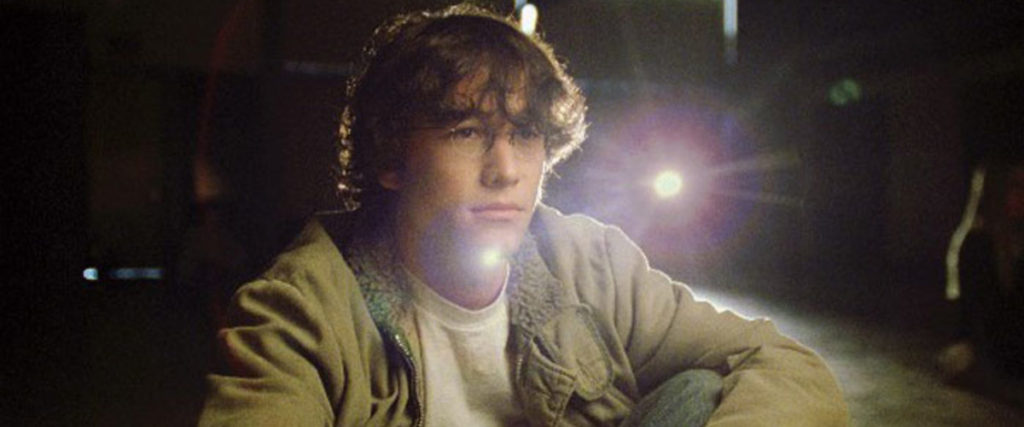
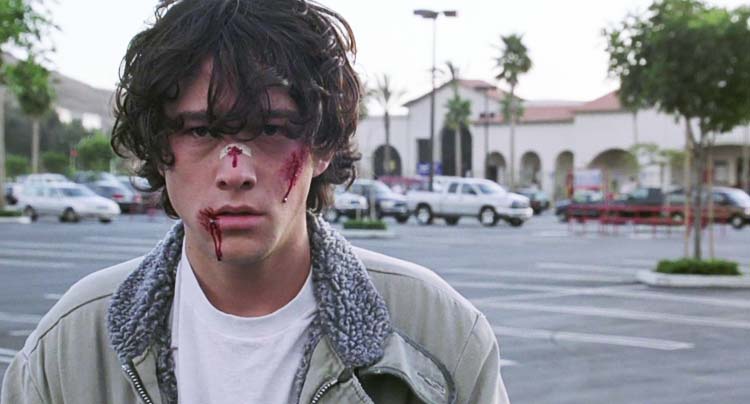
Brick was at that point in Joseph Gordon-Levitt’s career, between Mysterious Skin (2004) and Lookout (2007), when it was becoming clear what a major talent he is.
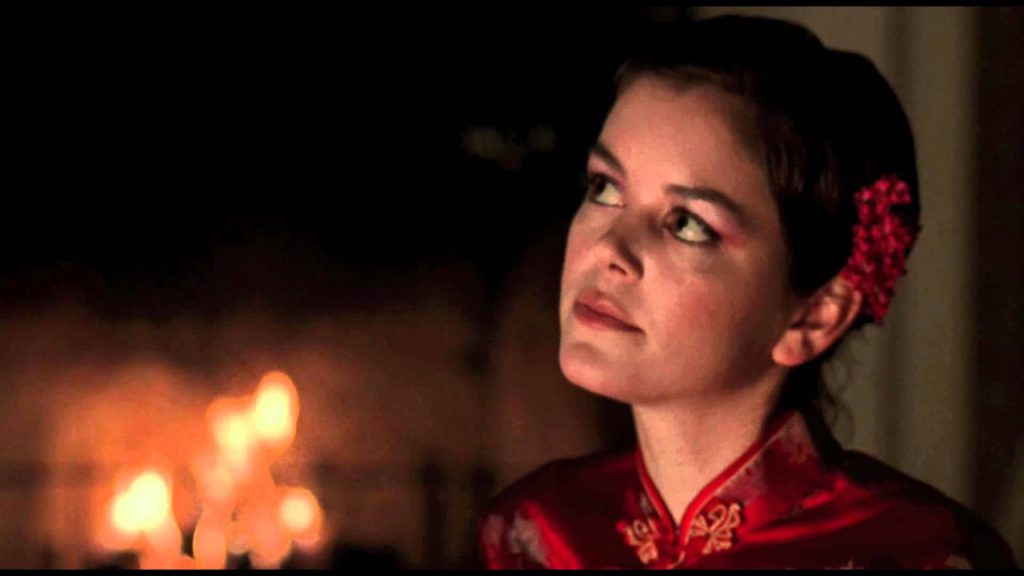
Norah Zehetner in BRICK
The femme fatale is played by Norah Zehetner in an unforgettable performance. Zehetner works a lot, and did ten episodes of Grey’s Anatomy, but Brick may be her career-topper.
Rian Johnson went on to make another original feature with Gordon-Levitt, Looper, along with the 2017 Star Wars movie. Knives Out, Johnson’s new take on the drawing room mystery, hits theaters this weekend.
Brick is available to stream on Netflix, AYouTube and Google Play.
The masterpiece Parasite explores social inequity, first with hilarious comedy, then evolving into suspense and finally a shocking statement of the real societal stakes. This is one of the decade’s best films.
Adam Driver and Scarlett Johannson are brilliant in Noah Baumbach’s career-topping Marriage Story. A superb screenplay, superbly acted, Marriage Story balances tragedy and comedy with uncommon success. Marriage Story is playing in just a couple Bay Area theaters and will be streaming on Netflix on December 6. Complete review coming this weekend.
Martin Scorsese’s gangster epic The Irishman is tremendous, and features performances by Al Pacino and Joe Pesci that are epic, too. It’s in theaters now, and will stream on Netflix on November 27. Complete review coming this weekend.
Filmmaker Taika Waititi takes on hatred in his often outrageous satire Jojo Rabbit. I saw Jojo Rabbit at the Mill Valley Film Festival, where the audience ROARED with laughter.
In his Pain and Glory, master filmmaker Pedro Almodovar invites us into the most personal aspects of his own life, illuminated by Antonio Banderas’ career-topping performance.
Harriet is excellent history (and Harriet Tubman belongs on the twenty dollar bill), but it’s not great cinema.
The atmospheric slow burn neo-noir Motherless Brooklyn gets postwar New York City right, but it’s too long.
The raucous romp Zombieland Double Tap is a fun change of pace to the serious fare in theaters.
I liked the Isabelle Huppert drama Frankie, but the Mill Valley Film Festival audience was very indifferent at the screening; I’m guessing that folks failed to warm to an ambiguous ending that leaves some plot threads unresolved.
Loro, Paolo Sorrentino’s send-up of Silvio Berlusconi is much more interesting visually than it is thematically.
ON VIDEO
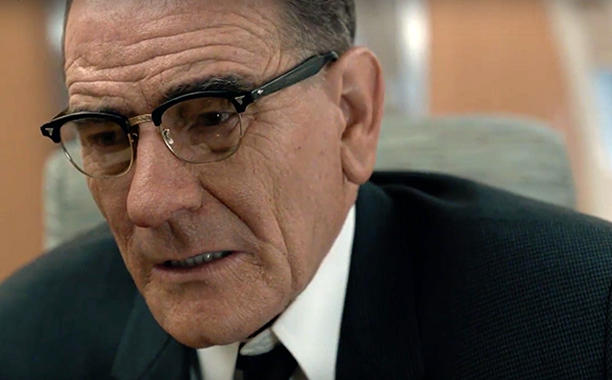
My Stream of the Week is All the Way, with Bryan Cranston (Breaking Bad, Trumbo) becoming the first actor to capture LBJ in all his facets – a man who was boring and square on television but frenetic, forceful and ever-dominating in person. LBJ’s 1964 makes for a stirring story, and All the Way is a compelling film. You can stream it from HBO GO, Amazon’s HBO Now, iTunes, YouTube and Google Play.
ON TV
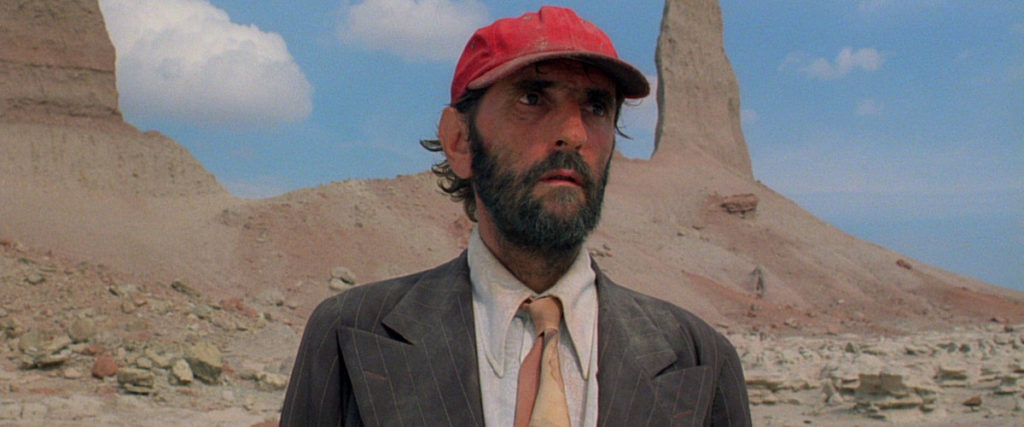
On November 27, Turner Classic Movies will air Harry Dean Stanton’s masterpiece in Wim Wenders’ Paris, Texas. In Paris Texas, Harry Dean plays Travis, a man so traumatized that he has disappeared and is found wandering across the desert and mistaken for a mute. As he is cared for by his brother (Dean Stockwell), he evolves from feral to erratic to troubled, but with a sense of tenderness and a determination to put things right. We see Travis as a madman who gains extraordinary lucidity about what wrong in his life and his own responsibility for it.
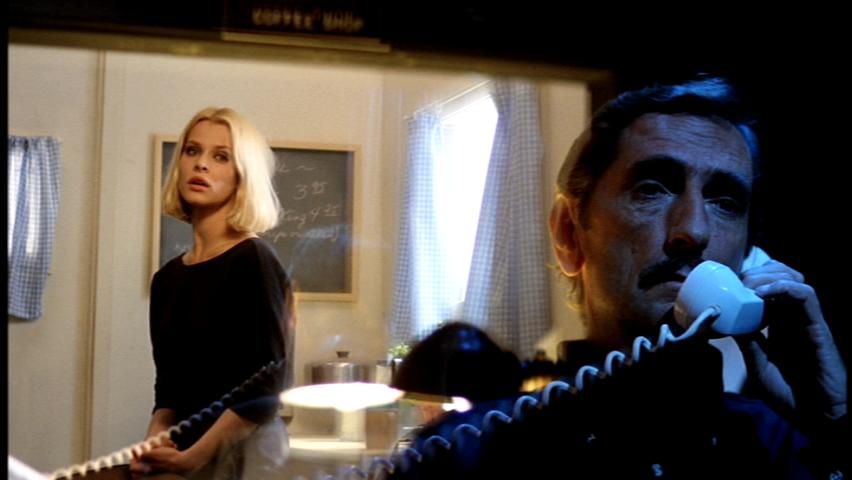
At the film’s climax, Travis speaks to Jane (Natassja Kinski) through a one-way mirror (she can’t see him). Spinning what at first seems like parable, Travis explains what happened to him – and to her – and why it happened. It’s a 20-minute monologue so captivating and touching that it rises to be recognized as one of the very greatest screen performances.
Harry Dean Stanton in PARIS, TEXASNatassja Kinski and Harry Dean Stanton in PARIS, TEXAS
Lyndon B. Johnson, one of American history’s larger-than-life characters, finally comes alive on the screen in the HBO movie All the Way. Bryan Cranston (Breaking Bad, Trumbo) is the first actor who captures LBJ in all his facets – a man who was boring and square on television but frenetic, forceful and ever-dominating in person. All the Way traces the first year in LBJ’s presidency, when he ended official racial segregation in America with the Civil Rights Act of 1964.
LBJ was obsessed with gaining and keeping political power, and he was utterly ruthless and amoral about the means to do that. His tools of persuasion included deceit, flattery, threats, promised benefits and horse-trading. He was equally comfortable in playing to someone’s ideals and better nature as well to one’s vanity or venality. In All the Way, we see one classic moment of what was called “the Johnson treatment”, when LBJ looms over Senator Everett Dirksen, and it becomes inevitable that Dirksen is going to be cajoled, intimidated or bought off and ultimately give LBJ what he wants.
LBJ was so notoriously insincere that one of the joys of All the Way is watching LBJ tell completely inconsistent stories to the both sides of the Civil Right battle. Both the Civil Rights proponents (Hubert Humphrey and Martin Luther King, Jr.) and the opponents (the Southern Senators led by Richard Russell) must determine whether LBJ is lying and to whom. Each of them must make this calculation and then bet his own cause on his perception of LBJ’s real intentions.
But LBJ amassed power for two reasons – he needed to have it and he needed to do something with it. Along with the LBJ’s unattractive personal selfishness and the political sausage-making that some may find distasteful, All the Way shows that Johnson did have two core beliefs that drove his political goals – revulsion in equal parts to discrimination and poverty. We hear references to the childhood poverty that led to the humiliation of his father, to the plight of the Mexican schoolchildren in Cotulla, Texas, that he mentored as a young man, and his outrage at the discriminatory treatment suffered by his African-American cook Zephyr.
Bryan Cranston brilliantly brings us the complete LBJ – crude, conniving, thin-skinned, intimidating and politically masterful. Besides Cranston’s, we also see superb performances by Melissa Leo as Ladybird, Anthony Mackie as MLK, Bradley Whitford as Hubert Humphrey and Frank Langella as Richard Russell.
All the Way is remarkably historically accurate. It does capsulize some characters and events, but the overall depiction of 1964 in US history is essentially truthful. As did Selma, All the Way drills down to secondary characters like James Eastland and Bob Moses. We also see the would-be scandal involving LBJ’s chief of staff Walter Jenkins, a story that has receded from the popular culture. Vietnam is alluded to with a reference to the Gulf of Tonkin incident, which is fitting since Vietnam grew to become LBJ’s nemesis and the national obsession only after the 1964 election.
All the Way was adapted from a Broadway play for which Cranston won a Tony. LBJ’s 1964 makes for a stirring story, and All the Way is a compelling film. You can stream it from HBO GO, Amazon’s HBO Now, iTunes, YouTube and Google Play.
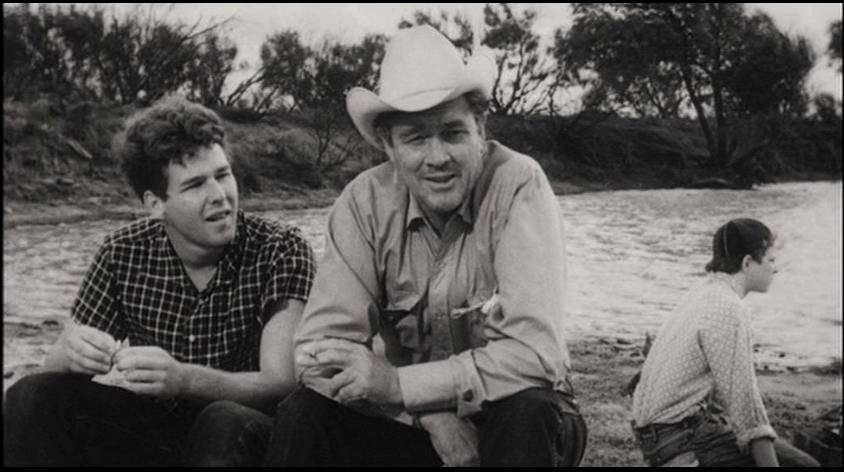
Timothy Bottoms, Ben Johnson and Sam Bottoms in THE LAST PICTURE SHOW
On November 20, Turner Classic Movies is airing Peter Bogdanovich’s 1971 masterpiece The Last Picture Show. It’s a movie about kids that is best appreciated by grown-ups, especially grown-ups with some mileage on them.
The Last Picture Show is the story of 18-year-olds in a tiny, windblown Texas town in the early 1950s, from Larry McMurtry’s novel about his own upbringing in Archer City, Texas. It’s a coming of age film about teens finishing high school: the sensitive Sonny (Timothy Bottoms), his macho best friend Duane (Jeff Bridges) and pretty, snotty Jacy (Cybill Shepherd), entitled by her looks and her family’s wealth. There’s also a sweet, intellectually disabled boy Billy (Sam Bottoms). The boys’ male role model is Sam the Lion (Ben Johnson in an Oscar-winning performance), an older bachelor cowpoke who owns the town’s cafe, movie theater and pool hall.
The film was actually shot in Archer City, which took the movie name of a Texas ghost town, Anarene. (Decades later, Archer City also showed up in a bank robbery in 2016’s Hell and High Water.)
Cybill Shepherd in THE LAST PICTURE SHOW
18-year-olds wonder how they will navigate the world of adults that they are about to enter. It turns out that, for the kids in the movie, if only they paid attention, there’s plenty to lean about life from the adults in Anarene. The other thing that 18-year-olds obsess about is their sexuality, super-fueled by hormones but piloted by immature brains.
It’s a remarkable thing to watch a coming of age story about 18-year-olds when you are 18 and then again forty years later when you know stuff.
When I saw The Last Picture Show at San Jose’s domed Century Theaters in 1971, I was the same age as the main characters, and I was especially interested in their sexual escapades. I was, however, discerning enough to appreciate that this was a great movie, and I fully experienced the heartbreak of the Cloris Leachman character and grasped that Sam the Lion’s authority came from his decency and dignity.
Peter Bogdanovich with Jesse Hawthorne Ficks at the Roxie
In September, I was privileged to attend one of the year’s most stirring experiences of Bay Area cinema culture. The Roxie Theater screened the The Last Picture Show – with the legendary Bogdanovich himself in attendance for two Q&A sessions, plus a screening of his hard-to-find Saint Jack (1979).
Ben Johnson in THE LAST PICTURE SHOW
Rewatching The Last Picture Show, I was especially struck by the subtle yet emotionally powerful performances by Ben Johnson, Clu Gulager and Ellen Burstyn
The plot is about the kids, but Ben Johnson’s character is the center of the film. Johnson underplays the part, and Bogdanovich says that Johnson didn’t even like to say lines at all. But Johnson nailed two unforgettable speeches. In the first, his eyes flash as he spits out his disgust at bullying. In the other, he recalls a love affair; as a clueless kid the first time around, I failed to connect the dots as who the woman was. Ben Johnson’s Oscar acceptance speech (you can find it on YouTube) is still my all-time favorite.
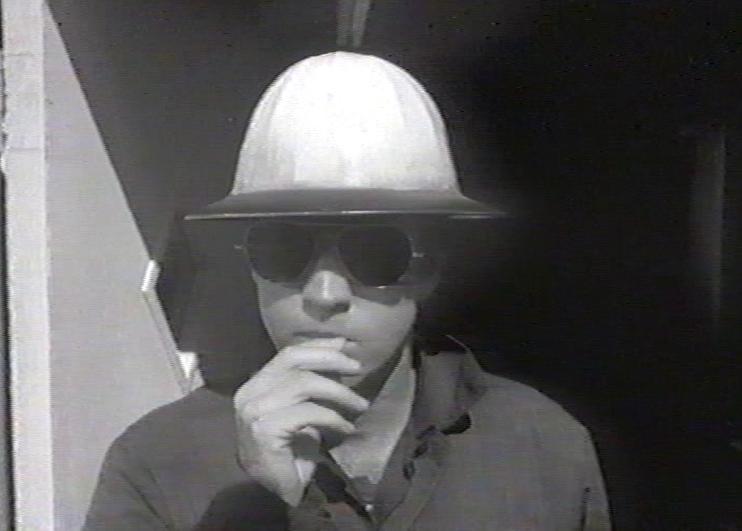
Clu Gulager in THE LAST PICTURE SHOW
Clu Gulager plays an oil rig foreman who is the illicit squeeze of his boss’ wife (Burstyn) . Gulager did scores of TV Westerns in the 1960s, including 105 appearances as the sheriff on The Virginian. The Last Picture Show is probably his best-ever screen performance. The Director’s Cut also adds some sizzle to his sex scene with Jacy in the pool hall. This guy is trapped in a job he will never improve upon and an affair he will never control; Gulager perfectly conveys his bitter dissatisfaction.
Unlike Gulager, Burstyn was already a prestige actress. Here, she brings both searing and withering looks at the men and wise and comforting, if cynical, advice to her daughter.
This is a great film, and it’s just as timeless today as it was in 1971.