Here’s a heartfelt and funny cinematic dive into the
Bay Area’s Filipino community – and it’s a movie musical! Colma: The Musical is a coming
of age story following three Filipino-American kids graduating from high
school.
The characters burst into 13 original songs written by
director H.P. Mendoza – and they’re great songs. As one of the kids, the charismatic L.A.
Renigen absolutely soars.
The film was shot on location in Colma, California, the town more known in the Bay Area as the home of San Francisco’s cemeteries. But almost 2,000 living, breathing folks reside there, and they have their stories, too.
H.P. Mendoza is a Bay Area treasure, having written and directed the genre-bending art film I Am a Ghost and the dark indie comedy on domestic violence Bitter Melon.
Colma: The Musical is refreshing on many levels – and it’s a hoot. I recommend the delightful Colma: The Musical for anyone, especially Bay Area residents; you can stream it from Vudu, YouTube and Google Play.
The Noir City film fest, always one of the best Bay Area cinema experiences, opens this weekend in San Francisco. Noir City is the annual festival of the Film Noir Foundation, spearheaded by its founder and president Eddie Muller. The Foundation preserves movies from the traditional noir period that would otherwise be lost. Noir City often plays newly restored films and movies not available on DVD or streaming. And we get to watch them in a vintage movie palace (San Francisco’s Castro Theatre) with a thousand other film fans.
Eddie Muller, whom you should recognize as the host of Turner Classic Movies’ Noir Alley series, has programmed this year’s version as Noir City: International II, with vintage film noir from Argentina, France, Germany, Korea, Japan, Czechoslovakia, Italy, England, West Germany, Sweden and Poland. Noir City’s first intentional foray, six years ago, was one of my favorites, highlighted by the Argentine Bitter Stems and the Swedish Girl with Hyacinths.
The Film Noir Foundation restored the Argentine films The Beast Must Die and The Black Vampire, which open the fest on Friday night. This is your only chance to see these and sixteen other Noir City films, which cannot be streamed.
My personal favorites on the program:
Pale Flower: Writer-director Masahiro Shinoda’s masterpiece is a slow burn that erupts into breathtaking set pieces. This is pioneering neo-noir; its look and feel is as different from classic noir as are Elevator to the Gallows and Blast of Silence. I predict that the Thursday night Castro Theatre audience will be THRILLED.
Any Number Can Win: In this Perfect Crime flick, Jean Gabin plays a veteran crook who plans One Last Big Job – the heist of a Cannes casino. He trains a raw former cell-mate (Alain Delon) to perform the key role. There’s incredible suspense in the heist, the getaway and the recovery of the loot, with an ending worthy of The Treasure of the Sierra Madre.
The Long Haul: This British noir was a vehicle for the 25-year-old curvy blonde Diana Dors, who could Wear A Dress (and look up her real life!). Victor Mature stars as a GI who stayed in Britain after WW II because his English wife doesn’t want to emigrate; he is stuck in a job as a truck driver and becomes entangled in a hijacking ring. Mature, whose best work was in film noir, was an underrated actor; if acting is reacting, Mature does it all here – his eyes and face reflect his weariness, disgust, desperation and adherence to a code. The snarling villain (Patrick Allen) meets a uniquely fitting fate.
Ashes and Diamonds: Auteur Andrzej Wajda ‘s filmmaking gifts are on display in this Hit Man Finds Love tale, set as the Polish Resistance battles for a place in post-war Poland. As kinetic and unpredictable as James Dean, Zbigniew Cybulski makes for an irresistibly charismatic leading man.
Trench coats and fedoras are not required (and no smoking, please), but, other than that, you’ll get the full retro experience in the period-appropriate Castro. Noir City runs from Friday, January 24 through Sunday, February 2. To see the this year’s Noir City program and buy tickets, go here. I’ll be there myself on both weekends.
The best film still in theaters, Parasite, has garnered six Oscar nominations, and is certain to win the Best International Oscar. Marriage Story also has six Oscar nods. But I’m not a big fan of 1917.
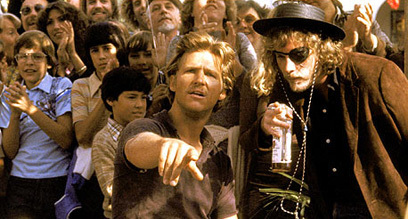
Remembrance: Director Ivan Passer came out of the Czech New Wave (Intimate Lighting) to work in the US (fifteen features including award-winning Haunted Summer and Robert Duvall’s Stalin). My favorite Passer film is his 1981 Cutter’s Way, with its early Jeff Bridges and fine performances by John Heard and Lisa Eichhorn – and it’s still the best film set in Santa Barbara. I watched it again recently and it still holds up; you can stream it from Amazon, iTunes, Vudu, YouTube and Google Play.
Jeff Bridges and John Heard in CUTTER’S WAY
OUT NOW
The masterpiece Parasite explores social inequity, first with hilarious comedy, then evolving into suspense and finally a shocking statement of the real societal stakes. This is one of the decade’s best films.
Adam Driver and Scarlett Johannson are brilliant in Noah Baumbach’s career-topping Marriage Story. A superb screenplay, superbly acted, Marriage Story balances tragedy and comedy with uncommon success. Marriage Story is playing in just a couple Bay Area theaters and is now streaming on Netflix.
Martin Scorsese’s gangster epic The Irishman is tremendous, and features performances by Al Pacino and Joe Pesci that are epic, too. It’s both in theaters and streaming on Netflix.
Uncut Gems is a neo-noir in a pressure cooker. Adam Sandler channels a guy racing through a gambling addiction and the resultant financial desperation. It’s the most wire-to-wire movie tension in years.
Rian Johnson’s Knives Out turns a drawing room murder mystery into a wickedly funny send-up of totally unjustified entitlement.
Refusing to play it safe, director Francisco Meirelles elevates The Two Popes from would have been a satisfying acting showcase into a thought-provoker. It’s streaming on Netflix.
1917 is technically groundbreaking, but the screenplay neither thrilled me nor moved me.
The earnest documentary Honeyland failed to keep me interested.
ON VIDEO
My Stream/DVD of the Week is Brian De Palma’s gangster epic Carlito’s Way, starring a brilliant Al Pacino. Carlito’s Way plays frequently on premium television channels and is available on DVD and Blue-Ray from Netflix. Carlito’s Way can also be streamed from Amazon, iTunes, Vudu, YouTube and Google Play.
And where else can you find a guy who writes about Cutter’s Way and Carlito’s Way in the same blog post?
ON TV
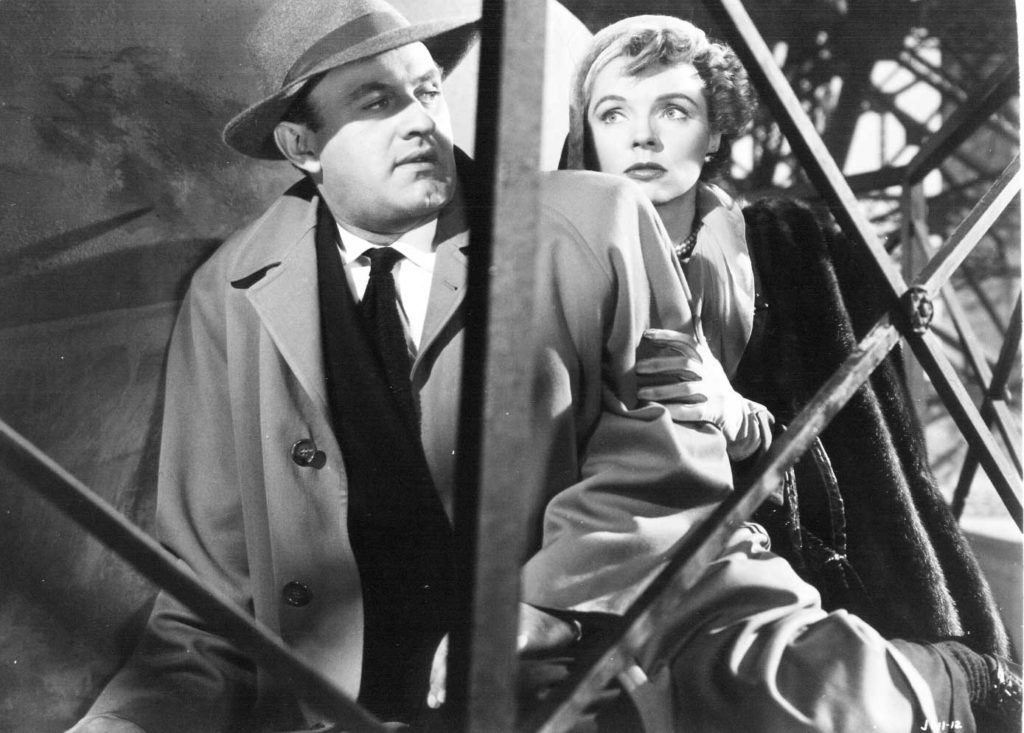
On January 18, Turner Classic Movies airs The Man Who Cheated Himself, one of my Overlooked Noir. A cop falls for a dame who makes him go bad – but it’s not just any cop and not just any dame. Bonus: there are plenty of glorious mid-century San Francisco locations.
Jane Wyatt amd Lee J. Cobb in THE MAN WHO CHEATED HIMSELF
The WW I thriller 1917 is a only a solid movie, despite groundbreaking technical achievements. The story is simple – two British soldiers must race across nine miles of enemy territory to prevent a doomed attack. One of them has been cynically selected because his brother would be one of the soldiers to walk into the German deathtrap. Will they survive a series of perils and make it in time?
There are moments which are essentially the equivalents of video games or amusement park rides, especially a tunnel cave-in, a crashing biplane and an unexpectedly roaring river. Now, a viewer knows that there is NO MOVIE HERE AT ALL if at least one of these guys doesn’t reach the objective, or at least come heartbreakingly close; that knowledge removes some of the tension from the dangerous situations in the first three-quarters of the film.
The screenplay, co-written by director Sam Mendes, is very lame; unbelievably, it has been nominated for an Oscar. One of the leads regards his tranquil surroundings with “I don’t like this place,” which is movie foreshadowing as obvious as “It’s quiet…too quiet.” I don’t consider it a spoiler to let you know something bad happens in “I don’t like this place“,
On to the technical achievements. Mendes has constructed the film as if it were one, continuous shot. This is NOT a gimmick; the continuity and the illusion of a single shot is all in service to the story by reinforcing the POV of our protagonists. It is brilliantly photographed by cinematographer Roger Deakins.
Deakins is a lead pipe cinch to win a deserved Cinematography Oscar. He won in 2018 for Blade Runner 2049 and has 12 other Oscar nominations. 1917 is in amazing achievement for Deakins.
At one point, a protagonist is creeping through a decimated town that is filled with enemy snipers. Every so often, a flare lights up the ruins as if it were daylight, and our soldier has to sprint toward darkness, essentially racing the flares. It’s a remarkable visual, and I never seen anything like it before.
There are scenes where we follow the soldiers down miles of trenches – a remarkable job of production design. Mendes also seems to have gotten all of the period details right.
George MacKay is excellent as one of the protagonists, Corporal Scofield. As a character, Scofield spends the movie in fear, determination or both simultaneously, so MacKay doesn’t need to use much range, but he is compelling. MacKay has the kind of face that is well-suited for a character haunted by dread and tragedy.
The always-charismatic Benedict Cumberbatch makes the most out of his two minutes on screen. as does Andrew Scott.
I admired the movie wizardry of 1917, but I wasn’t thrilled or moved by it. 1917 won a Golden Globe and has garnered a zillion Oscar nominations. I see 1917 as this year’s Avatar, a technical marvel that no one will be talking about in five years.
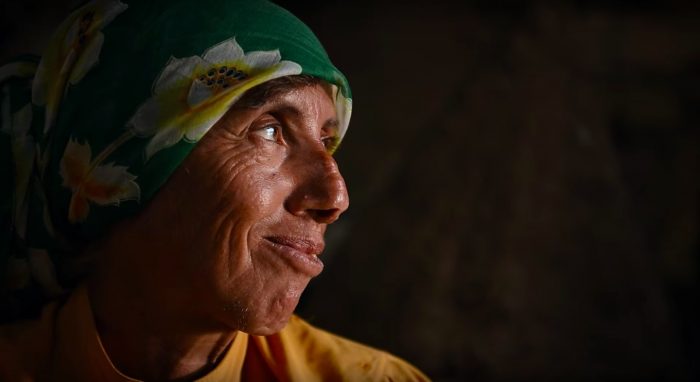
The documentary Honeyland is about a fiftyish Macedonian woman named Hatidze, who lives in an otherwise abandoned mountain village. She cares for her mother, who is blind and bedridden, and she clambers over rocky mountains to collect honeycombs and bees; she sells the honey in a nearby city for a living.
Suddenly, a thoroughly disorganized family moves in next door, sprawling litter and rowdy kids across the previously serene landscape. The father, Hussein, thinks that he will strike it rich raising cattle and bees; the fact that it’s not that easy utterly escapes him. Hussein is foolish, makes the lazy choice at every opportunity and blames the resultant misadventures on others.
Despite Hatidze’s best efforts, her mother’s health declines and Hussein’s self-made disasters continue. That’s all that happens in Honeyland. As my longtime readers will know, I’m more patient with the slowly paced, indie cinéma vérité than the next guy; but but I lost interest in Honeyland. The only reason I watched Honeyland to the end was because The Wife wanted to see if something more interesting was going to happen.
In fact, the only reason that I’m writing about this film at all is that it has somehow been Oscar-nominated for both the Best International Film and the Best Documentary, which I find baffling.
Reportedly, the filmmakers lived in tent in the remote village and filmed Honeyland over four years.
Hatidze is sweet, decent and fully aligned with popular values of sustainability. She has a sense of humor and some measure of snaggle-toothed charm. The film is only one hour 26 minutes, but it seems longer. I streamed Honeyland, but I don’t know why you should.
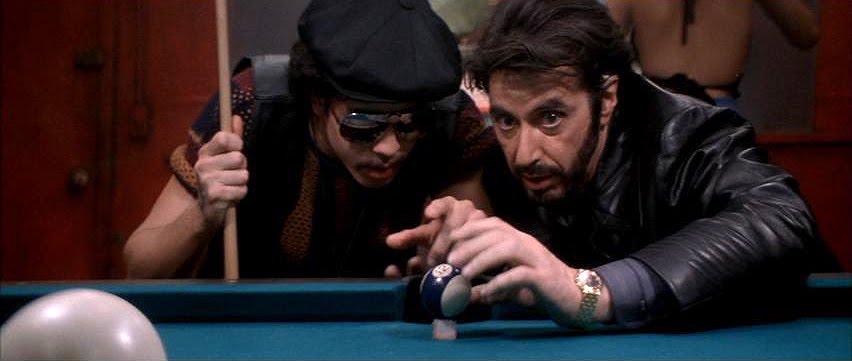
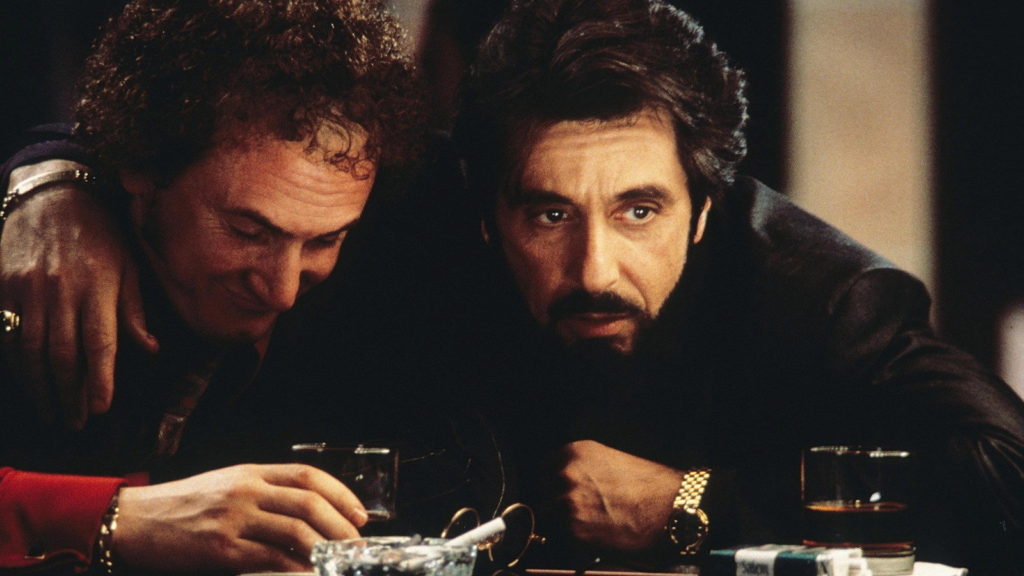
Brian De Palma’s 1993 neo-noir Carlito’s Way is one of the great crime films. If you like The Godfather, you’ll like the similarly operatic Carlito’s Way. Al Pacino is brilliant, and we so sympathize with this anti-hero that we’re hoping he will avoid the heartbreakingly noir ending.
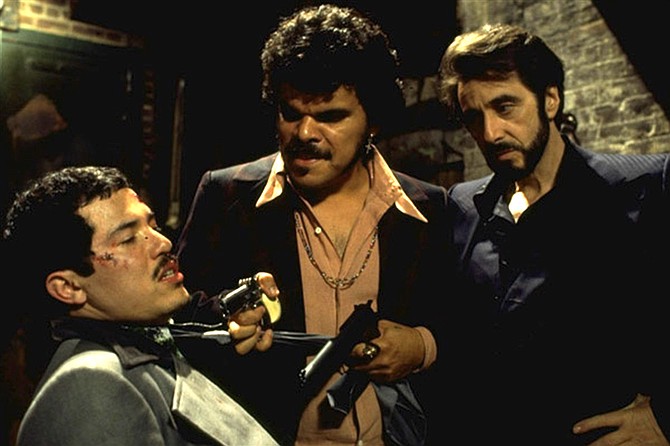
Pacino stars as Carlito Brigante, a successful Puerto Rican drug dealer just released back to New York City from prison. He’s looking to invest in a nightclub and develop a legitimate nest egg so he can retire to the tropics with his girlfriend. But the crime world he comes from isn’t going to make that easy. This isn’t the bombastic Pacino – his Carlito is ever-watchful and shrewd, like his Michael Corleone in The Godfather films.
Carlito’s Way’s
high points are three unforgettable set pieces: a drug deal rendezvous where
Carlito senses something is amiss, a nightclub confrontation with an aspiring
gangster, and an extraordinary chase scene through Grand Central Station. In
the chase, Carlito must escape two skilled and determined Mafia hit men, one of
whom is profoundly obese.
Carlito’s Way features top rate supporting performances from Luis Guzman, Sean Penn, Penelope Ann Miller and Viggo Mortensen, along with John Leguizamo’s breakthrough. Penn’s coke-fueled shady lawyer is the juiciest role, but don’t overlook Jorge Porcel as Sasso; this Argentine comic actor was near the end of his 54-movie and 32 -television series career, and he is perfect as Sasso.
The two hours and 24 minutes never drags. Carlito’s Way plays frequently on
premium television channels and is available on DVD and Blue-Ray from Netflix. Carlito’s
Way can also be streamed from Amazon, iTunes, Vudu, YouTube and Google
Play.
Sean Penn and Al Pacino in CARLITO’S WAY. Credit:The Kobal/Universal. Collection John Leguizamo, Luis Guzman and Al Pacino in CARLITO’S WAY.
“I just want to say one word to you. Just one word…Plastics.” Screenwriter Buck Henry wrote some of the most iconic dialogue in the movies. “Mrs. Robinson, you’re trying to seduce me!” Henry was nominated for Oscars for adapting The Graduate screenplay and for directing Heaven Can Wait. Along with The Graduate, I also love his screenplay for What’s Up, Doc? He also played the hotel clerk in The Graduate and played himself in The Player, pitching The Graduate II. He appeared often on Saturday Night Live, once getting nipped by John Belushi’s samurai sword. HisNYT obit includes his birth name and other tidbits.
Actress Sue Lyon died at the very end of last year and hadn’t made a movie in forty years. She is best remembered for her performance at age 16 as the titular character in Stanley Kubrick’s 1962 Lolita. She also appeared in The Night of the Iguana and in one of my guilty faves, The Flim Flam Man.
OUT NOW
The masterpiece Parasite explores social inequity, first with hilarious comedy, then evolving into suspense and finally a shocking statement of the real societal stakes. This is one of the decade’s best films.
Adam Driver and Scarlett Johannson are brilliant in Noah Baumbach’s career-topping Marriage Story. A superb screenplay, superbly acted, Marriage Story balances tragedy and comedy with uncommon success. Marriage Story is playing in just a couple Bay Area theaters and is now streaming on Netflix.
Martin Scorsese’s gangster epic The Irishman is tremendous, and features performances by Al Pacino and Joe Pesci that are epic, too. It’s both in theaters and streaming on Netflix.
Uncut Gems is a neo-noir in a pressure cooker. Adam Sandler channels a guy racing through a gambling addiction and the resultant financial desperation. It’s the most wire-to-wire movie tension in years.
Rian Johnson’s Knives Out turns a drawing room murder mystery into a wickedly funny send-up of totally unjustified entitlement.
Refusing to play it safe, director Francisco Meirelles elevates The Two Popes from would have been a satisfying acting showcase into a thought-provoker. It’s streaming on Netflix.
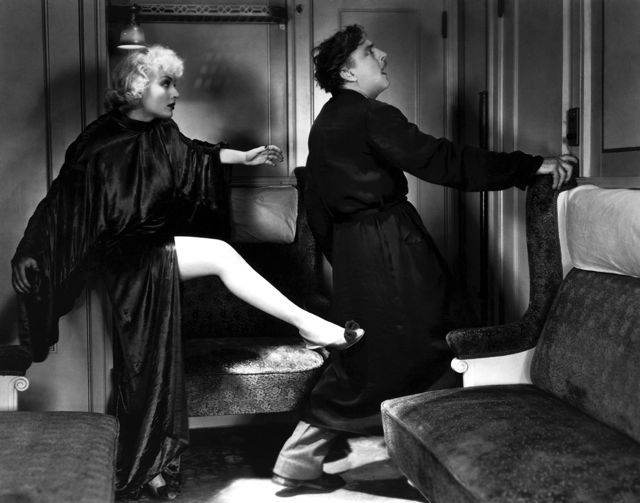
On January 12, Turner Classic Movies will present the 1934 screwball comedy Twentieth Century, which holds up as well today as it did 85 years ago. A flamboyantly narcissistic Broadway producer (John Barrymore) has fallen on hard times and hops a transcontinental train to persuade his former star (Carole Lombard), now an A-list movie star, to headline his new venture. Barrymore’s shameless self-entitlement and hyper dramatic neediness makes for one of the funniest performances in the movies.
Six of my Best Movies of 2019 – So Far are already available to stream. This week, I’m featuring They Shall Not Grow Old: a generation finally understood. Lord of the Rings filmmaker Peter Jackson has, for the first time, layered humanity over our understanding of World War I. By slowing down the speed of the jerky WWI film footage and adding sound and color, Jackson has allowed us to relate to the real people in the Great War. This film is a generational achievement. Now you can stream it from Amazon, iTunes, Vudu, YouTube and Google Play.
Also available to stream:
Once Upon a Time…in Hollywood: masterpiece. Quentin Tarantino’s exquisite filmmaking skills blend together verisimilitude of time and place, vivid performances and a rock ’em, sock ’em story to make Once Upon a Time…in Hollywood an instant classic. Brad Pitt, Margot Robbie, Leonardo DiCaprio and a host of others create tremendous performances, and Tarantino delivers the most startling ending in recent cinema. And it’s a love letter to a Hollywood that six-year-old Quentin Tarantino lived near to, but was not a part of. This is a Tarantino masterpiece, right up there with his best, Jackie Brown and Pulp Fiction. It’s available to stream on Amazon and the other major platforms.
The Last Black Man in San Francisco: the most stark reality, only dream-like. This uncommonly clear-eyed love letter to San Francisco is an absorbing exploration of the inner lives of two friends as they react to their changing city. The brilliantly original filmmaking by director and co-writer Joe Talbot portrays the starkly real as dreamlike. It’s available to stream from Amazon, iTunes, Vudu, YouTube and Google Play.
Long Day’s Journey into Night: obsession and a vivid darkness. This brilliantly original film explores memory – a man obsessed with a doomed romance from twenty years ago plunges into a neo-noir underworld. After a slow burn beginning, his search reaches its climax in a spectacular ONE-HOUR single shot. It can be streamed on Amazon, iTunes and Vudu.
Amazing Grace : pure, sanctified Aretha. This Aretha Franklin concert filmis, at once, the recovery of a lost film, the document of an extraordinary live recording and an immersive, spiritual experience. Amazing Grace can be streamed on Amazon, iTunes, Vudu, YouTube and Google Play; the DVD can be rented from Redbox.
Booksmart: smart, fresh and hilarious. This wildly successful comedy is an entirely fresh take on the coming of age film, and a high school graduation party romp like you’ve never seen. Directed and written by women, BTW. It’s available to stream from Amazon, iTunes, Vudu, YouTube and Google Play.
Here’s a once-in-a-lifetime film noir experience, the opportunity to be a part of an audience to see films that haven’t been projected in a theater in over sixty years. Make plans to attend the Noir City film fest, always one of the best Bay Area cinema experiences, in San Francisco January 24-February 2. Noir City has become an irreplaceable Bay Area cultural treasure like Alcatraz or John’s Grill.
Noir City is the annual festival of the Film Noir Foundation, spearheaded by its founder and president, the Czar of Noir, Eddie Muller. The Foundation preserves movies from the traditional noir period that would otherwise be lost. Noir City often plays newly restored films and movies not available on DVD or streaming. And we get to watch them in a vintage movie palace, San Francisco’s Castro Theatre, with a thousand other film fans.
The 2020 Noir City will focus on international film noir, as it did so successfully six years ago. Then I was enthralled by the Argentine Bitter Stems and the Swedish Girl with Hyacinths, and must admit that I had never even imagined that vintage film noir from those nations existed. This year’s fest brings us titles from Argentina, France, Germany, Korea, Japan, Czechoslovakia, Italy, England, West Germany, Sweden and Poland.
One of best things about Noir City is the opportunity to see a few films that are not available to stream. This year Noir CIty is outdoing itself by presenting EIGHTEEN films that can’t found on a streaming platform, most of them impossible to see outside of Noir City in any format.
The Beast Must Die (Argentina 1952)
The Black Vampire (Argentina 1953)
Panique (France 1947)
Razzia (France 1955)
Any Number Can Win (France 1963),
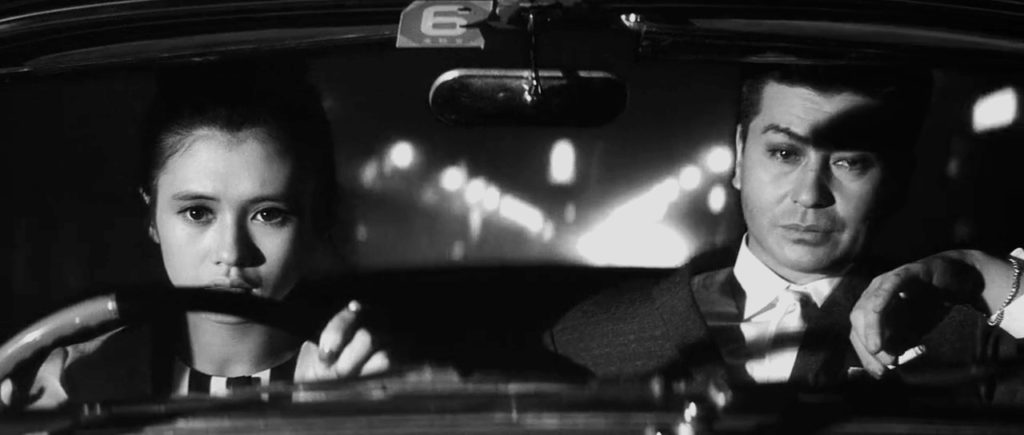
Black Hair (South Korea 1964)
The Facts of Murder (Italy 1959)
…And the Fifth Horseman Is Fear (Czechoslovakia 1965)
90 Degrees In the Shade (Czechoslovakia 1965)
The Long Haul (England 1957)
Never Let Go (England 1965)
The Devil Strikes at Night (West Germany 1957)
Black Gravel (West Germany 1961)
Another Dawn (Mexico 1943)
Twilight (Mexico 1945)
Night Falls (1952)
Salon Mexico (Mexico 1949)
Ashes and Diamonds (Poland 1958)
The films on this year’s program are SO difficult to find that only one of them (Pale Flower) is even on The Movie Gourmet’s list of Overlooked Noir.
“Difficult to find” doesn’t mean “obscure”. The program includes films directed by Michelangelo Antonioni, Jean-Pierre Melville and Roebert Siodmak and starring Ingrid Bergman, Jean Gabin, Alain Delon, Peter Sellers, Emilio Fernandez, Victor Mature and Jean-Paul Belmondo.
The Film Noir Foundation has restored the Argentine films The Beast Must Die and The Black Vampire, and the opening night will feature these films. (These are coincidentally the most lurid titles on this year’s program.) Think about it – you can be in the first movie theater audience to see these films in over sixty years – and perhaps the first US movie audience ever.
This year, I predict that the Thursday night Castro Theatre audience will be THRILLED by the Japanese neo-noir Pale Flower. Writer-director Masahiro Shinoda’s masterpiece is a slow burn that erupts into breathtaking set pieces. This is pioneering neo-noir; its look and feel is as different from classic noir as are Elevator to the Gallows and Blast of Silence.
Noir City runs from Friday, January 24 through Sunday, February 2. To see the this year’s Noir City program and buy tickets, go here. Incidentally, the woman escaping with the loot on this year’s Noir City poster is Victoria Mature, daughter of movie star Victor Mature, whose best work was in film noir.
I’ll be posting a comprehensive Noir City preview on January 20. And you may run into me at Noir City as I cover both weekends.
Adam Sandler and filmmaking brothers Benny and Josh Safdie serve up neo-noir in a pressure cooker in the relentlessly tense Uncut Gems.
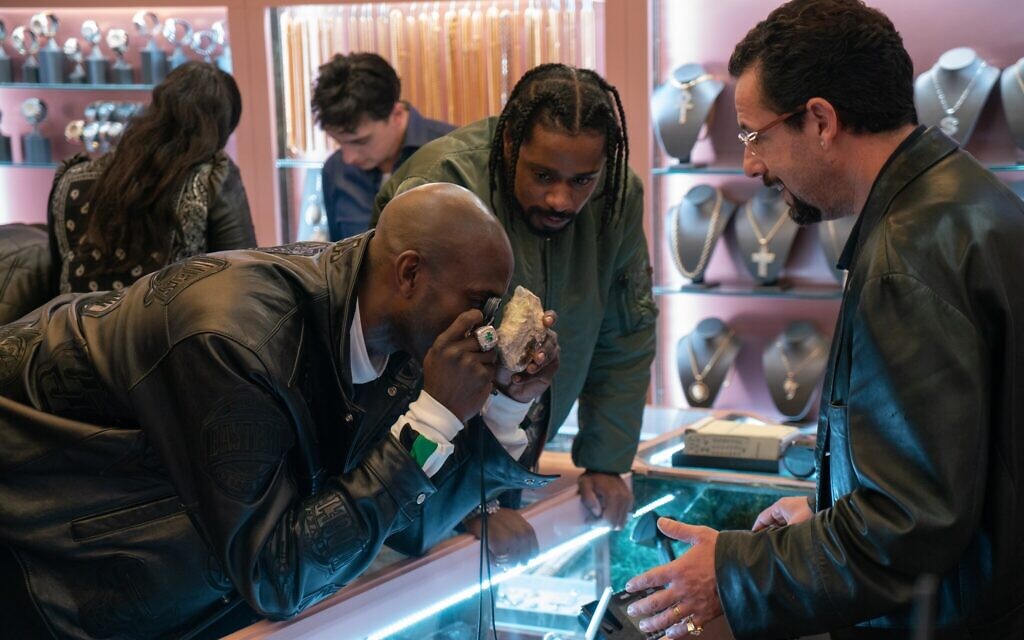
Howard (Adam Sandler) is a Jewish jewelry dealer in New York City’s Diamond District, who makes his big bucks catering to NBA stars brought in by his associate (LaKeith Stanfield). He’s also a gambling addict. One of the consequences of gambling addiction is losing more than you can afford and owing money that you don’t have to very nasty people.
Kevin Garnett, LaKeith Stanfield and Adam Sandler in UNCUT GEMS
Howard has a lot – a wife and kids in a luxurious suburban house, a young mistress in a Manhattan apartment, a thriving business. But he’s always on the verge of losing it all because it’s not enough; his life is driven by the compulsion to make five figure exotic sports bets.
That means that he is constantly robbing Peter to pay Paul, shifting money, jewelry, schemes and bullshit around like a spinning plate act on The Ed Sullivan Show. Throughout Uncut Gems, the chaos elevates, as Howard bets on being bailed out by the Big Sale and the Big Bet. There’s a massive Ethiopian opal (a MacGuffin like the Maltese Falcon), a spine chilling auction and an even more gripping sports bet.
It’s clear that the inevitable will catch up with Howard – we just don’t know where it will fall on the continuum between having all of the bones in his hand broken and wearing cement shoes in the East River. Or whether his spiking blood pressure will send him out with a stroke or heart attack. Come to think of it, this probably isn’t the best movie choice for a cardiologist.
Adam Sandler in UNCUT GEMS
Here’s the challenge that the Safdies faced in writing this character and that Sandler faced in playing him. How do you make him just appealing enough to keep us engaged with his situation? This is a guy who, were we in the same family or community, we would dread his every approach (Here comes trouble).
This is an extraordinary, awards-worthy performance by Sandler; he inhabits a perpetually frenetic guy, fueled by his compulsions and by the resultant desperation.
Idina Menzel is superb as the wife who knows Howard best and assesses him the most accurately (and cruelly). Stanfield is very good, as are Julia Fox as the girlfriend and Eric Bogosian as a frustrated creditor. Former NBA star Kevin Garnett plays NBA star Kevin Garnett and holds his own with the professional actors.
The 2 hours and 15 minutes of Uncut Gems flies by (and you feel like you’ve been running the whole time). This is one of the Best Movies of 2019.