CAUGHT BY THE TIDES: China evolves, she persists

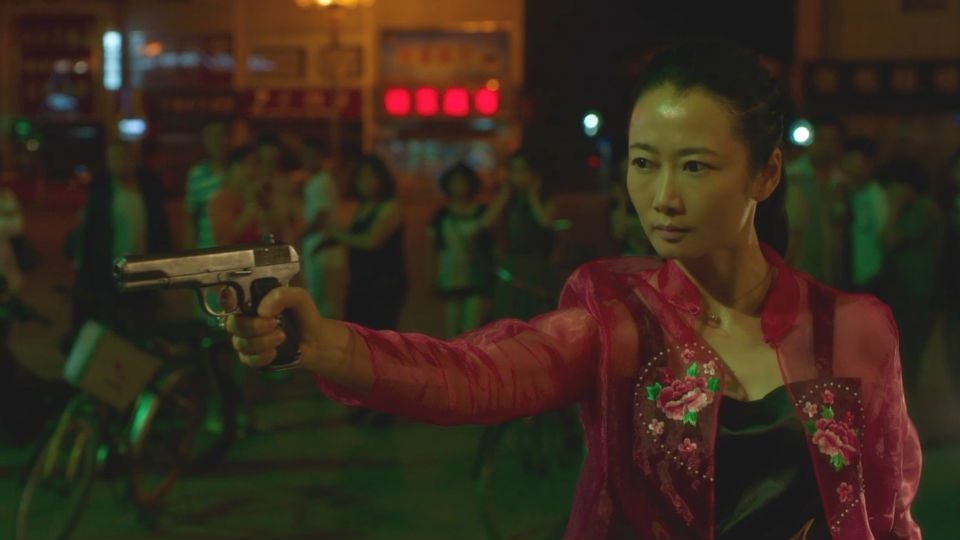
Photo caption: Tao Zhao in CAUGHT BY THE TIDES: Photo courtesy of Janus Films.

Sweeping over decades of modern Chinese history, the auteur Jia Zhangke’s Caught by the Tides reveals profound changes in Chinese society by implanting a personal story within an epic sweep. Writer-director Jia has built Caught by the Tides from footage shot over the 21 years as he made other movies. In a tour de force, actress Tao Zhao delivers an exquisite portrait of resilience.

The plot is deceptively straight-forward, tracing the 21-year arc of the relationship between Qiaoqiao (Tao Zhao) and her shady boyfriend Bin (Zhubin Li). He moves away to find a better financial opportunity, promising to send for her when he’s settled. But he ghosts her, and she heads off to track him down. This simple story is embedded in a portrait of a changing China over the 21-years, with Jia’s clear-eyed observation of the changes and their impacts on regular people.

Neither Qiaoqiao or Bin can affect the course of China’s evolution (they are caught by the tides), but both seek to find their place it in.
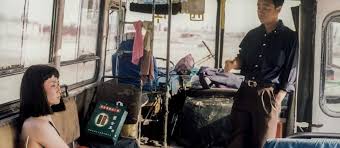
Tao Zhao and Zhubin Li in CAUGHT BY THE TIDES: Photo courtesy of Janus Films.

This is a China that we rarely see, real Chinese (and I mean hundreds of non-professional actors) doing their jobs and entertaining themselves, in cities most of us Westerners haven’t heard of. In what amounts to one dreamy 111-minute montage, Jia presents scores of vignettes . We see retired miners tipping female singers, river travel on boats large and small, a small Christian worship service, mass jogging, an adage-spouting supermarket robot, and a most unlikely TikTok star. The stream of scenes never feels disjointed or boring because the continuity of human experience is so authentic and so novel.

The story begins in 2001 in Datong, a dreary coal mining city in Northern China, a gritty place where no building seems to have been repainted for decades. By 2006, when the story moves to Fenjie City, China is ALL IN on economic development, and corruption is rampart, as everybody seeks a slice of the action; the Chinese government relocated 1.1 million people, sacrificing their homes for the economic payoff of the Three Gorges dam. and Jia shows us the human impact. In 2022, the story moves to Zuhai City near Guadong and back to Datong; despite the COVID pandemic, the new widespread prosperity is jarring, and even Datong has become vibrant.
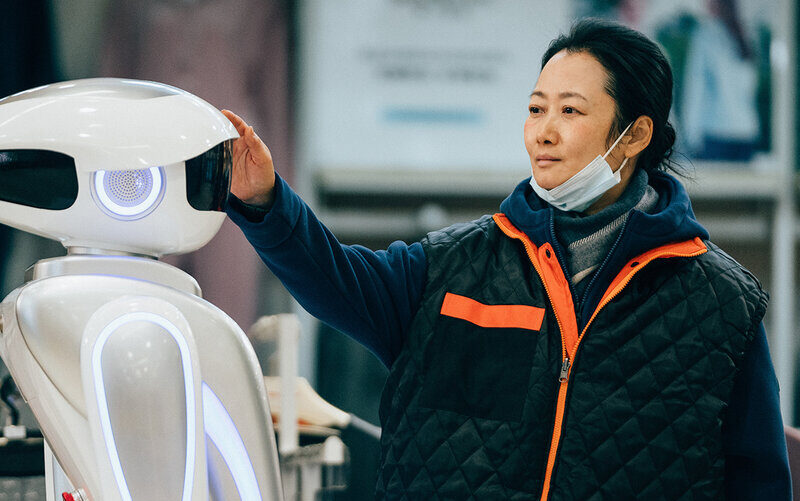
Tao Zhao in CAUGHT BY THE TIDES: Photo courtesy of Janus Films.

Jia is one of the world’s best filmmakers; I rated his Ash Is the Purest White as one of the best films of 2019. In Caught by the Tides, as in most of his films, he benefits from the collaboration with one of the world’s most compelling screen actresses, his wife Tao Zhao. Remarkably, Tao dominates Caught by the Tides without speaking any dialogue. Her character Qiaoqiao isn’t mute or even passive; she has plenty to say but she’s able to communicate, even forcefully, with her face. Qiaoqiao isn’t able to get everything to go her way, but the sound she makes in the final second of Caught by the Tides makes it clear that she’s living life on her terms. It’s an indelible performance.

Caught by the Tides is the best movie of 2025 so far and the best Chinese art film I’ve ever seen.
Stream of the week: ASH IS PUREST WHITE – a survivor’s journey

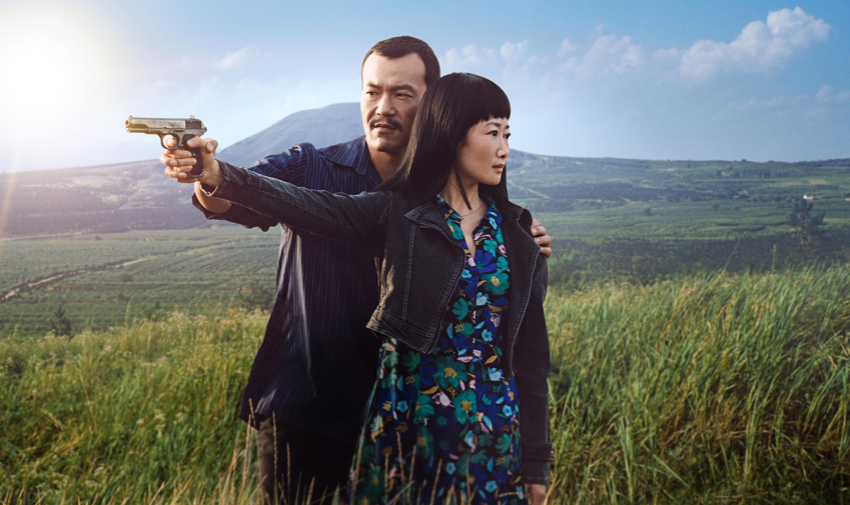
Fan Liao and Tao Zhao in ASH IS PUREST WHITE

Ash Is Purest White is writer-director Zhangke Jia’s portrait of an unforgettable woman surviving betrayal, the crime world and the tidal waves of change in modern China, all embedded in a gangster neo-noir.

Qiao (Tao Zhao), is the tough and spirited girlfriend of the provincial jianghu gang leader Bin (Fan Liao). They are the big fish in their little pond, and they are relishing life. Then circumstances change – great and unperceived economic forces are enervating their hometown and a younger rival gang emerges. Qiao takes a heroic action with severe consequnces. When she re-emerges, she finds herself personally betrayed and unsupported. The seventeen-year span of Ash Is Purest White follows Qiao as she roams across China to rebuild her life. She is at times devastated but refuses to accept permanent defeat.

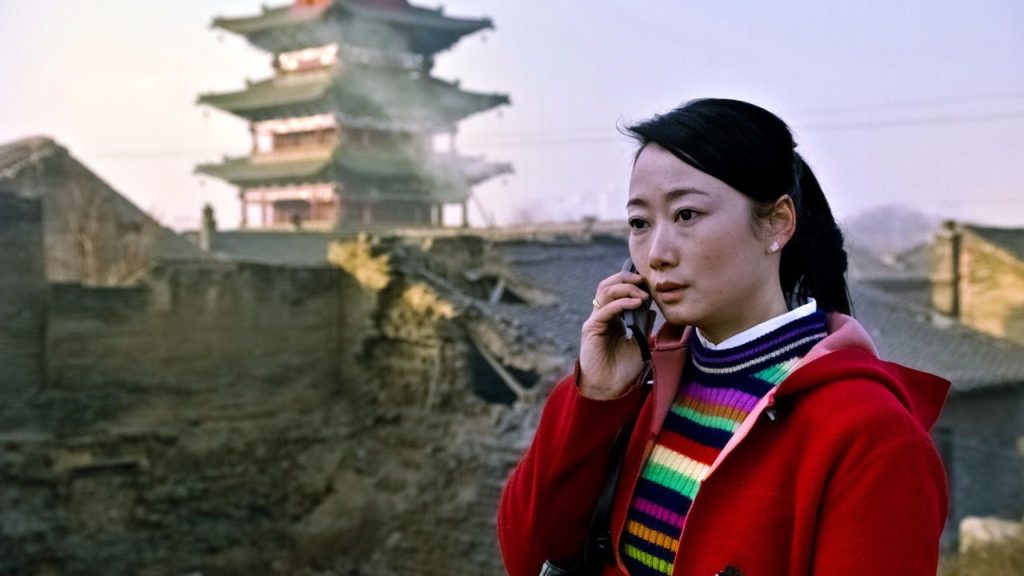
Tao Zhao in ASH IS PUREST WHITE

Tao Zhao is Jia’s wife and muse. Ash Is Purest White is a sweeping epic, and it is her movie. Her performance is a tour de force. Watch her portray Qiao’s confidence in the opening scenes, her resourcefulness and ingenious cons when she is dumped out on her own and the resolve that powers her quest. Fan Liao is also excellent as Bin.

As Qiao’s journey spans almost two decades and thousands of miles, we get insights into contemporary China. Jia’s China is a place where, when the coal industry plays out in one city, the government builds a new city for hundreds of thousands of people to movie into the oil industry. Economic forces sweep across China like flash floods that inundate and sudenly recede. Qiao rides these changes like a fishing bobber on the surface of a tsunami.

Tao Zhao in ASH IS PUREST WHITE

We are familiar with movies about the Mafia and yakuza, but Ash Is Purest White is a glimpse into jianghu – their Chinese equivalent.

Ash is Purest White is on my list of Best Movies of 2019, and it’s streaming on Amazon, iTunes, Vudu, YouTube and Google Play.

ASH IS PUREST WHITE: a survivor’s journey

Fan Liao and Tao Zhao in ASH IS PUREST WHITE

Ash Is Purest White is writer-director Zhangke Jia’s portrait of an unforgettable woman surviving betrayal, the crime world and the tidal waves of change in modern China, all embedded in a gangster neo-noir.

Qiao (Tao Zhao), is the tough and spirited girlfriend of the provincial jianghu gang leader Bin (Fan Liao). They are the big fish in their little pond, and they are relishing life. Then circumstances change – great and unperceived economic forces are enervating their hometown and a younger rival gang emerges. Qiao takes a heroic action with severe consequnces. When she re-emerges, she finds herself personally betrayed and unsupported. The seventeen-year span of Ash Is Purest White follows Qiao as she roams across China to rebuild her life. She is at times devastated but refuses to accept permanent defeat.

Tao Zhao in ASH IS PUREST WHITE

Tao Zhao is Jia’s wife and muse. Ash Is Purest White is a sweeping epic, and it is her movie. Her performance is a tour de force. Watch her portray Qiao’s confidence in the opening scenes, her resourcefulness and ingenious cons when she is dumped out on her own and the resolve that powers her quest. Fan Liao is also excellent as Bin.

As Qiao’s journey spans almost two decades and thousands of miles, we get insights into contemporary China. Jia’s China is a place where, when the coal industry plays out in one city, the government builds a new city for hundreds of thousands of people to movie into the oil industry. Economic forces sweep across China like flash floods that inundate and sudenly recede. Qiao rides these changes like a fishing bobber on the surface of a tsunami.

Tao Zhao in ASH IS PUREST WHITE

We are familiar with movies about the Mafia and yakuza, but Ash Is Purest White is a glimpse into jianghu – their Chinese equivalent.

Ash is Purest White is on my list of Best Movies of 2019, and it’s streaming on Amazon, iTunes, Vudu, YouTube and Google Play.