DELIVER ME FROM NOWHERE: a genius works out his issues

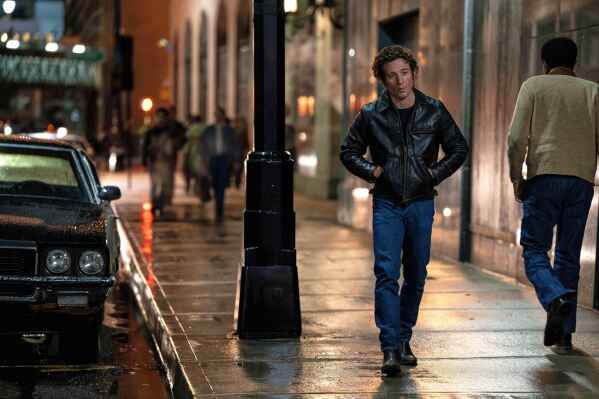
Photo caption: Jeremy Allen White in DELIVER ME FROM NOWHERE. Courtesy of 20th Century Studios.

As the Bruce Springsteen docudrama Deliver Me from Nowhere opens, Springsteen (Jeremy Allen White) is belting out the massive hit Hungry Heart to cap off his The River tour in 1981. Afterwards, his manager/producer/confidante Jon Landau (Jeremy Strong) finds him sitting alone in the bowels of the arena, exhausted and depleted. Too nice a guy to blow off chatting with local radio personalities, Springsteen rallies, but Landau can see that he’s fried.

Landau sets up Springsteen at a rented house in the countryside of Colts Neck, New Jersey. It’s an obscure enough location, so he can rest in privacy, but still only a 25-minute drive to Bruce’s old stomping grounds in Asbury Park. Bruce sits around, decompressing in the darkened house, pondering something other than his future. While their record company is eager for another exuberant, rockin’ Springsteen album and tour, Landau does his best to insulate Springsteen from the pressure.

Bruce experiences a few lighthearted moments, sitting in with the house band at The Stone Pony and having a dalliance with a single mom (a fictional character played by the Australian actress Odessa Young). The Terence Malick movie Badlands sparks his interest and he starts researching the teen killing spree that the film was based on. But mostly, he’s brooding.
Jeremy Allen White in DELIVER ME FROM NOWHERE. Courtesy of 20th Century Studios.

In flashback, Deliver Me from Evil depicts the childhood that Bruce is reflecting on, dominated by his haunted and sometimes brutish father Doug (Stephen Graham). Doug had his demons, and now Bruce’s own demons are blocking his creative work. Bruce Springsteen is depressed, and that’s what Deliver Me from Evil is really about. In publicity for the film, Springsteen is oft crediting Landau for steering him to professional help and advocating for the destigmatization of mental health treatment.

The scenes with Doug Springsteen both with the young Bruce and the adult Bruce – are the core of Deliver Me from Evil.

The plot centers on Springsteen’s dark contemplations leading to his writing his darkest material yet, the songs that make up his Nebraska album. He records the material by himself, at home and on a cassette recorder, intending to record them in a studio with the E Street Band. The unconventional artistic choices that followed and the battle with his own record company, with Landau’s unwavering support, make up the rest of the story.

(In the same period, Springsteen also wrote Born in the U.S.A., Glory Days and I’m on Fire, which were later successful in arrangements with the full E Street Band on the Born in the U.S.A. album which followed Nebraska.)

Deliver Me from Evil depends on an actor’s success in a ballsy challenge – playing a person that all of us have watched closely for decades. Fortunately, Jeremy Allen White can match Bruce Springsteen in charisma and intensity, and that allows White to inhabit the character of Springsteen without resorting to impersonation.
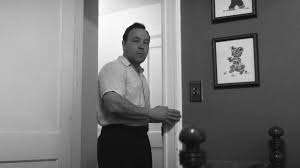
Stephen Graham in DELIVER ME FROM NOWHERE. Courtesy of 20th Century Studios.

Stephen Graham delivers another indelible performance as Doug, capturing the core disappointment and bitterness that leak out in rage and confusion. After early-career roles in Gangs of New York and Band of Brothers, the stocky Englishman has emerged as one of our great character actors, perhaps best in British crime mini-series like Little Boy Blue, Line of Duty, and Adolescence. He also appears in Hollywood movies like Rocketman and the Pirates of the Caribbean franchise (he plays Scrum), and the 2012 refresh of Tinker Tailor Soldier Spy. Along the way, he has become a one-man cottage industry playing fabled American gangsters – Baby Face Nelson in Public Enemies, Al Capone in Boardwalk Empire, and Tony Provenzano in The Irishman. I just love this guy’s work.

Gaby Hoffman is excellent as Springsteen’s mom.

Deliver Me from Nowhere’s director Scott Cooper (Crazy Heart) and Warren Zanes wrote the screenplay, adapting Zanes’ book about the writing and recording of Nebraska. Deliver Me from Nowhere was made with the participation and support of Springsteen and Landau; that provides lots insight to the screenplay, although Landau’s character is a bit saintly, for my taste. However, the portrayal of Springsteen is unsparing.

The E Street Band isn’t on screen much, but I didn’t completely swallow the depiction of certain band members. But that’s just a quibble about a film otherwise brimming with authenticity.

Deliver Me from Nowhere, as smart and genuine as it is, is irresistibly entertaining.
BLUE MOON: wit and vulnerability

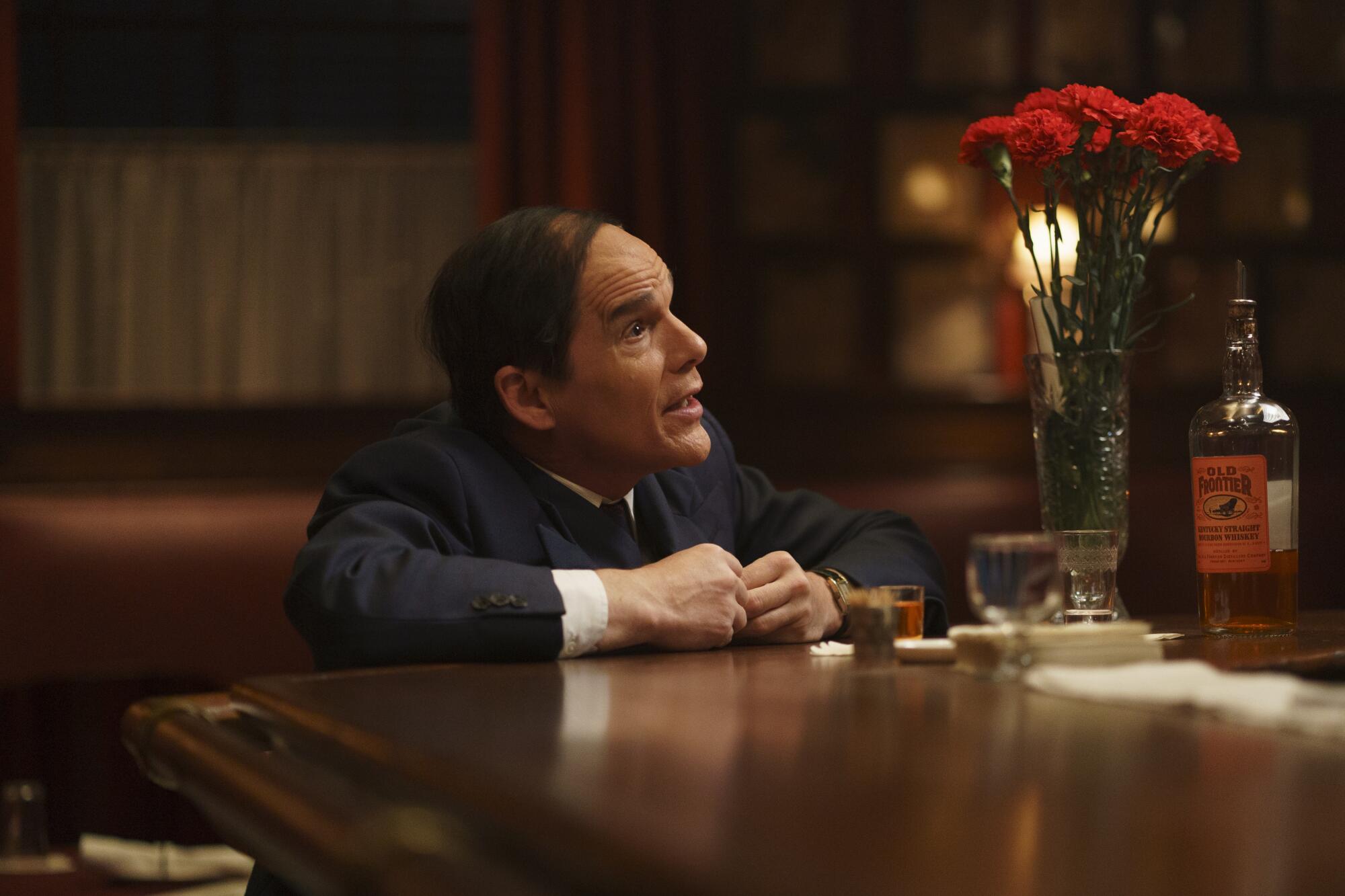
Photo caption: Ethan Hawke in BLUE MOON. Courtesy of Sony Pictures Classics.

The protagonist of Richard Linklater’s Blue Moon is lyricist Lorenz Hart (Ethan Hawke), who Linklater immediately shows us dying of alcoholism, before taking us to a night eight months earlier. Hart, having left the opening night production of Oklahoma!, has entered a familiar haven, the bar at Sardi’s, where he is ready, as always, to hold forth. His longtime partner Richard Rodgers has dumped him for a new collaborator, Oscar Hammerstein, and Hart has immediately recognized that the new duo’s debut musical would dwarf the success of the Rodgers and Hart work. It’s hard to feel good about yourself when you are dumped by your partner of 24 years, who then soars to new heights with a different collaborator.

Beginning in 1919 (when Hart was 24 and Rodgers only 17), the two created 28 stage musicals (including Babes in Arms and Pal Joey and more than 500 songs for Broadway and Hollywood, many of which have become American standards, like Manhattan, The Lady Is a Tramp, My Funny Valentine, and, of course, Blue Moon.

Seeing that body of work eclipsed in one night has Hart reeling. But, now, in 1943, Hart was 48 and Rodgers 41. Hart’s alcoholism has made him unreliable, so Rodger has moved on. Hart’s gift at wordplay is as brilliant as ever, but his confidence is crushed – and he is desperate to work again, and, in his wildest dreams, with Rodgers.

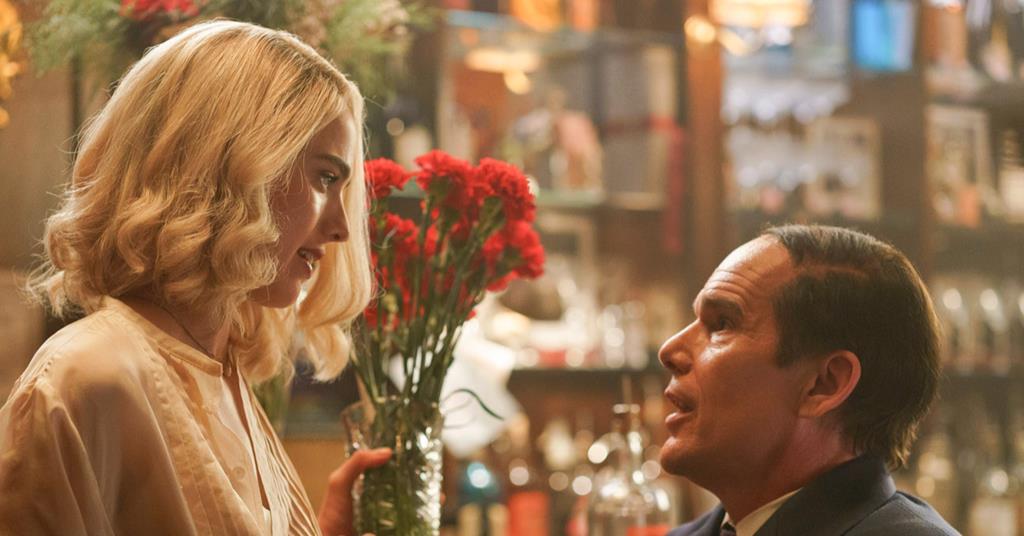
Hart’s career desperation is matched by his romantic desperation – from a doomed fixation with the comely Yale coed, Elizabeth (Margaret Qualley). Elizabeth is self-confident and ambitious, towers over the shrimpish Hart and can match wits with him . Hart is a successful celebrity, but not rich or conventionally attractive, and being an over-the-hill drunken gay man, neither the audience or other characters in Blue Moon see Hart’s pursuit of Elizabeth as anything but a pathetic fantasy.

Margaret Qualley and Ethan Hawke in BLUE MOON. Courtesy of Sony Pictures Classics.

Hart presides over all conversation in the bar, and proves himself a most witty raconteur. Hart, usually unintentionally, reveals himself in banter with Sardi’s affable bartender (an excellent Bobby Cannavale).

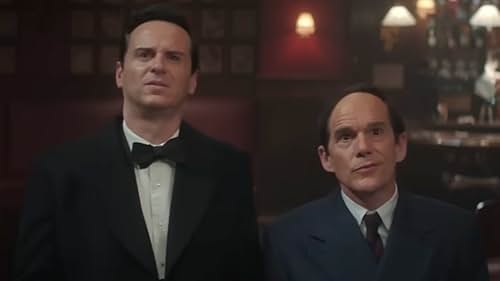
Finally, Richard Rodgers (Andrew Scott) leads in his entourage from Oklahoma! for the opening night party, and Hart explodes into the full wheedle. Moment by moment, we learn more about Rodger’s complicated experience with Hart. It’s clear that Rodgers is genuinely grateful for Hart’s contribution to his life and is also relieved not to no longer be a secondary victim of Hart’s drinking. Rodgers still is affectionate and nostalgic with Hart, but wary about reliving Hart’s worst behavior. When Hart offers a celebratory glass of champagne, Rodgers recoils and barks, “I won’t drink with you!”, registering the pain that Hart’s drinking has inflicted on him over many years.

Why isn’t Blue Moon, a portrait of a man’s crash-and-burn, unwatchably sad?

  • Foremost, even when Hart is being sad, he’s very, very funny.
  • Hawke’s performance is deliciously vivid.
  • We stay engaged in sussing out the complicated relationship between Hart and Rodgers.
  • We delight in the stellar cast and in Richard Linklater’s storytelling genius.

Hawke is one of our very most interesting actors, and his turn as Hart is exceptional, plumbing all of Hart’s desperation, self-loathing and vulnerability. Of course, Hawke, who is 5′ 10″, can play a dreamy romantic lead, so there’s some movie magic – and a bad comb over – employed to help us see him as a 5 foot gnome. Others have described Hawke’s performance here as career-topping, but it’s hard for me to see this performance, as good as it is, as even better than those in Before Sunrise, Before the Devil Knows You’re Dead, and First Reformed, for example.

Andrew Scott and Ethan Hawke in BLUE MOON. Courtesy of Sony Pictures Classics.

Lorenz Hart is a flashy role, but Andrew Scott (Tom Ripley in the recent television episodic Ripley) is quietly mesmerizing as Rodgers, who struggles to contain the embarrassment, wariness, revulsion, pity and love that Hart triggers. Scott won the supporting actor Silver Bear at the Berlinale for this performance.

Qualley just seems to brighten every movie that she’s in – shall we call it the Joan Blondell quality?

One of the most interesting encounters in Blue Moon is between Hart and another bar patron, the writer E.B. White (Patrick Kennedy). The two know and admire each other’s work, although they are conversing for the first time. White can keep up with Hart intellectually, and also has the emotional intelligence to see, without comment, what’s going on with Hart. It’s a remarkably subtle performance by Kennedy.

The entire movie takes place in Sardi’s, except for two or three minutes at and near the beginning. Over 80% of the story takes place in Sardi’s bar. But Blue Moon never looks as inexpensive as it must be. No filmmaker has delivered more fine movies on low budgets than Linklater; I couldn’t find a Linklater movie budgeted at more than a frugal $35 million (School of Rock). Nevertheless, Linklater has created the three most thoughtful romances in cinema (the Before Sunrise series) and the milennium’s best film (Boyhood), along with launching an entire generation of actors in Dazed and Confused.

Here, Linklater turns one night into a vivid portrait of a man’s life and times, and Blue Moon is both funny and profound.