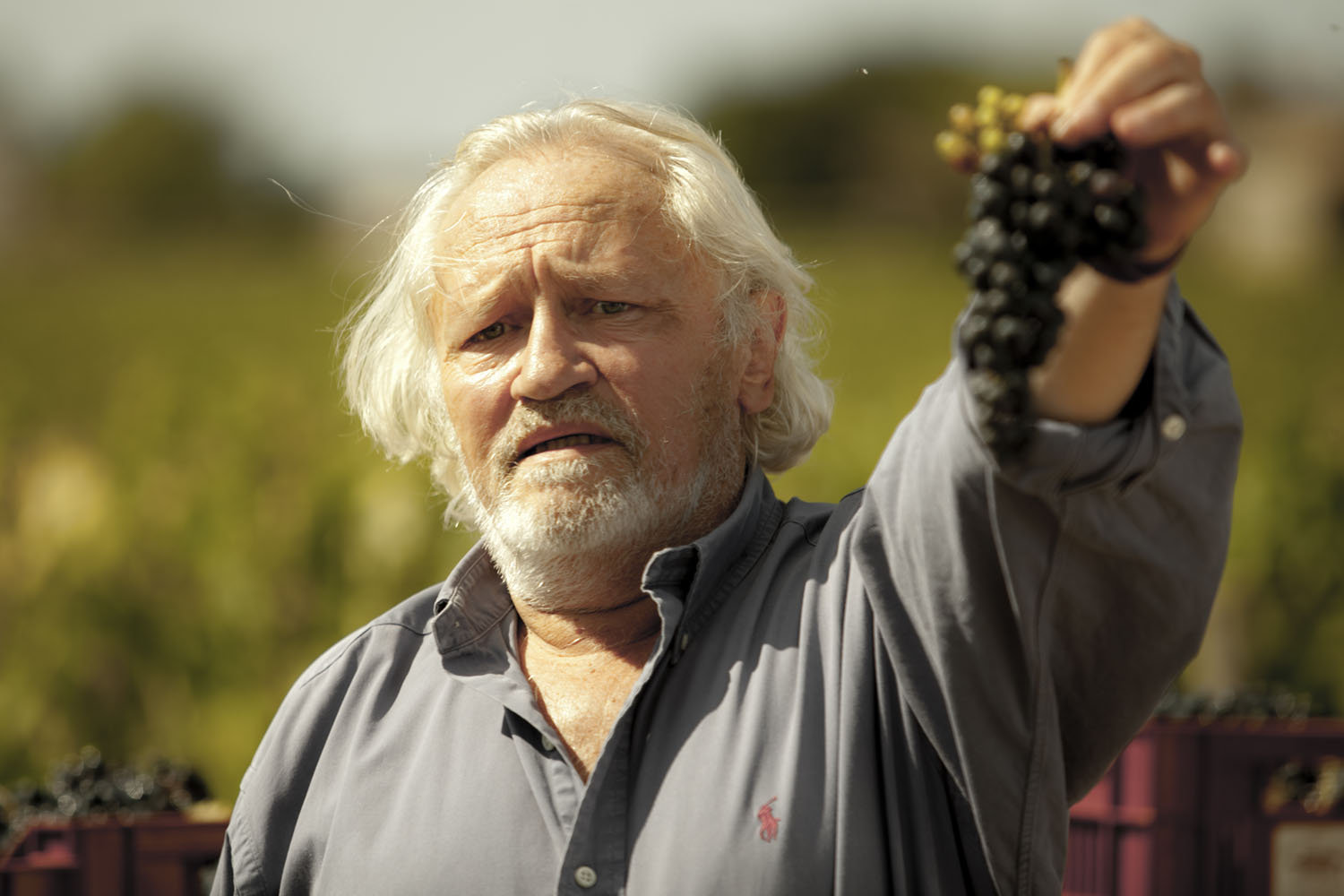
Niels Arestrup (A Prophet, War Horse) stars as the owner of French wine estate who places impossible expectations on his son, with lethal results. The poor son has gotten a degree in winemaking, has worked his ass off on his father’s estate for years and has even married well – but it’s just not enough for his old man. The father’s interactions with the son range from dismissive to deeply cruel.
The father’s best friend is his longtime estate manager, whose health is faltering. The son is the natural choice for a successor, but the owner openly prefers the son’s boyhood friend, the son of the manager. The first half of You Will Be My Son focuses on the estate owner’s nastiness toward his son, which smolders throughout the film. But then the relationship between the sons turns from old buddies to that of the usurper and the usurped. And, finally, things come down to the decades-long relationship between the two old men.
Deep into the movie, we learn something about the father that colors his view of his son. And then, there’s a startling development that makes for a thrilling and operatic ending.
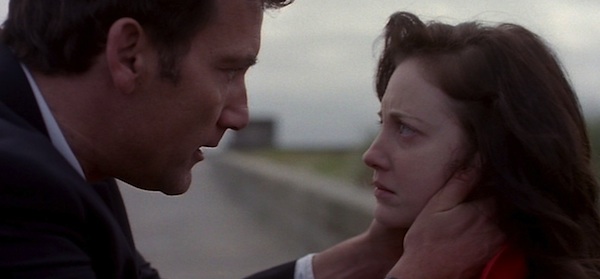
The riveting thriller Shadow Dancer takes place during The Troubles in 1990s Belfast. Thirtyish single mom Collette (Andrea Riseborough) is captured by British security while planting an IRA bomb in London. Faced with the alternative of a long imprisonment with her young son snatched off to foster care, Collette reluctantly agrees to return to Belfast and inform on her IRA unit. This would make for a tense ride in any case, but Collette belongs to a crew run by her two adult brothers, and all three live with their mother.
Everyone in the cell, including the three siblings, is paranoid out of necessity. And paranoid is only a starting point in describing the IRA’s internal security chief, who soon figures out that there’s a mole in the unit, and begins a mercilessly ruthless investigation; before every interrogation, his assistant rolls out plastic sheeting on the floor – just in case an immediate execution is warranted. To make matters even more nerve-wracking, Collette’s British handler Max (Clive Owen) suspects that his superiors are making Collette expendable to protect another intelligence asset. And so we go along on Shadow Dancer’s wild ride, all the way to its noirish ending.
The heart of the film is Andrea Riseborough’s fine performance as Collette. Surrounded by suspicious friends and foes alike, she must be contained and ever watchful. She cannot reveal that the tension is ripping her apart on the inside.
All of the performances are excellent, especially Brid Brennan as Collette’s severe mother, always putting on the kettle for one of her terrorist offspring. David Wilmot is convincing as the IRA’s mole hunter, dead serious here after his comic turn in The Guard as the goon who couldn’t remember whether he was a psychopath or a sociopath.
Director James Marsh won an Oscar for his documentary Man on Wire. Marsh also directed Project Nim (one of my Best Movies of 2011) and the based-on-fact British crime drama Red Riding: In the Year of Our Lord 1980.
Here, Marsh demonstrates an excellent sense of pace. Pay attention to the scenes at the beginning with Collette’s little brother and with the London Underground. In contrast to many quick-cutting filmmakers, Marsh takes his time so dread settles in and the tension builds. It results in a top-notch thriller.
I can say only three good things about Only God Forgives. First, it’s not painfully bad, but laughably bad. Second, the great Kristin Scott Thomas is on-screen for 10-15 minutes in an outlandishly campy role. Third, this week presents the rare opportunity to see the best of cinema (The Hunt) and the worst (Only God Forgives) in a perverse double feature.
After combining on the thrilling Drive, director Nicholas Winding Refn and Ryan Gosling return with Only God Forgives, a hyper-violent revenge tale. I loved Drive, with Winding Refn’s vivid colors and taut pacing, its shocking violence and Gosling’s evocative performance. Only God Forgives reprises the garish palette, but fails on the other aspects.
Gosling’s character, a pro kick-boxer and the henpecked son of a female crime lord, has little so personality that he could have played by Keanu Reeves. The exploitative violence doesn’t have the shock value of Drive’s. But, most unforgivably, the pacing drags. Winding Refn tries to deliver gravity by inserting pregnant pauses between virtually each shot. Typically, one character looks off camera, and there’s a pause and a dramatic musical chord; then another character looks back, with another pause and another chord. Look Pause Chord Look Pause Chord Look Pause Chord ad nauseam.
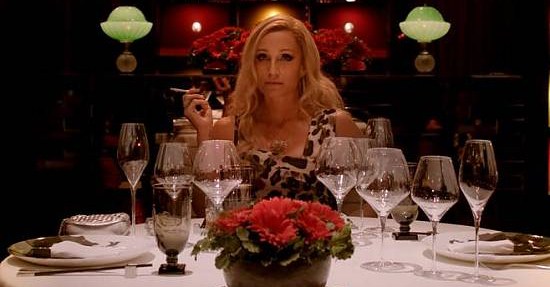
Kristin Scott Thomas plays Gosling’s evil mom and gets to utter this unforgettable line: “How many cocks can you entertain in that cute little cumdumster of yours?”.
Playing the cop villain, Thai actor Vithaya Pansringarm walks deliberately – very deliberately – around Bangkok and is very good at moving his eyes without moving his head. Oddly, after mutilating yet another person with his hidden sword, he enthralls a roomful of uniformed cops by crooning a karaoke ballad.
Highly anticipated (because of Drive), Only God Forgives got trashed by critics at Cannes and been reviled upon its US release. Only After Earth, The Lone Ranger and Pacific Rim may keep it out of the bottom spot as the year’s worst major release.
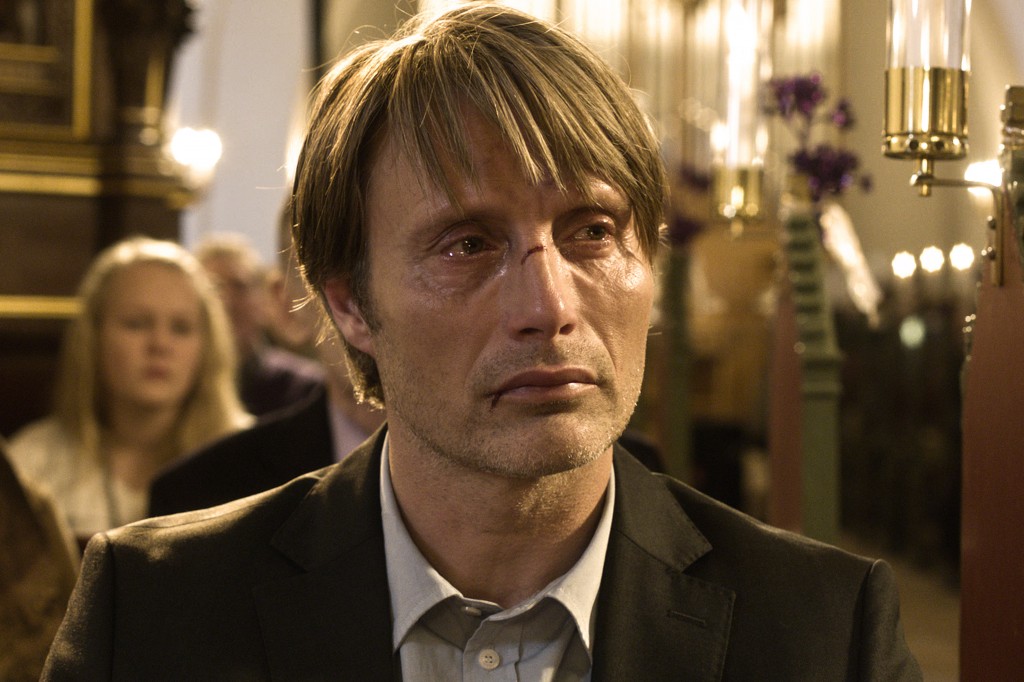
In the Danish drama The Hunt (Jagten), Mads Mikkelsen plays a man whose life is ruined by a false claim of child sexual abuse. You’ll recognize Mikkelsen, a big star in Europe, from After the Wedding and the 2006 Casino Royale (he was the villain with the bleeding eye). He won the 2012 Cannes Best Actor award for this performance.
The story is terrifyingly plausible. The protagonist, Lucas, is getting his bearings after a job change and a divorce. He lives in a small Danish town where everyone knows everyone else, next door to his best friend. The best friend drinks too much and his wife is a little high-strung, but Lucas embraces them for who they are. He’s a regular guy who hunts and drinks with his buddies and is adored by the kids at the kindergarten where he works. He’s not a saint – his ex-wife can get him to fly off the handle with little effort.
A little girl hears a sexual reference at home that she does not understand (and no one in the story could ever find out how she heard it). When she innocently repeats it at school, the staff is alarmed and starts to investigate. Except for one mistake by the school principal, everyone in the story acts reasonably. One step in the process builds upon another until the town’s parents become so understandably upset that a public hysteria ensues.
Director Thomas Vinterburg had previously created the underappreciated Celebration (Festen).The Hunt is gripping – we’re on the edges of our seats as the investigation snowballs and Lucas is put at risk of losing everything – his reputation, his job, his child, his friends, his liberty and even his life. Can Lucas be cleared, and, if he is, how scarred will he be? The Hunt is a superbly crafted film with a magnificent performance by Mikkelsen.
The riveting thriller Shadow Dancer takes place during The Troubles in 1990s Belfast. Thirtyish single mom Collette (Andrea Riseborough) is captured by British security while planting an IRA bomb in London. Faced with the choice of a long imprisonment with her young son snatched off to foster care, Collette reluctantly agrees to return to Belfast and inform on her IRA unit. This would make for a tense ride in any case, but Collette belongs to a crew run by her two adult brothers, and all three live with their mother.
Everyone in the cell, including the three siblings, is paranoid out of necessity. And paranoid is only a starting point in describing the IRA’s internal security chief, who soon figures out that there’s a mole in the unit, and begins a mercilessly ruthless investigation; before every interrogation, his assistant rolls out plastic sheeting on the floor – just in case an immediate execution is warranted. To make matters even more nerve-wracking, Collette’s British handler Max (Clive Owen) suspects that his superiors are making Collette expendable to protect another intelligence asset. And so we go along on Shadow Dancer’s wild ride, all the way to its noirish ending.
The heart of the film is Andrea Riseborough’s fine performance as Collette. Surrounded by suspicious friends and foes alike, she must be contained and ever watchful. She cannot reveal that the tension is ripping her apart on the inside.
All of the performances are excellent, especially Brid Brennan as Collette’s severe mother, always putting on the kettle for one of her terrorist offspring. David Wilmot is convincing as the IRA’s mole hunter, dead serious here after his comic turn in The Guard as the goon who couldn’t remember whether he was a psychopath or a sociopath.
Director James Marsh won an Oscar for his documentary Man on Wire. Marsh also directed Project Nim (one of my Best Movies of 2011) and the based-on-fact British crime drama Red Riding: In the Year of Our Lord 1980.
Here, Marsh demonstrates an excellent sense of pace. Pay attention to the scenes at the beginning with Collette’s little brother and with the London Underground. In contrast to many quick-cutting filmmakers, Marsh takes his time so dread settles in and the tension builds. It results in a top-notch thriller.
Shadow Dancer is showing in some theaters now, but can be hard to find. It is available streaming from Amazon, iTunes and Vudu.
Driven to an air-conditioned theater by a weekend heat wave, I surprised myself by seeing Fast & Furious 6 (just “Furious 6” in the title sequence). Now you do not go to a franchise action thriller for strong characters, profound themes or plausible stories; instead you’re looking for fights and chases (and, in my case, air conditioning). Fortunately, Fast & Furious 6 delivers the cool chase scenes, doesn’t take itself too seriously and offers a couple of strong female performances to boot.
In a smoldering performance, Michelle Rodriguez steals the movie whenever she’s on screen. I was also delighted to see Gina Carano, whom I liked so much last year in Steven Soderbergh’s Haywire. Carano is a mixed martial arts star in real life, so she adds authenticity to an action picture.
Then there’s the dialogue and the plot. One team member says, as Dwayne “The Rock” Johnson approaches unseen from behind, “Why do I smell baby oil?”. That is the ONLY line in Fast & Furious 6 that I hadn’t heard in a movie before. The movie’s climactic set piece is over 20 minutes of frantic action as an airplane is trying to take off, and I calculated that the runway needed to be at least 68 miles long. But, because Furious 6 shows the good sense not to linger on anything for longer than a second or two, we don’t mind.
Some female viewers will gag at a male fantasy aspect of Fast & Furious 6. It’s not a sexual, but a gender behavioral fantasy – the women characters always release the men from any emotional drama. When a guy opts to leave his wife and their baby for a totally unnecessary suicide mission, she accedes, affirming that he’s gotta do what he’s gotta do. When the hero finds and rescues his old girlfriend, his current girlfriend is a good sport and steps aside with no hard feelings. It’s a Low Maintenance and No Drama world for the guys. This is the most implausible part of Fast & Furious 6.
Rodriguez: outstanding. Chases and Carano: good. Everything else: silly but harmless.
{Note: I’m reposting this because The East’s wider release was delayed until this weekend – and it’s one of very few good new movies.)
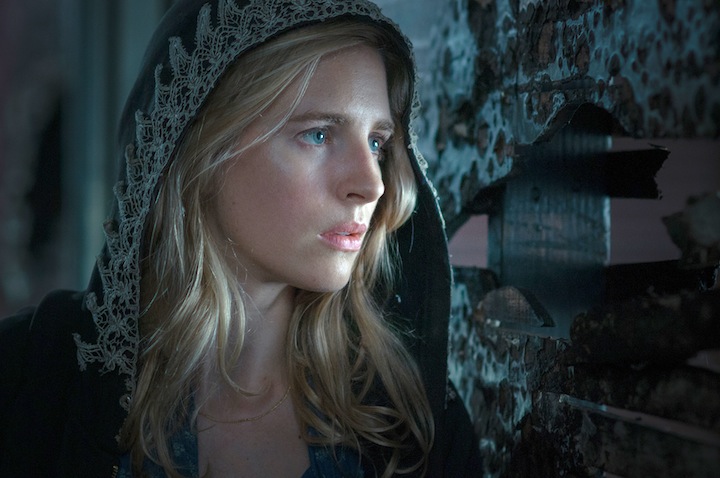
The East, coming out on Friday, is a smart and gripping thriller that explores both our response to corporate criminality and the unfamiliar world of anarchist collectives. Brit Marling plays a brilliant up-and-comer in an industrial security firm who goes undercover to hunt down and infiltrate a band of eco-terrorists named The East.
The East seeks to brings deadly personal accountability to corporate leaders who injure people and the environment. These aren’t Hollywoodized corporate villains – all of the corporate crimes depicted in the movie have occurred in real life. Lesser filmmakers would have made The East into a revenge fantasy with a Robin Hood-like merry band of earnest kids – or a conventional espionage procedural, hunting down a gang of wild-eyed terrorists.
The East is so good because it explores our helplessness in the face of corporate malfeasance. The corporate targets deserve to be held accountable, and their crimes cry out for punishment. Yet the vigilante violence of The East is clearly unacceptable. No self-selected group of avengers – no matter how legitimate their grievance – should be able to inflict extra-legal violence. (If you don’t think so, just substitute white supremacist militia, fundamentalist Mormons or Chechen immigrants for the hippies in this movie.)
We view this dilemma through the perspective of Marling’s protagonist, whose own views evolve through the course of the story. Marling co-wrote the screenplay with director Zal Batmanglij. Marling and Batmanglij spent over three months in an anarchist collective, living a cash-free life off the grid; that experience has paid off with an unusual authenticity in the depiction of the anarchist lifestyle.
Marling and Batmanglij also co-wrote the indie The Sound of My Voice, and Marling wrote and starred in last year’s sci-fi hit Another Earth. Here, they have created a set of original characters and invented some really ingenious plot points, especially a very powerful initiation dinner and an astounding bit of tradecraft involving dental floss.
Besides Marling, Ellen Page is especially good as one of the eco-terrorists. Julia Ormond is brilliant in a tiny part as a business executive. There are other fine performances by Patricia Clarkson as Marling’s nasty boss and by Alexander Skarsgaard and Toby Kebell as anarchists.
There may be some holes in the plot, but The East is such a tautly crafted thriller, that we don’t have time to notice. There is one unfortunately corny scene between Ellen Page’s character and Jamey Sheridan’s (he’s become the Go To Guy for entitled white male scumbags). But those are quibbles – The East is a very strong film.
The East, coming out on Friday, is a smart and gripping thriller that explores both our response to corporate criminality and the unfamiliar world of anarchist collectives. Brit Marling plays a brilliant up-and-comer in an industrial security firm who goes undercover to hunt down and infiltrate a band of eco-terrorists named The East.
The East seeks to brings deadly personal accountability to corporate leaders who injure people and the environment. These aren’t Hollywoodized corporate villains – all of the corporate crimes depicted in the movie have occurred in real life. Lesser filmmakers would have made The East into a revenge fantasy with a Robin Hood-like merry band of earnest kids – or a conventional espionage procedural, hunting down a gang of wild-eyed terrorists.
The East is so good because it explores our helplessness in the face of corporate malfeasance. The corporate targets deserve to be held accountable, and their crimes cry out for punishment. Yet the vigilante violence of The East is clearly unacceptable. No self-selected group of avengers – no matter how legitimate their grievance – should be able to inflict extra-legal violence. (If you don’t think so, just substitute white supremacist militia, fundamentalist Mormons or Chechen immigrants for the hippies in this movie.)
We view this dilemma through the perspective of Marling’s protagonist, whose own views evolve through the course of the story. Marling co-wrote the screenplay with director Zal Batmanglij. Marling and Batmanglij spent over three months in an anarchist collective, living a cash-free life off the grid; that experience has paid off with an unusual authenticity in the depiction of the anarchist lifestyle.
Marling and Batmanglij also co-wrote the indie The Sound of My Voice, and Marling wrote and starred in last year’s sci-fi hit Another Earth. Here, they have created a set of original characters and invented some really ingenious plot points, especially a very powerful initiation dinner and an astounding bit of tradecraft involving dental floss.
Besides Marling, Ellen Page is especially good as one of the eco-terrorists. Julia Ormond is brilliant in a tiny part as a business executive. There are other fine performances by Patricia Clarkson as Marling’s nasty boss and by Alexander Skarsgaard and Toby Kebell as anarchists.
There may be some holes in the plot, but The East is such a tautly crafted thriller, that we don’t have time to notice. There is one unfortunately corny scene between Ellen Page’s character and Jamey Sheridan’s (he’s become the Go To Guy for entitled white male scumbags). But those are quibbles – The East is a very strong film.
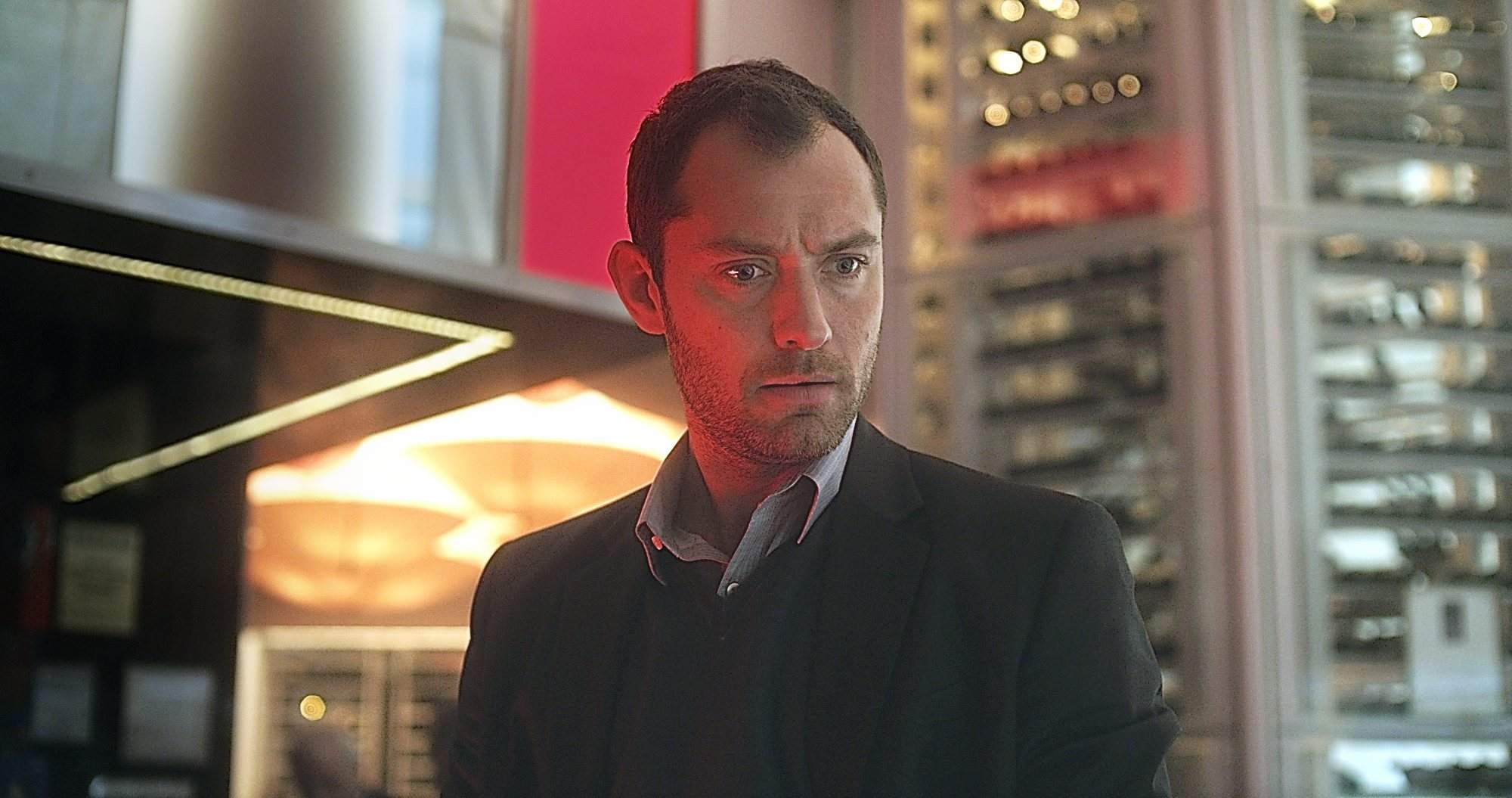
Side Effects is a psychological thriller that keeps thriller-lovers on the their toes by constantly changing its focus. First one character is on the verge of falling apart, then another and then another. Initially, we think that the story is about mental illness and prescription psych meds, but then it evolves into something else quite different. The plot might have seemed implausible in the hands of a lesser director, but Steven Soderbergh pulls it off with panache.
Soderbergh got superb performances by his leads: Jude Law, Rooney Mara and Catherine Zeta-Jones. Mara, so striking in The Social Network and The Girl with the Dragon Tattoo, serves notice that she is a perfect fit for psychological dramas; she can turn apparent fragility and unknowability into menace like few other film actresses. And few actors can take a character from charming confidence to a desperate meltdown like Law does here. Zeta-Jones shows that she play a frigid mistress of the universe who is passionate and needy underneath. The supporting players are all perfectly cast.
The insistent music by Thomas Newman, while never obvious, is an integral part of the suspense. Soderbergh, a master who has repeatedly elevated genre films, has another winner in Side Effects.
Side Effects is available on DVD from Netflix and streaming from Vudu,YouTube and GooglePlay.
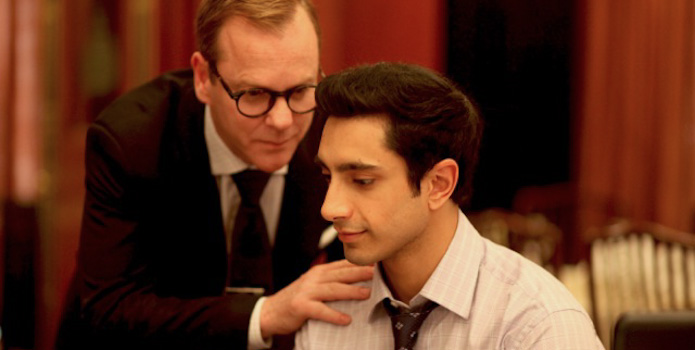
Director Mira Nair (Mississippi Masala, Monsoon Wedding, The Namesake) brings the novel The Reluctant Fundamentalist to the screen. A young Pakistani man flourishes at Princeton and on Wall Street, and he becomes an American Master of the Universe. But then September 11 changes his world, as Americans reacting and overreacting to terror start treating him badly. Suddenly, he no longer sees a fit with his American girlfriend, a flighty, overprivileged artist. He returns to Pakistan to teach in a university, and becomes an intellectual leader for Pakistanis seeking to resist the West. The movie becomes a thriller when the question arises, has he become a terrorist?
The thriller works – if you haven’t read the novel, you don’t know whether the guy we’ve been rooting for is or is not a terrorist until the final minutes. The best thing about the movie is the remarkably intense performance of British actor Riz Ahmed as the protagonist. Ahmed is a compelling screen presence, and he clearly has impressive acting range when you contrast his hyper-alert role here with the dim terrorist he played in the hilarious terrorist parody Four Lions. As one would expect, Liev Schreiber is also excellent as the guy who must determine whether Ahmed has become a terrorist.
What didn’t work for me? First there was the odd choice of Kate Hudson as the girlfriend. The character is just too vapid to captivate a Wall Street whiz kid, and Hudson just doesn’t project the sensuality to make up the difference for a guy in his early 20s.
The story also suggests that non-violent, democratic nationalism can have widespread appeal in Pakistan, and, while I would hope that Pakistanis embrace that path, I’m not sure that it’s a likely outcome.
If you need a sermon on the blowback from our War on Terror, then you can sit in the pew for The Reluctant Fundamentalist. But, for an ambiguous thriller, Homeland is a better choice.