RESPECT: struggling to take command of her own artistry

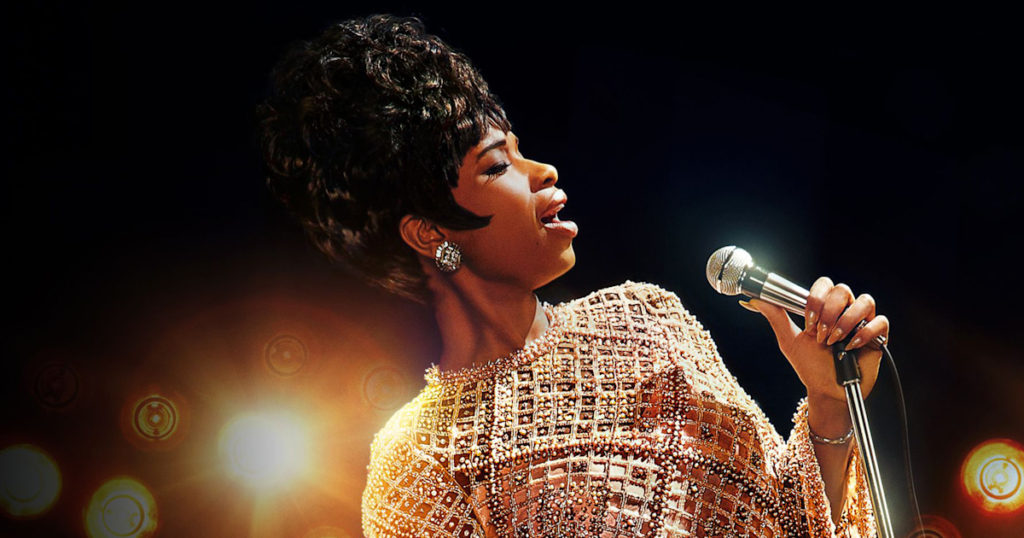
Jennifer Hudson in RESPECT

Aretha Franklin was, if anything, formidable, and Jennifer Hudson reaches formidability as Aretha in Respect. Hudson (handpicked by Aretha to star in her own biopic) is sensitive enough to play the ambitious but confidence-challenged young Aretha and brassy enough to soar as the diva that Aretha became.

Respect concentrates on three stages of Aretha’s life – her childhood in the 1950s, her uncertain career at Columbia Records in 1960-65 and her creative partnership with Jerry Wexler, beginning in 1967, that led to stardom. The film culminates with the1972 live gospel album that we can now watch in the 2019 film Amazing Grace.

The common thread in Respect is Aretha’s learning to push back on the attempts by men to control her artistically, financially and intimately. The film’s high point is Aretha finally getting the opportunity, in a Muscle Shoals recording session, to impose her own creativity on I Never Loved a Man (Like the Way I Love You); we’re able to watch the instant that Aretha transforms herself into an icon. Hudson also delivers killer versions of Respect, Amazing Grace, Natural Woman and (my personal favorite) Think.

During much of the film, 12-year-old actress Skye Dakota Turner, plays a ten-year-old Aretha (and she’s heartbreakingly great). Aretha’s formative years were startlingly unusual. For one thing, as the daughter of a celebrity minister dad and a celebrity gospel singer mom, she was unusually privileged for a black youngster in the 1950’s – she was spared poverty and grew up in a home where MLK himself, Dinah Washington and gospel music legend James Cleveland were frequent guests. On the other hand, her broken home was unhealthy enough that Aretha became pregnant at age 12, and again at age 14. She emerged well-connected – and severely traumatized.

Forest Whitaker is, as one would expect, excellent in the pivotal role of Franklin’s father, C.L. Franklin. The cast is uniformly excellent including Audra MacDonald as Aretha’s mom, Kimberly Scott as her grandmother, Marc Maron as Jerry Weinberg, Marlon Wayans as her seamy first husband, and Mary. J. Blige as Dinah Washington.

Respect is 2 hours, 25 minutes long, and could have been better if 15-20 minutes shorter. Nevertheless, it gives us a sound view of the factors that molded Aretha Franklin’s personality, and her struggles to take command of her own artistry.
THE BIG PICTURE: Christopher Guest before the mockumentaries

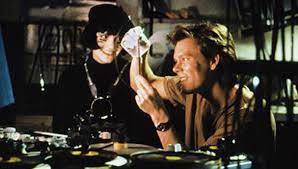
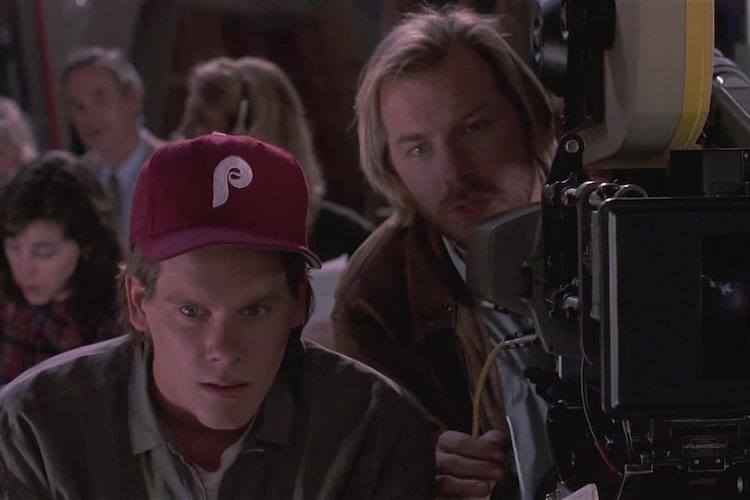
Kevin Bacon and Michael McKean in THE BIG PICTURE

Pre-mockumentary, Christopher Guest’s first feature as a director was The Big Picture (1989), a pointed satire of modern Hollywood. It’s not as vicious as Robert Altman’s The Player, and not as funny as Guest’s own brilliant mockumentaries, but you can glimpse Guest’s path to realizing his comic genius.

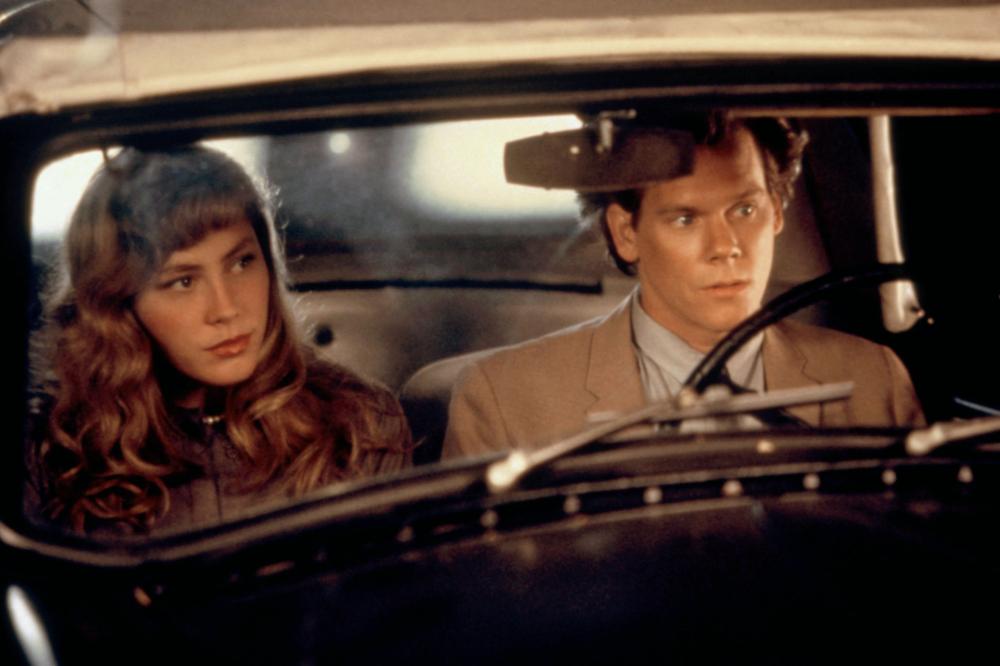
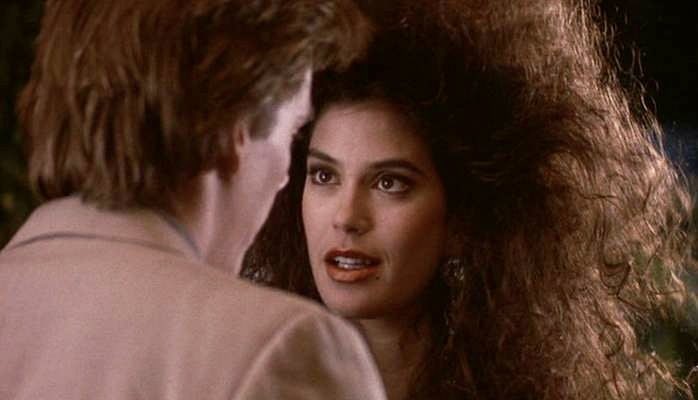
In this cautionary comedy, Nick (Kevin Bacon), a young director, wins a prestigious student film competition and suddenly finds himself Hollywood’s new Bright and Shiny Thing. Movie studios and agents clamor over him, and Nick moves to LA with his architect girlfriend (Emily Longstreth) and cinematographer and best friend (Michael McKean) for his first big movie; all three newcomers are very naive. Nick is soon dazzled by promises of fame and money (and Teri Hatcher’s body), loses his way and betrays his girlfriend and his best friend.

Kevin Bacon and Teri Hatcher in THE BIG PICTURE

Along the way, Nick hires a wacky agent (Martin Short) and encounters a range of Hollywood Suits, and there are lots of funny moments. My favorites are pitches for a beach party sexploitation movie and an Abe and Babe buddy picture (about Abe Lincoln and Babe Ruth).

The cast also includes the always welcome J.T. Walsh and Jennifer Jason Leigh at her most comically kooky (joyously manic but hinting at emotional damage underneath). Watch for John Cleese as the bartender Frankie. And then there’s Teri Hatcher, ravishing even in an unfortunate 1980s hairstyle.

Jennifer Jason Leigh and Kevin Bacon in THE BIG PICTURE

The Big Picture follows Rob Reiner’s 1984 This Is Spinal Tap, which Guest co-wrote and in which he starred in as the dim guitarist Nigel Tufnel, who sets his amp to eleven. In 1996, Guest followed The Big Picture with Waiting for Guffman, which launched his string of mockumentaries – Best in Show (his masterpiece), A Mighty Wind, For Your Consideration and Mascots.

I watched The Big Picture on on Turner Classic Movies, and it streams from Amazon, Vudu and YouTube.

Emily Longstreth and Kevin Bacon in THE BIG PICTURE

THE SPARKS BROTHERS: must be seen to be believed

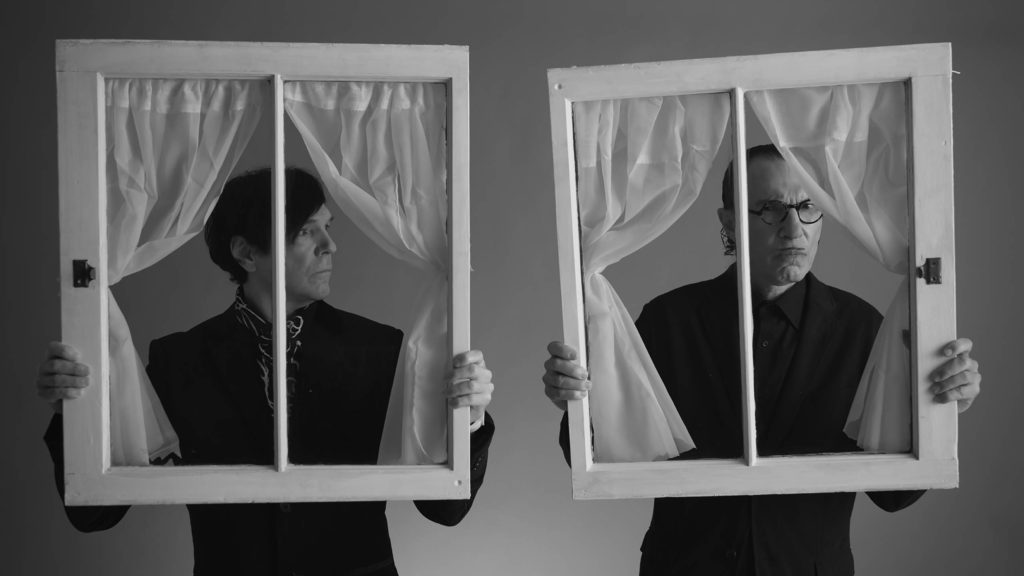
Photo caption: Russell Mael and Ron Mael in THE SPARKS BROTHERS. Photo by Jake Polonsky, courtesy of Sundance Institute.

The Sparks Brothers is Edgar Wright’s affectionate documentary on a pop band that has been active for 54 years (and that I had never heard of). The band is Sparks, comprised of brothers Ron and Russell Mael, and The Sparks Brothers is one fun movie.

Ron writes the songs and plays keyboards, and Russell is the singer and front man. In the film, Sparks is described as “the best British pop band to come out of America” and “a snaky lead singer for the ladies and then the Hitler mustache”. Sparks was first produced by Todd Rungren, of all people, in 1967. (Both Rungren and Russell Mael were dating Miss Christine of the GTOs.) Pop success eluded them until they surged in the UK in 1974-75.

Then Sparks pioneered electro dance a couple years too early, came to hard rock a little late, and have kept moving on to the next project and musical style that interests them. Of course, that approach doesn’t let their fans get comfortable.

A musician says, “they don’t care about money or fame – just art for art’s sake”, which isn’t EXACTLY true. The Maels really DO want their music to be heard, and they really DO want to be popular and famous. They just won’t compromise artistically to get there.

What they WILL do is work with remarkable stamina and discipline. This is the rock first rock documentary I’ve seen without somebody’s serious drug use being a point of deflection. These guys marry an intense work ethic with their often bizarre art.

Their stage presence is remarkable. With his pretty boy looks and charisma, Russell bounds about as the quintessential front man. Ron silently stands behind his keyboard, posing with his, well, Hitler mustache (which he has now replaced with a pencil mustache).

Above all, Sparks is ever playful, and The Sparks Brothers is very funny. They match their stage persona with lyrics like “dinner for 12 is now dinner for 10 because I’m under the table with her“. Ron and Russell Mael themselves kick off the movie with a hilariously deadpan questionnaire.

Their performances are fun and witty, and their music is peppy and catchy. The overt humor sometimes masks lyrics that are poignant and even despairing.

Growing up in LA, Ron and Russell cherished their boyhood weekend matinees with their dad, filled with Westerns and war movies. As artsy UCLA students, they admired Ingmar Bergman and French New Wave cinema as much as they did The Who and the Kinks, They had lined up a movie project themselves with the great auteur Jacques Tati that fell through because of Tati’s health. In the 1990s, they invested six years in trying to make the Japanese manga Mai, the Psychic Girl as a movie musical with director Tim Burton. When that movie also died, they were devastated.

Happily, they have written the screenplay for a movie which has actually been finished. Annette, directed by Leo Carax (Holy Motors) and starring Adam Driver and Marion Cotillard, is coming out later this summer,

I may not love their music or think that Spark is important, but I sure like these guys. The Spark Brothers is a delight, and it’s damn funny, too.

THAT GUY DICK MILLER: putting the “character” in “character actor”

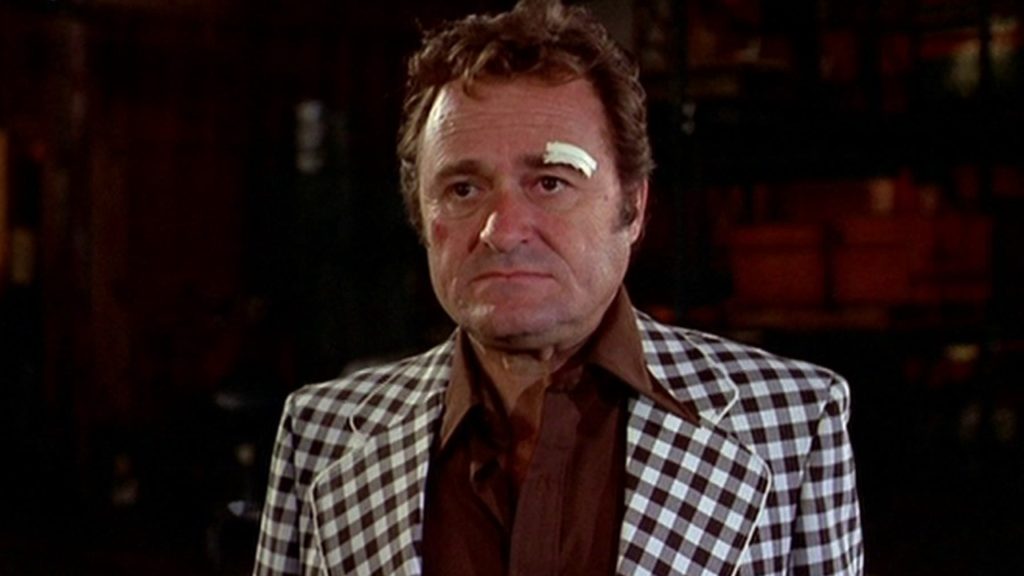
Photo caption: THAT GUY DICK MILLER

The entertaining documentary That Guy Dick Miller is about an actor whose name you may not place, but that you’ve seen. It’s a straight-ahead documentary about a delightfully offbeat guy.

Dick Miller amassed 184 screen credits as a protégé of legendary independent filmmaker and schlockmeister Roger Corman.  Along the way, he rubbed shoulders with indie film icons Jack Nicholson, Paul Bartel and Mary Woronov, John Sayles, Martin Scorsese and Quentin Tarantino.

Miller’s career started in 1955 as an Indian in the Roger Corman-directed Western Apache Woman and then Corman’s The Little Shop of Horrors, The Terror, The Wild Angels and The Trip. Continuing as the king of the low budget movies, Miller went on to work for a second generation of Corman acolyte directors and then plunged full throttle into horror films.  Miller was the unfortunate Murray Futterman in Gremlins and Uncle Willie in Tales from the Crypt: Demon Knight.

On the screen and off, Dick Miller was glib and Bronx-accented, the quintessential wiseacre. In That Guy Dick Miller, we get to meet Miller and his wife Lainey; it’s clear the the two of them were lots of fun to be around. Irresistibly a card, Miller is even bawdy when he recalls his appearance in Night Call Nurses, a 1972 sexploitation film (that I actually saw in a drive-in 1972). 

On screen, Miller always swung for the fences, no matter how small the part.  Lots of actors play the ticket-taker or the security guard, but it’s Dick Miller that you remember for those minuscule roles.

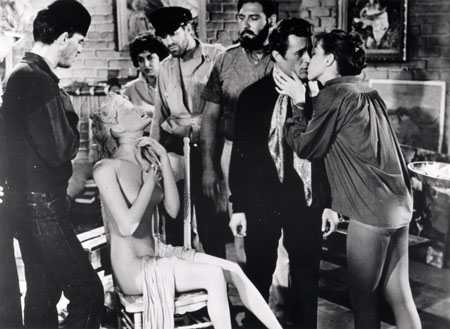
Dick Miller as Walter Paisley, getting smooched in A BUCKET OF BLOOD

Miller is most well known for the lead character, Walter Paisley, in the beatnik-flavored cult film A Bucket of Blood. Miller appeared over ten more times as different characters named with some version of Walter Paisley. In fact, his final role was as Rabbi Walter Paisley in Hannukah, which opened after his death in 2019.

That Guy Dick Miller was recommended to me by Sandy Wolf, who had screened it as a Cinequest submission. However, That Guy Dick Miller premiered at SXSW instead of at Cinequest.

That Guy Dick Miller can be streamed from Amazon (included with Prime).

STREET GANG: HOW WE GOT TO SESAME STREET: the origin story of an institution

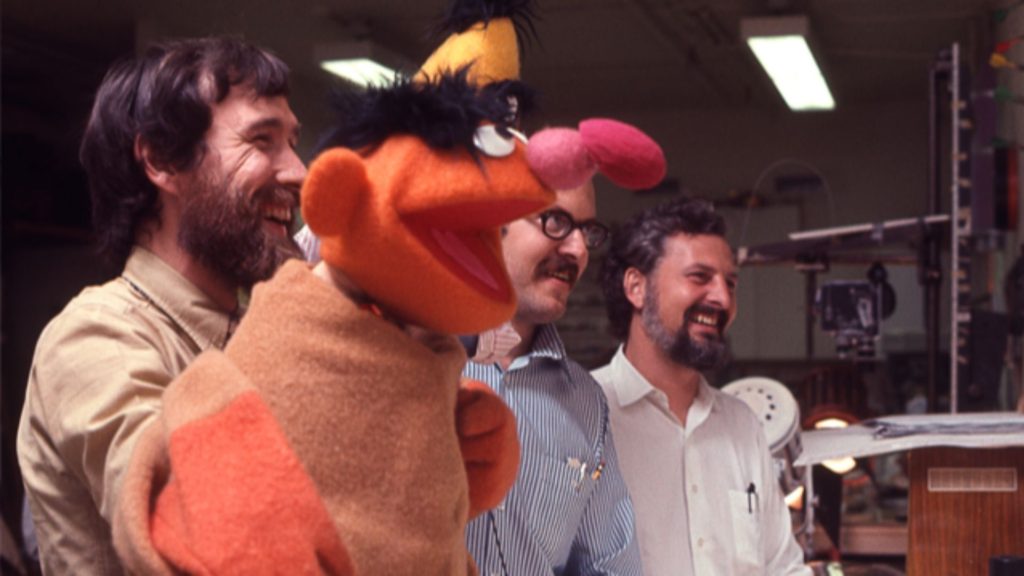
Caption: A scene from Marilyn Agrelo’s film STREET GANG: HOW WE GOT TO SESAME STREET. Courtesy of SFFILM

There’s a lot to like about Street Gang: How We Got to Sesame Street, a documentary as charming as the beloved TV series. As groundbreaking as it was, Sesame Street is now a 51-year-old institution, and its origin saga has not been well-known. Most of the key players survive, allowing director Marilyn Agrelo to present the first-hand back story.

We take the concept for granted today, based on the recognition that kids voraciously learn from commercial television – they learn to consume commercially marketed products. Sesame Street’s founders aimed to find out what kids like to watch and what is good for them to watch and put the two together.

Refreshingly. the pioneering producer Joan Ganz Cooney, the visionary Lloyd Morrisette of the Carnegie Foundation and the inventive director/head writer Jon Stone, each gives the credit to the others. If you add Mister Rogers to these folks, you have the Mount Rushmore of children’s television.

Everything in Sesame Street was intentional – like the street setting itself. Noting that most kid shows had fantasy settings, the creators chose a gritty urban neighborhood street to be relatable to disadvantaged urban kids. The same is true for the integrated cast.

Of course, Street Gang highlights the role of the Muppets. At first, the Muppets had their own set, but the creators learned that kids were so entertained by the Muppets that they found the street boring. So, they pivoted and brought the Muppets on to the street.

Jim Henson founded the Muppets as a late night satirical act and brought that adult sensibility to Sesame Street. The jokes embedded for adults encouraged parents to watch Sesame Street with their kids (which the educators thought was important).

There is also the astounding story of Sesame Street in Mississippi, where state government-controlled public television refused to air a show with an integrated cast. Those stations had to reverse themselves when private Mississippi stations put the show on the air.

This had not occurred to me, but Sesame Street requires creation of original music for 100 episodes per year – an enormous body of work. Street Gang takes us into the songwriting craft, with witty gems like Letter B (from Let It Be).

I screened Street Gang: How We Got to Sesame Street at SFFILM in April. It is widely available to stream today.

STREET GANG: HOW WE GOT TO SESAME STREET: the origin story of an institution

Caption: A scene from Marilyn Agrelo’s film STREET GANG: HOW WE GOT TO SESAME STREET. Courtesy of SFFILM

There’s a lot to like about Street Gang: How We Got to Sesame Street, a documentary as charming as the beloved TV series. As groundbreaking as it was, Sesame Street is now a 51-year-old institution, and its origin saga has not been well-known. Most of the key players survive, allowing director Marilyn Agrelo to present the first-hand back story.

We take the concept for granted today, based on the recognition that kids voraciously learn from commercial television – they learn to consume commercially marketed products. Sesame Street’s founders aimed to find out what kids like to watch and what is good for them to watch and put the two together.

Refreshingly. the pioneering producer Joan Ganz Cooney, the visionary Lloyd Morrisette of the Carnegie Foundation and the inventive director/head writer Jon Stone, each gives the credit to the others. If you add Mister Rogers to these folks, you have the Mount Rushmore of children’s television.

Everything in Sesame Street was intentional – like the street setting itself. Noting that most kid shows had fantasy settings, the creators chose a gritty urban neighborhood street to be relatable to disadvantaged urban kids. The same is true for the integrated cast.

Of course, Street Gang highlights the role of the Muppets. At first, the Muppets had their own set, but the creators learned that kids were so entertained by the Muppets that they found the street boring. So, they pivoted and brought the Muppets on to the street.

Jim Henson founded the Muppets as a late night satirical act and brought that adult sensibility to Sesame Street. The jokes embedded for adults encouraged parents to watch Sesame Street with their kids (which the educators thought was important).

There is also the astounding story of Sesame Street in Mississippi, where state government-controlled public television refused to air a show with an integrated cast. Those stations had to reverse themselves when private Mississippi stations put the show on the air.

This had not occurred to me, but Sesame Street requires creation of original music for 100 episodes per year – an enormous body of work. Street Gang takes us into the songwriting craft, with witty gems like Letter B (from Let It Be).

I screened Street Gang: How We Got to Sesame Street at SFFILM. It opens today in select San Francisco theaters and will release on VOD on May 6.

MAKING THE DAY: will anyone see his movie?

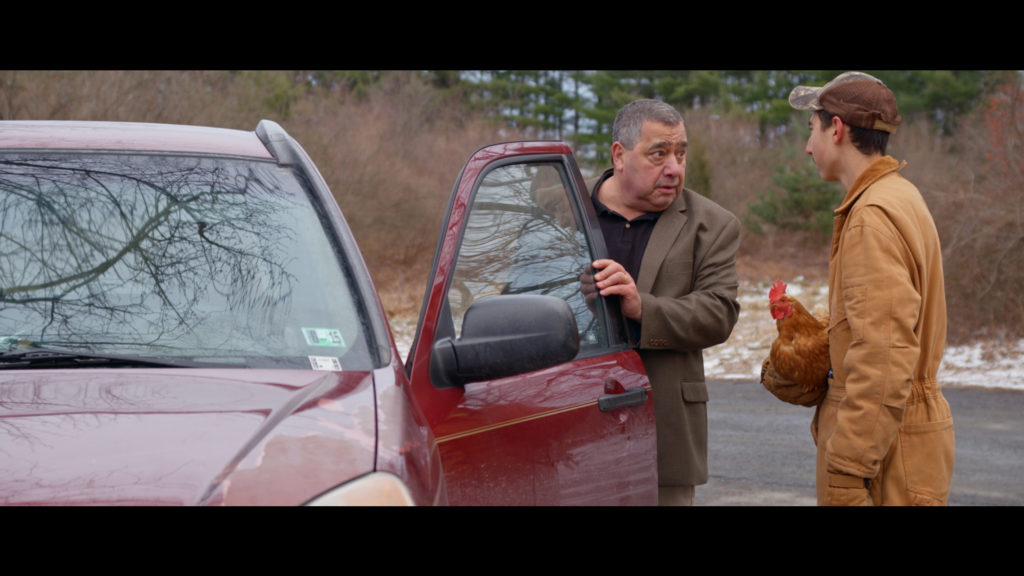
Steven Randazzo (center) in MAKING THE DAY. Photo courtesy of MCM Creative.

In the showbiz comedy Making the Day, a no-longer-in-much-demand character actor (a brilliant Steven Randazzo) struggles to put together the financing for an independent film. Director and co-writer Michael Canzoniero, who is clearly familiar with this problem, begins with the titles “Much inspired by true events. The rest is improvised.”

Our sublimely earnest hero is trying to make a film about his beloved late wife. You just know that, not only is no one going to invest in this film, no one is going to want to see it. But he’s so driven to make his movie that he takes money from a very scary hood (whose primary cinematic interest is in laundering ill-gotten loot).

Things go awry and he needs even more money. A neurotic actress (Juliette Bennett) promises the money if she can star in the movie. Is she going to be ultimately more dangerous to the movie than the mobster? It’s a tossup.

The plot is kind of like an indie movie version of The Producers, only if Zero Mostel’s Max Bialystock were understated and sincere.

The core of Making the Day is the hangdog performance by Randazzo. His character’s sincerity and desperation are so genuine, that he’s the perfect counterpoint to all the screwballs surrounding him.

I screened Making the Day for its world premiere at Cinequest.

BRUCE SPRINGSTEEN’S LETTER TO YOU: wiser and still vital

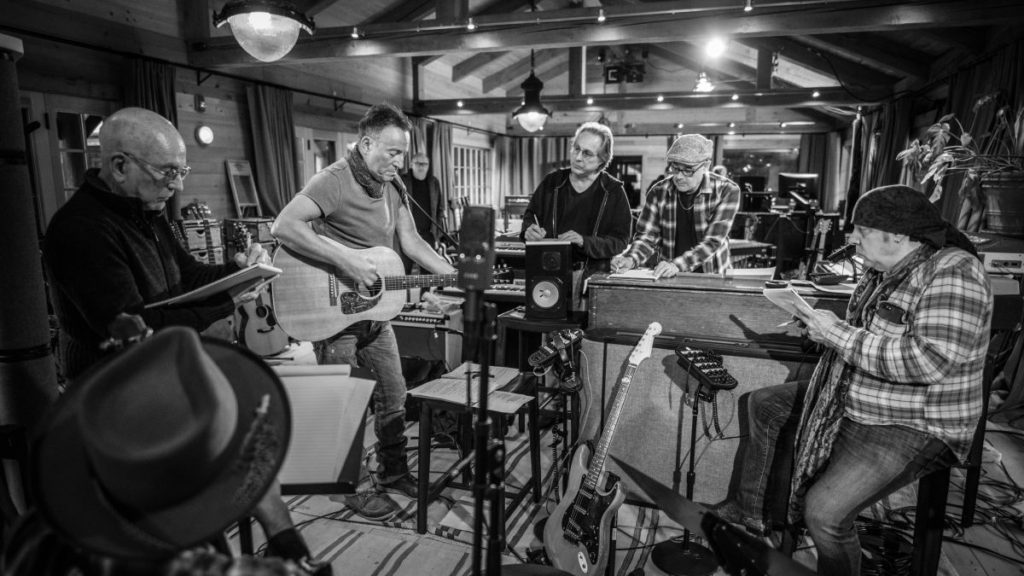
The documentary Bruce Springsteen’s Letter to You, sometimes sage and sometimes exhilarating, is a companion movie to the latest studio album from Springsteen and the E Street Band.

This is an obvious MUST SEE for devoted Springsteen fans like The Wife. For everyone else, Bruce Springsteen’s Letter to You is worthwhile for Bruce’s comments (in narration and in song), the creative collaboration in the recording studio and the songs themselves.

Springsteen is now 71 and this film was shot a year-and-a-half-ago. He is frankly conscious of mortality, the explicit subject of two of the songs. I’ll See You in My Dreams is a heartbreaking call to friends who have passed. Last Man Standing came to Bruce when he found himself the sole survivor of his high school band, The Castiles. (BTW that’s a way cool band name for back when Ricardo Montalban was hawking “rich Corinthian leather”.)

Springsteen’s reflections bring poignancy without melancholy.

On the upbeat side, The Power of Prayer is about devotion and charismatic experience – but the kind we get from pop music. We recognize that this is from the songwriter of Girls in their Summer Clothes.

The best song IMO – and the hardest rocking – is Burnin’ Train. Turn up the volume and settle into Max Weinberg’s drumming and Garry Talent’s bass line. Sounds like an extremely tight band of 20-somethings.

In the studio, we get a glimpse into the collaborative aspect of songwriting and recording, where the musicians and producers get the charts and then start making suggestions about how to hone each song.

Writing rock music is usually a young person’s jam, with the best and the most productivity front-loaded in the earliest segments of songwriting careers. It’s remarkable that Springsteen still is imagining and forging such vital songs. And it’s remarkable that the E Street Band, almost all of them about 70, still can crush and shred.

Director Thom Zimny is Bruce’s personal filmmaker, and also made the fine HBO doc Elvis Presley: The Searcher. The quick cutting of the scenes in the recording studios allow us to miss the drudgery of repeated takes and highlight the sparks of creativity. The exterior shots of the winter-bare woods of rural New Jersey remind me of Alexander Payne’s Nebraska. This is a very handsome black-and-white film.

Bruce Springsteen’s Letter to You is streaming on AppleTV.

MANK: biting the hand

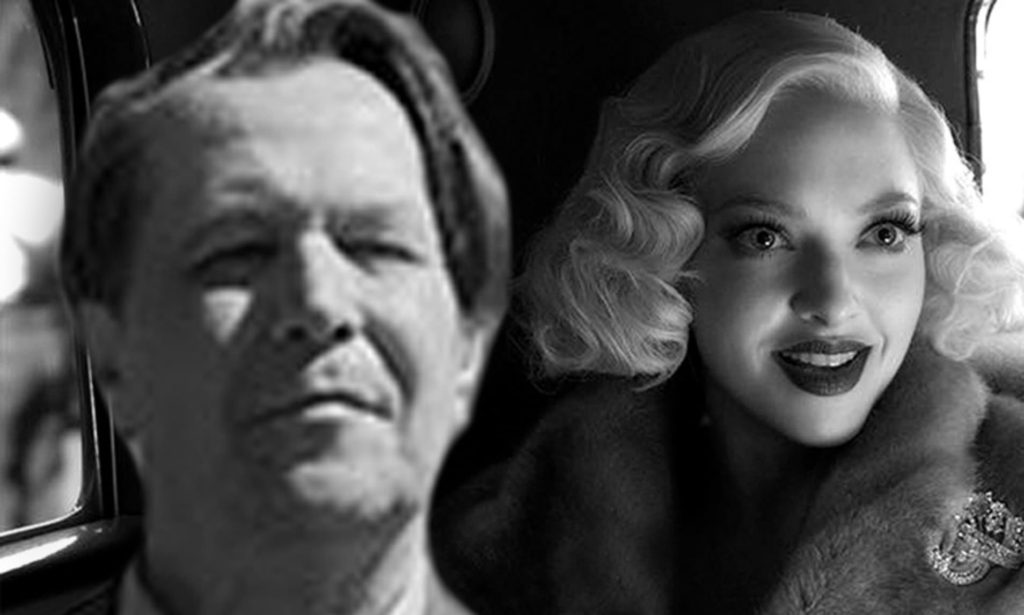
Gary Oldman and Amanda Seyfried in MANK

David Fincher’s Mank is a black-and-white beauty of a film, a portrait of troubled talent in Classic Hollywood.

Mank is a character study of Herman J. Mankiewicz (Gary Oldman) as he pens his Oscar-winning screenplay for Citizen Kane. Mankiewicz was an Algonquin Round Table wit whose misfortune was that he despised the one thing that he excelled at. He was a master writer and fixer of Hollywood movie scripts, but he would rather have been in Manhattan trading bon mots with his peers in the intelligentsia. He particularly the industrial, ultra-commercial and course movie studio bosses and despised their politics.

It didn’t help that Mankiewicz was a raging alcoholic and compulsive gambler (although not a womanizer). He was so hard to handle that Orson Welles essentially imprisoned him at a remote California desert ranch to write Citizen Kane.

Mankiewicz had one unsurpassed idea for a script – the story of media mogul (and frustrated politician) William Randolph Hearst. Mankiewicz had been a frequent guest of Hearst and his companion Marion Davies at Hearst Castle. The problem is that telling this story would piss off the owner of the world’s biggest publicity machine and horrify the movie studio heads who employed screenwriters. And, most poignantly, it would betray Mankiewicz’s kind friend Marion Davies.

Mankiewicz had served as the court jester at Hearst Castle, and the term comes up repeatedly in Mank, most importantly in a cutting remark by Herman’s little brother Joseph Mankiewicz.

The Wife stayed with Mank and finished it, but she advised me that Mank is much more appealing to cinephiles who already know the “inside baseball” of the old movie studio system and the making of Citizen Kane. Indeed, when the likes of Louis B. Mayer, Ben Hecht, Joseph Mankiewicz, Irving Thalberg and John Houseman popped up, it instantly resonated with me.

The entire cast is excellent, but Amanda Seyfried is beyond great as Marion Davies. Charles Dance (coming off his Lord Mountbatten in The Crown) is perfect as William Randolph Hearst. Muckraker-turned-socialist-gubernatorial-candidate Upton Sinclair is played by…(wait for it)…Bill Nye the Science Guy.

David Fincher is one of our greatest directors (Se7en, Fight Club, Zodiac, The Social Network, Gone Girl). Fincher’s father Jack Fincher wrote the screnplay for Mank (and clearly shared Herman Mankiewicz’ acid view of the Hollywood hierarchy), so this is clearly a labor of love for David Fincher.

As a tribute to both Citizen Kane and the Golden Age of Hollywood, Mank is just gorgeous, as beautiful a black-and-white film as any directed by John Ford or shot by Sidney Toler, Nicholas Musuraca or John Alton. Mank’s cinematographer is Erik Messerschmidt (TV’s Mindhunter).

Mank is going on my list of Best Movies of 2020 – So Far. I see Oscar nominations coming for Fincher, Messerschmidt and Seyfried. Mank is streaming on Netflix.

STUNTWOMEN: THE UNTOLD HOLLYWOOD STORY – don’t wig a guy

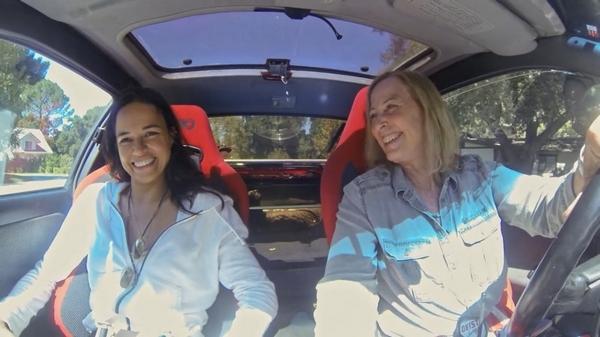
Michelle Rodriguez and Debbie Evans in StUNTWOMEN: THE UNTOLD HOLLYWOOD STORY. Photo Credit Shout! Factory

Actresses play characters, but stuntwoman play actresses playing characters, while driving fast and kicking ass.”

That’s one of the professional movie stuntwomen summing up the business in the documentary Stuntwomen: The Untold Hollywood Story. Stunt performing and stunt coordinating are underappreciated by most of us – and certainly kept in the background by the industry (and the Oscars). It’s hard and dangerous enough to perform movie stunts, but females have also had to battle against persistent gender bias.

Stuntwomen: The Untold Hollywood Story takes us back to the first decade of silent films, when actresses did their own extreme stunts, until they became too valuable in box office terms to be expendable. At that point, women were frozen out of the stunt business for half a century. Michelle Rodriguez, who is currently our most kickass/badass actress, helps introduce us to today’s world of women who specialize in fighting, crashing cars, falling off great heights and getting set on fire.

We meet Jeannie Epper, who doubled Lynda Carter in Wonder Woman and Jadie David, who doubled Pam Grier in all those Blaxploitation action movies. (Epper fell backwards out of tall buildings, and then the film was reversed to create the effect of Wonder Woman zooming upwards.)

We also learn the meaning of “wigging a guy”. And we are reminded that stuntwomen often double actresses who are wearing high heels, and that skimpy outfits don’t allow for much protective padding.

This is solid women’s history and a great inside glimpse at the movie biz. Stuntwomen: The Untold Hollywood Story can be streamed from iTunes and Google Play.