OH, HI!: romantic disappointment becomes absurdly unhinged

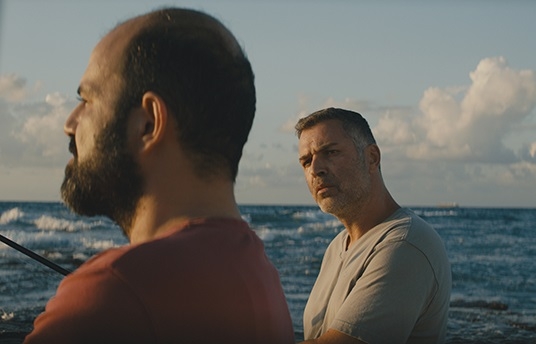
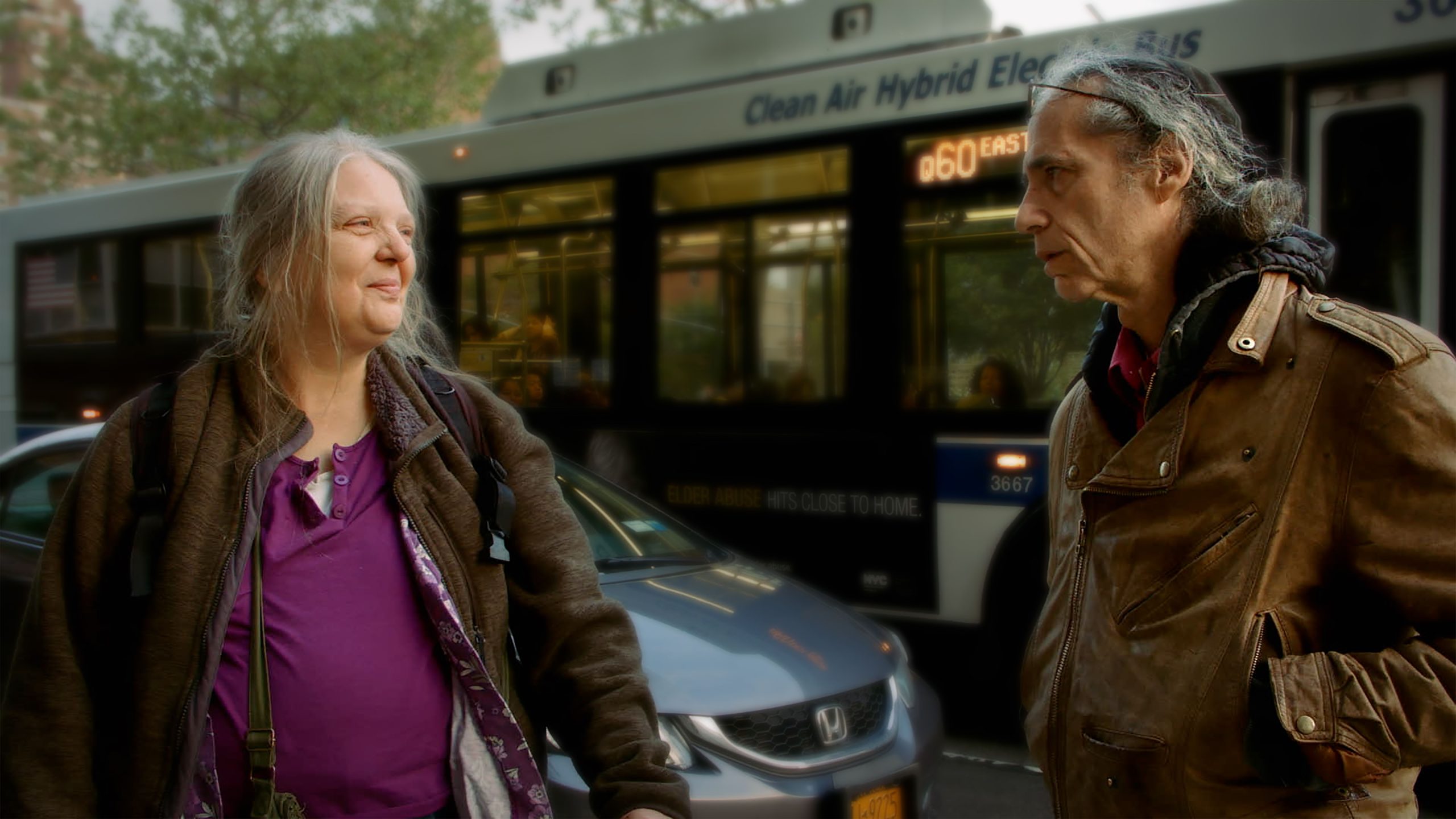
Photo caption: Logan Lerman as Isaac and Molly Gordon as Iris in OH, HI!. Courtesy of Sony Pictures Classics.

The dark romantic comedy Oh, Hi! begins with Iris (Molly Gordon of Booksmart, Theater Camp, The Bear) and Isaac (Logan Lerman of The Perks of Being a Wallflower) heading off to a countryside vacation rental for their first romantic getaway. All is lustful fun until they discover that each has a different perception of what their relationship is and where it is headed. What could have been a merely awkward or hurtful moment precipitates an extreme reaction, and escalates into an absurdly funny situation.

Oh, Hi! is the sophomore feature for writer-director Sophie Brooks. Commitment-averse guys and overthinking gals are common fodder for rom com humor, but Brooks is sharply observant about relationships tending to evolve at different speeds for the participants. Although she has created a broadly funny, over-the-top situation, much of the comedy is character-driven. Brooks has mined the first act and later flashbacks with clever hints about each character’s level of commitment to the relationship and their emotional stability. It’s a smart screenplay.

The success of Oh, Hi! depends on Molly Gordon’s fine performance as a woman whose increasingly unhinged and transgressive behavior is vulnerability-based. Logan Lerman is very good as a guy thinking his way through through a surreal experience with complete helplessness.

Polly Draper (Thirtysomething) is very funny as Iris’ mother, dispensing supportive yet unhelpful advice. Josh Reynolds is hilarious as an uxorious goof who has become entangled in a No Win state of affairs.

I screened Oh, Hi!, which premiered at this year’s Sundance, for the San Francisco Jewish Film Festival. It releases in theaters this weekend.

Two Nuggets at this year’s SFJFF

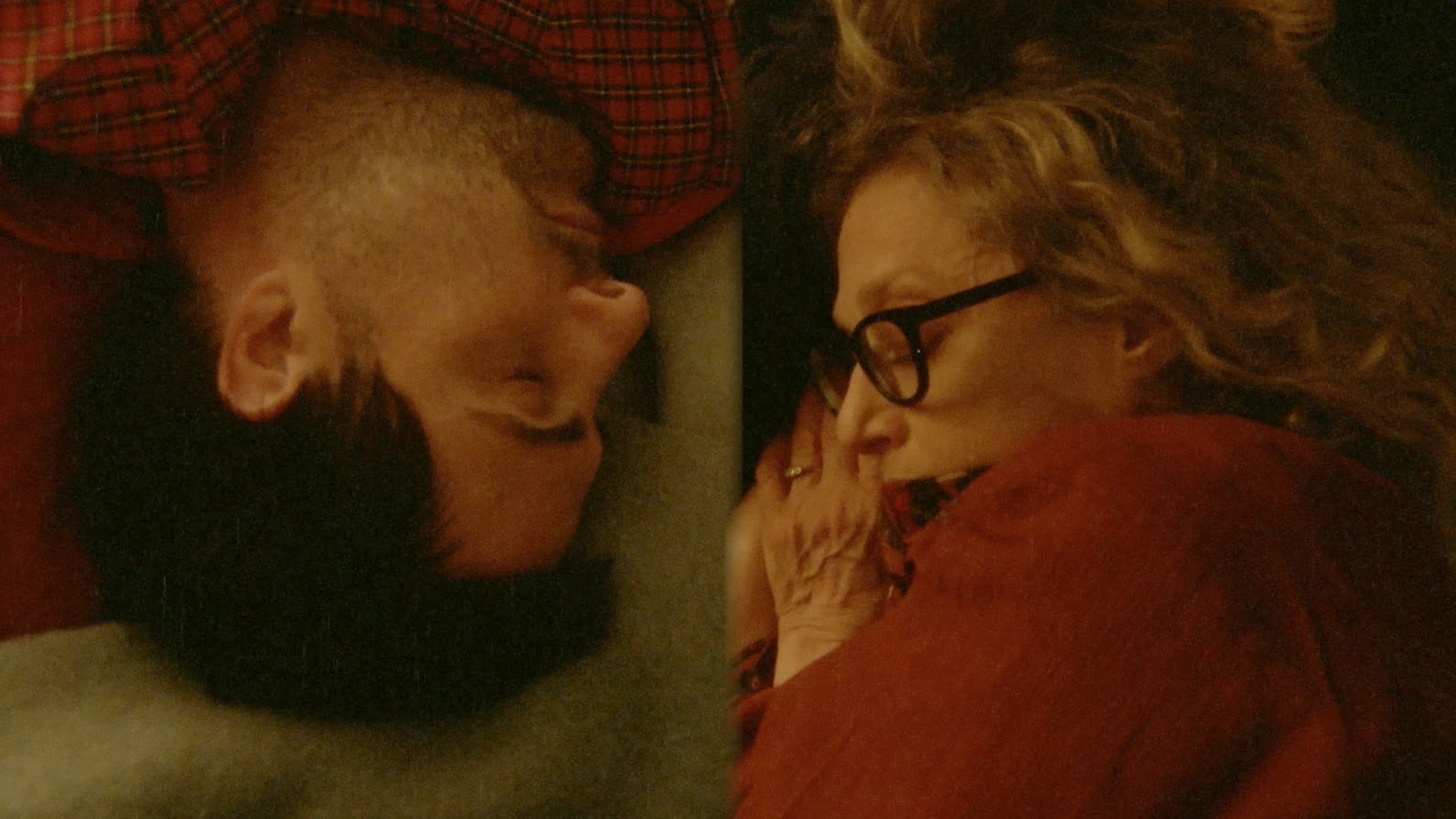
Photo caption: Logan Lerman as Isaac and Molly Gordon as Iris in OH, HI!. Courtesy of Sony Pictures Classics.

The San Francisco Jewish Film Festival (SFJFF), always a major event for Bay Area cinephiles, opens tomorrow. The program offers 70 films from Belgium, Canada, France, Germany, Israel, Italy, Switzerland, the US and the UK and Uzbekistan. Here’s my festival preview.

This year, I’m recommending two nuggets:

Oh, Hi!: This dark romantic comedy begins with a couple heading off to a countryside vacation rental for their first romantic getaway. All is lustful fun until they discover that each has a different perception of what their relationship is and where it is headed. What could have been a merely awkward or hurtful moment precipitates an extreme reaction, and escalates into an absurdly funny situation. Oh, Hi! is the sophomore feature for writer-director Sophie Brooks, who has created a broadly funny, over-the-top situation that is sharply observant about relationships tending to evolve at different speeds for the participants. It’s a very smart screenplay. Oh, Hi!, which premiered at Sundance, is releasing into theaters soon; see it early at the SFJFF. (Full review to be published on July 23.)

THE STAMP THIEF. Courtesy of the San Francisco Jewish Film Festival.

The Stamp Thief: We don’t expect a Holocaust-related documentary to get wacky, but The Stamp Thief combines a historical whodunit and a real-life comic heist. It begins with tracking down a fourth-hand oral account of Nazi-stolen valuable stamps hidden in Poland: Is it true, who was the Nazi, where did he stash the loot and is it still there? And here’s where The Stamp Thief gets zany. Because the Polish authorities have not been supportive of the restitution of Nazi loot, our heroes decide to find and recover the stamps with a ruse. The team masquerades as a film crew shooting a romantic drama; they plan to dig around Polish basements until they find the stamps, under the noses of the Poles. What could possibly go wrong? How does the team navigate the moral ambiguity of lying for a good cause? Do they find the stamps? Do they get caught? What follows is Sherlock Holmes meets The Gang That Couldn’t Shoot Straight, an unusually colorful documentary. Full review.

The SFJFF runs through August 3 in select San Francisco and Oakland venues. Check out the program and buy tickets at SFJFF.

Here’s the trailer for Oh, My!.

THE STAMP THIEF: amateur detectives running amuck

Photo caption: THE STAMP THIEF. Courtesy of the San Francisco Jewish Film Festival.

We don’t expect a Holocaust-related documentary to get wacky, but The Stamp Thief combines a historical whodunit and a real-life comic heist.

The Stamp Thief’s shaky premise is based on what is at least a fourth-hand oral account: As Nazis looted the possessions of Jews heading to the death camps, one German officer pocketed highly valuable, easy-to-hide stamp collections. As he fled after the war with his family, he buried the stamps in the basement of the apartment building, intending to return and retrieve his booty. But, because the location was now behind the Iron Curtain in Poland, he was never able to go back.

Naturally, this story raises some fundamental questions, starting with whether it is true. If so, who was the Nazi and where did he stash the stamps? Has someone else found the stamps, or is the treasure still buried?

Gary Gilbert, after a distinguished career as a movie producer (Garden State, The Kids Are Alright, Margaret, La La Land) aspires to track down the truth, hoping to recover the stamps and to restore them, if possible, to the heirs of the original owners. The story comes from a series of potentially unreliable narrators, so Gilbert and colleagues must first undertake an impressive detective investigation, armed at first with not much more than a possibly tall tale and an old photo of two girls in front of a house.

And here’s where The Stamp Thief gets zany. Gilbert is both a man with a sacred mission and a bit of an adventurer. Because the Polish authorities have not been supportive of the restitution of Nazi loot, Gilbert decides to find and recover the stamps in secret. His plan is to take a faux film crew to Poland on the false pretense of shooting a romantic drama, and digging around until he finds the stamps, under the noses of the Poles. His team includes documentarian Dan Sturman, the The Stamp Thief’s director, who films their escapades. What could possibly go wrong? Gilbert’s cause is righteous, but he may not even be able to operate a metal detector competently.

How does the team navigate the moral ambiguity of lying for a good cause? Do they find the stamps? Do they get caught? What follows is Sherlock Holmes meets The Gang That Couldn’t Shoot Straight.

And was the distrust of Polish attitudes justified? There is one local fixer whose behavior is heroic, but the Polish government and the apartment dwellers do not cover themselves with glory here. Gilbert also happens upon a breathtakingly offensive tchotchke common in Polish households.

With its historical whodunit, an operation of deception, generational antisemitism and buried treasure, The Stamp Thief is an unusually colorful documentary.

The SFJFF is back in 2025

Photo caption: Logan Lerman as Isaac and Molly Gordon as Iris in OH, HI!. Courtesy of Sony Pictures Classics.

One of the Bay Area’s top cinema events is back – the San Francisco Jewish Film Festival (SFJFF), running from July 17 to August 3. The SFJFF is the world’s oldest and largest Jewish film festival – this year’s festival is the 45th! The program offers 70 films from Belgium, Canada, France, Germany, Israel, Italy, Switzerland, the US and the UK and Uzbekistan.

After opening night at the Herbst Theatre, films will screen at the AMC Kabuki 8, the Vogue, the Roxie, and Oakland’s Landmark Piedmont Theater, as well as additional programming at the Jewish Community Center of San Francisco.

Highlights include:

  • Opening Night: Amber Fares’s Coexistence, My Ass! won the World Cinema Documentary Special Jury Award for Freedom of Expression at this year’s Sundance. the film follows Israeli comedian Noam Shuster-Eliassi (who will perform live in a separate event on the SFJFFF’s first weekend) as she develops an act tackling inequality and taboo amidst the Israeli-Palestinian conflict.
  • Centerpiece Narrative: In Fantasy Life, writer-director Matthew Shear stars as a laid-off, thirty-something paralegal who begins nannying for his psychiatrist’s grandkids and falls for their mother.  Co-stars Amanda Peet and Judd Hirsch.
  • Next Wave Spotlight: The dark rom com Oh, Hi! stars Molly Gordon and Logan Lerman as a couple heading off to a countryside vacation rental for their first romantic getaway, which gets completely unhinged. It’s the sophomore feature for writer-director Sophie Brooks (The Boy Downstairs, SFJFF 2017).
  • Closing Night: The Floaters, an indie comedy about misfits at a Jewish summer camp.

Just before the fest, I’ll be publishing some recommendations. I’ve already screened an absurdly dark rom com and an unexpectedly wacky documentary. Check out the program and buy tickets at SFJFF. Here’s the trailer for Oh, My!.

BETWEEN THE TEMPLES: prodded out of his funk

In Nathan Silver’s comedy Between the Temples:, Jason Schwartzman plays a cantor whose wife’s death the year before has plunged him into despair; he is so paralyzed by depression, he has even lost his ability to sing. He has a chance meeting with his childhood music teacher (Carol Kane), now a retired widow.

Despite her age and his resistance, she insists on joining the bat mitzvah class he teaches at the temple. She’s a force of nature and may have enough gusto to overcome his angst. As their friendship evolves, will it bring him out of his funk?

Between the Temples is co-written by C. Mason Wells and director Nathan Silver. There are plenty of chuckles arising from Schwartzman’s character trying to neutralize his former teacher’s tsunami of will. And there are LOL moments from Madeleine Weinstein’s hilarious turn as as the rabbi’s lovelorn daughter Gabby.

Kane is excellent, and so is Dolly De Leon, who stole Triangle of Sadness, sparkles as a relentlessly determined Jewish mother. The prolific comedy writer Robert Smigel appears as the rabbi.

I screened Between the Temples for this year’s San Francisco Jewish Film Festival; Between the Temples opens in Northern California theaters this weekend.

The SFJFF is here

Photo caption: Amer Hlehel and Ashraf Farah in Maha Haj’s MEDITERRANEAN FEVER at the SLO Film Fest Courtesy of San Francisco Jewish Film Festival.

The San Francisco Jewish Film Festival (SFJFF) always a major event for Bay Area cinephiles, opens today. The SFJFF is the world’s oldest and largest Jewish film festival, and the program offers over 60 films from Israel, Palestine, Australia, Canada, Colombia, Cyprus, Ethiopia, France, Germany, Hungary, Italy, Poland, Ukraine, the US and the UK. Here’s my festival preview.

This year, I’m recommending three comedies.

  • Mediterranean Fever: A depressive writer becomes friends with his shady neighbor and the two embark on a dark journey. Second feature for Israeli Arab director Maha Haj. Although it’s dark and funny, I don’t want to describe Mediterranean Fever, like I do many films, as “darkly funny” because the tone is singular. Haj has written a story about that unfunniest of topics, depression, and keeps us watching with subtle, observational humor.  In Mediterranean Fever, we glimpse into the day-to-day life of Israeli Arabs – and middle-class Israeli Arabs at that. Won the Un Certain Regard screenplay prize at Cannes. Here’s my full review.
  • The Monkey House: This witty, twisty comedy is the latest from popular and prolific Israeli writer-director Avi Nesher. Set in pre-Internet 1989, novelist Amitay (Adir Miller) has gone a long time without a best seller, and sees his literary legacy fading. His ego is uplifted by an American grad student who plans to publish about his body of work; but, when that falls through, Amitay plans an elaborate ruse – he hires the flighty, wannabe actress Margo (Suzanna Papian) to impersonate the grad student. Plenty of unanticipated complications threaten to derail the scheme and humiliate Amitay, especially to his recently-widowed, longtime crush Tamar (Shani Cohen). Nesher, evidently a gimlet-eyed observer of human behavior, delivers lots of plot twists in this smart and funny movie. Nominated for 11 Israeli Academy Awards.
  • Between the Temples: In Nathan Silver’s comedy, Jason Schwartzman plays a cantor whose wife’s death the year before has plunged him into despair; he is so paralyzed by depression, he has even lost his ability to sing. He has a chance meeting with his childhood music teacher (Carol Kane), now a retired widow. Despite her age and his resistance, she insists on joining the bat mitzvah class he teaches at the temple. She’s a force of nature and may have enough gusto to overcome his angst. As their friendship evolves, will it bring him out of his funk? There are plenty of LOL moments. Kane is excellent, and so is Madeleine Weinstein as the rabbi’s lovelorn daughter. Dolly De Leon, who stole Triangle of Sadness, sparkles as a relentlessly determined Jewish mother.

The SFJFF runs through August 4 in select San Francisco and Oakland venues. Peruse the program and purchase tickets at SFJFFHere’s the trailer for Between the Temples.

DESPERATE SOULS, DARK CITY AND THE LEGEND OF MIDNIGHT COWBOY: a movie and its time

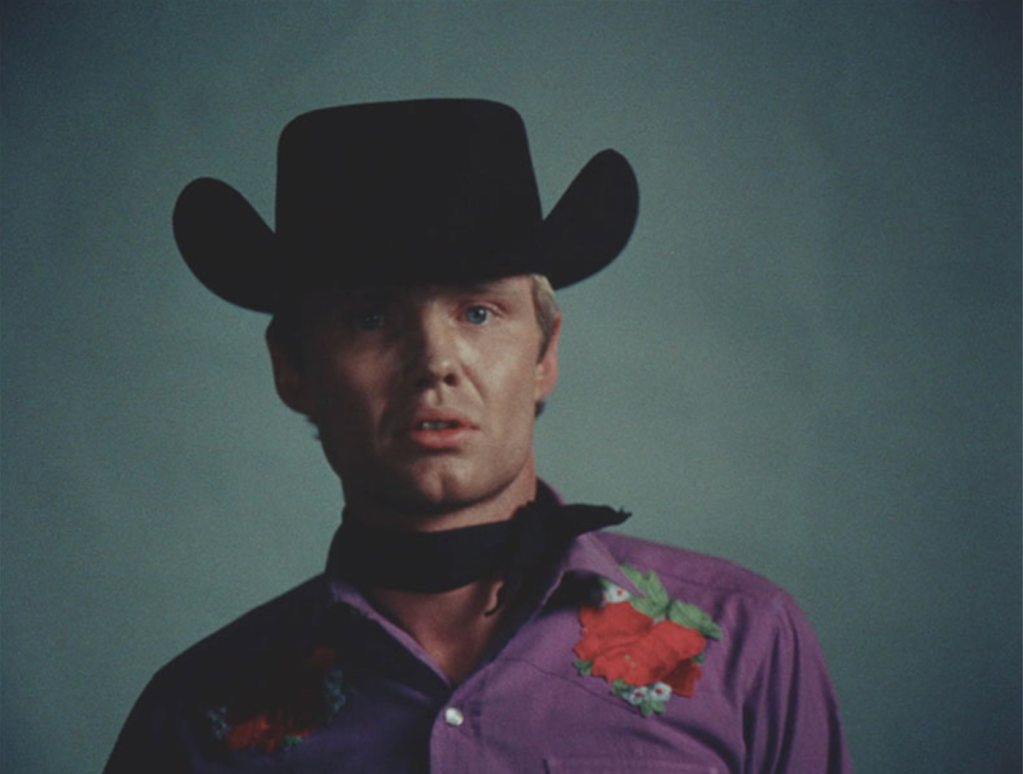
Jon Voight in his screen test for Midnight Cowboy from DESPERATE SOULS, DARK CITY AND THE LEGEND OF MIDNIGHT COWBOY. Courtesy of Kino Lorber.

The remarkably insightful documentary Desperate Souls, Dark City and the Legend of Midnight Cowboy explores the making of Midnight Cowboy and its place both in cinema and in American culture. 

Midnight Cowboy won Oscars for Best Picture, Director and Adapted Screenplay, all with an X-rating. Sure, we know Midnight Cowboy as a groundbreaking film, but Desperate Souls argues that it both reflected the zeitgeist of the moment and opened new possibilities in American filmmaking.

This was a transitional period in Hollywood and in the culture. Midnight Cowboy won its Oscars at the same Academy Award ceremony that honored John Wayne as Best Actor. Midnight Cowboy’s protagonists were completely unDukelike, one a would-be gigolo and the other an almost homeless conman.

So, we have two marginal anti-heroes and their unconventional bond, along with, shockingly, incidents of gay sex, heterosexual impotence and incontinence. The director John Schlesinger himself was a closeted gay man. Anyone who was alive in 1969 can tell you that this was extraordinarily transgressive content to penetrate the cultural mainstream.

Besides the unsettling themes, Midnight Cowboy, along with The Graduate (1967) and Butch Cassidy and the Sundance Kid (1969) pioneered the effective use of popular music on the soundtrack. Midnight Cowboy is notable for both John Barry’s Emmy-winning score and for the use of Fred Niel’s Everybody’s Talkin’, which Schlesinger used as the theme.

Filmmaker Nancy Buirski, who died in September, builds her case with superb sourcing. She hit gold with the unique perspective of Jennifer Salt, who observed her father, screenwriter Waldo Salt, and the director John Schlesinger birth the film; she also acted in the movie and came to date its star, Jon Voight. Voight himself bookends the film with emotionally powerful reflections.

Desperate Souls, Dark City and the Legend of Midnight Cowboy also includes Voight’s screen test, and I dare you to explain why the filmmakers, after watching it, said THAT’S THE GUY.

As I write, Desperate Souls, Dark City and the Legend of Midnight Cowboy is number 21 on my carefully curated list of Longest Movie Titles.

This is a strong film, and a Must See for cinephiles, especially Jon Voight’s intro and outro. saw Desperate Souls, Dark City and the Legend of Midnight Cowboy, Midnight Cowboy at the San Francisco Jewish Film Festival, and you can stream it now on Amazon, AppleTV, Vudu and YouTube.

PERSIAN LESSONS: walking the tightrope

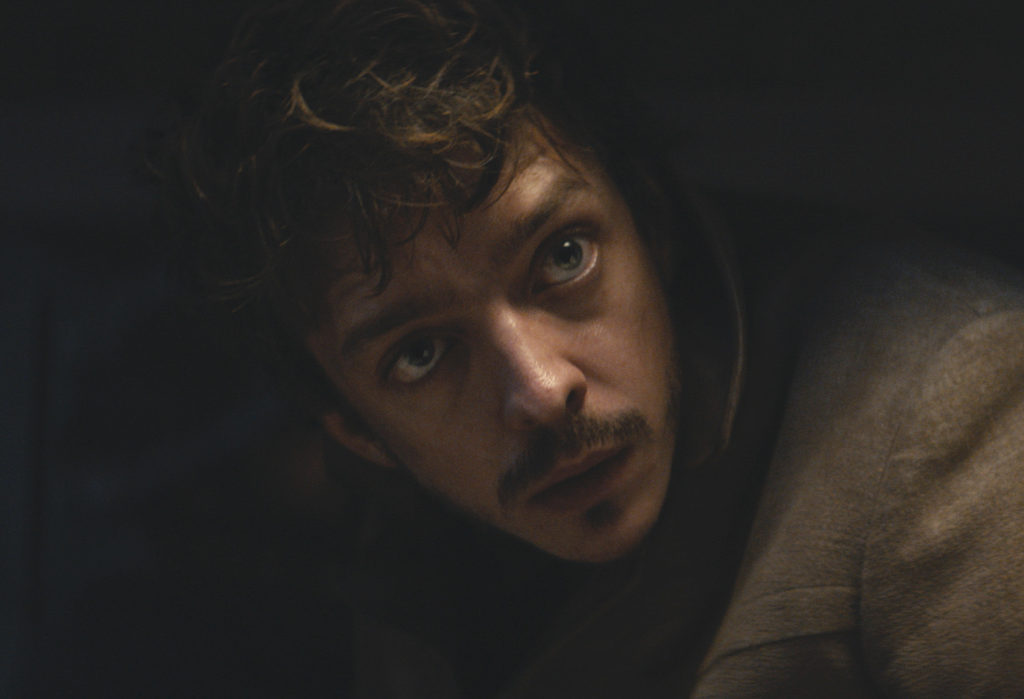
Photo caption: Nahuel Pérez Biscayart in PERSIAN LESSONS. Photo courtesy of Cohen Media Group.

The Holocaust thriller Persian Lessons walks a tightrope of tension, and the ending is very emotionally powerful. Gilles (Nahuel Pérez Biscayart) is a Belgian Jew sent to a German concentration camp. He seeks to avoid death by claiming to be Persian named Reza. He is not anticipating that a Nazi officer will demand to be taught Farsi. That officer, Koch (Lars Eidinger), aspires to a postwar future as a Tehran restaurateur.

Gilles/Reza, who doesn’t know ANY Farsi, must invent an entire faux Farsi language, word-by-word, and remember it. All the while, he’s sweating out the likelihood that his ruse will be discovered.

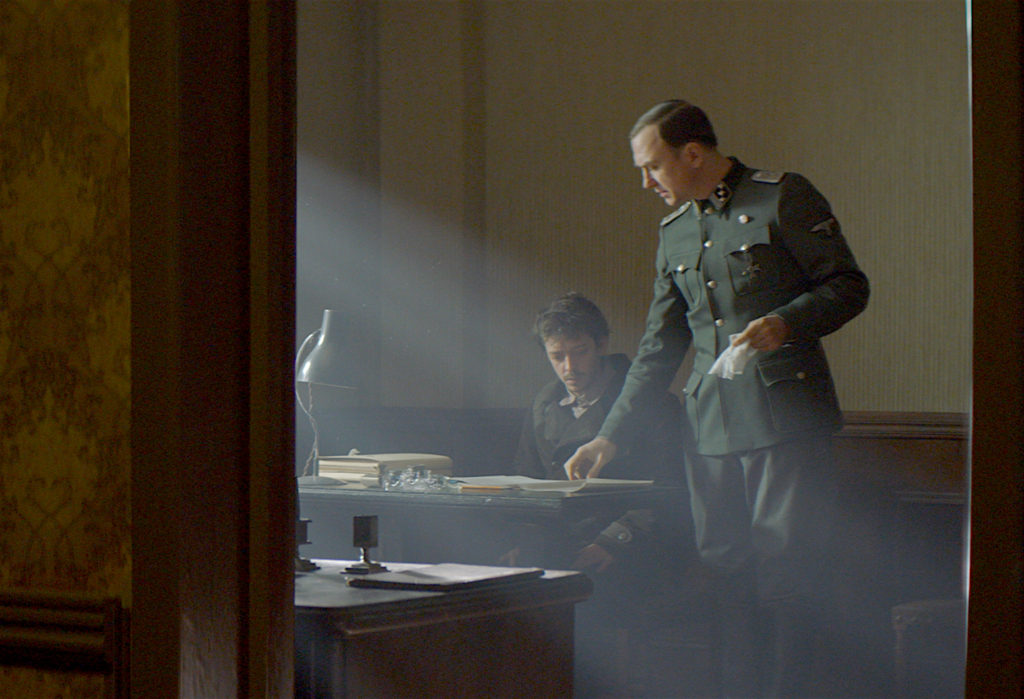
The blustery Koch, with his Persian fixation, is an oddball. A chef when he opportunistically joined the Nazi Party, he’s not a True Believer, although he is very comfortable with genocide. In another time or place, he could have easily been a corrupt official or a mafioso. While Gilles/Reza is the protagonist, the story rises and falls on Koch’s whims, and Eidinger’s performance is excellent.

Nazis were bullies at their core, and some of Persian Lessons’ lighter moments are when Gilles/Reza is offscreen and the Nazis’ own foibles, with their sexual peccadilloes and their petty internal power plays, are on display. There’s an especially funny scene when Koch gets a leg up on his boss, the camp’s Commandant.

Nahuel Pérez Biscayart and Lars Eidinger in PERSIAN LESSONS. Photo courtesy of Cohen Media Group.

Persian Lessons was directed by Ukrainian-born Vadim Perelman (2003’s Oscar nominated House of Sand and Fog). Belarus tried to submit Persian Lessons for an Academy Award, but it was too international to qualify as a Belarus film. IMDb catalogues it as a Russian/German/Belarus film; Biscayart is Argentine, Eidinger is German, and screenwriter Ilja Zofin is Russian.

I screened Persian Lessons for its North American premiere at the San Francisco Jewish Film Festival in July 2021. It opens June 9 at the Laemmle Royal in LA and more widely on June 16, including San Francisco’s Opera Plaza and the Landmark Pasadena.

SAN FRANCISCO JEWISH FILM FESTIVAL is back with a rich slate of docs

Raya Burstein and Uri Burstein in CHARM CIRCLE. Photo courtesy of Cinequest.

One of the Bay Area’s top cinema events is back – the San Francisco Jewish Film Festival (SFJFF). This year’s festival is a hybrid, with in-person screenings at San Francisco’s Castro Theatre and the Albany Twin in Albany through July 31, with some films streaming from the SFJFF digital screening room August 1-7. The SFJFF is the world’s oldest and largest Jewish film festival, and the program offers over 71 films from over 14 countries (but mostly from the US and Israel), plus 4 programs of short films (Jews in Shorts).

The SFJFF always presents an impressive slate of documentaries, in recent years including What She Said: The Art of Pauline Kael, Satan & Adam, Bombshell: The Hedy Lamarr Story, The Mossad and Levinsky Park.

The Must Sees from this year’s documentary program are:

  • Charm Circle: You think YOUR family has issues? In this superbly structured film, writer-director Nira Burstein exquisitely unspools the story of her own bizarre family, a cautionary and ever-surprising chronicle of mental illness.
  • Speer Goes to Hollywood: In this absorbing documentary, filmmaker Vanessa Lapa takes us inside a Nazi war criminal’s brazen attempt to rehabilitate his image into “the Good Nazi”. Previously unheard private audio recordings of Albert Speer himself reveal him to be one of history’s most audacious spin doctors.
  • The Faithful: The King, the Pope, the Princess: Filmmaker Annie Berman follows the people who are devoted to iconic celebrities, both dead (Elvis Presley and Princess Diana) and alive (the Pope du jour). I don’t mean “fans”, I mean “devoted”, as in those who make annual pilgrimages and who decorate shrines. Who are these faithful, and how did someone they never met “touch their lives”? The journey is sometimes amusing, sometimes appalling, but fundamentally meditative.

You can peruse the festival’s program and schedule at SFJFF.

THE FAITHFUL: THE KING, THE POPE, THE PRINCESS: are there limits to devotion?

Photo caption: THE FAITHFUL: THE KING, THE POPE, THE PRINCESS. Courtesy of Annie Berman.

In the documentary The Faithful: The King The Pope The Princess, filmmaker Annie Berman follows the people who are devoted to iconic celebrities, both dead (Elvis Presley and Princess Diana) and alive (the Pope du jour). I don’t mean “fans”, I mean “devoted”, as in those who make annual pilgrimages and who decorate shrines.

At first, Berman wryly observes the endless variety of cheesy Elvis souvenirs, and the possibly cheesier panoply of Pope souvenirs. She archly interviews a Papal spokesman about the Vatican’s commercial licensing of the Pope’s image. We see what are purported to be Pope lollipops, but when they are unwrapped, the Pope’s image turns out to be on a paper cover, so no tongues actually commit the sacrilege of licking the papal face.

But Berman – herself returning yearly to Graceland and Elvis’ Tupelo birthplace, a London Princess Di shrine and the Vatican – focuses on the faithful. She lets them talk about their obsessions, and how someone they never met “touched their lives”. Berman is remarkably nonjudgmental with these people and their sincere devotion and chooses not to mock them.

THE FAITHFUL: THE KING, THE POPE, THE PRINCESS. Courtesy of Annie Berman.

Finally, Berman has to ask herself whether she herself is too obsessed with this project on obsession.

Berman’s narration takes us on a journey that sometimes amusing, sometimes appalling, but fundamentally meditative.