ONE BATTLE AFTER ANOTHER: sometimes hilarious, sometimes thrilling, always outrageous

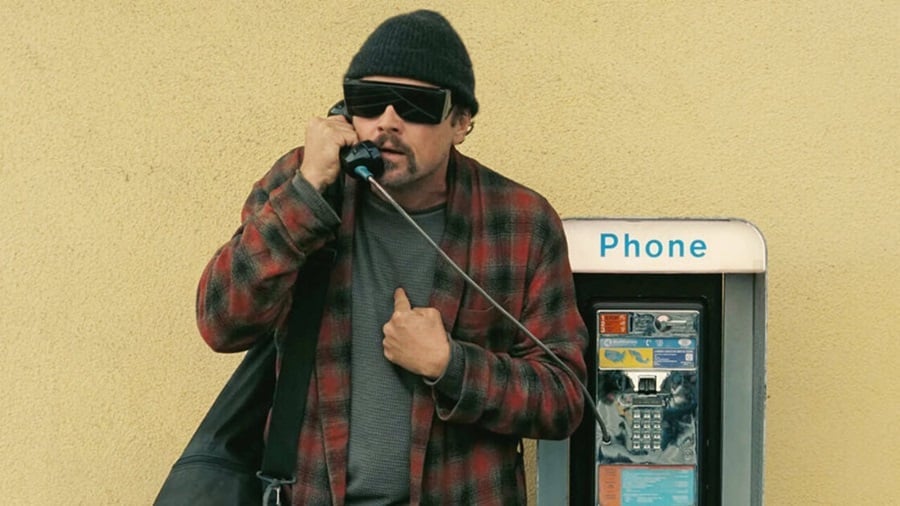
Photo caption: Leonardo DiCaprio in ONE BATTLE AFTER ANOTHER. Courtesy of Warner Bros.

It’s been a while since I’ve seen a movie so over-the-top as Paul Thomas Anderson’s broad satire One Battle After Another. It’s sometimes hilarious, sometimes thrilling and always outrageous.

Leonardo DiCaprio stars as Bob, the tinkering bomb-maker in French 75, a group of far-left revolutionaries led by Perfidia (Teyana Taylor), charismatic and oversexed and too in love with her own badass flamboyance. Sure enough, once they piss off the nation’s repressive law enforcement establishment, French 75 is destined to go the way of the Weather Underground and the Symbionese Liberation Army. In a shock-and-awe campaign led by Colonel Stephen J. Lockjaw (Sean Penn), the revolutionaries are all neutralized or driven underground. Bob is able to get away and hide out under a new identity with Perfidia’s newborn daughter Willa.

The story resumes sixteen years later, with Bob and Willa living in a Northern California forest cabin. Bob is still a stoner underachiever, but he’s a devoted dad, and Willa (Chase Infiniti) has blossomed into a young woman of uncommon intelligence and curiosity. Suddenly, Lockjaw leads a military assault team to capture them, and the two are off on a two-hour race for their lives. When they become separated, Bob, despite his sparse hero skills, tenaciously tries to find her. Why has Lockjaw reappeared after sixteen years? He has his reasons, which I won’t spoil.

Paul Thomas Anderson, whose best movies are Boogie Nights and There Will Be Blood, has a body of work that ranges from the super-serious (The Master) to the silly (Inherent Vice). But his movies are always character-driven and always centered in empathy – we understand what makes his characters tick. In this case, he celebrates the resilience of his protagonists.

What I haven’t seen before from Anderson are the violent attacks and white-knuckle chases that we see in more conventional Hollywood thrillers. Anderson delivers here, with a movie that’s chock-filled with exciting set pieces. The final chase on an up-and-down road called the Texas Dip outside Borrego Springs, California, is spectacular. Is this a political satire embedded in a thriller, or the other way around?

And about that broad satire – principal photography took place in the first seven months of 2024, before Trump’s election and before his second-term weaponization of ICE and attempt to inflict martial law upon American cities. It’s chilling that reality is now mirroring what Anderson, as he was writing the screenplay, must have thought was far-fetched.

From the get-go, Anderson paints the government forces as fascist and white supremacist. But he skewers the wacko far-left as well. One of the scenes with the revolutionaries is as funny as the Liberation Front/Splinter scene in Monty Python’s Life of Brian.

Leonardo DiCaprio is a huge movie star who can carry a romantic drama (Titanic) or an action adventure (The Revenant) and, hell, play Jay Gatsby or Romeo. Here, his Bob shambles along, often terrified and klutzy, and none too strategic. It’s to DiCaprio’s credit that he turned down what became the righteous Jesse Plemons role in Killers of the Flower Moon to play a dumbass. And, again in One Battle After Another, he is racing for survival, always seemingly one step too slowly. It’s a fantastic, anti-Tom Cruise performance.

Sean Penn in ONE BATTLE AFTER ANOTHER. Courtesy of Warner Bros.

Penn’s Lockjaw is the most demented military character in the movies since Brigadier General Jack D. Ripper (Sterling Hayden) in Dr. Strangelove. As perverse and perverted as he is, you have to acknowledge his epic relentlessness. Penn is able to humanize the awful Lockjaw with his vulnerabilities – sexual and social-climbing yearnings that control him.

Chase Infiniti, in her first feature film, gives us a Willa with the latent ferocity of her mom, but with more grounding, discipline and self-awareness. More of Chase Inifiniti, please.

Chase Infiniti in ONE BATTLE AFTER ANOTHER. Courtesy of Warner Bros.

Teyana Taylor dominates the first chapter of One Battle After Another, with Perfidia’s stunning charisma and power. Benicio Del Toro and Regina King are excellent as two of Bob’s rescuers. Eric Schweig, an actor I’ve admired since The Last of the Mohicans (1992), shows up in a small but key role.

One Battle After Another has a Metacritic rating of 95. Although I’ve been singing its praises here, I initially found it a little too long for something so bombastic. Since then, I’ve thought about it more, and have placed it higher on my list of the Best Movies of 2025. Anyway, it’s so well-crafted and unusually outrageous that it’s a Must See.
DADDIO: intimacy between strangers

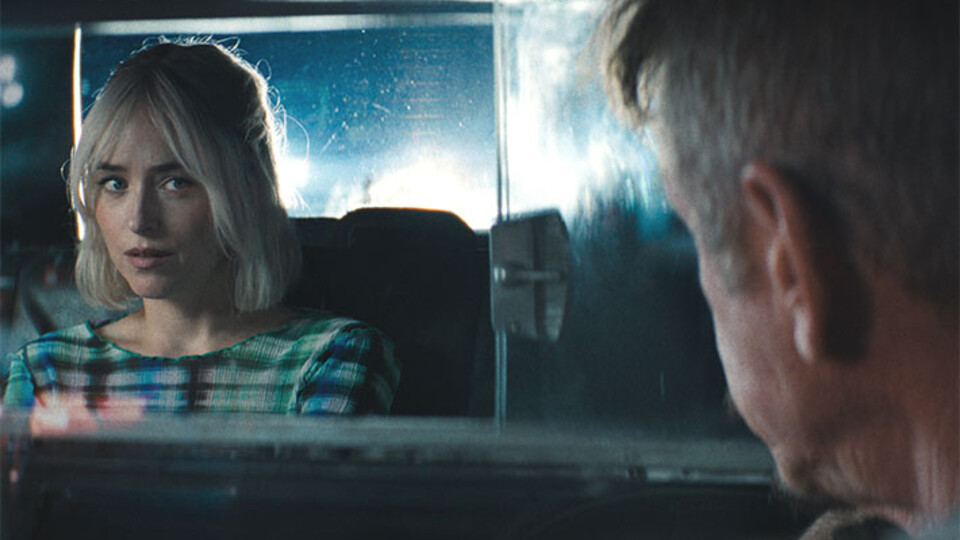
Photo caption: Dakota Johnson and Sean Penn in DADDIO. Courtesy of Sony Pictures Classics.

In the absorbing Daddio, Dakota Johnson plays a woman who gets into a cab at JFK for the final leg of her trip to Midtown Manhattan. The driver (Sean Penn) engages her in chitchat. She is amused to find herself with one of those philosopher cabbies. He likes that she is a New Yorker, not a tourist, and that she doesn’t ignore him in favor of her smartphone.

He fancies himself an acute judge of people, and proves it by correctly guessing an important fact about her current relationship. As he probes about her personal life, she probes back, and soon they are revealing intimate secrets to each other.

It’s possible that a conversation can cause you to rethink your life – even if it with someone you’ve never met and will never see again. That relatively instant and profound bonding is the core of Daddio.

Their conversation is limited by the duration of the cab ride, but the 40-minute trip is extended when traffic is stopped to clear a major accident up ahead. Daddio is a story told in real time – a story of two people talking inside a car – and I was captivated the entire time. Daddio is the first feature for writer-director Christy Hall, creator of TV’s I Am Not OK with This.

Dakota Johnson in DADDIO. Courtesy of Sony Pictures Classics.

It’s a good story, but Daddio is so good because the performances are superb. Their faces, in closeup and extreme closeup. tell us what they’re not saying – whether they are guarded, offended, surprised, hurt, annoyed, intrigued. Their eyes mostly meet in the rear view mirror.

Dakota Johnson is a very able actor, and has done excellent work lately – The Lost Daughter, Cha Cha Real Smooth and here in Daddio.

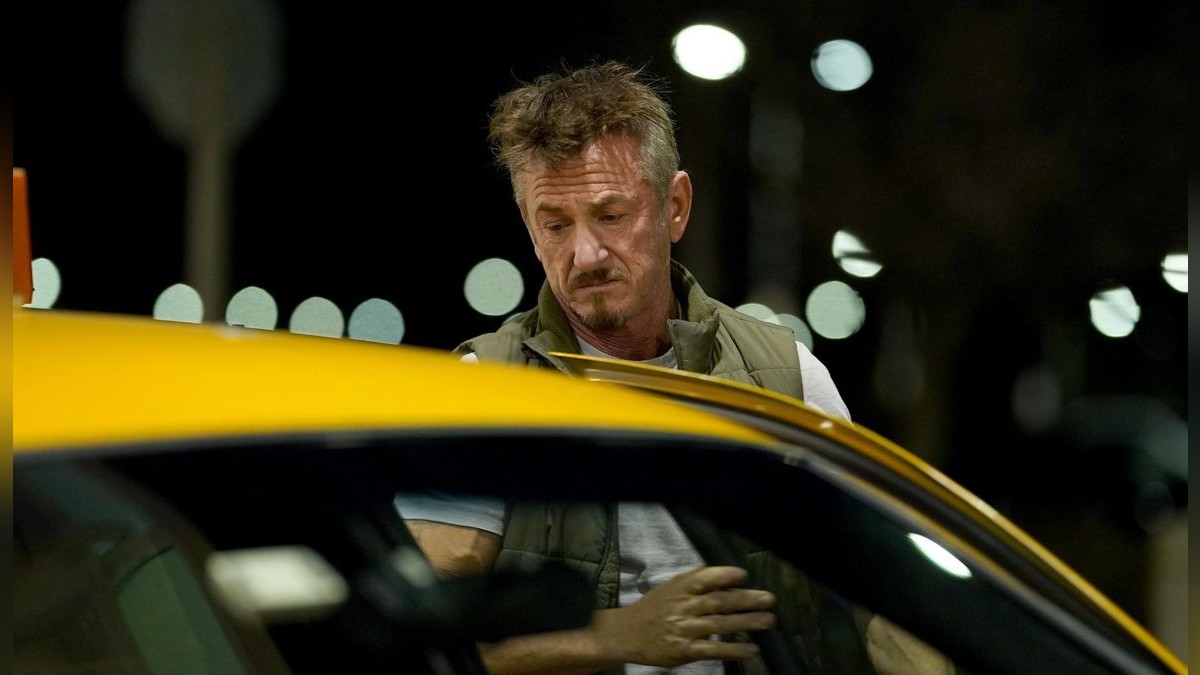
Penn’s cabbie is devilish, and enjoys being a provocateur. It’s been a long time (his Spicoli in Fast Times at Ridgemont High) since I’ve thought of Sean Penn as funny, but he sure is funny here. And, of course, Penn is unsurpassed in embodying profound sadness.

Sean Penn in DADDIO. Courtesy of Sony Pictures Classics.

It’s really surprising how two actors in a car can make for such an engrossing experience. Daddio, with its penetrating humanity, is thoughtful and entertaining.

Gangster Squad: waste of a good cast

An uncommon collection of acting talent (Sean Penn, Ryan Gosling, Nick Nolte, Josh Brolin, Emma Stone, Anthony Mackie, Giovanni Ribisi) sinks with Gangster Squad, a mob movie based on Mickey Cohn’s 1949 sojourn in LA.  Because director Reuben Fleischer recently made Zombieland, which I loved for its original approach to zombie movies.  Unfortunately, there is not one original minute in Gangster Squad.  If you enjoy movie violence, avoid Gangster Squad and see Django Unchained a second time.

Sean Penn plays Mickey Cohn – or maybe he’s playing Joe Pesci’s character in Goodfellas.  What made Pesci’s volatile character so menacing (and unforgettable) was that you never knew when he would irrationally erupt and do something unthinkably horrible.  But Penn’s character is totally predictable – he always does the worst thing imaginable so there’s no menace; it’s like watching Michael Vick train dogs – just gruesome.

Gangster Squad was slated for a September 7, 2012, release, but it contained a scene of a mass shooting inside a movie theater; the Aurora, Colorado, tragedy made the distributor skittish, so another scene was shot to replace it, delaying the release for four months.

The Tree of Life: What a bewildering, pompous mess

Every ten years, Terrence Malick directs a film that critics call a masterpiece (Badlands, Days of Heaven, The Thin Red Line, The New World).  Here, he has created a bewildering, pompous mess.

The core of The Tree of Life is fine 90-minute family drama about a boy growing up in 1950s Waco (a superb Hunter McCracken) and the friction with his caring but brutishly domineering father (Brad Pitt).  Unfortunately, there is another 60 minutes in the movie.

That additional 60 minutes is a self-important muddle that tries to lift the story to an exploration of life itself – from creation through afterlife.  There are beautiful shots of clouds and waterfalls, with unintelligible whisperings from cast members.  There are Bible verses, the Big Bang and dinosaurs (yes, dinosaurs).   And, in case you don’t get how seriously the movie takes itself, there is an overbearingly pretentious score.

Plus, there is Sean Penn, silently brooding about his childhood from a skyscraper.  And wandering through a desert in his suit.  And reunited with his dead relatives on a tidal flat.

Malick’s pretense succeeds only in distracting the audience from could have been a good story and a beautifully shot film.  Bottom line:  painfully unwatchable.


DVD of the Week: Fair Game

Ripped from the headlines, this is the Valerie Plame/Joe Wilson story with Naomi Watts and Sean Penn.  We already knew the story of Joe Wilson exposing the Bush Administration’s false WMD pretext for the Iraq war, and the White House striking back by outing an American covert intelligence operative –  Wilson’s wife, Plame.  But this film adds two more dimensions to the story.

First, this screenplay is based on Plame’s book, and the first act chronicles Plame’s exploits as a CIA officer.  She indeed ran undercover operations.  The depiction of real life, contemporary spycraft is even more thrilling than a fictional spy movie.

Second, the story also explores the excruciating pressure on the Plame/Wilson marriage.  Joe is an able and principled guy with a little too much testosterone.  His short fuse leads him to act impulsively to pick a fight that has even more severe consequences for his wife.  In principle, Joe is right, but Valerie’s career is ruined, her family’s safety is threatened and her social life is shattered; she is both scared and resentful.  And at the moment that they are under the most unbearable stress, each of them wants to react by moving in an opposite direction.  Will the relationship survive?  This dimension – a study of an adult relationship – makes this film much more than a typical history.

It’s also on my list of Best Movies of 2010.

Fair Game

Ripped from the headlines, this is the Valerie Plame/Joe Wilson story with Naomi Watts and Sean Penn.  We already knew the story of Joe Wilson exposing the Bush Administration’s false WMD pretext for the Iraq war, and the White House striking back by outing an American covert intelligence operative –  Wilson’s wife, Plame.  But this film adds two more dimensions to the story.

First, this screenplay is based on Plame’s book, and the first act chronicles Plame’s exploits as a CIA officer.  She indeed ran undercover operations.  The depiction of real life, contemporary spycraft is even more thrilling than a fictional spy movie.

Second, the story also explores the excruciating pressure on the Plame/Wilson marriage.  Joe is an able and principled guy with a little too much testosterone.  His short fuse leads him to act impulsively to pick a fight that has even more severe consequences for his wife.  In principle, Joe is right, but Valerie’s career is ruined, her family’s safety is threatened and her social life is shattered; she is both scared and resentful.  And at the moment that they are under the most unbearable stress, each of them wants to react by moving in an opposite direction.  Will the relationship survive?  This dimension – a study of an adult relationship – makes this film much more than a typical history.