THE DRY: a mystery as psychological as it is procedural

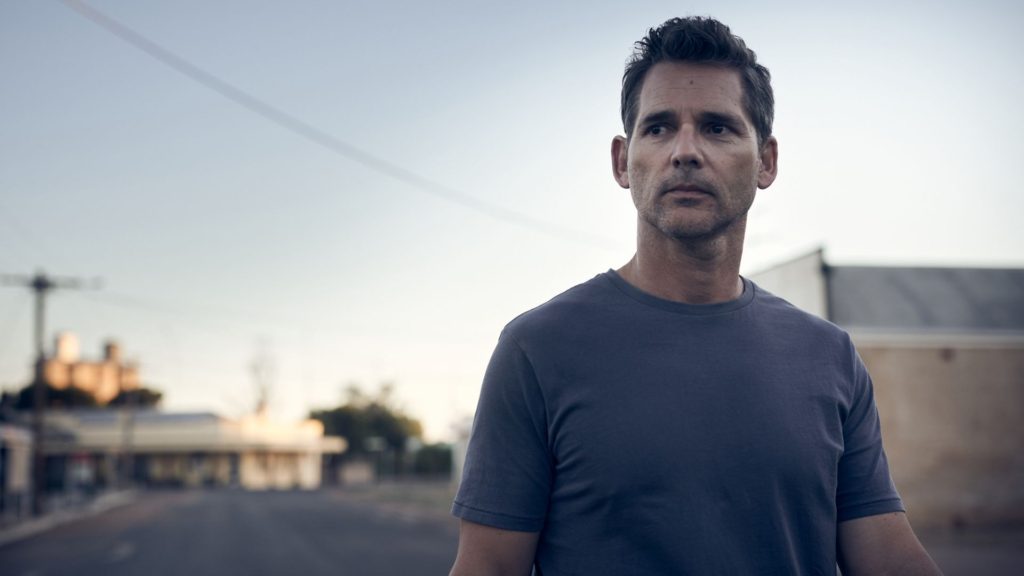
Photo caption: Eric Bana in Robert Connolly’s film THE DRY, which playes at SFFILM. Photo courtesy of SFFILM.

Eric Bana soars in The Dry, an atmospheric, slow-burn tale of murder and long-festering secrets from the Australian outback. The Dry is as psychological as it is procedural.

Bana plays Aaron, a renowned big city police officer who returns to his remote, tiny hometown, for the funeral of his childhood best friend. The friend, with his wife and young son, have been shotgunned to death, and all signs point to a murder-suicide. The friends’ parents implore Aaron to see if there is another explanation.

That task is complicated by the act that Aaron is not welcomed by many in his hometown. His teen heartthrob was mysteriously drowned, and Aaron was a prime suspect, causing him to flee the town. Twenty years later, all he knows is that he didn’t do it and that he lied about his alibi.

As indicated by the title, writer-director Robert Connolly sets The Dry in Australian outback in the Climate Change. The vast, tinder-dry landscapes underscores the literal and psychological isolation of the locals.

Aaron, racked with feelings about the twenty-year-old mystery death, starts investigating the current day murders. He joins up with the inexperienced local cop, and they poke around the rural community over several, searingly hot days. It takes a while to get there, but I thought the payoff justified the slow pace; The Wife didn’t. Both of us were surprised when the The Real Killer was revealed.

Eric Bana’s performance as Aaron is superb. The whole movie is about Aaron trying to keep his investigative focus while being buffeted by feelings about his childhood friends and his hometown and the trauma that caused him to move away from them.

Because of his good looks and his physicality, Bana appears in a lot of big movies that don’t test his emotional range (Hulk, Troy, Black Hawk Down). But Bana is always good and even better in movies like Munich and Hanna, where we get to glimpse his thinking and feeling. For a really good and overlooked Eric Bana movie, I recommend the 2012 thriller Deadfall, available to stream on Amazon, AppleTV, Vudu, YouTube and Google Play.

The Dry played at SFFILM in April, but I missed it there. The Dry is now in Bay Area theaters and streaming on AppleTV, YouTube and Google Play.
STREET GANG: HOW WE GOT TO SESAME STREET: the origin story of an institution

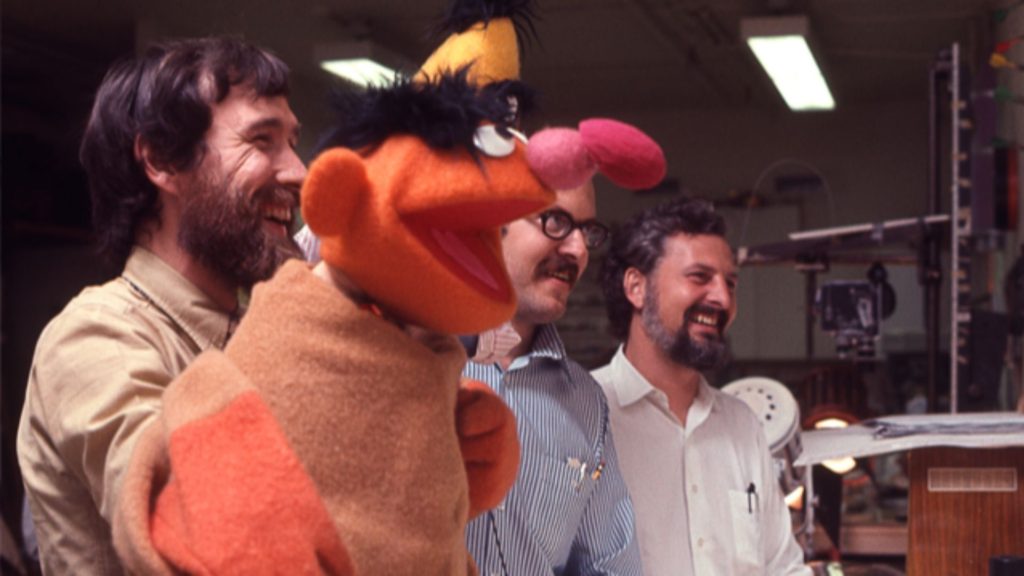
Caption: A scene from Marilyn Agrelo’s film STREET GANG: HOW WE GOT TO SESAME STREET. Courtesy of SFFILM

There’s a lot to like about Street Gang: How We Got to Sesame Street, a documentary as charming as the beloved TV series. As groundbreaking as it was, Sesame Street is now a 51-year-old institution, and its origin saga has not been well-known. Most of the key players survive, allowing director Marilyn Agrelo to present the first-hand back story.

We take the concept for granted today, based on the recognition that kids voraciously learn from commercial television – they learn to consume commercially marketed products. Sesame Street’s founders aimed to find out what kids like to watch and what is good for them to watch and put the two together.

Refreshingly. the pioneering producer Joan Ganz Cooney, the visionary Lloyd Morrisette of the Carnegie Foundation and the inventive director/head writer Jon Stone, each gives the credit to the others. If you add Mister Rogers to these folks, you have the Mount Rushmore of children’s television.

Everything in Sesame Street was intentional – like the street setting itself. Noting that most kid shows had fantasy settings, the creators chose a gritty urban neighborhood street to be relatable to disadvantaged urban kids. The same is true for the integrated cast.

Of course, Street Gang highlights the role of the Muppets. At first, the Muppets had their own set, but the creators learned that kids were so entertained by the Muppets that they found the street boring. So, they pivoted and brought the Muppets on to the street.

Jim Henson founded the Muppets as a late night satirical act and brought that adult sensibility to Sesame Street. The jokes embedded for adults encouraged parents to watch Sesame Street with their kids (which the educators thought was important).

There is also the astounding story of Sesame Street in Mississippi, where state government-controlled public television refused to air a show with an integrated cast. Those stations had to reverse themselves when private Mississippi stations put the show on the air.

This had not occurred to me, but Sesame Street requires creation of original music for 100 episodes per year – an enormous body of work. Street Gang takes us into the songwriting craft, with witty gems like Letter B (from Let It Be).

I screened Street Gang: How We Got to Sesame Street at SFFILM in April. It is widely available to stream today.

STREET GANG: HOW WE GOT TO SESAME STREET: the origin story of an institution

Caption: A scene from Marilyn Agrelo’s film STREET GANG: HOW WE GOT TO SESAME STREET. Courtesy of SFFILM

There’s a lot to like about Street Gang: How We Got to Sesame Street, a documentary as charming as the beloved TV series. As groundbreaking as it was, Sesame Street is now a 51-year-old institution, and its origin saga has not been well-known. Most of the key players survive, allowing director Marilyn Agrelo to present the first-hand back story.

We take the concept for granted today, based on the recognition that kids voraciously learn from commercial television – they learn to consume commercially marketed products. Sesame Street’s founders aimed to find out what kids like to watch and what is good for them to watch and put the two together.

Refreshingly. the pioneering producer Joan Ganz Cooney, the visionary Lloyd Morrisette of the Carnegie Foundation and the inventive director/head writer Jon Stone, each gives the credit to the others. If you add Mister Rogers to these folks, you have the Mount Rushmore of children’s television.

Everything in Sesame Street was intentional – like the street setting itself. Noting that most kid shows had fantasy settings, the creators chose a gritty urban neighborhood street to be relatable to disadvantaged urban kids. The same is true for the integrated cast.

Of course, Street Gang highlights the role of the Muppets. At first, the Muppets had their own set, but the creators learned that kids were so entertained by the Muppets that they found the street boring. So, they pivoted and brought the Muppets on to the street.

Jim Henson founded the Muppets as a late night satirical act and brought that adult sensibility to Sesame Street. The jokes embedded for adults encouraged parents to watch Sesame Street with their kids (which the educators thought was important).

There is also the astounding story of Sesame Street in Mississippi, where state government-controlled public television refused to air a show with an integrated cast. Those stations had to reverse themselves when private Mississippi stations put the show on the air.

This had not occurred to me, but Sesame Street requires creation of original music for 100 episodes per year – an enormous body of work. Street Gang takes us into the songwriting craft, with witty gems like Letter B (from Let It Be).

I screened Street Gang: How We Got to Sesame Street at SFFILM. It opens today in select San Francisco theaters and will release on VOD on May 6.

SFFILM: three indie gems

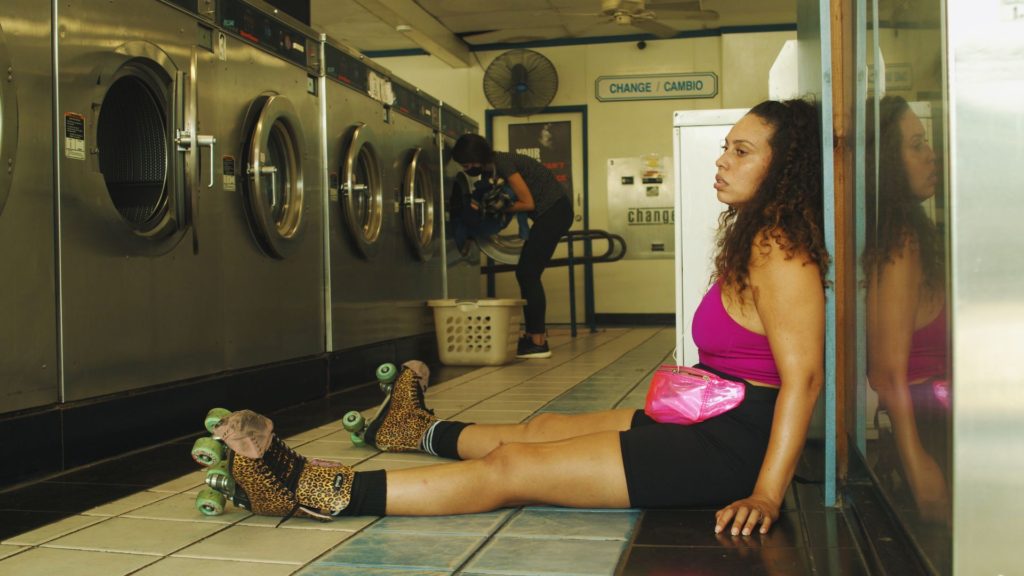
Kelley Kali in a scene from Kelley Kali’s and Angelique Molina’s film I’M FINE (THANKS FOR ASKING), playing at the 2021 San Francisco International Film Festival, April 9 -18, 2021. Courtesy of SFFILM

The San Francisco International Film Festival (SFFILM) is always an important showcase for independent cinema. Here are three indie gems in this year’s SFFILM program.

In the winning indie I’m Fine (Thanks for Asking), a recently widowed mom has lost her housing and goes on a one-woman crusade to get herself and her daughter back into an apartment. With a one-day deadline to earn the last $200 for a rental deposit, she races the clock through a series of misadventures – both comic and tragic – roller skating around Pacoima, braiding hair and making app-based food deliveries. And she’s putting on the best face, hiding her homelessness (and even convincing her 8-year-old that they’re “camping”). I’m Fine (Thanks for Asking) makes powerful statements about housing security and the gig economy in a oft funny, always accessible movie. It’s the first feature for the female, BIPOC filmmakers – shot on a low budget during a pandemic.

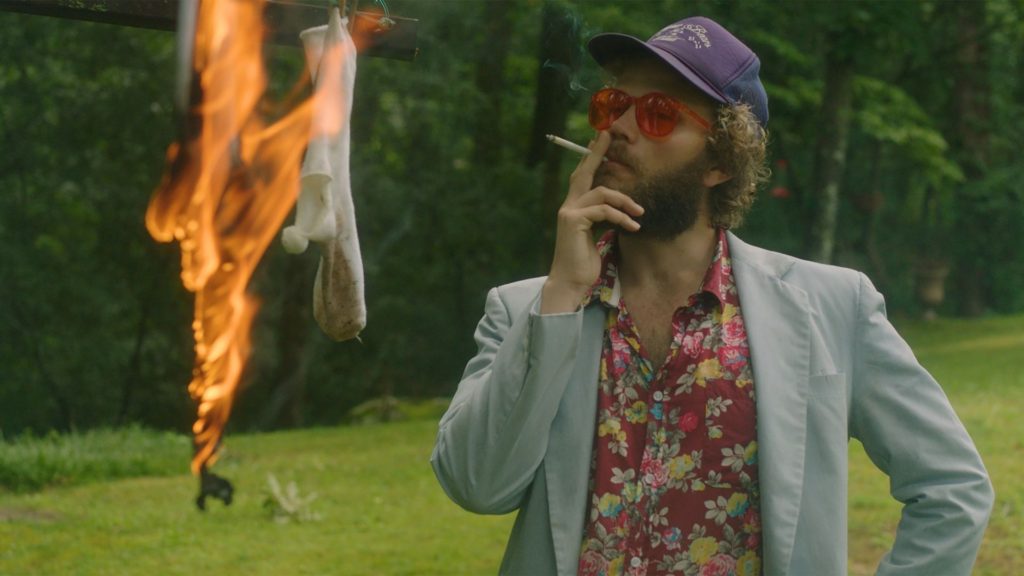
A scene from Bo Maguire’s film SOCKS ON FIRE, playing at the 2021 San Francisco International Film Festival, April 9 -18, 2021. Courtesy of SFFILM

Socks on Fire is Bo McGuire’s tale of his own family’s inheritance battle over a Hokes Bluff, Alabama, bungalow. The family of church-going Bama football fans – and one drag queen – is jarred and wounded by the mean behavior of one aunt. Enriched by old home movies and re-enactments, this ain’t your conventional talking head documentary. Socks on Fire swings between funny and operatic, and there’s a sweet remembrance of a grandmother in here, too. Won Best Documentary at the Tribeca Film Festival.

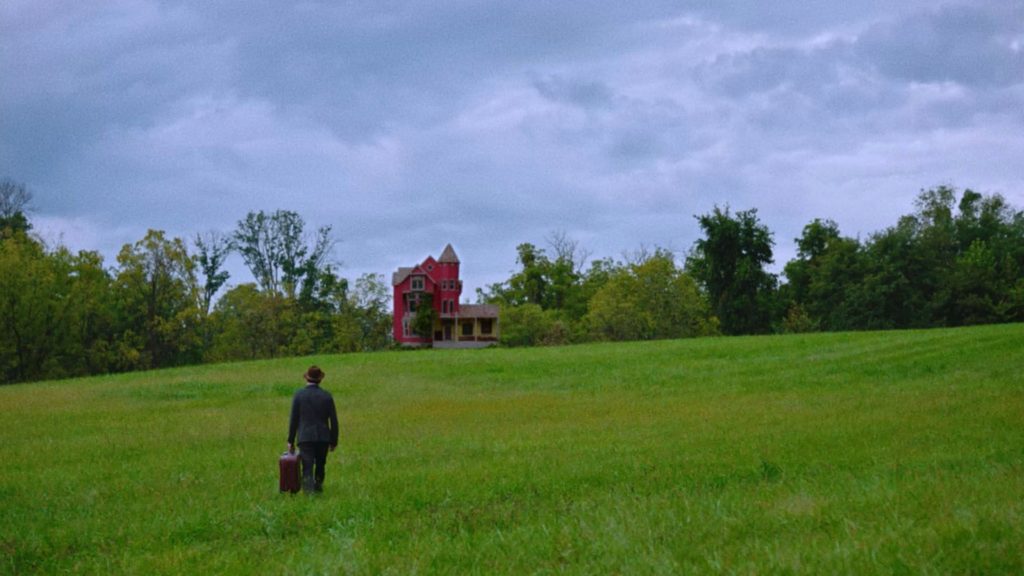
A scene from Kentucker Audley’s and Albert Birney’s film STRAWBERRY MANSION, playing at the 2021 San Francisco International Film Festival, April 9 -18, 2021. Courtesy of SFFILM

The very trippy and ultimately sweet fable Strawberry Mansion is set in a future where people’s dreams are taxed. An Everyman tax auditor (co-writer and co-director Kentucker Audley) is assigned to the dreams of an elderly artist and is plunged into an Alice in Wonderland experience with her dreams, and his dreams, and a romance, to boot. Strawberry Mansion is also a sharp and funny critique of insidious commercialism.

Socks on Fire had its North American theatrical premiere at a drive-in event – complete with live drag queen performances – as SFFILM’s centerpiece event. I’m Fine (Thanks for Asking) and Strawberry Mansion can be streamed at home through April 18. Tickets are available at SFFILM.

A LEAVE: the workplace evolves…unkindly

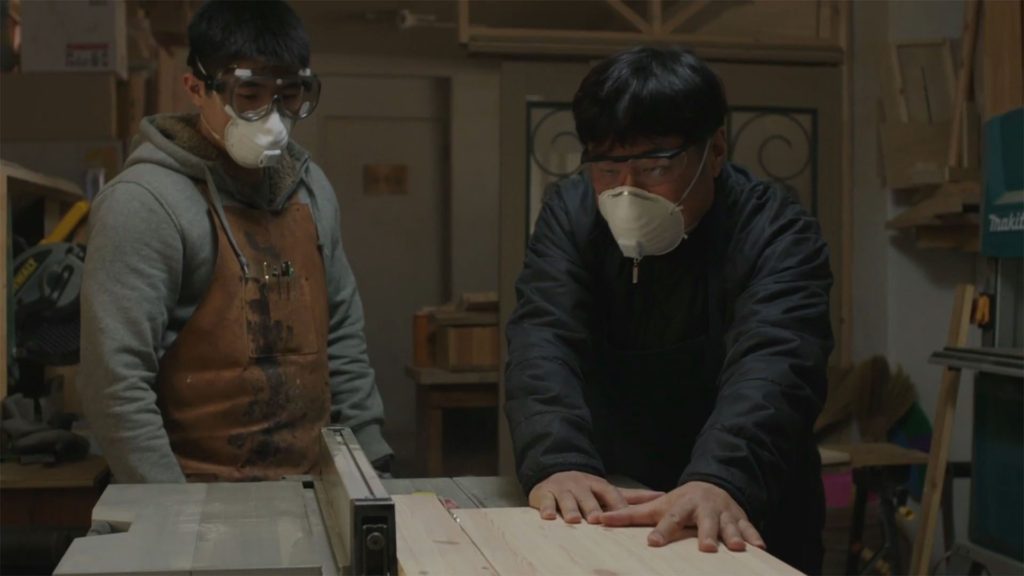
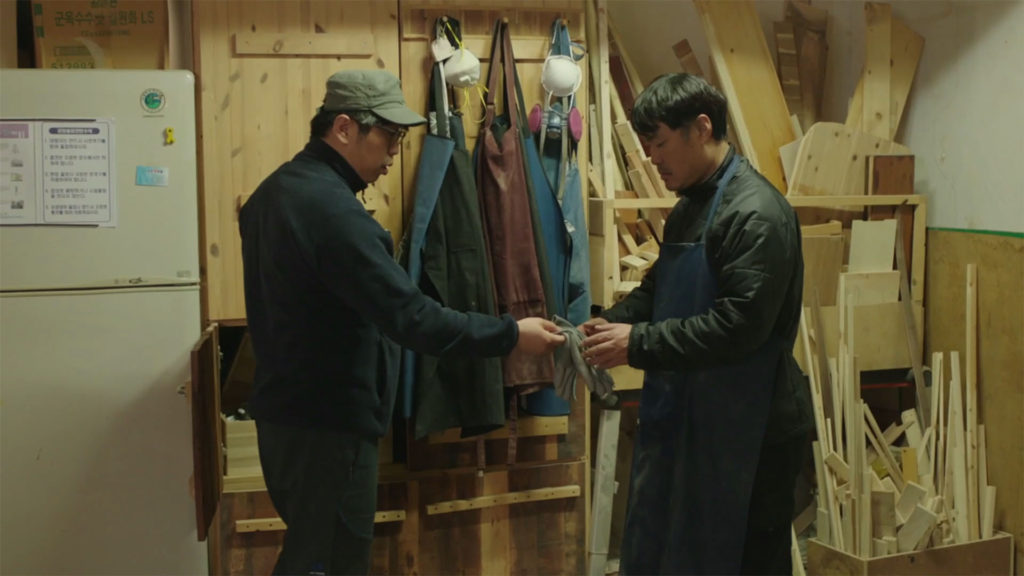
A scene from Ran-hee Lee’s film A LEAVE. Courtesy of SFFILM

Ran-hee Lee’s unpretentious A Leave is a surprisingly insightful slice-of-life into the modern global workplace. It opens on Day 1893 of a labor sit-in, as laid-off workers hold out to get reinstated in their longtime jobs. They have obviously lost this struggle a long while ago, although not everyone is ready to internalize that fact and move on. Middle-aged Jaebok, one of the sit-in;s remaining leaders, decides to take a leave from organizing that he characterizes as “like taking a leave from work”.

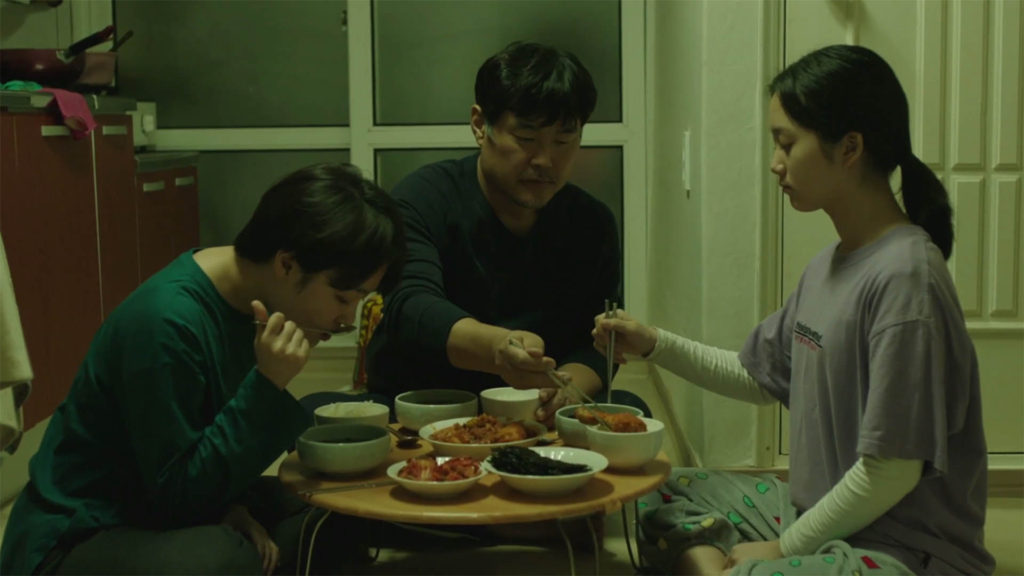
With some distance from the day-to-day campaign, he’s back in his apartment, and back to clogged drains and surly teenagers. He realizes that, without a paycheck, he cannot give his kids what they need (and his bright, promising older daughter needs college tuition). So, Jaebok finds a job in the new economy.

A scene from Ran-hee Lee’s film A LEAVE. Courtesy of SFFILM

It turns that his new job is as a temp contract worker in a sweat shop that supplies a big company like the one that laid him off. His new boss sells the opportunity with, “the company is disaster-free” – a low bar if ever there were one.

Jaebok, used to a decades-long career path with a single employer is puzzled by the revolving door of fellow workers. Only one young guy stays for more than a couple days, and many of the others must be undocumented immigrants working illegally.

The younger worker is not used to any continuity of co-workers – and not used to having relationships with his co-workers, something that Jaebok thinks is normal. The kid believes that asking for an eight hour shift is quaint.

A Leave is the first feature for writer-director Ran-hee Lee. She knows how to tell a little story in a little movie, which is not faint praise at all. Sometimes a little story is the best way to unmask great truth.

Lee uses non-actors in the film Her leading man is a 49-year-old guy who was laid off in real life and then picked up a temp job as a low wage contractor with undocumented, very green co-workers.

I screened A Leave for the SFFILM, where it won a jury mention.

A scene from Ran-hee Lee’s film A LEAVE. Courtesy of SFFILM

NUDO MIXTECO: three women, three dramas

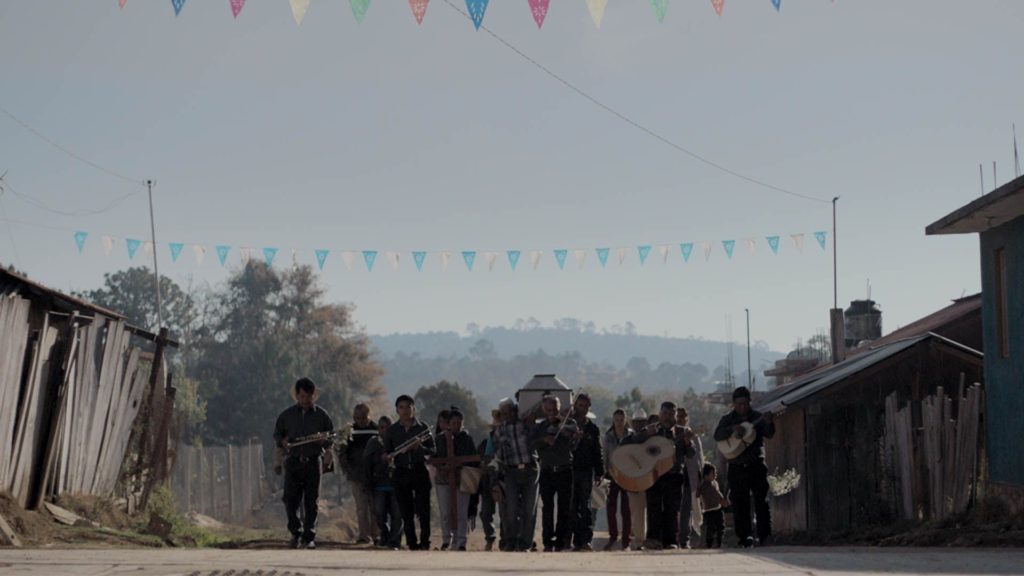
A scene from Angeles Cruz’s NUDO MEXTECO. Photo courtesy of SFFILM

In Nudo Mixteco, we visit an indigenous Mixtec village in Southern Mexico and get three dramas for the price of one. It’s the annual festival, and three long-absent locals return home. One is there for her mom’s funeral. another to intervene in her daughter’s welfare and the third has just decided that’s time to come back home.

Nudo is Spanish for “knot”, and the three stories form a loose braid. As in Kieślowski’s Blue/Red/White, the characters in each plot thread can be spotted in the others.

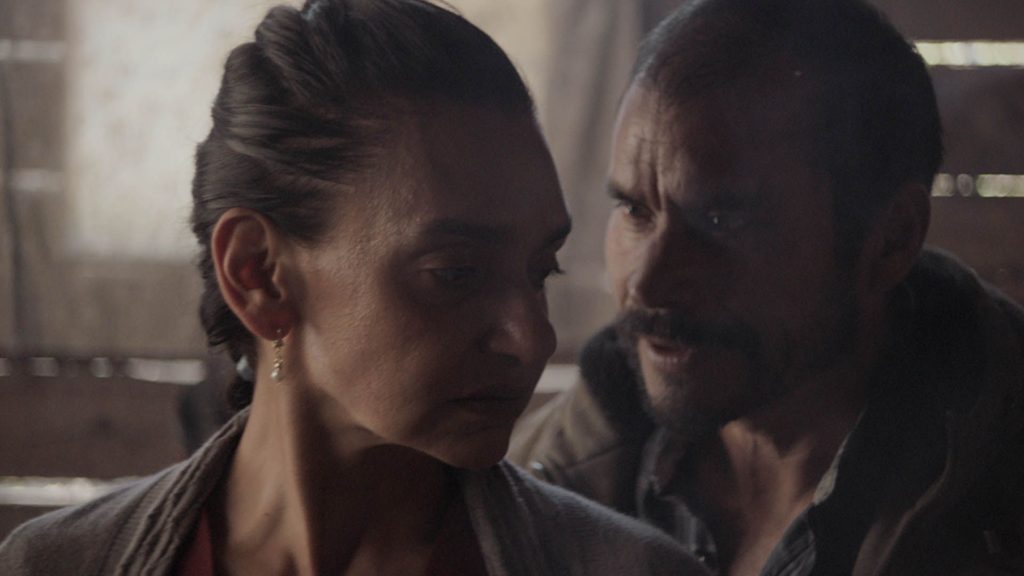
In each story, the women face constraints of patriarchy and traditional culture. An out lesbian has built a life in the city, but her father in the village cannot accept her sexuality, and even blames it for her mother’s death. Another woman also works in the city, and has left her daughter to be cared for by her sister in the village; reports of the daughter’s behavior trigger concern stemming from the mom’s own childhood sexual abuse.

In the third story, a village man has been working in the US. He had promised his wife that he would be gone six months, but it’s been three years. He expects that he can resume their lives as before, but his wife has moved on. Each feels betrayed by the other, and the village is convened to reach a community decision on a just outcome.

Nudo Mixteco is the debut feature for writer-director Angeles Cruz, who has won Ariels (Mexico’s Oscars) for her short films. Cruz is an accomplished actress, who was nominated for a best actress Ariel in 2018.

I screened Nudo Mixteco at SFFILM, where it won a jury award.

A scene from Angeles Cruz’s NUDO MEXTECO. Photo courtesy of SFFILM

I’M FINE (THANKS FOR ASKING): a desperate dash for dignity

Kelley Kali in a scene from Kelley Kali’s and Angelique Molina’s film I’M FINE (THANKS FOR ASKING), playing at the 2021 San Francisco International Film Festival, April 9 -18, 2021. Courtesy of SFFILM

In the winning indie I’m Fine (Thanks for Asking), Danny (Kelley Kali) is a recently widowed mom who has lost her housing and is on a one-woman crusade to get herself and her daughter back into an apartment.

Scraping together her earnings from here and there, she’s only $200 away from enough deposit for a new apartment. That 200 bucks is the MacGufffin of I’m Fine (Thanks for Asking), and Danny frantically roller skates around Pacoima, braiding hair and making app-based food deliveries.

With a one-day deadline, Danny races the clock through a series of comic and tragic misadventures, suffering more than her share of indignities. She’s desperate, but she still bypasses the off-ramps that would sacrifice her independence and personal integrity.

It’s also important to Danny that no one knows that she’s a mom who is homeless. Danny (Kali), Danny has even been telling her precocious 8-year-old daughter Wes (Wesley Moss) that they’re “camping”, but Wes is about to catch on.

Danny does let her situation slip to a couple of friends; (ironically, one’s housing depends on a new boyfriend and the other has inherited his). She gets more judginess than unconditional support.

We hear of “one paycheck away from being homeless”, but what about those hard-working folks in the informal economy who don’t get any paycheck at all? I’m Fine (Thanks for Asking) makes powerful statements about housing security and the gig economy in a oft funny, always accessible movie.

I’m Fine (Thanks for Asking) is an authentic and clear-eyed portrait of a woman navigating out of a fix. Danny is not an artificially noble character – not all of her choices are ideal. But she is driven by devotion to her daughter.

In a tour de force performance, Kelly Kali is a tornado of hustle. They say that acting is reacting, and Kali’s face tells us when she is thinking “I’m not going to go THERE” or “WTF am I going to tell my kid?”. Her Danny puts on the best possible face in a way to convince her acquaintances (without being convincing to the clued-in movie audience).

Deon Cole (Blackish) delivers a brief, magnetic turn as one tempting and very bad potential choice for Danny.

This is the first feature for co-directors Kelley Kali and Angelique Molina, who co-wrote I’m Fine (Thanks for Asking) with Roma Kong (also first feature). (Kali was also one of nine co-directors credited on The Adventures of Thomasina Sawyer). This film is especially well-paced, as Kali and Molina economically set up the situation that Danny and Wes are in and then keep up with Danny as she spurts from vignette to vignette on her quest.

Let’s not overlook that this is another example of female filmmakers, on the hunt for quality source material, writing it themselves. And they shot it on a low budget during a pandemic. With the matter of fact masking of the characters, I’m Fine is ever COVID-conscious.

I’m Fine (Thanks for Asking) won two jury awards at SXSW and can be streamed through April 18 at SFFILM.

First look at the 2021 SFFILM

A scene from Marilyn Agrelo’s film STREET GANG: HOW WE GOT TO SESAME STREET, playing at the 2021 San Francisco International Film Festival, April 9 -18, 2021. Courtesy of SFFILM

This year’s San Francisco International Film Festival (SFFILM) opens tomorrow, April 9, and runs through April 18. As always, it’s a Can’t Miss for Bay Area movie fans. This year, you can attend at home: with the exception of a few drive-in events at Fort Mason, the movies can be streamed.

The menu at SFFILM includes 42 feature films and 56 shorts from 41 countries, with 13 world premieres and 20 North American or US premieres. Of the 103 total films, 57% have female directors and 57% are directed by BIPOC.

Besides the streaming, here’s what’s new in this year’s SFFILM:

  • After years of programs impeccably curated by Bay Area treasure Rachel Rosen, Jessie Fairbanks takes over as Director of Programming. (And this is the first SFFILM fest for new SFFILM Executive DIrector Anne Lai.)
  • A cross section of movies highlighted as Family-friendly films, something that more film festivals should do. Introduce the kids to good cinema!
  • Mid-Lengths – a competition of five movies with hard-to-program running times of 30-50 minutes.

The festival’s Closing Night Film is Marilyn Agrelo’s documentary Street Gang: How We Got to Sesame Street, the origin story of the beloved children’s show.

I’ve screened some of the films, and I’ll be recommending some indie gems soon.

The 2021 SFFILM opens tomorrow. Here’s the information of the program, schedule and tickets and passes. Throughout SFFILM, you can follow me on Twitter for the very latest coverage.

ME AND EARL AND THE DYING GIRL – perched on the knife edge between comedy and tragedy

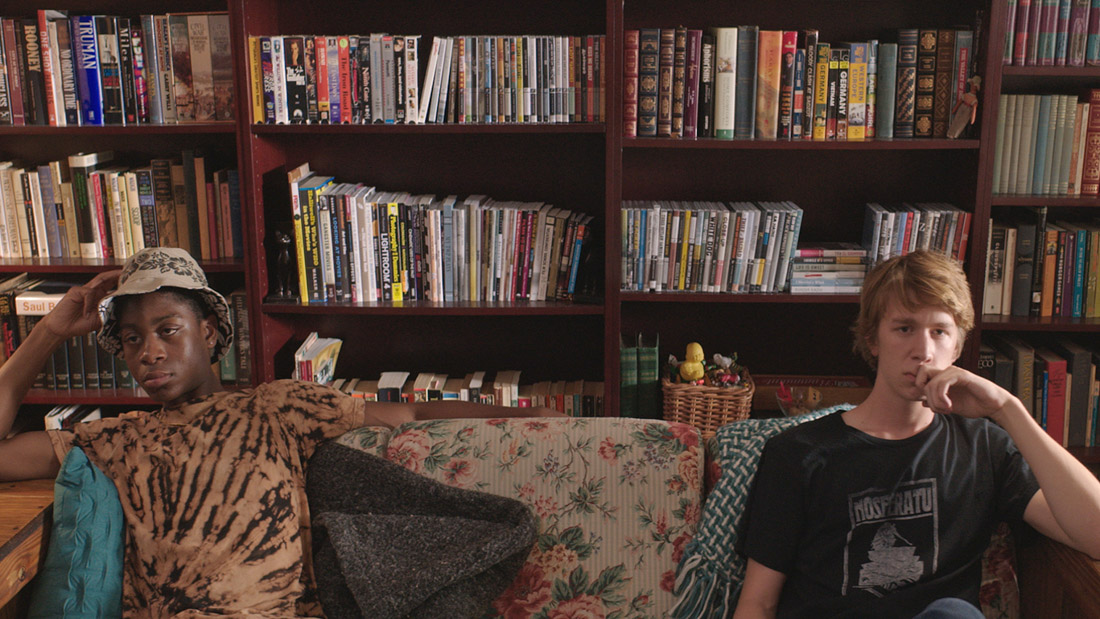
Olivia Cooke and Thomas Mann in ME AND EARL AND THE DYING GIRL

Here’s a MUST SEE – the unforgettable coming of age Me and Earl and the Dying Girl, a brilliant second feature from director Alfonso Gomez-Rejon. The title suggests a weeper (and it is), but 90% of Me and Earl is flat-out hilarious. It’s high on my list of the Best Movies of 2015 .

Greg (Thomas Mann) is a Pittsburgh teenager who has decided that the best strategy for navigating high school is to foster good relations with every school clique while belonging to none. Embracing the adage “hot girls destroy your life”, he gives the opposite gender a very wide berth. Outwardly genial, Greg is emphatically anti-social in practice, except for his best friend Earl (Ronald Cyler II). But he even refuses to admit that Earl is his friend, describing him “as more of a co-worker”.

Greg’s parents disrupt Greg’s routine by forcing him to visit his classmate Rachel (Olivia Cooke), who has just been diagnosed with leukemia. Rachel doesn’t want any pity, so this is awkward all around until Greg makes Rachel laugh, which draws him back again to visit -and again. A friendship, based on their shared quirky senses of humor, blossoms, but – given her diagnosis – how far can it go?

Rachel is delighted to learn that Greg and Earl shoot their own movies – short knock-offs of iconic cinema classics. She first laughs when she finds that he has remade Rashomon as MonoRash. Their other titles include Death in Tennis, Brew Velvet and A Box of Lips Now.

Ronald Cyler II and Thomas Mann in ME AND EARL AND THE DYING GIRL

Why is Me and Earl so successful? Most importantly, it perches right on the knife-edge between tragedy and comedy, and does so more than any movie I can think of. As funny as it is, we all know that there’s that leukemia thing just under the surface. But, with its originality and resistance to sentimentality, Me and Earl is the farthest thing from a disease-of-the-week movie.

Any movie lover will love all the movie references, as well as Greg and Earl’s many short films. Gomez-Rejon shot these shorts with Super 8, Bolex, digital Bolex and iPhone. Jesse Andrews adapted his own novel, and, as Gomez-Rejon expanded the number of “films within the film”, he called on Andrews to supply him with the new titles – and there are scores of them, right through the ending credits.

Finally, Me and Earl’s art direction is the most singular of any coming of age film. In fact, all the art direction led to the movie’s very satisfying ending; Gomez-Rejon brought in those surprises on the wall at the end – it’s not in the novel.

But Me and Earl and the Dying Girl is at its heart a coming of age story. Sure, the character of Greg is an original, but the life lessons that he must learn are universal.

Thomas Mann is hilarious as Greg; he could be a great comic talent in the making. Cooke and newcomer Cyler are also excellent. Nick Offerman and Connie Britton are perfect as Greg’s well-meaning parents, as is Molly Shannon as Rachel’s needy mom. Jon Bernthal also rocks the role of Mr. McCarthy, another great character we haven’t seen before – a boisterously vital, but grounded history teacher; Mr. McCarthy lets Greg and Earl spend their lunch hours in his office watching Werner Herzog movies on YouTube. (And Herzog himself reportedly loves the references.)

Alfonso Gomez-Rejon started as a personal assistant to Martin Scorsese and worked his way up to second unit director. With the startling originality of Me and Earl, he’s proved his chops as an auteur.

I saw Me and Earl and the Dying Girl in May 2015 at the San Francisco International Film Festival (SFFILM) at a screening with Gomez-Rejon.

Me and Earl and the Dying Girl is a guaranteed crowd-pleaser and a Must See. It’s available on DVD from Netflix and Redbox and streaming from Amazon, iTunes, Vudu, YouTube and Google Play.

VERY SEMI-SERIOUS – glimpsing inside The New Yorker cartoons

VERY SEMI-SERIOUS

If you’re like me and you worship the cartoons in The New Yorker, then the documentary Very Semi-Serious is a Must See. Very Semi-Serious takes us inside The New Yorker for a glimpse inside the process of creating and selecting the cartoons, chiefly from the perspective of cartoonist and twenty-year New Yorker Cartoon Editor Bob Mankoff. You will know Mankoff from his cartoon with the caption, “How about never? Is never good for you?”. (Mankoff has since left The New Yorker for Esquire and the website Cartoon Collections.)

We also meet rock star cartoonists that include Roz Chast and George Booth, along with The New Yorker Editor David Remnick and some aspiring cartoonist newcomers. We are boggled by the tens of cartoons each cartoonist pitches each week and the hundreds that the Cartoon Editor must review. Rejection is a major part of the cartoon life.

We also learn how Mankoff scientifically studies the eye movements of readers to see how/when/if we “get” the jokes. And we get to laugh again at HUNDREDS of cartoons.

I saw Very Semi-Serious at the 2015 San Francisco International Film Festival (SFFILM), and now you can stream it from Amazon (free with Prime), iTunes, YouTube and Google Play.