THE HAND OF GOD: coming of age, shaped by events

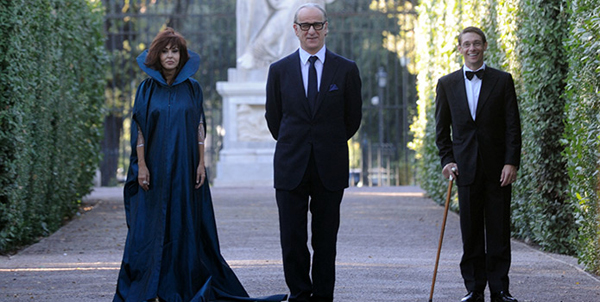
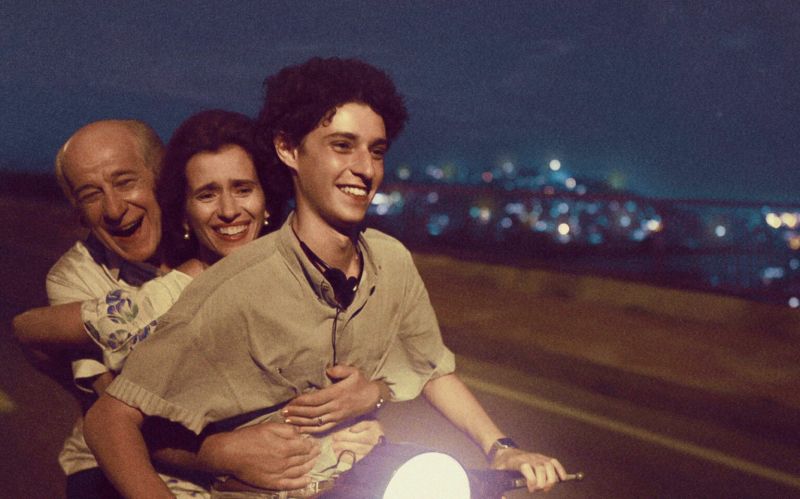
Photo caption: Toni Servillo, Teresa Saponangelo and Filippo Scotti) in THE HAND OF GOD. Courtesy of Netflix.

The Hand of God is filmmaker Paolo Sorrentino’s own coming of age story – and a time capsule of 1986 Naples. The kinda-fictional stand-in for Sorrentino is the directionless 16-year-old Fabietto (Filippo Scotti), who enjoys family life with his boisterous, ever-joking parents (Toni Servillo and Teresa Saponangelo). Events occur, one profoundly tragic, which pivot Fabietto into a future career in cinema.

The young Fabietto is very passive, a bobber floating on the surface of his tumultuous family and his rowdy hometown. Besides being rocked by the tragedy, he is deluged by the energy of a sexy, funny and mentally ill aunt, a formidable dowager baroness, a crazily impulsive smuggler and a bombastically narcissistic film director. He is a sensitive kid, one who is triggered into a panic attack when his mother, usually his rock, has her own meltdown.

The title of movie, as even casual sports fans may recognize, is a reference to soccer star Diego Maradona, whom the Naples soccer club broke the bank to acquire for seven seasons. As the film opens, Fabietto, with the rest of Naples, is transfixed by the possibility, then just a rumor, of getting Maradona. When Maradona leads Napoli to a league championship, Fabietto has been numbed by grief and is juxtaposed against the rest of his city in ecstatic celebration.
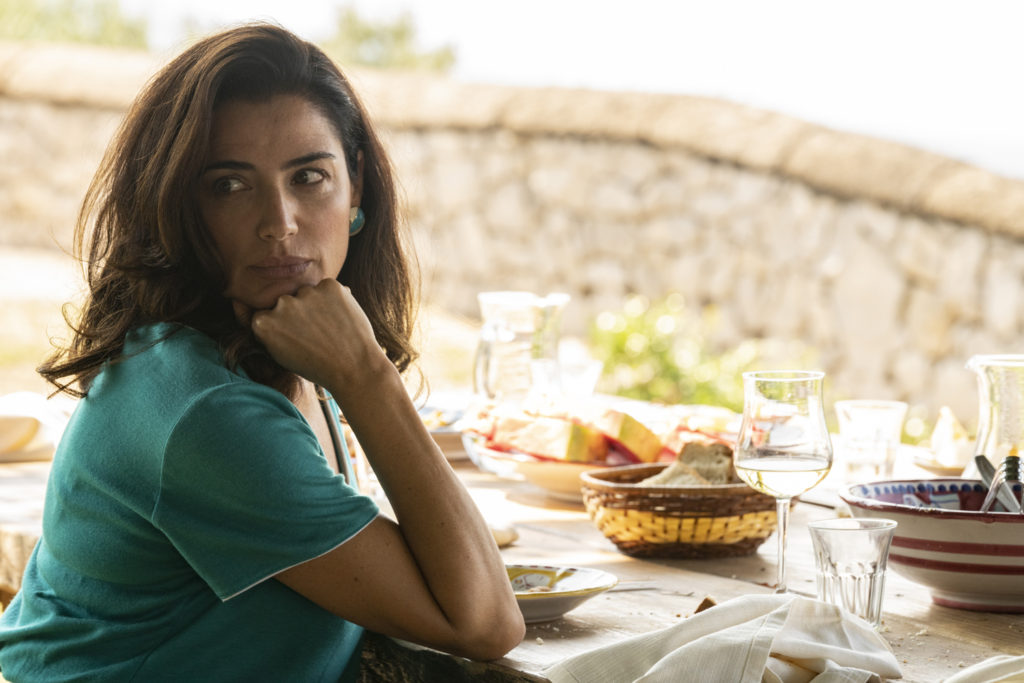
Luisa Ranieri in THE HAND OF GOD. Courtesy of Netflix.

The cast is very effective, but the standouts portray the key female parts – Fabietto’s mom (Teresa Saponangelo), his aunt Patrizia (Luisa Ranieri), and the Baroness (Betty Pedrazzi).

Nothing is more personal than one’s own coming of age, and Sorrentino, describing The Hand of God, says, “Almost everything is true”.

I think that, of all current filmmakers, Sorrentino (Il Divo, The Great Beauty, Youth) makes the most visually and striking beautiful movies. The Great Beauty won the Best Foreign Language Oscar. In that film, Sorrentino follows his protagonist (played by Servillo) through a series of strikingly beautiful Roman settings (including lots of gorgeously still Roman dawns.) If you’ve been to Rome, you know that it is a generally chaotic city with unexpected islands of solitude. Here in The Hand of God, Sorrentino gives this treatment to his own hometown, the grittier and more humble Naples.

The Hand of God opens with a remarkable 2 1/2-minute drone/helicopter shot that takes us from the ocean to Naples and back to the ocean; as the camera nears the city, the soundtrack gradually picks up the sounds of urban bustle.

In one very brief but inspired scene, Sorrentino shows us the casting call for extras in a Fellini film. (You can only imagine.)

How audience-friendly is The Hand of God? In real life, which this film seeks to reflect, events happen randomly. In contrast, a narrative screenplay would ideally organize the plot artificially in a way to make the story compelling. So, some viewers may find The Hand of God too disjointed to be satisfying. For sure, it’s not as good a film as The Great Beauty or Youth.

The Hand of God is now streaming on Netflix. I also recommend the 6-minute Netflix featurette with director Sorrentino discussing the film.
BAD TALES: perhaps too dark

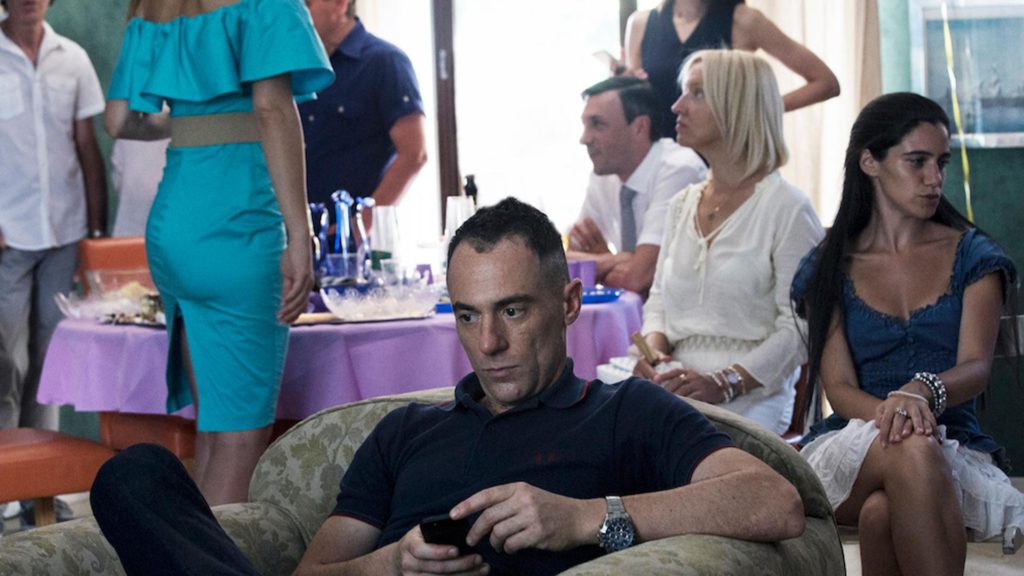
Photo caption: Elio Germano in BAD TALES. Photo courtesy of Strand Releasing.

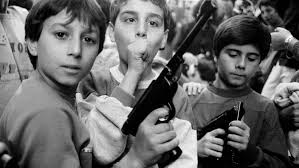
In the Italian coming of age film Bad Tales, middle schoolers must navigate adolescence. It’s droll, dark and captivating – and, finally, perhaps too dark.

The kids head into summer vacation while their suburban families languish someplace between ennui and malaise. The fathers radiate toxic masculinity.

Co-directors and co-directors Damiano and Fabio D’Innocenzo won for best screenplay at the Berlinale; it’s just their second feature film.

The kids in Bad Tales are much more sympathetic than are real life middle schoolers in my experience. They’re at that awkward and confusing age where there’s nothing to be confident about. It’s the age where the boys call each other spazz and the last day of school transitions into summer vacation with a glorious water balloon fight.

The kid actors are exceptionally good. The D’Innocenzos must be both extremely adept at casting and lucky; the boys are all perfect for the ages of the characters – and just one unpredictable growth spurt or a voice-deepening from aging out of their parts.

As we observe human foibles, Bad Tales‘ overall tone is caustically amusing. But things get deeply tragic at the end, including the most cowardly behavior I’ve ever seen from a movie father – and then there’s the most insidious act by a movie teacher.

Bad Tales is streaming on on Virtual Cinema; I watched it at Laemmle.

MARTIN EDEN: Jack London in an Italian art film

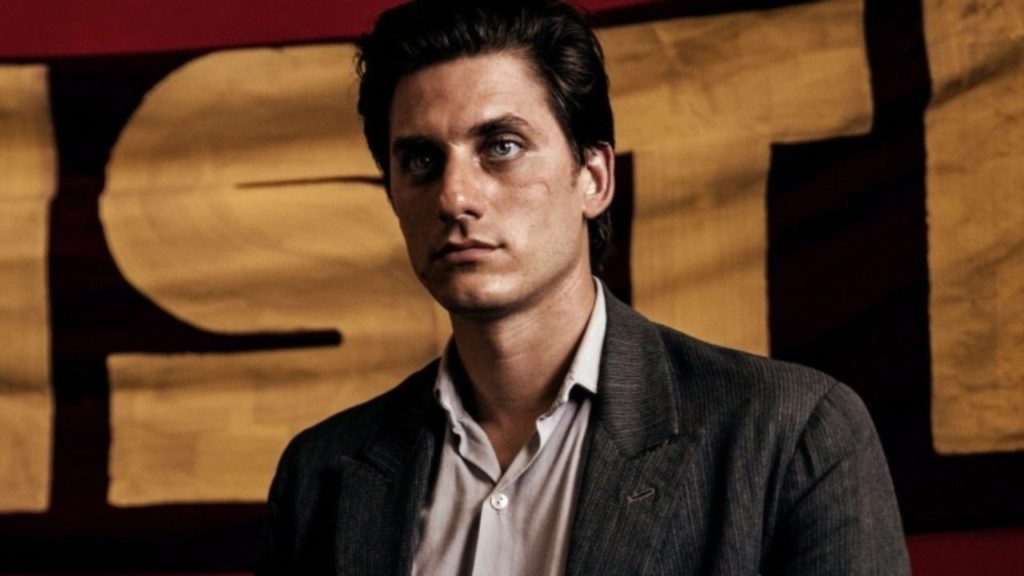
Luca Marinelli in MARTIN EDEN

A hunky and charming seaman, devoid of education, aspires to become a writer. Sound like Jack London? Indeed London authored the novel Martin Eden, in part modeled after himself. The lush art film Martin Eden is Pietro Marcello’s adaptation, which he set in Italy.

Luca Marinelli plays the eponymous protagonist with charisma and physicality. His Martin Eden is a zealous autodidact.

Martin ingratiates himself with a wealthy family and seeks the approval and affection of the daughter, whom he begins to idolize.  She sees him as a noble savage, a primitive ready to be cut and polished into a gemstone, and she encourages his education. She is attracted to him physically, but also appreciates his drive and intelligence. But she hopes he would harness his talents for something more commercial and more practical than writing.

Martin, however, attains fame as an author and public intellectual. Unlike Jack London himself, he rejects socialism and goes to the other Ayn Rand-like extreme. He becomes more confident in his philosophy. His political stridency leads to his rudeness at the girlfriend’s family table. She scolds, “you are unbearable“, and, indeed, he is.

Martin Eden has a very rich look and feel. Director Pietro Marcello’s work here has been compared to that of Visconti. There are some odd pop musical interludes, but the visual collages are much more interesting.

Martin Eden is a well-crafted and well-acted film, but its appeal is limited by the protagonist as he strives himself right into obnoxiousness. I watched Martin Eden on Virtual Cinema at Laemmle.

on TV: THE GREAT BEAUTY – decadence, stunning imagery and the beauties of Rome itself

Toni Servillo (center) in THE GREAT BEAUTY

On Sunday, November 29, Turner Classic Movies will air The Great Beauty (La grande belleza), which begins as its protagonist Gep Gambardella is celebrating his 65th birthday in a feverishly hedonistic party. Gep authored a successful novel in his twenties, which has since allowed him the indulgent life of a celebrity journalist, bobbing from party to party among Rome’s shallow rich.

Gep is having a helluva time, but now he reflects on the emptiness of his milieu and the superficial accomplishments of his past 40 years. As he alternates introspection and indulgence, we follow him through a series of strikingly beautiful Roman settings. (And, because Gep parties all night, we see lots of gorgeously still Roman dawns.)

The Great Beauty is foremost an extraordinarily beautiful art film. If you’ve been to Rome, you know that it is a generally chaotic city with unexpected islands of solitude. The Great Beauty captures this aspect of the Eternal City better than any other film I’ve seen. On one level, The Great Beauty is very successful Rome porn.

THE GREAT BEAUTY

Writer-director Paolo Sorrentino also explores the moral vacuity of the very rich and the party life. It’s the Italy of Silvio Berlusconi, whom Sorrentino blames for enabling a national culture of escapism. These themes, along with the main character and the movie’s structure are of course nearly identical to Fellini’s great La Dolce Vita (1960), but The Great Beauty is more accessible, funnier and a bit more hopeful – and much more of a showcase for the cityscape of Rome. Sorrentino provides plenty of laughs, especially with a gourmet-obsessed cardinal and a cadaverous celebrity nun with a Mephistopheles-looking handler.

It’s hard to imagine an actor better suited to play Gep than Toni Servillo. Servillo perfectly captures both the happiness Gep takes in carnal pleasure and his self-criticism for giving his entire life to it. Servillo’s Gep is brazenly proud of his own cynicism, until we see his humanity breaking through at a funeral. Servillo is even magnificent in wearing Gep’s impressive collection of sports jackets.

There’s so much to The Great Beauty – stunning imagery, introspection, social criticism, sexual decadence, fine performances, humor and a Rome travelogue – each by itself worth watching the film.  The Great Beauty won the Best Foreign Language Oscar. If you miss it on TCM, you can still stream it from Amazon, Apple TV, Vudu, YouTube, Google Play, kanopy and the Criterion Channel. Courtesy of the Criterion Channel, here’s a illustrative clip.

a Sicilian Mafia double bill: THE TRAITOR and SHOOTING THE MAFIA

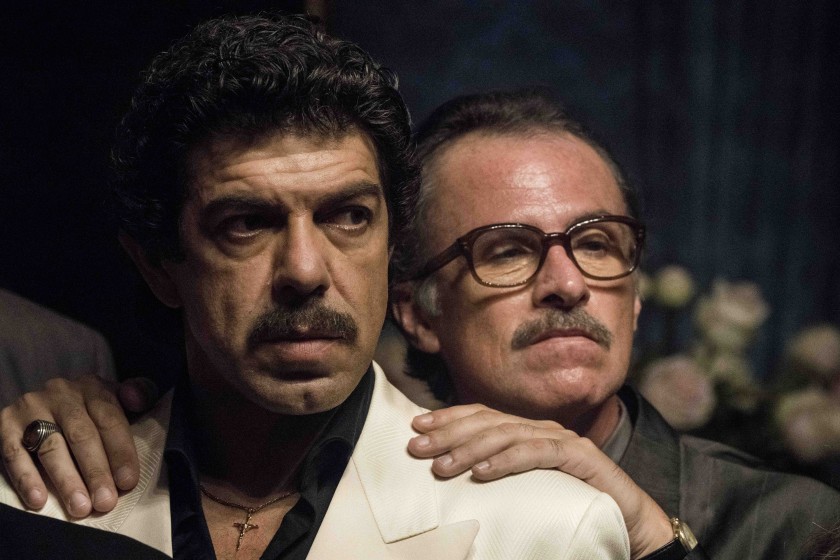
Pierfrancesco Favino and Totò Riina in THE TRAITOR, Photo courtesy of Sony Pictures Classics

Mafia movies have long been a cinematic staple and two current films explore the original Sicilian Mafia, the Cosa Nostra. The true life epic The Traitor and the documentary Shooting the Mafia cover the same territory – the Cosa Nostra‘s utter domination of Sicily until prosecuting judges Giovanni Falcone and Paolo Borsellini convicted almost 400 mafiosi in the bizarre Maxi Trial in 1986-87, the Mafia War on the State and assassination of the judges, leading to public outrage and arrests which have somewhat tamed the Cosa Nostra. Both films even feature the real village of Corleone, the home village of the fictional Godfather.

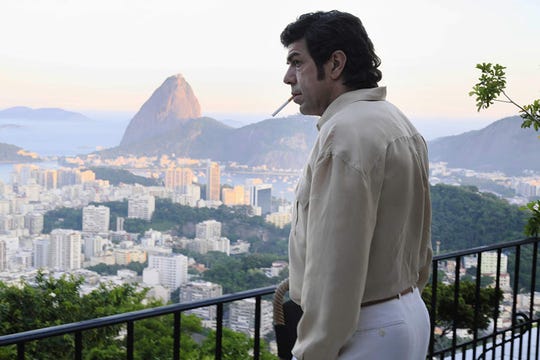
Pierfrancesco Favino in THE TRAITOR, Photo courtesy of Sony Pictures Classics.

The Traitor chronicles the career of Tommaso Buscetta, a mafia figure who traded in billions of dollars worth of heroin. Then, an internal gangland power grab led to the murders of his sons and to his arrest by very harsh Brazilian authorities. Buscetta retaliated by turning state’s evidence and testifying against his former Mafiosi, becoming the first and most important Sicilian Cosa Nostra informer.

The Traitor opens at a Mafia party where Buscetta (Pierfrancesco Favino) is sniffing out betrayal by his colleagues. It’s poker wisdom that, if you can’t spot the player who is :”the fish”, then it’s you. Or, as Victor Mature said in Gambling House, “You know what I think, Willie? I think I’m the fall guy.

Written and directed by Marco Bellocchio, The Traitor is a two-and-a-half hour epic that spans decades and three continents. The highlight is the Maxi Trial, held in a super-secure fortified arnea, ringed by over 400 defendants caged around the top.

Pierfrancesco Favino is very, very good as Buscetta, a guy who is firmly devoted to his personal code. Luigi Lo Cascio from The Best of Youth also appears as a Buscetta friend.

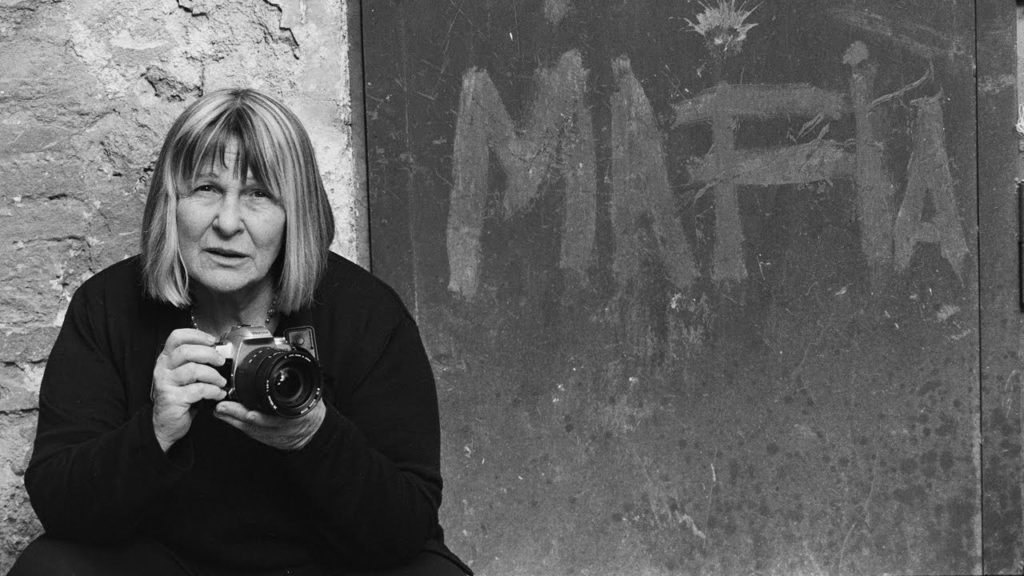
Letizia Battaglia in SHOOTING THE MAFIA

The documentary Shooting the Mafia introduces us to Letizia Battaglia, a talented Palermo photographer, whose photojournalistic specialty became photographing murder victims – scores, perhaps hundreds of corpses, bullet-riddled and bomb-mangled, in pools of blood. Her work also documented the grief. trauma and outrage of the Sicilian population.

Battaglia is open and unapologetic about her lusty personal appetites – and she over-shares. She would be an interesting subject for a biodoc even if she photographed ears of corn.

A Letizia Battaglia photograph in SHOOTING THE MAFIA

Shooting the Mafia, an Irish and US production, is directed by Kim Longinotto.

The Traitor can be rented from all the major streaming services. Shooting the Mafia can be streamed on iTunes, YouTube and Google Play.

LORO: just eye candy

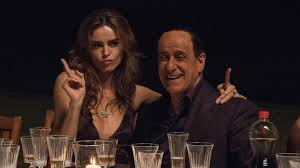
Kasia Smutniak and Toni Servillo in LORO

Loro is director Paolo Sorrentino’s take on the career end of the despicable Italian media mogul and former prime minister Silvio Berlusconi. The Berlusconi character has a different name, but there’s no mistake that it is the hair-dyed, ever-grinning Berlusconi.

The movie Loro is actually the combination of two television programs. In the first, we see Berlusconi’s corruption through the POV of another amoral grasper, Sergio (Ricardo Scarmacia). Sergio seeks his fortune by collecting a brigade of cocaine-fueled escorts to sexually entertain Berlusconi. In the second half, we follow Berlusconi himself as, out of power, he is unable to climb back into power, he loses his wife and he is sexually humiliated by a 20-year-old aspiring actress. Sorrentino gets his licks in by making Berlusconi, finally, pathetic.

Loro stars Sorrentino’s frequent collaborator Toni Servillo, who is able to play the Berlusconi character as a figure powerful to get all he desires…and then not.

I had high expectations of Loro because I loved Sorrentino’s The Great Beauty and Youth. Sorrentino is a master of the eye candy and those movies are especially beautiful, but also tell stories compelingly. Ultimately, Loro is much more interesting visually than it is thematically.

Loro, which got a screening at the San Francisco international Film Festival, has just concluded a wisp of a theatrical release in the Bay Area. It can be streamed from Amazon, iTunes, Vudu, YouTube and Google Play.

Stream of the Week: THE GREAT BEAUTY – decadence, stunning imagery and the beauties of Rome itself

As The Great Beauty (La grande belleza) begins, its protagonist Gep Gambardella is celebrating his 65th birthday in a feverishly hedonistic party. Gep authored a successful novel in his twenties, which has since allowed him the indulgent life of a celebrity journalist, bobbing from party to party among Rome’s shallow rich. Gep is having a helluva time, but now he reflects on the emptiness of his milieu and the superficial accomplishments of his past 40 years. As he alternates introspection and indulgence, we follow him through a series of strikingly beautiful Roman settings. (And, because Gep parties all night, we see lots of gorgeously still Roman dawns.)

The Great Beauty is foremost an extraordinarily beautiful art film. If you’ve been to Rome, you know that it is a generally chaotic city with unexpected islands of solitude. The Great Beauty captures this aspect of the Eternal City better than any other film I’ve seen. On one level, The Great Beauty is very successful Rome porn.

Writer-director Paolo Sorrentino also explores the moral vacuity of the very rich and the party life. It’s the Italy of Silvio Berlusconi, whom Sorrentino blames for enabling a national culture of escapism. These themes, along with the main character and the movie’s structure are of course nearly identical to Fellini’s great La Dolce Vita (1960), but The Great Beauty is more accessible, funnier and a bit more hopeful – and much more of a showcase for the cityscape of Rome. Sorrentino provides plenty of laughs, especially with a gourmet-obsessed cardinal and a cadaverous celebrity nun with a Mephistopheles-looking handler.

It’s hard to imagine an actor better suited to play Gep than Toni Servillo. Servillo perfectly captures both the happiness Gep takes in carnal pleasure and his self-criticism for giving his entire life to it. Servillo’s Gep is brazenly proud of his own cynicism, until we see his humanity breaking through at a funeral. Servillo is even magnificent in wearing Gep’s impressive collection of sports jackets.

There’s so much to The Great Beauty – stunning imagery, introspection, social criticism, sexual decadence, fine performances, humor and a Rome travelogue – each by itself worthwatching the film.  The Great Beauty won the Best Foreign Language Oscar and can be streamed from Amazon, iTunes, Vudu, YouTube and Google Play.

DVD/Stream of the Week: CAESAR MUST DIE

caesar must die
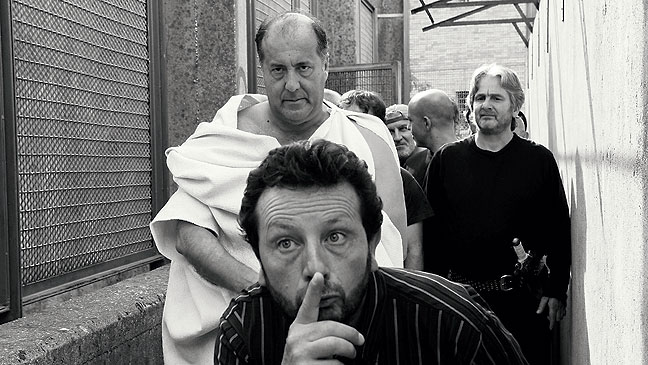
In the taut 76 minutes of Caesar Must Die, convicts in an Italian maximum security prison put on a performance of Shakespeare’s Julius Caesar. Every year, there’s a drama laboratory at this prison. It turns out that Julius Caesar is a perfect choice.

Julius Caesar is, most of all, a play about high stakes. And high stakes, where a decision can result in life or death or power or failure or freedom or incarceration, is something these guys profoundly understand – and have had time to reflect upon. During rehearsal, one actor snaps at the director, “I’ve been in here for 20 tears, and you’re telling me not to waste time?”. When Cassius states that he has wagered his life on the outcome of one battle and lost, the line is more powerful because we know the actor playing Cassius is himself a lifer.

When the prisoners audition, we learn that their sentences range from 14 years to “life meaning life”. Most of them are naturalistic and very effective actors. The guy who plays Caesar is especially powerful in his acting and reacting.

The Julius Caesar story unfolds in black-and-white as the prisoners rehearse and then play the early scenes in the contemporary prison setting. Segments from the performance itself – about 15 minutes worth – are filmed in color.

It all works very well as a successful Shakespeare movie – and as a prison movie, too. Caesar Must Die is available on DVD from Netflix and streaming on Netflix Instant, Amazon, iTunes, YouTube and Google Play.

Cinequest: WAX: WE ARE THE X

WAX: WE ARE THE WAX
WAX: WE ARE THE WAX

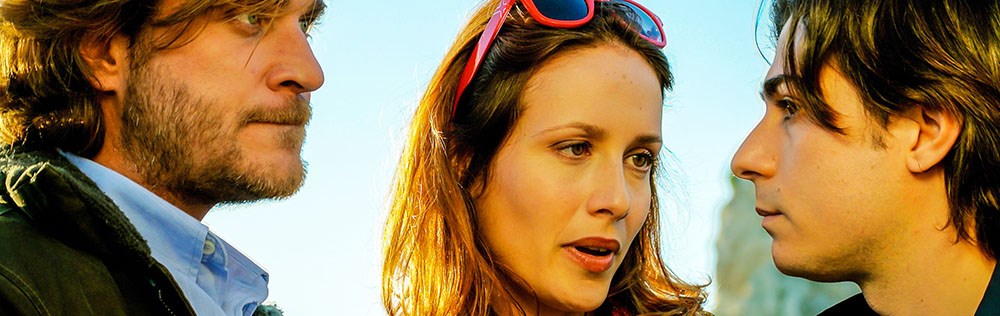
In the lighthearted Italian Wax: We Are the X, a notoriously shady producer sends two guy filmmakers to Monaco to scout locations for a commercial and meet a gal French casting director.  They are all hired because they work cheap.  What follows is a little whodunit, a little relationship drama, a little comedy and, as one might expect, a ménage à trois illustrating the  open-mindedness of French women (in the movies, anyway).

The best five minutes of the movie is right at the beginning, when the producer demonstrates his mastery of getting someone else to pick up a tab.

There is a superfluous but welcome cameo by 70-year-old Rutger Hauer (it’s been over thirty years since Nighthawks and Blade Runner!).  And there’s a Gen X hook, an attempt to make Wax: We Are themore than it is, which is basically an entertaining piece of Euro-fluff.

DVD/Stream of the Week: Caesar Must Die

caesar must die
In the taut 76 minutes of Caesar Must Die, convicts in an Italian maximum security prison put on a performance of Shakespeare’s Julius Caesar.  Every year, there’s a drama laboratory at this prison.  It turns out that Julius Caesar is a perfect choice.

Julius Caesar is, most of all, a play about high stakes.  And high stakes, where a decision can result in life or death or power or failure or freedom or incarceration, is something these guys profoundly understand – and have time to reflect upon.  During rehearsal, one actor snaps at the director, “I’ve been in here for 20 tears, and you’re telling me not to waste time?”.  When Cassius states that he has wagered his life on the outcome of one battle and lost, the line is more powerful because we know the actor playing Cassius is himself a lifer.

When the prisoners audition, we learn that their sentences range from 14 years to “life meaning life”.  Most of them are naturalistic and very effective actors.  The guy who plays Caesar is especially powerful in his acting and reacting.

The Julius Caesar story unfolds in black-and-white as the prisoners rehearse and then play the early scenes in the contemporary prison setting.  Segments from the performance itself – about 15 minutes – are filmed in color.

It all works very well as a very successful Shakespeare movie – and as a prison movie, too. Caesar Must Die is available on DVD from Netflix and streaming on Netflix Instant, Amazon, iTunes, Vudu and Hulu.