Neil Young Journeys: see it if you already like him

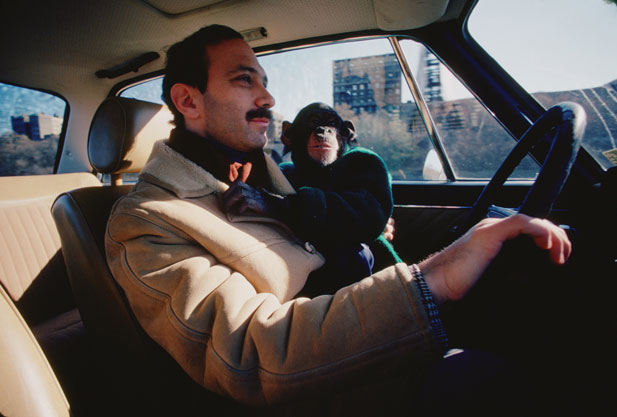
Neil Young Journeys documents Neil Young’s return to Ontario for a 2011 concert at Toronto’s Massey Hall.  It’s about 85% Neil Young music and about 15% Neil Young’s guided driving tour around his old haunts (“there is a town in north Ontario…all my changes were there”).  Young plays four of his songs from 2010 and several more from 1969-79.  He is alone on stage with boxes of equipment and a cigar store Indian, and accompanies himself with electric guitar, harmonica, piano and, on Down By the River, a stentorian pipe organ.  Ohio is intercut with video of the Kent State massacre and pictures of the victims.

It’s the third Neil Young film by director Jonathan Demme (Silence of the Lambs, Rachel Getting Married).  Demme shows the good sense to simply show Neil and then his music unadorned.   He does get arty with one camera that zooms on to Young’s mouth and grizzled chin.  Sitting in the third row, I felt like I’d need to duck spittle at any moment.

If you don’t love Neil Young, skip this movie.  If you do love Neil Young, see the movie in a theater or in a home theater with a good sound system.  Turn it up.
DVD/Stream of the Week: This Is Not a Robbery

After 87 years of abiding the law, J.L. “Red” Rountree robbed a bank in 1998.  In fact, he became a serial bank robber, robbing banks until his final incarceration at age 92.  The documentary This Is Not a Robbery explores how this could have happened.  Spoiler: nonagenarians do not excel at the art of the getaway.

Cleverly structured, This Is Not a Robbery intersperses the modern robberies with biographical segments that finally reveal the arc of Rountree’s singular journey.  We get to see Rountree explaining himself. He’s a kick, but the most revealing comments are from his friends, who relate the pivotal points in his business career and family life.

At only 70 minutes long, it’s a good watch.  This Is Not a Robbery is available on DVD, on Netflix streaming and sometimes plays on the Sundance Channel.

Let There Be Light: groundbreaking look at those who have endured too much

Let There Be Light is an extraordinary documentary about WW II soldiers being treated for psychological war wounds.  Made in 1946 by fabled director John Huston, Let There Be Light was suppressed by the US military until 1980 and had since been available only in a grainy, almost unintelligible version.  Thankfully, it was restored by the National Film Preservation Foundation in 2011, and now can be viewed for free on its website.

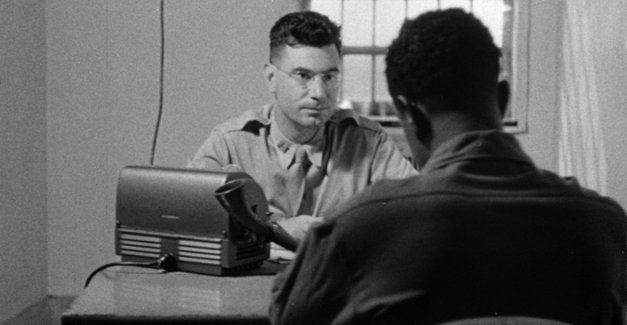
Huston followed a group of soldiers as they entered a hospital and engaged in treatment until their release from the service eight weeks later.  Huston shot 70 hours of film, which he winnowed down to this one-hour documentary.  We see the doctors use individual talk therapy, group therapy, hypnosis and sodium pentathol.  We know the condition as Post Traumatic Stress Disorder (PTSD).  At the time, it was popularly known as “shell-shock” or “combat fatigue” and termed “psychoneurosis” or “neuropsychosis” by the doctors.

Modern therapists will find the treatment primitive and the movie too optimistic (there’s a sense that everybody is OK after eight weeks in the hospital), but that shouldn’t obscure the compassion of the doctors and the heartbreaking stories of the men.  This was a moment in medical history when the public still needed to learn that this was a psychiatric condition, not cowardice or weakness – and that the condition was treatable.  The narrator (Huston’s father Walter) repeatedly emphasizes that these men have endured more than any human could be expected to bear.

Watch Let There Be Light HERE.

DVD of the Week: Project Nim

The documentary Project Nim tells the extraordinary story of a chimpanzee that was taught a human language – American Sign Language.  In a remarkable and compelling journey, the chimp Nim is first placed as a baby with a human hippie family and then at a university-owned country estate and at college laboratories.  Amazingly, he learns to use an ASL vocabulary – not just responding to commands, but initiating communication and forming sentences.  Then, the experiment ends, and he is off to an assortment of post-placements, some terrifying.

Along the way, we hear from the motley assortment of humans involved in his raising, his exploitation and his care. One human who enters the story as a grad student, Bob Ingersoll, emerges as the hero of the story.  It’s the story of a chimp, but we learn more about the foibles of humans.

Acclaimed documentarian James Marsh (Man on Wire) delivers another great story – one of the 2011’s best documentaries.

Pina 3D: watching dance from amid the dancers

There are two reasons to see Pina 3D – to watch modern dance and to marvel at the use of 3D in a dance film.  This documentary shows the work of the late German choreographer Pina Bausch performed by her dance troupe; it’s at least 90% dance performance.

But the singular feature of the film is director Wim Wenders’ use of 3D – the movie audience is transported on to the stage with and among the dancers.  It’s been easy to dismiss 3D with all the crap 3D product out there, but master directors like Martin Scorsese (Hugo) and Werner Herzog (Cave of Forgotten Dreams) can use the technology to make a film even more brilliant.  Wenders (Paris Texas, Wings of Desire) does that with Pina.

Now, if you don’t like modern dance, you’re not going to like this movie.  But, if you do, you should catch this film during the week or two that it will be out in theaters in Real 3D; I’m not going to recommend it in 2D unless you’re a huge dance fan.

[youtube-http://www.youtube.com/watch?v=LGKzXUWAjnI]

Thunder Soul: funk pride

This good-hearted  documentary is about a national champion high school stage band in the 1970s.  Because of the era, and because we’re talking about inner city Black kids from Houston, the backdrop is the Black Pride movement.  The key character is their band leader, Conrad “Prof” Johnson, who drove them to be technically proficient and flavored their music with his own funk compositions.  Thirty years later, the band members plan a reunion to honor Prof.  The band members are an entertaining bunch, and there’s plenty of footage from the 70s.  Thunder Soul is sure to be a crowd-pleaser and there are lots of great 70s Afros.

Thunder Soul won film fest awards but failed to get an adequate theatrical release, and is now available on DVD.

This Week on HBO: the documentaries that freed a condemned man

Last August, three men were released from prison in Arkansas – one of them from death row. This wouldn’t have happened without two HBO documentaries, the 1996 Paradise Lost: The Child Murders at Robin Hood Hills and its 2000 sequel Paradise Lost 2: Revelations.  Every night this week, HBO is airing its third documentary Paradise Lost 3: Purgatory, which wraps up the series.  You don’t need to have watched the first two to get the full impact of Paradise Lost 3.

The men had served over eighteen years each for a horrific crime that they apparently had nothing to do with. Three second grade Cub Scouts were brutally raped, murdered and their bodies mutilated. The authorities, under understandable pressure to solve the crime, arrested three Metallica-loving teenagers and railroaded them for a supposed Satanic ritual killing. Although no physical evidence tied them to the crime, one teen with an IQ of 76 was browbeaten for twelve hours into a confession that he later recanted.

The HBO films spawned media interest and public and celebrity support for the convicted men, who became known as the West Memphis Three.

Recently processed DNA evidence was inconsistent with any of the defendants.  Facing the specter of a futile new trial, the prosecutor accepted a plea bargain that freed the men without their having to acknowledge guilt. Interestingly, the father of one of the victims has gone from the villain of the second HBO film to a supporter of the recently freed men. Here’s the New York Times coverage of the August 2011 developments.

Paradise Lost 3: Purgatory is on the short list for the Best Documentary Oscar this year.

[youtube-http://www.youtube.com/watch?v=GqQnnXTTm3w]


2011 in Movies: documentaries

PROJECT NIM

As usual, several documentaries made my list of Best Movies of 2011:  Project Nim, Buck and Tabloid.

Werner Herzog gave us the wonderful 3D Cave of Forgotten Dreams.  Page One highlighted David Carr of the New York Times.  The Polish documentary War Games and the Man Who Stopped Them was a great find.  I also admired Thunder Soul (about a Houston high school stage band in the 60s), Magic Bus (featuring actual footage of Ken Kesey’s Merry Pranksters), American Grindhouse (about the grindhouse films of the 40s, 50s and early 60s) and These Amazing Shadows (about the National Film Registry).

PBS had stellar year, especially with Woody Allen: A Documentary, Jimmy Carter, Stonewall Uprising and Troubadours.

HBO delivered Bobby Fisher Against the World.  And ESPN has entered the documentary arena with the surprising The Marinovich Project.

Buck, Project Nim and Paradise Lost 3 make Oscar short list.

The Academy’s short list of candidates for the Best Documentary Oscar includes two films on my Best Movies of 2011 – So Far:  Buck and Project Nim.  Paradise Lost 3: Purgatory from the HBO Paradise series also made the list.  All fifteen films on the short list are here.

RIP Smokin’ Joe

Joe Frazier in THRILLER IN MANILA

Former heavyweight champion Joe Frazier has died.

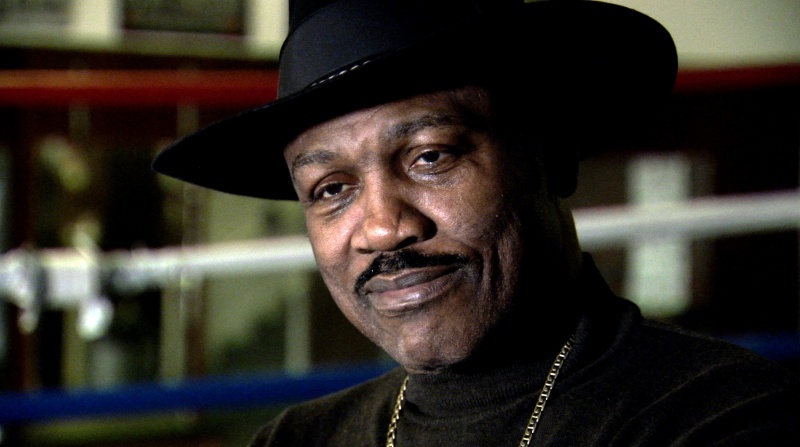
Many consider the 1975 Thrilla in Manila, the heavyweight championship bout between Frazier and Muhammed Ali, to be the greatest boxing match of all time.  Ali usually dominates the narrative of 1970s boxing.  However, the 2009 HBO documentary Thriller in Manila revisits the fight and its aftermath from Frazier’s point of view.  The film depicts Frazier in his final years, broke and living on the margins of society, still boiling with resentment from the experience.

In contrast, the 2009 documentary Facing Ali showcases Ali’s other rivals, who have all embraced their experiences with Ali as their career-defining moment.  We hear from George Chuvalo, Sir Henry Cooper, Earnie Shavers, George Foreman, Ernie Terrel, Larry Holmes, Ken Norton and Leon Spinks.  Chuvalo, Cooper and Shavers prove to be surprisingly charming raconteurs.

Thriller in Manila is on my list of 10 Best Boxing Movies, and I’ll put Facing Ali on the list when I have time.