Cinequest: MEMENTO MORI

MEMENTO MORI
MEMENTO MORI

Memento Mori can be translates as “remember that you die”. This documentary about organ donation must be the most emotionally shattering film at Cinequest. In Memento Mori, the stories of the donor families are woven into those of the recipient families. Filmmaker Niobe Thompson tells us at the outset that the specific donors are not actually linked to the specific recipients on a one-to-one basis; but the device of braiding these two threads delivers a powerful impact.

We all understand that people get sick when their organs fail and that their lives can be saved by switching in the organs from other people who have recently died. But that understanding takes on a new dimension when we see HOW SICK people are before the transplant and how vibrant they can be post-surgery.

And to make this all happen, someone has to die. And that person’s family – in their moment of deepest grief and shock – needs to find the donation of his organs acceptable. Accompanying a family through the death of their loved one is excruciating.

Memento Mori
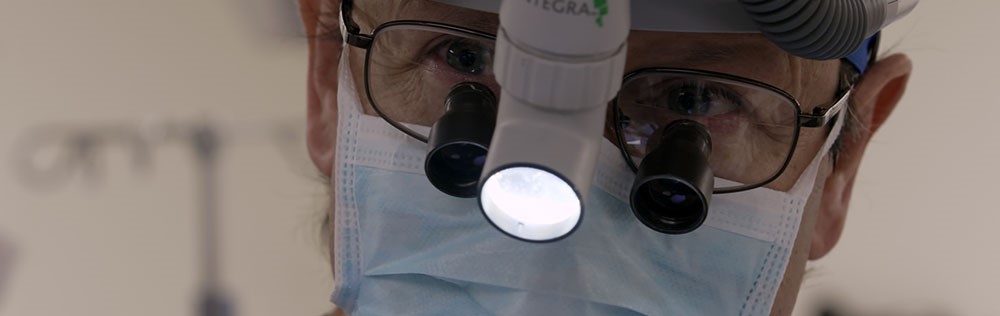
is also an insightful procedural about organ transplants. We see the organs harvested, transported and then implanted. A surgeon tell us how he finds it thrilling every time that he sees a brown organ turn red after he has connected it to a blood supply – essentially bringing life back to a human organ.

Memento Mori is the first feature as solo director for Niobe Thompson, and the US premiere for this Canadian doc is at Cinequest.

TV/Stream of the Week: TOWER – a most original and important retelling of a story that we thought we knew

TOWER
TOWER

This week, the PBS documentary series Independent Lens will feature Tower, a remarkably original retelling of the 1966 mass shooting at UT Austin. Tower is a tick-tock of the 96 minutes when 49 people were randomly chosen to be shot by a gunman in the landmark tower 240 feet above the campus. That gunman is barely mentioned (and may not even be named) in the movie.

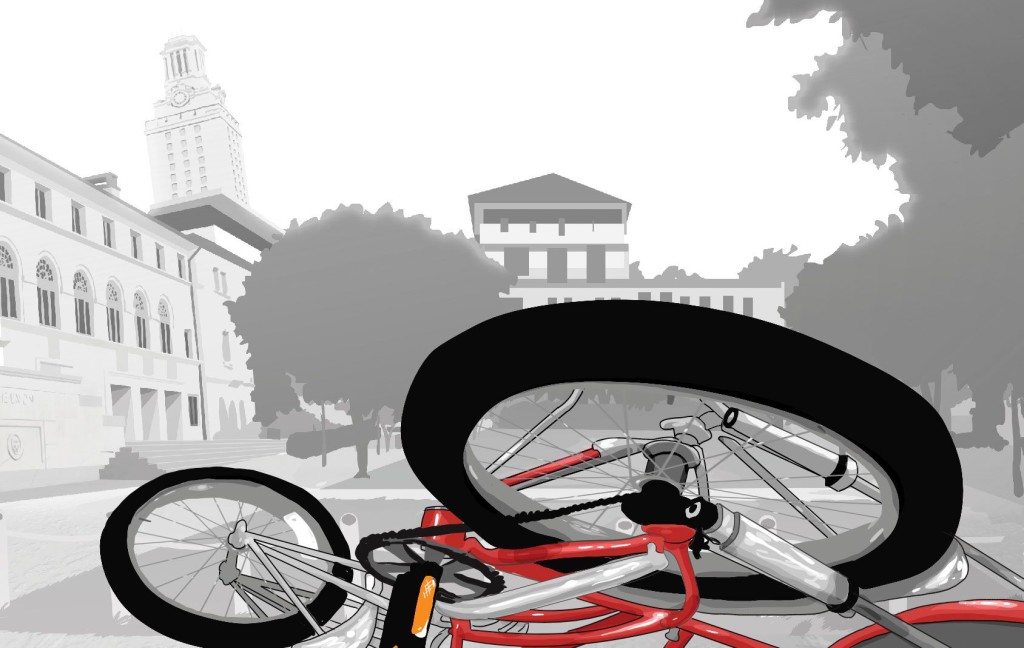
Tower is director Keith Maitland’s second feature. What makes Tower distinctive and powerful it’s the survivors who tell their stories, reenacted by actors who are animated by a rotoscope-like technique (think Richard Linklater’s Waking Life). Telling this story through animation, dotted with some historical stills and footage, is captivating.

Since 1966, we’ve suffered through lots of mass shootings. The UT Tower shooting was especially shocking at the time and prompted the questions about what drove the “madman” to his deed. But, fifty years later, what’s really important today is how the event affected the survivors – what was what like to live through this experience and how it lives with them today. That’s the story that Maitland lets them tell us – and in such an absorbing way.

I saw Tower at the Mill Valley Film Festival.  It plays on Independent Lens on KQED-TV at 10 PM, Tuesday night, February 14.  You can also stream Tower on Amazon Instant, iTunes, Vudu, YouTube and Google Play.

TOWER
TOWER

I AM NOT YOUR NEGRO: searing thoughts in elegant words

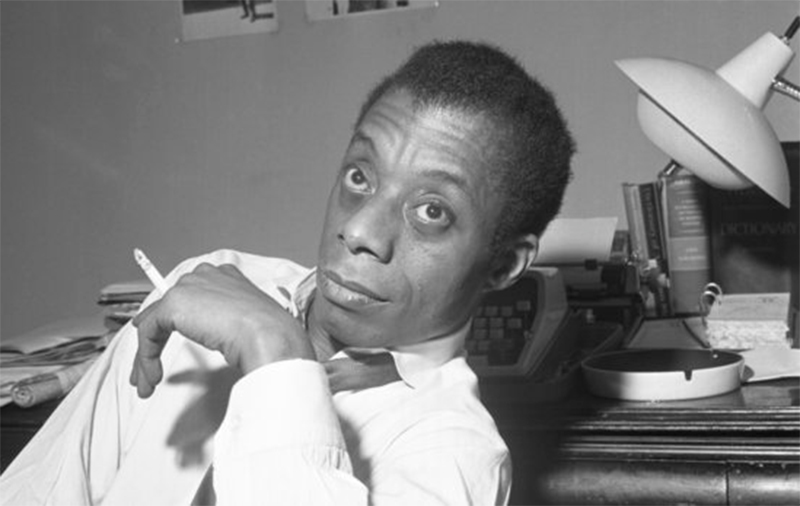
James Baldwin in I AM NOT A NEGRO

The documentary I Am Not Your Negro centers on the American public intellectual James Baldwin.  It’s a searing examination of race in America through Baldwin’s eyes and through his elegant words.

Those words are voiced by Samuel L. Jackson, and there is no third-party “narration”.  The spoken words are Baldwin’s, either voiced by Jackson or spoken by Baldwin himself in file footage.  Baldwin’s associates Malcom X and Martin Luther King Jr. are heard in file footage, but that’s it – the rest is all Baldwin.

The content of those words is about the African-American experience in America and Baldwin’s insistence on understanding and acknowledging the grievance and the moral imperative for remedy.   The very last thing that Baldwin cared about was the comfort of his readers and listeners.

I Am Not Your Negro is an important film because Baldwin’s words today, stripped of their relation to temporal events, are stirring as we hear them again, naked and with urgency.  Lest we fail to connect the dots to our current situation,  snippets of current day events (Obama, Black Lives Matter, etc.) make it clear how relevant Baldwin’s thinking still is today.

The choice to present Baldwin’s thinking through only his own words, unadorned by talking heads is very successful.   Director/co-writer Raoul Peck gets the credit for that, and the film that he has constructed with editor Alexandra Strauss is compelling.

It occurred tome that we really don’t have “public intellectuals” (thought leaders who were authors and columnists) as we did before cable television and Internet.  Today we must make do with Talking (or Yelling) Heads on cable TV and bloggers (hey, I’m one of those); the current focus is more temporal and focused on instant reaction instead of presenting a coherent body of thought.

But, in the Good Old Days, book and newspaper publishers and network television producers were the gatekeepers of public discourse.   Those gatekeepers in Baldwin’s time were older white heterosexual men, and even the well-meaning could not have shared his experiences.  Given that, it’s surprising and fortunate that Baldwin’s words were able to become accessible to a wide audience.

Baldwin was living the life of an ex-pat in Paris until he watched the newscast of Charlotte, North Carolina, school integration with a lone African-American girl walking thru agitated and abusive racist mob.  That’s what motivated him to return to his country and to try to fix it.

OJ: MADE IN AMERICA: finally, the sensational story stripped of the sideshow

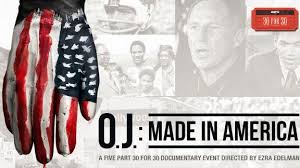
oj-made-in-america
OJ: Made in America
has been showing up on lots of critic’s year-end lists.  I hadn’t thought of putting it on my Best Movies of 2016 because it’s an eight-hour ESPN documentary series, I hadn’t hadn’t thought of treating it as a movie, but I will now because it’s good enough to merit it.

I remember the OJ saga with distaste because it became a sideshow – the Bronco ride, the Trial of the Century, the bloody glove (“if it doesn’t fit, you must acquit”), Kato Kaelin, Judge Lance Ito and the seemingly unfathomable verdict.  The genius of director Ezra Edelman is that OJ: Made in America rights a media wrong by keeping a laser focus on the crime itself  and setting out the societal factors that explain how this all went so far off track.  The sideshow elements are shown to be what they really were – distractions from the greater truth of a domestic violence murder.

OJ: Made in America is an unflinching look at a marriage that disintegrated because of chronic domestic violence, and then evolved into a terrifying stalker situation.  We also see glimpses of crime scene photos, grisly but not exploitative, that reinforce the gravity of the crime.

With more clarity than in any other film treatment of this case, we see OJ Simpson’s abandonment and even rejection of the African-American community and of his own racial identity – “I’m not Black, I’m O.J.”.  We see OJ creating a new community for himself of wealthy white men and refusing to perform advocacy, fundraising or even lending his name for African-American causes.  And so we are left with the sickening irony of OJ becoming a posterchild for black victimhood and a rallying point for resistance to white oppression.

To set the stage for the trial, Edelman shows us the historic racist oppression by the LAPD and the missteps by prosecution that created an environment that the legal team for a celebrity could exploit.  Through file footage and talking head witnesses, Edelman takes us through the trial to explain the critical choices that resulted in the verdict.  Finally, we see the surveillance video of the bumbling, thuggish crime that OJ is now imprisoned for.

OJ: Made in America benefits from an impressive group of witnesses, including prosecutor Marcia Clark, detective Mark Fuhrman, defense lawyer Barry Scheck, DA Gil Garcetti, former OJ confidantes Ron Shipp and Mike Gilbert and Nicole Brown Simpson’s sister.

ESPN, with its reliably solid 30 for 30 series, is, along with PBS and HBO, one of the most prolific sources of excellent documentaries.  With OJ: Made in Americas, ESPN has produced one of the top three or four documentaries of the year.

The trailer is on the film’s homepage. You can watch the entire movie on ESPNWatch and on some other streaming platforms such as iTunes and Hulu.

MIFUNE: THE LAST SAMURAI: an icon’s life and times

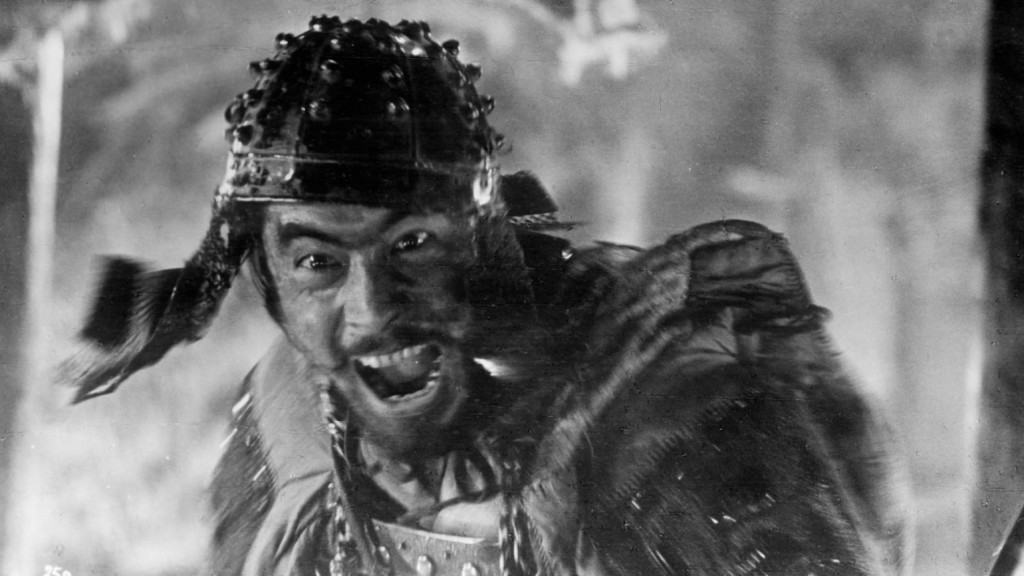
MIFUNE: THE LAST SAMURAI

The documentary Mifune: The Last Samurai profiles the iconic Japanese actor Toshiro Mifune.  Mifune was director Akira Kurosawa’s essential collaborator and the star of the cinematic masterpieces Rashomon, Seven Samuari and Yojimbo.  In those films, along with  The Hidden Fortress, Throne of Blood, Sanjuro and Red Beard, Kurosawa and Mifune re-invented and elevated the samurai genre.

The title “Rashomon” has become a noun in every language for the telling and retelling of the same story from different points of view. Seven Samurai was remade as The Magnificent Seven and Yojimbo as A Fist Full of Dollars.  (Kurosawa and Mifune also made some brilliant Japanese film noir – The Lower Depths, High and Low, The Bad Sleep Well, Drunken Angel, Stray Dog – that are NOT discussed in Mifune: The Last Samurai.)

What Mifune brought these films was an irreplaceable vitality.  One of the great prototypes for “strong and silent” screen actors, his physicality made his characters powerful, even forces of nature.

Director Steven Okazaki wisely makes Mifune: The Last Samurai a “Life and Times” with a survey of Japanese cinema history with importance of period swordfighting movies (called chanbara after the sound of swords).   Besides tracing Mifune’s own personal history (he was born and raised in Chine, which I certainly didn’t know), Okazaki explores wartime and postwar Japan society.

Okazaki also brings us witnesses of Mifune’s life, including his son, Kurosawa’s son and many Mifune son and costars.  There’s even a sword fight choreographer who played over 100 movie characters killed by Mifune.  The talking heads are rounded out with Martin Scorsese and Steven Spielberg.

There are plenty of cool insights like how the dangerous death scene in Throne of Blood (where Mifune is shot by hundreds of arrows) was filmed on the cheap with college student archers – and uninsured!

Despite their long partnership and historic successes, Mifune and Kurosawa never made another movie together after Red Beard in 1965, although the two lived another 32 years.  That is addressed, but not answered in Mifune: The Last Samurai; initially, I found that unsatisfying, but now I find it even more interesting that their sons and closest confidantes don’t know the reason.

I recommend Mifune: The Last Samurai for those who are interested in Mifune, Kurosawa or cinema generally.

THE EAGLE HUNTRESS: girl power in traditional Mongolia

THE EAGLE HUNTRESS
THE EAGLE HUNTRESS

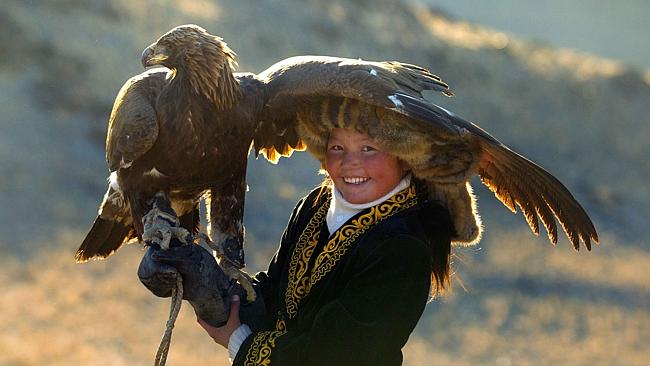
The documentary The Eagle Huntress is a Feel Good movie for the whole family, blending the genres of girl power, sports competition and cultural tourism. A 13-year-old girl in traditional (read “sexist”) Mongolian culture embraces hunting with an eagle. (It’s very funny when bitter old guys make excuses for losing a competition to a girl.) It’s also, at its heart, a heart-warming dad-daughter movie, as the girl’s father supports and encourages her at every moment.

Now, to eagle hunting. Instead of walking off with a rifle over shoulder, one rides off with an EAGLE on your right forearm, heading miles into impossibly barren mountains where the temperature can get to -40 degrees Fahrenheit. When it’s not winter, you can’t see anything growing on the terrain. When it is winter, the horses almost skate on the treacherous ice. When one spots a fox out in the open, one takes the hood off the eagle’s head so the eagle can soar high in the air before diving down to the fox. The eagle and fox, whose bodies are about the same size, fight it out, and the fox, a predator itself, has a chance. Very Discovery Channel.

Eagles are big, although their legs look surprisingly skinny when dangling in flight. I’ve seen Bald Eagles in Alaska, where they will routinely snatch and haul off a 20-pound salmon from the river. And I’ve seen Golden Eagles just south of Silicon Valley. I can’t imagine having one sit on my forearm all day – I haven’t done enough curls in my whole life to hoist that weight.

The Mongolian culture and terrain and the eagle hunting in The Eagle Huntress are all pretty impressive and easy to watch.

THE EAGLE HUNTRESS
THE EAGLE HUNTRESS

Stream of the Week: THE LOVERS AND THE DESPOT – a crazy dictator makes for a crazy story

THE LOVERS AND THE DESPOT

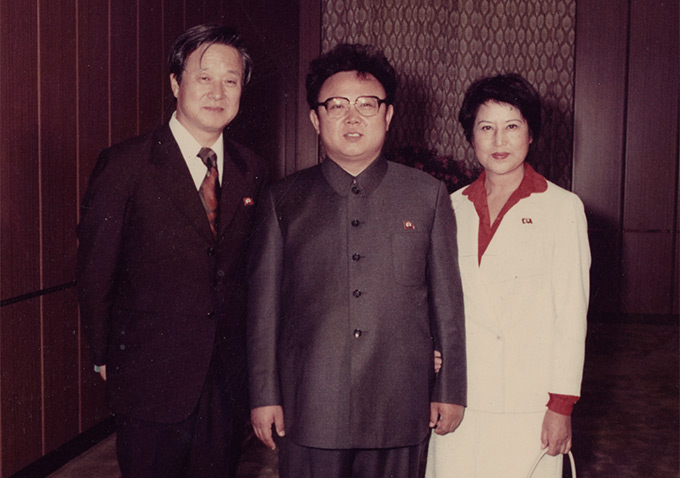
The documentary The Lovers and the Despot tells one of those you-would-never-believe-it-if it-were-made-up stories.  The late North Korean nutcase Kim Jong-Il, dissatisfied with the cinematic element in his propaganda machine, sought an upgrade by KIDNAPPING a top South Korean director and his movie star wife.

The story of the kidnapping and their escape spans two decades and is a real Cold War thriller.  One interesting aspect is that there was some question as to whether the two were actually kidnapped or instead defected – after all, the director’s career was in a downturn in South Korea and was ultimately resurrected in the North.  But, come one, who escapes from South Korea to North Korea?

The proof of their kidnapping is both convincing and mind-boggling.  The craziness of the North Korean regime has created such anti-communist paranoia in South Korea that the kidnapping vs defection question is still unresolved for some – and that’s crazy in and of itself.

The Lovers and the Despot will make good companion piece to Under the Sun, the documentary expose of Korea under its current Great Madman Leader, Kim Jong-il’s son Kim Jong-un.

The Lovers and the Despot is now available streaming from Amazon Instant, iTunes, Vudu, YouTube, Google Play and cable and satellite TV on demand.

It’s Election Eve…

THE WAR ROOM
THE WAR ROOM

It’s the eve of the Presidential election, and we need to find some relief from the current soul-sucking campaign in historical or fictional politics.  So here are three great movies about political campaigns:

  • The Candidate (1970):  Probably the best political movie of all time.  Robert Redford stars as an activist ideologue who resists following his father’s path into electoral office.  Once he’s in, he embraces winning with the help of a savvy consultant (Peter Boyle).   Anyone who has run a campaign will relate to this roller coaster.   Especially if you’ve set up an event with a bad sound system.  Or if you’ve been late to live television appearance.  Or if you’ve swiped an opponent’s literature when door-hanging.  Some scenes were shot on location in the Bay Area, including a banquet in a San Francisco hotel and a speech in San Jose’s Eastridge Mall.  The Candidate is available to rent on DVD from Netflix and to stream from Amazon Instant, iTunes, Vudu, YouTube and Google Play.
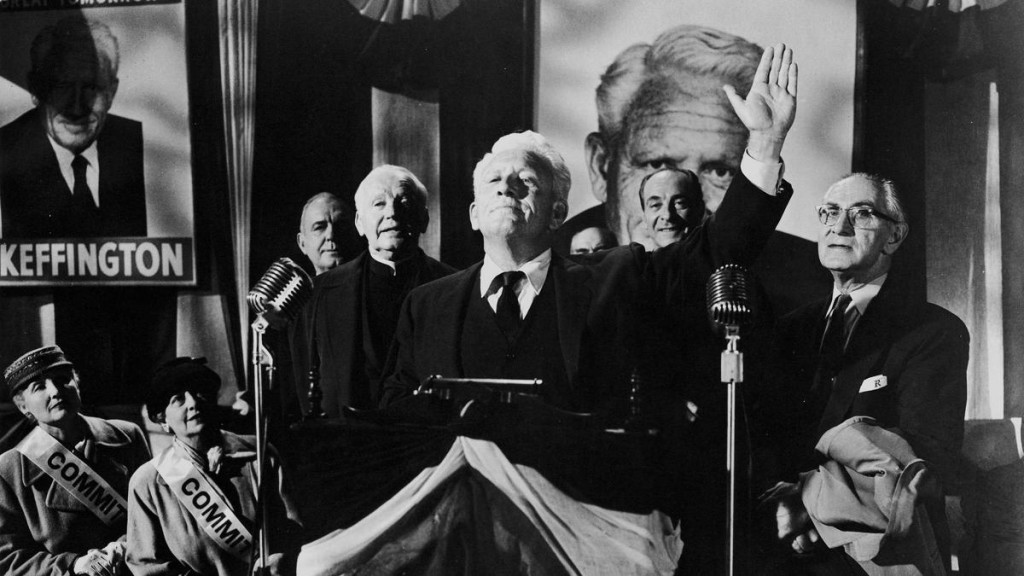
  • The Last Hurrah (1958):  The master director John Ford is famous for westerns, but this portrait of an embattled incumbent is a classic of political cinema.  Spencer Tracy plays the leader of an urban political machine. He’s got years of accomplishments and a machine in his favor, but his newspaper-owning antagonist is running an empty suit against him in a campaign increasingly fought on the newfangled medium of television.  He’s been so successful for so long that his ward heelers have become complacent, and he’s smelling the campaign getting away from him.  The Last Hurrah is available to rent on DVD from Netflix and to stream from Amazon Instant, iTunes, Vudu, YouTube and Google Play.
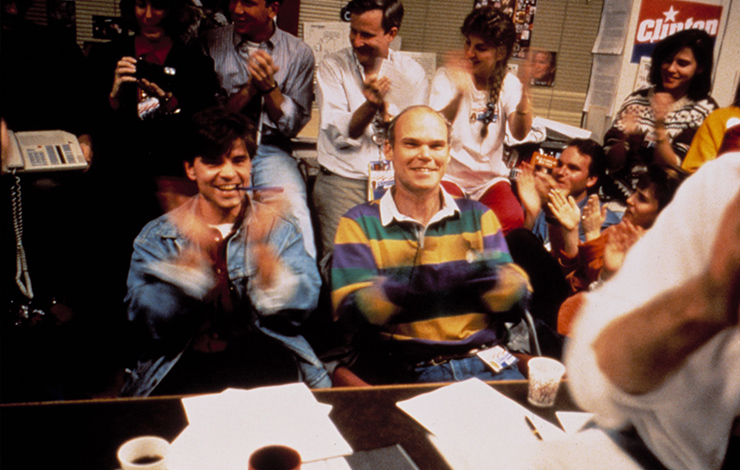
  • The War Room (1993): the brilliant documentary of the FIRST successful Clinton for president campaign. We get to watch from the inside as the first Baby Boomer takes out a sitting President from the Greatest Generation, aided by the new masters of the spin and the newly emerged 24-hour news cycle. Remember – this was the campaign steered by the on-again-off-again-on-again whims of H. Ross Perot. What seemed at the time as cut throat tactics are quaint today. And viewers will become wistful for time when you could kill a news story, no matter how sensational, if it were unverified or untrue. The War Room is available to rent on DVD from Netflix and to stream from Amazon Instant, iTunes and Hulu (subscription).

Plus tonight, Turner Classic Movies brings us two brilliant political documentaries:

  • Primary documents the Wisconsin Democratic primary election campaign in 1960. This was a key stepping stone in John F. Kennedy’s road to the White House because it was a chance for him to demonstrate that he appealed to voters outside the Northeast. Kennedy’s rival Hubert Humphrey was favored because Wisconsin neighbors Humphrey’s home state of Minnesota. Primary is both a time capsule of 1960 politics and an inside look at the Kennedy family unleashed in a campaign. There’s an amazing scene where Humphrey appeals to a handful of flinty farmers in a school gym – he’s giving his all and he ain’t getting much back. Only 60 minutes long, Primary has been selected for preservation in the National Film Registry. The great documentarian D.A. Pennebaker, who went on to direct Monterey Pop and The War Room, shot, edited and recorded sound for Primary.
  • The Times of Harvey Milk – the documentary Oscar winner from 1984. It’s the real story behind the 2008 Sean Penn narrative Milk – and with the original witnesses. If you pay attention, The Times of Harvey Milk can teach you everything from how to win a local campaign to how to build a societal movement. One of the best political movies ever. And watch for the dog poop scene!

    THE LAST HURRAH
    THE LAST HURRAH

Stream of the Week: MEET THE PATELS – a documentary funnier than most comedies

MEET THE PATELS
MEET THE PATELS

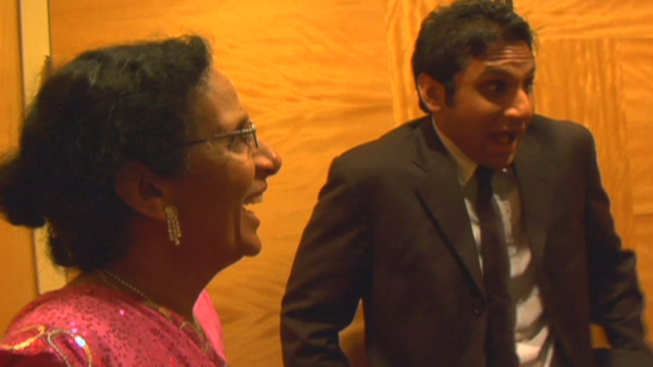
Meet the Patels is both a documentary and a comedy – and ultimately, a satisfying crowd-pleaser. Over several years, filmmaker Geeta Patel filmed her own brother Ravi and their parents in their quest to find a wife for Ravi. Ravi and Geeta’s parents were born in India, had a traditional arranged marriage which has resulted in decades of happiness. Their American-born kids, of course, reject the very idea of an arranged marriage. But Ravi finds the pull of his Indian heritage compelling enough to dump his redheaded girlfriend and try to find a nice Indian-American girl. His parents try to help him with unbounded and unrelenting enthusiasm.

Meet the Patels is very funny – much funnier than most fictional comedies. It’s always awkward when parents involve themselves in their child’s romantic aspirations. That’s true here, and produces some side-splitting moments. It helps that the Patel parents are very expressive, and downright hilarious. The dad is so funny that I could watch him read a telephone book for 90 minutes, and the mom is herself a force of nature.

We learn that the Patels of Gujarat have adapted an entire menu of marriage opportunities unfamiliar to mainstream American society: a matchmaking profile system called “biodata”, matrimonial fairs, “the wedding season” and more.

Meet the Patels has its share of cultural tourism and the clash of generations. But it is so damn appealing because it’s much more than that – it’s a completely authentic saga of family dynamics, dynamics that we’ve all experienced or at least observed. The family members’ mutual love for each other drives family conflict and, finally, family unity.

I saw Meet the Patels at the Camera Cinema Club last year, and it had a brief theatrical run in the Bay Area. Meet the Patels is available to stream from Netflix Instant, Amazon Video, iTunes, Vudu, YouTube and Google Play. It’s hilarious and heart-warming, so don’t miss it.

TOWER: a most original and important retelling of a story that we thought we knew

TOWER
TOWER


Tower is a remarkably original retelling of the 1966 mass shooting at UT Austin.  Tower is a tick-tock of the 96 minutes when 49 people were randomly chosen to be shot by a gunman in the landmark tower 240 feet above the campus.  That gunman is barely mentioned (and may not even be named) in the movie.

Tower is director Keith Maitland’s second feature. What makes Tower distinctive and powerful it’s the survivors who tell their stories, reenacted by actors who are animated by a rotoscope-like technique (think Richard Linklater’s Waking Life).  Telling this story through animation, dotted with some historical stills and footage, is captivating.

Since 1966, we’ve suffered through lots of mass shootings.   The UT Tower shooting was especially shocking at the time and prompted the questions about what drove the “madman” to his deed.  But, fifty years later, what’s really important today is how the event affected the survivors – what was what like to live through this experience and how it lives with them today.  That’s the story that Maitland lets them tell us – and in such an absorbing way.

I saw Tower at the Mill Valley Film Festival.  It opens theatrically in the Bay Area today at the Landmark Shattuck in Berkeley.

TOWER
TOWER