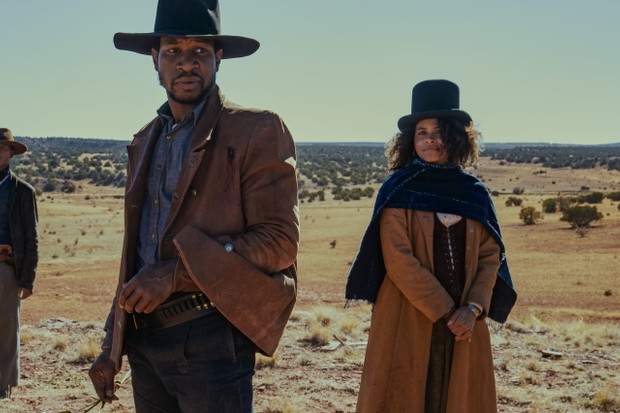
Jonathan Majors and Zazie Beetz in THE HARDER THEY FALL. Courtesy of Netflix.
The Harder They Fall is a neo-spaghetti western, pretty much like Quentin Tarantino’s The Hateful Eight, except that all the gunslingers are of African ancestry. As in Taratinoesque film, there is lots of bloody violence prefaced by clever speechifying.
Technically, this is a revenge film, with a heinous act in the opening scene sure to to be avenged in the last. But it’s really an excuse for some of the finest Black screen actors (Regina King, Idris Elba, LaKeith Stanfield, Delroy Lindo) to don cowboy gear and engage in the Western genre.
The protagonist is played by Jonathan Majors, who broke through in The Last Black Man in San Francisco, and it’s great to see him leading a Hollywood movie. Because I don’t watch much TV, I’m late to the party in recognizing Zazie Beetz as a compelling screen presence; man, she’s a force.
Deon Cole (Blackish, I’m Fine, Thank You or Asking) so good in broadly comic roles, gets to show off his dramatic chops.
There is plenty of humor sprinkled throughout and one LOL moment when the protagonists ride into a White Town. That joke is an homage to one in Blazing Saddles.
There’s nothing original about The Harder They Fall except for the all-Black cast. There’s nothing memorable about it, either – just 2 hours and 19 minutes of amusing shoot ’em up with some really excellent actors.
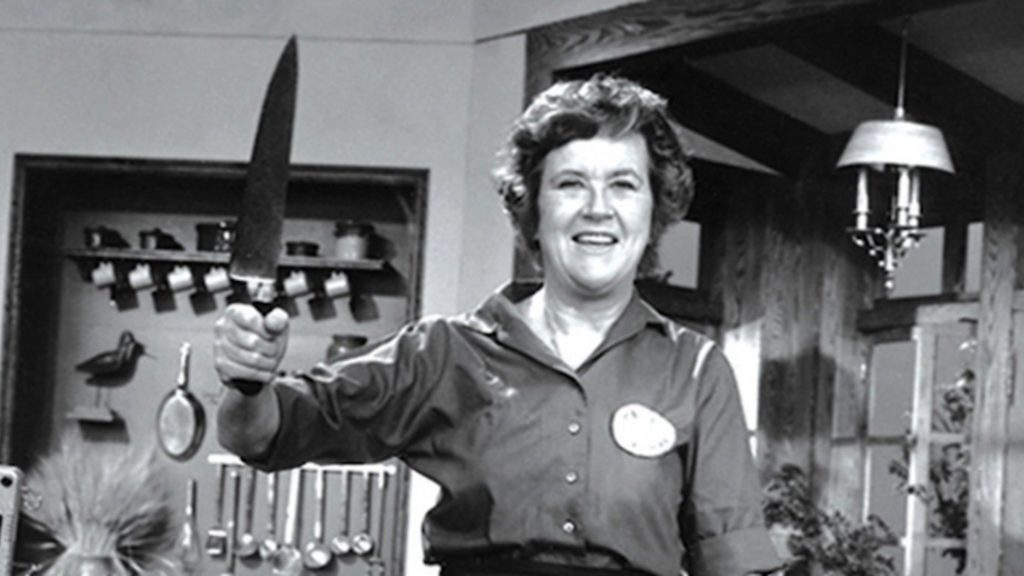
Photo caption: Julia Child in JULIA. Courtesy of Sony Pictures Classics.
The charming documentary Julia is an affectionate but clear-eyed portrait of the iconic Julia Child. Child became a best-selling author and TV star in her fifties; besides outlining her importance, Julia tells the unlikely story of how she got to that point.
Indeed, one of the most remarkable aspects to Julia Child was how she broke through every expectation of her gender, class and upbringing. She was liberated by WW II, which gave her the chance to reject the societal limitations of her background.
To mark her impact, Julia shows us both pre-Julia educational TV and pre-Julia American cuisine (think TV dinners and jello salad).
Julia is very well-sourced and based on no fewer than THREE books. We get to hear from some of Julia’s family and friends, and a slew of celebrity chefs.
Julia highlights Julia Child’s life-changing first French meal – sole meunière at La Couronne in Rouen. Through TripAdvisor, I found the restaurant online, and it still offers the dish on a Julia Child menu.
Julia was directed by Julia Cohen and Betsy West, the team behind the excellent Ruth Bader Ginsberg biodoc RBG. Julia is now playing in theaters.
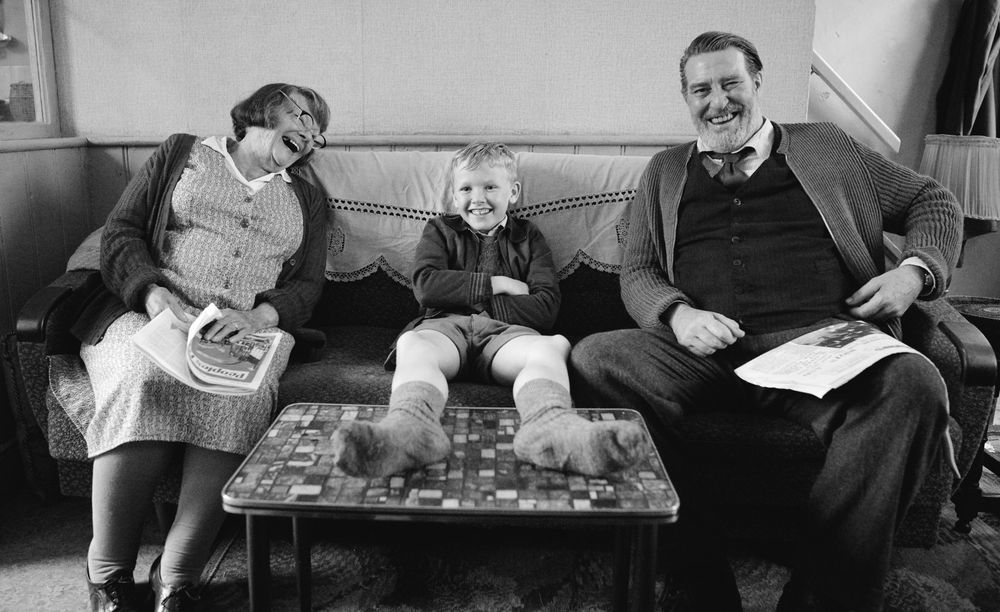
Photo caption: Judi Dench, Jude Hill and Ciarán Hinds in BELFAST. Courtesy of Focus Features.
On the Thanksgiving weekend – take the family to the theater to see Belfast. Or gather the family to stream CODA on AppleTV.
IN THEATERS
Belfast: a child’s point if view is universal. If you have heartstrings, they are gonna get pulled. Belfast is justifiably one of the Oscar favorites. #2 on my Best Movies of 2021 – So Far.
No Time to Die: I went to a James Bond movie, and a romance broke out.
ON VIDEO
Keep Sweet: This documentary traces the remarkable aftermath of the Warren Jeffs child sexual abuse scandal in an isolated settlement of fundamentalist Mormons. A decade after, a tiny community tries to wrangle a new future. Opens November 24 on discovery+.
Emilia Jones, Troy Kotsur, Marlee Matlin and Daniel Durant in CODA. Courtesy of AppleTV.
The most eclectic watch-at-home recommendations you’ll find ANYWHERE:
Passing: navigating a racist society and the value of one’s identity. Netflix.
Dirt Music: a gorgeous bodice-ripper with a WTF ending. Amazon, AppleTV, YouTube.
Kansas City Bomber: self-discovery at the roller derby track. Amazon, AppleTV, Vudu and YouTube
ON TV
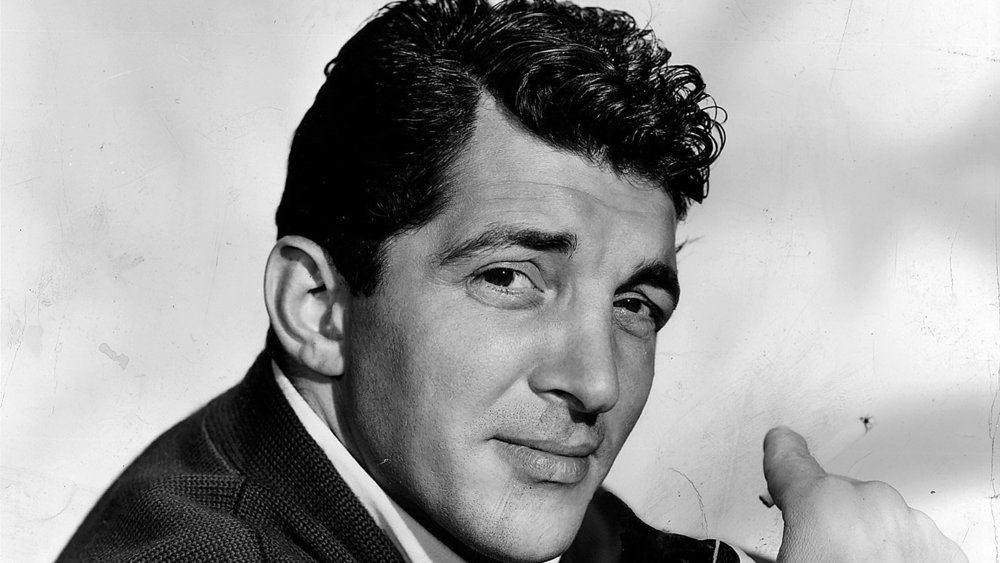
Dean Martin in KING OF COOL. Courtesy of Turner Classic Movies.
Turner Classic Movies’ will re-air the new Dean Martin documentary King of Cool on November 26. King of Cool is filled with insight into an icon who was extremely successful at being unknowable. Set your DVR.
Photo caption: Dean Martin in KING OF COOL. Courtesy of Turner Classic Movies.
Turner Classic Movies has premiered the Dean Martin documentary King of Cool, and it’s coming back to TCM on November 26. King of Cool is filled with insight into an icon who was extremely successful at being unknowable.
Dean Martin used his charm to mask his detachment. Universally beloved, his internal life was still never understood by his closest friends and colleagues – and even by his family.
Director Tom Donohoe and producer Ilan Arboleda, who had teamed for the essential filmmaking doc Casting By, faced this challenge – how does one create a biodoc on an enigma? Donohoe and Arboleda turned to the device from Citizen Kane – what was the “Rosebud” that drove and explained Dean Martin? (There’s one very fitting answer to that question in King of Cool.)
Superbly sourced, we get to hear from Martin’s closest associates, plus friends and co-workers like Bob Newhart, Angie Dickinson, Norman Lear, Carol Burnett, Barbara Rush, Florence Henderson, Lainie Kazan, Tommy Tune, Frankie Avalon and Dick Cavett,. The clearest – and most poignant – testimonies come from Martin’s daughter Deana Martin and Jerry Lewis’ son Scotty Lewis.
Despite Martin’s unknowability, King of Cool reveals a lot, including what Dino was really drinking on stage in his nightclub act, his close friendship with Montgomery Clift, and his rebuke of the JFK inauguration. There’s a wonderful firsthand account of his hosting big Hollywood parties and sneaking out to watch TV. We also get reading from Mark Rudman’s 2002 poem about Martin, The Secretary of Alcohol and hear how no less than Elvis Presley described Martin as “King of Cool”.
On a personal note, Dean Martin is on my own very short list of the most perpetually cool humans to ever walk the planet, along with Ben Gazzara, Joan Jett, Jean Gabin, Dr. John and Barack Obama.
TCM will replay King of Cool on November 26. Set your DVR.
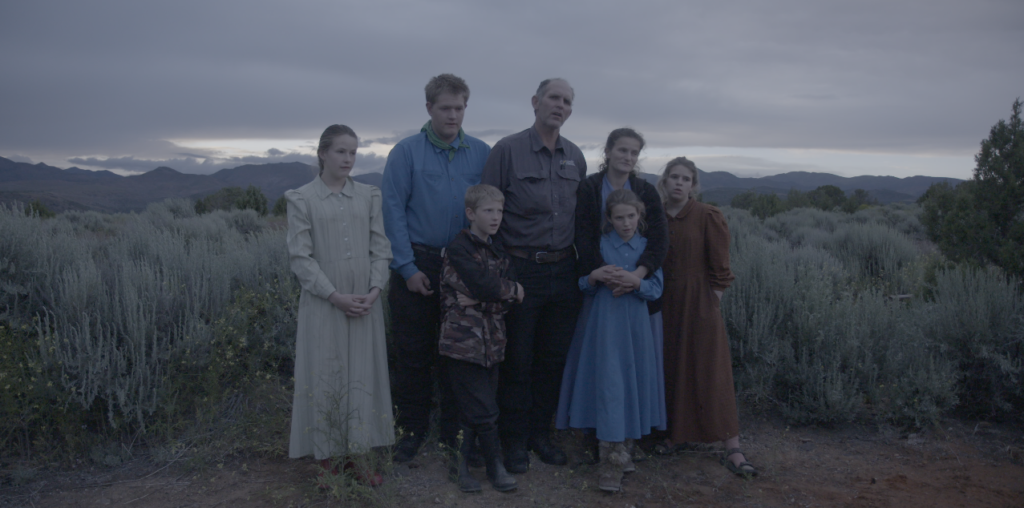
Photo caption: KEEP SWEET. Courtesy of discovery+.
The documentary Keep Sweet traces the remarkable aftermath of the Warren Jeffs child sexual abuse scandal in an isolated settlement of fundamentalist Mormons. A decade after, a tiny community tries to wrangle a new future.
Fundamentalist Mormons broke from the mainstream Church of Latter Day Saints, chiefly over the practice of polygamy, which they call plural marriage, and founded settlements in remote corners of the Great Basin. The Fundamentalist Church of Jesus Christ of Latter-Day Saints (FLDS) created a community in the adjoining border hamlets of Hildale, Utah, and Colorado City, Arizona.
In 2002, Warren Jeffs took over as the FLDS’ “prophet”, became the community’s absolute dictator, and implemented a reign of terror that included forcing child marriages to older men and expelling anyone who disagreed with him. This ended in 2006 with Jeff’s conviction on child sexual abuse charges. Warren Jeffs’ DNA established that he had impregnated a 15-year-old “wife”, and there was audio recording of sex with a 12-year-old. The title of this film comes from one of Warren Jeffs’ creepiest exhortations.
Keep Sweet returns to Hildale and Colorado City to find a community traumatized and torn asunder. Many of those victimized by Jeffs have returned to live among Jeffs loyalists, and the power dynamic has shifted. Of course, those on both sides grew up together in the intimacy of a tiny, isolated community.
Keep Sweet is directed by Don Argott (Framing John DeLorean, Art of the Steal, Kurt Vonnegut: Unstuck in Time). It benefits from footage of the community shot by producer Glenn Meehan a decade earlier; Meehan was documenting the “lost boys” – teenage boys forced to leave Hildale and Colorado City by Jeffs so older men would have less competition for teenage “brides”.
Some of the residents are nostalgic for the Jeffs regime, in denial of Jeffs’ misdeeds, and even ready to lose their homes rather than submit to legal authority. In what I find a sometimes stunning exercise in even-handedness, Argott allows these folks to have their voice and lets the audience members make their own assessments. Argott is sympathetically protective and respectful of everyone’s humanity, no matter how misguided.
For more depth on the Warren Jeffs case itself, I recommend Amy Berg’s fine documentary Prophet’s Prey (Showtime, Amazon, Vudu and YouTube). And for an offbeat fictional narrative on fundamentalist Mormons, there’s Electrick Children (Amazon, AppleTV, YouTube); it’s a story of magical Mormon teen runaways in Vegas (and it was my first look at Julia Garner of Ozark and The Assistant). And there’s the fictional Juniper Creek compound in Big Love, led by characters played by Harry Dean Stanton and Matt Ross.
This is a compelling true story of those who choose to heal – and those who deny that there was any wound to heal. Keep Sweet opens November 24 on discovery+.
Photo caption: Caitriona Balfe and Jamie Dornan in BELFAST. Courtesy of Focus Features.
Plenty of recommendations this week, but the Must See is Belfast – mask up, get yourself to a theater and see it.
IN THEATERS
Belfast: In Kenneth Branagh’s superb coming of age story, we see Northern Ireland’s Troubles through the eyes of eight-year-old. If you have heartstrings, they are gonna get pulled. Belfast is justifiably one of the Oscar favorites. #2 on my Best Movies of 2021 – So Far.
Brian Wilson: Long Promised Road: An unusual documentary about an unusual man. Brian Wilson, The Beach Boys’ songwriting and arranging genius weighs in on his life and work.
Also in theaters:
Passing: navigating a racist society and the value of one’s identity. Also streaming on Netflix.
Dirt Music: a gorgeous bodice-ripper with a WTF ending. Amazon, AppleTV, YouTube.
Kansas City Bomber: self-discovery at the roller derby track. Amazon, AppleTV, Vudu and YouTube.
ON TV
Irène Jacob in THE DOUBLE LIFE OF VERONIQUE
On November 21, Turner Classic Movies airs the exquisitely written The Double Life of Veronique (1991). Two women, one French and one Polish, both played by Irène Jacob, are living separate lives hundreds of miles apart yet somehow they are connected… Writer-director Krzysztof Kieślowski was on the verge of his 1993-1994 masterpiece, the Three Colors Trilogy (Blue, Red and White), which is high on my list of Greatest Movies of All Time. Kieślowski died in heart surgery just two years after the trilogy at the age of 54, robbing cinema of yet more masterworks (he was reportedly working on another trilogy).
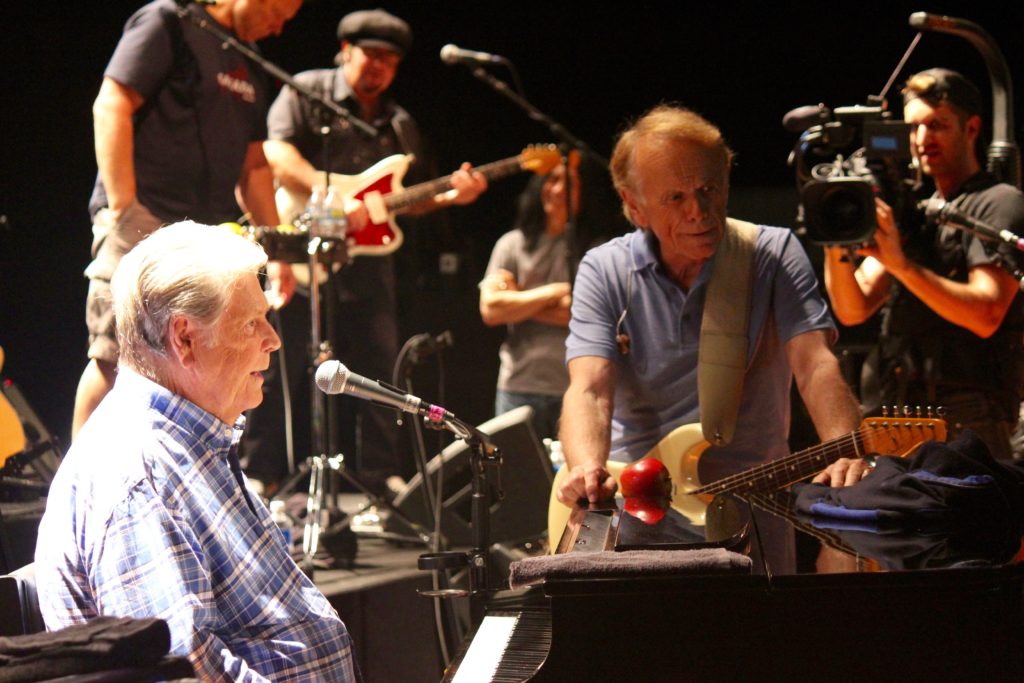
Photo caption: Brian Wilson (seated left) in BRIAN WILSON: LONG PROMISED ROAD. Courtesy of Nashville Film Festival.
A musical genius opens up in Brian Wilson: Long Promised Road, an unusual documentary about an unusual man. Brian Wilson. The Beach Boys’ songwriting and arranging master weighs in on his life and work.
As depicted in the film Love & Mercy, Wilson was afflicted with auditory hallucinations at 21, triggering painful years of what was essentially captivity at the hands of a quack doctor. Because Wilson’s affect is oddly flat and he he favors the briefest of answers, he would not be the ideal subject of a conventional interview documentary.
Instead, the filmmakers have Wilson’s old and trusted friend, rock journalist Jason Fine, drive him around important places in Wilson’s life; it’s the format of Comedians in Cars Drinking Coffee, and it pays off with oft emotional revelations. It turns out that Wilson is remarkably open about his travails and his creative process.
Completely at ease cruising Southern California with with Fine, Wilson matter-of-factly replies to very personal questions and even blurts some revelations of his own – as how he detoxed from alcohol, cocaine and cigarettes simultaneously (giving up cigarettes was the toughest).
Remarkably, some of the places in the Beach Boys origin story are now actually adorned with civic historical monuments, including the site of the Wilson family homeplace and the spot of the band’s photo shoot for their Surfer Girl album cover.
We get to see which of his songs that Brian himself listens to when he is feeling grief or nostalgia. And there are indelible moments of great feeling when Brian listens to his own music.
The film also brings in assessments of Brian’s work from master songwriters that include Elton John, Bruce Springsteen and Linda Perry; Perry says, “Brian Wilson is still trying to beat God Only Knows. Can you imagine?”
I saw Brian Wilson: Long Promised Road when it opened theNashville Film Festival. It’s opening this weekend, including at the Landmark Shattuck in Berkeley.
Photo caption: Jude Hill in BELFAST. Courtesy of Focus Features.
In Belfast, Kenneth Branagh’s superb coming of age story, we see Northern Ireland’s Troubles through the eyes of eight-year-old Buddy (Jude Hill). His dad (Jamie Dornan) works for two weeks at a time in Britain, so his mom (Caitriona Balfe) is raising Buddy and his older brother by herself most of the time. The family is under severe financial pressure. They are a nominally Protestant family living in a working class Belfast neighborhood, integrated with Catholics.
The movie’s opening is set on August 15, 1969, the day the Troubles intrude on Buddy’s neighborhood. Branagh perfectly captures the moment – the very second – that external events upend Buddy’s life. Overnight, his block has barbed wire at one end and a barricade at the other. Catholics are pressured to move out in a measure of ethnic cleansing.
Things get real, and the dad has the chance to move the family to Britain. There are factors that make uprooting the family a complicated decision. The audience is thinking, get the HELL out of THERE. After all, the family doesn’t know what we know – that the Troubles will persist for 29 more years.
This is autobiographical, the story of Kenneth Branagh’s own family. They escaped the Troubles by moving to from Belfast to Britain in 1970 when Branagh was Buddy’s age.
Although this story is about a specific child, telling it from the child’s point of view makes it universal. Children need security, but adult grievances, however valid, are prioritized over the security of children. The sectarians may think that they are targeting Catholics or Protestants, but the impact of their violence is to destroy safety, civility and predictability for all.
Judi Dench, Jude Hill and Ciarán Hinds in BELFAST. Courtesy of Focus Features.
The performances are impeccable, especially those by Judi Dench and Ciarán Hinds as Buddy’s grandparents. (The grandfather has the best line in the film.)
And where did Branagh find this kid actor Jude Hill? He is completely believable in every scene – and he might just be the most adorable child on the planet.
Belfast is a family drama, but the family is Irish, so there’s plenty of humor.
Branagh has shot Belfast in a glorious black-and-white which amplifies both the historical period and the grittiness of the setting. The use of Belfast’s own Van Morrison on the soundtrack is perfect.
Belfast is justifiably one of the Oscar favorites. If you have heartstrings, they are gonna get pulled.
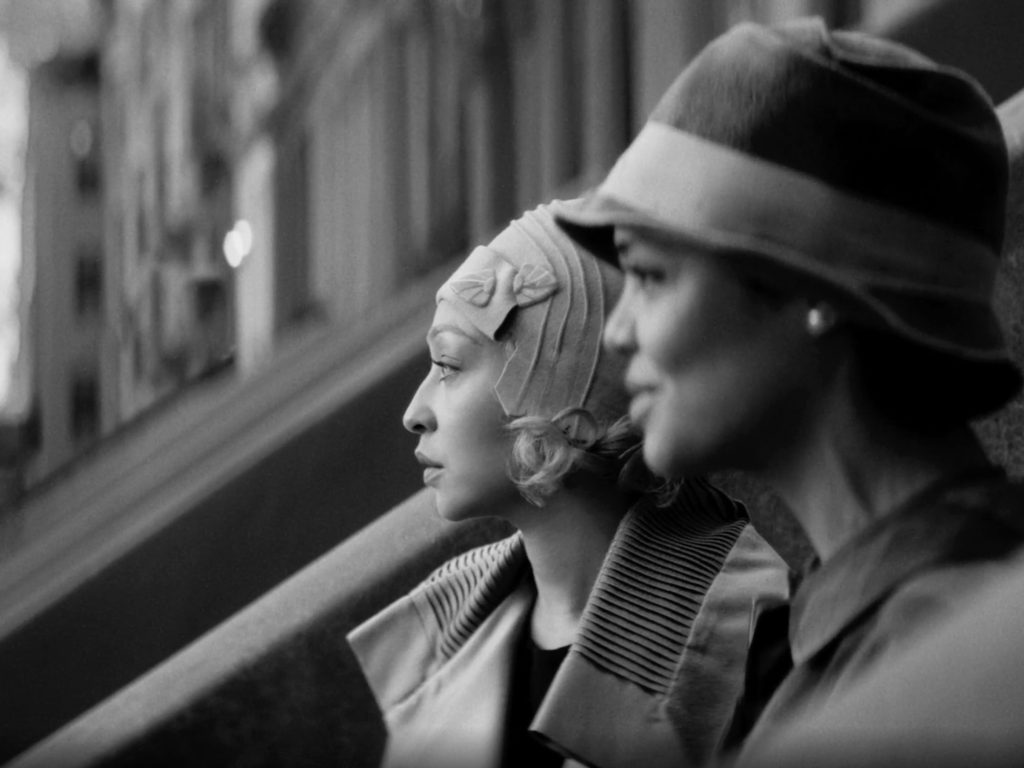
Photo caption: Negga and Tessa Thompson in PASSING. Courtesy of Netflix.
Ruth Negga and Tessa Thompson star in Rebecca Hall’s thought-provoking drama Passing, about the value of one’s identity and navigating in a racist society. It’s 1920s New York City and two light-skinned black women, both prosperous wives and mothers, happen upon each other for the first time since childhood. Irene (Tessa Thompson) is married to a doctor and has become a figure in Harlem society. Irene is shocked to find Clare (Ruth Negga) with her hair died platinum blonde and passing as Caucasian – even married to a racist white man.
For Irene, the reunion is unsettling because, ever polite, she doesn’t want to express her own disapproval of “passing”. Things get nerve-wracking for Irene when Clare’s husband (Alexander Skarsgård) shows up; from his very first word (which is overtly racist), it’s clear that things will go badly for Clare if he discovers her actual race. Presumably, he knows that Clare is not a real blonde, but he is SO racist that he even assumes that Irene must be white.
Clare on other hand, is eager to rekindle their friendship, regardless of the risks that Irene calculates. Clare NEEDS to slip a toe back into African-American culture. She is oblivious to Irene’s disgust for “passing”, and, when they first encounter in an elegant hotel tea room, Clare even assumes at first that Irene is passing.
Despite Irene’s reluctance, Clare composes herself in Irene’s family and social circle. We watch Irene as she runs her staid household (with black servants). She puts on a swinging charity benefit, attended by her black upper crust peers and by hip white New Yorkers sampling Harlem culture. One of the latter is Irene’s friend Wentworth (Bill Camp), a literary figure of standing.
Despite her charity leadership (for the Negro Welfare League), she wants to “protect” her sons from the “race issue” by keeping them sheltered and ignorant. Her husband Brian (André Holland) doesn’t agree – he has given up on improving race relations in America and wants to relocate the family in another country.
Is anyone here satisfied? Irene keeps saying she is satisfied, meaning personally, but she does her charity work for a reason. Brian is exhausted by his practice and wants to give up on the entire nation. Clare is comfortable having made a choice that she describes in the most materialistic terms, but is still yearning for what she misses in White society.
Referring to the 1929 novel, Mick LaSalle writes,
“…it’s a great advantage that the movie’s source is in the past. If this story were attempted today, it would be about a social issue. One woman would be presented as right, and the other would be wrong. There would be a crucial realization three-quarters in, and then a moral to the story spelled out before the closing credits.“
Passing is directed by British actress Rebecca Hall, whose own American mother is multiracial. As a director, Hall puts her actors in the forefront, framing them in static shots and with piano music just jazzy enough to suggest Harlem setting. Passing is photographed in black and white, with the backgrounds washed out to emphasize the characters in the foreground (and the colors of their skin).
The performances are excellent. Negga has the showier role as the charming, flamboyant and dangerously flighty Clare. Thompson’s Irene is really the more important character, and Thompson lets us see inside this woman who is so very proper that she should be boring; but Thompson’s Irene is ever thoughtful, introspective and contained – with all her turmoil roiling inside.
Veteran character actor Camp is exceptional as Wentworth, the sardonic white novelist who enjoys his forays into Harlem and values his friendship with Irene. An actor who can make the smallest role memorable, Camp has recently played Mr. Shaibel, the chess-teaching school janitor in The Queen’s Gambit and The Beach Boys’ controlling father in Love & Mercy.
Passing is still in some theaters and is now streaming on Netflix.
This week, the big movie on Netflix is Passing, and Oscar favorite Belfast opens in theaters – stay tuned for my reaction.
Cinequest’s online festival CINEJOY is running through November 17, and here are my five top Cinejoy recommendations (and capsules on nine other Cinejoy films).
REMEMBRANCE
Dean Stockwell in BLUE VELVET.
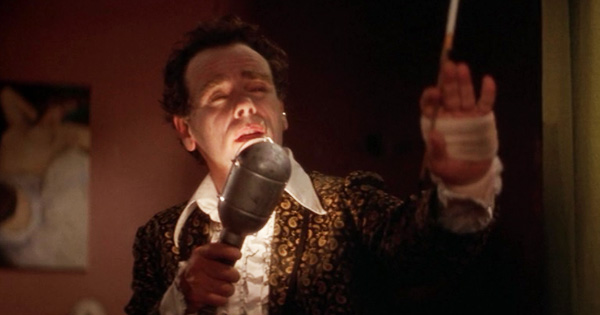
Dean Stockwell‘s 70-year acting career contained at least four distinct chapters, between which he took mostly voluntary breaks. He started as a child star – one of the biggest; he was spanked by William Powell in Son of the Thin Man and acted with Gene Kelly and Frank Sinatra in Anchors Aweigh. After walking away as a teenager, he returned for serious, original roles in Compulsion and Long Day’s Journey Into Night. During his hippie drop-out phase, he dropped back in for the Roger Corman hippie exploitation movie Psych-out. Then Stockwell played Harry Dean Stanton’s sympathetic brother in Wim Wenders masterpiece Paris, Texas. He followed that with hos most indelible performance, as his friend Dennis Hopper’s terrifying henchman in Blue Velvet, where he unforgettably lip-synchs a Roy Orbison tune. Stockwell topped of his career with the popular television series Quantum Leap. Here is Sheila O’Malley’s marvelous tribute at RogerEbert.com.
IN THEATERS
Passing: Ruth Negga and Tessa Thompson star in Rebecca Hall’s thought-provoking drama about the value of one’s identity and navigating in a racist societ. Also streaming on Netflix.
Dirt Music: a gorgeous bodice-ripper with a WTF ending. Amazon, AppleTV, YouTube.
Kansas City Bomber: self-discovery at the roller derby track. Amazon, AppleTV, Vudu and YouTube.
ON TV
Eli Wallach, Mary LaRoche, Cindy Calloway, Robert Keith and Richard Jaeckel in THE LINEUP
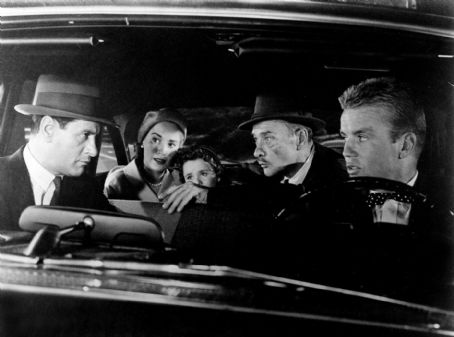
On November 13 and 14, Turner Classic Movies broadcasts Don Siegel’s The Lineup, one of my very favorite San Francisco movies. The villains and the final chase sceneare unforgettable, as are the movie’s iconic San Francisco locations. It’s on TCM’s Noir Alley, so Eddie Muller will present the intro and outro. Don’t miss it.
Cynda Williams and Billy Bob Thornton in ONE FALSE MOVE
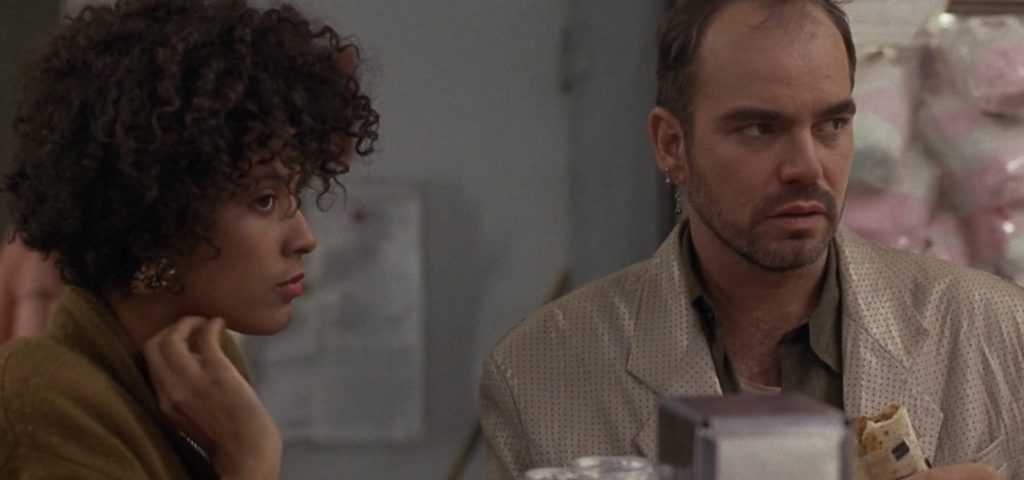
Moving from classic film noir to neo-noir, on November 14, TCM airs the gripping contemporary neo-noir One False Move. A Los Angeles crime is solved right away – the cops know who did it and that the murderers are headed to a small town in Arkansas, where the cops lay in wait. One False Move is a ticking time bomb as we wait for the criminals to drive across the Southwest to the inevitable confrontation. There are guys overreaching for greed and ambition, a femme fatale, and a very dark secret, but America’s original sin – race – is at the core of One False Move.