ZOLA: the road trip is not what it seems, (and neither is this movie)

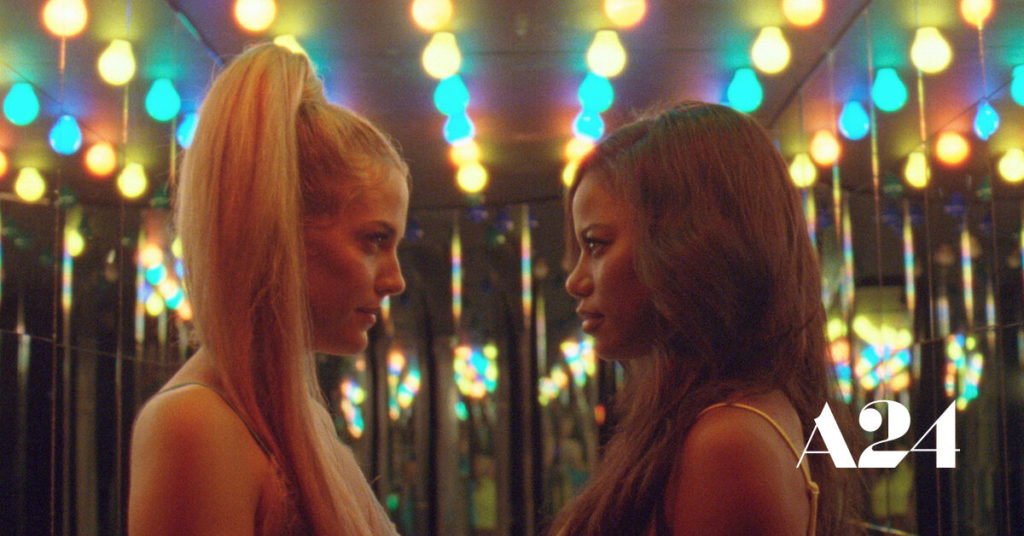
Photo caption: Riley Keough and Taylour Paige in ZOLA. Photo courtesy of A24 Films.

The titular character in Zola (Taylour Paige, Ma’s girlfriend in Ma Rainey’s Black Bottom) is a waitress in a Hooters-like joint in Detroit and an occasional pole-dancer. Zola accepts an invitation from Stefani (Riley Keough, Capable in Mad Max: Fury Road) for a weekend roadtrip to Tampa to make some quick cash stripping. Stefani is the most recent of acquaintances, and Zola doesn’t realize until it’s too late that the Tampa weekend is going to be a harrowing misadventure.

Off they go with Stefani’s boyfriend (Nicholas Braun) and Stefani’s mysterious “friend” (Colman Domingo). It is revealed that Stefani is a basket of bad choices, dangerous entanglements and treacherous mendacity. The trashy fun quickly descends into the appalling, the disgusting and the terrifying.

Zola has widely been called a comedy. It is filled with very funny moments, but it is about dysfunction and exploitation, and it’s not a relaxing watch.

Zola is the first feature for director Janicza Bravo, and it is a highly original film:

  • Bravo co-wrote the screenplay “based on the Tweets by A’Ziah King”, a series of 148 Tweets that recounted an actual occurrence in real time.
  • Zola is a film by a BIPOC female director on sexual exploitation.
  • There is no female nudity, but there is male nudity.
  • Riley Keough, who is white, plays Stefani with a blaccent and in what Taylour Paige calls “blackface” after discussing cultural appropriation with Bravo.

Stefani’s boyfriend (Nicholas Braun) is astonishingly dumb, so much so that he asks, “do you think I’m stupid?”. There are varieties of melons that are smarter than this guy. Braun throws himself into this character without any hint of irony, which makes him him even funnier.

Other comic highlights:

  • A brief rehash of the story from Stefani’s outrageously deceitful point of view.
  • An enthusiastic pre-dance group prayer by the strippers.
  • Ben Bladon, a character actor who usually plays zombies, makes the most of his turn as a strip club patron who utters what he thinks is a complement.

Riley Keough is the granddaughter of Elvis Presley, and I keep mixing her up with Jenny Lewis’ old band Rilo Kiley.

They say that acting is reacting, and Taylour Paige is excellent as our prism for the story. Keough has the showier part, and Paige is usually observing Stefani’s antics with some combination of annoyance, disgust, and increasing desperation. Paige is effective as Zola’s anchor.

Zola is now in theaters. Just make sure you don’t think that Zola is a naughty, light comedy.
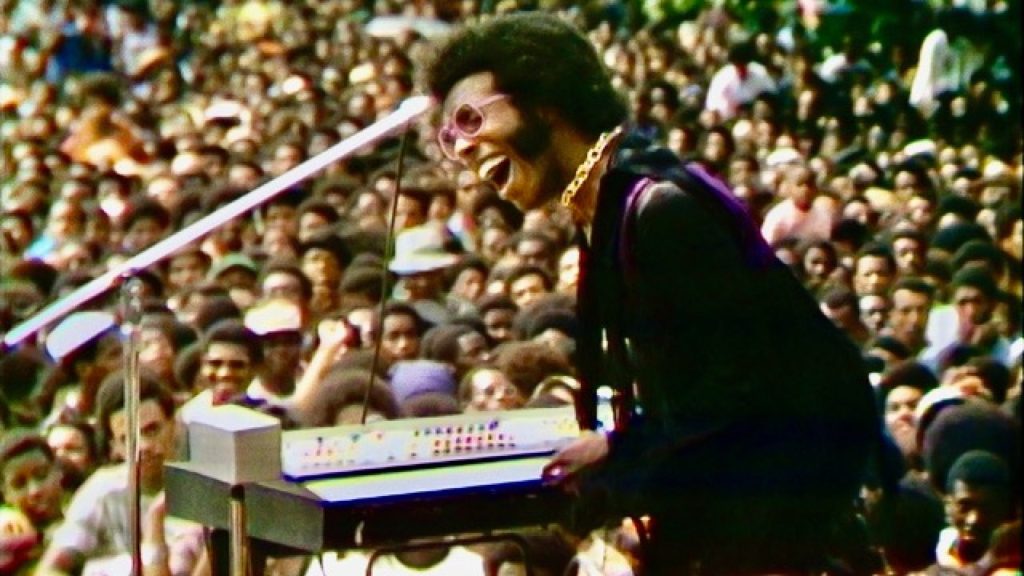
SUMMER OF SOUL (…OR, WHEN THE REVOLUTION COULD NOT BE TELEVISED): concert with context

Sly Stone in SUMMER OF SOUL (…OR, WHEN THE REVOLUTION COULD NOT BE TELEVISED)

In Summer of Soul (…Or, When the Revolution Could Not Be Televised), Questlove recovers the never-before-seen film of the Harlem Cultural Festival over six weekends in 1969. The promoters had tried to market the footage as “the Black Woodstock”, but had no takers at the time (for the obvious reason).

This is a superb concert film, but that’s not all it is. 1969 was an important historical and cultural moment – especially for American Blacks, and Questlove supplies the context. A 2021 audience cannot miss the parallels between 1969’s Black Is Beautiful and Black Power and today’s Black Lives/Black Voices.

Ahmir “Questlove” Thompson is widely-known as drummer of The Roots and bandleader for The Tonight Show with Jimmy Fallon. Creative and versatile, he is Emmy-nominated and Grammy-winning, he is going to win an Oscar for this, his directorial debut for a feature film. Summer of Soul proves that Questlove is such a gifted storyteller that I hope he takes on narrative fictional filmmaking, too.

The music in Summer of Soul is fantastic:

  • Sly and the Family Stone shattered expectations with their garb, racially integrated band and female musicians on trumpet and keyboards. Their psychedelic funk and super-charged ebullience blew away the audience. (BTW Vallejo native Sly Stone is now age 78.)
  • Stevie Wonder was only 19, 3 years before Superstition, and already taking his remarkable creativity and musicianship down new roads.
  • Gladys Knight and the Pips – watch the Pips and appreciate how those guys really worked it.
  • BB King at the height of his popular breakthrough, singing Why I Sing the Blues.
  • The Fifth Dimension were best sellers among the white mainstream – and here they were finally accepted by a Black audience. Billy Davis Jr. and Miriam McCoo get to relive the experience on camera in one of Summer of Soul’s most touching moments.

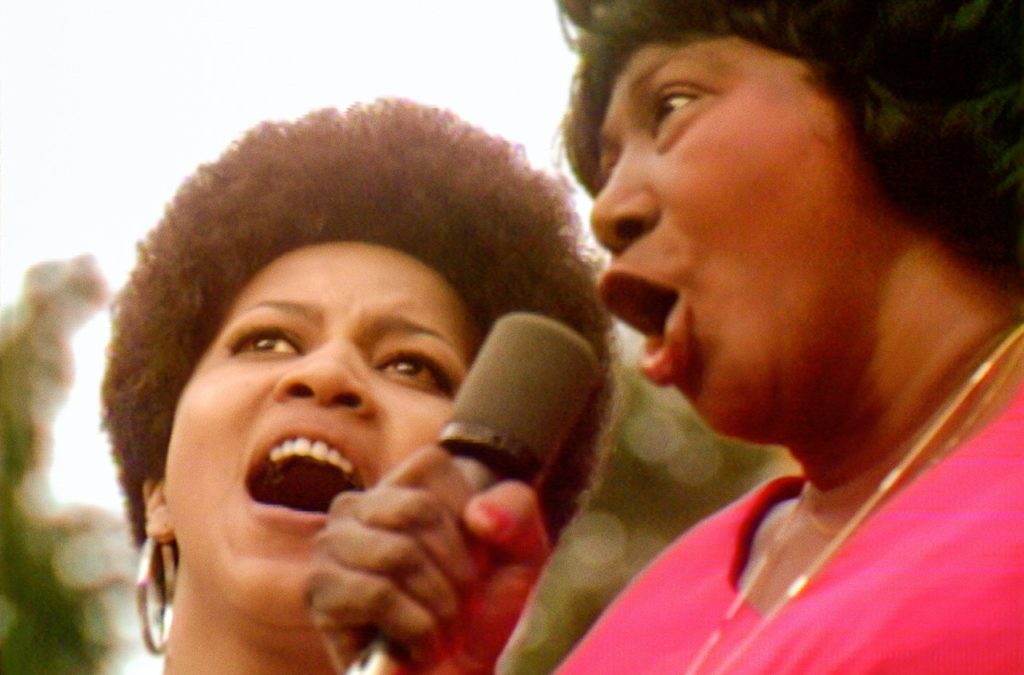
The musical high point is a rendition of Precious Lord, Take My Hand by Mahalia Jackson and Mavis Staples. Mahalia was then 58 and a legend, and this was her signature song. Mavis was already a showbiz veteran at 30 and at the top of her game. The Reverend Jesse Jackson introduces the song with a heartbreaking account of Martin Luther King asking for this, his favorite hymn, seconds before his murder. Mahalia was not feeling well, and asked Mavis to kick off the song. Mavis’ first verse is volcanic, then Mahalia takes over and the two finish together in an explosion of emotions. Epic.

Mavis Staples and Mahalia Jackson in SUMMER OF SOUL (…OR, WHEN THE REVOLUTION COULD NOT BE TELEVISED)

Something else happened that summer – the manifestation of JFK’s pledge to land a man on the Moon and return him safely to Earth. Questlove uses file footage of person-on-the-street interviews to contrast the reactions of Blacks and Whites. It’s a Rorschach test of privilege and alienation.

Gladys Knight recounts “it wasn’t just about the music”. BB King performed here just weeks after the release of The Thrill Is Gone, and he must have included Thrill in his set, but I’m sure that Questlove instead chose Why I’m Singing the Blues to focus on that song’s larger subtext for Black Americans.

And the need to show the militant commitment to self-determination must be why Questlove features so much of Nina Simone at her rawest. If she had ever worried about being too harsh, Simone was well past that point in 1969.

On a lighter note, ironic sombrero-wearing must have been a thing in Harlem that summer – check out the crowd shots (and drink a shot for every sombrero.)

Summer of Soul etc. etc. has also earned the #13 ranking on my list of Longest Movie Titles.

How good is Summer of Soul, which swept the Grand Jury Prize and the Audience Award at Sundance? It’s hard to imagine it not winning the Oscar for Best Documentary Feature, and I’m guessing it will be that rare doc nominated for Best Picture. FWIW I’m putting it on my list of Best Movies of 2021 – So Far.

Summer of Soul (…Or, When the Revolution Could Not Be Televised) is in theaters and streaming on Hulu. It’s worth watching for the music and worth it for the history, too; for the combination, it’s a Must See.

NO SUDDEN MOVE: more double crosses than movie stars

Don Cheadle in NO SUDDEN MOVE. Photo courtesy of Warner Bros. Pictures.

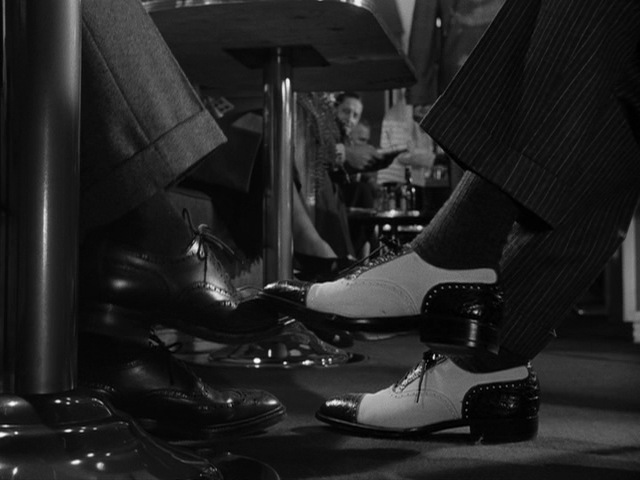
Double crosses abound in Steven Soderbergh’s neo-noir thriller No Sudden Move. Here’s all you need to know about the story – two Detroit hoods, Curt (Don Cheadle) and Ronald (Benicio Del Toro) are hired for a one-time job. They are being substantially overpaid for the job, which means that they might be getting set up…

The plot contains more betrayals than movie stars, and No Sudden Move is star-studded – Cheadle, Del Toro, Matt Damon, Jon Hamm, Ray Liotta, Bill Duke, David Harbour and a very, very fleshy Brendan Fraser. Amy Seimetz, the noted indie director of Sun Don’t Shine and She Dies Tomorrow. is in here, too.

Soderbergh relishes genre movies, and here he delivers a satisfying thriller. There have been comments about the plot being challenging to follow, but I didn’t have a problem keeping the twists coherent. One of the persistent themes in film noir and neo-noir is the riskiness of overreaching – and No Sudden Move is instructive about settling for one’s share.

No Sudden Move is streaming on HBO Max.

Movies to See Right Now

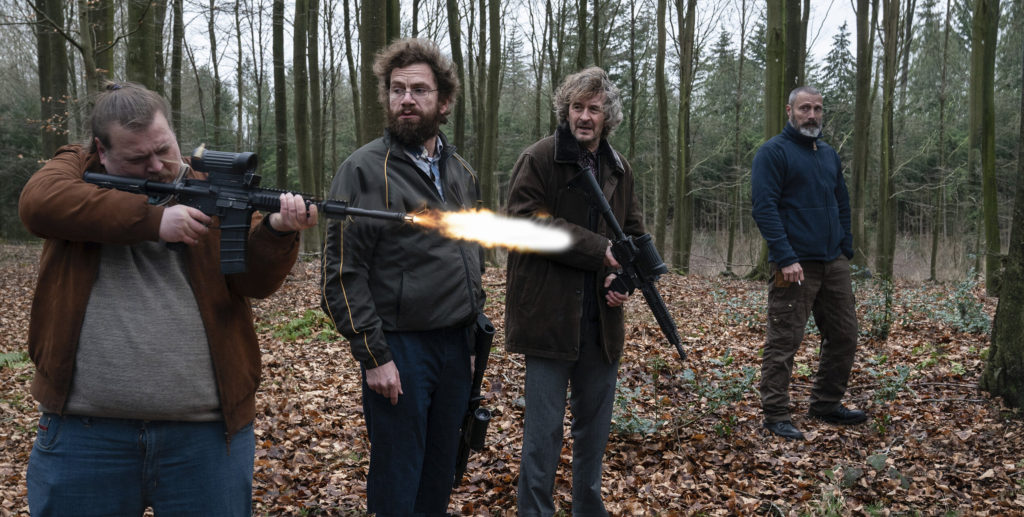
Photo caption: RIDERS OF JUSTICE, a Magnet release. © Rolf Konow. Photo courtesy of Magnet Releasing

For the Fourth of July weekend, I’m recommending going to theaters to see The Sparks Brothers or In the Heights, OR streaming Riders of Justice.

Last night I saw one of the year’s most eagerly-awaited films – and it;s great: Questlove’s Summer of Soul (…Or, When the Revo’ution Could Not Be Televised). Now in theaters and on Hulu.

IN THEATERS

  • The Sparks Brothers: Must be seen to be believed.
  • Truman and Tennessee: An Intimate Conversation: Two giants of American literature in their own words.
  • In the Heights: Vibrant, earnest and perfect for this moment. Also streaming on HBO Max.
  • Summer of 85: Director Francois Ozon reflects on how we remember our youth in this romantic teen coming of age story.
  • The Dry: a mystery as psychological as it is procedural. In theaters and also streaming on AppleTV, YouTube and Google Play
  • Undine: slow burn, barely flickering.
  • Censor: less scary and suspenseful than it is unpleasant.

ON VIDEO

Riders of Justice: It’s the year’s best movie so far. A character-driven comedy thriller embedded with deeper stuff. Marvelous. Amazon, AppleTV, Vudu and YouTube.

Slow Machine: An incomprehensible art film that is surprisingly engrossing. At Laemmle now and coming to the Roxie.

The Courier: Benedict Cumberbatch stars in this true story of Cold War espionage. Amazon, Vudu, YouTube and redbox.

The most eclectic watch-at-home recommendations you’ll find ANYWHERE

ON TV

STRANGERS ON A TRAIN

On July 3, Turner Classic Movies is broadcasting the 1951 Alfred Hitchcock suspense thriller Strangers on a Train – one of his very best. A hypothetical discussion about murdering inconvenient people turns out to be not so hypothetical.

Robert Walker plays Bruno, one of the creepiest villains in movie history.  Guy (San Jose native Farley Granger) thinks that Bruno is just an oddball – until it’s too late. The tennis match and carousel finale are epic set pieces.

THE COURIER: amateur among the spies

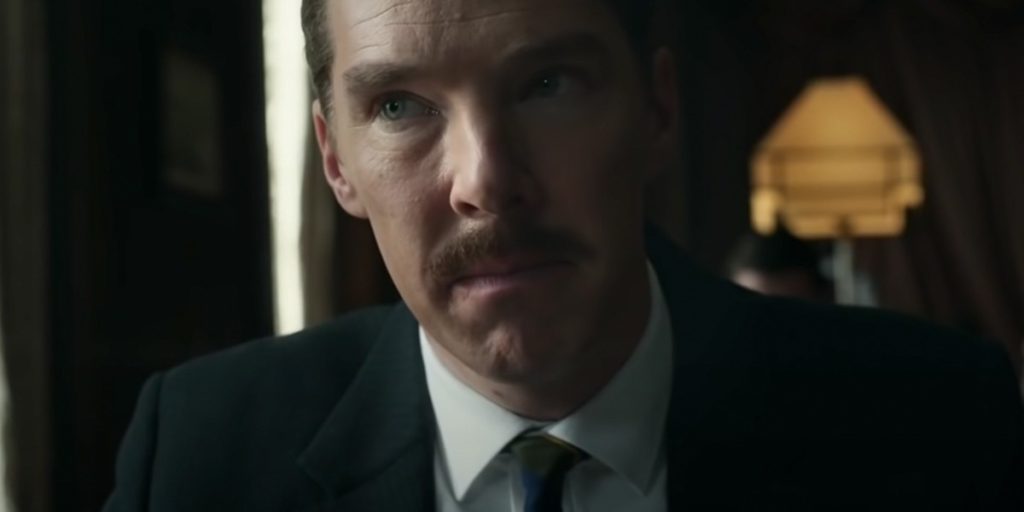
Photo caption: Benedict Cumberbatch in THE COURIER. Photo courtesy of Roadside Attractions.

The docudrama The Courier tells the true story of Greville Wynne, a British businessman who became entangled in espionage during the height of the Cold War. British and American intelligence were getting Kremlin secrets leaked by a high-ranking Soviet official. How to sneak the secrets out of the USSR? The whole point was to use an amateur because the KGB would be less suspicious, so the untrained salesman Greville Wynne was recruited. His experience was thrilling at first, and then searing.

The ordinary, avuncular Wynne is played by Benedict Cumberbatch, without his usual creepy sharpness. Rachel Brosnahan (The Marvelous Mrs. Maisel, House of Cards, Louder Than Bombs) plays a CIA officer. Georgian actor Merab Ninidze is solid as the Russian source. Jessie Buckley plays Wynne’s wife, and it’s good to see her cast in a mainstream movie after she was such a force of nature in indies Beast and Wild Rose

Cumberbatch, who is not a fleshy man, underwent a 21-pound weight loss to make Wynne frighteningly gaunt. To me, the risk to his health was just not worth it; The Courier is not close to a masterpiece like Raging Bull or The Pianist, and I would rather that Cumberbatch had played the part as his normally slender self.

The Courier does depict real events, but it grossly over-inflates the impact of this episode on the Cuban Missile Crisis. However, the general arc of the story is historically accurate.

Keep watching the end credits to glimpse the real Greville Wynne.

The Courier is streaming from Amazon, Vudu, YouTube and redbox. It’s watchable, but not a Must See.

SLOW MACHINE: incomprehensibly engrossing

Photo caption: Stephanie Hayes in SLOW MACHINE. Photo courtesy of Grasshopper Films.

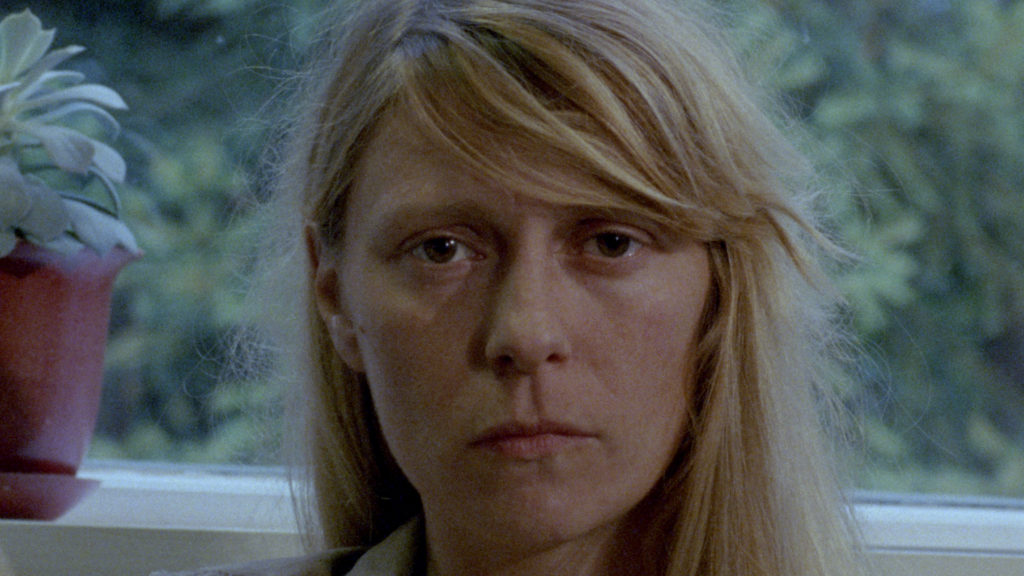
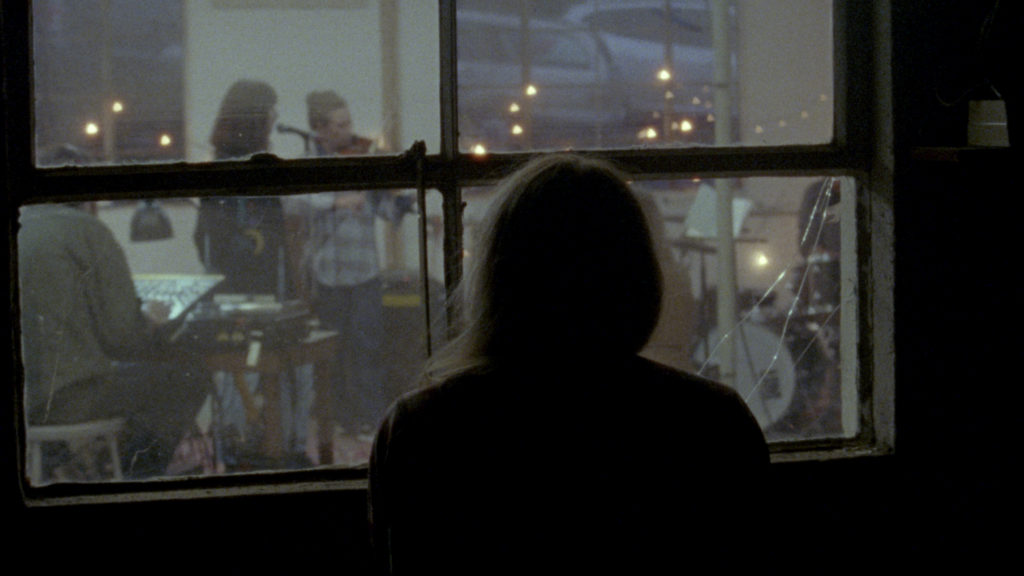
Slow Machine dives enigmatically into paranoia. A 72-minute art film shot on 16mm and a very low budget, Slow Machine is surprisingly engrossing.

After a night of hard drinking, Swedish actress Stephanie (Stephanie Hayes) wakes up in an unfamiliar Queens apartment. She has been brought there for her safety by Gerard (Scott Shepherd), an NYPD counter intelligence officer.  It’s not his apartment, but one he uses for his work.

Stephanie is trying to get her bearings and assess Gerard while he chatters amiably, describing himself as “emotionally promiscuous”. Gerard has a rare quality – he is loquacious without being tiresome – you can’t help but listen to guy. He is transparently mysterious, if that’s a thing.

Despite initial resistance, Stephanie becomes involved with Gerard. Then an unexpected event causes Stephanie to hide out at an acquaintance’s house.

Stephanie has found herself in a paranoid mystery, but she’s mysterious herself. Shifting between accents, she often sounds like she is fabricating. She deflects men’s passes with practiced moxie, but she can be paralyzed with terror.

The story is not the point. Slow Machine draws us in as we try to figure out who these people are and what is going on.

There are lots of unexpected nuggets. Chloe Sevigny shows up and plays a version of herself. Gerard’s unseen fiance is an anthropologist studying the setups in porn movies. A touch football game breaks out. Stephanie rehearses with Gerard for an audition, and the scene becomes riveting.

Slow Machine is the first feature for co-directors Joe Denardo and Paul Felten; Felten wrote the screenplay. 

Slow Machine is not for folks who need their movies to be linear or even coherent. Why is this movie so engrossing? Beats me, but it is seductive and ever watchable.

Slow Machine is streaming on Virtual Cinema, I saw it at Laemmle, and it’s coming to the Roxie.

Stephanie Hayes in SLOW MACHINE. Photo courtesy of Grasshopper Films.

Movies to See Right Now

Photo caption: A scene from RIDERS OF JUSTICE, a Magnet release. © Kasper Tuxen. Photo courtesy of Magnet Releasing

This week: my experience returning to theaters, the best movie of the year so far, and a marathon of Alfred Hitchcock.

I finally went to a movie theater for the first time in an unimaginable 473 days – and I was a little rusty. On a 92 degree day, I slipped into the air conditioned theater and, while trying to adjust my recliner, inadvertently turned on the seat heater. Everything else went well.

I found the Astronaut Pen that The Wife gave me, which fits easily in my pants pocket. And I still had my unlined notepad from Muji, so I can scrawl notes in the dark. (the downtown San Jose Muji did not survive COVID, so I’ll need another source.)

Incidentally, in that 473 days of COVID hermitage, I had watched 328 films at home – streaming, broadcast, DVD and screeners.

IN THEATERS

The Sparks Brothers: This affectionate documentary profiles a 54-year-old pop band, still tirelessly living their art. Both the subject band and the movie about them are very funny.

Truman and Tennessee: An Intimate Conversation: Two giants of American literature in their own words.

Also in theaters:

  • In the Heights: Vibrant, earnest and perfect for this moment. Also streaming on HBO Max.
  • Summer of 85: Director Francois Ozon reflects on how we remember our youth in this romantic teen coming of age story.
  • The Dry: a mystery as psychological as it is procedural. In theaters and also streaming on AppleTV, YouTube and Google Play
  • Undine: slow burn, barely flickering.
  • Censor: less scary and suspenseful than it is unpleasant.

ON VIDEO

Riders of Justice: It’s the year’s best movie so far. A character-driven comedy thriller embedded with deeper stuff. Marvelous. Also AppleTV.

Summertime: This ever vibrant film is about giving voice, the voice of mostly young Los Angelenos, expressing themselves mostly through poetry. Stream from Frameline through Sunday night, June 27.

The most eclectic watch-at-home recommendations you’ll find ANYWHERE

ON TV

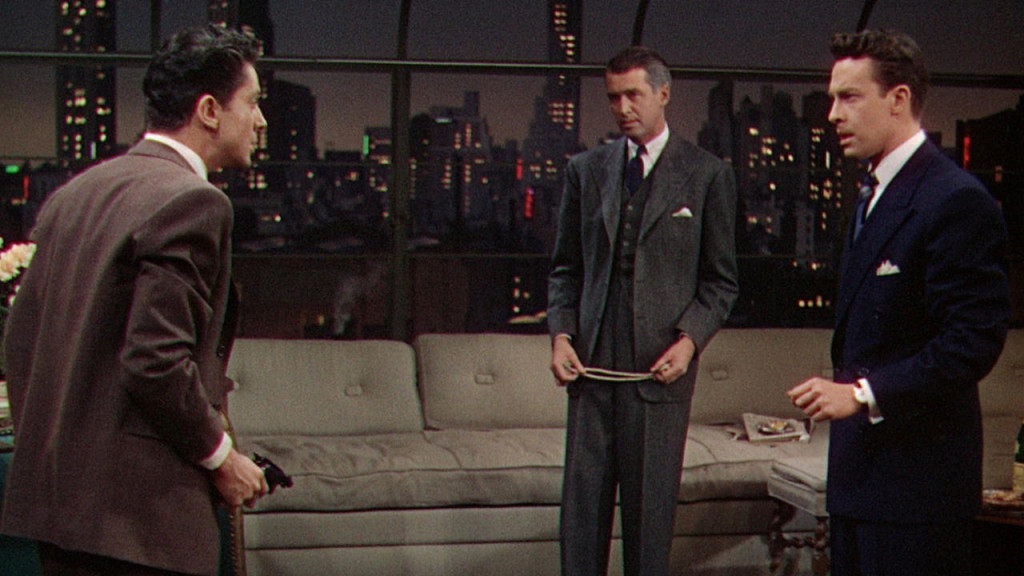
Starting Saturday, June 26, and continuing through early Monday. Turner Classic Movies will be airing FORTY-EIGHT HOURS of Alfred Hitchcock. The 23 different movies (Shadow of a Doubt plays twice on Eddie Muller’s Noir Alley) range from Hitchcock’s 1927 silent The Lodger to his 1976 Family Plot. The program includes Hitchcock’s best eight films: Vertigo, Psycho, Strangers on a Train, Rear Window, North by Northwest, Rope, The Birds and Shadow of a Doubt. 

Farley Granger, James Stewart and John Dahl in ROPE

THE SPARKS BROTHERS: must be seen to be believed

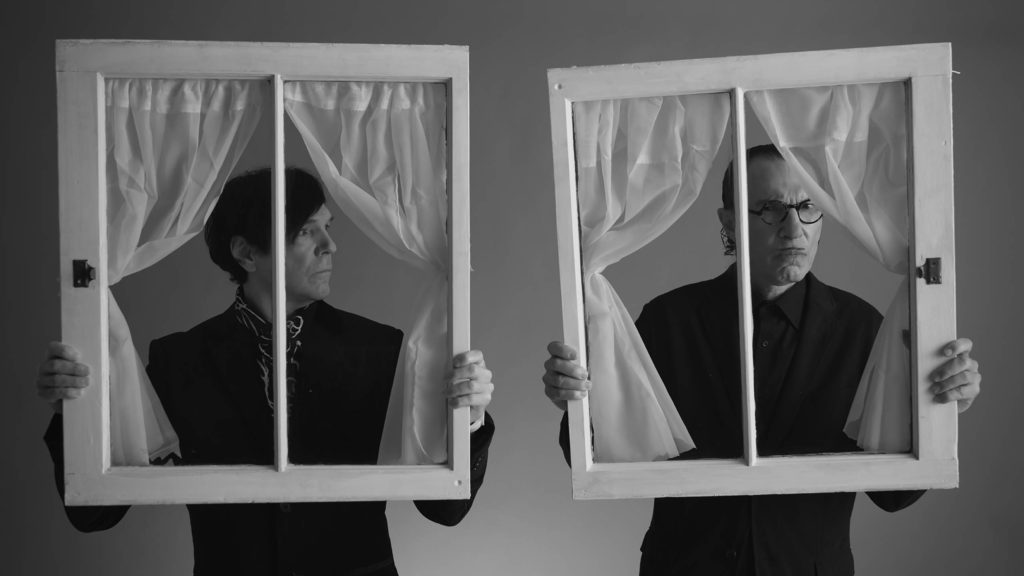
Photo caption: Russell Mael and Ron Mael in THE SPARKS BROTHERS. Photo by Jake Polonsky, courtesy of Sundance Institute.

The Sparks Brothers is Edgar Wright’s affectionate documentary on a pop band that has been active for 54 years (and that I had never heard of). The band is Sparks, comprised of brothers Ron and Russell Mael, and The Sparks Brothers is one fun movie.

Ron writes the songs and plays keyboards, and Russell is the singer and front man. In the film, Sparks is described as “the best British pop band to come out of America” and “a snaky lead singer for the ladies and then the Hitler mustache”. Sparks was first produced by Todd Rungren, of all people, in 1967. (Both Rungren and Russell Mael were dating Miss Christine of the GTOs.) Pop success eluded them until they surged in the UK in 1974-75.

Then Sparks pioneered electro dance a couple years too early, came to hard rock a little late, and have kept moving on to the next project and musical style that interests them. Of course, that approach doesn’t let their fans get comfortable.

A musician says, “they don’t care about money or fame – just art for art’s sake”, which isn’t EXACTLY true. The Maels really DO want their music to be heard, and they really DO want to be popular and famous. They just won’t compromise artistically to get there.

What they WILL do is work with remarkable stamina and discipline. This is the rock first rock documentary I’ve seen without somebody’s serious drug use being a point of deflection. These guys marry an intense work ethic with their often bizarre art.

Their stage presence is remarkable. With his pretty boy looks and charisma, Russell bounds about as the quintessential front man. Ron silently stands behind his keyboard, posing with his, well, Hitler mustache (which he has now replaced with a pencil mustache).

Above all, Sparks is ever playful, and The Sparks Brothers is very funny. They match their stage persona with lyrics like “dinner for 12 is now dinner for 10 because I’m under the table with her“. Ron and Russell Mael themselves kick off the movie with a hilariously deadpan questionnaire.

Their performances are fun and witty, and their music is peppy and catchy. The overt humor sometimes masks lyrics that are poignant and even despairing.

Growing up in LA, Ron and Russell cherished their boyhood weekend matinees with their dad, filled with Westerns and war movies. As artsy UCLA students, they admired Ingmar Bergman and French New Wave cinema as much as they did The Who and the Kinks, They had lined up a movie project themselves with the great auteur Jacques Tati that fell through because of Tati’s health. In the 1990s, they invested six years in trying to make the Japanese manga Mai, the Psychic Girl as a movie musical with director Tim Burton. When that movie also died, they were devastated.

Happily, they have written the screenplay for a movie which has actually been finished. Annette, directed by Leo Carax (Holy Motors) and starring Adam Driver and Marion Cotillard, is coming out later this summer,

I may not love their music or think that Spark is important, but I sure like these guys. The Spark Brothers is a delight, and it’s damn funny, too.

RIDERS OF JUSTICE: thriller, comedy and much, much more

Photo caption: RIDERS OF JUSTICE, a Magnet release. © Kasper Tuxen. Photo courtesy of Magnet Releasing.

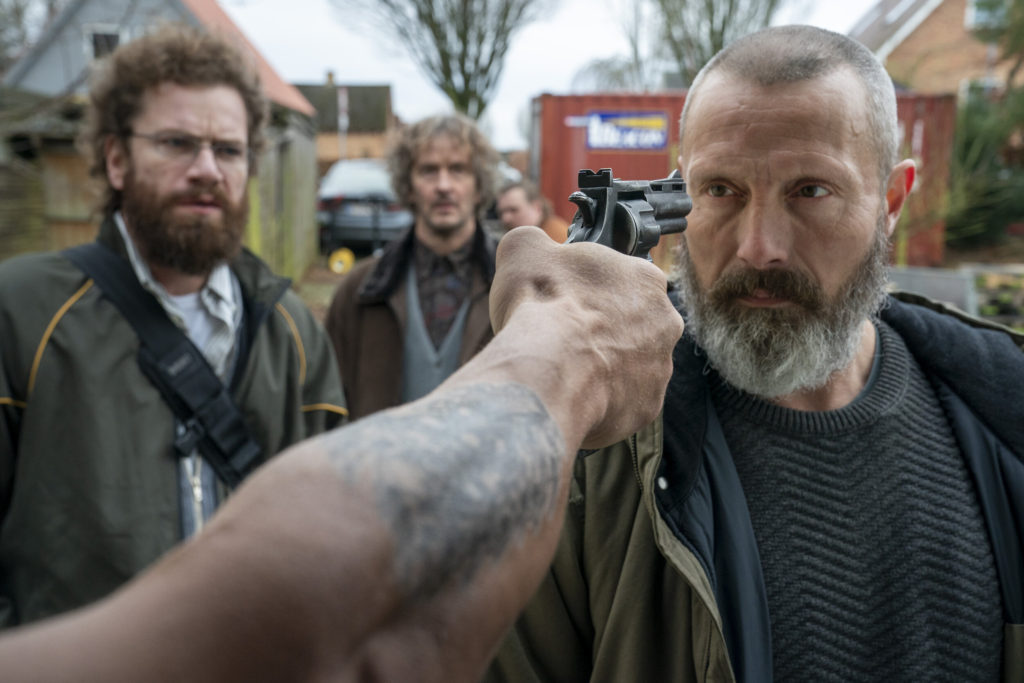
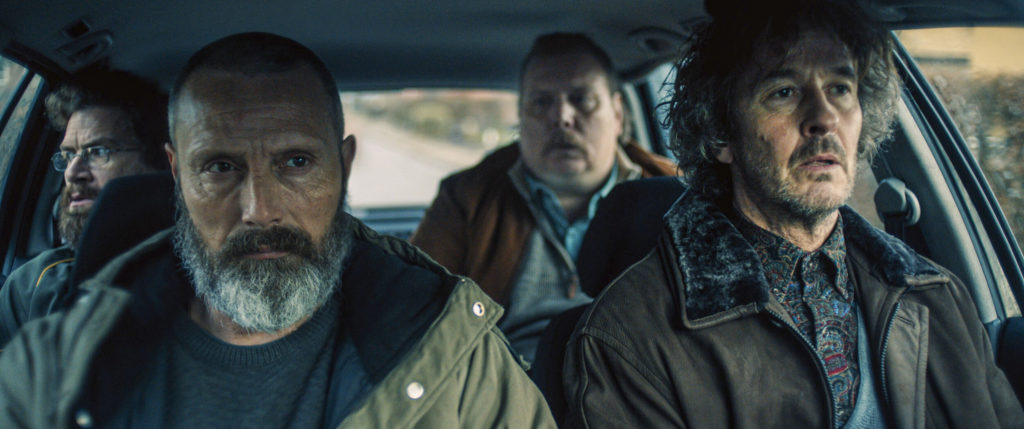
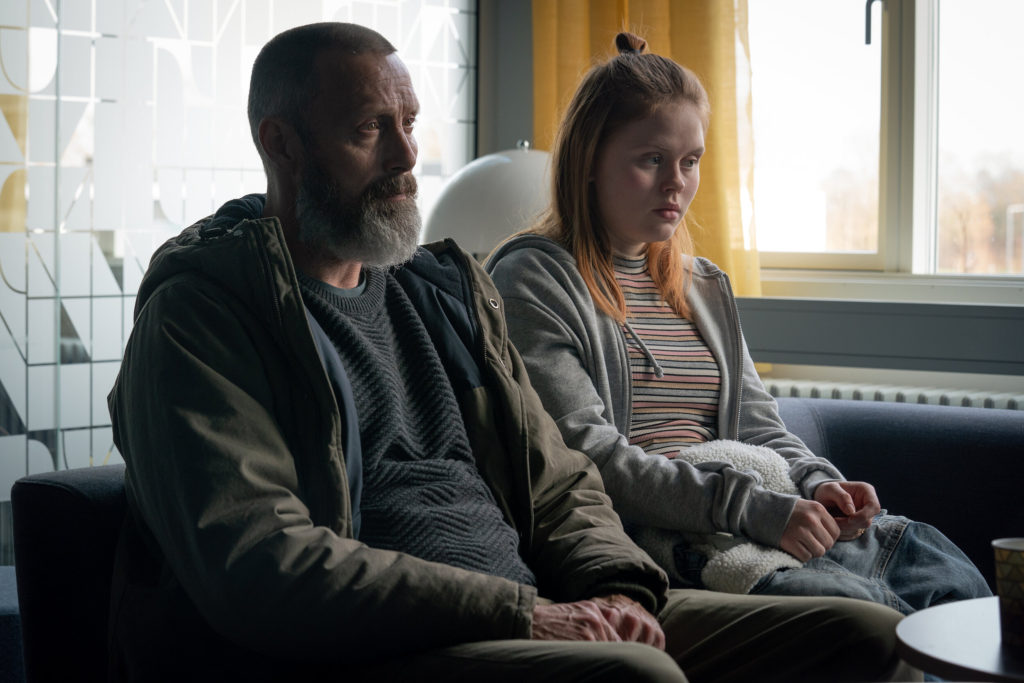
In the marvelous Riders of Justice, Mads Mikkelsen plays Markus, a soldier on active duty in the Middle East; when his wife dies in an accident, Markus returns home to tend to their teenage daughter. Then two geeky data scientists show up at his door with an anti-social hacker – and Markus learns that the tragedy may not have been an accident. Markus, a human killing machine, and the three supernerds team up on a quest for revenge.

Riders of JustIce has been inadequately described as a revenge thriller and an action comedy. It is gloriously satisfying as entertainment, but the more I think about it, Riders of Justice explores grief, revenge and mortality – they’re all in here. And it’s still very, very funny.

The key is that Riders of Justice is so character-driven. At first, Markus and his three compatriots seem to be comic types, but writer-director Anders Thomas Jensen has fleshed them out – each of these men has a personality formed by a trauma.

Markus has the laser focus of a combat commander, which he uses to deflect any contemplation of his feelings – or those of others, including his grief-wracked daughter.

Mathematician Otto (Nikolaj Lie Kaas) is just socially aware enough to recognize how inappropriate his buddies are. His partner Lennart (Lars Brygmann), with 40,000 hours of therapy under his belt, is both psychologically savvy and remarkably devoid of self-awareness or boundaries. The hacker Emmenthaler (Nicolas Bro) really can’t navigate any social interaction. These guys are hilarious from their opening presentation to a bunch of corporate suits, where they present an elaborate mathematical proof that rich people buy Mercedes and poor people drive Hyundais.

Mads Mikkelsen and Andrea Heick Gadeberg in RIDERS OF JUSTICE, a Magnet release. © Rolf Konow. Photo courtesy of Magnet Releasing.

Mads Mikkelsen is a favorite of mine. I can’t name a more compelling and versatile screen actor working to day. He has delivered some of the best performances of the past two decades in After the Wedding, The Hunt and Another Round. (And he was the Bond villain with the tears of blood in the 2006 Casino Royale). I recommend this wonderful NYT interview with Mikkelsen, who really used to be professional dancer (who knew?) and touches on his exhilarating dance scene in Another Round.

In Riders of Justice, Mikkelsen takes Markus’ men-don’t talk-about-their-feelings attitude just far enough to set up Jensen’s jokes and to create tension about what’s best for his daughter. It’s extreme, but not cartoonish.

Writer-director Anders Thomas Jensen, who won an Oscar for a 1998 short film, co-wrote Susanne Bier’s Brothers, After the Wedding and In a Better World. Brothers (Brødre) and After the Wedding (Efter brylluppet) are two of the best films of the 2000s; watch the Danish originals, not the putrid American remakes.

Jensen, with his wicked wit at the ready, has also written and directed The Green Butchers, Stealing Rembrandt, Flickering Lights and Men & Chicken.

Riders of Justice is the best movie that I’ve seen so far in 2021. Riders of Justice has slipped out of Bay Area theaters, but is streaming on Amazon, AppleTV, Vudu and YouTube.

SUMMERTIME: no longer invisible and unheard, giving voice through verse

SUMMERTIME

The ever vibrant Summertime is about giving voice, the voice of mostly young Los Angelenos, expressing themselves mostly through poetry. Stretching across LA from Venice Beach to Crenshaw, director Carlos López Estrada takes us to the neighborhoods that we often see and those we don’t; he introduces us to marginalized kids who share dreams and despair in one kinetic poetry slam.

I can’t remember hearing so much poetry in a movie. Some of the poetry is rapped. This really isn’t a musical, but there are a few songs and one very powerful dance, taking over the street outside a Jons for a female manifesto responding to toxic masculinity. And some warmly goofy, multi-generational dancing erupts in the kitchen of a Korean restaurant. We glimpse the visual arts, too, including a brief montage of LA murals.

Summertime is a series of loosely connected vignettes, some better than others, with different art forms, characters and neighborhoods. The most powerful is the poem Shallow, written and performed by Marquesha Babers; it’s about a young woman who finally confronts a cruel remark about her appearance that had emotionally devastated her.

Director Estrada (Blindspotting) and cinematographer John Schmidt clearly love Los Angeles – especially the everyday LA that most of us never see.

You could pair Summertime with In the Heights for an exuberant, youth- oriented double feature. Or you could match Summertime with I’m Fine (Thanks for Asking) in a festival of underrepresented LA.

Someone has to manage the fast food store, and someone has to drive the limo. Invisible in their own city, the characters in Summertime demand to be seen and heard. One uses a spray can of paint and another weaponizes Yelp. They all have something to say.

This is a good movie – and it’s sui generis. I missed Summertime at this year’s Cinequest, but you can stream it from Frameline through Sunday night, June 27.