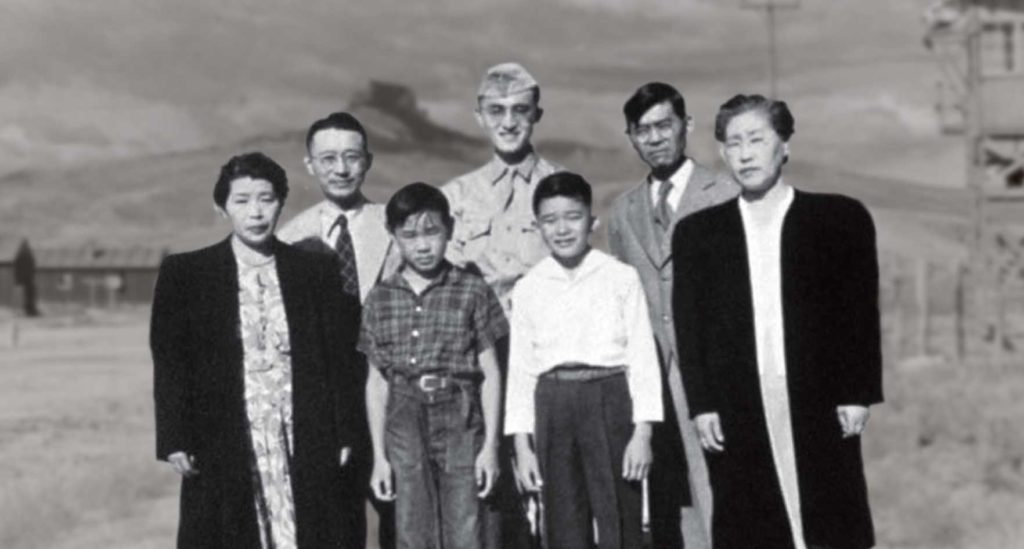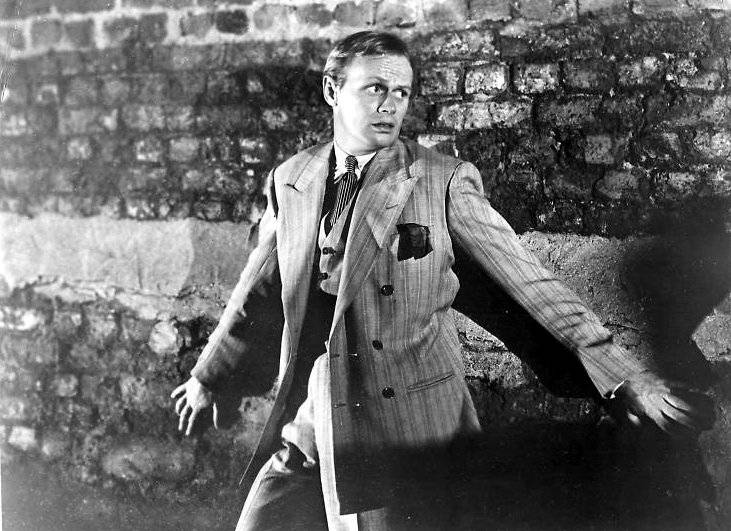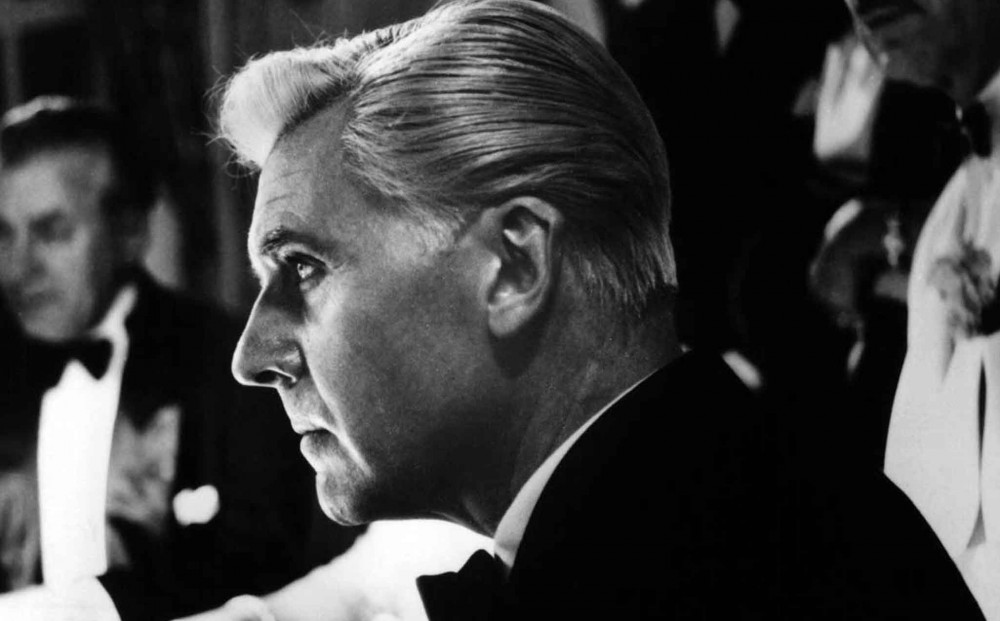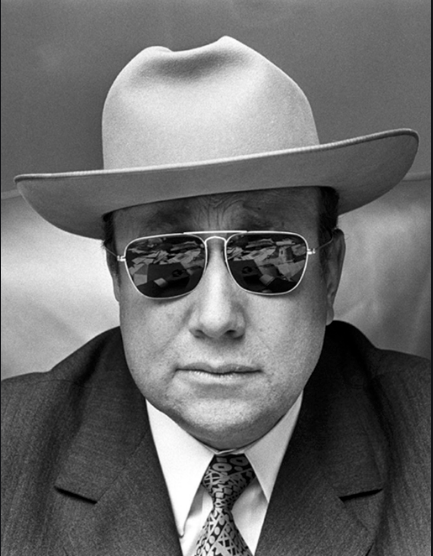
Photo caption: Charles Chaplin in THE REAL CHARLIE CHAPLIN. Courtesy of Showtime.
The biodocumentary The Real Charlie Chaplin has some insights, as far as it goes. The film aspires to cover these elements of Charlie Chaplin’s life and does a pretty good job:
the crushing poverty of his childhood,
his quick rise to world-wide celebrity,
his exploitation of his very young wives, and
his blacklisting.
The highlights are video interviews with Chaplin’s school mate and childhood neighbor Effie, an absolutely delightful old gal. Unusual for a celebrity biodoc, the filmmakers also do a good job in giving voice to Chaplin’s wives.
Of course, you have to pick and choose, and the filmmakers only reference Chaplin’s pioneering filmmaking as it pertains to his personal life. If you’re looking for insights into Chaplin’s artistic genius and innovations, look elsewhere.
The Real Charlie Chaplin is streaming on Showtime.
Some of 2021’s best movie experiences are still under the radar. Here are seven films that you shouldn’t overlook.
All are available to stream at home. (There are more overlooked 2021 movies that I could recommend, but I’m not going to tease you with movies that you can’t find.)
Riders of Justice: Starring the charismatic Mads Mikkelsen, this character-driven thriller is near the top of my Best Movies of 2021. Riders of Justice has been inadequately described as a revenge thriller and an action comedy. It is gloriously satisfying as entertainment, but the more I think about it, Riders of Justice explores grief, revenge and mortality – they’re all in here. And it’s still very, very funny. Even Denmark overlooked Riders of Justice, submitting Flee as their entry for the Best International Feature Oscar instead. Amazon, AppleTV, Vudu and YouTube.
Brian Wilson: Long Promised Road: An unusual documentary about an unusual man. Brian Wilson, The Beach Boys’ songwriting and arranging genius weighs in on his life and work. Wilson’s old and trusted friend drove him around important places in his life – in the format of Comedians in Cars Drinking Coffee – and it paid off with oft emotional revelations from the usually monosyllabic Wilson. Amazon, AppleTV, Vudu, YouTube and redbox.
The Lost Leonardo: This documentary peels back the onion on an ever surprising tale of discovery, scholarship, fraud, commerce and politics in the refined and pretentious art world. Is a rediscovered Renaissance masterpiece authentic, and does it matter? Amazon, AppleTV, Vudu, YouTube and redbox.
Wildland: This remarkable Danish neo-noir gives family ties a bad name. The story simmers and evolves into a nail biter right up to its noir-stained epilogue. Amazon, AppleTV, Vudu.
THE UNKNOWN SAINT. Photo courtesy of The Match Factory.
The Unknown Saint: This delightfully deadpan crime comedy is a shrine to really bad luck. Morocco’s submission for this year’s Best International Feature Oscar. Netflix.
Summertime: I can’t remember hearing so much poetry in a movie. This ever vibrant film is about giving voice, the voice of mostly young Los Angelenos, expressing themselves, mostly through poetry. Amazon, AppleTV, YouTube and redbox.
Ma Belle, My Beauty: This simmering romantic drama is a gorgeous, sexy, character-driven film, an exploration of the post-breakup dynamics of polyamorous queer women. This is a beautiful, absorbing movie with the unexpected appearance of a strap-on. Amazon, AppleTV, Vudu, YouTube and redbox.
Idella Johnson, Sivan Noam Shimon and Hannah Pepper in Marion Hill’s film MA BELLE, MY BEAUTY. Courtesy of SFILM.
Drive My Car: director and co-writer Ryûsuke Hamaguchi’s engrossing masterpiece about dealing with loss – and it’s the best movie of 2021. Layered with character-driven stories that could each justify their own movie, this is a mesmerizing film that builds into an exhilarating catharsis.
Also in theaters:
Nightmare Alley: enough burning ambition for a thousand carnies.
Belfast: a child’s point if view is universal. If you have heartstrings, they are gonna get pulled.
C’mon C’mon: In Mike Mills’ charming and authentic film, Joaquin Phoenix plays a well-intentioned, emotionally intelligent guy who gets an immersion course in parenting.
House of Gucci: Lady Gaga and Adam Driver shine in this modern tale of Shakespearean family treachery.
Benedetta: Paul Verhoeven’s entertaining parable of belief and class, wrapped in scandal and sacrilege.
ON VIDEO
Being the Ricardos: a tepid slice of a really good story. Amazon (included with Prime).
The Hand of God: Filmmaker Paolo Sorrentino’s own coming of age story – and a time capsule of 1986 Naples. Netflix.
Don’t Look Up: Wickedly funny. Filmmaker Adam McKay (The Big Short) and a host of movie stars hit the bullseye as they target a corrupt political establishment, a soulless media and a gullible, lazy-minded public. Netflix.
Myrna Loy and William Powell as Nora and Nick Charles during the Holidays
Once again, Turner Classic Movies is giving us a wonderful New Year’s Eve present – an all-day Thin Man marathon. William Powell and Myrna Loy are cinema’s favorite movie couple for a reason – just settle in and watch Nick and Nora Charles in The Thin Man and its sequels do what they do best – banter, canoodle, solve crimes and, of course, tipple.
Stars abound in supporting roles in the series. James Stewart had only made one feature film before 1936, the year, he appeared in After the Thin Man. Dean Stockwell, who died in November, played Nick and Nora’s son Nick Charles Jr in Song of the Thin Man. Film noir goddesses Gloria Grahame and Marie Windsor also both appear in Song of the Thin Man.
The pre-notoriety Tom Neal has a key role in in Another Thin Man. Classic film aficionados will also recognize Maureen O’Sullivan, Keenan Wynn, Leon Ames, Sheldon Leonard, C. Awbrey Smith, Joseph Calleia and Sam Levene.
These six movies from 1934-47 are still first-rate escapist entertainment. Love ’em.
Photo caption: The Wife and the Movie Gourmet still enjoying wedded bliss
Happy 21st Anniversary to The Wife, also known as Lisa, The Love of My Life!
We’ve spent most of the past two years together 24/7, and, for most of this year, with her father living with us, too – and we’ve resented the pandemic, but not each other.
We started out the year by admiring Sound of Metaland Nomadlandtogether. Now that I’ve eased her back into the theaters, too, we enjoyed Belfast last month.
This year we binged EVEN MORE more episodic television together. Her dad has an insatiable appetite for crime drama, so we’ve watched OVER FORTY FULL SEASONS of them, mostly on Acorn. The best have been Hidden, Shetland, River, Mystery Road, Traces, Darkness: Those Who Kill, Hinterland, Line of Duty, Bloodlands, L’Accident, Little Boy Blue, and Trapped. As far as we can tell from TV, the murder epidemic in England, Scotland and Wales has spread to Ireland, France, Iceland and Australia.
On a less grim note, we enjoyed Ted Lasso and Episodes (except for the concluding episode of Episodes).
She was fine with me heading off to cover the Nashville Film Festival in person. Once again, she tolerated my spending huge chunks of time covering Cinequest, Frameline, San Francisco International Film Festival (SFFILM) and San Francisco Jewish Film Festival virtually.
She’s the biggest fan and supporter of this blog DURING ALL OF ITS ELEVEN YEARS, and I appreciate her and love her. Happy Anniversary, Honey!
Sian Reese-Williams in HIDDEN, one of our many episodic crime dramas.
Photo caption: Toni Servillo, Teresa Saponangelo and Filippo Scotti) in THE HAND OF GOD. Courtesy of Netflix.
The Hand of God is filmmaker Paolo Sorrentino’s own coming of age story – and a time capsule of 1986 Naples. The kinda-fictional stand-in for Sorrentino is the directionless 16-year-old Fabietto (Filippo Scotti), who enjoys family life with his boisterous, ever-joking parents (Toni Servillo and Teresa Saponangelo). Events occur, one profoundly tragic, which pivot Fabietto into a future career in cinema.
The young Fabietto is very passive, a bobber floating on the surface of his tumultuous family and his rowdy hometown. Besides being rocked by the tragedy, he is deluged by the energy of a sexy, funny and mentally ill aunt, a formidable dowager baroness, a crazily impulsive smuggler and a bombastically narcissistic film director. He is a sensitive kid, one who is triggered into a panic attack when his mother, usually his rock, has her own meltdown.
The title of movie, as even casual sports fans may recognize, is a reference to soccer star Diego Maradona, whom the Naples soccer club broke the bank to acquire for seven seasons. As the film opens, Fabietto, with the rest of Naples, is transfixed by the possibility, then just a rumor, of getting Maradona. When Maradona leads Napoli to a league championship, Fabietto has been numbed by grief and is juxtaposed against the rest of his city in ecstatic celebration.
Luisa Ranieri in THE HAND OF GOD. Courtesy of Netflix.
The cast is very effective, but the standouts portray the key female parts – Fabietto’s mom (Teresa Saponangelo), his aunt Patrizia (Luisa Ranieri), and the Baroness (Betty Pedrazzi).
Nothing is more personal than one’s own coming of age, and Sorrentino, describing The Hand of God, says, “Almost everything is true”.
I think that, of all current filmmakers, Sorrentino (Il Divo, The Great Beauty,Youth) makes the most visually and striking beautiful movies. The Great Beauty won the Best Foreign Language Oscar. In that film, Sorrentino follows his protagonist (played by Servillo) through a series of strikingly beautiful Roman settings (including lots of gorgeously still Roman dawns.) If you’ve been to Rome, you know that it is a generally chaotic city with unexpected islands of solitude. Here in The Hand of God, Sorrentino gives this treatment to his own hometown, the grittier and more humble Naples.
The Hand of God opens with a remarkable 2 1/2-minute drone/helicopter shot that takes us from the ocean to Naples and back to the ocean; as the camera nears the city, the soundtrack gradually picks up the sounds of urban bustle.
In one very brief but inspired scene, Sorrentino shows us the casting call for extras in a Fellini film. (You can only imagine.)
How audience-friendly is The Hand of God? In real life, which this film seeks to reflect, events happen randomly. In contrast, a narrative screenplay would ideally organize the plot artificially in a way to make the story compelling. So, some viewers may find The Hand of God too disjointed to be satisfying. For sure, it’s not as good a film as The Great Beauty or Youth.
The Hand of God is now streaming on Netflix. I also recommend the 6-minute Netflix featurette with director Sorrentino discussing the film.
Photo caption: Hidetoshi Nishijima and Tôko Miura in DRIVE MY CAR. Courtesy of The Match Factory.
somehow managed to watch 137 2021 movies (and another 170 movies from earlier years). Here are the ones that I most admire and engage with. (Note: I still haven’t seen The Tragedy of Macbeth or Parallel Mothers.)
To get on my year-end list, a movie has to be one that thrills me while I’m watching it and one that I’m still thinking about a couple of days later.
Christopher Plummer has died at age 91. I loved him in his Oscar-winning performance in Beginners and in 2019’s Knives Out. One of the great Shakespearean stage actors of his generation, Plummer’s TV and movie career, with its 372 screen credits, eclipses the adjective “prolific”. Plummer, of course is best known for that beloved movie that I despise (as did he for decades), The Sound of Music. Plummer elevated some fine movies in his supporting roles: The Man Who Would Be King, Jesus of Nazareth. The Girl with the Dragon Tattoo. Here’s his NYT obit.
Dean Stockwell in BLUE VELVET.
Dean Stockwell’s 70-year acting career contained at least four distinct chapters, between which he took mostly voluntary breaks. He started as a child star – one of the biggest; he was spanked by William Powell in Son of the Thin Man and acted with Gene Kelly and Frank Sinatra in Anchors Aweigh. After walking away as a teenager, he returned for serious, original roles in Compulsion and Long Day’s Journey Into Night. During his hippie drop-out phase, he dropped back in for the Roger Corman hippie exploitation movie Psych-out. Then Stockwell played Harry Dean Stanton’s sympathetic brother in Wim Wenders masterpiece Paris, Texas. He followed that with hos most indelible performance, as his friend Dennis Hopper’s terrifying henchman in Blue Velvet, where he unforgettably lip-synchs a Roy Orbison tune. Stockwell topped of his career with the popular television series Quantum Leap. Here is Sheila O’Malley’s marvelous tribute at RogerEbert.com.
Hal Holbrook as Deep Throat in ALL THE PRESIDENT’S MEN
Hal Holbrook, known for his one-man stage personification of Mark Twain between 1947 and 2005, has died at age 95. Holbrook was responsible for the most gripping moments in a great movie, All the President’s Men, even though he was always in the dark or on the phone, and his face was never seen.
Yaphet Kotto (right) with Richard Pryor in BLUE COLLAR
Actor Yaphet Kotto made plenty of big movies (Alien) and is most remembered for starring the television series Homicide: Life on the Street, as the Bond villain in Live and Let Die and as Idi Amin in the superb TV movie Raid on Entebbe. I most appreciate his performance in Paul Schrader’s 1978 Blue Collar with Richard Pryor and Harvey Keitel, set in an auto factory. The Movie Gourmet comes from an autoworker family, and I have worked in a plant like the one in the movie. so I found the film especially evocative. Kotto was also excellent as the FBI agent shepherding Charles Grodin in Midnight Run.
Ned Beatty in SUPERMAN
Actor Ned Beatty, Oscar-nominated for Network, amassed 165 screen credits, and Beatty was impeccable in every one that I’ve seen. Pudgy people (including The Movie Gourmet) are often underestimated; character actor Ned Beatty was certainly one of his generation’s greatest screen actors.
Beatty has been so prolific and so consistently excellent, that it’s now hard to grok that his most unforgettable performance, in Deliverance, was also his first movie. The rape scene in Deliverance was so shocking and so sensational that many overlook how perfectly Beatty played each of his scenes, including the one with the Banjo Boy and the one where his assailant has been dispatched by Burt Reynold’s arrow.
Cicely Tyson in a MAN CALLED ADAM
Cicely Tyson was nominated for a Best Actress Oscar for Sounder. I recently wrote of her radiant big screen debut in A Man Called Adam. Two great speeches, in which she absolutely commands the screen, showcase her talent; you can tell that this is going to be a movie star.
Norman Lloyd (center) in SCENE OF THE CRIME
Actor, director and producer Norman Lloyd died at age 106. Lloyd was the villain in Alfred Hitchcock’s 1942 nailbiter Saboteur, and his career stretched through 2015 (when he was a centenarian). His most remembered role was as Dr. Daniel Auschlander on television’s St Elsewhere. Among his achievements – a 75 year marriage.
As an actor on stage, radio, television and the Big Screen, Lloyd worked with Hitchcock, Charlie Chaplin, Orson Welles, Jean Renoir, Anthony Mann, Elia Kazan and Martin Scorsese. He acted with stars from Dana Andrews and Burt Lancaster to Denzel Washington. Fortunately for film fans, Lloyd was a delightful, anecdote-rich raconteur.
My own favorite Norman Lloyd performance was as the highly idiosyncratic stoolie Sleeper in Scene of the Crime.
Cloris Leachman in THE LAST PICTURE SHOW
I first became aware of Cloris Leachman, who died this year at age 94, in 1971 – in her Oscar-winning performance in The Last Picture Show. Then I enjoyed her as Frau Blücher in Young Frankenstein and as Phyllis Lindstrom in The Mary Tyler Moore Show. Much later, as I delved into film noir, I learned that her movie debut was in the startling opening scene of the 1955 atomic noir Kiss Me Deadly.
What I didn’t know was that Leachman had, beginning in 1947, already amassed over 100 of her 285 screen credits before The Last Picture Show. Before her great run in the 70s, she had a prolific career in television, including guest appearances on Perry Mason, Mannix, The Big Valley, Dr. Kildare, Gunsmoke and 77 Sunset Strip. She even appeared 28 times in a recurring role on Lassie.
But Leachman will be forever remembered for her performance at age 45 as Ruth Popper in The Last Picture Show. Ruth Popper is the neglected wife of the football coach in a windswept Texas hamlet, a woman trapped in the most profound loneliness. She seeks comfort in an affair with Sonny (Timothy Bottoms), the local good kid, who is 18. This relationship cannot last, and Ruth’s final monologue with Sonny is devastating.
George Segal (right) with Elliott Gould in CALIFORNIA SPLIT
George Segal’s big screen breakthrough came in that most searing exploration of toxic marriages, Who’s Afraid of Virginia Woolf? My favorite George Segal performance came in what is arguably Robert Altman’s best movie, California Split. Segal and Elliot Gould played two compulsive gamblers; as usual, Gould had the flamboyant part, but Segal was masterful as his more contained character slipped bit by bit into the vortex of addictive behavior
Olympia Dukakis was a stage actress of renown She was 56 when she got a screen role in her sweet spot (Moonstruck) and knocked it for an Oscar. She was perfect as the only-in-San-Francisco Anna Madrigal in the miniseries Tales of the City in 1993, 1998 and 2019. For a completely unrestrained Olympia Dukakis performance, try the little 2011 Canadian dramedy Cloudburst (Amazon – included with Prime, AppleTV).
Charles Grodin‘s perfect role was as an accountant in way over his head; a bounty hunter (Robert De Niro) is taking him across the country as they are being pursed by the FBI (Yaphet Kottto) and the Mafia (Dennis Farina). Grodin’s was an exquisite performance in a very funny movie.
Grodin was known for characters consumed by handwringing anxiety, with the exception of his more likeable role in the Jill Clayburgh vehicle It’s My Turn. He broke through in 1972’s The Heartbreak Kid, playing a guy on his honeymoon who falls for a beautiful woman (Cybill Shepherd) with whom he is not honeymooning. (He was also well-known for his appearances on television talk shows, including his own.)
Jessica Walter was an incredibly prolific television actress with one great movie performance. That performance was as Evelyn, Clint Eastwood’s nightmare of a one night stand in Play Misty for Me. Walter topped off her career as Lucille Bluth in 84 episodes of Arrested Development. I don’t know what the record is for guest spots in 1972-76 detective shows, but Water appeared in Banyon, Cannon, The F.B.I. (six times), Mannix, Columbo, Ironside, Barnaby Jones, Hawaii Five-O, Banacek, McCloud, The Streets of San Francisco, and MacMillan & Wife.
Michael Apted. Photo credit: First Run Features courtesy Everett Collection
In 2021, we lost writers, directors, cinematographers and composers who produced classic of cinema:
Director Michael Apted’s 9 Seven Up movies constitute the greatest documentary series in the history of cinema. Got to see him in person at the 2019 Mill Valley Film Festival.
Giusepe Rotunno’s cinematography in CARNAL KNOWLEDGE
Cinematographer Giuseppe Rotunno was a master at creating images that told us about the characters and their relation to each other. Here’s my remembrance with some of his images, plus a link to a brilliant video essay.
Hary Dean Stanton and Warren Oates in Monte Hellman’s COCKFIGHTER
Monte Hellman, my favorite cult film director, was described by theNew York Timesas a “hero of the American independent film movement“. Working in low-budget genre movies, collaborating with the likes of Roger Corman Hellman could elevate the sparest of scripts and the most minuscule of budgets into film classics. Hellman showcased Warren Oates’ gift for playing a tough, bottom-feeding grasper who needs a little too much luck in Two-Lane Blacktop (1971) and the Hellman masterpiece Cockfighter (1974).
Robert Duvall and Tommy Lee Jones in Larry McMurtry’s LONESOME DOVE
Writer Larry McMurtry told powerful, unflinching, character-centered stories of the Old West (Lonesome Dove) and the contemporary West (The Last Picture Show). He won an Oscar for his Brokeback Mountain screenplay, and his novels were the basis for Hud and Terms of Endearment.
Melvin Van Peebles was a Renaissance Man (see his NYT obit) who wrote, directed, edited and produced 1971’s Sweet Sweetback’s Baadasssss Song. Along with Gordon Park’s Shaft, that film launched blaxploitation cinema and was a landmark in indie filmmaking. His son Mario directed and starred in Baadasssss! (Amazon, AppleTV, Vudu, YouTube) about this seminal project.
Jean-Marc Vallée directed The Dallas Buyers Club, Wild and The Young Victoria, which earned acting awards for Matthew McConaughey, Jared Leto, Reece Witherspoon, Laura Dern and Emily Blunt.
Photo caption: Nicole Kidman and Javier Bardem in BEING THE RICARDOS. Courtesy of Amazon.
The origin story of I Love Lucy is pretty amazing, and Aaron Sorkin samples it in his Being the Ricardos, which is not as compelling as the real story. Sorkin takes two pivotal moments that threaten the show (and Lucy and Desi’s careers) – when Lucy is redbaited and when Lucy gets pregnant. These two events really happened 18 months apart, but Sorkin compresses them into one week.
In fact, just about everything in Being the Ricardos is more or less true to fact except for a totally imagined J. Edgar Hoover telephone call. Being the Ricardos gives the audience a glimpse of Desi’s business genius, Lucy’s artistic genius and their passionate and tempestuous relationship, all embedded in a procedural about the making of a TV episode.
I’ve learned a lot about Lucy and Desi from I Love Lucy, the third season of the TCM podcast The Plot Thickens, and I strongly recommend it. Here’s one of many tidbits from the podcast that is not in the movie: Desi invented the TV rerun by repeating episodes during Lucy’s maternity leave; it was possible because Desi had innovated by recording the show on film instead of kinescope, and it was a huge success because TV ownership had boomed since the original broadcasts.
Lucy and Desi are played by Nicole Kidman and Javier Bardem. The filmmakers have used some prosthetics to make Kidman look more like Ball, but have come up short, and I found it distracting until I settled into the story. Kidman is an excellent actor, and they just should have let her play Lucy while looking like Kidman.
Sorkin’s signature in West Wing was to have characters striding around the White House, tossing off impossibly quick and witty repartee; after forty years in politics, I can tell you that real life political professionals do not talk like that. But Sorkin’s Lucy was really a quickwitted product of showbiz during the 40s, and her banter in the movie rings true – Sorkin has finally found a subject that fits Sorkin dialogue.
Nicole Kidman and Javier Bardem are just fine, but Being the Ricardos is a little disappointing – it’s better to dive into the TCM podcast instead. After a brief theatrical run, Being the Ricardos is now streaming on Amazon (included with Prime).
One of the primary reasons that I watch so many movies is to see something that I haven’t seen before.
Some 2021 films have imaginatively tweaked the very forms and parameters of cinema itself and its genres:
Summertime: I can’t remember hearing so much poetry in a movie. This ever vibrant film is about giving voice, the voice of mostly young Los Angelenos, expressing themselves, mostly through poetry.
499: In this critique of contemporary Mexico, director Rodrigo Reyes has invented the medium of “docu-fable”. It is all as real as real can be (the documentary), except for the fictional, 500-year-old conquistador (the fable).
The Velvet Underground: I’ ve never seen a doc which so completely immerses the audience into a time and place.
Lamb: This dark, cautionary fable of karma is somewhat misdescribed as a horror film because it plays with the concept of “monster”.
Aviva Armour-Ostroff (left) in LUNE, world premiere at Cinequest. Photo credit: Samantha Falco.
Then there are the movies that take us to the unknown, the underrepresented and the new:
Lune: The Must See in this year’s Cinequest is this astonishingly authentic exploration of bipolar disorder. Played by writer and co-director Aviva Armour-Ostroff, the most singular movie character I’ve seen recently is based on Armour-Ostroff’s father.
I’m Fine (Thanks for Asking): Filmmaker/star Kelley Kali shows us a hard-worker trying to stay afloat the gig economy – and explicitly in a pandemic.
Socks on Fire: Bo McGuire uses old home movies and re-enactments in this unconventional documentary about his family’s unlikely inheritance battle. Socks on Fire swings between funny and operatic, and there’s a sweet remembrance of a grandmother in here, too.
Ma Belle My Beauty: Marion Hill’s simmering exploration of the post-breakup dynamics of polyamorous queer women. This is a beautiful, absorbing movie with the unexpected appearance of a strap-on.
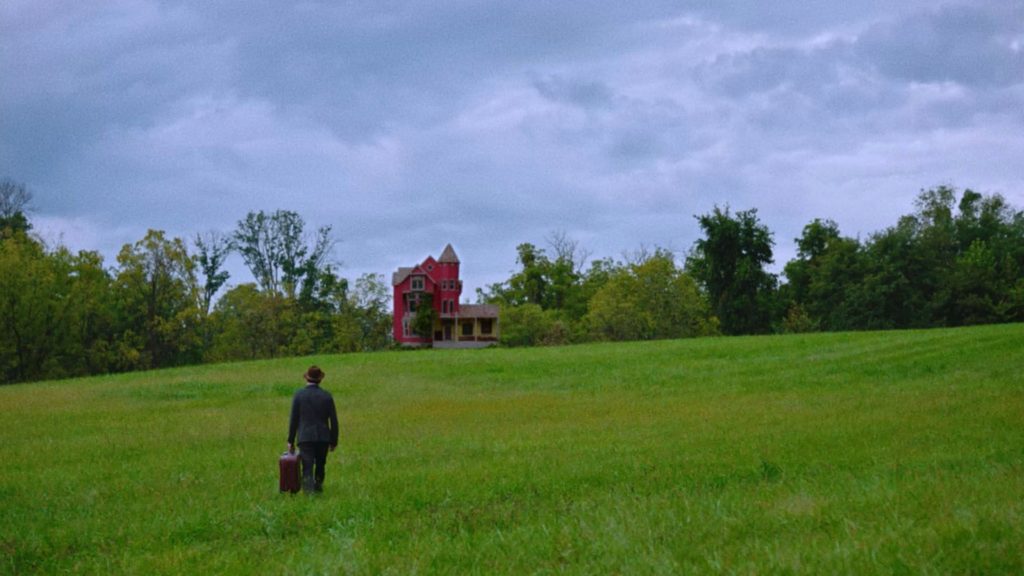
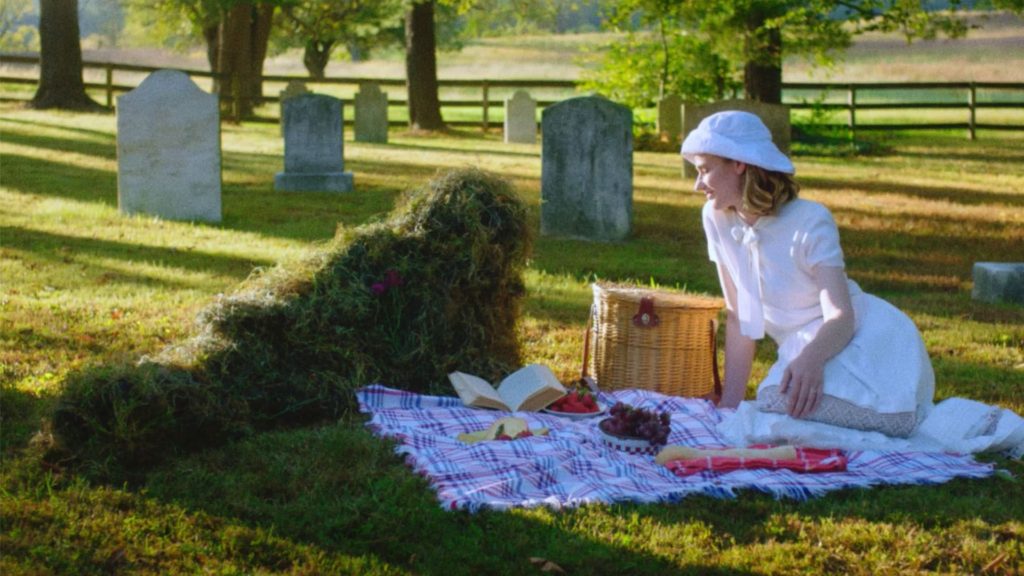
Strawberry Mansion: Filmmaker/star Kentucker Audley’s very trippy and ultimately sweet fable is set in an utterly surreal, imagined future. It’s also a sharp and funny critique of insidious commercialism.
Slow Machine: In their enigmatic dive into paranoia, filmmakers Joe Denardo and Paul Felten somehow made a film that is at once engrossing and impenetrable.
And finally, there is the category of “aiming low and hitting it”: