LAND OF GOLD: the kid is very good, anyway

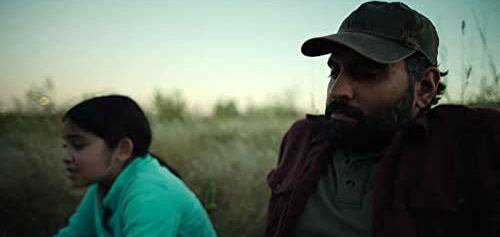
Caroline Valencia and Nardeep Khurmi in LAND OF GOLD. Courtesy of Land of Gold.

In the indie drama Land of Gold, Kiran (Nardeep Khurmi, also the film’s writer and director) is a Punjabi truck driver in Southern California who is mere days away from becoming a father for the first time – and he’s panicking. To the dismay of his wife, he decides to take on a long haul to the East Coast (and risks not being present for the birth). Of course, he’s really running away from the pressure. Part way across the country, he discovers that there’s a stowaway in his truck – a ten-year-old girl, whom he deduces is undocumented.

Kiran’s family are also immigrants, so he understands that presenting her to the authorities would have consequences. It turns out that she is on the run, too, but toward a family connection. The two continue their road trip, and Kiran learns enough from her to address his personal crisis.

The girl is played by Caroline Valencia, and she’s exceptional. Khurmi’s screenplay handles the kindling of their relationship and the girl’s determination adeptly and with authenticity.

Land of Gold is certainly not a bad movie, but it didn’t engage me when Caroline Valencia was off-screen. That’s because I never bought into Kiran’s own angst.

I screened Land of Gold for the SLO Film Fest, where it won the audience award for Best Narrative Feature. It begins streaming on HBO on May 15th.

Movies to See Right Now

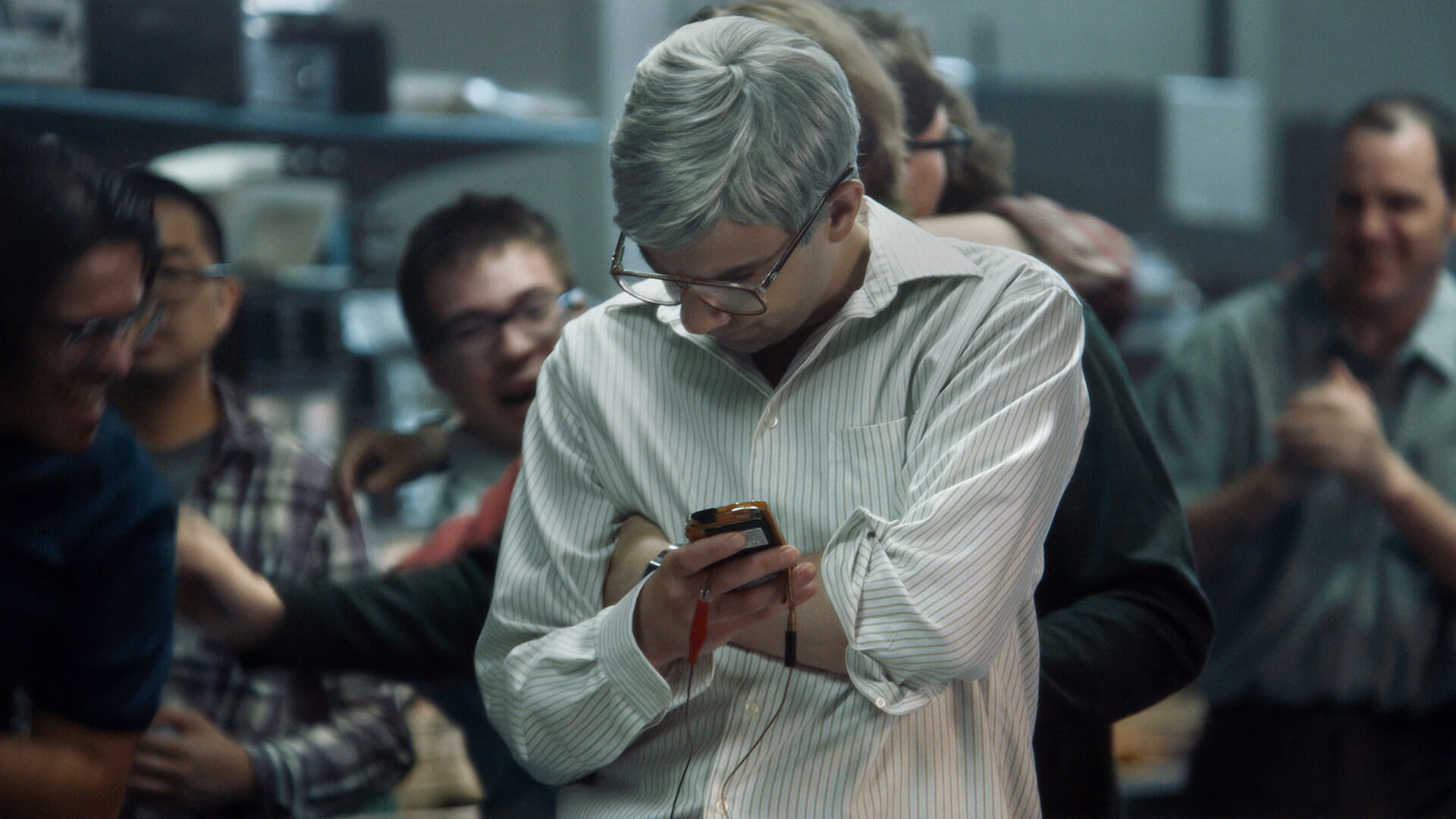
Photo caption: Jay Baruchal and Glenn Howerton in BLACKBERRY. Courtesy of IFC Films.

This week on The Movie Gourmet – a review of the new audience-pleaser BlackBerry, opening today. Also streaming recommendations of The Last Lullaby, an overlooked neo-noir, and Best Worst Movie, an entertaining documentary about a laughably bad horror movie. I also highlighted Preston Sturges’ wickedly funny satires Sullivan’s Travels and Hail the Conquering Hero; if you missed them on TCM this week, you can still stream them from the major services – after eighty years, they’re still hilarious.

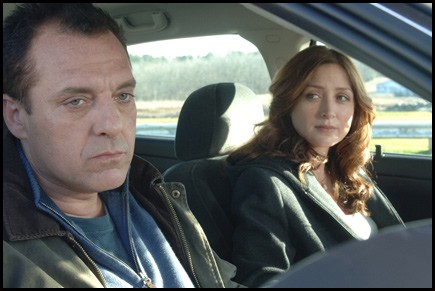
Sasha Alexander and Tom Sizemore and in THE LAST LULLABY. Courtesy of Chaillot Films.

CURRENT MOVIES

WATCH AT HOME

Ane Dahl Torp (center) in THE WAVE. Courtesy of Cinequest.

The most eclectic watch-at-home recommendations you’ll find ANYWHERE:

  • The Wave: Everything you want in a disaster movie. Amazon, AppleTV, Vudu, YouTube.
  • Satan & Adam: more than an odd couple. Amazon, AppleTV.
  • Reggie: it’s not just about Reggie. Netflix.
  • Levinsky Park: refuge for refugees? Amazon, AppleTV, YouTube.
  • The Speed Cubers: odd, and then profound. Netflix.
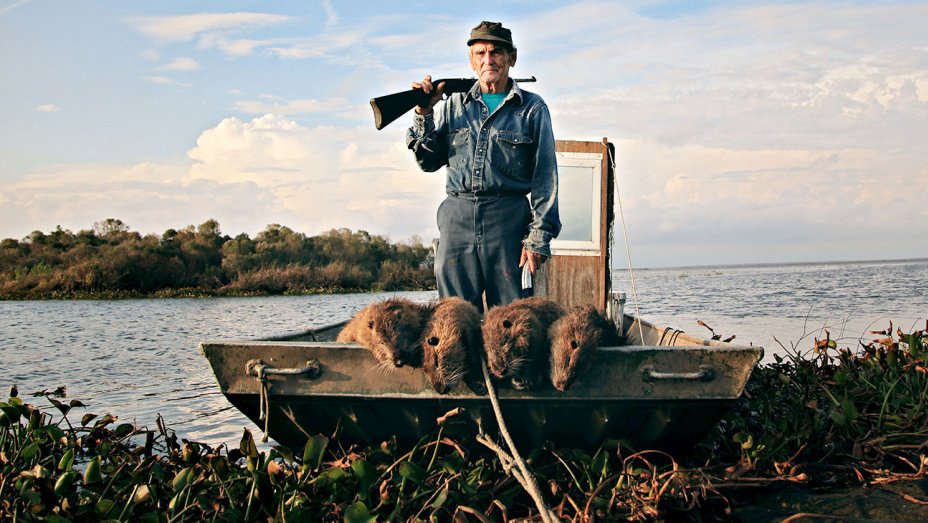
  • Rodents of Unusual Size: 5 million orange-toothed critters and a Cajun octogenarian. Amazon, AppleTV.
  • The 11th Green: a thinking person’s paranoid conspiracy. Amazon, AppleTV, Vudu, YouTube.
  • Magallanes: some wrongs cannot be righted. AppleTV.

ON TV

Audrey Totter and Richard Basehart in TENSION.

On May 16, Turner Classic Movies will present the deliciously sordid Tension, where Quimby (Richard Basehart), the wimpy night manager of a drugstore, has one of the worst wives in film noir. Claire (Audrey Totter) spends her daytime hours belittling Quimby and her nighttime hours cuckolding him. When she moves into Barney’s beach house and lets the hairy-chested Barney (Lloyd Gough) beat up her nerdy hubbie, the humiliated Quimby has had enough. There’s a murder and a frame. Will the cops find the real murderer? Rising star Cyd Charisse plays the good girl, and Barry Sullivan plays the cop who outsmarts them all.

Lloyd Gough and Audrey Totter in TENSION.

BLACKBERRY: woulda, coulda, shoulda

Photo caption: Jay Baruchal in BLACKBERRY. Courtesy of IFC Films.

BlackBerry is the funny true story of Canadian geeks who find themselves suddenly dominating the nascent smartphone market…but not for long. The improbable rise of BlackBerry’s parent company is a tale of the Odd Couple partnership co-CEOs, Mike Lazaridis (Jay Baruchal), who ran the engineering side, and Jim Balsillie (Glenn Howerton), who managed finance and sales.

Mike Lazaridis solved the technical challenge that had kept cell phones from becoming the email machines that they have been since. As played by Baruchal, Lazaridis is reserved, even shy, supremely confident in all things tech and not all confidant with other humans.

Lazaridis needed a pitchman, and that was the hard charging Balsillie, who, as played by Howerton ranged between hard-charging and abusive. A tech exec I knew in Silicon Valley was described to me as having “too much testosterone” and that’s Howerton’s Balsillie.

Lazaridis’ engineering brilliance, combined with Balsillie’s sheer will and audacity, allowed the company to nimbly pivot through various product cycles. Balsillie’s hubris even began to leak into Lazaridis. But then came an advance in product design that Lazaridis hadn’t anticipated, and Balsillie had cut one too many corners in finance.

I’ve mostly seen Baruchal in much more broadly funny roles (Tropic Thunder, This Is the End). Here, Baruchal successfully carries the leading role with a much more subtle and textured performance. One nice (and slyly underplayed) touch is that when Baruchal’s character transitions from the CEO of a start-up to the CEO of a company with a massive market cap, his haircut transitions, too.

For much of the movie, we see Howerton playing Balsillie as a one-note, hard charger. He refuses to acknowledge any obstacle, until, in a wonderful moment of performance, his face shows when knows he’s finally been had.

BlackBerry was directed by Matt Johnson, who also co-adapted the screenplay and plays one of company co-founders.

Make sure you watch the end credits to see what happened to the real guys.

I screened BlackBerry for the San Luis Obispo Film Festival, where it won the audience award for Best of Fest. BlackBerry opens in theaters tomorrow, and it’s a surefire audience-pleaser.

THE LAST LULLABY: backing out of a contract hit

Photo caption: Tom Sizemore and Sasha Alexander in THE LAST LULLABY. Courtesy of Chaillot Films.

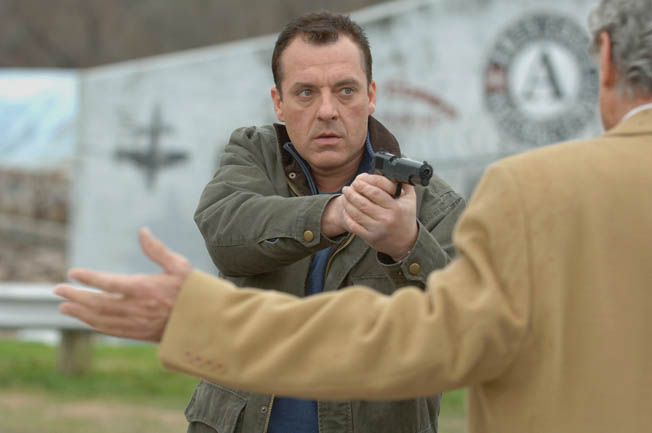
The Last Lullaby is a surprisingly brilliant contemporary noir film from 2008 (that I KNOW that you haven’t seen).  Tom Sizemore plays a retired hit man, a professional loner now living what would be a comfortable loner life (except for his chronic insomnia).  He is offered a very large sum to take out a librarian (Sasha Alexander), but he is attracted to her and wonders why someone wants her dead?  And we ask, as in any noir film, is she the innocent that she seems? 

Sizemore, who just died this March,  is most remembered for his Oscar-nominated performance as Tom Hank’s sergeant in Saving Private Ryan. Sizemore was intense and charismatic and hugely talented, but his longtime cocaine addiction kept him off the screen and in the tabloids, rehab and jail. The Last Lullaby was a rare leading role for Sizemore, and showcased his magnetism.

Tom Sizemore in THE LAST LULLABY. Courtesy of Chaillot Films.

The Last Lullaby is the only feature directed by Jeffrey Goodman, and he adds the appropriate level of neo-noir dread to the suspense. Sizemore’s performance and a smart screenplay by Peter Biegen and Max Alan Collins carry this film, and Alexander is good, too.

Ray McKinnon, who played the heartbreakingly unhinged Reverend H.W. Smith in Deadwood and created the TV series Rectify, is credited here as Ominous figure.

The Last Lullaby is available to stream from Amazon (included with Prime), Vudu and redbox. 

BEST WORST MOVIE: a romp through cinematic awfulness

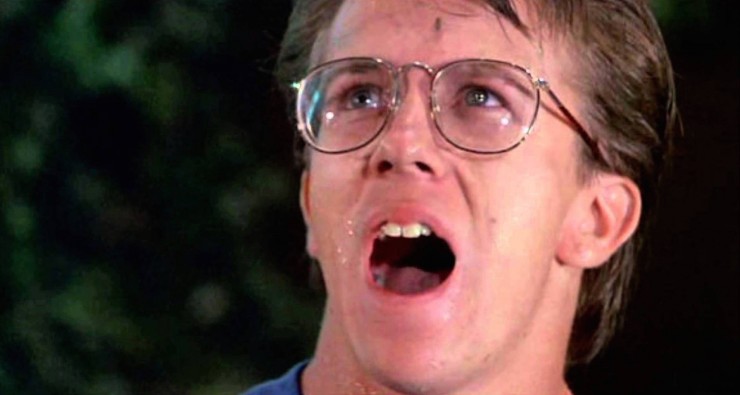
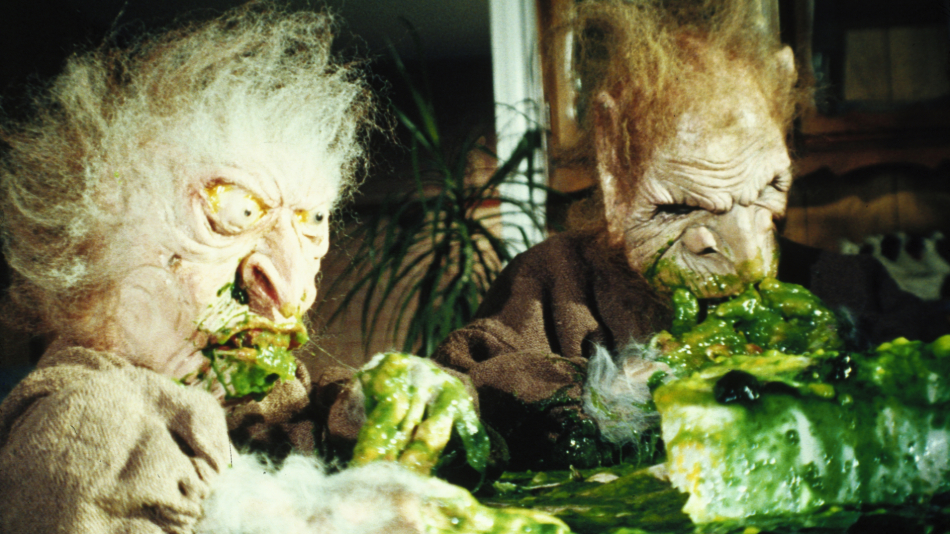
The notorious “O My God” TROLL 2 scene in BEST BAD MOVIE

Troll 2 was so bad that it earned its very own documentary, Best Worst Movie. Despite its title, Troll 2 was completely unrelated to the earlier movie Troll – and has no trolls in it.

Troll 2 is about a white bread suburban family that vacations in the mountain village of Nilbog (“Goblin” spelled backwards, get it?). The family doesn’t know that all of the locals are vegetarian predator goblins who can take the form of regular humans. The goblins are able to turn humans into vegetative matter (a green slime) that the goblins can ingest.

TROLL 2 scene in BEST WORST MOVIE

Troll 2 was made in 1990 with very primitive production values – and by a non-English speaking Italian crew and a non-Italian speaking Z-list American cast. Best Worst Movie showcases the inept acting and directing aside, but Troll 2’s screenplay is probably the source of the most laughs:

  • Dead Grandpa Seth keeps appearing to the boy.
  • The boy saves his family by urinating on the family dinner.
  • There’s a teen make out scene so “hot” that it literally pops popcorn.

You can see some of the finer bits by doing a YouTube search for “You can’t piss on hospitality” and “Troll 2 O my God”.

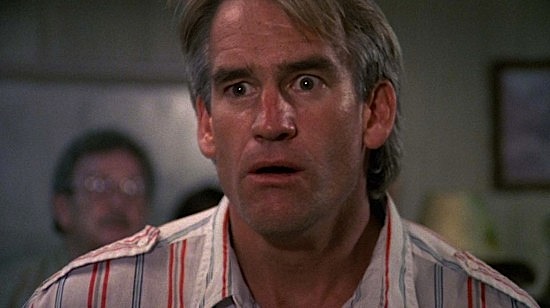
Best Worst Movie contains some squirmy scenes with cast members whose mental health issues have since worsened. And the Italian director is a jerk who is narcissistically unwilling to acknowledge its badness, but is all to happy to bask in Troll 2‘s new found cult status. But the goodhearted goofiness of star George Hardy, a cast of good sports and Troll 2‘s cult following dominates.

George Hardy in a TROLL 2 scene in BEST WORST MOVIE

Troll 2 is one of the films in my Bad Movie Festival. Best Worst Movie can be streamed from Amazon (included with Prime) and AppleTV.

on TV – Preston Sturges’ comedy masterworks

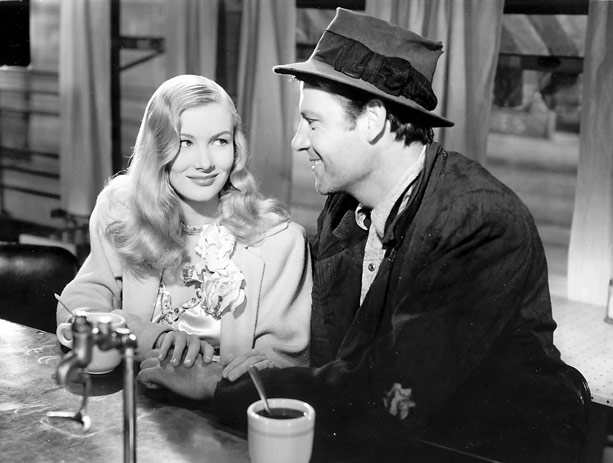
Veronica Lake and Joel McCrea in SULLIVAN'S TRAVELS
Veronica Lake and Joel McCrea in SULLIVAN’S TRAVELS

On May 9, Turner Classic Movies will be presenting the best work of Preston Sturges, the first workaday Hollywood screenwriter to transition into a major writer-director. TCM will be screening The Lady Eve, The Palm Beach Story, Sullivan’s Travels, Hail the Conquering Hero and The Great McGinty, an impressive body of work that Sturges churned out between the ages of 42 and 46. Unfortunately, his turbulent personality led to conflict in his business affairs, which exacerbated his drinking. He burned out and was dead at age 60, but he left behind some of the very, very smartest and funniest movie comedies.

Preston Sturges’ masterpiece is Sullivan’s Travels, a fast-paced and cynical comedy about a pretentious movie director who goes on the road to be inspired by The Average Man – and gets more of an adventure than he expects. There has never been a better movie about Hollywood. (See the clip below.) It’s on my A Classic American Movie Primer – 5 to Start With.

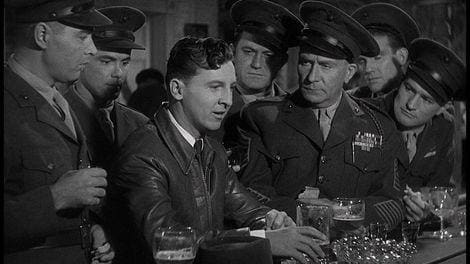
And don’t miss the brilliantly funny Hail the Conquering Hero.  It’s one of Preston Sturges’ less well known great comedies.  Eddie Bracken plays a would-be soldier discharged for hay fever – but his hometown mistakenly thinks that he is being sent home a war hero.  Hilarity ensues.  All the funnier when you realize that this film was made in 1944 amid our nation’s most culturally patriotic period.

Eddie Bracken surrounded by his new Marine pals in HAIL THE CONQUERING HERO.

Movies to See Right Now

Photo caption: Little Richard in LITTLE RICHARD: I AM EVERYTHING. Courtesy of Magnolia Pictures.

This week on The Movie Gourmet – new reviews of Little Richard: I Am Everything and Jews of the Wild West:. Plus a reminder that Hallelujah: Leonard Cohen, a Journey, a Song is now available to stream.

Gordon Lightfoot died this week, so it’s fitting to stream the amiable biodoc Gordon Lightfoot: If You Could Read My Mind from Amazon (included with Prime), AppleTV or KinoNow.

CURRENT MOVIES

WATCH AT HOME

RODENTS OF UNUSUAL SIZE

The most eclectic watch-at-home recommendations you’ll find ANYWHERE:

  • Rodents of Unusual Size: 5 million orange-toothed critters and a Cajun octogenarian. Amazon, AppleTV.
  • Satan & Adam: more than an odd couple. Amazon, AppleTV.
  • Levinsky Park: refuge for refugees? Amazon, AppleTV, YouTube.
  • The Speed Cubers: odd, and then profound. Netflix.
  • The 11th Green: a thinking person’s paranoid conspiracy. Amazon, AppleTV, Vudu, YouTube.
  • The Wave: Everything you want in a disaster movie. Amazon, AppleTV, Vudu, YouTube.
  • Magallanes: some wrongs cannot be righted. AppleTV.

ON TV

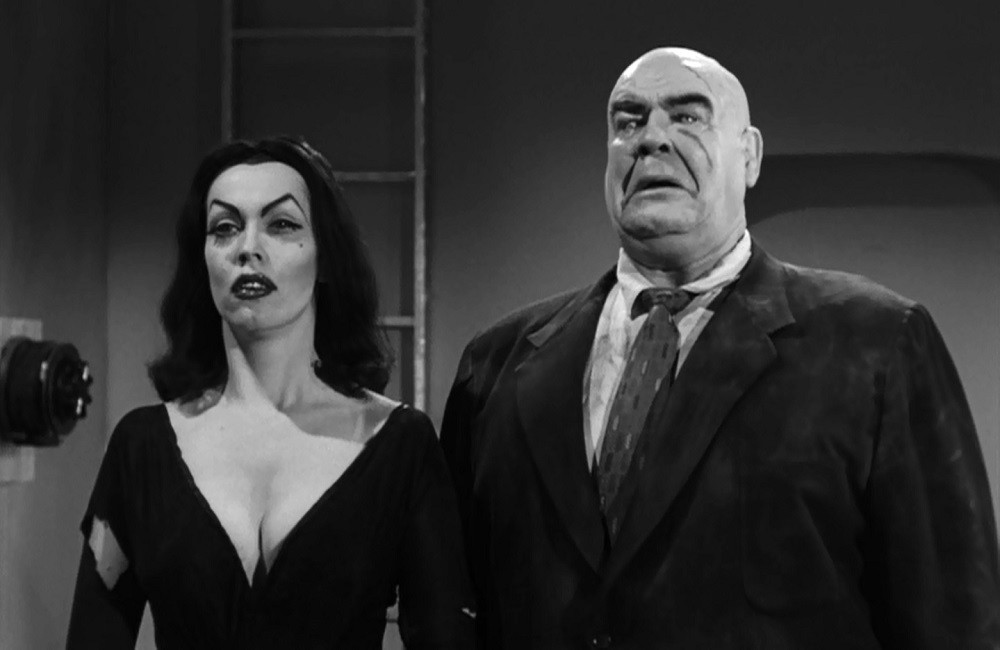
Vampira and Tor Johnson in Ed Wood’s PLAN 9 FROM OUTER SPACE

First, the good movies – on May 9, Turner Classic Movies will be presenting the best work of Preston Sturges:  The Lady Eve, The Palm Beach Story, Sullivan’s Travels, Hail the Conquering Hero and The Great McGinty. I’ll be writing more about them on Sunday.

And now, the bad one – on May 11, TCM will air Plan 9 From Outer Space (1959), often ranked as the worst movie of all time and #1 in my Bad Movie Festival.

This movie is so bad that Tim Burton made a Johnny Depp movie about it – Ed Wood, named for its zealously persistent, but pathetic, creator.  Ed Wood throws everything at the screen, hoping that something interesting will stick:  dying vampire star Bela Lugosi, the TV fortune teller Criswell, the horror movie hostess Vampira, zombie-look-alike pro wrestler Tor Johnson and stock footage of a nuclear explosion.  None of it is tied together with any coherence, and it’s all unintentionally funny.  This one’s good for the whole family.

Lugosi died while making this film and was replaced by a taller, non-speaking “double”, who stalks about covering his face with his cloak.  The double shows up in the trailer.

JEWS OF THE WILD WEST: desperadoes, cowpunchers…and Jews

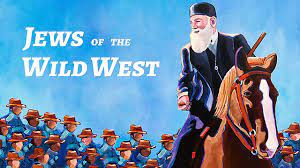
Okay, so this is one of those rare movies that had me at the title. One doesn’t automatically think of Jews among the wagon trains, desperadoes and cowpunchers of the Wild West. But, in Jews of the Wild West, documentarian Amanda Kinsey brings us an anthology of impressively well-researched Jewish experiences on the Western frontier.

Kinsey starts off with a saloon girl who married an iconic gunslinger (and buried him in Colma’s Jewish cemetery) and the marketer of the clothing item most identified with the American West (hint – not Wranglers). As a Western history buff, I was familiar with those first two stories, but then I started learning a lot:

  • Why many of the first mayors of frontier towns were Jewish;
  • How Eastern European occupational restrictions on Jews prepared them for a pivotal role in the development of the great Denver and Greeley, Colorado, cattle stockyards;
  • That most Jews found markedly less antisemitism in the West than in the East;
  • That teenage Golda Meir ran away to high school in Denver.

My jaw dropped at the shocking story of the Hebrew Emigrant Aid Society, which in 1881-84, until taken over by the reputable United Hebrew Charities, was helping new Jewish emigrants resettle in the remote West. The seeming benevolence, it turns out, was motivated by an earlier wave of now prosperous Jews who didn’t want the impoverished Orthodox arrivals from Eastern Europe to challenge capitalism and make them look bad.

Interestingly, filmmaker Kinsey, a longtime NBC News producer and five-time Emmy winner, is NOT herself Jewish.

I attended a screening of Jews of the Wild West at the San Luis Obispo Jewish Film Festival that included a Q&A with Kinsey and local historians. Jews of the Wild West is streaming on Amazon, AppleTV, Vudu and YouTube.

HALLELUJAH: LEONARD COHEN, A JOURNEY, A SONG: a reflective artist, a reflective movie

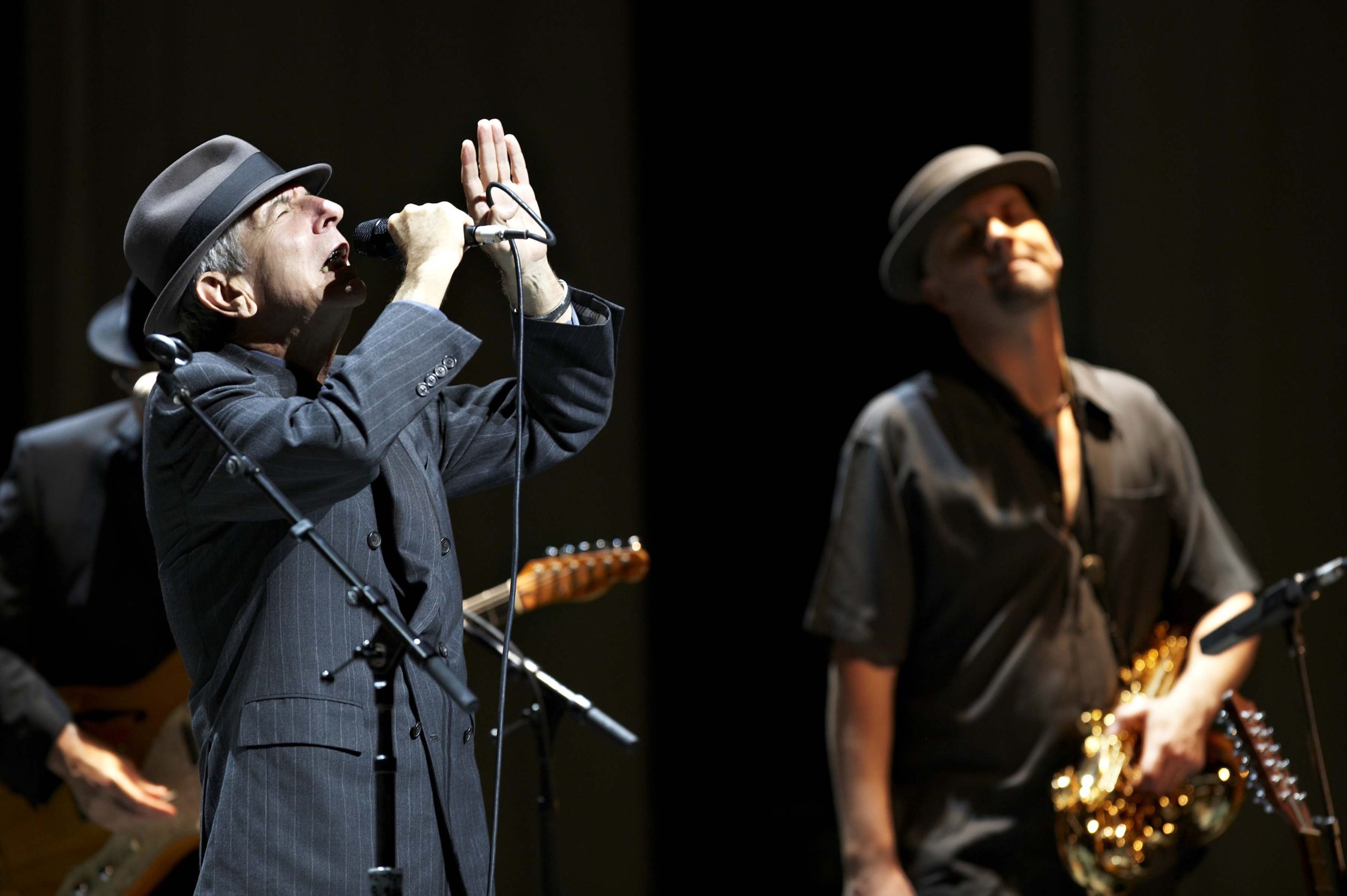
Photo caption. Leonard Cohen in HALLELUJAH: LEONARD COHEN, A JOURNEY, A SONG. Courtesy of Leonard Cohen Family Trust.

Hallelujah: Leonard Cohen, a Journey, a Song is a biodoc as reflective as the subject himself. That subject is poet/singer/songwriter Leonard Cohen, creator of profound verse and ear-worm melodies. Cohen was such a seeker that he secluded himself for five years at a Buddhist monastery on Mount Baldy. I’m reposting about this film because it is finally widely available to stream.

Co-writers and co-directors Daniel Geller and Dayna Goldfine have comprehensively sourced the film with Cohen intimates and a substantial dose of Cohen himself. Geller and Goldfine have braided together Cohen’s journey with that of his most sublime song, Hallelujah.

One doesn’t think of a song even HAVING a journey, but Cohen wrote Hallelujah over years and years, possibly composing over 150 verses, only to have Columbia refuse to issue the album that it had commissioned. Then the song was rescued by John Cale, rejuvenated in the animated movie Shrek, and became iconic with the spectacular cover by Jeff Buckley. Along the way, Cohen himself would reveal alternative lyrics in live performance. Helluva story.

I’ve seen splashier documentaries – this is, after all, about a poet. The one forehead-slapping shocker for me was the initial rejection of Hallelujah. At almost two hours, Hallelujah: Leonard Cohen, a Journey, a Song is a settle-in-and-be-mesmerized experience.

(BTW, could there be a bigger producer/artist mismatch than Phil Spector and Leonard Cohen?)

Hallelujah: Leonard Cohen, a Journey, a Song is now available to stream from Amazon, AppleTV, Vudu, YouTube and redbox.

LITTLE RICHARD: I AM EVERYTHING: never denying his identity, but renouncing it

Photo caption: Little Richard in LITTLE RICHARD: I AM EVERYTHING. Courtesy of Magnolia Pictures.

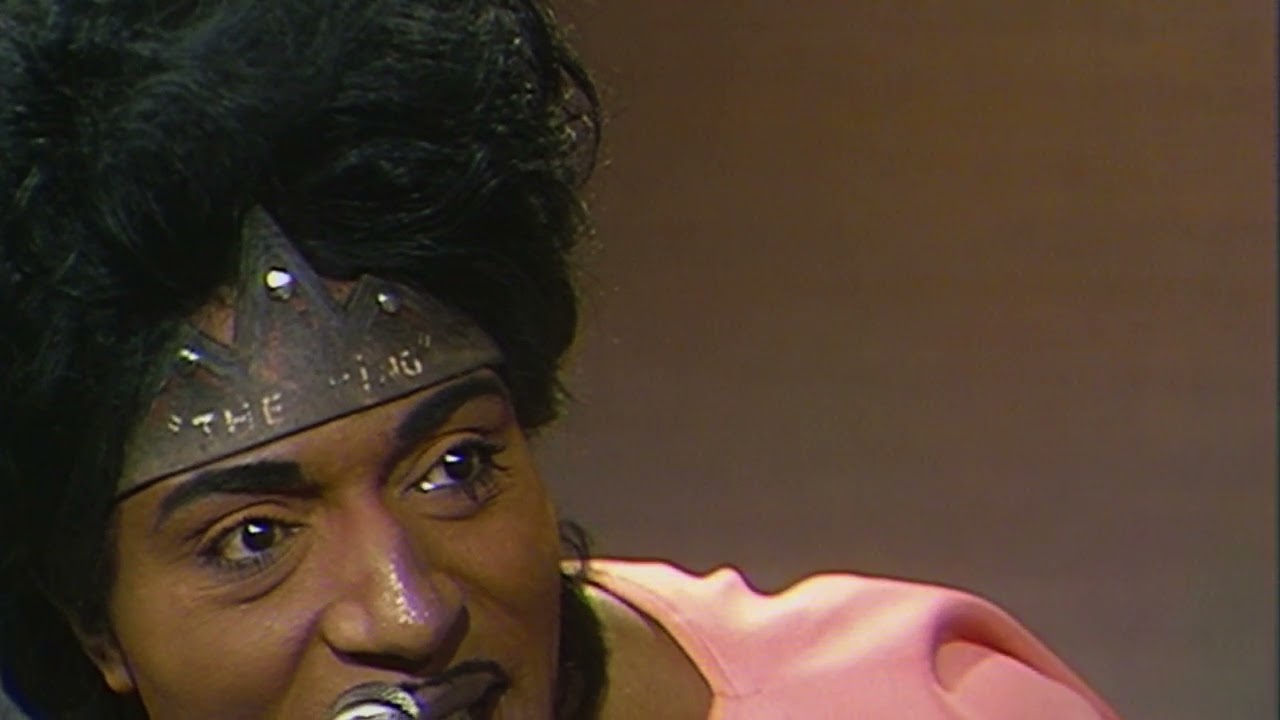
Little Richard: I Am Everything traces the life of the trailblazing rock-and-roller, and it is NOT your paint-by-the-numbers showbiz biodoc. Director Lisa Cortés (Primetime Emmy winner) has superbly framed the two defining aspects of Little Richard – an unfettered confidence in his exuberant performances and an uneasy assessment of himself as a flamboyant gay man.

As one would expect, Cortés lays out Little Richard’s importance in the very beginning of rock and roll – writing hard-driving hits, many with unmistakably sexualized lyrics and performing them with then unseen animation. Before Elvis. During Jim Crow. Before African-American music was played on mainstream radio.

Most strikingly, from the very beginning, Little Richard never tried to dress or act like a heterosexual male. (Baby Boomers will recall that this was the age of an unconvincingly closeted Liberace and no other hints of homosexuality in American mass culture)

As much as we see Little Richard in later work by artists like David Bowie, Elton John and Prince, there were performers that Little Richard himself emulated. In a staggering achievement in sourcing, Cortés brings us photos and film of queer black performers of the 1940s whom Little Richard saw – and some he worked with as a teenager. I’ve seen plenty of documentaries on showbiz, LGBTQ and African-American history, and I’ve never seen much of this material.

Little Richard is a difficult case for queer people because, although he was an important role model who never DENIED being a gay man, he sporadically RENOUNCED his own sexual identity. He is a difficult case for all of us, because his music would celebrate sex as naughty fun, but then he would occasionally scare himself back into backwoods religion.

Little Richard: I Am Everything also reveals the original lyrics of Tutti Frutti, and how they were cleaned up to Tutti frutti, oh rootie.

David Bowie is joined by Mick Jagger, Paul McCartney and Tom Jones in appreciating Little Richard’s pioneering career. John Waters reveals that his own pencil-thin mustache is an homage to Little Richard’s.

Little Richard: I Am Everything touches on rock music, race in America, drugs, sex and sexual identity – and spends a lot of time on sex and sexual identity sex drugs. It’s a remarkable insightful profile of a complicated man who was himself very fun for us to watch.