Haywire: an action star is born

One of the first 2012 releases, Haywire is a rockem sockem spy action thriller by Steven Soderbergh, starring Gina Carano.  I was not familiar with Gina Carano, who is an accomplished star of mixed martial arts.  Haywire is a vehicle seeking to launch her as an action film star.  And why not, for she is attractive (with “real girl”, not Hollywood, looks), well-endowed and can kick ass?  She can, after all, kick ass for real, not just pretend to in a movie.

As an actor, Carano is plenty good enough.  She’s way better than Chuck Norris, Jackie Chan and the Rock, and is at least as good as Schwarzenegger.  And, when she beats up a swat team, it is believable (and fun).

Soderbergh is always interesting, as he moves between high brow/arty (sex lies and videotape, The Good German) and lowbrow/popular (Ocean’s Twelve, Contagion).  Here he takes an inexperienced leading woman and an unremarkable story and makes the most of it.  It’s a good watch.

Soderbergh delivers fast pacing and great locations (Barcelona, Dublin, New Mexico).  Soderbergh and Carano benefit from a top rate cast:  Michael Douglas, Ewan McGregor, Michael Fassbender, Antonio Banderas, Michael Angarano and Bill Paxton.  Overall, it’s good entertainment and, for once,  I’m actually looking forward to the sequels.
 

War Horse: Spielberg’s sentimental epic

War Horse is a sweeping epic that traces the journey of an especially spirited horse and its series of owners before and during World War I.  It’s not a critical spoiler to let you know that the horse survives, although its various handlers are all savaged by war.

It’s a movie that we could have seen in the 1950s – but a very, very good 1950s movie.  The story is sentimental, but neither simple nor dully plotted.  The movie is beautifully composed and shot, and many scenes recall John Ford’s use of landscapes and action.  The silhouettes and sky in the final shot are lit as in the similar climax of Gone With the Wind.

War Horse is also one of the better movies about World War I, of which the central fact was its massive, brutally stupid waste of lives on a thereto unimagined scale.  Along the way we see clear and accurate depictions of trench warfare, No Man’s Land, foraging, and the relative utility of cavalry, infantry, artillery, machine guns, and tanks.  Spielberg doesn’t distract us from the overall horror with unnecessary gore.

The Iron Lady: a magnificent Streep amid a middling story

Meryl Streep is the finest actress of our lifetimes, a fact reemphasized by her performance in The Iron Lady.  Streep plays two Margaret Thatchers.  In flashbacks, she plays Thatcher in her prime –  seizing power and wielding it with complete confidence and absolutely without a nano whit of mercy.  She also plays today’s elderly Thatcher, doddering on the verge of dementia.  Streep is magnificent, which might be enough reason to see the movie.

It’s also always a pleasure to watch Jim Broadbent, and he teams with Streep as Thatcher’s hubbie.  Alexandra Roach plays a third and younger Thatcher – forming herself in her early twenties.  The fine actor Nicholas Farrell is also quite good as one of Thatcher’s mentors.

My problem is with the story.  Now I’m no expert on Thatcher, although I have loathed her from afar for decades.  To me, the most interesting aspect of Thatcher was her certitude – the absolutely deep and profound belief that she was always right and the will to impose her direction on everyone else.  When her actions were creating widespread pain and she was hated (really, really hated) by a large percentage of her own people, why did she not doubt herself for a moment?  The Iron Lady explains her conservatism as coming from her father, but leaves her certitude unexamined.

Instead, The Iron Lady‘s screenplay chooses to focus on her feminism, battling to make her way in an arena filled with men especially eager not to relinquish any power to her.  (Her feminism seems to be entirely in practice, not theory, as she battles for HER due, but not to make the way easier for other women, whom she probably expects to pull themselves up by their own pumps.)

A lot of screen time is also devoted to her aged decline, which gives good fodder to Streep, but is not very important to understanding her career.

On the other hand, The Iron Lady does depict the very personal impact of the IRA’s campaign against her, with an assassination attempt and the killing of a close colleague.  It also gives us an unsparing look at her bullying of friends and allies, which, of course, does not encourage loyalty.  And there are telling glimpses into her family life, especially her longtime marriage.

But on the whole, The Iron Lady is long on Streep and short on understanding what made Margaret Thatcher the pivotal political leader that she was.

Hugo: Scorsese’s revelatory 3D tale

Martin Scorsese’s Hugo is both a delight and a lessons in the possibilities of 3D in the hands of a master filmmaker.  The story follows a young orphan living in the bowels of a 1920s Paris train station who strives to survive by his wits, keep his independence and solve the puzzle of an discarded automaton.

Scorsese’s use of 3D is revelatory.  We feel entirely transported to WITHIN the worlds of the station, of its industrial inner workings and Paris itself.  When the orphan walks into a bookstore, we are immersed ourselves in the many stacks of books.  Scorsese’s 3D always works to advance the story, not to distract us with assaultive gimmicks.

As an extra treat for movie lovers, the very story becomes one of movie making, film as art and film preservation.  We see the early movie magic of George Melies, especially his 1902 A Trip the Moon. We also see Lumiere’s 1896 The Arrival of a Train, and the main characters even sneak into Harold Lloyd’s 1923 Safety Last.

Sacha Baron Cohen is very, very funny as the boy’s foil, the bitter and preening station policeman.  The cast is very good, with the most pleasing turns by Emily Mortimer, Helen McCrory and Richard Griffiths.

Hugo makes my list of Best Movies of 2011.

This Week on HBO: the documentaries that freed a condemned man

Last August, three men were released from prison in Arkansas – one of them from death row. This wouldn’t have happened without two HBO documentaries, the 1996 Paradise Lost: The Child Murders at Robin Hood Hills and its 2000 sequel Paradise Lost 2: Revelations.  Every night this week, HBO is airing its third documentary Paradise Lost 3: Purgatory, which wraps up the series.  You don’t need to have watched the first two to get the full impact of Paradise Lost 3.

The men had served over eighteen years each for a horrific crime that they apparently had nothing to do with. Three second grade Cub Scouts were brutally raped, murdered and their bodies mutilated. The authorities, under understandable pressure to solve the crime, arrested three Metallica-loving teenagers and railroaded them for a supposed Satanic ritual killing. Although no physical evidence tied them to the crime, one teen with an IQ of 76 was browbeaten for twelve hours into a confession that he later recanted.

The HBO films spawned media interest and public and celebrity support for the convicted men, who became known as the West Memphis Three.

Recently processed DNA evidence was inconsistent with any of the defendants.  Facing the specter of a futile new trial, the prosecutor accepted a plea bargain that freed the men without their having to acknowledge guilt. Interestingly, the father of one of the victims has gone from the villain of the second HBO film to a supporter of the recently freed men. Here’s the New York Times coverage of the August 2011 developments.

Paradise Lost 3: Purgatory is on the short list for the Best Documentary Oscar this year.

[youtube-http://www.youtube.com/watch?v=GqQnnXTTm3w]


2011 in Movies: the year of the smart action film

SOURCE CODE

These days, explosions and chases in movies have become indicators of dumb and dumber.  But, this year, we’re seeing a welcome rebirth of the smart action film.

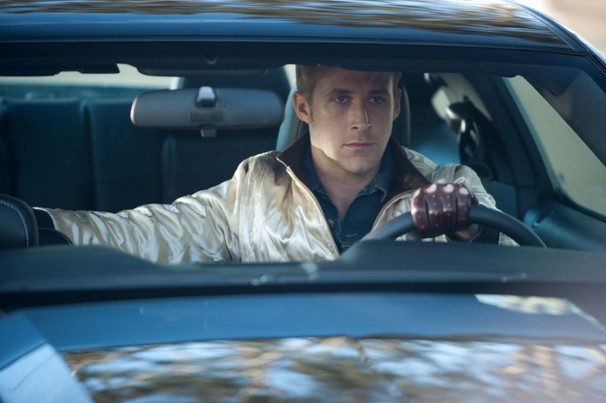
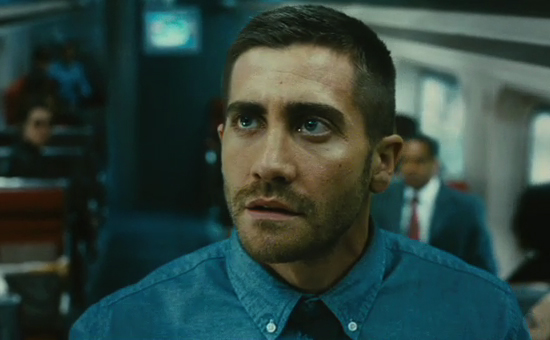
Like last year’s Inception Source Code, The Adjustment Bureau, Drive and even Hannah, brought some originality to the genre.  Drive was the most visually interesting, but Source Code combined great production values with a great hook in Ben Ripley’s screenplay:  Supersoldier Jake Gyllenhaal can inhabit the brain of a terrorism victim for the same 8 minutes – over and over again.  Each time, he has 8 minutes to seek more clues. Can he build the clues into a solution and prevent the terrorist atrocity?

The smart action movie: a welcome trend, indeed.

2011 in the Movies: most overlooked

John Sayle's AMIGO

What are 2011’s most overlooked films? The Guard and Take Shelter are on some Top Ten lists, including mine, but they still haven’t gotten the buzz that they deserve.  These are two of the very best films of the year and are not to be missed.

Kill the Irishman is a gritty crime drama with a charismatic lead performance by Ray Stevenson.

Terri is something completely new in a teen mifit movie.

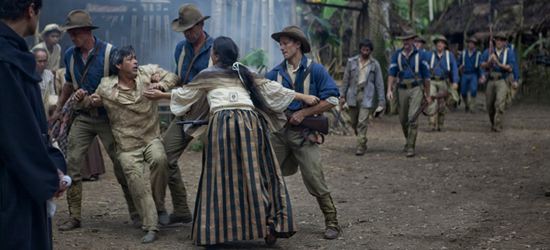
As in most films by the master director-writer-editor John Sayles, the historical drama Amigo intertwines the stories of a large ensemble cast while keeping each character recognizable, distinct and textured.

For a guilty pleasure, I will go with TrollHunter, a hilariously deadpan Norwegian take on the horror genre.

2011 in Movies: biggest disappointments

LE QUATTRO VOLTE

1.  I haven’t seen Killer Joe, Restless and Tyrannosaur becuase they haven’t been released where I live.  And I haven’t seen Oslo August 3, The Kid on the Bike, Paul Williams Still Alive, Natural Selection, Polisse and Little White Lies because – as far as I know – they haven’t yet been released in the US.  You can read descriptions and watch trailers of these films as Movies I’m Looking Forward To.


2.  Meek’s Cutoff is an unfortunate misfire by the excellent director Kelly Reichardt (Old Joy, Wendy and Lucy).


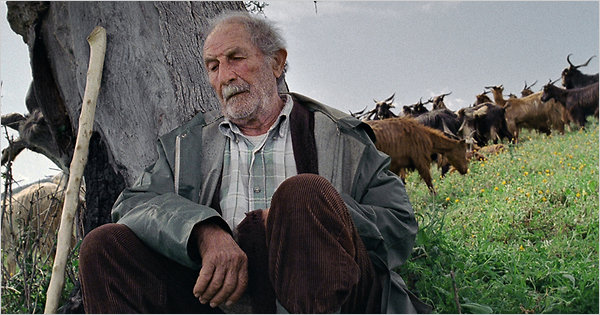
3.  Le Quattro Volte is supposed to be a lyrical contemplation on the Circle of Life, but you’ll find yourself checking your watch during the interminable hacking of an aged goatherd.  If the geezer had taken Robitussin DM, there would be no story at all.


4.  The bewildering, pompous mess that is The Tree of Life .  It does contain a fine 90-minute family drama about a boy growing up in 1950s Waco (a superb Hunter McCracken) and the friction with his caring but brutishly domineering father (Brad Pitt). Unfortunately, there is another 60 minutes in the movie.

That additional 60 minutes is a self-important muddle that tries to lift the story to an exploration of life itself – from creation through afterlife. There are beautiful shots of clouds and waterfalls, with unintelligible whisperings from cast members. There are Bible verses, the Big Bang and dinosaurs (yes, dinosaurs). And, in case you don’t get how seriously the movie takes itself, there is an overbearingly pretentious score.


5. The Hangover Part II.  I really enjoyed The Hangover, but the sequel was just lame.


6.  Uncle Boonmee Who Can Recall His Past Lives is by no means a bad film, but I expected more from the winner of the Palm d’Or.


7.  David Gordon Green, director of All the Real Girls, Undertow, Snow Angels and Pineapple Express, showed up this year with The Sitter.  Say it ain’t so, Dave.


8.  HBO’s take on the financial meltdown, Too Big To Fail, failed in spite of an excellent cast.  It wasn’t nearly as good as last year’s great documentary Inside Job or this year’s fictional Margin Call.


9.  James Franco co-hosting the Academy Awards.  Lay off the weed, Jimmy!


10.  After watching the jaw droppingly awful trailer, I was hoping that Nicholas Cage’s Season of the Witch would be deliciously and entertainingly laugh out loud bad. But it was just bad.


2011 in Movies: breakthroughs

Ryan Gosling in Nicholas Winding Refn's DRIVE

One of the most rewarding aspects of watching movies is seeing the emergence of new talent.  Here are some pleasant surprises from the past year.

1.  Denis Villenueve:  Because Incendies is anything but stagey, you can’t tell that this little known French-Canadian director adapted the screenplay from a play. In fact, he created the most gripping film of the year.

2.  Jessica Chastain:  She’s on everybody’s “breakthrough” list for a damn good reason. First, she delivered a fine performance as an enabling 1950s mom in the most coherent part of The Tree of Life.  She followed that with a riveting performance as a 1960s Mossad agent (the younger version of Helen Mirren’s character) in the thriller The Debt.  In Take Shelter, she plays a well-grounded housewife who must deal with a mentally disintegrating husband.  She won critical praise for the trashy but aspiring housewife in a film I haven’t seen – The Help.  She’s a tough cop in The Texas Killing Fields.  And then she’s in Ralph Fiennes’ adaptation of Shakespeare’s Coriolanus.

Six movies in six months – that’s quite a way to start a career. And she’s at the top of her game in all of them, playing soft and tough, brittle and sexy, action and romance.

3.  Nicholas Winding Refn:  With apologies to Ryan Gosling, Refn is the real star of the vivid and compelling Drive.  He has a great eye and a great sense of pacing, and could produce a masterpiece with the right material.

4.  Michel Hazanavicius:  He came out of nowhere to strike gold with The Artist.  Who would think to make a silent film today?  Everyone will want to see what he can come up with next.

5.  Shailene Woodley:  Her performance is absolutely essential to the success of The Descendants.  It’s not just that she perfectly plays a bratty teenager, but that we can see that some of her brattiness is hormonal and some of it is entirely voluntary and manipulative.  Woodley had to convincingly play a character who is at times self-centered and shallow, but who can rally and reach within herself to serve as the family glue and support her dad and little sister.

6.  Ben Ripley:   The key to Source Code is a breakthrough screenplay by Ben Ripley.  In a year with at least some smart action films, Ripley’s is the smartest.  He came up with the scifi premise that supersoldier Jake Gyllenhaal can inhabit the brain of a terrorism victim for the same 8 minutes – over and over again.  Each time, he has 8 minutes to seek more clues. Can he build the clues into a solution and prevent the terrorist atrocity?  Ripley had us on the edge of our seats.

7.  Ryan Gosling:  He has already established himself as one of our best actors (Half Nelson, All Good Things, Blue Valentine), so why is he on this list?  Because this year he has broken out of quirky roles in indies and has carried more mainstream films.  He proved that he can play an action star (Drive) and also be the funniest guy in a Steve Carell comedy (Stupid Crazy Love).  And he proved that he can carry a George Clooney movie as the male lead holding his own with Philip Seymour Hoffman and Paul Giamatti (The Ides of March).  He could be looking at a Clooney/Hanks/Nicholson career.

2011 in Movies: worst moviegoing experience

The Winner:  3 Backyards.  This unbearably pretentious and self-indulgent wannabe art film presents us with a petty meltdown, Elias Koteas furrowing his brow, a random mystical white poodle and caterpillars.  Did I mention the masturbating dog killer?  I hated this movie – and it is still pissing me off.

The Worst Trend:  People sitting in front of me texting and checking their email, flashing their screens and taking me out of the film.

Note: I don’t have a Worst Ten Movie list because, unlike professional critics, I don’t have to see every movie.  I do see 75-100 new movies each year, but I try REALLY, REALLY HARD to avoid the bad movies.  So my worst movie going experience is always either 1)  on an airline flight when I see a movie that I normally wouldn’t; 2) a hyped art film that disastrously falls on its face and/or really pisses me off (The White Ribbon); or 3) something I find on cable TV while channel surfing (Paul Blart: Mall Cop).  But usually, the culprit finds its way aboard a long airline flight.  Not this year.